Library
Browse and search books
204 novels found
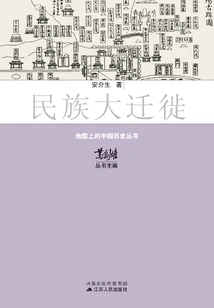
地图上的中国历史·民族大迁徙
An Jiesheng
This set of books is called "Chinese History on the Map" and includes four types: "Territorial and Political Regions", "Ancient Capitals and Cities", "Exchanges and Transportation", and "The Great Migration of Nationalities". As the name suggests, it uses maps as an outline to tell a certain aspect of Chinese history. The method of learning history summarized by former sages emphasizes the need to grasp several W's, one of which is Where. Because any historical fact, whether it is a person, system or event, whether material or spiritual, is related to a certain spatial range, and all occurs or affects a certain point, line, or surface on the surface of the earth. As our former teacher Ji Long (Tan Qixiang) said: "History is like a play, geography is the stage; if you can't find the stage, where can you see the play!" The role of spatial factors in history is so important, it is an important part of understanding and studying history, and it is also an indispensable reason for understanding history...
This set of books is called "Chinese History on the Map" and includes four types: "Territorial and Political Regions", "Ancient Capitals and Cities", "Exchanges and Transportation", and "The Great Migration of Nationalities". As the name suggests, it uses maps as an outline to tell a certain aspect of Chinese history. The method of learning history summarized by former sages emphasizes the need to grasp several W's, one of which is Where. Because any historical fact, whether it is a person, system or event, whether material or spiritual, is related to a certain spatial range, and all occurs or affects a certain point, line, or surface on the surface of the earth. As our former teacher Ji Long (Tan Qixiang) said: "History is like a play, geography is the stage; if you can't find the stage, where can you see the play!" The role of spatial factors in history is so important, it is an important part of understanding and studying history, and it is also an indispensable reason for understanding history...
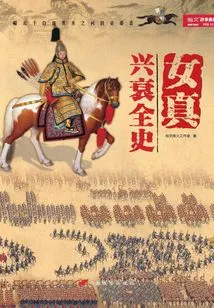
女真兴衰全史
Zhiwen Fenghuo Studio
As a member of the Chinese nation, the Jurchens have a long history. They have thrived in the white mountains and black waters of Northeast my country for more than three thousand years. Whether it is "Sushen" in the pre-Qin historical records, "Yilou" in the Han and Jin Dynasties, "Fuyu" and "Wuji" in the Northern and Southern Dynasties, "Heishui Mohe" in the Sui and Tang Dynasties, "Jurchen (Zhi)" in the Liao, Song, Yuan and Ming dynasties, or "Jurchen (Zhi)" after the founding of the Qing Dynasty. "Manchu (banner people)", although there are certain differences in the tribes they belong to and the places they live in are also different, from the perspective of ethnic integration and historical evolution, they are all inherited from the same line, and have played an important role on the historical stage with their distinctive national character. The "Jin" founded by Wanyan Aguda and the "Qing" laid and established by Nurhaci made the Jurchen the only ethnic minority in ancient my country to successfully rise and dominate the Central Plains twice.
As a member of the Chinese nation, the Jurchens have a long history. They have thrived in the white mountains and black waters of Northeast my country for more than three thousand years. Whether it is "Sushen" in the pre-Qin historical records, "Yilou" in the Han and Jin Dynasties, "Fuyu" and "Wuji" in the Northern and Southern Dynasties, "Heishui Mohe" in the Sui and Tang Dynasties, "Jurchen (Zhi)" in the Liao, Song, Yuan and Ming dynasties, or "Jurchen (Zhi)" after the founding of the Qing Dynasty. "Manchu (banner people)", although there are certain differences in the tribes they belong to and the places they live in are also different, from the perspective of ethnic integration and historical evolution, they are all inherited from the same line, and have played an important role on the historical stage with their distinctive national character. The "Jin" founded by Wanyan Aguda and the "Qing" laid and established by Nurhaci made the Jurchen the only ethnic minority in ancient my country to successfully rise and dominate the Central Plains twice.
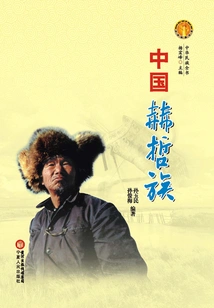
China's Hezhen Ethnic Group
History中国赫哲族
Sun Yumin Sun Junmei
This book focuses on the development of Hezhen culture from ancient times to the present, and narrates the history, society, humanities, economy, politics, etc. Of the Hezhen people in a vertical and horizontal manner. It concretely, systematically and comprehensively displays the cultural life of the Hezhe people throughout history. It is a detailed and valuable historical material reflecting the Hezhe people.
This book focuses on the development of Hezhen culture from ancient times to the present, and narrates the history, society, humanities, economy, politics, etc. Of the Hezhen people in a vertical and horizontal manner. It concretely, systematically and comprehensively displays the cultural life of the Hezhe people throughout history. It is a detailed and valuable historical material reflecting the Hezhe people.
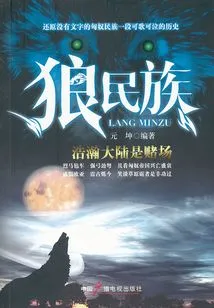
狼民族:浩瀚大陆是赌场
Yuan Kun
This nation once became the nightmare of the world, a symbol of ferocity, cruelty, wildness, and tyranny. This nation can adapt to harsh and harsh environments. No matter whether it is severe cold, scorching heat, or barren mountains and rivers, its tenacious will to survive cannot be diminished. This nation was good at traveling long distances, fighting in the south and north. They galloped on horseback, used strong bows and crossbows to seize vast lands, plundered priceless property, and killed countless people. This nation is the Xiongnu, a wolf-like nation, we call it the wolf nation.
This nation once became the nightmare of the world, a symbol of ferocity, cruelty, wildness, and tyranny. This nation can adapt to harsh and harsh environments. No matter whether it is severe cold, scorching heat, or barren mountains and rivers, its tenacious will to survive cannot be diminished. This nation was good at traveling long distances, fighting in the south and north. They galloped on horseback, used strong bows and crossbows to seize vast lands, plundered priceless property, and killed countless people. This nation is the Xiongnu, a wolf-like nation, we call it the wolf nation.
Five Thousand Years
History上下五千年
H
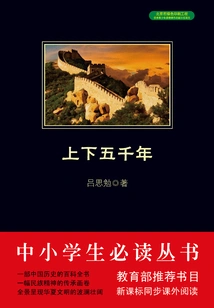
"Five Thousand Years Up and Down" is a history textbook written by the author for senior middle school students. "Up and Down Five Thousand Years" is written in vernacular, and the narrative is as specific as possible, with few generalizations. It was a high school history textbook that was widely used and had the largest circulation at that time. "Up and Down Five Thousand Years" involves specialized knowledge in history, geography and other aspects that are not easily found in general reference books. The whole book uses simple and smooth words to describe China's historical trends, institutional evolution, and cultural development from ancient times to the 1930s. The final chapter is based on the great rejuvenation of the Chinese nation. It is a comprehensive encyclopedia of Chinese history that runs through all eras and looks at all fields. It covers the Three Sovereigns and Five Emperors, Xia, Shang and Zhou, Spring and Autumn and Warring States, Qin and Han Dynasties to the Republic of China, covering various fields such as politics, economy, system, culture, society, ethnicity, religion and so on.
"Five Thousand Years Up and Down" is a history textbook written by the author for senior middle school students. "Up and Down Five Thousand Years" is written in vernacular, and the narrative is as specific as possible, with few generalizations. It was a high school history textbook that was widely used and had the largest circulation at that time. "Up and Down Five Thousand Years" involves specialized knowledge in history, geography and other aspects that are not easily found in general reference books. The whole book uses simple and smooth words to describe China's historical trends, institutional evolution, and cultural development from ancient times to the 1930s. The final chapter is based on the great rejuvenation of the Chinese nation. It is a comprehensive encyclopedia of Chinese history that runs through all eras and looks at all fields. It covers the Three Sovereigns and Five Emperors, Xia, Shang and Zhou, Spring and Autumn and Warring States, Qin and Han Dynasties to the Republic of China, covering various fields such as politics, economy, system, culture, society, ethnicity, religion and so on.
胡商 胡腾舞与入华中亚人:解读虞弘墓
Zhang Qingjie
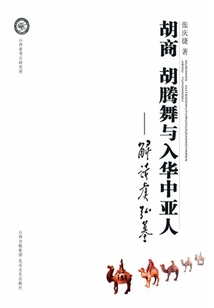
"Hu Shang, Hu Tengwu and the Central Asians who entered China: Interpretation of the Tomb of Yu Hong" is a sequel or companion volume to the archaeological report of "The Tomb of Yu Hong in the Sui Dynasty in Taiyuan". It attempts to show the Yellow River between the Han and Tang Dynasties from several aspects through Yu Hong and other Central Asians who entered China in the Northern Dynasties. The cultural exchange between China and the West on both sides of the Taiwan Strait aims to illustrate the close connection between the two sides of the Yellow River and the Silk Road, reveal the important position and role of Pingcheng and Jinyang in the cultural exchange between the East and the West on the Silk Road, and attract the attention of Silk Road researchers and enthusiasts.
"Hu Shang, Hu Tengwu and the Central Asians who entered China: Interpretation of the Tomb of Yu Hong" is a sequel or companion volume to the archaeological report of "The Tomb of Yu Hong in the Sui Dynasty in Taiyuan". It attempts to show the Yellow River between the Han and Tang Dynasties from several aspects through Yu Hong and other Central Asians who entered China in the Northern Dynasties. The cultural exchange between China and the West on both sides of the Taiwan Strait aims to illustrate the close connection between the two sides of the Yellow River and the Silk Road, reveal the important position and role of Pingcheng and Jinyang in the cultural exchange between the East and the West on the Silk Road, and attract the attention of Silk Road researchers and enthusiasts.
古代民族史(中国文化史丛书)
Editor-in-chief Li Munan
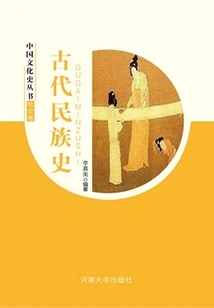
The Chinese nation is the oldest nation in the world, and the Chinese civilization is one of the oldest civilizations in the world. China has a written history of nearly 5,000 years. Starting from 841 BC, there has been no interruption in documented chronicles for nearly 3,000 years. This is unique in the long history of mankind. Among the four major ancient civilizations in the world, only China's history has always been passed down in an orderly manner and has never been interrupted.
The Chinese nation is the oldest nation in the world, and the Chinese civilization is one of the oldest civilizations in the world. China has a written history of nearly 5,000 years. Starting from 841 BC, there has been no interruption in documented chronicles for nearly 3,000 years. This is unique in the long history of mankind. Among the four major ancient civilizations in the world, only China's history has always been passed down in an orderly manner and has never been interrupted.
Second Opium War
History第二次鸦片战争
Jin Kaicheng
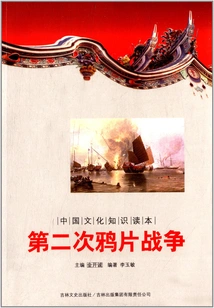
"Chinese Culture Knowledge Reader: The Second Opium War" has beautiful and vivid words, concise and popular language, and a rich illustration and text format, which comprehensively displays the material culture, institutional culture, behavioral culture, spiritual culture and other key points of knowledge in Chinese culture to readers. Bits and pieces of cultural knowledge are like stars, forming the splendid sky of Chinese culture. It can make a modest contribution to carrying forward China's five thousand years of excellent traditional culture, strengthening the unity of all ethnic groups, and building a socialist harmonious society.
"Chinese Culture Knowledge Reader: The Second Opium War" has beautiful and vivid words, concise and popular language, and a rich illustration and text format, which comprehensively displays the material culture, institutional culture, behavioral culture, spiritual culture and other key points of knowledge in Chinese culture to readers. Bits and pieces of cultural knowledge are like stars, forming the splendid sky of Chinese culture. It can make a modest contribution to carrying forward China's five thousand years of excellent traditional culture, strengthening the unity of all ethnic groups, and building a socialist harmonious society.