Library
Browse and search books
3,417 novels found
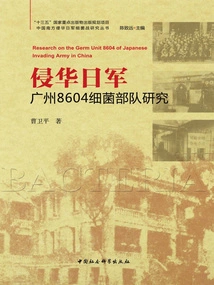
侵华日军广州8604细菌部队研究
Cao Weiping
This book is a historical academic work that specializes in studying the numerous crimes committed by the "Bo" 8604 unit of the Japanese invaders stationed in Guangzhou in various bacterial operations in the southern provinces of China. The content covers a large number of historical facts such as the research on various bacteria and the implementation of various bacterial operations by the "Bo" 8604 unit in the seven years from its establishment to its disbandment. It also covers the academic research on the "Bo" 8604 unit by the Chinese and Japanese academic circles in more than half a century after the Second World War. This book is the first academic work dedicated to studying the criminal norms of bacteriological warfare carried out by the "Bo" 8604 unit. It has serious content, rigorous logic, complete structure, and more substantial and reliable historical materials. Much of the content in the book is the first disclosure of new crimes committed by the "Bo" 8604 unit in carrying out bacteriological warfare. It is of indispensable academic significance for studying the bacteriological warfare carried out by the Japanese invaders in the southern provinces of China.
This book is a historical academic work that specializes in studying the numerous crimes committed by the "Bo" 8604 unit of the Japanese invaders stationed in Guangzhou in various bacterial operations in the southern provinces of China. The content covers a large number of historical facts such as the research on various bacteria and the implementation of various bacterial operations by the "Bo" 8604 unit in the seven years from its establishment to its disbandment. It also covers the academic research on the "Bo" 8604 unit by the Chinese and Japanese academic circles in more than half a century after the Second World War. This book is the first academic work dedicated to studying the criminal norms of bacteriological warfare carried out by the "Bo" 8604 unit. It has serious content, rigorous logic, complete structure, and more substantial and reliable historical materials. Much of the content in the book is the first disclosure of new crimes committed by the "Bo" 8604 unit in carrying out bacteriological warfare. It is of indispensable academic significance for studying the bacteriological warfare carried out by the Japanese invaders in the southern provinces of China.
秦早期历史研究
Yong Jichun
This book conducts a systematic study of the early history of the Qin people from Dongyi, especially since they migrated westward to Yong, the capital of Degong. Using new historical documents and archaeological materials and multidisciplinary methods, we will focus on the origin and clan origin of Ying Qin, the exploration of the deeds of the founder of Ying Qin and the feudal state with the surname Ying, the five westward migrations and Ying Qin's settlement in Xicui, Zhongyi's return to Zhou and the rise of the Qin people, Feizi's enfeoffment to Qin and the founding of the Xianggong, Wen Gong's entry into the Pass and the rise of the Qin people, and other historical mysteries and major issues. Multi-directional excavation, multi-angle analysis and multi-level exploration have sorted out the development clues of the Qin people from the Dongyi tribe to the Ying surname feudal state and then to the formation and rise of the Qin people to found the country. It has revealed the tortuous, arduous and magnificent rise trajectory and evolution process of the Qin people, and initially constructed the time and space coordinates and logical framework of the early historical development of the Qin people.
This book conducts a systematic study of the early history of the Qin people from Dongyi, especially since they migrated westward to Yong, the capital of Degong. Using new historical documents and archaeological materials and multidisciplinary methods, we will focus on the origin and clan origin of Ying Qin, the exploration of the deeds of the founder of Ying Qin and the feudal state with the surname Ying, the five westward migrations and Ying Qin's settlement in Xicui, Zhongyi's return to Zhou and the rise of the Qin people, Feizi's enfeoffment to Qin and the founding of the Xianggong, Wen Gong's entry into the Pass and the rise of the Qin people, and other historical mysteries and major issues. Multi-directional excavation, multi-angle analysis and multi-level exploration have sorted out the development clues of the Qin people from the Dongyi tribe to the Ying surname feudal state and then to the formation and rise of the Qin people to found the country. It has revealed the tortuous, arduous and magnificent rise trajectory and evolution process of the Qin people, and initially constructed the time and space coordinates and logical framework of the early historical development of the Qin people.
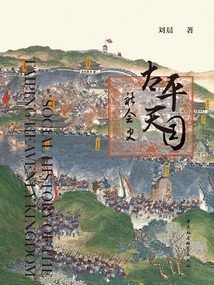
太平天国社会史
Liu Chen
The rise of the Taiping Army was rooted in the corruption of officials in the Qing government, who forced the people to rebel. But not long ago, civil unrest also broke out in the areas ruled by the Taiping Heavenly Kingdom. This phenomenon has profound implications. Previous studies on the Taiping Rebellion focused more on the Taiping Rebellion against the Qing Dynasty and less (or not at all) on the people's resistance to the Taiping Rebellion, which raises the intriguing question of "resisting the rebels." For even a "revolutionary" regime, to maintain long-term peace and stability, the direction and direction of the people's hearts and minds are also top-level issues. Through the study and judgment of more than 170 typical cases, this book gives a panoramic view of the interaction and influence between the Taiping Heavenly Kingdom regime and the people. Based on specialized research on the Taiping Heavenly Kingdom's political history and military history, it constructs an important aspect of the Taiping Heavenly Kingdom's social history (the history of popular resistance) and objectively summarizes the Taiping Heavenly Kingdom's historical experience and historical lessons.
The rise of the Taiping Army was rooted in the corruption of officials in the Qing government, who forced the people to rebel. But not long ago, civil unrest also broke out in the areas ruled by the Taiping Heavenly Kingdom. This phenomenon has profound implications. Previous studies on the Taiping Rebellion focused more on the Taiping Rebellion against the Qing Dynasty and less (or not at all) on the people's resistance to the Taiping Rebellion, which raises the intriguing question of "resisting the rebels." For even a "revolutionary" regime, to maintain long-term peace and stability, the direction and direction of the people's hearts and minds are also top-level issues. Through the study and judgment of more than 170 typical cases, this book gives a panoramic view of the interaction and influence between the Taiping Heavenly Kingdom regime and the people. Based on specialized research on the Taiping Heavenly Kingdom's political history and military history, it constructs an important aspect of the Taiping Heavenly Kingdom's social history (the history of popular resistance) and objectively summarizes the Taiping Heavenly Kingdom's historical experience and historical lessons.
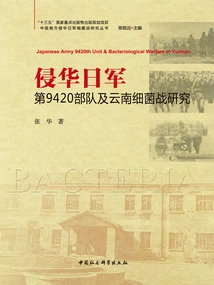
侵华日军第9420部队及云南细菌战研究
Zhang Hua
Yunnan bacteriological warfare was carried out under the unified command of the Japanese base camp, with Unit 9420 of the Japanese Southern Army Bacteriological Warfare Unit as the main force, supplemented by other bacteriological warfare units. To study bacterial warfare in Yunnan, we must first explore the history of Unit 9420 of the Japanese invaders. The bacteriological warfare carried out by the Japanese invaders in Yunnan included attacks on humans and animals. The attacks on humans were mainly two forms of warfare: cholera bacteriological warfare and plague bacteriological warfare. This is the foothold and focus of this study. This book is the latest, most systematic and detailed study of the Japanese invasion of China Unit 9420 and the germ warfare in Yunnan so far in China. The author firmly believes that the relevant files on germ warfare disclosed by Japan in the future will prove the value of this research. Not only that, the author also hopes that this work can give new research connotation to the bacterial warfare of the Japanese invaders in Yunnan, and in this way promote the research of the 9420th Unit of the Japanese invaders and the bacterial warfare in Yunnan at home and abroad.
Yunnan bacteriological warfare was carried out under the unified command of the Japanese base camp, with Unit 9420 of the Japanese Southern Army Bacteriological Warfare Unit as the main force, supplemented by other bacteriological warfare units. To study bacterial warfare in Yunnan, we must first explore the history of Unit 9420 of the Japanese invaders. The bacteriological warfare carried out by the Japanese invaders in Yunnan included attacks on humans and animals. The attacks on humans were mainly two forms of warfare: cholera bacteriological warfare and plague bacteriological warfare. This is the foothold and focus of this study. This book is the latest, most systematic and detailed study of the Japanese invasion of China Unit 9420 and the germ warfare in Yunnan so far in China. The author firmly believes that the relevant files on germ warfare disclosed by Japan in the future will prove the value of this research. Not only that, the author also hopes that this work can give new research connotation to the bacterial warfare of the Japanese invaders in Yunnan, and in this way promote the research of the 9420th Unit of the Japanese invaders and the bacterial warfare in Yunnan at home and abroad.
士人结社与古代文化论集
Zeng Xiao
Starting from the mentality, based on collected works and historical materials, and combining individuals, times, society, and culture, it is the focus and rationale of the author's research to explore the interactions, activities, thoughts, and creative achievements of scholars. The first part of the manuscript is about the study of scholar associations during the Ming and Qing dynasties, and the second part is about the study of the mentality and ideological culture of ancient scholars.
Starting from the mentality, based on collected works and historical materials, and combining individuals, times, society, and culture, it is the focus and rationale of the author's research to explore the interactions, activities, thoughts, and creative achievements of scholars. The first part of the manuscript is about the study of scholar associations during the Ming and Qing dynasties, and the second part is about the study of the mentality and ideological culture of ancient scholars.
元朝理财记:从成吉思汗的崛起到元朝的衰亡
Guo Jianlong
Did the Yuan Dynasty die from inflation? From the rise of Genghis Khan to the decline and fall of the Yuan Dynasty, this is a history of the rise and decline of the Yuan Dynasty with finance as the line. A new work by the well-known historical writer Guo Jianlong! This book begins with the financial impact of Genghis Khan's Western expeditions. Genghis Khan adopted various measures such as the military plunder system, the Darucha Chi system, and the surrender system. He used the commercial spirit to establish a larger global political power and laid important economic, cultural, and political foundations for the Yuan Dynasty, the most commercial dynasty in ancient Chinese history. During the Kublai Khan period, serious financial risks and institutional malpractices arose due to the massive conquests. Subsequent emperors rotated like a revolving lantern, paving the way for the outcome of the Yuan Dynasty. The rulers of the Yuan Dynasty were hesitant between the Mongolian and Han cultures, and the financial and political imbalance between the north and the south made the Yuan Dynasty's life hang on a thread. Open this book to unearth the mystery of the short life of the Yuan Dynasty from multiple dimensions and get a glimpse of the financial undercurrent of the historical evolution of ancient China.
Did the Yuan Dynasty die from inflation? From the rise of Genghis Khan to the decline and fall of the Yuan Dynasty, this is a history of the rise and decline of the Yuan Dynasty with finance as the line. A new work by the well-known historical writer Guo Jianlong! This book begins with the financial impact of Genghis Khan's Western expeditions. Genghis Khan adopted various measures such as the military plunder system, the Darucha Chi system, and the surrender system. He used the commercial spirit to establish a larger global political power and laid important economic, cultural, and political foundations for the Yuan Dynasty, the most commercial dynasty in ancient Chinese history. During the Kublai Khan period, serious financial risks and institutional malpractices arose due to the massive conquests. Subsequent emperors rotated like a revolving lantern, paving the way for the outcome of the Yuan Dynasty. The rulers of the Yuan Dynasty were hesitant between the Mongolian and Han cultures, and the financial and political imbalance between the north and the south made the Yuan Dynasty's life hang on a thread. Open this book to unearth the mystery of the short life of the Yuan Dynasty from multiple dimensions and get a glimpse of the financial undercurrent of the historical evolution of ancient China.
Xia Jin in Western Liaoning: the Iron Horse Glacier Comes into Dreams (this is Chinese History)
History辽西夏金:铁马冰河入梦来(这就是中国历史)
Editor-in-chief He Xiaorong
This series of books records the history from myths and legends: Xia, Shang, Western Zhou - to the end of the Qing Dynasty. It uses a combination of hand-painted style and historical pictures, and selects nearly a thousand color pictures and photos of precious cultural relics. After rigorous research, it uses realistic techniques to express historical events and character costumes, allowing children to be immersed in the scenes, conveying correct historical knowledge, and enriching children's aesthetic experience. This book uses experience and language that children can understand to describe the people, events, times, places, and things that have had a profound impact on Chinese history. It makes the originally abstract and difficult concepts or complex backgrounds lively and interesting, and establishes a clear concept of China's official history for children.
This series of books records the history from myths and legends: Xia, Shang, Western Zhou - to the end of the Qing Dynasty. It uses a combination of hand-painted style and historical pictures, and selects nearly a thousand color pictures and photos of precious cultural relics. After rigorous research, it uses realistic techniques to express historical events and character costumes, allowing children to be immersed in the scenes, conveying correct historical knowledge, and enriching children's aesthetic experience. This book uses experience and language that children can understand to describe the people, events, times, places, and things that have had a profound impact on Chinese history. It makes the originally abstract and difficult concepts or complex backgrounds lively and interesting, and establishes a clear concept of China's official history for children.
上古时代至西周:从神话到历史(这就是中国历史)
Editor-in-chief He Xiaorong
This series of books records the history from myths and legends: Xia, Shang, Western Zhou - to the end of the Qing Dynasty. It uses a combination of hand-painted style and historical pictures, and selects nearly a thousand color pictures and photos of precious cultural relics. After rigorous research, it uses realistic techniques to express historical events and character costumes, allowing children to be immersed in the scenes, conveying correct historical knowledge, and enriching children's aesthetic experience. This book uses experience and language that children can understand to describe the people, events, times, places, and things that have had a profound impact on Chinese history. It makes the originally abstract and difficult concepts or complex backgrounds lively and interesting, and establishes a clear concept of China's official history for children.
This series of books records the history from myths and legends: Xia, Shang, Western Zhou - to the end of the Qing Dynasty. It uses a combination of hand-painted style and historical pictures, and selects nearly a thousand color pictures and photos of precious cultural relics. After rigorous research, it uses realistic techniques to express historical events and character costumes, allowing children to be immersed in the scenes, conveying correct historical knowledge, and enriching children's aesthetic experience. This book uses experience and language that children can understand to describe the people, events, times, places, and things that have had a profound impact on Chinese history. It makes the originally abstract and difficult concepts or complex backgrounds lively and interesting, and establishes a clear concept of China's official history for children.
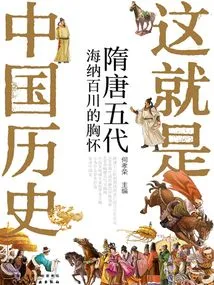
隋唐五代:海纳百川的胸怀(这就是中国历史)
Editor-in-chief He Xiaorong
This series of books records the history from myths and legends: Xia, Shang, Western Zhou - to the end of the Qing Dynasty. It uses a combination of hand-painted style and historical pictures, and selects nearly a thousand color pictures and photos of precious cultural relics. After rigorous research, it uses realistic techniques to express historical events and character costumes, allowing children to be immersed in the scenes, conveying correct historical knowledge, and enriching children's aesthetic experience. This book uses experience and language that children can understand to describe the people, events, times, places, and things that have had a profound impact on Chinese history. It makes the originally abstract and difficult concepts or complex backgrounds lively and interesting, and establishes a clear concept of China's official history for children.
This series of books records the history from myths and legends: Xia, Shang, Western Zhou - to the end of the Qing Dynasty. It uses a combination of hand-painted style and historical pictures, and selects nearly a thousand color pictures and photos of precious cultural relics. After rigorous research, it uses realistic techniques to express historical events and character costumes, allowing children to be immersed in the scenes, conveying correct historical knowledge, and enriching children's aesthetic experience. This book uses experience and language that children can understand to describe the people, events, times, places, and things that have had a profound impact on Chinese history. It makes the originally abstract and difficult concepts or complex backgrounds lively and interesting, and establishes a clear concept of China's official history for children.
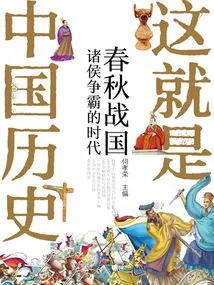
春秋战国:诸侯争霸的时代(这就是中国历史)
Editor-in-chief He Xiaorong
This series of books records the history from myths and legends: Xia, Shang, Western Zhou - to the end of the Qing Dynasty. It uses a combination of hand-painted style and historical pictures, and selects nearly a thousand color pictures and photos of precious cultural relics. After rigorous research, it uses realistic techniques to express historical events and character costumes, allowing children to be immersed in the scenes, conveying correct historical knowledge, and enriching children's aesthetic experience. This book uses experience and language that children can understand to describe the people, events, times, places, and things that have had a profound impact on Chinese history. It makes the originally abstract and difficult concepts or complex backgrounds lively and interesting, and establishes a clear concept of China's official history for children.
This series of books records the history from myths and legends: Xia, Shang, Western Zhou - to the end of the Qing Dynasty. It uses a combination of hand-painted style and historical pictures, and selects nearly a thousand color pictures and photos of precious cultural relics. After rigorous research, it uses realistic techniques to express historical events and character costumes, allowing children to be immersed in the scenes, conveying correct historical knowledge, and enriching children's aesthetic experience. This book uses experience and language that children can understand to describe the people, events, times, places, and things that have had a profound impact on Chinese history. It makes the originally abstract and difficult concepts or complex backgrounds lively and interesting, and establishes a clear concept of China's official history for children.
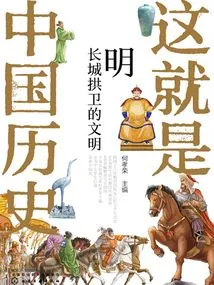
明:长城拱卫的文明(这就是中国历史)
Editor-in-chief He Xiaorong
This series of books records the history from myths and legends: Xia, Shang, Western Zhou - to the end of the Qing Dynasty. It uses a combination of hand-painted style and historical pictures, and selects nearly a thousand color pictures and photos of precious cultural relics. After rigorous research, it uses realistic techniques to express historical events and character costumes, allowing children to be immersed in the scenes, conveying correct historical knowledge, and enriching children's aesthetic experience. This book uses experience and language that children can understand to describe the people, events, times, places, and things that have had a profound impact on Chinese history. It makes the originally abstract and difficult concepts or complex backgrounds lively and interesting, and establishes a clear concept of China's official history for children.
This series of books records the history from myths and legends: Xia, Shang, Western Zhou - to the end of the Qing Dynasty. It uses a combination of hand-painted style and historical pictures, and selects nearly a thousand color pictures and photos of precious cultural relics. After rigorous research, it uses realistic techniques to express historical events and character costumes, allowing children to be immersed in the scenes, conveying correct historical knowledge, and enriching children's aesthetic experience. This book uses experience and language that children can understand to describe the people, events, times, places, and things that have had a profound impact on Chinese history. It makes the originally abstract and difficult concepts or complex backgrounds lively and interesting, and establishes a clear concept of China's official history for children.
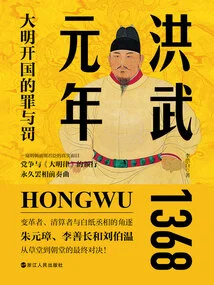
洪武元年:大明开国的罪与罚
Li Haobai
77 days before the establishment of the Ming Dynasty, Zhu Yuanzhang launched a northern expedition to the remaining forces of the Yuan Dynasty, and Prince Zhu Biao stayed in Yingtianfu, Nanjing, the capital. Little did they know that in Nanjing at this time, undercurrents were surging. With the severe drought as the background and the arrest of Li Shanchang's nephew Li Bin for corruption as the trigger, a secret war began surrounding Zhu Yuanzhang, Li Shanchang, Hu Weiyong, and Liu Bowen. Various parties launched an arduous and complicated wrestling on this matter. When three major problems such as driving away the barbarians, eliminating natural disasters, and clearing up the rule of law suddenly hit them, the four people each showed their uprightness, strategy, and ferocity. A small incident suddenly became the biggest case in the early days of the Ming Dynasty. Who is confusing everything? What secrets are hidden behind this corruption case? Why did Liu Bowen resign and go home 11 days after the case ended? Did Hu Weiyong and Li Shanchang really die because of the "Hu Weiyong Case"? All the secrets are within these 77 days!
77 days before the establishment of the Ming Dynasty, Zhu Yuanzhang launched a northern expedition to the remaining forces of the Yuan Dynasty, and Prince Zhu Biao stayed in Yingtianfu, Nanjing, the capital. Little did they know that in Nanjing at this time, undercurrents were surging. With the severe drought as the background and the arrest of Li Shanchang's nephew Li Bin for corruption as the trigger, a secret war began surrounding Zhu Yuanzhang, Li Shanchang, Hu Weiyong, and Liu Bowen. Various parties launched an arduous and complicated wrestling on this matter. When three major problems such as driving away the barbarians, eliminating natural disasters, and clearing up the rule of law suddenly hit them, the four people each showed their uprightness, strategy, and ferocity. A small incident suddenly became the biggest case in the early days of the Ming Dynasty. Who is confusing everything? What secrets are hidden behind this corruption case? Why did Liu Bowen resign and go home 11 days after the case ended? Did Hu Weiyong and Li Shanchang really die because of the "Hu Weiyong Case"? All the secrets are within these 77 days!
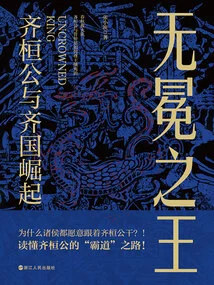
无冕之王:齐桓公与齐国崛起
Zhang Xiaoyang
The Chinese have always talked about the Five Hegemons of the Spring and Autumn Period, but what did these hegemons bring to the Chinese people? This question has never been answered. Qi Huangong's history of hegemony in the Spring and Autumn Period is undoubtedly a vivid lesson - this is an era of great powers competing for hegemony, and its political landscape is the same as today. All great powers are working tirelessly for hegemony. Which one of economy, military, culture, morality and system is the key to the rise of a great power? Overlord Qi Huan will explain the meaning of "overlord" and teach us an interesting lesson. This book describes the life of Duke Huan of Qi, the first overlord of the Spring and Autumn Period. It tells how he won the throne, used Guan Zhong in an important position, worked hard to govern, respected the king and rejected the barbarians, and united the nine princes, making Qi a dominant country, which greatly changed the structure of China at that time and had a profound impact on later generations.
The Chinese have always talked about the Five Hegemons of the Spring and Autumn Period, but what did these hegemons bring to the Chinese people? This question has never been answered. Qi Huangong's history of hegemony in the Spring and Autumn Period is undoubtedly a vivid lesson - this is an era of great powers competing for hegemony, and its political landscape is the same as today. All great powers are working tirelessly for hegemony. Which one of economy, military, culture, morality and system is the key to the rise of a great power? Overlord Qi Huan will explain the meaning of "overlord" and teach us an interesting lesson. This book describes the life of Duke Huan of Qi, the first overlord of the Spring and Autumn Period. It tells how he won the throne, used Guan Zhong in an important position, worked hard to govern, respected the king and rejected the barbarians, and united the nine princes, making Qi a dominant country, which greatly changed the structure of China at that time and had a profound impact on later generations.
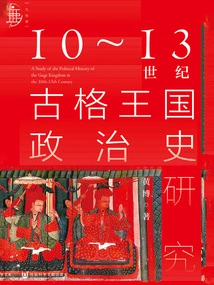
10~13世纪古格王国政治史研究
Huang Bo
This book mainly discusses the early history of the "Guge Kingdom" established in western Tibet. The whole book uses historical methods and combines the relevant results of archaeology, religion, and ethnology. Based on the accurate and rich historical facts of the Guge Kingdom from the 10th to the 13th century, the book analyzes the basic issues in the history of the political and religious relations of the Guge Kingdom during this period from the perspective of political culture and political system. Taking the interaction patterns of various major events in the political and religious life of the Guge Kingdom from the 10th to 13th centuries as clues, this paper examines the era characteristics, specific trends and key links of the political and religious relations in the Guge Kingdom at each stage, and reveals the specific evolution of the power relationship between secular political forces and religious sectarian forces in Tibetan society from the 10th to 13th centuries.
This book mainly discusses the early history of the "Guge Kingdom" established in western Tibet. The whole book uses historical methods and combines the relevant results of archaeology, religion, and ethnology. Based on the accurate and rich historical facts of the Guge Kingdom from the 10th to the 13th century, the book analyzes the basic issues in the history of the political and religious relations of the Guge Kingdom during this period from the perspective of political culture and political system. Taking the interaction patterns of various major events in the political and religious life of the Guge Kingdom from the 10th to 13th centuries as clues, this paper examines the era characteristics, specific trends and key links of the political and religious relations in the Guge Kingdom at each stage, and reveals the specific evolution of the power relationship between secular political forces and religious sectarian forces in Tibetan society from the 10th to 13th centuries.
元末士人危素研究
Xiao Chaoyu
Figures of the Yuan Dynasty have always attracted academic attention, and the scholars examined in this book are representatives of this group. Wei Su (1303~1372), whose courtesy name was Taipu and whose nickname was Yunlin, was from Linchuan, Jiangxi. He is famous for his literature, but he was controversial among later generations because of his official position in the Yuan and Ming dynasties. This book discusses Wei Su's family background, life, social interactions, and cultural achievements in detail, aiming to enhance our understanding of the politics, culture, and ethnic integration of the Yuan Dynasty from a case perspective.
Figures of the Yuan Dynasty have always attracted academic attention, and the scholars examined in this book are representatives of this group. Wei Su (1303~1372), whose courtesy name was Taipu and whose nickname was Yunlin, was from Linchuan, Jiangxi. He is famous for his literature, but he was controversial among later generations because of his official position in the Yuan and Ming dynasties. This book discusses Wei Su's family background, life, social interactions, and cultural achievements in detail, aiming to enhance our understanding of the politics, culture, and ethnic integration of the Yuan Dynasty from a case perspective.
清史论丛(2019年第1辑\u002F总第37辑)
Compiled By Qing History Research Office, Institute Of Ancient History, Chinese Academy Of Social Sciences
"Qing History Series" is sponsored by the Qing History Research Office of the Institute of History, Chinese Academy of Social Sciences. It is a collection of academic papers on Qing history research at home and abroad. It was founded in 1979. This collection has wide influence at home and abroad, and is highly valued by the academic community. Its important features are concentrated research, rigorous academic style, and grasp of academic frontiers. The articles included in the book include both research articles on the critical history of the Qing Dynasty and research articles on the academic history of the Qing Dynasty. It includes both erudite Hongci research on the traditional culture of the Qing Dynasty and articles on the exchange of local Chinese and Western cultures in the Qing Dynasty.
"Qing History Series" is sponsored by the Qing History Research Office of the Institute of History, Chinese Academy of Social Sciences. It is a collection of academic papers on Qing history research at home and abroad. It was founded in 1979. This collection has wide influence at home and abroad, and is highly valued by the academic community. Its important features are concentrated research, rigorous academic style, and grasp of academic frontiers. The articles included in the book include both research articles on the critical history of the Qing Dynasty and research articles on the academic history of the Qing Dynasty. It includes both erudite Hongci research on the traditional culture of the Qing Dynasty and articles on the exchange of local Chinese and Western cultures in the Qing Dynasty.
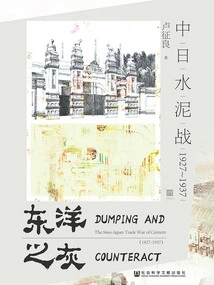
东洋之灰:中日水泥战(1927~1937)
Lu Zhengliang
The history of the world economy in the 20th century is a history of crisis transfer. In the 1920s and 1930s, China could have stayed away from the global economic depression, but the storm of crisis still blew in through the window of Japan. Overcapacity, financial constraints, failed currency reform, international balance of payments imbalances... Japan's economic problems need to be passed on to the outside world, and China has become the last resort to absorb international excess production capacity. Even cement, a bulky commodity that is not suitable for international trade, has suffered high levels of dumping. Japanese companies do not hesitate to "go bankrupt for the country" and use weapons such as exchange depreciation, shipping subsidies, and agreed tariffs to try to strangle Chinese national cement companies such as Qixin and Huashang with low-priced cement. This book is an economic history monograph with the theme of commodity dumping. It shows a battle to defend the national economy jointly staged by national cement companies, the Nanjing National Government, and various social groups under desperate circumstances.
The history of the world economy in the 20th century is a history of crisis transfer. In the 1920s and 1930s, China could have stayed away from the global economic depression, but the storm of crisis still blew in through the window of Japan. Overcapacity, financial constraints, failed currency reform, international balance of payments imbalances... Japan's economic problems need to be passed on to the outside world, and China has become the last resort to absorb international excess production capacity. Even cement, a bulky commodity that is not suitable for international trade, has suffered high levels of dumping. Japanese companies do not hesitate to "go bankrupt for the country" and use weapons such as exchange depreciation, shipping subsidies, and agreed tariffs to try to strangle Chinese national cement companies such as Qixin and Huashang with low-priced cement. This book is an economic history monograph with the theme of commodity dumping. It shows a battle to defend the national economy jointly staged by national cement companies, the Nanjing National Government, and various social groups under desperate circumstances.
清史论丛(2019年第2辑\u002F总第38辑)
Compiled By Qing History Research Office, Institute Of Ancient History, Chinese Academy Of Social Sciences
"Qing History Series" is sponsored by the Qing History Research Office of the Institute of History, Chinese Academy of Social Sciences. It is a collection of academic papers on Qing history research at home and abroad. It was founded in 1979. This collection has wide influence at home and abroad, and is highly valued by the academic community. Its important features are concentrated research, rigorous academic style, and grasp of academic frontiers. The articles included in the book include both research articles on the critical history of the Qing Dynasty and research articles on the academic history of the Qing Dynasty. It includes both erudite Hongci research on the traditional culture of the Qing Dynasty and articles on the exchange of local Chinese and Western cultures in the Qing Dynasty.
"Qing History Series" is sponsored by the Qing History Research Office of the Institute of History, Chinese Academy of Social Sciences. It is a collection of academic papers on Qing history research at home and abroad. It was founded in 1979. This collection has wide influence at home and abroad, and is highly valued by the academic community. Its important features are concentrated research, rigorous academic style, and grasp of academic frontiers. The articles included in the book include both research articles on the critical history of the Qing Dynasty and research articles on the academic history of the Qing Dynasty. It includes both erudite Hongci research on the traditional culture of the Qing Dynasty and articles on the exchange of local Chinese and Western cultures in the Qing Dynasty.
清末宣讲与演说研究
Cheng Lihong
What is the media cultural significance of the rise of speech communication in the late Qing Dynasty? What social message is revealed? These have always been areas rarely touched upon by communication historians. This book focuses on the preaching and speech activities in the late Qing Dynasty, and takes the social changes in the late Qing Dynasty as the background to explore the reasons for the rise of speech communication and the characteristics of the times contained in this media phenomenon itself. On the basis of systematically sorting out the content, appearance, characteristics and development rules of preaching and speech communication in the Qing Dynasty, through the appearance of drastic changes in these two forms of speech communication in the late Qing Dynasty, we will reveal the changes in social structure and interpersonal relationships during this period, and then explore the interactive mechanism between the evolution of communication media and the reconstruction of social structure and social relationships.
What is the media cultural significance of the rise of speech communication in the late Qing Dynasty? What social message is revealed? These have always been areas rarely touched upon by communication historians. This book focuses on the preaching and speech activities in the late Qing Dynasty, and takes the social changes in the late Qing Dynasty as the background to explore the reasons for the rise of speech communication and the characteristics of the times contained in this media phenomenon itself. On the basis of systematically sorting out the content, appearance, characteristics and development rules of preaching and speech communication in the Qing Dynasty, through the appearance of drastic changes in these two forms of speech communication in the late Qing Dynasty, we will reveal the changes in social structure and interpersonal relationships during this period, and then explore the interactive mechanism between the evolution of communication media and the reconstruction of social structure and social relationships.
明清时期陕商川藏贸易研究
Liu Liyun
This book closely follows "business roads", "merchants' gangs" and "commodities", and uses roads, inns, ancestral halls, pot houses, guild halls and other Shaanxi-Sichuan-Tibetan trade relics to listen to the different understandings of the Shaanxi-Sichuan-Tibetan trade from the government, academia and the public. Combined with literature, it examines the tea, salt, cloth, medicinal materials, tobacco, wine, and leather goods on the Shaanxi-Sichuan-Tibetan trade road. The actual business conditions of the , timber, and pawn industries reveal the profound meaning and influence of Shaanxi merchants in the Ming and Qing dynasties and their southwest trade, explain their major inspiration and experience for the joint development of contemporary southwest and northwest economies, give contemporary Shaanxi merchants new development ideas, and assist the implementation of the national "One Belt and One Road" and the high-quality economic development of Shaanxi Province.
This book closely follows "business roads", "merchants' gangs" and "commodities", and uses roads, inns, ancestral halls, pot houses, guild halls and other Shaanxi-Sichuan-Tibetan trade relics to listen to the different understandings of the Shaanxi-Sichuan-Tibetan trade from the government, academia and the public. Combined with literature, it examines the tea, salt, cloth, medicinal materials, tobacco, wine, and leather goods on the Shaanxi-Sichuan-Tibetan trade road. The actual business conditions of the , timber, and pawn industries reveal the profound meaning and influence of Shaanxi merchants in the Ming and Qing dynasties and their southwest trade, explain their major inspiration and experience for the joint development of contemporary southwest and northwest economies, give contemporary Shaanxi merchants new development ideas, and assist the implementation of the national "One Belt and One Road" and the high-quality economic development of Shaanxi Province.
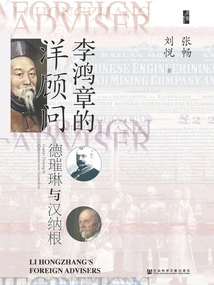
李鸿章的洋顾问:德璀琳与汉纳根
Zhang Chang Liu Yue
This book introduces the life-long activities in China of two foreign advisers to Li Hongzhang, an important minister of the late Qing Dynasty and leader of the Westernization movement: Gustav Detring and Constantin von Hanneken. As ambitious young people, under the circumstances of the self-improvement movement launched by the late Qing government, the two not only participated in China's military, economic, diplomatic, educational and other reforms at the right time, but also created a personal career in China. Through the special experiences of two people in China, this book presents the overall situation of foreign expatriates in China and analyzes their role in China's modernization.
This book introduces the life-long activities in China of two foreign advisers to Li Hongzhang, an important minister of the late Qing Dynasty and leader of the Westernization movement: Gustav Detring and Constantin von Hanneken. As ambitious young people, under the circumstances of the self-improvement movement launched by the late Qing government, the two not only participated in China's military, economic, diplomatic, educational and other reforms at the right time, but also created a personal career in China. Through the special experiences of two people in China, this book presents the overall situation of foreign expatriates in China and analyzes their role in China's modernization.
南开史学(2020年第1期\u002F总第29期)
Editor-in-chief Jiang Pei
In 1980, the History Department of Nankai University founded "Nankai History", which is quite prestigious in the academic world. Later ceased publication. This reissue focuses on ancient Chinese history, modern Chinese history, and world history, supplemented by archeology and cultural relics research. It mainly publishes original and cutting-edge papers, as well as book reviews and notes on reading history. This journal emphasizes "Nankai history" as its main feature, highlights the research style of "practical learning", and uses a research method that combines social history and intellectual history to drive changes in research fields and topics, which has distinctive Nankai characteristics.
In 1980, the History Department of Nankai University founded "Nankai History", which is quite prestigious in the academic world. Later ceased publication. This reissue focuses on ancient Chinese history, modern Chinese history, and world history, supplemented by archeology and cultural relics research. It mainly publishes original and cutting-edge papers, as well as book reviews and notes on reading history. This journal emphasizes "Nankai history" as its main feature, highlights the research style of "practical learning", and uses a research method that combines social history and intellectual history to drive changes in research fields and topics, which has distinctive Nankai characteristics.
吴越国与吴越钱氏研究
Hu Yaofei
This book is divided into five parts. The introduction sorts out the current status of research on the Wuyue Kingdom and Wuyue Qian family in the past twenty years; the military section discusses the importance of Huzhou, Suzhou, and Fuzhou to Wuyue Kingdom's land territory during the Five Dynasties of Wuyue Kingdom, as well as Wuyue Kingdom's defense strategy for the three states; the literature section chronologically analyzes the poems and essays of Qian Liu, King Wusu of Wuyue Kingdom, and the Zhongxun King of Wuyue Qian Family in Wuyue Kingdom and Two Song Dynasties. It sorted out the writings of the branch, and examined the inscriptions of the Wuyue Qian family handed down and unearthed during the Wuyue Kingdom and the Two Song Dynasties; the character editor first connected the lineage of the Wuyue Qian family in the Wuyue Kingdom and the Wuyue Qian family in the two Song Dynasties in reliable historical materials, and then chronicled the life historical materials of Qian Weiyan, a descendant of the Wuyue Qian family and the privy envoy of the Northern Song Dynasty; and finally attached a catalog of treatises on the study of the Wuyue Kingdom and the Wuyue Qian family over the past century.
This book is divided into five parts. The introduction sorts out the current status of research on the Wuyue Kingdom and Wuyue Qian family in the past twenty years; the military section discusses the importance of Huzhou, Suzhou, and Fuzhou to Wuyue Kingdom's land territory during the Five Dynasties of Wuyue Kingdom, as well as Wuyue Kingdom's defense strategy for the three states; the literature section chronologically analyzes the poems and essays of Qian Liu, King Wusu of Wuyue Kingdom, and the Zhongxun King of Wuyue Qian Family in Wuyue Kingdom and Two Song Dynasties. It sorted out the writings of the branch, and examined the inscriptions of the Wuyue Qian family handed down and unearthed during the Wuyue Kingdom and the Two Song Dynasties; the character editor first connected the lineage of the Wuyue Qian family in the Wuyue Kingdom and the Wuyue Qian family in the two Song Dynasties in reliable historical materials, and then chronicled the life historical materials of Qian Weiyan, a descendant of the Wuyue Qian family and the privy envoy of the Northern Song Dynasty; and finally attached a catalog of treatises on the study of the Wuyue Kingdom and the Wuyue Qian family over the past century.
民国研究(2019年秋季号\u002F总第36辑)
Editor-in-chief Zhu Qingbao
"Republic of China Studies" is an academic special issue sponsored by the Research Center for the History of the Republic of China at Nanjing University, a key research base in the humanities and social sciences of the Ministry of Education. It mainly publishes research articles on relevant historical facts and theories about the Republic of China period (1912-1949). It is now a CSSCI source publication. This volume is the 36th in total, with a total of 19 articles divided into five columns: politics, economy, culture, and reviews of people and achievements.
"Republic of China Studies" is an academic special issue sponsored by the Research Center for the History of the Republic of China at Nanjing University, a key research base in the humanities and social sciences of the Ministry of Education. It mainly publishes research articles on relevant historical facts and theories about the Republic of China period (1912-1949). It is now a CSSCI source publication. This volume is the 36th in total, with a total of 19 articles divided into five columns: politics, economy, culture, and reviews of people and achievements.
信息与权力:宋代的文书行政
Li Quande
Ruling the world with documents is a prominent feature of the ancient Chinese state bureaucracy, and the differences in information communication and processing mechanisms in different periods also reveal their different era personalities and power operation methods. The clerical administration of the Song Dynasty relied on diversified information communication and a developed clerical system, and the depth it could achieve was far beyond that of previous generations. This book combs through the multiple channels of information communication that coexisted and competed with each other in the Song Dynasty. It analyzes the power operation mechanism under the political structure of the scholar-bureaucrats in the Song Dynasty starting from the daily administrative documents of the emperor and ministers such as imperial approval, provincial letters, and approval petitions, as well as the refutation system for decision-making behaviors.
Ruling the world with documents is a prominent feature of the ancient Chinese state bureaucracy, and the differences in information communication and processing mechanisms in different periods also reveal their different era personalities and power operation methods. The clerical administration of the Song Dynasty relied on diversified information communication and a developed clerical system, and the depth it could achieve was far beyond that of previous generations. This book combs through the multiple channels of information communication that coexisted and competed with each other in the Song Dynasty. It analyzes the power operation mechanism under the political structure of the scholar-bureaucrats in the Song Dynasty starting from the daily administrative documents of the emperor and ministers such as imperial approval, provincial letters, and approval petitions, as well as the refutation system for decision-making behaviors.
矿政:清代国家治理的逻辑与困境
Wen Chunlai
The maintenance of a country depends on the extraction of resources. The methods of resource extraction correspond to different national governance models. Traditional China had a vast territory with various regional differences. Constrained by the backward transportation, rudimentary technical means and information capabilities at that time, how did the rulers draw resources across the country? This book starts with a number of variables that affect the country's resource extraction model, such as importance, scarcity, transaction costs, social effects, the country's bargaining power and multi-subjectivity. Combined with the characteristics of mining costs increasing over time, it discusses the Qing Dynasty's mineral resource extraction situation through rich and detailed historical materials. While revealing the Qing Dynasty's mining policy model and its inherent flaws, it also discusses several important principles and aspects of national governance at that time. Based on the above empirical facts, this book further connects the Ming and Qing dynasties' acquisition patterns of important materials such as salt, silk, porcelain, and horses. Combined with the general background of national transformation from the 15th to the 18th century, this book reveals the logic and dilemma of national governance in the Qing Dynasty by elucidating concepts such as "central comprehensive decision-making mechanism," "suspicious decision-making," "administrative information creation," and "case-based principles."
The maintenance of a country depends on the extraction of resources. The methods of resource extraction correspond to different national governance models. Traditional China had a vast territory with various regional differences. Constrained by the backward transportation, rudimentary technical means and information capabilities at that time, how did the rulers draw resources across the country? This book starts with a number of variables that affect the country's resource extraction model, such as importance, scarcity, transaction costs, social effects, the country's bargaining power and multi-subjectivity. Combined with the characteristics of mining costs increasing over time, it discusses the Qing Dynasty's mineral resource extraction situation through rich and detailed historical materials. While revealing the Qing Dynasty's mining policy model and its inherent flaws, it also discusses several important principles and aspects of national governance at that time. Based on the above empirical facts, this book further connects the Ming and Qing dynasties' acquisition patterns of important materials such as salt, silk, porcelain, and horses. Combined with the general background of national transformation from the 15th to the 18th century, this book reveals the logic and dilemma of national governance in the Qing Dynasty by elucidating concepts such as "central comprehensive decision-making mechanism," "suspicious decision-making," "administrative information creation," and "case-based principles."
从“理想”到“现实”:美国对伪满洲国政策的演变(1931—1941)
Duan Yongfu
This book examines the evolution of U. S. Policy toward the puppet Manchukuo from the September 18th Incident to the Pearl Harbor incident. The book uses archival materials from China, the United States, Japan, and other parties as well as previous writings to examine a series of major historical facts about the exchanges between the United States and the Puppet Manchukuo one by one, clarifying many details of the exchanges between the two parties, in order to restore the true historical picture as much as possible, and place it in the overall investigation of the United States' Far East strategy.
This book examines the evolution of U. S. Policy toward the puppet Manchukuo from the September 18th Incident to the Pearl Harbor incident. The book uses archival materials from China, the United States, Japan, and other parties as well as previous writings to examine a series of major historical facts about the exchanges between the United States and the Puppet Manchukuo one by one, clarifying many details of the exchanges between the two parties, in order to restore the true historical picture as much as possible, and place it in the overall investigation of the United States' Far East strategy.
Beliefs and Customs: Taoism in the Tang Dynasty from the Perspective of Social and Cultural History
History信仰与习俗:社会文化史视野下的唐代道教
Wang Yongping
Taoism was an important social and cultural phenomenon in the history of the Tang Dynasty, which had a profound impact on people's daily life. Therefore, in order to have a good understanding and grasp of the history of the Tang Dynasty, we should have a deep understanding of the role of Taoism in social life at that time. This book selects and analyzes Taoism among gods and Tang Dynasty society, Taoism and women in the Tang Dynasty, the religious and secular life of Taoist priests, Taoist magic and folk customs, Taoist gods and folk beliefs, Taoist imprints in seasonal customs, and the interaction and integration between Confucianism, Buddhism, and Taoism. It attempts to see Taoism in the Tang Dynasty from the perspective of social and cultural history, and to give a more objective explanation of the importance of Taoism in the social life of the Tang Dynasty.
Taoism was an important social and cultural phenomenon in the history of the Tang Dynasty, which had a profound impact on people's daily life. Therefore, in order to have a good understanding and grasp of the history of the Tang Dynasty, we should have a deep understanding of the role of Taoism in social life at that time. This book selects and analyzes Taoism among gods and Tang Dynasty society, Taoism and women in the Tang Dynasty, the religious and secular life of Taoist priests, Taoist magic and folk customs, Taoist gods and folk beliefs, Taoist imprints in seasonal customs, and the interaction and integration between Confucianism, Buddhism, and Taoism. It attempts to see Taoism in the Tang Dynasty from the perspective of social and cultural history, and to give a more objective explanation of the importance of Taoism in the social life of the Tang Dynasty.
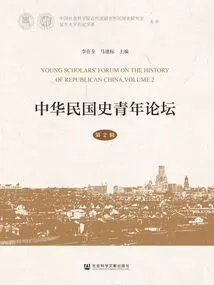
中华民国史青年论坛(第2辑)
Li Zaiquan Editor-in-chief Ma Jianbiao
This book is a collection of the results of the "Second Youth Forum on the History of the Republic of China". It is divided into three parts: "History of the Early Republic of China", "Wartime China" and "Academic and Society". It involves the official almanac of the Republic of China, the image of the May Fourth martyrs, the Anti-Japanese War, cities and small towns, etc. The "Youth Forum on the History of the Republic of China" advocates the study of "the history of the Republic of China", covering all aspects of the Republic of China period. The forum not only encourages young scholars to research and think about major issues related to the trend of China's modern history and the destiny of the country, but also focuses on selecting papers that are intended to open up new fields and study issues that have not been paid enough attention by previous generations. It also advocates young scholars to introduce new perspectives and new methods to inject new thinking and vitality into the discipline of the history of the Republic of China.
This book is a collection of the results of the "Second Youth Forum on the History of the Republic of China". It is divided into three parts: "History of the Early Republic of China", "Wartime China" and "Academic and Society". It involves the official almanac of the Republic of China, the image of the May Fourth martyrs, the Anti-Japanese War, cities and small towns, etc. The "Youth Forum on the History of the Republic of China" advocates the study of "the history of the Republic of China", covering all aspects of the Republic of China period. The forum not only encourages young scholars to research and think about major issues related to the trend of China's modern history and the destiny of the country, but also focuses on selecting papers that are intended to open up new fields and study issues that have not been paid enough attention by previous generations. It also advocates young scholars to introduce new perspectives and new methods to inject new thinking and vitality into the discipline of the history of the Republic of China.
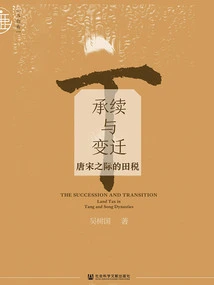
承续与变迁:唐宋之际的田税
Wu Shuguo
This book studies the land tax system during the Tang and Song Dynasties along three levels: the evolution of the system structure, the adjustment of the system implementation mechanism, and the impact of system changes. Among them, the evolution of institutional structure discusses the land tax and additional tax in the Tang and Song Dynasties from two perspectives: vertical and horizontal. The system implementation mechanism reveals the adjustment of land tax collection and management. The impact of system changes mainly analyzes the impact of changes in the land tax system on national finance, agricultural economy and farmers' lives. In the research process, we first focus on the study of the process of changes in the land tax system, and strive to grasp and capture the key policies, systems and nodes that lead to system changes. Secondly, we focus on the relationship between the land tax system and other systems in the process of continuous reconstruction and reshaping, showing the multiple dynamics of institutional change.
This book studies the land tax system during the Tang and Song Dynasties along three levels: the evolution of the system structure, the adjustment of the system implementation mechanism, and the impact of system changes. Among them, the evolution of institutional structure discusses the land tax and additional tax in the Tang and Song Dynasties from two perspectives: vertical and horizontal. The system implementation mechanism reveals the adjustment of land tax collection and management. The impact of system changes mainly analyzes the impact of changes in the land tax system on national finance, agricultural economy and farmers' lives. In the research process, we first focus on the study of the process of changes in the land tax system, and strive to grasp and capture the key policies, systems and nodes that lead to system changes. Secondly, we focus on the relationship between the land tax system and other systems in the process of continuous reconstruction and reshaping, showing the multiple dynamics of institutional change.
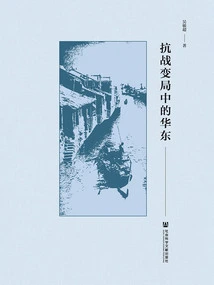
抗战变局中的华东
Wu Minchao
In the changing situation of the Anti-Japanese War, East China was in a complex state where frontal battlefields and battlefields behind enemy lines coexisted, and the Wang puppet regime, the Kuomintang regime, and the CCP's anti-Japanese base area regimes coexisted. This book uses a large number of first-hand archives from both sides of the Taiwan Strait to demonstrate the rise, development and persistence of the Chinese Communist Party's anti-Japanese forces behind enemy lines in East China from all aspects of military history, political history and socio-economic history, as well as the rise of the Kuomintang's guerrilla warfare in the early stages of the comprehensive resistance war and the smuggling, exhaustion and fragmentation in the middle and later stages of the war.
In the changing situation of the Anti-Japanese War, East China was in a complex state where frontal battlefields and battlefields behind enemy lines coexisted, and the Wang puppet regime, the Kuomintang regime, and the CCP's anti-Japanese base area regimes coexisted. This book uses a large number of first-hand archives from both sides of the Taiwan Strait to demonstrate the rise, development and persistence of the Chinese Communist Party's anti-Japanese forces behind enemy lines in East China from all aspects of military history, political history and socio-economic history, as well as the rise of the Kuomintang's guerrilla warfare in the early stages of the comprehensive resistance war and the smuggling, exhaustion and fragmentation in the middle and later stages of the war.
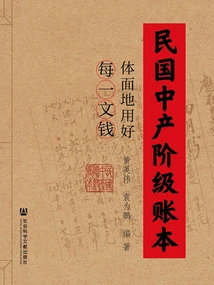
民国中产阶级账本:体面地用好每一文钱
Compiled By Huang Yingwei And Yuan Weipeng
This book is the daily income and expenditure account book of a middle-class warehouse manager in Suzhou, Anhui Province, and the author's detailed research and analysis of the account book. This article provides an in-depth analysis of the account owner's daily income and expenditure and several important social and economic activities between 1936 and 1942, including family illness, death, funerals, sacrificial activities, going to the countryside to collect rent, book purchasing and reading, social etiquette, wartime contingency and love. National donations, etc., From which we can see through the cultural character of the owner of the account book, which is a mixture of old and new and a blend of East and West. His style of behavior not only reflects high economic rationality, but also has a profound imprint of traditional Chinese culture; it can also be seen that the relationship between urban and rural areas in modern China has a distinct dualistic characteristic.
This book is the daily income and expenditure account book of a middle-class warehouse manager in Suzhou, Anhui Province, and the author's detailed research and analysis of the account book. This article provides an in-depth analysis of the account owner's daily income and expenditure and several important social and economic activities between 1936 and 1942, including family illness, death, funerals, sacrificial activities, going to the countryside to collect rent, book purchasing and reading, social etiquette, wartime contingency and love. National donations, etc., From which we can see through the cultural character of the owner of the account book, which is a mixture of old and new and a blend of East and West. His style of behavior not only reflects high economic rationality, but also has a profound imprint of traditional Chinese culture; it can also be seen that the relationship between urban and rural areas in modern China has a distinct dualistic characteristic.
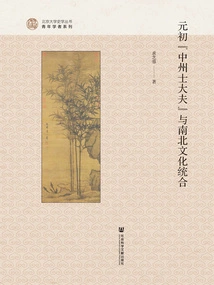
元初“中州士大夫”与南北文化统合
Asking For Zhirong
The great unification of the Yuan Dynasty ended China's nearly four hundred years of division, but achieving true integration in terms of culture and psychological identity is a more arduous historical task. The research approach of this book spans literature and history, and puts forward the concept of "Zhongzhou scholar-officials", revealing the initiative that the north once had in the development of Chinese culture after the Tang Dynasty, and basically clarifying the basic changes in the cultural lineage between the northern and southern Han Dynasty from the mid-Jin Dynasty to the mid-Yuan Dynasty. This clue analyzes the thinking, debate, exchange and integration of the northern and southern scholar elites around "literary" and "Tao", and reveals from one side how the Yuan Dynasty realized the transformation of the national identity of the scholar elites in more than half a century after completing political unification.
The great unification of the Yuan Dynasty ended China's nearly four hundred years of division, but achieving true integration in terms of culture and psychological identity is a more arduous historical task. The research approach of this book spans literature and history, and puts forward the concept of "Zhongzhou scholar-officials", revealing the initiative that the north once had in the development of Chinese culture after the Tang Dynasty, and basically clarifying the basic changes in the cultural lineage between the northern and southern Han Dynasty from the mid-Jin Dynasty to the mid-Yuan Dynasty. This clue analyzes the thinking, debate, exchange and integration of the northern and southern scholar elites around "literary" and "Tao", and reveals from one side how the Yuan Dynasty realized the transformation of the national identity of the scholar elites in more than half a century after completing political unification.
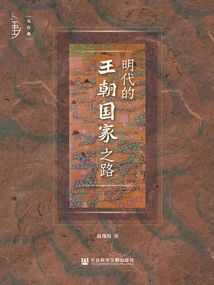
明代的王朝国家之路
Zhao Xianhai
This book is a large work, covering the author's thoughts on the political history along the Great Wall of the Ming Dynasty for at least ten years. The book focuses on the inside and outside of the Great Wall, describing the political and military structure of the Ming Dynasty in a clear and detailed manner. The author puts forward a number of novel concepts and viewpoints in the book, such as the "introverted dynastic state" in the early Hongwu period, the "differential order territory" of the dynastic state in the Hongwu period, the "domestic-oriented" orientation and the "shrinking dynastic state" in the Renxuan period, etc. From the perspective of the entire history and the comparison between China and the West, the geopolitics of the Ming Dynasty has a very grand pattern and perspective. This book contains extremely detailed historical materials. Taking "Records of the Ming Dynasty" as an example, it has basically digested and absorbed all the information on related topics.
This book is a large work, covering the author's thoughts on the political history along the Great Wall of the Ming Dynasty for at least ten years. The book focuses on the inside and outside of the Great Wall, describing the political and military structure of the Ming Dynasty in a clear and detailed manner. The author puts forward a number of novel concepts and viewpoints in the book, such as the "introverted dynastic state" in the early Hongwu period, the "differential order territory" of the dynastic state in the Hongwu period, the "domestic-oriented" orientation and the "shrinking dynastic state" in the Renxuan period, etc. From the perspective of the entire history and the comparison between China and the West, the geopolitics of the Ming Dynasty has a very grand pattern and perspective. This book contains extremely detailed historical materials. Taking "Records of the Ming Dynasty" as an example, it has basically digested and absorbed all the information on related topics.
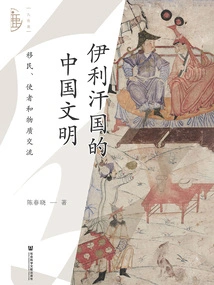
伊利汗国的中国文明:移民、使者和物质交流
Chen Chunxiao
In the 13th and 14th centuries, the Yuan Dynasty and the Ilkhanate under Mongolian rule had close relations and frequent exchanges. During this period, Chinese civilization had a strong influence on Iran. This book focuses on the immigrant groups from China who moved westward to Iran during the Mongol and Yuan Dynasties, as well as the envoys between the Yuan Dynasty and the Ilkhanate, and examines their contributions to the spread of Chinese civilization to the west. This book also focuses on the spread of Chinese material culture in Iran, revealing that the influence of Chinese civilization is more reflected in the level of material civilization, and that "Made in China" contributed greatly to improving the quality of life of people in the ancient world.
In the 13th and 14th centuries, the Yuan Dynasty and the Ilkhanate under Mongolian rule had close relations and frequent exchanges. During this period, Chinese civilization had a strong influence on Iran. This book focuses on the immigrant groups from China who moved westward to Iran during the Mongol and Yuan Dynasties, as well as the envoys between the Yuan Dynasty and the Ilkhanate, and examines their contributions to the spread of Chinese civilization to the west. This book also focuses on the spread of Chinese material culture in Iran, revealing that the influence of Chinese civilization is more reflected in the level of material civilization, and that "Made in China" contributed greatly to improving the quality of life of people in the ancient world.
中日历史认识共同研究报告(战前篇):中日战争何以爆发
Yu Tiejun Editor-in-chief Wang Chaoguang
In March 2016, the Institute of International Strategic Studies at Peking University and the Sasakawa Peace Foundation of Japan jointly launched the research project "Historical Understanding and the Future of Sino-Japanese Relations-Strategic Dialogue between Chinese and Japanese Intellectuals", striving to jointly examine the history of Sino-Japanese relations through Chinese and Japanese scholars and discuss the future of Sino-Japanese relations. A certain consensus was reached on the causes and background of the Sino-Japanese War from 1931 to 1945, as well as the development of Sino-Japanese relations after the war. Then, based on the consensus of both sides on historical understanding, the practical problems faced by the two countries were sorted out, and future Sino-Japanese cooperative relations were discussed. This book is a compilation of the research results of the first phase of the project, including seven articles written by Chinese scholars and eight articles written by Japanese scholars.
In March 2016, the Institute of International Strategic Studies at Peking University and the Sasakawa Peace Foundation of Japan jointly launched the research project "Historical Understanding and the Future of Sino-Japanese Relations-Strategic Dialogue between Chinese and Japanese Intellectuals", striving to jointly examine the history of Sino-Japanese relations through Chinese and Japanese scholars and discuss the future of Sino-Japanese relations. A certain consensus was reached on the causes and background of the Sino-Japanese War from 1931 to 1945, as well as the development of Sino-Japanese relations after the war. Then, based on the consensus of both sides on historical understanding, the practical problems faced by the two countries were sorted out, and future Sino-Japanese cooperative relations were discussed. This book is a compilation of the research results of the first phase of the project, including seven articles written by Chinese scholars and eight articles written by Japanese scholars.
南开史学(2019年第2期\u002F总第28期)
Editor-in-chief Jiang Pei
In 1980, the History Department of Nankai University founded "Nankai History", which is quite prestigious in the academic world. Later ceased publication. This reissue focuses on ancient Chinese history, modern Chinese history, and world history, supplemented by archeology and cultural relics research. It mainly publishes original and cutting-edge papers, as well as book reviews and notes on reading history. This journal emphasizes "Nankai history" as its main feature, highlights the research style of "practical learning", and uses a research method that combines social history and intellectual history to drive changes in research fields and topics, which has distinctive Nankai characteristics.
In 1980, the History Department of Nankai University founded "Nankai History", which is quite prestigious in the academic world. Later ceased publication. This reissue focuses on ancient Chinese history, modern Chinese history, and world history, supplemented by archeology and cultural relics research. It mainly publishes original and cutting-edge papers, as well as book reviews and notes on reading history. This journal emphasizes "Nankai history" as its main feature, highlights the research style of "practical learning", and uses a research method that combines social history and intellectual history to drive changes in research fields and topics, which has distinctive Nankai characteristics.
“白银时代”的落地:明代货币白银化与银钱并行格局的形成
Qiu Yongzhi
The formation and development of the "Silver Age" in Chinese history lasted for more than eight centuries. Each stage has attracted many discussions, especially the Ming and Qing Dynasties. The silvering of currency in the Ming Dynasty triggered the transformation of monetary institutions, forms, and systems. It not only shook and ended the dominant position of national coinage and laid the foundation for circulation in the following five centuries, but also changed the way fiscal operations were conducted and shaped an alternative relationship between the state and the market. This book adopts a comprehensive monetary history framework to analyze the historical foundation, institutional causes, development process, and pattern establishment of monetary silvering in the Ming Dynasty. It strives to reveal the changes in banknotes, money, and silver and the twists and turns of the "Silver Age" from a long-term perspective.
The formation and development of the "Silver Age" in Chinese history lasted for more than eight centuries. Each stage has attracted many discussions, especially the Ming and Qing Dynasties. The silvering of currency in the Ming Dynasty triggered the transformation of monetary institutions, forms, and systems. It not only shook and ended the dominant position of national coinage and laid the foundation for circulation in the following five centuries, but also changed the way fiscal operations were conducted and shaped an alternative relationship between the state and the market. This book adopts a comprehensive monetary history framework to analyze the historical foundation, institutional causes, development process, and pattern establishment of monetary silvering in the Ming Dynasty. It strives to reveal the changes in banknotes, money, and silver and the twists and turns of the "Silver Age" from a long-term perspective.
校书与修史:东观与东汉帝制文化整合
Zhang Zongpin
This book attempts to focus on Dongguan and explore the inner connection between the activities of compiling books and compiling history during the Eastern Han Dynasty and the cultural construction of the imperial country. As the core institution of the national cultural undertakings of the Eastern Han Dynasty, Dongguan had a greater influence on later generations in three ways: first, the relevant school officials participated in the Baihu Temple Conference and wrote the "White Tiger Theory of Tongde", completing the theoretical construction of the official ideology of the imperial country; second, correcting the text of the scriptures and promulgating them to the world; third, gathering Confucian scholars to compile the history of the country. The text of scriptures and their interpretation, as well as the writing of the history of this dynasty, began to rise from individual behavior to the collective administrative operation of the country. This change weakened the personal authority of scribes and historians and helped to construct the legal "political system" of the Eastern Han Dynasty. Dongguan is actually an integrated platform for the country to deal with many aspects of knowledge, education, and ideological issues. The evolution of academics in the Eastern Han Dynasty is basically consistent with the process of cultural integration in imperial countries at that time.
This book attempts to focus on Dongguan and explore the inner connection between the activities of compiling books and compiling history during the Eastern Han Dynasty and the cultural construction of the imperial country. As the core institution of the national cultural undertakings of the Eastern Han Dynasty, Dongguan had a greater influence on later generations in three ways: first, the relevant school officials participated in the Baihu Temple Conference and wrote the "White Tiger Theory of Tongde", completing the theoretical construction of the official ideology of the imperial country; second, correcting the text of the scriptures and promulgating them to the world; third, gathering Confucian scholars to compile the history of the country. The text of scriptures and their interpretation, as well as the writing of the history of this dynasty, began to rise from individual behavior to the collective administrative operation of the country. This change weakened the personal authority of scribes and historians and helped to construct the legal "political system" of the Eastern Han Dynasty. Dongguan is actually an integrated platform for the country to deal with many aspects of knowledge, education, and ideological issues. The evolution of academics in the Eastern Han Dynasty is basically consistent with the process of cultural integration in imperial countries at that time.
民国研究(2018年秋季号\u002F总第34辑)
Editor-in-chief Zhu Qingbao
"Republic of China Studies" is an academic special issue sponsored by the Research Center for the History of the Republic of China at Nanjing University, a key research base in the humanities and social sciences of the Ministry of Education. It mainly publishes research articles on relevant historical facts and theories about the Republic of China period (1912-1949). It is now a CSSCI source publication. The "Anti-Japanese War", "Economy and Society", "Nanjing University History Research", "Urban History Research", "Special Research", "Academic Review", "Book Review" and "Historical Data Window" in this volume (the 34th volume) are more distinctive. The relevant papers can be used as reference for academic circles, and other articles are also of considerable academic value.
"Republic of China Studies" is an academic special issue sponsored by the Research Center for the History of the Republic of China at Nanjing University, a key research base in the humanities and social sciences of the Ministry of Education. It mainly publishes research articles on relevant historical facts and theories about the Republic of China period (1912-1949). It is now a CSSCI source publication. The "Anti-Japanese War", "Economy and Society", "Nanjing University History Research", "Urban History Research", "Special Research", "Academic Review", "Book Review" and "Historical Data Window" in this volume (the 34th volume) are more distinctive. The relevant papers can be used as reference for academic circles, and other articles are also of considerable academic value.
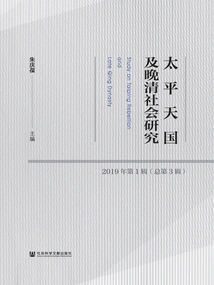
太平天国及晚清社会研究(2019年第1辑\u002F总第3辑)
Editor-in-chief Zhu Qingbao
"Research on Taiping Rebellion and Late Qing Society" is an academic special issue sponsored by the China Taiping Rebellion History Research Association, a national first-level society approved by the Ministry of Civil Affairs. This journal mainly publishes research articles on relevant historical facts and theories about the Taiping Heavenly Kingdom and the late Qing Dynasty (1840-1911). Its purpose is to maintain a rigorous and solid academic style and expand the breadth and depth of research on the Taiping Heavenly Kingdom and the late Qing history with objective and rational research concepts. This collection contains a total of 20 articles, divided into three columns: "Research on the History of the Taiping Rebellion", "Research on the History of the Late Qing Dynasty" and "Review·Book Review".
"Research on Taiping Rebellion and Late Qing Society" is an academic special issue sponsored by the China Taiping Rebellion History Research Association, a national first-level society approved by the Ministry of Civil Affairs. This journal mainly publishes research articles on relevant historical facts and theories about the Taiping Heavenly Kingdom and the late Qing Dynasty (1840-1911). Its purpose is to maintain a rigorous and solid academic style and expand the breadth and depth of research on the Taiping Heavenly Kingdom and the late Qing history with objective and rational research concepts. This collection contains a total of 20 articles, divided into three columns: "Research on the History of the Taiping Rebellion", "Research on the History of the Late Qing Dynasty" and "Review·Book Review".
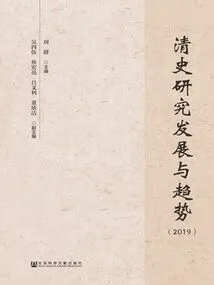
清史研究发展与趋势(2019)
Editor-in-chief Zhou Qun
This book focuses on the development trend of domestic Qing history research in 2019. The papers included are all published academic papers, and the authors come from different units such as the Chinese Academy of History, the Institute of Qing History at Renmin University of China, and the School of History and Culture at Minzu University of China. These papers are intended to demonstrate the "Chineseness" of the Qing Dynasty, answer questions such as "what is China" and "where are the borders of China" in history, prove that China has been a unified multi-ethnic country since ancient times, and refute the erroneous views led by the American "New Qing History" that "dynasties ruled by ethnic minorities in Chinese history are not China" and "north of the Great Wall Line is not China".
This book focuses on the development trend of domestic Qing history research in 2019. The papers included are all published academic papers, and the authors come from different units such as the Chinese Academy of History, the Institute of Qing History at Renmin University of China, and the School of History and Culture at Minzu University of China. These papers are intended to demonstrate the "Chineseness" of the Qing Dynasty, answer questions such as "what is China" and "where are the borders of China" in history, prove that China has been a unified multi-ethnic country since ancient times, and refute the erroneous views led by the American "New Qing History" that "dynasties ruled by ethnic minorities in Chinese history are not China" and "north of the Great Wall Line is not China".
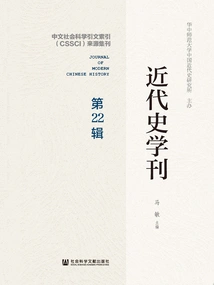
近代史学刊(第22辑)
Editor-in-chief Ma Min
"Journal of Modern History" is a professional academic journal sponsored by the Institute of Modern History of China at Central China Normal University, a key research base for the humanities and social sciences of the Ministry of Education. It publishes the latest research results and information in the field of modern Chinese history from 1840 to 1949, including special discussions, research papers, research reviews, book reviews, historical factual examinations, scholars' letters, academic information, etc. This book is the 22nd volume and is divided into six parts: the centenary commemoration of the May 4th Movement, modern Chinese universities and society, modern Chinese religious and social history, special research, book reviews, and conference reviews.
"Journal of Modern History" is a professional academic journal sponsored by the Institute of Modern History of China at Central China Normal University, a key research base for the humanities and social sciences of the Ministry of Education. It publishes the latest research results and information in the field of modern Chinese history from 1840 to 1949, including special discussions, research papers, research reviews, book reviews, historical factual examinations, scholars' letters, academic information, etc. This book is the 22nd volume and is divided into six parts: the centenary commemoration of the May 4th Movement, modern Chinese universities and society, modern Chinese religious and social history, special research, book reviews, and conference reviews.
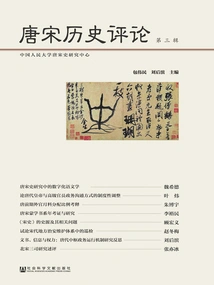
唐宋历史评论(第3辑)
Bao Weimin Editor-in-chief Liu Houbin
"Tang and Song History Review" is a professional historical journal sponsored by the School of History of Renmin University of China, focusing on the study of Tang and Song history. It features special research and commentary on the history of the Tang and Song Dynasties. It mainly publishes problem-oriented research papers on the history of the Tang and Song Dynasties, as well as special reviews and book reviews with the purpose of sorting out the academic history of Tang and Song studies. Article categories include essays, book reviews, prefaces and postscripts, historical reading notes, etc.
"Tang and Song History Review" is a professional historical journal sponsored by the School of History of Renmin University of China, focusing on the study of Tang and Song history. It features special research and commentary on the history of the Tang and Song Dynasties. It mainly publishes problem-oriented research papers on the history of the Tang and Song Dynasties, as well as special reviews and book reviews with the purpose of sorting out the academic history of Tang and Song studies. Article categories include essays, book reviews, prefaces and postscripts, historical reading notes, etc.
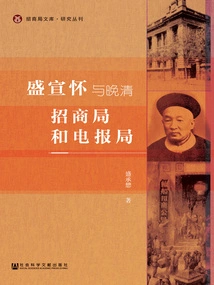
Sheng Xuanhuai and the Investment Promotion Bureau and Telegraph Bureau in the Late Qing Dynasty
History盛宣怀与晚清招商局和电报局
Sheng Chengmao
Sheng Xuanhuai founded many industries throughout his life. Among them, the ones with the longest history and the most far-reaching influence on China's modern industrial development were the Steamship Merchants Bureau and the China Telegraph General Administration. The founding and development of the Second Railway Bureau and the Electric Power Bureau marked the rise of national capitalism in modern China and played a certain role in the development and improvement of my country's military, economy, and people's livelihood at that time. This book sorts out the founding and development process of the Lun and Electric Power Bureau according to historical stages, and focuses on Sheng Xuanhuai's close relationship with the Lun and Electric Power Bureau and the important role he played in this process.
Sheng Xuanhuai founded many industries throughout his life. Among them, the ones with the longest history and the most far-reaching influence on China's modern industrial development were the Steamship Merchants Bureau and the China Telegraph General Administration. The founding and development of the Second Railway Bureau and the Electric Power Bureau marked the rise of national capitalism in modern China and played a certain role in the development and improvement of my country's military, economy, and people's livelihood at that time. This book sorts out the founding and development process of the Lun and Electric Power Bureau according to historical stages, and focuses on Sheng Xuanhuai's close relationship with the Lun and Electric Power Bureau and the important role he played in this process.
重审中国的“近代”:在思想与社会之间
Sun Jiang
Looking back at Chinese history in the past forty years, social history emerged in the first ten years, and conceptual history became prominent in the second decade. Social history explores the context behind a text, while conceptual history focuses on the language and structure of the text. This book is divided into four parts with twelve chapters. The first part examines the relationship between Manchu and Han under the rule of the Qing Dynasty. The second part combs through the introduction and reproduction of modern Western knowledge. The third part discusses the relationship between self and other inherent in "modern China" from the perspective of religion. The fourth part involves the method of historical understanding. As an empirical research monograph that interprets the outline of "modern China", this book believes that the interactive use of social history methods and conceptual history methods can be regarded as a feasible way to get rid of metaphysical entanglements.
Looking back at Chinese history in the past forty years, social history emerged in the first ten years, and conceptual history became prominent in the second decade. Social history explores the context behind a text, while conceptual history focuses on the language and structure of the text. This book is divided into four parts with twelve chapters. The first part examines the relationship between Manchu and Han under the rule of the Qing Dynasty. The second part combs through the introduction and reproduction of modern Western knowledge. The third part discusses the relationship between self and other inherent in "modern China" from the perspective of religion. The fourth part involves the method of historical understanding. As an empirical research monograph that interprets the outline of "modern China", this book believes that the interactive use of social history methods and conceptual history methods can be regarded as a feasible way to get rid of metaphysical entanglements.
Newly Compiled Cross-strait Chinese Modern History·republic of China Volume (2 Volumes in Total)
History两岸新编中国近代史·民国卷(全2册)
Editor-in-chief Wang Jianlang Huang Kewu
This is the first time that famous scholars from both sides of the Taiwan Strait have collaborated to write the history of the Republic of China. Its academic and social significance is self-evident. In the form of a special topic, the book invites Mesozoic scholars from both sides of the Taiwan Strait who are active in teaching and scientific research in related fields to write articles and compile it into the "Republic of China Volume". The first volume deals more with the politics, military, and diplomacy of the Republic of China, while the second volume focuses on the economy, society, and culture of the Republic of China. The whole book reproduces the full picture of the history of the Republic of China and the latest progress in related research. It can be said that this is the most important result of the current research on the history of the Republic of China written in Chinese.
This is the first time that famous scholars from both sides of the Taiwan Strait have collaborated to write the history of the Republic of China. Its academic and social significance is self-evident. In the form of a special topic, the book invites Mesozoic scholars from both sides of the Taiwan Strait who are active in teaching and scientific research in related fields to write articles and compile it into the "Republic of China Volume". The first volume deals more with the politics, military, and diplomacy of the Republic of China, while the second volume focuses on the economy, society, and culture of the Republic of China. The whole book reproduces the full picture of the history of the Republic of China and the latest progress in related research. It can be said that this is the most important result of the current research on the history of the Republic of China written in Chinese.
上海法租界的警察(1910—1937年)
Zhu Xiaoming
The Shanghai French Concession Police is a police agency under the direct leadership of the French Consul in Shanghai. It is an important force in maintaining French interests in Shanghai and even in China. It has the dual functions of political repression and social management. It not only has a certain impact on the development of modern Chinese politics, but also plays an indispensable and important role in shaping Shanghai's urban space and urban culture. This book mainly uses archival materials from the Archives of the French Ministry of Foreign Affairs, the French Overseas Colonial Archives, and the Shanghai Archives, and combines relevant research in French, English, and Chinese to conduct a comprehensive analysis and discussion of the origin, organizational structure, personnel composition, social management, and political suppression functions of the Shanghai French Concession Police.
The Shanghai French Concession Police is a police agency under the direct leadership of the French Consul in Shanghai. It is an important force in maintaining French interests in Shanghai and even in China. It has the dual functions of political repression and social management. It not only has a certain impact on the development of modern Chinese politics, but also plays an indispensable and important role in shaping Shanghai's urban space and urban culture. This book mainly uses archival materials from the Archives of the French Ministry of Foreign Affairs, the French Overseas Colonial Archives, and the Shanghai Archives, and combines relevant research in French, English, and Chinese to conduct a comprehensive analysis and discussion of the origin, organizational structure, personnel composition, social management, and political suppression functions of the Shanghai French Concession Police.
元大都史话
Sun Meng
"History of Yuan Dadu" shows the achievements of the Yuan Dynasty in politics, economy, culture, military system and other aspects by describing the construction, shape, layout, planning concepts, architectural features, palace customs, social management, etc. Of Yuan Dadu. The ancient Chinese capital is a microcosm of Chinese history. Through the ancient capital, a historical activity platform that integrates national political rule, economic management, cultural activities, and military command, we can explore the major history of the country in politics, economy, military, culture, etc. And the laws of development and changes they reflect. The perspective is unique and unique.
"History of Yuan Dadu" shows the achievements of the Yuan Dynasty in politics, economy, culture, military system and other aspects by describing the construction, shape, layout, planning concepts, architectural features, palace customs, social management, etc. Of Yuan Dadu. The ancient Chinese capital is a microcosm of Chinese history. Through the ancient capital, a historical activity platform that integrates national political rule, economic management, cultural activities, and military command, we can explore the major history of the country in politics, economy, military, culture, etc. And the laws of development and changes they reflect. The perspective is unique and unique.