Library
Browse and search books
2,273 novels found
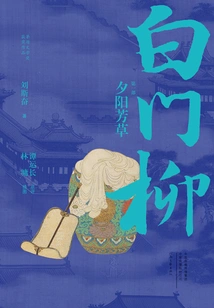
White Gate Willow (part 1): Sunset Grass
General Fiction白门柳(第一部):夕阳芳草
Liu Sifen
"Sunset Grass" is the first part of the long historical novel "White Gate Willow". This book describes how the Qing army and the peasant uprising army were eyeing each other, internal party disputes continued, and the moment before the building was about to collapse, the scholars and celebrities in Jiangnan were still struggling for their ideals and desires. The author uses realism to depict the appearance of the literati and bureaucratic class and paints a colorful historical panorama. In the fifteenth year of Chongzhen's reign, peasant uprisings broke out, and the Qing army threatened Shanhaiguan. In the rear area of Nanjing, the struggle between the Donglin Party and the Eunuch Party continued. Qian Qianyi, the former right minister of the Ministry of Rites and former leader of the Donglin Party, who lost the party struggle, discussed with his favorite concubine Liu Rushi. In order to be reinstated, he planned an exchange of interests with Zhou Yanru, the chief minister of the cabinet, and agreed to use his influence to persuade the majority of the members of the restoration society to make a public decision at the Tiger Hill Conference to support Ruan Dacheng, the remnant of the Eunuch Party, to come out. At the same time, Maoxiang, one of the four sons of Fushe, also secretly accepted Zhou Yanru's favor in order to transfer his father away from the front line.
"Sunset Grass" is the first part of the long historical novel "White Gate Willow". This book describes how the Qing army and the peasant uprising army were eyeing each other, internal party disputes continued, and the moment before the building was about to collapse, the scholars and celebrities in Jiangnan were still struggling for their ideals and desires. The author uses realism to depict the appearance of the literati and bureaucratic class and paints a colorful historical panorama. In the fifteenth year of Chongzhen's reign, peasant uprisings broke out, and the Qing army threatened Shanhaiguan. In the rear area of Nanjing, the struggle between the Donglin Party and the Eunuch Party continued. Qian Qianyi, the former right minister of the Ministry of Rites and former leader of the Donglin Party, who lost the party struggle, discussed with his favorite concubine Liu Rushi. In order to be reinstated, he planned an exchange of interests with Zhou Yanru, the chief minister of the cabinet, and agreed to use his influence to persuade the majority of the members of the restoration society to make a public decision at the Tiger Hill Conference to support Ruan Dacheng, the remnant of the Eunuch Party, to come out. At the same time, Maoxiang, one of the four sons of Fushe, also secretly accepted Zhou Yanru's favor in order to transfer his father away from the front line.
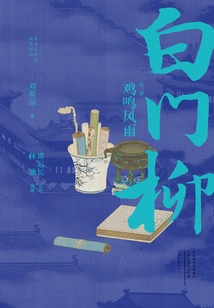
White Gate Willow (part 3): Rooster Crows, Wind and Rain
General Fiction白门柳(第三部):鸡鸣风雨
Liu Sifen
"Cockcrow, Storm" is the third part of the long historical novel "White Gate Willow". The fall of the Ming Dynasty was a foregone conclusion. Under the overthrow of the nest, no eggs could be left intact. The scholars were also faced with the dilemma of sacrificing their reputation to serve the new master, or giving up their future and sticking to their old ambitions. In a realistic style, this book reflects the tragic scenes of frequent wars and devastation in the late Ming Dynasty. The literati, brothel girls, martyrs, and Jianghu artists described by the author are all full of flesh and blood and lifelike. In the second year of Shunzhi, Gong Dingzi and other old officials of the Ming Dynasty shaved their heads, changed their clothes, and submitted to the Qing Dynasty. Huang Zongxi and others continued to train troops in the south of the Yangtze River, persisted in resisting the Qing Dynasty, and established the regime of King Lu. Hong Chengchou was appointed governor of Jiangnan and continued to attack the city southward. Liu Rushi had a falling out with Qian Qianyi because he opposed his defection to the Qing Dynasty, and insisted on staying in Nanjing. During this period, because of his resentment and loneliness, he secretly communicated with others, which caused a scandal in the local area. Qian Qianyi finally decided to resign and go home. His family captured Liu Rushi's lover and complained to him. Qian Qianyi forgave Liu Rushi after knowing the truth.
"Cockcrow, Storm" is the third part of the long historical novel "White Gate Willow". The fall of the Ming Dynasty was a foregone conclusion. Under the overthrow of the nest, no eggs could be left intact. The scholars were also faced with the dilemma of sacrificing their reputation to serve the new master, or giving up their future and sticking to their old ambitions. In a realistic style, this book reflects the tragic scenes of frequent wars and devastation in the late Ming Dynasty. The literati, brothel girls, martyrs, and Jianghu artists described by the author are all full of flesh and blood and lifelike. In the second year of Shunzhi, Gong Dingzi and other old officials of the Ming Dynasty shaved their heads, changed their clothes, and submitted to the Qing Dynasty. Huang Zongxi and others continued to train troops in the south of the Yangtze River, persisted in resisting the Qing Dynasty, and established the regime of King Lu. Hong Chengchou was appointed governor of Jiangnan and continued to attack the city southward. Liu Rushi had a falling out with Qian Qianyi because he opposed his defection to the Qing Dynasty, and insisted on staying in Nanjing. During this period, because of his resentment and loneliness, he secretly communicated with others, which caused a scandal in the local area. Qian Qianyi finally decided to resign and go home. His family captured Liu Rushi's lover and complained to him. Qian Qianyi forgave Liu Rushi after knowing the truth.
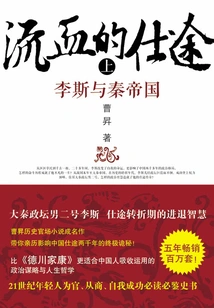
A Bloody Official Career: Li Si and the Qin Empire (part 1)
General Fiction流血的仕途:李斯与秦帝国(上)
Cao Sheng
A famous writer of new-school historical novels, Ming Yue, the author of "Those Things in the Ming Dynasty", became famous in the Tianya Community at the same time. He has published historical best-selling works such as "Bloody Career" and "Bloodthirsty Crown". "Bleeding Official Career" was first published in July 2007. Just four months after its first publication, it sold an astonishing 400,000 copies and won the honor of "2007 Most Popular Historical Novel" selected by the Chinese Book Industry. In the past five years, "Bloody Career" has achieved a market success of selling one million copies and received a huge response.
A famous writer of new-school historical novels, Ming Yue, the author of "Those Things in the Ming Dynasty", became famous in the Tianya Community at the same time. He has published historical best-selling works such as "Bloody Career" and "Bloodthirsty Crown". "Bleeding Official Career" was first published in July 2007. Just four months after its first publication, it sold an astonishing 400,000 copies and won the honor of "2007 Most Popular Historical Novel" selected by the Chinese Book Industry. In the past five years, "Bloody Career" has achieved a market success of selling one million copies and received a huge response.
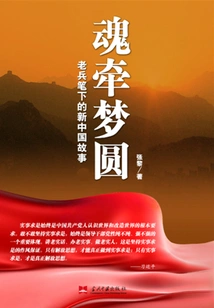
Dreams Come True: the Story of New China Written by Veterans
General Fiction魂牵梦圆:老兵笔下的新中国故事
Zhang Li
This book is a work that closely revolves around the soul of the Party of "seeking truth from facts". It uses the literary form of a novel and the means of storytelling to tell the history of the Party, the military and the country over the past eighty years since the victory of the Anti-Japanese War. It is a perfect interpretation of General Secretary Xi Jinping's emphasis on "the history of the Chinese revolution is the best nutrition!"
This book is a work that closely revolves around the soul of the Party of "seeking truth from facts". It uses the literary form of a novel and the means of storytelling to tell the history of the Party, the military and the country over the past eighty years since the victory of the Anti-Japanese War. It is a perfect interpretation of General Secretary Xi Jinping's emphasis on "the history of the Chinese revolution is the best nutrition!"
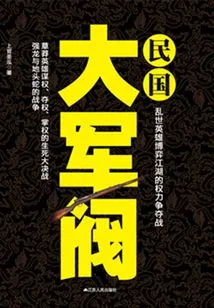
Great Warlord of the Republic of China
General Fiction民国大军阀
Shangguan Shenghong
"Warlords of the Republic of China" reveals a series of anecdotes that happened between the big and small warlords in the Beiyang period in a relaxed and cheerful style. Based on unofficial history, this book extends the behind-the-scenes stories of intrigues and power disputes among various forces in the turbulent current situation, allowing readers to see a true and different history of the Republic of China from this book.
"Warlords of the Republic of China" reveals a series of anecdotes that happened between the big and small warlords in the Beiyang period in a relaxed and cheerful style. Based on unofficial history, this book extends the behind-the-scenes stories of intrigues and power disputes among various forces in the turbulent current situation, allowing readers to see a true and different history of the Republic of China from this book.
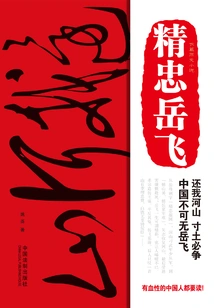
Jingzhong Yue Fei
General Fiction精忠岳飞
Yao Yao
From his mother-in-law tattooing the words "Serve the country with loyalty", to practicing martial arts in the mountains and receiving mysteries; from joining the army at a young age and guarding the capital, to "regretting that the mountains are easy, regretting that the Yue family's army is in trouble"; from being determined to regain the country, to being persecuted by treacherous ministers and dying generously: Yue Fei's life was full of ups and downs, but it also made people sigh. Emperor Xiaozong of the Song Dynasty built the Yuewang Temple for Yue Fei to redress his injustice. In front of Yue Fei's tomb, future generations can only sigh - "The mountains are lucky enough to bury loyal bones, and the innocent white iron casts fawns." Yue Fei used his life to interpret a legend and pass it on to future generations. "The Long Historical Novel: Jing Zhong Yue Fei" unfolds the historical picture for you, tells the past of Jing Zhong Yue Fei, and looks back on that period of blood hatred and war, humiliation and hard work. History is wordless, but it tells everything...
From his mother-in-law tattooing the words "Serve the country with loyalty", to practicing martial arts in the mountains and receiving mysteries; from joining the army at a young age and guarding the capital, to "regretting that the mountains are easy, regretting that the Yue family's army is in trouble"; from being determined to regain the country, to being persecuted by treacherous ministers and dying generously: Yue Fei's life was full of ups and downs, but it also made people sigh. Emperor Xiaozong of the Song Dynasty built the Yuewang Temple for Yue Fei to redress his injustice. In front of Yue Fei's tomb, future generations can only sigh - "The mountains are lucky enough to bury loyal bones, and the innocent white iron casts fawns." Yue Fei used his life to interpret a legend and pass it on to future generations. "The Long Historical Novel: Jing Zhong Yue Fei" unfolds the historical picture for you, tells the past of Jing Zhong Yue Fei, and looks back on that period of blood hatred and war, humiliation and hard work. History is wordless, but it tells everything...
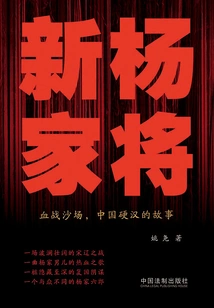
New Yang Family General
General Fiction新杨家将
Yao Yao
During the Five Dynasties, wars raged. After the death of Emperor Chai Rong of the Later Zhou Dynasty, Zhao Kuangyin took over the throne and established the Song Dynasty. After Zhao Kuangyin founded the country, he immediately set about unifying the country. However, he still had two major regrets during his lifetime. One was that the Northern Han Dynasty was still a separatist regime, and the other was that the Niuyuan Barrier Yanyun sixteen states were still there. Under the control of Khitan. After Zhao Guangyi became emperor, he went to great lengths to conquer the Northern Han Dynasty and recruited the famous general Yang Ye of the Northern Han Dynasty to surrender...
During the Five Dynasties, wars raged. After the death of Emperor Chai Rong of the Later Zhou Dynasty, Zhao Kuangyin took over the throne and established the Song Dynasty. After Zhao Kuangyin founded the country, he immediately set about unifying the country. However, he still had two major regrets during his lifetime. One was that the Northern Han Dynasty was still a separatist regime, and the other was that the Niuyuan Barrier Yanyun sixteen states were still there. Under the control of Khitan. After Zhao Guangyi became emperor, he went to great lengths to conquer the Northern Han Dynasty and recruited the famous general Yang Ye of the Northern Han Dynasty to surrender...
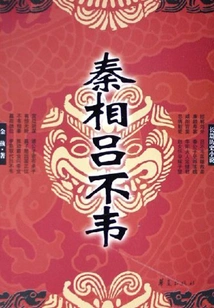
Qin Prime Minister Lu Buwei
General Fiction秦相吕不韦
Golden Child
At the end of the Warring States Period, the great merchant Shang Buwei traveled around the world and witnessed frequent wars and the misery of the people. He determined to unify the world and seek prosperity for the country and peace for the people. On the way to Handan, he met Zhao Nu and became close friends. Later, he met Qin's hostage son in Handan, and felt that this man Min was the person he relied on to realize his ambition. After some planning by him, Zi Chu, who had no hope of succeeding to the throne, became the heir to the throne. Soon, Zi Chu fell in love with Zhao Nu. In order not to ruin the career he had started, Lu Buwei reluctantly parted ways. At this time, Zhao's daughter was already two months pregnant. Thinking that their lofty ideal might be realized in their son, the two decided to make sacrifices to realize their ideal. Later, Lu Buwei became the prime minister, completed the strategy of transforming Qin from hegemony to emperor, won the government and succeeded to the throne. Lu Buwei was dismissed as prime minister and left Xianyang. Finally, he returned to the Qin Palace in a unique way and died silently while watching over his sweetheart and son.
At the end of the Warring States Period, the great merchant Shang Buwei traveled around the world and witnessed frequent wars and the misery of the people. He determined to unify the world and seek prosperity for the country and peace for the people. On the way to Handan, he met Zhao Nu and became close friends. Later, he met Qin's hostage son in Handan, and felt that this man Min was the person he relied on to realize his ambition. After some planning by him, Zi Chu, who had no hope of succeeding to the throne, became the heir to the throne. Soon, Zi Chu fell in love with Zhao Nu. In order not to ruin the career he had started, Lu Buwei reluctantly parted ways. At this time, Zhao's daughter was already two months pregnant. Thinking that their lofty ideal might be realized in their son, the two decided to make sacrifices to realize their ideal. Later, Lu Buwei became the prime minister, completed the strategy of transforming Qin from hegemony to emperor, won the government and succeeded to the throne. Lu Buwei was dismissed as prime minister and left Xianyang. Finally, he returned to the Qin Palace in a unique way and died silently while watching over his sweetheart and son.
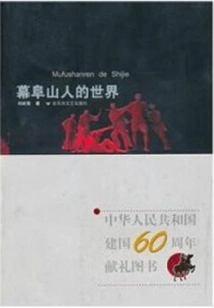
The World of Mufushan People
General Fiction幕阜山人的世界
Liu Lingnan
In the autumn of 1927 AD, a famous war that later historians called the "Autumn Harvest Uprising" broke out in the vast mountains on the border of Hunan, Hubei, and Jiangxi in southern China. This epic and tragic war produced many earth-shaking and weeping stories, and created a generation of people's heroes and a marshal-general of the Republic... This is a novel describing the Autumn Harvest Uprising. The author uses lyrical and textual research to recreate the scene of the 1927 Autumn Harvest Uprising Army brewing and preparing for the uprising in Mufu Mountain in northwest Jiangxi. The description of the scenery in the novel is so refreshing that people can't help but sigh: Mufu Mountain is the most beautiful scenic spot in the world! Although the plot and characters in the novel are fictitious, not a single word has origins, which shows the author's broadness and thoroughness in researching historical materials of the late Qing Dynasty and the early Republic of China.
In the autumn of 1927 AD, a famous war that later historians called the "Autumn Harvest Uprising" broke out in the vast mountains on the border of Hunan, Hubei, and Jiangxi in southern China. This epic and tragic war produced many earth-shaking and weeping stories, and created a generation of people's heroes and a marshal-general of the Republic... This is a novel describing the Autumn Harvest Uprising. The author uses lyrical and textual research to recreate the scene of the 1927 Autumn Harvest Uprising Army brewing and preparing for the uprising in Mufu Mountain in northwest Jiangxi. The description of the scenery in the novel is so refreshing that people can't help but sigh: Mufu Mountain is the most beautiful scenic spot in the world! Although the plot and characters in the novel are fictitious, not a single word has origins, which shows the author's broadness and thoroughness in researching historical materials of the late Qing Dynasty and the early Republic of China.
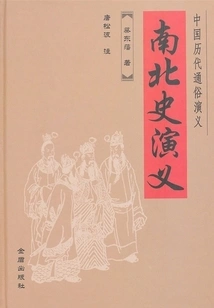
Romance of Northern and Southern History
General Fiction南北史演义
Cai Dongfan
The narrative content of this book covers a history of about two centuries from Liu Yu's generation in the Jin Dynasty to the demise of the Sui Dynasty. The south experienced Song, Qi, Liang, and Chen, with frequent dynasty changes and constant wars. After the Northern Wei unified the north, Emperor Xiaowen implemented reforms and absorbed Han culture. Later, the Eastern and Western Wei were split, and were replaced by the Northern Qi and Northern Zhou.
The narrative content of this book covers a history of about two centuries from Liu Yu's generation in the Jin Dynasty to the demise of the Sui Dynasty. The south experienced Song, Qi, Liang, and Chen, with frequent dynasty changes and constant wars. After the Northern Wei unified the north, Emperor Xiaowen implemented reforms and absorbed Han culture. Later, the Eastern and Western Wei were split, and were replaced by the Northern Qi and Northern Zhou.
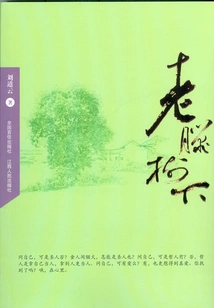
Under the Old Wax Tree
General Fiction老腊树下
Liu Daoyun
Under the sun, no matter how many reincarnations there are, people are always chasing and yearning. They are all so persistent and willfully betray the arrangements of fate and the constraints of nature. Fighting against fate, looking back and thinking, what I gained was too much helplessness. Finally, got some? Maybe some are lost. When I wrote this, I couldn't find the exact words, but I still want to say: pursuit is beautiful! Yearning is beautiful! ! In the face of dreams and reality, if people have dreams, they must pursue them persistently!
Under the sun, no matter how many reincarnations there are, people are always chasing and yearning. They are all so persistent and willfully betray the arrangements of fate and the constraints of nature. Fighting against fate, looking back and thinking, what I gained was too much helplessness. Finally, got some? Maybe some are lost. When I wrote this, I couldn't find the exact words, but I still want to say: pursuit is beautiful! Yearning is beautiful! ! In the face of dreams and reality, if people have dreams, they must pursue them persistently!
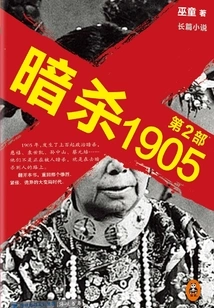
Assassination 1905 (part 2)
General Fiction暗杀1905(第2部)
M
In 1905, the prelude to the most tragic "era of assassinations" in China's modern history slowly unfolded: Sun Yat-sen established the Assassination Department of the Tongmenghui; Cai Yuanpei organized the Liberation Society to engage in assassination activities; Chen Duxiu became the mastermind behind the assassination group; and even the scholar Lu Xun also joined the assassination group. No matter what doctrine they believe in or what purpose they harbor, they all attempt to use this oldest method of violence to control the future of the entire country. In those covered histories, an assassin who truly determined someone's life and death was also involved in many political assassinations by the tide of the times, becoming the key to the checks and balances of all parties: he broke into the Forbidden City alone to assassinate Cixi, also served as Sun Yat-sen's bodyguard in Tokyo, sneaked into a prison to rescue Wang Jingwei, and formed a deep friendship with Wu Yue and other anti-Qing patriots. In that turbulent and troubled time, he changed the future destiny of himself and the country with assassinations one after another on countless dark nights.
In 1905, the prelude to the most tragic "era of assassinations" in China's modern history slowly unfolded: Sun Yat-sen established the Assassination Department of the Tongmenghui; Cai Yuanpei organized the Liberation Society to engage in assassination activities; Chen Duxiu became the mastermind behind the assassination group; and even the scholar Lu Xun also joined the assassination group. No matter what doctrine they believe in or what purpose they harbor, they all attempt to use this oldest method of violence to control the future of the entire country. In those covered histories, an assassin who truly determined someone's life and death was also involved in many political assassinations by the tide of the times, becoming the key to the checks and balances of all parties: he broke into the Forbidden City alone to assassinate Cixi, also served as Sun Yat-sen's bodyguard in Tokyo, sneaked into a prison to rescue Wang Jingwei, and formed a deep friendship with Wu Yue and other anti-Qing patriots. In that turbulent and troubled time, he changed the future destiny of himself and the country with assassinations one after another on countless dark nights.
The Code of Classics of Mountains and Seas (complete Collection) Original Animation of the Same Name
General Fiction山海经密码(全集)同名动漫原著
K
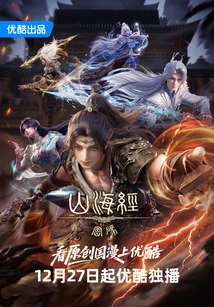
4,000 years ago, a young man named Youxin Bupo wandered alone in the wilderness that is now a bustling city. He was originally the grandson of the Shang Dynasty and the heir to the throne, but now he was a rebellious young man who escaped from the palace. Behind him, China's two oldest dynasties were alternating. The greatest war in history broke out between the Xia Dynasty and the Shang Dynasty. This book will take you back to the ancient battlefield and travel with those ancient heroes to the wild world in the "Book of Mountains and Seas". You will meet the descendants of Hou Yi and Zhu Rong, see the missing boulder that Nuwa used to mend the sky, pass through Leize where monsters are rampant, and the war-torn Ba Kingdom, until you encounter the most primitive and mysterious beliefs of the ignorant era of Chinese civilization. This book is written based on China's oldest classic "The Classic of Mountains and Seas" and reproduces the geography and humanistic customs of ancient times. What we can see today is all thanks to Qin Shihuang: "The Classic of Mountains and Seas" was the only book Qin Shihuang could not bear to burn when he burned it.
4,000 years ago, a young man named Youxin Bupo wandered alone in the wilderness that is now a bustling city. He was originally the grandson of the Shang Dynasty and the heir to the throne, but now he was a rebellious young man who escaped from the palace. Behind him, China's two oldest dynasties were alternating. The greatest war in history broke out between the Xia Dynasty and the Shang Dynasty. This book will take you back to the ancient battlefield and travel with those ancient heroes to the wild world in the "Book of Mountains and Seas". You will meet the descendants of Hou Yi and Zhu Rong, see the missing boulder that Nuwa used to mend the sky, pass through Leize where monsters are rampant, and the war-torn Ba Kingdom, until you encounter the most primitive and mysterious beliefs of the ignorant era of Chinese civilization. This book is written based on China's oldest classic "The Classic of Mountains and Seas" and reproduces the geography and humanistic customs of ancient times. What we can see today is all thanks to Qin Shihuang: "The Classic of Mountains and Seas" was the only book Qin Shihuang could not bear to burn when he burned it.
True and False "three Kingdoms
General Fiction真假“三国”
Gu Chengfu Sheng Xunchang
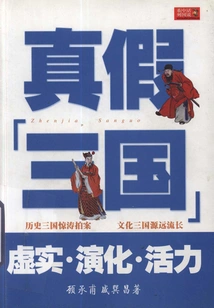
"The True and False Three Kingdoms" includes four parts: from the historical Three Kingdoms to the cultural Three Kingdoms, the virtual and real Three Kingdoms, the evolving Three Kingdoms, and the dynamic Three Kingdoms. "The True and False Three Kingdoms" is one of the volumes of "The True and False Three Kingdoms" in the "Talk about China Series". The book specifically includes: Luo Guanzhong and "The Romance of the Three Kingdoms", Zhuge Liang's Unwritten
"The True and False Three Kingdoms" includes four parts: from the historical Three Kingdoms to the cultural Three Kingdoms, the virtual and real Three Kingdoms, the evolving Three Kingdoms, and the dynamic Three Kingdoms. "The True and False Three Kingdoms" is one of the volumes of "The True and False Three Kingdoms" in the "Talk about China Series". The book specifically includes: Luo Guanzhong and "The Romance of the Three Kingdoms", Zhuge Liang's Unwritten
Sunflower
General Fiction太阳花
J
"Sunflower" is a work that boldly touches the "forbidden zone". The author does this to praise the truth, goodness and beauty of that "extraordinary time" and to criticize the ugliness, shamelessness and cruelty. People with a sound spiritual vision and the courage to explore their inner world never shy away from life and have the courage to reflect deeply on life. The author relies on his love for life, his pursuit of truth, his thoughts and concerns about the destiny of society and life, and uses an approachable, fresh, smooth and unpretentious artistic language style to tell a touching tragic story of the past. It will touch the heartstrings of many of us who have lived through it, and will allow young people who have not experienced those "extraordinary years" to understand history, cherish today more, love life more; do their best to revitalize, strengthen and prosper the motherland, and create the greatest value of life.
"Sunflower" is a work that boldly touches the "forbidden zone". The author does this to praise the truth, goodness and beauty of that "extraordinary time" and to criticize the ugliness, shamelessness and cruelty. People with a sound spiritual vision and the courage to explore their inner world never shy away from life and have the courage to reflect deeply on life. The author relies on his love for life, his pursuit of truth, his thoughts and concerns about the destiny of society and life, and uses an approachable, fresh, smooth and unpretentious artistic language style to tell a touching tragic story of the past. It will touch the heartstrings of many of us who have lived through it, and will allow young people who have not experienced those "extraordinary years" to understand history, cherish today more, love life more; do their best to revitalize, strengthen and prosper the motherland, and create the greatest value of life.
The First Gang of the Republic of China
General Fiction民国第一帮会
Chen Weiwei
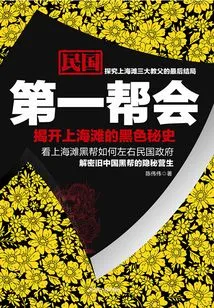
A history of the Qinggang and a popular history of the Republic of China! In ancient China, gangs have always been small organized and disciplined groups in society. During the Ming and Qing Dynasties, the government gradually restricted trade and severely cracked down on associations. As a result, the scope of gang activities moved underground. The Youth Gang was formed during this period, and then developed and prospered in the chaotic social environment of modern China. "The First Gang of the Republic of China" is the most profound explanation of the history of the Youth Gang. It incorporates a variety of materials into the documentary method and becomes a popular and popular history of the Youth Gang. The main content of "The First Gang of the Republic of China" includes: the relationship between the three gang giants of the Republic of China - Huang Huangrong, Du Yuesheng, and Zhang Xiaolin - and their respective gangs; the complex relationship between the Qinggang and Hongmen; the relationship between masters and apprentices within the gang and the internal strife within the gang; the system and political plot of the gang; the Qinggang's manipulation of the Kuomintang, etc.
A history of the Qinggang and a popular history of the Republic of China! In ancient China, gangs have always been small organized and disciplined groups in society. During the Ming and Qing Dynasties, the government gradually restricted trade and severely cracked down on associations. As a result, the scope of gang activities moved underground. The Youth Gang was formed during this period, and then developed and prospered in the chaotic social environment of modern China. "The First Gang of the Republic of China" is the most profound explanation of the history of the Youth Gang. It incorporates a variety of materials into the documentary method and becomes a popular and popular history of the Youth Gang. The main content of "The First Gang of the Republic of China" includes: the relationship between the three gang giants of the Republic of China - Huang Huangrong, Du Yuesheng, and Zhang Xiaolin - and their respective gangs; the complex relationship between the Qinggang and Hongmen; the relationship between masters and apprentices within the gang and the internal strife within the gang; the system and political plot of the gang; the Qinggang's manipulation of the Kuomintang, etc.
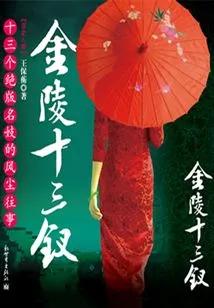
Jinling Thirteen Hairpins
General Fiction金陵十三钗
K
This book draws on novel creation methods, incorporates reasonable imagination, and uses beautiful and poetic sentences to tell readers about Su Xiaoxiao, Liu Rushi, Liang Hongyu, Sai Jinhua, Chen Yuanyuan, Du Qiuniang, Ma Xianglan, Gu Hengbo, Dong Xiaowan, The tortuous and poignant experiences of thirteen ancient brothel women including Ni Baimen, Li Xiangjun, Bian Yujing and Du Shiniang - birth, growth and other events that are remembered by the world, reproduce the tortuous life of talented ancient women. The twists and turns of life, emotions and representative events of these brothel girls are the reason why they attract people's attention.
This book draws on novel creation methods, incorporates reasonable imagination, and uses beautiful and poetic sentences to tell readers about Su Xiaoxiao, Liu Rushi, Liang Hongyu, Sai Jinhua, Chen Yuanyuan, Du Qiuniang, Ma Xianglan, Gu Hengbo, Dong Xiaowan, The tortuous and poignant experiences of thirteen ancient brothel women including Ni Baimen, Li Xiangjun, Bian Yujing and Du Shiniang - birth, growth and other events that are remembered by the world, reproduce the tortuous life of talented ancient women. The twists and turns of life, emotions and representative events of these brothel girls are the reason why they attract people's attention.
The City of the Army
General Fiction筸军之城
Liu Xiao
This is a work that reflects the rise and fall of the Jin army in history, and artistically displays the cultural soul of the Xiangxi region. The story is set in Zhenyu Town, a complex town full of magic and strange customs. Here: men inherit the mantle of being soldiers for generations and are obsessed with the life-and-death war mission and the ever-changing power struggle, while women are dedicated to waiting for the love they love throughout their lives until their lives wither away. With complex and intricate plots, characters full of tension, and ancient and mysterious regional culture, the author uses his unique vision and wonderful narration rich in national characteristics to write about the soul of the Jin army, see through the soul of Xiangxi, and discover some inner, essential, different yet common survival secrets of the Xiangxi people, especially the Miao people.
This is a work that reflects the rise and fall of the Jin army in history, and artistically displays the cultural soul of the Xiangxi region. The story is set in Zhenyu Town, a complex town full of magic and strange customs. Here: men inherit the mantle of being soldiers for generations and are obsessed with the life-and-death war mission and the ever-changing power struggle, while women are dedicated to waiting for the love they love throughout their lives until their lives wither away. With complex and intricate plots, characters full of tension, and ancient and mysterious regional culture, the author uses his unique vision and wonderful narration rich in national characteristics to write about the soul of the Jin army, see through the soul of Xiangxi, and discover some inner, essential, different yet common survival secrets of the Xiangxi people, especially the Miao people.
中国历代通俗演义:两晋演义(上)
Cai Dongfan
"The Romance of the Two Jin Dynasties" begins with Sima Yan's dynasty in the Wei Dynasty and ends with Liu Yu's dynasty in the Jin Dynasty, with a total of one hundred chapters. It truly reproduces the split situation of the Five Hus and Sixteen Kingdoms during the decline of the Han Dynasty in the Central Plains and the exchanges and integration among the ethnic minorities. This book tells the history from "the first time to worship Sima Kaiji in the southern suburbs and set up the East Palace to avoid disasters" to "the fiftieth time to select generals in Liangzhou to defeat the enemy and to build palaces and fishermen, Shi Shi's prostitution". The internal affairs of the Western Jin Dynasty fell into disrepair, chaos invaded, and eventually fell. If the husband's internal affairs are in disrepair, internal strife will inevitably arise. If internal strife arises, foreign aggression will take advantage of it. Insects grow on decaying trees, and ants infiltrate into walls. It seems that there are always external dangers, but after all, they are like snipers and clams, and only then can there be fishermen...
"The Romance of the Two Jin Dynasties" begins with Sima Yan's dynasty in the Wei Dynasty and ends with Liu Yu's dynasty in the Jin Dynasty, with a total of one hundred chapters. It truly reproduces the split situation of the Five Hus and Sixteen Kingdoms during the decline of the Han Dynasty in the Central Plains and the exchanges and integration among the ethnic minorities. This book tells the history from "the first time to worship Sima Kaiji in the southern suburbs and set up the East Palace to avoid disasters" to "the fiftieth time to select generals in Liangzhou to defeat the enemy and to build palaces and fishermen, Shi Shi's prostitution". The internal affairs of the Western Jin Dynasty fell into disrepair, chaos invaded, and eventually fell. If the husband's internal affairs are in disrepair, internal strife will inevitably arise. If internal strife arises, foreign aggression will take advantage of it. Insects grow on decaying trees, and ants infiltrate into walls. It seems that there are always external dangers, but after all, they are like snipers and clams, and only then can there be fishermen...
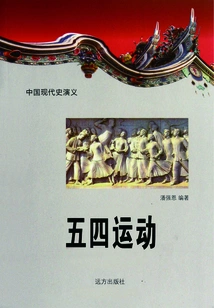
Romance of Modern Chinese History: the May 4th Movement
General Fiction中国现代史演义:五四运动
Compiled By Pan Qiangen
The May 4th Movement was a patriotic movement of the Chinese people that broke out in Beijing on May 4, 1919, to completely oppose imperialism and feudalism. The May 4th Movement was the end of China's old democratic revolution and the beginning of the new democratic revolution. The May 4th Movement was an epoch-making event in the history of the Chinese revolution and a turning point from China's old democratic revolution to the new democratic revolution. The May 4th Movement promoted the spread of Marxism in China and its integration with the workers' movement, thereby preparing the conditions for the establishment of the Communist Party of China ideologically and cadres.
The May 4th Movement was a patriotic movement of the Chinese people that broke out in Beijing on May 4, 1919, to completely oppose imperialism and feudalism. The May 4th Movement was the end of China's old democratic revolution and the beginning of the new democratic revolution. The May 4th Movement was an epoch-making event in the history of the Chinese revolution and a turning point from China's old democratic revolution to the new democratic revolution. The May 4th Movement promoted the spread of Marxism in China and its integration with the workers' movement, thereby preparing the conditions for the establishment of the Communist Party of China ideologically and cadres.
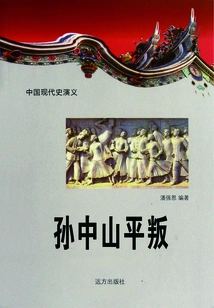
中国现代史演义:孙中山平叛
Compiled By Pan Qiangen
"Sun Yat-sen Counters the Rebellion" is one of the series of "The Romance of Modern Chinese History": "The Romance of Modern Chinese History" describes in the form of a novel from the Revolution of 1911 when Sun Yat-sen founded the Republic to today's current situation of the two sides of the Taiwan Strait longing for reunification. It vividly displays the stormy waves caused by the historical giants Sun Yat-sen, Chiang Kai-shek, Mao Zedong, and Deng Xiaoping in the century-old Chinese history.
"Sun Yat-sen Counters the Rebellion" is one of the series of "The Romance of Modern Chinese History": "The Romance of Modern Chinese History" describes in the form of a novel from the Revolution of 1911 when Sun Yat-sen founded the Republic to today's current situation of the two sides of the Taiwan Strait longing for reunification. It vividly displays the stormy waves caused by the historical giants Sun Yat-sen, Chiang Kai-shek, Mao Zedong, and Deng Xiaoping in the century-old Chinese history.
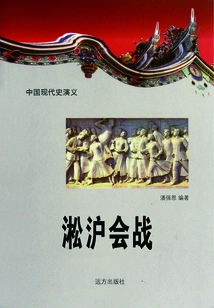
Romance of Modern Chinese History: Battle of Songhu
General Fiction中国现代史演义:淞沪会战
Compiled By Pan Qiangen
The Battle of Songhu was a battle fought by the Chinese army against the Japanese invasion of Shanghai from August 13 to November 12, 1937. It is also known as the "August 13th Battle of Songhu". This battle was the first important battle in China's Anti-Japanese War. It was also the largest and most brutal battle in the Anti-Japanese War.
The Battle of Songhu was a battle fought by the Chinese army against the Japanese invasion of Shanghai from August 13 to November 12, 1937. It is also known as the "August 13th Battle of Songhu". This battle was the first important battle in China's Anti-Japanese War. It was also the largest and most brutal battle in the Anti-Japanese War.
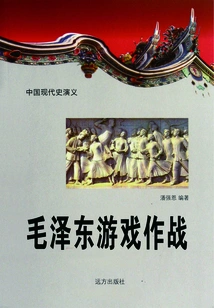
Romance of Modern Chinese History: Mao Zedong Game Combat
General Fiction中国现代史演义:毛泽东游戏作战
Compiled By Pan Qiangen
After the "April 12" massacre, the southern provinces also began to massacre communists. At this time Zhou Enlai also went underground. He was ordered by the Party Central Committee to notify Deng Yingchao to come to Shanghai. From then on, he paid attention to the missing person notices in the "News" every day. On May 2, he immediately saw a notice in the newspaper looking for "Wu Hao". "Ah! It's Xiaochao here!" He quickly found Deng Yingchao according to the address on the notice. The couple reunited during the crisis, and both of them were very happy. Zhou Enlai asked with concern: "Where is the child?" Deng Yingchao said nothing, covering her face with her hands, tears streaming down her fingers. Deng's mother Yang Zhende took him aside and said sadly: "It was difficult to deliver and the baby died. Unfortunately, it's still a boy!" After Zhou Enlai heard this, he was so sad that he cried. Seeing that Deng Yingchao was weak, he first found a hospital for her to stay in.
After the "April 12" massacre, the southern provinces also began to massacre communists. At this time Zhou Enlai also went underground. He was ordered by the Party Central Committee to notify Deng Yingchao to come to Shanghai. From then on, he paid attention to the missing person notices in the "News" every day. On May 2, he immediately saw a notice in the newspaper looking for "Wu Hao". "Ah! It's Xiaochao here!" He quickly found Deng Yingchao according to the address on the notice. The couple reunited during the crisis, and both of them were very happy. Zhou Enlai asked with concern: "Where is the child?" Deng Yingchao said nothing, covering her face with her hands, tears streaming down her fingers. Deng's mother Yang Zhende took him aside and said sadly: "It was difficult to deliver and the baby died. Unfortunately, it's still a boy!" After Zhou Enlai heard this, he was so sad that he cried. Seeing that Deng Yingchao was weak, he first found a hospital for her to stay in.
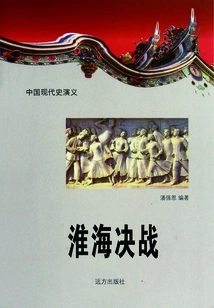
中国现代史演义:淮海决战
Compiled By Pan Qiangen
The Battle of Huaihai was the second strategic offensive campaign conducted by the East China and Central Plains Field Army of the Chinese People's Liberation Army against the Kuomintang Army during the War of Liberation in a vast area centered on Xuzhou, starting from Haizhou in the east, Shangqiu in the west, Lincheng (now Xuecheng, Zaozhuang City) in the north, and reaching the Huaihe River in the south. The Huaihai Campaign was also the battle in which the People's Liberation Army suffered the heaviest sacrifices, wiped out the largest number of enemies, had the greatest political impact, and had the most complex war style among the three major battles.
The Battle of Huaihai was the second strategic offensive campaign conducted by the East China and Central Plains Field Army of the Chinese People's Liberation Army against the Kuomintang Army during the War of Liberation in a vast area centered on Xuzhou, starting from Haizhou in the east, Shangqiu in the west, Lincheng (now Xuecheng, Zaozhuang City) in the north, and reaching the Huaihe River in the south. The Huaihai Campaign was also the battle in which the People's Liberation Army suffered the heaviest sacrifices, wiped out the largest number of enemies, had the greatest political impact, and had the most complex war style among the three major battles.
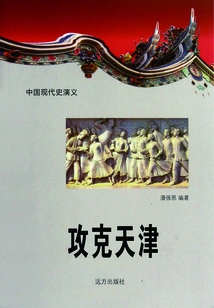
Romance of Modern Chinese History: Conquering Tianjin
General Fiction中国现代史演义:攻克天津
Compiled By Pan Qiangen
The Battle of Tianjin was an important part of the Battle of Pingjin and the most important battle in the Liberation War. The Chinese People's Liberation Army launched a general offensive at 10 a. M. On January 14. After 29 hours of fierce fighting, it wiped out more than 130,000 enemies and successfully occupied Tianjin.
The Battle of Tianjin was an important part of the Battle of Pingjin and the most important battle in the Liberation War. The Chinese People's Liberation Army launched a general offensive at 10 a. M. On January 14. After 29 hours of fierce fighting, it wiped out more than 130,000 enemies and successfully occupied Tianjin.
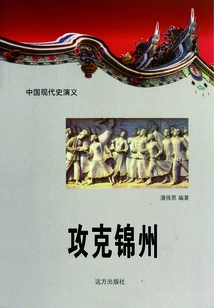
Romance of Modern Chinese History: Conquering Jinzhou
General Fiction中国现代史演义:攻克锦州
Compiled By Pan Qiangen
The Jinzhou Campaign was the first stage of the Liaoshen Campaign in October 1948. The main force of the Northeast Field Army of the People's Liberation Army fought against the Kuomintang troops defending Jinzhou, Liaoning Province. The Battle of Jinzhou was a battle between the Chinese People's Liberation Army and the National Revolutionary Army in the civil war between the Kuomintang and the Communist Party. It was one of the decisive battles in the Northeast and an integral part of the Liaoshen Campaign. Now follow this book to visit the scene of the Jinzhou Battle!
The Jinzhou Campaign was the first stage of the Liaoshen Campaign in October 1948. The main force of the Northeast Field Army of the People's Liberation Army fought against the Kuomintang troops defending Jinzhou, Liaoning Province. The Battle of Jinzhou was a battle between the Chinese People's Liberation Army and the National Revolutionary Army in the civil war between the Kuomintang and the Communist Party. It was one of the decisive battles in the Northeast and an integral part of the Liaoshen Campaign. Now follow this book to visit the scene of the Jinzhou Battle!
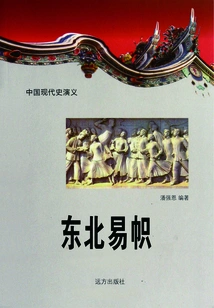
中国现代史演义:东北易帜
Pan Qiangen
On December 29, 1928, General Zhang Xueliang sent a telegram to the world that day, resolutely announcing that the Northeast would implement a flag change, abide by the Three People's Principles, and obey the National Government. In the Northeast, he would change the original red, yellow, blue, white, and black flag of the Beijing government to the blue sky and white sun flag of the Nanjing National Government, and declare his support for the political action of the National Government. This was the "Northeast Flag Change" that shocked China and foreign countries.
On December 29, 1928, General Zhang Xueliang sent a telegram to the world that day, resolutely announcing that the Northeast would implement a flag change, abide by the Three People's Principles, and obey the National Government. In the Northeast, he would change the original red, yellow, blue, white, and black flag of the Beijing government to the blue sky and white sun flag of the Nanjing National Government, and declare his support for the political action of the National Government. This was the "Northeast Flag Change" that shocked China and foreign countries.
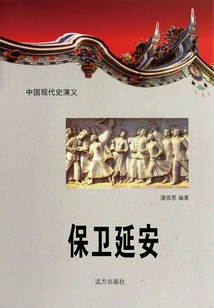
Romance of Modern Chinese History: Defending Yan'an
General Fiction中国现代史演义:保卫延安
Compiled By Pan Qiangen
Yan'an, known as Yanzhou in ancient times, is located in the northern part of Shaanxi Province, in the middle reaches of the Yellow River. It has always been the political, economic, cultural and military center of northern Shaanxi. Yan'an is the end point of the Red Army's Long March and the base of the Communist Party of China from 1935 to 1948, so it is regarded as the "Holy Land of Revolution." This book reproduces the historical reality of the war period in chapters.
Yan'an, known as Yanzhou in ancient times, is located in the northern part of Shaanxi Province, in the middle reaches of the Yellow River. It has always been the political, economic, cultural and military center of northern Shaanxi. Yan'an is the end point of the Red Army's Long March and the base of the Communist Party of China from 1935 to 1948, so it is regarded as the "Holy Land of Revolution." This book reproduces the historical reality of the war period in chapters.
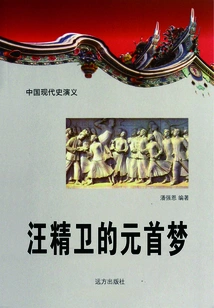
中国现代史演义:汪精卫的元首梦
Compiled By Pan Qiangen
Wang Zhaoming (May 4, 1883 - November 10, 1944), whose courtesy name was Jixin and whose pen name was Jingwei, was often called "Wang Jingwei" in history. He once plotted to assassinate the Qing regent Zaifeng and went to France to study during Yuan Shikai's reign. After returning to China, in 1919, under the leadership of Sun Yat-sen, he founded the magazine "Construction" in Shanghai. In 1921, Sun became the Extraordinary President in Guangzhou, and Wang served as the Guangdong Provincial Education Chairman, Guangdong Government Advisor, and the General Councilor the following year. During the Anti-Japanese War, he defected to Japan and became a traitor.
Wang Zhaoming (May 4, 1883 - November 10, 1944), whose courtesy name was Jixin and whose pen name was Jingwei, was often called "Wang Jingwei" in history. He once plotted to assassinate the Qing regent Zaifeng and went to France to study during Yuan Shikai's reign. After returning to China, in 1919, under the leadership of Sun Yat-sen, he founded the magazine "Construction" in Shanghai. In 1921, Sun became the Extraordinary President in Guangzhou, and Wang served as the Guangdong Provincial Education Chairman, Guangdong Government Advisor, and the General Councilor the following year. During the Anti-Japanese War, he defected to Japan and became a traitor.
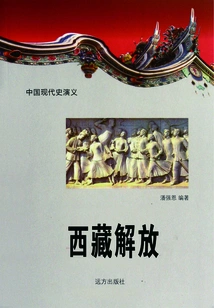
Romance of Modern Chinese History: Liberation of Tibet
General Fiction中国现代史演义:西藏解放
Compiled By Pan Qiangen
On May 23, 1951, the plenipotentiary representatives of the Central People's Government and the plenipotentiary representatives of the Tibetan local government signed the "Agreement between the Central People's Government and the Tibetan Local Government on Measures for the Peaceful Liberation of Tibet" (referred to as the "Seventeen-Article Agreement") in Beijing, declaring the peaceful liberation of Tibet.
On May 23, 1951, the plenipotentiary representatives of the Central People's Government and the plenipotentiary representatives of the Tibetan local government signed the "Agreement between the Central People's Government and the Tibetan Local Government on Measures for the Peaceful Liberation of Tibet" (referred to as the "Seventeen-Article Agreement") in Beijing, declaring the peaceful liberation of Tibet.
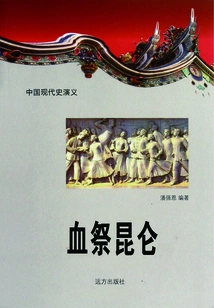
Romance of Modern Chinese History: Blood Sacrifice to Kunlun
General Fiction中国现代史演义:血祭昆仑
Compiled By Pan Qiangen
The Battle of Kunlun Pass, which broke out in Binyang County, Guangxi in December 1939, was the result of a head-to-head confrontation between the Chinese National Government's decision to launch a counterattack and the Japanese invading military authorities' "Operation No. 1" Plan. It was actually the core battle of the entire Guangxi Battle.
The Battle of Kunlun Pass, which broke out in Binyang County, Guangxi in December 1939, was the result of a head-to-head confrontation between the Chinese National Government's decision to launch a counterattack and the Japanese invading military authorities' "Operation No. 1" Plan. It was actually the core battle of the entire Guangxi Battle.
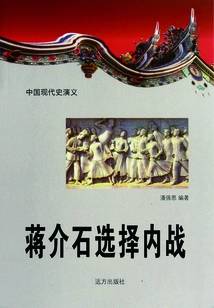
中国现代史演义:蒋介石选择内战
Compiled By Pan Qiangen
After the victory of the Anti-Japanese War, in order to strive for peace and avoid civil war, with the persistence and struggle of the Communist Party of China, the Kuomintang and the Communist Party formally signed an armistice agreement on January 10, 1946. The Chinese Communist Party strictly implemented this agreement, but the Kuomintang showed no sincerity in the armistice. When the armistice order was issued, it continued to mobilize troops to attack the liberated areas. After Chiang Kai-shek completed preparations for the civil war, he single-handedly tore up the armistice agreement and the CPPCC resolutions, regardless of the Chinese people's desire for peace. On June 26, 1946, the Kuomintang besieged the Central Plains Liberated Area with 300,000 troops and launched an all-out attack on the liberated area. The civil war forced on the Chinese people broke out.
After the victory of the Anti-Japanese War, in order to strive for peace and avoid civil war, with the persistence and struggle of the Communist Party of China, the Kuomintang and the Communist Party formally signed an armistice agreement on January 10, 1946. The Chinese Communist Party strictly implemented this agreement, but the Kuomintang showed no sincerity in the armistice. When the armistice order was issued, it continued to mobilize troops to attack the liberated areas. After Chiang Kai-shek completed preparations for the civil war, he single-handedly tore up the armistice agreement and the CPPCC resolutions, regardless of the Chinese people's desire for peace. On June 26, 1946, the Kuomintang besieged the Central Plains Liberated Area with 300,000 troops and launched an all-out attack on the liberated area. The civil war forced on the Chinese people broke out.
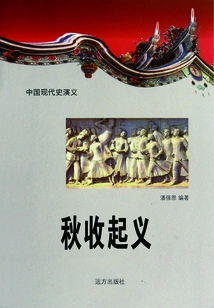
Romance of Modern Chinese History: Autumn Harvest Uprising
General Fiction中国现代史演义:秋收起义
Compiled By Pan Qiangen
The Autumn Harvest Uprising was an armed uprising held by the Workers' and Peasants' Revolutionary Army (the Red Army) led by Mao Zedong in eastern Hunan and western Jiangxi on September 9, 1927. It was another famous armed uprising led by the Communist Party of China after the Nanchang Uprising. The outbreak of the Autumn Harvest Uprising marked the beginning of the independent leadership of the armed struggle by the Communist Party, which was a milestone. Finally, Comrade Mao Zedong led the Autumn Harvest Uprising troops to Jinggangshan, opened up the first rural revolutionary base, and found the correct path for the Chinese revolution. From then on, the Chinese Communist Party grew from small to large, from weak to strong, and finally won the final victory of the Chinese revolution.
The Autumn Harvest Uprising was an armed uprising held by the Workers' and Peasants' Revolutionary Army (the Red Army) led by Mao Zedong in eastern Hunan and western Jiangxi on September 9, 1927. It was another famous armed uprising led by the Communist Party of China after the Nanchang Uprising. The outbreak of the Autumn Harvest Uprising marked the beginning of the independent leadership of the armed struggle by the Communist Party, which was a milestone. Finally, Comrade Mao Zedong led the Autumn Harvest Uprising troops to Jinggangshan, opened up the first rural revolutionary base, and found the correct path for the Chinese revolution. From then on, the Chinese Communist Party grew from small to large, from weak to strong, and finally won the final victory of the Chinese revolution.
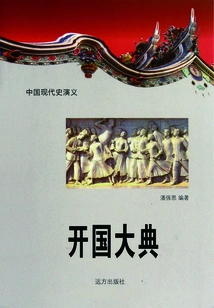
Romance of Modern Chinese History: the Founding Ceremony of the People's Republic of China
General Fiction中国现代史演义:开国大典
Compiled By Pan Qiangen
The founding ceremony of the People's Republic of China was the founding ceremony of the Central People's Government of the People's Republic of China held grandly in Tiananmen Square in Beijing on October 1, 1949. The Chairman, Vice Chairman and members of the Central People's Government took their seats, and the band played the national anthem "March of the Volunteers". Chairman Mao Zedong announced: "The Central People's Government of the People's Republic of China has been established today." And personally raised the first five-star red flag. Then a grand military parade and mass march were held. The establishment of the People's Republic of China also means that the development of the Chinese nation has opened a new historical era.
The founding ceremony of the People's Republic of China was the founding ceremony of the Central People's Government of the People's Republic of China held grandly in Tiananmen Square in Beijing on October 1, 1949. The Chairman, Vice Chairman and members of the Central People's Government took their seats, and the band played the national anthem "March of the Volunteers". Chairman Mao Zedong announced: "The Central People's Government of the People's Republic of China has been established today." And personally raised the first five-star red flag. Then a grand military parade and mass march were held. The establishment of the People's Republic of China also means that the development of the Chinese nation has opened a new historical era.
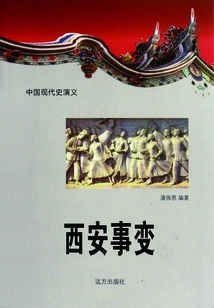
Romance of Modern Chinese History: Xi'an Incident
General Fiction中国现代史演义:西安事变
Compiled By Pan Qiangen
Xi'an Incident, also known as the "Double Twelve Incident". In order to persuade Chiang Kai-shek to change the established national policy of "reconciling foreign affairs before settling domestic affairs", stop the civil war and unite to resist Japan. Zhang Xueliang and Yang Hucheng launched a mutiny in Huaqingchi, Xi'an, and detained Chiang Zhongzheng, then chairman of the Military Commission of the National Government and commander-in-chief of the Northwest Bandit Suppression. They were known as the "Xi'an Military Remonstrance" at the time. Under the leadership of the Central Committee of the Communist Party of China and Comrade Zhou Enlai, Chiang Kai-shek was finally released after accepting the proposition of "stop suppressing the Communist Party and resisting Japan together." This forced the Nationalist Government to abandon the basic national policy of "reconciling internal affairs before resisting foreign aggression" and formally established the Anti-Japanese United Front.
Xi'an Incident, also known as the "Double Twelve Incident". In order to persuade Chiang Kai-shek to change the established national policy of "reconciling foreign affairs before settling domestic affairs", stop the civil war and unite to resist Japan. Zhang Xueliang and Yang Hucheng launched a mutiny in Huaqingchi, Xi'an, and detained Chiang Zhongzheng, then chairman of the Military Commission of the National Government and commander-in-chief of the Northwest Bandit Suppression. They were known as the "Xi'an Military Remonstrance" at the time. Under the leadership of the Central Committee of the Communist Party of China and Comrade Zhou Enlai, Chiang Kai-shek was finally released after accepting the proposition of "stop suppressing the Communist Party and resisting Japan together." This forced the Nationalist Government to abandon the basic national policy of "reconciling internal affairs before resisting foreign aggression" and formally established the Anti-Japanese United Front.
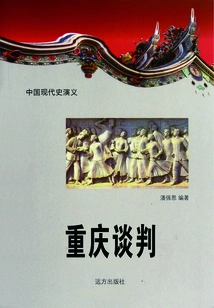
Romance of Modern Chinese History: Chongqing Negotiations
General Fiction中国现代史演义:重庆谈判
Compiled By Pan Qiangen
The Chongqing Negotiations refer to a negotiation held in Chongqing, China, from August 29 to October 10, 1945, between the National Government of the Republic of China under the leadership of the Chinese Kuomintang and the Communist Party of China to avoid civil war and strive for peace.
The Chongqing Negotiations refer to a negotiation held in Chongqing, China, from August 29 to October 10, 1945, between the National Government of the Republic of China under the leadership of the Chinese Kuomintang and the Communist Party of China to avoid civil war and strive for peace.
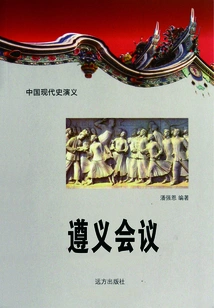
Romance of Modern Chinese History: Zunyi Conference
General Fiction中国现代史演义:遵义会议
Compiled By Pan Qiangen
The Zunyi Conference is an important meeting in the history of the Communist Party of China. It ended the rule of Wang Ming's "Left" adventurism in the Party Central Committee, established the correct leadership of the new Party Central Committee with Mao Zedong as the core, and established Mao Zedong's leadership position in the Red Army and the Party Central Committee. At the critical juncture of the party's life and death, he saved the party, saved the Red Army, and saved the Chinese revolution. The Red Army was able to survive in the most dangerous situation, successfully completed the Long March, and created a new situation in the Anti-Japanese War. It proves that the Chinese Communist Party is fully capable of solving its own complex internal problems independently, and is a sign that the Chinese Communist Party has grown from infancy to maturity.
The Zunyi Conference is an important meeting in the history of the Communist Party of China. It ended the rule of Wang Ming's "Left" adventurism in the Party Central Committee, established the correct leadership of the new Party Central Committee with Mao Zedong as the core, and established Mao Zedong's leadership position in the Red Army and the Party Central Committee. At the critical juncture of the party's life and death, he saved the party, saved the Red Army, and saved the Chinese revolution. The Red Army was able to survive in the most dangerous situation, successfully completed the Long March, and created a new situation in the Anti-Japanese War. It proves that the Chinese Communist Party is fully capable of solving its own complex internal problems independently, and is a sign that the Chinese Communist Party has grown from infancy to maturity.
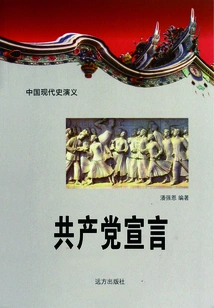
Romance of Modern Chinese History: the Communist Manifesto
General Fiction中国现代史演义:共产党宣言
Compiled By Pan Qiangen
Human art is almost symbiotic with human civilization, with a long history and a long history. Art history research should provide some answers for people who want to understand and explore the secrets of art. It should describe and show the trajectory of mankind's unremitting artistic pursuits in the long history. But more importantly, it should lead people to a fascinating field and show the long march of art in the long history of mankind.
Human art is almost symbiotic with human civilization, with a long history and a long history. Art history research should provide some answers for people who want to understand and explore the secrets of art. It should describe and show the trajectory of mankind's unremitting artistic pursuits in the long history. But more importantly, it should lead people to a fascinating field and show the long march of art in the long history of mankind.
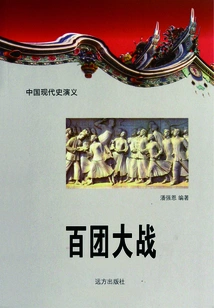
Romance of Modern Chinese History: the Hundred Regiments War
General Fiction中国现代史演义:百团大战
Compiled By Pan Qiangen
The Hundred Regiments War was the largest and longest-lasting battle in North China between the New Fourth Army, the Eighth Route Army under the leadership of the Communist Party of China, and the Japanese Army during the Chinese Anti-Japanese War. Under the unified command of the headquarters, the Shanxi-Chahar-Hebei Military Region and the 120th and 129th Divisions of the Eighth Route Army launched a campaign focusing on attacking the Zhengtai Railway (Shijiazhuang to Taiyuan). On the third day of the campaign, 105 regiments of the Eighth Route Army participated in the battle, so the Chinese called it the "Battle of One Hundred Regiments."
The Hundred Regiments War was the largest and longest-lasting battle in North China between the New Fourth Army, the Eighth Route Army under the leadership of the Communist Party of China, and the Japanese Army during the Chinese Anti-Japanese War. Under the unified command of the headquarters, the Shanxi-Chahar-Hebei Military Region and the 120th and 129th Divisions of the Eighth Route Army launched a campaign focusing on attacking the Zhengtai Railway (Shijiazhuang to Taiyuan). On the third day of the campaign, 105 regiments of the Eighth Route Army participated in the battle, so the Chinese called it the "Battle of One Hundred Regiments."
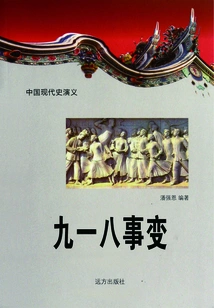
Romance of Modern Chinese History: September 18th Incident
General Fiction中国现代史演义:九一八事变
Compiled By Pan Qiangen
On the evening of September 18, 1931, the Japanese Kwantung Army entrenched in Northeast China carried out a carefully planned plot to blow up the tracks of the South Manchuria Railway near Liutiao Lake in Shenyang, and blamed the Chinese army. This is known as the "Wicker Lake Incident." The Japanese army used this as an excuse to suddenly launch an attack on the Chinese army stationed at Shenyang North Camp. As the Northeast Army implemented the "non-resistance policy", the Japanese army captured Beida Camp that night and occupied the entire Shenyang City the next day. The Japanese army continued to attack the vast areas of Liaoning, Jilin and Heilongjiang. In just over four months, the entire Northeast China of 1.28 Million square kilometers, equivalent to 3.5 Times Japan's territory, fell. This was the "September 18th Incident" that shocked China and the world.
On the evening of September 18, 1931, the Japanese Kwantung Army entrenched in Northeast China carried out a carefully planned plot to blow up the tracks of the South Manchuria Railway near Liutiao Lake in Shenyang, and blamed the Chinese army. This is known as the "Wicker Lake Incident." The Japanese army used this as an excuse to suddenly launch an attack on the Chinese army stationed at Shenyang North Camp. As the Northeast Army implemented the "non-resistance policy", the Japanese army captured Beida Camp that night and occupied the entire Shenyang City the next day. The Japanese army continued to attack the vast areas of Liaoning, Jilin and Heilongjiang. In just over four months, the entire Northeast China of 1.28 Million square kilometers, equivalent to 3.5 Times Japan's territory, fell. This was the "September 18th Incident" that shocked China and the world.
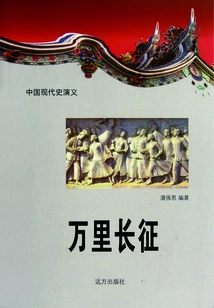
Romance of Modern Chinese History: the Long March
General Fiction中国现代史演义:万里长征
Compiled By Pan Qiangen
In the middle of winter, the mountains, fields and villages are immersed in a quiet cold, immersed in dazzling light and pale blue shadows. The ground seemed frozen to death, and even the air was icy. In the midwinter of 1932, Chiang Kai-shek ordered the Jiangxi-Guangdong-Fujian Border Region "Bandit Suppression" General Headquarters to organize the Kuomintang troops to conduct the fourth large-scale "encirclement and suppression" against the Central Soviet Area and the Red Front Army commanded by Zhu De and Zhou Enlai.
In the middle of winter, the mountains, fields and villages are immersed in a quiet cold, immersed in dazzling light and pale blue shadows. The ground seemed frozen to death, and even the air was icy. In the midwinter of 1932, Chiang Kai-shek ordered the Jiangxi-Guangdong-Fujian Border Region "Bandit Suppression" General Headquarters to organize the Kuomintang troops to conduct the fourth large-scale "encirclement and suppression" against the Central Soviet Area and the Red Front Army commanded by Zhu De and Zhou Enlai.
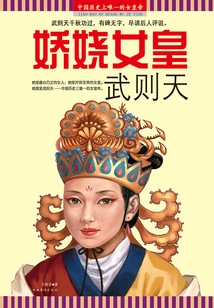
Charming Empress Wu Zetian
General Fiction娇娆女皇武则天
Wang Yongxing
Every historical figure is controversial. As the only female emperor in history, Wu Zetian is no exception. Some people say that she is a woman with a snake-like heart: to fight for favor, she strangles her daughter to death and kills the queen with a stick; to avenge old revenge, she kills her brother; to protect the throne, she murders her sister; to fight for the throne, she poisons her son; to protect the throne, she murders like a scorpion... Some people say that she is an enlightened and sage empress: an enlightened sage who selects virtuous people and accepts advice. However, Wu Zetian controlled national affairs in her hands and made others surrender before her. What kind of woman is she? What makes her turn things around in a society where men are superior to women? Next, let me take you all to uncover the veil on the face of this mysterious woman!
Every historical figure is controversial. As the only female emperor in history, Wu Zetian is no exception. Some people say that she is a woman with a snake-like heart: to fight for favor, she strangles her daughter to death and kills the queen with a stick; to avenge old revenge, she kills her brother; to protect the throne, she murders her sister; to fight for the throne, she poisons her son; to protect the throne, she murders like a scorpion... Some people say that she is an enlightened and sage empress: an enlightened sage who selects virtuous people and accepts advice. However, Wu Zetian controlled national affairs in her hands and made others surrender before her. What kind of woman is she? What makes her turn things around in a society where men are superior to women? Next, let me take you all to uncover the veil on the face of this mysterious woman!
清末那几年:一幕未散场的潜伏传奇
Snow Screen
At the end of the Qing Dynasty, foreign powers invaded, social turmoil occurred, and people's lives were miserable. In a posthouse in Tongzhou, an important town in Gyeonggi Province, there is a group of patriots lurking, Lin Yicheng, Sanniang, Zhang Mu, Li Er, Wang Pin... They worry about the world, and have established a deep friendship in their common life, helping each other; but they are also their own masters, either the "imperialist party", or the "rear party", or the "revolutionary party". They have different political opinions and monitor each other. In their eyes, what did the Boxer Rebellion, the invasion of the Eight-Power Allied Forces, the struggle between emperors and empresses, the Revolution of 1911, etc. Look like, and what was their fate like?
At the end of the Qing Dynasty, foreign powers invaded, social turmoil occurred, and people's lives were miserable. In a posthouse in Tongzhou, an important town in Gyeonggi Province, there is a group of patriots lurking, Lin Yicheng, Sanniang, Zhang Mu, Li Er, Wang Pin... They worry about the world, and have established a deep friendship in their common life, helping each other; but they are also their own masters, either the "imperialist party", or the "rear party", or the "revolutionary party". They have different political opinions and monitor each other. In their eyes, what did the Boxer Rebellion, the invasion of the Eight-Power Allied Forces, the struggle between emperors and empresses, the Revolution of 1911, etc. Look like, and what was their fate like?

Eternal Song
General Fiction千古绝唱
Yang Li
One piece of history, one piece of history. "Eternal Song" shows the splendid splendor of China's five thousand years of history and culture. It eulogized the greatness of the Chinese people. Yang Li's historical novel "Eternal Song" has beautiful writing, shocking plot, and rich historical connotation. It not only gives people a sense of history, but also enjoys the enjoyment of literary beauty, demonstrating her extraordinary literary talent.
One piece of history, one piece of history. "Eternal Song" shows the splendid splendor of China's five thousand years of history and culture. It eulogized the greatness of the Chinese people. Yang Li's historical novel "Eternal Song" has beautiful writing, shocking plot, and rich historical connotation. It not only gives people a sense of history, but also enjoys the enjoyment of literary beauty, demonstrating her extraordinary literary talent.
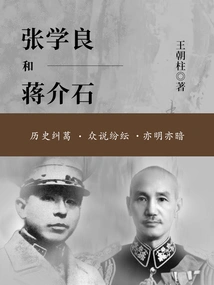
Zhang Xueliang and Chiang Kai-shek
General Fiction张学良和蒋介石
Dynasty Pillar
Zhang Xueliang and Chiang Kai-shek are famous figures in the history of China's modern times. They intersected during the most turbulent era of Chinese society, and participated in almost all major historical events together. Their historical entanglements have always been controversial, both overt and covert. "Selected Essays of Dynasty Pillar: Zhang Xueliang and Chiang Kai-shek" uses authoritative historical materials to record in detail the ups and downs and the special relationship between Zhang Xueliang and Chiang Kai-shek. It writes about whether they are close or distant, whether they are separated or combined, whether they are consistent or contradictory, all of which have had a great impact on Chinese history...
Zhang Xueliang and Chiang Kai-shek are famous figures in the history of China's modern times. They intersected during the most turbulent era of Chinese society, and participated in almost all major historical events together. Their historical entanglements have always been controversial, both overt and covert. "Selected Essays of Dynasty Pillar: Zhang Xueliang and Chiang Kai-shek" uses authoritative historical materials to record in detail the ups and downs and the special relationship between Zhang Xueliang and Chiang Kai-shek. It writes about whether they are close or distant, whether they are separated or combined, whether they are consistent or contradictory, all of which have had a great impact on Chinese history...
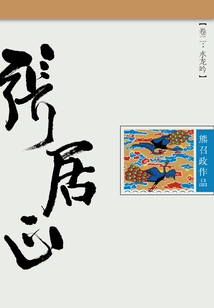
Zhang Juzheng (volume 2): Water Dragon Yin
General Fiction张居正(第二卷):水龙吟
Xiong Zhaozheng
The four-volume novel "Zhang Juzheng" vividly reproduces a vast and complex historical scene associated with the "Wanli New Deal" with sober historical rationality and warm and flexible realism, shaping the image of Zhang Juzheng, a complex feudal social reformer, and demonstrating the inevitability of his tragic fate. The author is distinguished by his rich literary and historical accomplishments, his magnificent and balanced artistic structure ability, and his contemporary revelation of specific historical background.
The four-volume novel "Zhang Juzheng" vividly reproduces a vast and complex historical scene associated with the "Wanli New Deal" with sober historical rationality and warm and flexible realism, shaping the image of Zhang Juzheng, a complex feudal social reformer, and demonstrating the inevitability of his tragic fate. The author is distinguished by his rich literary and historical accomplishments, his magnificent and balanced artistic structure ability, and his contemporary revelation of specific historical background.
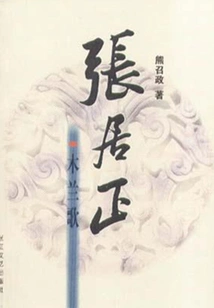
Zhang Juzheng (volume 1): Mulan Song
General Fiction张居正(第一卷):木兰歌
I
This book is the first volume in the series of long historical novels "Zhang Juzheng". Focusing on the political struggle between the two powerful officials Zhang Juzheng and Chief Assistant Gao Gong, it shows the ebb and flow of various political forces inside and outside the palace, depicts the complexity and cruelty of the struggle, and creates a number of characters with distinctive personalities such as Zhang Juzheng, Gao Gong, Feng Bao, and Li Guifei.
This book is the first volume in the series of long historical novels "Zhang Juzheng". Focusing on the political struggle between the two powerful officials Zhang Juzheng and Chief Assistant Gao Gong, it shows the ebb and flow of various political forces inside and outside the palace, depicts the complexity and cruelty of the struggle, and creates a number of characters with distinctive personalities such as Zhang Juzheng, Gao Gong, Feng Bao, and Li Guifei.
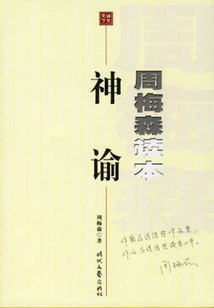
Oracle
General Fiction神谕
Mason Zhou
"Oracle" is a novel that reflects the political history of gangs in the late Qing Dynasty in my country. It describes the historical fact that Ruan Dacheng, a powerful figure in the Hongmen Tiandihui, took the opportunity to rise up and then perished.
"Oracle" is a novel that reflects the political history of gangs in the late Qing Dynasty in my country. It describes the historical fact that Ruan Dacheng, a powerful figure in the Hongmen Tiandihui, took the opportunity to rise up and then perished.
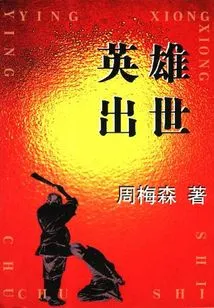
A Hero is Born
General Fiction英雄出世
Mason Zhou
This book is a historical novel by the author. It is set in the late Qing Dynasty and the early Republic of China. It starts from different aspects and the living conditions of different social classes, showing readers endless memorable stories.
This book is a historical novel by the author. It is set in the late Qing Dynasty and the early Republic of China. It starts from different aspects and the living conditions of different social classes, showing readers endless memorable stories.