Library
Browse and search books
156 novels found
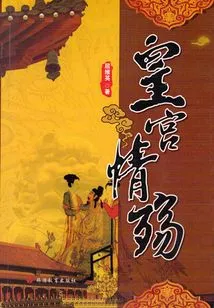
Love in the Palace
History皇宫情殇
Qu Weiying
"Palace of Love" is the first domestic book to highlight the tragedy of royal emotions, the palace burning with "jealousy", the royal "trial marriage" that deprives others of their emotions, the naked swimming pool of the emperor and the women, the earliest red light district in ancient China, the emperor's unspeakable secrets and his habit of cutting off his sleeves, the ugly sexual bribery and sex memorials, and the fire deception of "picking yin and replenishing yang", giving you a deeper understanding of feudal society.
"Palace of Love" is the first domestic book to highlight the tragedy of royal emotions, the palace burning with "jealousy", the royal "trial marriage" that deprives others of their emotions, the naked swimming pool of the emperor and the women, the earliest red light district in ancient China, the emperor's unspeakable secrets and his habit of cutting off his sleeves, the ugly sexual bribery and sex memorials, and the fire deception of "picking yin and replenishing yang", giving you a deeper understanding of feudal society.
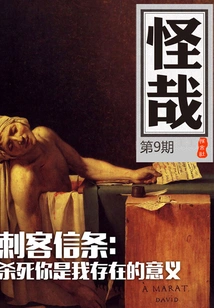
刺客信条:杀死你是我存在的意义
Agency
Assassin is an ancient profession, but there are very few assassins who have left their names in history, because of the understandable reason - secrecy. They hide in the darkness all year round, and the purpose of their actions is to let the blood of the assassination target flow on the ground. If they fail, then their own blood will flow on the ground. They disappear quietly, just like they appeared silently. This issue collects several assassins who have left their names in history, as well as several famous assassination organizations.
Assassin is an ancient profession, but there are very few assassins who have left their names in history, because of the understandable reason - secrecy. They hide in the darkness all year round, and the purpose of their actions is to let the blood of the assassination target flow on the ground. If they fail, then their own blood will flow on the ground. They disappear quietly, just like they appeared silently. This issue collects several assassins who have left their names in history, as well as several famous assassination organizations.
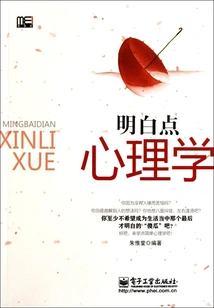
Understand Some Psychology
History明白点心理学
Compiled By Zhu Weitang
Life is about dealing with people. Understanding some simple psychology will allow us to be more prepared to deal with all kinds of strangers and all kinds of emergencies. If you are willing to spend some time looking at the stories and content in this book, you will find that these are exactly what you need. When you try to understand others and solve problems through the methods in this book, you will find that everyone has "talent".
Life is about dealing with people. Understanding some simple psychology will allow us to be more prepared to deal with all kinds of strangers and all kinds of emergencies. If you are willing to spend some time looking at the stories and content in this book, you will find that these are exactly what you need. When you try to understand others and solve problems through the methods in this book, you will find that everyone has "talent".
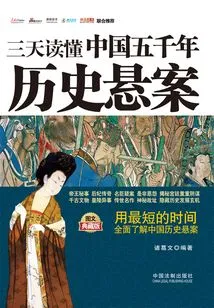
Three Days to Understand China's 5,000-year History of Unsolved Cases (latest Upgraded Version)
History三天读懂中国五千年历史悬案(最新升级版)
Zhuge Wen
The most in-depth, exclusive and exciting mystery in Chinese history! The attitude of official history, the style of unofficial history, secrets, legends, unofficial history, and miscellaneous news will definitely satisfy your curiosity!
The most in-depth, exclusive and exciting mystery in Chinese history! The attitude of official history, the style of unofficial history, secrets, legends, unofficial history, and miscellaneous news will definitely satisfy your curiosity!
民国军阀的后宫生活
Jiang Feng
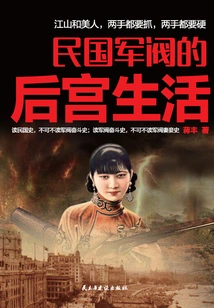
The warlords of the Republic of China fought for territory, the army, power, and women. You might as well go back in time and take a look. There is no warlord who does not pat his chest and arrogantly promise, "I am a strong man." In this way, the unique landscape of the Republic of China warlords with many wives and concubines emerged. When reading the history of the Republic of China, you must read the history of warlords, and you must read the bits and pieces of women in the history of warlords. Compared with the strong smell of copper and blood, the wives and concubines of warlords are like adding a little spice to this cruel history, with all the ups and downs. The wives and concubines of the warlords in the Republic of China were in so many different shapes that one pen cannot describe them completely. This is the biggest regret. But did the wives and concubines of the warlords of the Republic of China have no regrets? How can these regrets be written down in one word, a few sentences, or several articles? Rather than covering everything, it's better to stick to the shortcomings. Leave more space for friends who are reading "Wives of Warlords and Concubines of the Republic of China" with me.
The warlords of the Republic of China fought for territory, the army, power, and women. You might as well go back in time and take a look. There is no warlord who does not pat his chest and arrogantly promise, "I am a strong man." In this way, the unique landscape of the Republic of China warlords with many wives and concubines emerged. When reading the history of the Republic of China, you must read the history of warlords, and you must read the bits and pieces of women in the history of warlords. Compared with the strong smell of copper and blood, the wives and concubines of warlords are like adding a little spice to this cruel history, with all the ups and downs. The wives and concubines of the warlords in the Republic of China were in so many different shapes that one pen cannot describe them completely. This is the biggest regret. But did the wives and concubines of the warlords of the Republic of China have no regrets? How can these regrets be written down in one word, a few sentences, or several articles? Rather than covering everything, it's better to stick to the shortcomings. Leave more space for friends who are reading "Wives of Warlords and Concubines of the Republic of China" with me.
Unofficial History is Even Crazier: Alternative Historical Styles of the Tang and Song Dynasties
History野史更疯狂:另类的唐宋历史风情
Lao Cai's Vegetable Garden
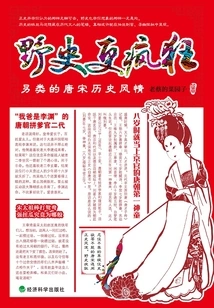
This book is divided into seven chapters: "Legends of the Emperors", "Secret History of the Palace", "Official Affairs", "Anecdotes of Celebrities", "Exploration of Mysterious History", "Folk Gossip", and "Rhymes of the Tang Dynasty and Song Dynasty". The content includes: Is Emperor Taizong of the Tang Dynasty a hypocrite or a traitor? Why did Emperor Taizong of the Tang Dynasty become an emperor after being angered three times? The absurd story of the life and death of the passionate emperor and his two queens, why the famous minister Fang Xuanling feared his wife like a tiger, etc.
This book is divided into seven chapters: "Legends of the Emperors", "Secret History of the Palace", "Official Affairs", "Anecdotes of Celebrities", "Exploration of Mysterious History", "Folk Gossip", and "Rhymes of the Tang Dynasty and Song Dynasty". The content includes: Is Emperor Taizong of the Tang Dynasty a hypocrite or a traitor? Why did Emperor Taizong of the Tang Dynasty become an emperor after being angered three times? The absurd story of the life and death of the passionate emperor and his two queens, why the famous minister Fang Xuanling feared his wife like a tiger, etc.
Behind the Scenes News
History幕后新闻
Guan Jie
This book includes the secret of the world's best story telling village, the mysterious disappearance of Zheng Banqiao's authentic works, the popularity of General Zhong Wei in Hunan folk oral literature, the four-hundred-year wandering history of Hai Rui's seal, the martial arts legends in Tai Chi's hometown, the old woman from Shaoshan who entertained Mao Zedong, and other mysterious chapters to satisfy readers all over the world's desire to solve historical mysteries...
This book includes the secret of the world's best story telling village, the mysterious disappearance of Zheng Banqiao's authentic works, the popularity of General Zhong Wei in Hunan folk oral literature, the four-hundred-year wandering history of Hai Rui's seal, the martial arts legends in Tai Chi's hometown, the old woman from Shaoshan who entertained Mao Zedong, and other mysterious chapters to satisfy readers all over the world's desire to solve historical mysteries...
乱世解码:犀利说民国
Wang Lei
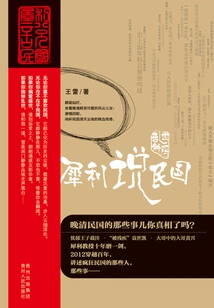
This book is an alternative history of the Republic of China for the general public. It provides an alternative interpretation of the most chaotic and exciting troubled times in Chinese history, deciphers the black and white lives of the bigwigs of the Republic of China, and deciphers the rules of survival in troubled times. If you understand the troubled times, you will understand history and life, and you will naturally uncover the ambitions of heroes and tyrants, and the life-and-death knots of great and villains. The author has studied the history of the Republic of China for many years and has consulted tens of millions of words of historical materials. He has a solid professional foundation and a broad ideological vision, which is different from the impetuousness of grassroots history theory and the boring academic history. With rigorous historical facts, sharp perspective, and pleasant writing style, it directly points to people's hearts and heartily decodes the black and white past events in troubled times. History that speaks directly to people's hearts may not necessarily be the best, but it must be the most enjoyable. History can be very exciting, and the Republic of China is certainly even more exciting.
This book is an alternative history of the Republic of China for the general public. It provides an alternative interpretation of the most chaotic and exciting troubled times in Chinese history, deciphers the black and white lives of the bigwigs of the Republic of China, and deciphers the rules of survival in troubled times. If you understand the troubled times, you will understand history and life, and you will naturally uncover the ambitions of heroes and tyrants, and the life-and-death knots of great and villains. The author has studied the history of the Republic of China for many years and has consulted tens of millions of words of historical materials. He has a solid professional foundation and a broad ideological vision, which is different from the impetuousness of grassroots history theory and the boring academic history. With rigorous historical facts, sharp perspective, and pleasant writing style, it directly points to people's hearts and heartily decodes the black and white past events in troubled times. History that speaks directly to people's hearts may not necessarily be the best, but it must be the most enjoyable. History can be very exciting, and the Republic of China is certainly even more exciting.
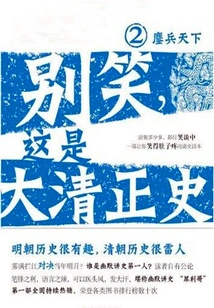
别笑,这是大清正史2:鏖兵天下
Fog Blocks The River
This book describes the 105-year history from the birth of the demon king Zhang Xianzhong (1606 AD) to the fifty-ninth year of Kangxi (1720) when Yue Zhongqi entered Tibet and defeated the Junggar soldiers. With his sharp writing style and spicy words, the author vividly reproduces Zheng Chenggong's ever-increasing frustration and loyalty, Emperor Shunzhi's crazy and frustrated struggle for love, and Kangxi's "haha" martial arts of capturing Oboi, pacifying San Francisco, and destroying Junggar. In this book, the image of the all-powerful historical figure is completely overturned. The heroic image of the "great traitor" Wu Sangui is more majestic in benevolence and loyalty. The Mingjun Kangxi, the emperor through the ages and widely praised by later generations, was a pervert with twisted psychology, surly personality, and shameless behavior. At first reading, it seems like a thunderous shock, which makes people's hair stand on end and is difficult to accept. But if you think about it carefully, you can find the infinite true meaning in it.
This book describes the 105-year history from the birth of the demon king Zhang Xianzhong (1606 AD) to the fifty-ninth year of Kangxi (1720) when Yue Zhongqi entered Tibet and defeated the Junggar soldiers. With his sharp writing style and spicy words, the author vividly reproduces Zheng Chenggong's ever-increasing frustration and loyalty, Emperor Shunzhi's crazy and frustrated struggle for love, and Kangxi's "haha" martial arts of capturing Oboi, pacifying San Francisco, and destroying Junggar. In this book, the image of the all-powerful historical figure is completely overturned. The heroic image of the "great traitor" Wu Sangui is more majestic in benevolence and loyalty. The Mingjun Kangxi, the emperor through the ages and widely praised by later generations, was a pervert with twisted psychology, surly personality, and shameless behavior. At first reading, it seems like a thunderous shock, which makes people's hair stand on end and is difficult to accept. But if you think about it carefully, you can find the infinite true meaning in it.