Library
Browse and search books
3,417 novels found
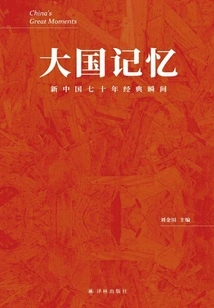
大国记忆:新中国七十年经典瞬间
Editor-in-chief Liu Jintian
The book is divided into ten parts: "Rebirth from the Ashes", "Reshaping the Old River", "Laying the Foundation", "Going Your Own Path", "Advancing in the Winds and Waves", "Historical Turning Point", "Century Leap", "Scientific Development", "Building the Dream of China" and "Strive for a New Era". It selects nearly 200 historical moments such as the founding ceremony and the peaceful liberation of Tibet to comprehensively display the magnificent and colorful picture of the seventy years of New China. "The road to the great pass is really like iron, but now we are crossing it from the beginning." Looking back on the road we have traveled is to move forward better. The brilliant achievements of New China over the past seventy years since its founding have become our precious wealth and indicate the bright prospects for the great rejuvenation of the Chinese nation.
The book is divided into ten parts: "Rebirth from the Ashes", "Reshaping the Old River", "Laying the Foundation", "Going Your Own Path", "Advancing in the Winds and Waves", "Historical Turning Point", "Century Leap", "Scientific Development", "Building the Dream of China" and "Strive for a New Era". It selects nearly 200 historical moments such as the founding ceremony and the peaceful liberation of Tibet to comprehensively display the magnificent and colorful picture of the seventy years of New China. "The road to the great pass is really like iron, but now we are crossing it from the beginning." Looking back on the road we have traveled is to move forward better. The brilliant achievements of New China over the past seventy years since its founding have become our precious wealth and indicate the bright prospects for the great rejuvenation of the Chinese nation.
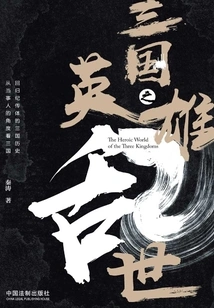
三国之英雄乱世
Qin Tao
This book is a popular book on the history of the Three Kingdoms written by experts on the history of the Three Kingdoms for the majority of lovers of the history of the Three Kingdoms. It comprehensively introduces the important historical events and historical figures from the warlord melee in 190 AD to the Jin Dynasty's destruction of Wu and the unification of the south in 280 AD, involving politics, military, economy, culture and other aspects, allowing readers to quickly have a systematic and comprehensive understanding of the Three Kingdoms period. Respecting historical truth is a major feature of this set of books. It truly restores the true appearance, thoughts and styles of historical figures such as Cao Cao, Sun Quan, Zhuge Liang, and Sima Yi, and summarizes the strategies and wisdom of the figures during the Three Kingdoms period for future generations to learn from. "The Romance of the Three Kingdoms" is a historical romance novel. Reading "The Romance of the Three Kingdoms" is equivalent to appreciating the story of the Three Kingdoms from a god's perspective. But the real history book "Three Kingdoms" is a character-centered biography. Reading "Three Kingdoms" is equivalent to experiencing the history of the Three Kingdoms from a first-person perspective, as if we are the heroic figures who galloped on the historical stage thousands of years ago. "Heroes of the Three Kingdoms: Troubled Times" will be character-centered and will experience with you that era when heroes emerged in large numbers.
This book is a popular book on the history of the Three Kingdoms written by experts on the history of the Three Kingdoms for the majority of lovers of the history of the Three Kingdoms. It comprehensively introduces the important historical events and historical figures from the warlord melee in 190 AD to the Jin Dynasty's destruction of Wu and the unification of the south in 280 AD, involving politics, military, economy, culture and other aspects, allowing readers to quickly have a systematic and comprehensive understanding of the Three Kingdoms period. Respecting historical truth is a major feature of this set of books. It truly restores the true appearance, thoughts and styles of historical figures such as Cao Cao, Sun Quan, Zhuge Liang, and Sima Yi, and summarizes the strategies and wisdom of the figures during the Three Kingdoms period for future generations to learn from. "The Romance of the Three Kingdoms" is a historical romance novel. Reading "The Romance of the Three Kingdoms" is equivalent to appreciating the story of the Three Kingdoms from a god's perspective. But the real history book "Three Kingdoms" is a character-centered biography. Reading "Three Kingdoms" is equivalent to experiencing the history of the Three Kingdoms from a first-person perspective, as if we are the heroic figures who galloped on the historical stage thousands of years ago. "Heroes of the Three Kingdoms: Troubled Times" will be character-centered and will experience with you that era when heroes emerged in large numbers.
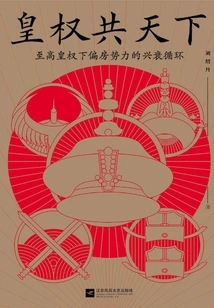
皇权共天下
Liu Shaodan
During the struggle for power, political groups dependent on imperial power continued to rise, fall, and be reborn. In the process of continuous improvement and strengthening, the imperial power politics of absolutism produced a large number of vassals: royal family, concubines, relatives, eunuchs, powerful officials, separatist regimes, vagrants and external forces. They can be a guarantee to strengthen and consolidate the imperial power, or they can be a bomb that creates hidden dangers for the imperial power. They are either benign or malignant. They always accompany the imperial power, covet the imperial power, and go through ups and downs in the changes of political power. Emperors of all dynasties have all struggled with these major forces. Who is in charge of the ups and downs in this ebb and flow?
During the struggle for power, political groups dependent on imperial power continued to rise, fall, and be reborn. In the process of continuous improvement and strengthening, the imperial power politics of absolutism produced a large number of vassals: royal family, concubines, relatives, eunuchs, powerful officials, separatist regimes, vagrants and external forces. They can be a guarantee to strengthen and consolidate the imperial power, or they can be a bomb that creates hidden dangers for the imperial power. They are either benign or malignant. They always accompany the imperial power, covet the imperial power, and go through ups and downs in the changes of political power. Emperors of all dynasties have all struggled with these major forces. Who is in charge of the ups and downs in this ebb and flow?
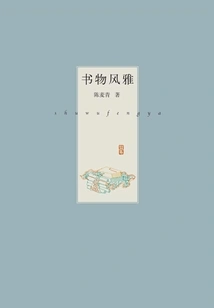
Elegant Books
History书物风雅
Chen Maiqing
Calligraphy and painting have always been an important part of the life of traditional Chinese literati. In the twentieth century, the traditional literati group gradually disappeared, and the appreciation of calligraphy and painting gradually became a specialized study. This book has a rigorous attitude and unique writing style. It contains many comments on the appreciation of calligraphy and painting since modern times and the photocopying of inscriptions and inscriptions. It also covers the engravings of the Republic of China and other important figures. It also talks about Xu Senyu, Ye Gongchuo, Zhang Congyu, Zhang Daqian, Zhu Shengzhai, Wang Jiqian, Gu Luofu, Xie Zhiliu and other important figures. There are also words in memory of Mr. Huang Shang and Mr. Zhu Weizheng to record the origin of the compilation.
Calligraphy and painting have always been an important part of the life of traditional Chinese literati. In the twentieth century, the traditional literati group gradually disappeared, and the appreciation of calligraphy and painting gradually became a specialized study. This book has a rigorous attitude and unique writing style. It contains many comments on the appreciation of calligraphy and painting since modern times and the photocopying of inscriptions and inscriptions. It also covers the engravings of the Republic of China and other important figures. It also talks about Xu Senyu, Ye Gongchuo, Zhang Congyu, Zhang Daqian, Zhu Shengzhai, Wang Jiqian, Gu Luofu, Xie Zhiliu and other important figures. There are also words in memory of Mr. Huang Shang and Mr. Zhu Weizheng to record the origin of the compilation.
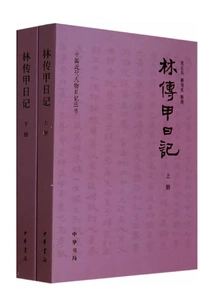
中国近代人物文集丛书:林传甲日记(全二册)
Kuang Zhengbing Xie Xun Lingzong
Lin Chuanjia was a famous scholar in the late Qing Dynasty. This book collects two existing diaries of Lin Chuanjia, namely "Choubixuan Reading Diary" and "Heilongjiang Education Diary". The former is a reading diary written by Gengzi (1900) when he entered the Hunan Academy of Education, and the latter is an uninterrupted record of Lin's three consecutive years of education in Heilongjiang. It is a first-hand source for studying the academic history and educational history of the late Qing Dynasty and the Republic of China.
Lin Chuanjia was a famous scholar in the late Qing Dynasty. This book collects two existing diaries of Lin Chuanjia, namely "Choubixuan Reading Diary" and "Heilongjiang Education Diary". The former is a reading diary written by Gengzi (1900) when he entered the Hunan Academy of Education, and the latter is an uninterrupted record of Lin's three consecutive years of education in Heilongjiang. It is a first-hand source for studying the academic history and educational history of the late Qing Dynasty and the Republic of China.
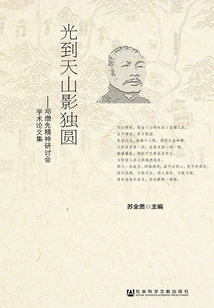
光到天山影独圆:邓缵先精神研讨会学术论文集
Editor-in-chief Su Quangui
This book is a collection of papers submitted at the "Deng Zuanxian Spiritual Seminar" held by the Heyuan Municipal Party Committee to commemorate the 150th anniversary of Deng Zuanxian's birth. Deng Zuanxian, a native of Heyuan City, Guangdong Province, is known as a frontier historian, a famous frontier fortress poet, a modern patriotic and upright official, and a hero who sacrificed his life while guarding the border. He is an iconic figure in the modern history of Xinjiang. This book analyzes and studies Deng Zuanxian's thoughts and career contributions during his tenure in Xinjiang, Deng Zuanxian's poems and essays, and the inspiration and experience of border construction during Deng Zuanxian's period through thematic essays.
This book is a collection of papers submitted at the "Deng Zuanxian Spiritual Seminar" held by the Heyuan Municipal Party Committee to commemorate the 150th anniversary of Deng Zuanxian's birth. Deng Zuanxian, a native of Heyuan City, Guangdong Province, is known as a frontier historian, a famous frontier fortress poet, a modern patriotic and upright official, and a hero who sacrificed his life while guarding the border. He is an iconic figure in the modern history of Xinjiang. This book analyzes and studies Deng Zuanxian's thoughts and career contributions during his tenure in Xinjiang, Deng Zuanxian's poems and essays, and the inspiration and experience of border construction during Deng Zuanxian's period through thematic essays.
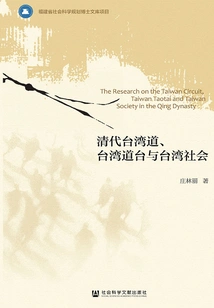
清代台湾道、台湾道台与台湾社会(福建省社会科学规划博士文库项目)
Zhuang Linli
This book conducts a detailed study of the establishment of Taiwan Daotai in the Qing Dynasty, the situation of successive Taiwan Daotai, and the achievements of Taiwan Daotai in various aspects of Taiwan. It also provides a detailed introduction to the experiences of successive Taiwan Daotai. The author of the book focuses on Taiwan Daotai and examines the role of the construction of Taiwan's official system on Taiwan's social construction. This shows that Taiwan's society has been developing continuously under the jurisdiction of the central government. The establishment of Taiwan Road and the series of measures taken by Taiwan Road in handling Taiwan affairs also fully reflect the characteristics of the political, military, economic and cultural integration of Fujian and Taiwan.
This book conducts a detailed study of the establishment of Taiwan Daotai in the Qing Dynasty, the situation of successive Taiwan Daotai, and the achievements of Taiwan Daotai in various aspects of Taiwan. It also provides a detailed introduction to the experiences of successive Taiwan Daotai. The author of the book focuses on Taiwan Daotai and examines the role of the construction of Taiwan's official system on Taiwan's social construction. This shows that Taiwan's society has been developing continuously under the jurisdiction of the central government. The establishment of Taiwan Road and the series of measures taken by Taiwan Road in handling Taiwan affairs also fully reflect the characteristics of the political, military, economic and cultural integration of Fujian and Taiwan.
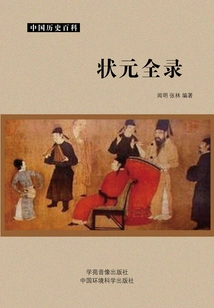
状元全录
Compiled By Wen Ming And Zhang Lin
China is a huge country with a splendid civilization history of five thousand years and full of vitality and vitality. The Chinese nation has long been standing in the east of the world, and has continued for hundreds of generations.
China is a huge country with a splendid civilization history of five thousand years and full of vitality and vitality. The Chinese nation has long been standing in the east of the world, and has continued for hundreds of generations.
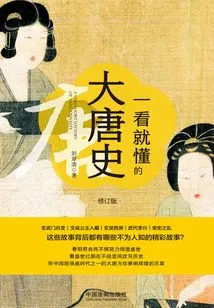
一看就懂的大唐史(修订版)
Liu Cuiqing
It took nearly three hundred years from the time when Emperor Gaozu of the Tang Dynasty, Li Yuan, raised troops in Jinyang to the time when the Tang Dynasty was destroyed by Zhu Wen. Emperor Gaozu raised an army to destroy the Sui Dynasty, and Emperor Taizong's Xuanwumen rebelled and seized power. He then worked hard to govern, select and appoint talents, and create the "Government of Zhenguan". After the third generation of the Tang Dynasty, Li Xing of the Wu Dynasty, the first female emperor in Chinese history, came to rule the world and changed the Tang Dynasty to Zhou Dynasty, continuing the prosperous age. When Emperor Xuanzong of the Tang Dynasty came to the throne, he placed great emphasis on virtuous ministers and created the "Kaiyuan prosperous age". However, in his later years, he indulged in pleasure and the "An-Shi Rebellion" ruined this prosperous age. Although the Rebellion of the Eight Years of Anshi was finally put down, the Tang Dynasty never flourished again. Although there were virtuous kings in the middle and late Tang Dynasty, the decline of the Tang Dynasty was unstoppable.
It took nearly three hundred years from the time when Emperor Gaozu of the Tang Dynasty, Li Yuan, raised troops in Jinyang to the time when the Tang Dynasty was destroyed by Zhu Wen. Emperor Gaozu raised an army to destroy the Sui Dynasty, and Emperor Taizong's Xuanwumen rebelled and seized power. He then worked hard to govern, select and appoint talents, and create the "Government of Zhenguan". After the third generation of the Tang Dynasty, Li Xing of the Wu Dynasty, the first female emperor in Chinese history, came to rule the world and changed the Tang Dynasty to Zhou Dynasty, continuing the prosperous age. When Emperor Xuanzong of the Tang Dynasty came to the throne, he placed great emphasis on virtuous ministers and created the "Kaiyuan prosperous age". However, in his later years, he indulged in pleasure and the "An-Shi Rebellion" ruined this prosperous age. Although the Rebellion of the Eight Years of Anshi was finally put down, the Tang Dynasty never flourished again. Although there were virtuous kings in the middle and late Tang Dynasty, the decline of the Tang Dynasty was unstoppable.
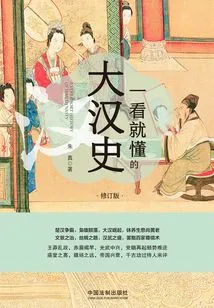
一看就懂的大汉史(修订版)
Zhu Zhen
The Han Dynasty was the foundation period of my country's feudal society. It lasted for more than 400 years and was divided into the Western Han Dynasty and the Eastern Han Dynasty. The capital of the Western Han Dynasty was Chang'an, and the capital of the Eastern Han Dynasty was Luoyang. The Eastern and Western Han Dynasties created many important systems in Chinese history, laying the foundation for the establishment and development of institutional systems in subsequent dynasties in China. During this period, in addition to its strong political, economic, and military strength, the Han Dynasty also made fruitful achievements in ideology, culture, art, and science and technology. This book takes you on a journey through the history of the Han Dynasty and appreciate the long history of Chinese culture in a simple and in-depth way.
The Han Dynasty was the foundation period of my country's feudal society. It lasted for more than 400 years and was divided into the Western Han Dynasty and the Eastern Han Dynasty. The capital of the Western Han Dynasty was Chang'an, and the capital of the Eastern Han Dynasty was Luoyang. The Eastern and Western Han Dynasties created many important systems in Chinese history, laying the foundation for the establishment and development of institutional systems in subsequent dynasties in China. During this period, in addition to its strong political, economic, and military strength, the Han Dynasty also made fruitful achievements in ideology, culture, art, and science and technology. This book takes you on a journey through the history of the Han Dynasty and appreciate the long history of Chinese culture in a simple and in-depth way.
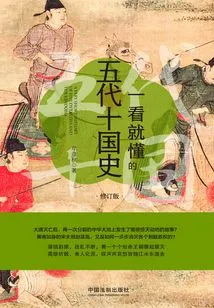
一看就懂的五代十国史(修订版)
Mou Yanqiu
Zhu Wen's destruction of the Tang Dynasty ended nearly three centuries of splendor and splendor of the Tang Dynasty, and also started half a century of division and war in China. Later Liang, Later Tang, Later Jin, Later Han and Later Zhou emerged alternately in the Central Plains. In the end, Zhao Kuangyin, who launched the Chenqiao mutiny, joined the army, thus ending the Five Dynasties and establishing the Song Dynasty. The Central Plains has been unified, but outside the Central Plains region, the former Shu, Hou Shu, Wu, Southern Tang, Wuyue, Fujian, Chu, Southern Han, Nanping (Jingnan), Northern Han, etc. Are still performing the drama of big fish eating small fish. However, reunification has become a general trend. No matter whether you are conscientious or ignorant, you will never escape the fate of destroying the country.
Zhu Wen's destruction of the Tang Dynasty ended nearly three centuries of splendor and splendor of the Tang Dynasty, and also started half a century of division and war in China. Later Liang, Later Tang, Later Jin, Later Han and Later Zhou emerged alternately in the Central Plains. In the end, Zhao Kuangyin, who launched the Chenqiao mutiny, joined the army, thus ending the Five Dynasties and establishing the Song Dynasty. The Central Plains has been unified, but outside the Central Plains region, the former Shu, Hou Shu, Wu, Southern Tang, Wuyue, Fujian, Chu, Southern Han, Nanping (Jingnan), Northern Han, etc. Are still performing the drama of big fish eating small fish. However, reunification has become a general trend. No matter whether you are conscientious or ignorant, you will never escape the fate of destroying the country.
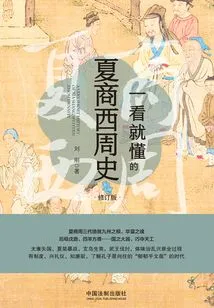
一看就懂的夏商西周史(修订版)
Liu Gang
Xia, Shang, and Zhou are collectively called the "Three Dynasties" because they cannot be counted as a "dynasty". The term "chao" refers to the Qin Dynasty and later. The main difference is whether there is a strong and powerful central government that governs the country. This was the case in Qin and beyond, but it was different in Xia, Shang, and Zhou. At best, they could be regarded as tribal alliances, tribal-state alliances, or state-state alliances. Their so-called central power is only based on the land of "China", which is the center of the world in their perception. However, their control over all parts of the country and the princes is very weak and unreliable. This is different from the Qin and Han Dynasties and beyond.
Xia, Shang, and Zhou are collectively called the "Three Dynasties" because they cannot be counted as a "dynasty". The term "chao" refers to the Qin Dynasty and later. The main difference is whether there is a strong and powerful central government that governs the country. This was the case in Qin and beyond, but it was different in Xia, Shang, and Zhou. At best, they could be regarded as tribal alliances, tribal-state alliances, or state-state alliances. Their so-called central power is only based on the land of "China", which is the center of the world in their perception. However, their control over all parts of the country and the princes is very weak and unreliable. This is different from the Qin and Han Dynasties and beyond.
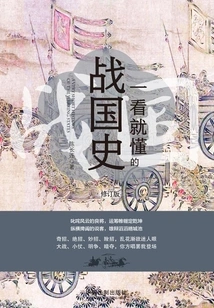
The History of the Warring States Period That You Can Understand at a Glance: Revised Edition
History一看就懂的战国史:修订版
Chen Changlian
During the Warring States Period, society was turbulent and heroes came together. The seven powerful states of Qi, Chu, Yan, Han, Zhao, Wei, and Qin fought against each other in a battle of wits and courage, and launched a desperate contest. If you unite vertically, I will unite horizontally. Sun Wu, Wu Qi, Sun Bin, Zhao She, Le Yi, Zou Ji, Su Qin, Zhang Yi, Wei Yang and other famous ministers and generals all appeared on the stage, each showing his style in the gathering. Over the past two hundred years, how the hegemonic Wei lost power, how the powerful Qi destroyed itself, how the powerful Chu was manipulated, how the originally backward Qin State became strong and powerful, how the struggle for hegemony between the seven heroes evolved into the Qin State unifying the six countries... Everything is in "The History of the Warring States Period that You Can Understand at a Glance".
During the Warring States Period, society was turbulent and heroes came together. The seven powerful states of Qi, Chu, Yan, Han, Zhao, Wei, and Qin fought against each other in a battle of wits and courage, and launched a desperate contest. If you unite vertically, I will unite horizontally. Sun Wu, Wu Qi, Sun Bin, Zhao She, Le Yi, Zou Ji, Su Qin, Zhang Yi, Wei Yang and other famous ministers and generals all appeared on the stage, each showing his style in the gathering. Over the past two hundred years, how the hegemonic Wei lost power, how the powerful Qi destroyed itself, how the powerful Chu was manipulated, how the originally backward Qin State became strong and powerful, how the struggle for hegemony between the seven heroes evolved into the Qin State unifying the six countries... Everything is in "The History of the Warring States Period that You Can Understand at a Glance".
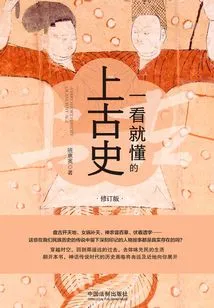
一看就懂的上古史(修订版)
Ban Huiying
When we talk about history, we are just talking about people, so when we talk about ancient history, we also start with people. Where did man come from? People in ancient times couldn't explain it at all, so the idea that the Creator God created man and the world emerged. There is God in the West, and we in the East also have Pangu and Nuwa. In the era when this kind of deification of the Creator God occurred, even if writing had not yet been invented, there must have been language and simple social organization. But humans probably evolved from monkeys. Monkeys don't make up a myth and pass it down orally to future generations. Therefore, when people first became human, they did not have those deifications. Since there is no mythology as a reference, it is naturally impossible to have historical data. But we still have to talk about ancient history, and we have to talk about it clearly, and this requires archeology.
When we talk about history, we are just talking about people, so when we talk about ancient history, we also start with people. Where did man come from? People in ancient times couldn't explain it at all, so the idea that the Creator God created man and the world emerged. There is God in the West, and we in the East also have Pangu and Nuwa. In the era when this kind of deification of the Creator God occurred, even if writing had not yet been invented, there must have been language and simple social organization. But humans probably evolved from monkeys. Monkeys don't make up a myth and pass it down orally to future generations. Therefore, when people first became human, they did not have those deifications. Since there is no mythology as a reference, it is naturally impossible to have historical data. But we still have to talk about ancient history, and we have to talk about it clearly, and this requires archeology.
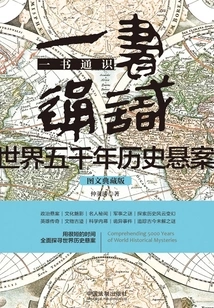
一书通识世界五千年历史悬案
Zhong Yingtao
This book is a book about human history. It introduces in depth some unsolved cases in world history, attracts readers to pay attention to world history, and guides people to review world history, reflect on the present, and learn to use the historical reference system to correct today's actions and practices. This book is easy to understand. For those who love history but have no time to read large historical works in their busy work, "One Book to Comprehend Five Thousand Years of History of the World" should be a good choice for understanding history.
This book is a book about human history. It introduces in depth some unsolved cases in world history, attracts readers to pay attention to world history, and guides people to review world history, reflect on the present, and learn to use the historical reference system to correct today's actions and practices. This book is easy to understand. For those who love history but have no time to read large historical works in their busy work, "One Book to Comprehend Five Thousand Years of History of the World" should be a good choice for understanding history.
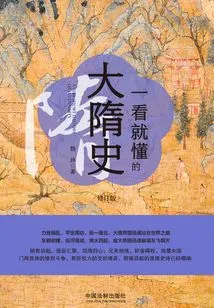
一看就懂的大隋史(修订版)
Wei Ting
Yang Jian, who was born in the Yang family of Hongnong, rose from the position of abbot of the Northern Zhou Dynasty to the founding emperor of the Sui Dynasty. In the process, he carefully avoided the hidden arrows of Yu Wenhu, the powerful minister of the Northern Zhou Dynasty, and the suspicion of Yu Wenyong, the Emperor Wu of the Northern Zhou Dynasty. After the mediocre Emperor Xuan ascended the throne, Yang Jian finally waited for the opportunity to change dynasties and establish the Sui Dynasty. During this period, he worked hard and worked hard, and finally created the "Kaihuang Rule". However, under the instigation of Queen Dugu, Yang Jian deposed the crown prince and established Yang Guang, which was a big mistake. Although Yang Guang made contributions to the country after his death, his headstrong and arrogant character eventually led him to embark on the path of militarism and disregard of human life. In the end, heroes rose up and the Sui Dynasty perished.
Yang Jian, who was born in the Yang family of Hongnong, rose from the position of abbot of the Northern Zhou Dynasty to the founding emperor of the Sui Dynasty. In the process, he carefully avoided the hidden arrows of Yu Wenhu, the powerful minister of the Northern Zhou Dynasty, and the suspicion of Yu Wenyong, the Emperor Wu of the Northern Zhou Dynasty. After the mediocre Emperor Xuan ascended the throne, Yang Jian finally waited for the opportunity to change dynasties and establish the Sui Dynasty. During this period, he worked hard and worked hard, and finally created the "Kaihuang Rule". However, under the instigation of Queen Dugu, Yang Jian deposed the crown prince and established Yang Guang, which was a big mistake. Although Yang Guang made contributions to the country after his death, his headstrong and arrogant character eventually led him to embark on the path of militarism and disregard of human life. In the end, heroes rose up and the Sui Dynasty perished.
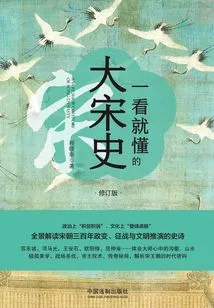
一看就懂的大宋史(修订版)
Cheng Xiaonan
The Northern Song Dynasty was the most prosperous era of economic and cultural prosperity in ancient Chinese history, and was called China's Renaissance by many Western historians. During this period, Confucianism was revived, and the literary world of the Northern Song Dynasty gathered together with stars, such as Su Xun, Su Shi, Su Che, Ouyang Xiu, Wang Anshi, Zeng Gong, Yan Shu, Yan Jidao, Fan Zhongyan, Liu Yong, Huang Tingjian, Zhou Bangyan... It is no wonder that some people say that "since the Qin Dynasty, literature has not flourished in the Song Dynasty." Why does this happen? It is probably due to Zhao Kuangyin's national policy of "emphasis on literature and suppression of martial arts". But this has a big drawback, that is, the military is not strong, and it is always at a disadvantage when facing the Liao and Xixia in the north. The "Chanyuan Alliance" only relieved the pressure on the Northern Song Dynasty, but the military laxity directly led to the "Jingkang Disgrace". The Jin Kingdom captured Bianliang, and Song Huizong and Song Qinzong were both captured. The Song Dynasty had to move south to Hangzhou to establish its capital, and this was the end of the Northern Song Dynasty.
The Northern Song Dynasty was the most prosperous era of economic and cultural prosperity in ancient Chinese history, and was called China's Renaissance by many Western historians. During this period, Confucianism was revived, and the literary world of the Northern Song Dynasty gathered together with stars, such as Su Xun, Su Shi, Su Che, Ouyang Xiu, Wang Anshi, Zeng Gong, Yan Shu, Yan Jidao, Fan Zhongyan, Liu Yong, Huang Tingjian, Zhou Bangyan... It is no wonder that some people say that "since the Qin Dynasty, literature has not flourished in the Song Dynasty." Why does this happen? It is probably due to Zhao Kuangyin's national policy of "emphasis on literature and suppression of martial arts". But this has a big drawback, that is, the military is not strong, and it is always at a disadvantage when facing the Liao and Xixia in the north. The "Chanyuan Alliance" only relieved the pressure on the Northern Song Dynasty, but the military laxity directly led to the "Jingkang Disgrace". The Jin Kingdom captured Bianliang, and Song Huizong and Song Qinzong were both captured. The Song Dynasty had to move south to Hangzhou to establish its capital, and this was the end of the Northern Song Dynasty.
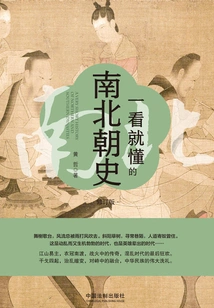
一看就懂的南北朝史(修订版)
Huang Zhe
Although the Three Kingdoms returned to the Jin Dynasty, the unified Western Jin Dynasty only lasted for fifty years. After the Eight Kings Rebellion, they had no choice but to migrate southward, which began with the Eastern Jin Dynasty and developed into the later Southern Dynasties, namely the Song, Qi, Liang, and Chen Dynasties. These four dynasties, together with the Eastern Jin Dynasty and the previous Dongwu Dynasty, are collectively referred to as the "Six Dynasties" in history. The Northern Dynasties were basically ruled by the Xianbei people, and went through the Northern Wei, Eastern Wei, Western Wei, Northern Qi, Northern Zhou, and the Sui Dynasty, which replaced the Northern Zhou Dynasty. After the Northern Zhou Dynasty destroyed the Northern Qi Dynasty, its leader was fatuous. Emperor Wen of the Sui Dynasty, Yang Jian, took advantage of the situation and took advantage of the situation. In addition, the last wise emperor of the Southern Dynasty, Chen Xu, died of illness. The century-long division between the north and the south finally ended, and the Sui and Tang Dynasties began. This book tells the story of the turbulent and vibrant era of the Southern and Northern Dynasties.
Although the Three Kingdoms returned to the Jin Dynasty, the unified Western Jin Dynasty only lasted for fifty years. After the Eight Kings Rebellion, they had no choice but to migrate southward, which began with the Eastern Jin Dynasty and developed into the later Southern Dynasties, namely the Song, Qi, Liang, and Chen Dynasties. These four dynasties, together with the Eastern Jin Dynasty and the previous Dongwu Dynasty, are collectively referred to as the "Six Dynasties" in history. The Northern Dynasties were basically ruled by the Xianbei people, and went through the Northern Wei, Eastern Wei, Western Wei, Northern Qi, Northern Zhou, and the Sui Dynasty, which replaced the Northern Zhou Dynasty. After the Northern Zhou Dynasty destroyed the Northern Qi Dynasty, its leader was fatuous. Emperor Wen of the Sui Dynasty, Yang Jian, took advantage of the situation and took advantage of the situation. In addition, the last wise emperor of the Southern Dynasty, Chen Xu, died of illness. The century-long division between the north and the south finally ended, and the Sui and Tang Dynasties began. This book tells the story of the turbulent and vibrant era of the Southern and Northern Dynasties.
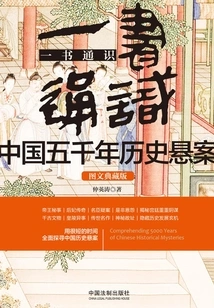
一书通识中国五千年历史悬案
Zhong Yingtao
In the long history of five thousand years, our ancestors worked hard to create the splendid Chinese civilization. As their descendants, how much do you know about these five thousand years of history? Come read this unsolved mystery of China's five thousand years of history, get closer to our ancestors, learn about their past lives, learn about the unsolved mysteries that happened in history, and explore the origin and context of Chinese civilization.
In the long history of five thousand years, our ancestors worked hard to create the splendid Chinese civilization. As their descendants, how much do you know about these five thousand years of history? Come read this unsolved mystery of China's five thousand years of history, get closer to our ancestors, learn about their past lives, learn about the unsolved mysteries that happened in history, and explore the origin and context of Chinese civilization.
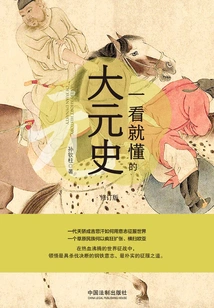
一看就懂的大元史(修订版)
Sun Qinzhu
The general trend of the world is that if it has been together for a long time, it must be divided, and if it has been divided for a long time, it must be reunited. This book takes military and political events as the main axis, minus the complicated branches, and concisely outlines the rise and fall of a huge empire in Chinese history. The Yuan Dynasty was the first regime in Chinese history to be established nationwide and dominated by ethnic minority rulers. With their powerful force, the Mongols not only conquered the Central Plains and the areas south of the Yangtze River, but also expanded their control to the entire West Asia region, becoming the largest dynasty in Chinese history.
The general trend of the world is that if it has been together for a long time, it must be divided, and if it has been divided for a long time, it must be reunited. This book takes military and political events as the main axis, minus the complicated branches, and concisely outlines the rise and fall of a huge empire in Chinese history. The Yuan Dynasty was the first regime in Chinese history to be established nationwide and dominated by ethnic minority rulers. With their powerful force, the Mongols not only conquered the Central Plains and the areas south of the Yangtze River, but also expanded their control to the entire West Asia region, becoming the largest dynasty in Chinese history.
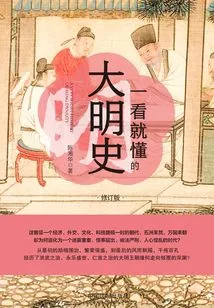
一看就懂的大明史:修订版
Chen Xianghua
This book takes the time course of the Ming Dynasty as its longitude and major historical events as its latitude, and vividly and clearly outlines the context of the Ming Dynasty. The author narrates every historical event in a story-telling tone, and captures the correlation between them, making the entire Ming history come together in one go. Every reader can feel the inextricable connections between historical events. Whether it is a golden war or a peaceful and prosperous age or the collapse of a country, there are laws in it.
This book takes the time course of the Ming Dynasty as its longitude and major historical events as its latitude, and vividly and clearly outlines the context of the Ming Dynasty. The author narrates every historical event in a story-telling tone, and captures the correlation between them, making the entire Ming history come together in one go. Every reader can feel the inextricable connections between historical events. Whether it is a golden war or a peaceful and prosperous age or the collapse of a country, there are laws in it.
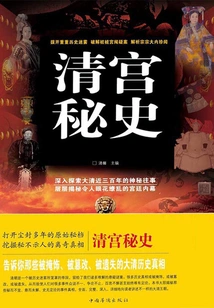
清宫秘史
Qingxin
As the last feudal dynasty in China, the Qing Dynasty has endless stories: the Aixinjueluo family has an ancient and mysterious legend. It is said that the reckless hero Nurhachi started with thirteen suits of armor and formed an indissoluble bond with the big green horse and the yellow dog; Huang Taiji stood out among many princes and ascended the throne, and staged a show with Hai Lanzhu A love affair that moved the world and moved the world; Emperor Shunzhi did not love the country but beauty, so he became a monk after his death because of his deep love for Concubine Dong E; Emperor Kangxi planned to capture Obai, cut off vassals and quelled the rebellion, creating a century-old foundation for the prosperous times of Kangxi and Qianlong; in his later years, he deposed the prince and established a relationship, setting off a drama of the Nine Dragons seizing the throne; Emperor Yongzheng was burdened with usurping the throne There are different opinions on the cause of death; Emperor Qianlong was known as the "Old Man of Perfection", but his life experience is a mystery that cannot be explained clearly; Emperor Jiaqing did one major thing in his life, which was to eradicate corruption and corruption; Emperor Daoguang had no merit except frugality; Emperor Xianfeng had no vision, courage, talent, or achievements, and died. Emperor Tongzhi stayed in the summer resort, causing the government to fall into the hands of Cixi; Emperor Tongzhi lingered in the flowers and died shortly, and the cause of his death was aroused; Emperor Guangxu, although he was determined to reform and strengthen himself, was unable to do so, and ended up in prison, and the cause of his death was even related to a murder case; Emperor Xuantong announced his abdication due to internal and external troubles only three years after he ascended the throne. At this point, the twelve emperors of the Qing Dynasty took turns to appear on the stage, finishing their lives on the stage of history and then calling their curtains.
As the last feudal dynasty in China, the Qing Dynasty has endless stories: the Aixinjueluo family has an ancient and mysterious legend. It is said that the reckless hero Nurhachi started with thirteen suits of armor and formed an indissoluble bond with the big green horse and the yellow dog; Huang Taiji stood out among many princes and ascended the throne, and staged a show with Hai Lanzhu A love affair that moved the world and moved the world; Emperor Shunzhi did not love the country but beauty, so he became a monk after his death because of his deep love for Concubine Dong E; Emperor Kangxi planned to capture Obai, cut off vassals and quelled the rebellion, creating a century-old foundation for the prosperous times of Kangxi and Qianlong; in his later years, he deposed the prince and established a relationship, setting off a drama of the Nine Dragons seizing the throne; Emperor Yongzheng was burdened with usurping the throne There are different opinions on the cause of death; Emperor Qianlong was known as the "Old Man of Perfection", but his life experience is a mystery that cannot be explained clearly; Emperor Jiaqing did one major thing in his life, which was to eradicate corruption and corruption; Emperor Daoguang had no merit except frugality; Emperor Xianfeng had no vision, courage, talent, or achievements, and died. Emperor Tongzhi stayed in the summer resort, causing the government to fall into the hands of Cixi; Emperor Tongzhi lingered in the flowers and died shortly, and the cause of his death was aroused; Emperor Guangxu, although he was determined to reform and strengthen himself, was unable to do so, and ended up in prison, and the cause of his death was even related to a murder case; Emperor Xuantong announced his abdication due to internal and external troubles only three years after he ascended the throne. At this point, the twelve emperors of the Qing Dynasty took turns to appear on the stage, finishing their lives on the stage of history and then calling their curtains.
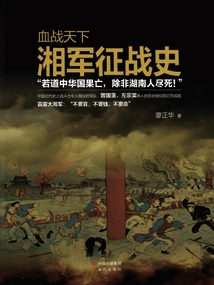
血战天下:湘军征战史
Liao Zhenghua
The Hunan Army is an armed force that commands the attention of both China and foreign countries in modern Chinese history. At a time when China's destiny was in the sunset and the Qing government was in danger and almost unsustainable, the appearance of the Hunan Army was a shot in the arm for the Qing court. It was not only the Qing court's hope for stabilizing the domestic political situation, but also the force that the Qing court relied on to fight externally and maintain the overall situation of unification. As a result, the late Qing court also had a vague atmosphere of resurgence. At the same time, it was this army that created the status of Zeng Guofan, Zuo Zongtang, Peng Yulin and others as famous officials of the ZTE. This book uses rich historical materials to comprehensively tell the history of the Hunan Army's civil war and foreign wars. The civil war mainly included the bloody battles between the Hunan Army and the Taiping Army and the Nian Army. The foreign war mainly included the struggle between the Hunan Army and foreign enemies such as the Agub invaders, Tsarist Russia, France, Japan, and Germany, such as Zuo Zongtang's recovery of Xinjiang, the Sino-French War, and the Sino-Japanese War of 1888-1895. Every battle is concrete and tangible, and the characters are described with flesh and blood. At the same time, this book provides an in-depth and three-dimensional interpretation of this highly distinctive armed force that "does not want officials, does not want money, and does not want lives" from many aspects such as personnel composition (soldiers are selected as generals, and soldiers are generals), military training concepts (military discipline, ideological education), strategies and tactics (static), humanistic character (Hunan people's domineering character). Yang Du once said, "If China is destroyed, all Hunan people must die!" This is an extremely accurate explanation of the Hunan Army's loyalty, iron-bloodedness, and good fighting skills.
The Hunan Army is an armed force that commands the attention of both China and foreign countries in modern Chinese history. At a time when China's destiny was in the sunset and the Qing government was in danger and almost unsustainable, the appearance of the Hunan Army was a shot in the arm for the Qing court. It was not only the Qing court's hope for stabilizing the domestic political situation, but also the force that the Qing court relied on to fight externally and maintain the overall situation of unification. As a result, the late Qing court also had a vague atmosphere of resurgence. At the same time, it was this army that created the status of Zeng Guofan, Zuo Zongtang, Peng Yulin and others as famous officials of the ZTE. This book uses rich historical materials to comprehensively tell the history of the Hunan Army's civil war and foreign wars. The civil war mainly included the bloody battles between the Hunan Army and the Taiping Army and the Nian Army. The foreign war mainly included the struggle between the Hunan Army and foreign enemies such as the Agub invaders, Tsarist Russia, France, Japan, and Germany, such as Zuo Zongtang's recovery of Xinjiang, the Sino-French War, and the Sino-Japanese War of 1888-1895. Every battle is concrete and tangible, and the characters are described with flesh and blood. At the same time, this book provides an in-depth and three-dimensional interpretation of this highly distinctive armed force that "does not want officials, does not want money, and does not want lives" from many aspects such as personnel composition (soldiers are selected as generals, and soldiers are generals), military training concepts (military discipline, ideological education), strategies and tactics (static), humanistic character (Hunan people's domineering character). Yang Du once said, "If China is destroyed, all Hunan people must die!" This is an extremely accurate explanation of the Hunan Army's loyalty, iron-bloodedness, and good fighting skills.
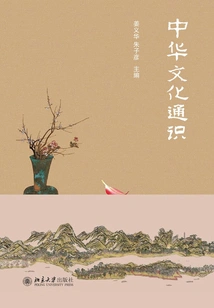
中华文化通识
Jiang Yihua Zhu Ziyan
This book is a basic introduction to the core competencies of Chinese traditional culture. In response to the "General History of Chinese Culture", "General Knowledge of Chinese Culture" came into being. "General History of Chinese Culture" has ten classics and hundreds of volumes, with a grand system and profound research. This book is a basic reading book on Chinese traditional culture specially written for public readers. It is tailor-made for readers with secondary education and above. It divides Chinese traditional culture into categories according to topics, and explains system knowledge from a macro level. The information is detailed but does not quote large sections. It explains the profound things in simple terms, and the writing is vivid. "The writing is not very profound, and the words are not very vulgar." The text is highly readable, and it is equipped with many high-quality illustrations. It is positioned as popular and has its own system. It has the characteristics of knowledge, appeal, and practicality. It can integrate the excellent traditional Chinese culture into daily life and integrate it with today's real life. It can draw nutrition from it, standardize behavior, cultivate personality, and cultivate modern people with Chinese heart, national soul, cultural roots, and innovation. This book is based on the reading habits and reality of the public, and is carefully written by authoritative scholars for the public readers. It is an extremely rare popular reading that combines academic culture and popular interest.
This book is a basic introduction to the core competencies of Chinese traditional culture. In response to the "General History of Chinese Culture", "General Knowledge of Chinese Culture" came into being. "General History of Chinese Culture" has ten classics and hundreds of volumes, with a grand system and profound research. This book is a basic reading book on Chinese traditional culture specially written for public readers. It is tailor-made for readers with secondary education and above. It divides Chinese traditional culture into categories according to topics, and explains system knowledge from a macro level. The information is detailed but does not quote large sections. It explains the profound things in simple terms, and the writing is vivid. "The writing is not very profound, and the words are not very vulgar." The text is highly readable, and it is equipped with many high-quality illustrations. It is positioned as popular and has its own system. It has the characteristics of knowledge, appeal, and practicality. It can integrate the excellent traditional Chinese culture into daily life and integrate it with today's real life. It can draw nutrition from it, standardize behavior, cultivate personality, and cultivate modern people with Chinese heart, national soul, cultural roots, and innovation. This book is based on the reading habits and reality of the public, and is carefully written by authoritative scholars for the public readers. It is an extremely rare popular reading that combines academic culture and popular interest.
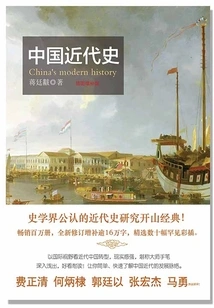
Modern History of China
History中国近代史
Jiang Tingfu
This book is a popular work on modern history written by the famous historian Jiang Tingfu for ordinary readers. This book thoroughly explains the evolution of China's history, the collision of civilizations, major events and important figures in the past century in simple words. It is transparent, comprehensive, impartial, and has extremely high academic content. The historical framework and chronological history system constructed in this book once led the trend of modern history research and were highly praised by later researchers. It is called the pioneering work of modern Chinese history research. From the Opium War to the Revolution of 1911, from the Westernization Movement to the Hundred Days Reform, from Zeng Guofan to Kang Youwei, and from Li Hongzhang to Sun Yat-sen, this book narrates the evolution and characters of nearly a century. There is no boring textual research and no accumulation of historical materials, but it fully shows the future of the country, the destiny of the nation and the development trend of society.
This book is a popular work on modern history written by the famous historian Jiang Tingfu for ordinary readers. This book thoroughly explains the evolution of China's history, the collision of civilizations, major events and important figures in the past century in simple words. It is transparent, comprehensive, impartial, and has extremely high academic content. The historical framework and chronological history system constructed in this book once led the trend of modern history research and were highly praised by later researchers. It is called the pioneering work of modern Chinese history research. From the Opium War to the Revolution of 1911, from the Westernization Movement to the Hundred Days Reform, from Zeng Guofan to Kang Youwei, and from Li Hongzhang to Sun Yat-sen, this book narrates the evolution and characters of nearly a century. There is no boring textual research and no accumulation of historical materials, but it fully shows the future of the country, the destiny of the nation and the development trend of society.
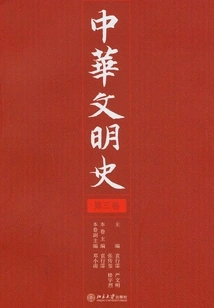
中华文明史(第三卷)
Yuan Xingpei
Yuan Xingpei, born in 1936. Dean of the Institute of Chinese Studies at Peking University, professor of the Chinese Department, and doctoral supervisor. This book is a multi-disciplinary academic work organized and written by the Institute of Chinese Studies at Peking University. From the viewpoint that the history of emergent civilization is both the creation history of mankind and the history of its evolution, material civilization, political civilization, and spiritual civilization correspond to the relationship between man and nature, the organization of human society, and the human spiritual world respectively, showing their intricate relationships and making an overall description to highlight the creativity of the Chinese nation and the endless process of Chinese civilization. This book divides Chinese civilization into four periods, using major transformations in the history of Chinese civilization as the basis for periodization. It describes in detail the characteristics, highlights, and connections between civilizations in each period, highlights those who have made significant contributions to the development of civilization, and explores various factors that play a key role in the development of civilization. It thus comprehensively discusses the development process of Chinese civilization and reveals several development laws and historical experiences. This book strives to examine Chinese civilization within the world structure and write about the position of Chinese civilization in the process of world civilization. In the discussion, full attention should be paid to the combination of cultural relics and archaeological materials with documentary materials, and efforts should be made to combine historical writing, discussion, and talent. This volume covers the Sui and Tang Dynasties to the mid-Ming Dynasty.
Yuan Xingpei, born in 1936. Dean of the Institute of Chinese Studies at Peking University, professor of the Chinese Department, and doctoral supervisor. This book is a multi-disciplinary academic work organized and written by the Institute of Chinese Studies at Peking University. From the viewpoint that the history of emergent civilization is both the creation history of mankind and the history of its evolution, material civilization, political civilization, and spiritual civilization correspond to the relationship between man and nature, the organization of human society, and the human spiritual world respectively, showing their intricate relationships and making an overall description to highlight the creativity of the Chinese nation and the endless process of Chinese civilization. This book divides Chinese civilization into four periods, using major transformations in the history of Chinese civilization as the basis for periodization. It describes in detail the characteristics, highlights, and connections between civilizations in each period, highlights those who have made significant contributions to the development of civilization, and explores various factors that play a key role in the development of civilization. It thus comprehensively discusses the development process of Chinese civilization and reveals several development laws and historical experiences. This book strives to examine Chinese civilization within the world structure and write about the position of Chinese civilization in the process of world civilization. In the discussion, full attention should be paid to the combination of cultural relics and archaeological materials with documentary materials, and efforts should be made to combine historical writing, discussion, and talent. This volume covers the Sui and Tang Dynasties to the mid-Ming Dynasty.
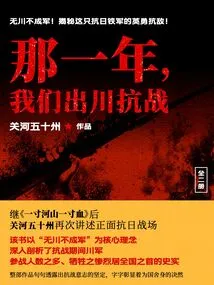
那一年,我们出川抗战(全二册)
Guanhe Fifty States
"There is no army without Sichuan." During the Anti-Japanese War, the Sichuan Army ranked first in the country in terms of the number of people participating in the war and the tragic sacrifices. The casualties accounted for one-fifth of the total number of anti-Japanese troops in the country! In the eight years after the July 7th Incident, more than 3 million Sichuan Army soldiers stepped onto the front line of the Anti-Japanese War to save the nation from danger. Led by generals such as Liu Xiang, Deng Xihou, Li Jiayu, Yang Sen, Wang Lingji, Tang Shizun, and Wang Zuanxu, they fought bravely with crude equipment and meager supplies, and shed blood for the country. They participated in almost all major battles on the frontal anti-Japanese battlefields such as the Songhu Anti-Japanese War, the Nanjing Defense War, the Niangziguan Battle, the Teng County Defense Battle, the Wuhan Battle, the Changsha Battle, the Zaoyi Battle, the Shanggao Battle, the Zhejiang-Jiangxi Battle, the Changde Battle, and the Hengyang Defense Battle. They truly interpreted "every inch of river and mountain, every inch of blood" to the extreme. With rich historical data, this book passionately and truly objectively reproduces the tragic journey of the Sichuan Army on the frontal anti-Japanese battlefield. It not only has an overall perspective, but also has a microscopic perspective of grassroots officers and soldiers, foreign reporters, etc. It has a richly detailed depiction and interpretation of the Sichuan Army's combat power, tactics, high-level generals and grassroots soldiers, the relationship with Chiang Kai-shek's direct relatives and the Communist armed forces, and the real situation on the frontal anti-Japanese battlefield. Every sentence is the firm will to fight the war, and every word is the determination to sacrifice one's life for the country.
"There is no army without Sichuan." During the Anti-Japanese War, the Sichuan Army ranked first in the country in terms of the number of people participating in the war and the tragic sacrifices. The casualties accounted for one-fifth of the total number of anti-Japanese troops in the country! In the eight years after the July 7th Incident, more than 3 million Sichuan Army soldiers stepped onto the front line of the Anti-Japanese War to save the nation from danger. Led by generals such as Liu Xiang, Deng Xihou, Li Jiayu, Yang Sen, Wang Lingji, Tang Shizun, and Wang Zuanxu, they fought bravely with crude equipment and meager supplies, and shed blood for the country. They participated in almost all major battles on the frontal anti-Japanese battlefields such as the Songhu Anti-Japanese War, the Nanjing Defense War, the Niangziguan Battle, the Teng County Defense Battle, the Wuhan Battle, the Changsha Battle, the Zaoyi Battle, the Shanggao Battle, the Zhejiang-Jiangxi Battle, the Changde Battle, and the Hengyang Defense Battle. They truly interpreted "every inch of river and mountain, every inch of blood" to the extreme. With rich historical data, this book passionately and truly objectively reproduces the tragic journey of the Sichuan Army on the frontal anti-Japanese battlefield. It not only has an overall perspective, but also has a microscopic perspective of grassroots officers and soldiers, foreign reporters, etc. It has a richly detailed depiction and interpretation of the Sichuan Army's combat power, tactics, high-level generals and grassroots soldiers, the relationship with Chiang Kai-shek's direct relatives and the Communist armed forces, and the real situation on the frontal anti-Japanese battlefield. Every sentence is the firm will to fight the war, and every word is the determination to sacrifice one's life for the country.
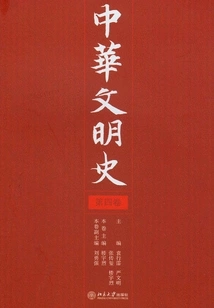
中华文明史(第四卷)
Lou Yulie
Lou Yulie, born in 1934. Professor and doctoral supervisor in the Department of Philosophy, Peking University. This book is a multi-disciplinary academic work organized and written by the Institute of Chinese Studies at Peking University. From the perspective that the history of emergent civilization is both the history of human creation and the history of human evolution, material civilization, political civilization, and spiritual civilization correspond to the relationship between man and nature, the organization of human society, and the human spiritual world respectively, showing their intricate relationships and making an overall description to highlight the creativity of the Chinese nation and the endless process of Chinese civilization. This book divides Chinese civilization into four periods, using major transformations in the history of Chinese civilization as the basis for periodization. It describes in detail the characteristics, highlights, and connections between civilizations in each period, highlights those who have made significant contributions to the development of civilization, and explores various factors that play a key role in the development of civilization. It thus comprehensively discusses the development process of Chinese civilization and reveals several development laws and historical experiences. This book attempts to examine Chinese civilization within the world structure and write about the position of Chinese civilization in the process of world civilization. In the discussion, full attention should be paid to the combination of cultural relics and archaeological materials with documentary materials, and efforts should be made to combine historical writing, discussion, and talent. This volume covers the period from the mid-Ming Dynasty to the Revolution of 1911.
Lou Yulie, born in 1934. Professor and doctoral supervisor in the Department of Philosophy, Peking University. This book is a multi-disciplinary academic work organized and written by the Institute of Chinese Studies at Peking University. From the perspective that the history of emergent civilization is both the history of human creation and the history of human evolution, material civilization, political civilization, and spiritual civilization correspond to the relationship between man and nature, the organization of human society, and the human spiritual world respectively, showing their intricate relationships and making an overall description to highlight the creativity of the Chinese nation and the endless process of Chinese civilization. This book divides Chinese civilization into four periods, using major transformations in the history of Chinese civilization as the basis for periodization. It describes in detail the characteristics, highlights, and connections between civilizations in each period, highlights those who have made significant contributions to the development of civilization, and explores various factors that play a key role in the development of civilization. It thus comprehensively discusses the development process of Chinese civilization and reveals several development laws and historical experiences. This book attempts to examine Chinese civilization within the world structure and write about the position of Chinese civilization in the process of world civilization. In the discussion, full attention should be paid to the combination of cultural relics and archaeological materials with documentary materials, and efforts should be made to combine historical writing, discussion, and talent. This volume covers the period from the mid-Ming Dynasty to the Revolution of 1911.
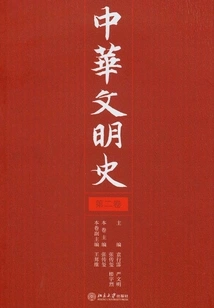
中华文明史(第二卷)
Editor-in-chief Zhang Chuanxi
Zhang Chuanxi, born in 1927. Professor of History Department of Peking University. This book is a multi-disciplinary academic work organized and written by the Institute of Chinese Studies at Peking University. From the viewpoint that the history of emergent civilization is both the creation history of mankind and the history of its evolution, material civilization, political civilization, and spiritual civilization correspond to the relationship between man and nature, the organization of human society, and the human spiritual world respectively, showing their intricate relationships and making an overall description to highlight the creativity of the Chinese nation and the endless process of Chinese civilization. This book divides Chinese civilization into four periods, using major transformations in the history of Chinese civilization as the basis for periodization. It describes in detail the characteristics, highlights, and connections between civilizations in each period, highlights those who have made significant contributions to the development of civilization, and explores various factors that play a key role in the development of civilization. It thus comprehensively discusses the development process of Chinese civilization and reveals several development laws and historical experiences. This book attempts to examine Chinese civilization within the world structure and write about the position of Chinese civilization in the process of world civilization. In the discussion, full attention should be paid to the combination of cultural relics and archaeological materials with documentary materials, and efforts should be made to combine historical writing, discussion, and talent. This volume covers the Qin, Han, Wei, Jin, Southern and Northern Dynasties.
Zhang Chuanxi, born in 1927. Professor of History Department of Peking University. This book is a multi-disciplinary academic work organized and written by the Institute of Chinese Studies at Peking University. From the viewpoint that the history of emergent civilization is both the creation history of mankind and the history of its evolution, material civilization, political civilization, and spiritual civilization correspond to the relationship between man and nature, the organization of human society, and the human spiritual world respectively, showing their intricate relationships and making an overall description to highlight the creativity of the Chinese nation and the endless process of Chinese civilization. This book divides Chinese civilization into four periods, using major transformations in the history of Chinese civilization as the basis for periodization. It describes in detail the characteristics, highlights, and connections between civilizations in each period, highlights those who have made significant contributions to the development of civilization, and explores various factors that play a key role in the development of civilization. It thus comprehensively discusses the development process of Chinese civilization and reveals several development laws and historical experiences. This book attempts to examine Chinese civilization within the world structure and write about the position of Chinese civilization in the process of world civilization. In the discussion, full attention should be paid to the combination of cultural relics and archaeological materials with documentary materials, and efforts should be made to combine historical writing, discussion, and talent. This volume covers the Qin, Han, Wei, Jin, Southern and Northern Dynasties.
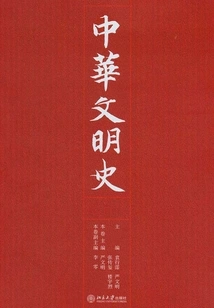
中华文明史(1—4)(精装)
Yuan Xingpei
This book brings together the research results of many outstanding scholars in the humanities of Peking University. On the basis of learning from previous research experiences, this book strives to make breakthroughs in theories, perspectives, methods, etc., And is especially committed to multi-disciplinary comprehensive research. It systematically discusses the long history of the development of Chinese civilization. , With pictures and texts, shows the rich and colorful features of civilization in each period, focuses on describing the highlights, characteristics and reasons of the formation of civilization in each period, and reveals the laws of the development of Chinese civilization that are extensive and profound. It is a history of Chinese civilization with contemporary consciousness, forward-looking, multi-disciplinary and comprehensive history.
This book brings together the research results of many outstanding scholars in the humanities of Peking University. On the basis of learning from previous research experiences, this book strives to make breakthroughs in theories, perspectives, methods, etc., And is especially committed to multi-disciplinary comprehensive research. It systematically discusses the long history of the development of Chinese civilization. , With pictures and texts, shows the rich and colorful features of civilization in each period, focuses on describing the highlights, characteristics and reasons of the formation of civilization in each period, and reveals the laws of the development of Chinese civilization that are extensive and profound. It is a history of Chinese civilization with contemporary consciousness, forward-looking, multi-disciplinary and comprehensive history.
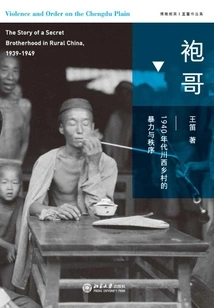
袍哥:1940年代川西乡村的暴力与秩序
Wang Di
Pao Ge was a secret social organization active in the middle and upper reaches of the Yangtze River before 1949. Its influence was comparable to that of the Qinggang and Hongmen. At its peak, about 70% of adult men in Sichuan Province joined, and its influence reached every corner. It had a huge influence on the Sichuan Army and the Hunan Army, and was also an important force in the revolution of the late Qing Dynasty. Starting from a murder case in 1939 and a report that has been dusty for more than 70 years, this book combines rich graphic materials to examine the power operation of the Paoge organization and grassroots society in the Republic of China in detail. It examines the ups and downs of the personal fate of Paoge members and their families in the turbulent era, reveals the "daily" face of the mysterious Paoge world, and presents a full, three-dimensional and vivid social picture of western Sichuan during the Republic of China.
Pao Ge was a secret social organization active in the middle and upper reaches of the Yangtze River before 1949. Its influence was comparable to that of the Qinggang and Hongmen. At its peak, about 70% of adult men in Sichuan Province joined, and its influence reached every corner. It had a huge influence on the Sichuan Army and the Hunan Army, and was also an important force in the revolution of the late Qing Dynasty. Starting from a murder case in 1939 and a report that has been dusty for more than 70 years, this book combines rich graphic materials to examine the power operation of the Paoge organization and grassroots society in the Republic of China in detail. It examines the ups and downs of the personal fate of Paoge members and their families in the turbulent era, reveals the "daily" face of the mysterious Paoge world, and presents a full, three-dimensional and vivid social picture of western Sichuan during the Republic of China.
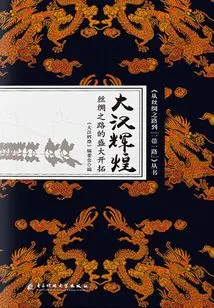
大汉辉煌:丝绸之路的盛大开拓
Editorial Board Of "the Brilliance Of The Han Dynasty"
This book begins with a review of the historical background of the Central Plains dynasties that gradually moved toward unification before the Silk Road was developed, and gradually reveals the inevitable era of the Silk Road's development. It leads readers to gradually enter the Western Regions and appreciate the culture of the Western Regions for thousands of years. It also explains the East-West exchanges represented by the silk trade and its important impact on the trade and civilized transportation of the four great empires of the East and West at that time, as well as the development of civilization in Central Asia, West Asia, Europe, and even the world. The book uses history as evidence and quotes from other sources to reveal the cohesion and centripetal force of the Chinese nation brought about by the strong comprehensive national power of the Han Dynasty from the accidental and inevitable development of the Silk Road.
This book begins with a review of the historical background of the Central Plains dynasties that gradually moved toward unification before the Silk Road was developed, and gradually reveals the inevitable era of the Silk Road's development. It leads readers to gradually enter the Western Regions and appreciate the culture of the Western Regions for thousands of years. It also explains the East-West exchanges represented by the silk trade and its important impact on the trade and civilized transportation of the four great empires of the East and West at that time, as well as the development of civilization in Central Asia, West Asia, Europe, and even the world. The book uses history as evidence and quotes from other sources to reveal the cohesion and centripetal force of the Chinese nation brought about by the strong comprehensive national power of the Han Dynasty from the accidental and inevitable development of the Silk Road.
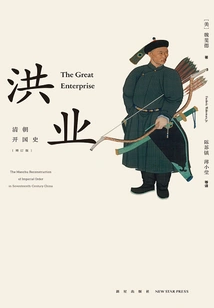
洪业:清朝开国史
F
Professor Wei Feide's historical masterpiece "Hong Ye: The Founding of the Qing Dynasty" tells the story of a very dramatic historical stage in the history of Chinese dynasties - the end of the Ming Dynasty in 1644 and the consolidation of the Qing Dynasty in the following 20 years. From the grand background of politics, economy, culture, society, nation, and national defense, the author provides an overall dissection and perspective on the process of how one empire fell into trouble and how another empire reestablished order and became strong. In this book, Wei Feide hopes to present the "Hongye" through the reconstruction of the Chinese imperial order in the early Qing Dynasty to reveal a series of important changes that had occurred in Chinese society before the arrival of Western forces in the Opium War in 1840.
Professor Wei Feide's historical masterpiece "Hong Ye: The Founding of the Qing Dynasty" tells the story of a very dramatic historical stage in the history of Chinese dynasties - the end of the Ming Dynasty in 1644 and the consolidation of the Qing Dynasty in the following 20 years. From the grand background of politics, economy, culture, society, nation, and national defense, the author provides an overall dissection and perspective on the process of how one empire fell into trouble and how another empire reestablished order and became strong. In this book, Wei Feide hopes to present the "Hongye" through the reconstruction of the Chinese imperial order in the early Qing Dynasty to reveal a series of important changes that had occurred in Chinese society before the arrival of Western forces in the Opium War in 1840.
China's Borderlands and Ethnic Issues: Challenges in Contemporary China and Their Historical Origins
History中国边疆与民族问题:当代中国的挑战及其历史由来
Zhang Zhirong
"China's Border and Ethnic Issues: Challenges in Contemporary China and Its Historical Origins" explores the historical origins of contemporary China's border and ethnic issues and the new characteristics that have emerged in the era of globalization from two perspectives that combine history and reality, theory and practice. The discussion of the main ethnic issues and maritime issues currently faced by our country is profound and simple, and is particularly thought-provoking. Throughout my country's long history, border and ethnic issues have always been major issues affecting national security and border stability.
"China's Border and Ethnic Issues: Challenges in Contemporary China and Its Historical Origins" explores the historical origins of contemporary China's border and ethnic issues and the new characteristics that have emerged in the era of globalization from two perspectives that combine history and reality, theory and practice. The discussion of the main ethnic issues and maritime issues currently faced by our country is profound and simple, and is particularly thought-provoking. Throughout my country's long history, border and ethnic issues have always been major issues affecting national security and border stability.
商务印书馆与中国近代文化
Shi Chunfeng
The Commercial Press is a century-old tree and a heavy book. Whether from the perspective of modern cultural history or modern publishing history, the Commercial Press is an object worthy of careful study. In recent years, the industry has begun to re-examine the Commercial Press, which is what it should be. In 1999, Comrade Shi Chunfeng was admitted to the History Department of Beijing Normal University and studied for a doctorate with me. He is eager to learn and his writing skills are also very good. She discussed with me the topic of her dissertation, and finally decided on "The Commercial Press and Modern Chinese Culture." Although academic research on the Commercial Press has produced some results, Comrade Shi Chunfeng's paper takes a different approach and still has its own unique perspective. She placed the Commercial Press in the historical process of the collision and blending of Chinese and Western cultures in modern times, conducted a long-term and systematic investigation, and focused on its rise and development, especially its relationship with modern political trends, modern Chinese and Western cultures, modern education, and modern cultural celebrities. She provided many independent insights and helped people understand the Commercial Press and even modern cultural history. The author pays attention to collecting information extensively, and takes advantage of the favorable conditions in Beijing to visit old people in the Commercial Press, so that his thesis has a solid historical data foundation. This book is the result of further enriching her doctoral thesis while teaching. There is no end to academic research. Comrade Shi Chunfeng has taken a gratifying step and I believe she will continue to achieve new results. This book is a publication funded by the Beijing Social Science Fund. The author traces and verifies the history of the Commercial Press and clarifies many historical issues. In particular, he makes a convincing discussion of the relationship between the publishing industry of the Commercial Press and the development of modern Chinese culture.
The Commercial Press is a century-old tree and a heavy book. Whether from the perspective of modern cultural history or modern publishing history, the Commercial Press is an object worthy of careful study. In recent years, the industry has begun to re-examine the Commercial Press, which is what it should be. In 1999, Comrade Shi Chunfeng was admitted to the History Department of Beijing Normal University and studied for a doctorate with me. He is eager to learn and his writing skills are also very good. She discussed with me the topic of her dissertation, and finally decided on "The Commercial Press and Modern Chinese Culture." Although academic research on the Commercial Press has produced some results, Comrade Shi Chunfeng's paper takes a different approach and still has its own unique perspective. She placed the Commercial Press in the historical process of the collision and blending of Chinese and Western cultures in modern times, conducted a long-term and systematic investigation, and focused on its rise and development, especially its relationship with modern political trends, modern Chinese and Western cultures, modern education, and modern cultural celebrities. She provided many independent insights and helped people understand the Commercial Press and even modern cultural history. The author pays attention to collecting information extensively, and takes advantage of the favorable conditions in Beijing to visit old people in the Commercial Press, so that his thesis has a solid historical data foundation. This book is the result of further enriching her doctoral thesis while teaching. There is no end to academic research. Comrade Shi Chunfeng has taken a gratifying step and I believe she will continue to achieve new results. This book is a publication funded by the Beijing Social Science Fund. The author traces and verifies the history of the Commercial Press and clarifies many historical issues. In particular, he makes a convincing discussion of the relationship between the publishing industry of the Commercial Press and the development of modern Chinese culture.
晚唐钟声:中国文学的原型批评(修订本)
Fu Daobin
"The Bells of the Late Tang Dynasty: Archetypal Criticism of Chinese Literature (Revised Edition)" is an academic monograph that uses the method of archetypal criticism to explain the symbolic meaning of Chinese culture and literature. Archetype is a condensed and accumulated human history and cultural history, and archetype criticism is a kind of "spiritual archeology". Although history has disappeared without a trace, symbols, the special symbols used by humans to understand and feel the world, store the thrilling history of mankind in the most concise form. Archetypal criticism is therefore called literary criticism with truly international significance. Starting from archetypal criticism, the author believes that Chinese literature contains rich and vivid primitive images. "Xiang" in "Yi". "Xing" in "Poetry" is an ancient interpretation of archetypes in Chinese philosophy and art. The archetypal system represented by Xing Xiang is ubiquitous in classical culture.
"The Bells of the Late Tang Dynasty: Archetypal Criticism of Chinese Literature (Revised Edition)" is an academic monograph that uses the method of archetypal criticism to explain the symbolic meaning of Chinese culture and literature. Archetype is a condensed and accumulated human history and cultural history, and archetype criticism is a kind of "spiritual archeology". Although history has disappeared without a trace, symbols, the special symbols used by humans to understand and feel the world, store the thrilling history of mankind in the most concise form. Archetypal criticism is therefore called literary criticism with truly international significance. Starting from archetypal criticism, the author believes that Chinese literature contains rich and vivid primitive images. "Xiang" in "Yi". "Xing" in "Poetry" is an ancient interpretation of archetypes in Chinese philosophy and art. The archetypal system represented by Xing Xiang is ubiquitous in classical culture.
The Ancient Charm of the Silk Road: the Glory of the Silk Road That Lasts for Thousands of Years
History丝路古韵:延绵千年的丝路荣光
Editorial Board Of "ancient Rhythm Of The Silk Road"
This book mainly focuses on the opening and smoothing of the Silk Road in the Han Dynasty. After the management of the Silk Road by successive dynasties such as the Han and Tang Dynasties, the Silk Road showed its glory for thousands of years, and China's prestige also increased. The second half of the book introduces the advancement of shipbuilding and navigation technology in the Song and Yuan Dynasties. The Yuan, Ming and Qing dynasties neglected the management of the Silk Road. The status of the land Silk Road declined while the status of the Maritime Silk Road rose. It then introduces the vicissitudes of the Ming and Qing dynasties as national power gradually declined and the influence of the Silk Road gradually faded.
This book mainly focuses on the opening and smoothing of the Silk Road in the Han Dynasty. After the management of the Silk Road by successive dynasties such as the Han and Tang Dynasties, the Silk Road showed its glory for thousands of years, and China's prestige also increased. The second half of the book introduces the advancement of shipbuilding and navigation technology in the Song and Yuan Dynasties. The Yuan, Ming and Qing dynasties neglected the management of the Silk Road. The status of the land Silk Road declined while the status of the Maritime Silk Road rose. It then introduces the vicissitudes of the Ming and Qing dynasties as national power gradually declined and the influence of the Silk Road gradually faded.
海上丝路:有故事的城
Yang Donger
The Maritime Silk Road was a maritime channel for economic and cultural exchanges between ancient China and other parts of the world. As a human historical activity lasting more than 2,000 years and covering most of the earth and an important carrier of cultural and economic exchanges between the East and the West, the Maritime Silk Road has multiple starting points and routes, and has status and roles in different historical eras. It is an extremely precious historical heritage. This international trade network, which consisted of a series of ports between the East and West at that time, stretched from Quanzhou, Guangzhou, Ningbo, Fuzhou, Yangzhou, Zhangzhou, Penglai to Vietnam, Thailand, India, Sri Lanka, Singapore... And stretched all the way. It has left a beautiful and unique memory in the long river of history through the ages, which can never be replaced and can never be erased. Every city, every port, and every ruin has its own stories and legends. These are worthy of being remembered for eternity. These are worthy of you and me using our own meager strength to pass them on from generation to generation.
The Maritime Silk Road was a maritime channel for economic and cultural exchanges between ancient China and other parts of the world. As a human historical activity lasting more than 2,000 years and covering most of the earth and an important carrier of cultural and economic exchanges between the East and the West, the Maritime Silk Road has multiple starting points and routes, and has status and roles in different historical eras. It is an extremely precious historical heritage. This international trade network, which consisted of a series of ports between the East and West at that time, stretched from Quanzhou, Guangzhou, Ningbo, Fuzhou, Yangzhou, Zhangzhou, Penglai to Vietnam, Thailand, India, Sri Lanka, Singapore... And stretched all the way. It has left a beautiful and unique memory in the long river of history through the ages, which can never be replaced and can never be erased. Every city, every port, and every ruin has its own stories and legends. These are worthy of being remembered for eternity. These are worthy of you and me using our own meager strength to pass them on from generation to generation.
一书通识五千年中国史(图文典藏版)
Sun Jianhua
History is like a stage that is sometimes bright and gorgeous, sometimes dim and withered. On this stage, emperors, generals, officials, concubines, heroes, etc. Appear one by one, from the ancient legend of Pangu's creation to the end of the Qing Dynasty. The emperor abdicates, and various characters are either twisted, ferocious, dark and corrupt, or proud and heroic... The scenes of the play are filled with sorrow and joy, and provide the world with material to reflect on the past and look forward to the future all the time. If you are trapped by reality in life, you may wish to read this little book carefully, and you will soon find the answer.
History is like a stage that is sometimes bright and gorgeous, sometimes dim and withered. On this stage, emperors, generals, officials, concubines, heroes, etc. Appear one by one, from the ancient legend of Pangu's creation to the end of the Qing Dynasty. The emperor abdicates, and various characters are either twisted, ferocious, dark and corrupt, or proud and heroic... The scenes of the play are filled with sorrow and joy, and provide the world with material to reflect on the past and look forward to the future all the time. If you are trapped by reality in life, you may wish to read this little book carefully, and you will soon find the answer.
晋诤:解读晋王朝那些决定国运民生的话语
Qi Su
It is said that history is heavy, and we can fully feel it from these words that determined the fate of the country and people's livelihood in the Jin Dynasty. One word can make a country prosper, one word can destroy it. How to treat advice and how to listen to advice so that it is effective has become a test question for the rulers of all dynasties. The ancients said: "Only wood can be upright by following ropes, and saints can be achieved by admonishing." "The virtue of Taizong lies in being able to bend oneself and obey admonitions." In my opinion, admonishment is a kind of wealth, and criticism is a kind of promotion. Admonition connects the people and the true people's conditions and national conditions, which is also necessary for the country to move toward political prosperity and social progress.
It is said that history is heavy, and we can fully feel it from these words that determined the fate of the country and people's livelihood in the Jin Dynasty. One word can make a country prosper, one word can destroy it. How to treat advice and how to listen to advice so that it is effective has become a test question for the rulers of all dynasties. The ancients said: "Only wood can be upright by following ropes, and saints can be achieved by admonishing." "The virtue of Taizong lies in being able to bend oneself and obey admonitions." In my opinion, admonishment is a kind of wealth, and criticism is a kind of promotion. Admonition connects the people and the true people's conditions and national conditions, which is also necessary for the country to move toward political prosperity and social progress.
燕行与清代盛京:以《燕行录》为中心
Liu Zheng
This book uses "Yan Xing Lu", the diary of a North Korean envoy who went to pay tribute to the Qing Dynasty, as the basic historical research material. It also refers to other documents and uses the experiences of the North Korean envoys to conduct a detailed study of the urban appearance, social life, religious beliefs and Manchu folk customs of the Shengjing area in the Qing Dynasty. Observe Shengjing society from a foreign perspective and examine "self" through the "other" in order to achieve the purpose of learning from the mirror.
This book uses "Yan Xing Lu", the diary of a North Korean envoy who went to pay tribute to the Qing Dynasty, as the basic historical research material. It also refers to other documents and uses the experiences of the North Korean envoys to conduct a detailed study of the urban appearance, social life, religious beliefs and Manchu folk customs of the Shengjing area in the Qing Dynasty. Observe Shengjing society from a foreign perspective and examine "self" through the "other" in order to achieve the purpose of learning from the mirror.
和与战的抉择:战后国民党的东北决策(中华史学丛书)
Wang Chaoguang
About the Book Northeast has played a special and important role in the evolution of Chinese history after the end of the Anti-Japanese War. The struggle between the Kuomintang and the Communist Party for the Northeast was not only related to both sides' control of the Northeast, but also affected the overall strategic deployment of both sides. The Northeast once became the focus of the evolution of China's political and military situation, and thus affected China's political trend and outcome after the war. This book takes the international Cold War, Sino-Soviet relations, and Sino-US relations as the background, and uses the relationship between the Kuomintang and the Communist Party and the Kuomintang and the Communist Party's struggle for the Northeast as the basis for research. It observes and discusses the origin, formulation, implementation, impact, and pros and cons of the postwar Kuomintang's Northeast decision-making, and uses this to analyze why the Kuomintang eventually lost the Northeast and thus lost its power to govern in mainland China.
About the Book Northeast has played a special and important role in the evolution of Chinese history after the end of the Anti-Japanese War. The struggle between the Kuomintang and the Communist Party for the Northeast was not only related to both sides' control of the Northeast, but also affected the overall strategic deployment of both sides. The Northeast once became the focus of the evolution of China's political and military situation, and thus affected China's political trend and outcome after the war. This book takes the international Cold War, Sino-Soviet relations, and Sino-US relations as the background, and uses the relationship between the Kuomintang and the Communist Party and the Kuomintang and the Communist Party's struggle for the Northeast as the basis for research. It observes and discusses the origin, formulation, implementation, impact, and pros and cons of the postwar Kuomintang's Northeast decision-making, and uses this to analyze why the Kuomintang eventually lost the Northeast and thus lost its power to govern in mainland China.
全面战争·日式三国(套装共5册)
H
"Three Kingdoms" is the pinnacle work of Eiji Yoshikawa, and it is also the ultimate work of the blend of Chinese culture and Japanese temperament. In Japan, there are countless historians, politicians, entrepreneurs, writers and artists influenced by "Three Kingdoms". They regard "Three Kingdoms" as a historical masterpiece, a comprehensive collection of political strategies, a business war manual and an inspirational book, and learn from it history and culture, ways of success, methods of doing things, leadership theories, etc.
"Three Kingdoms" is the pinnacle work of Eiji Yoshikawa, and it is also the ultimate work of the blend of Chinese culture and Japanese temperament. In Japan, there are countless historians, politicians, entrepreneurs, writers and artists influenced by "Three Kingdoms". They regard "Three Kingdoms" as a historical masterpiece, a comprehensive collection of political strategies, a business war manual and an inspirational book, and learn from it history and culture, ways of success, methods of doing things, leadership theories, etc.
清代如何治理帮会(中华史学丛书)
Qin Baoqi
Gangs in the Qing Dynasty originated from "brothers of different surnames" organizations, and later developed into "hui party", which "formed alliances and established parties". After the Tiandihui emerged during the Qianlong period, a large number of Huihui parties with various names emerged. During the reign of Xian Tongzhi, Sichuan Tunlu developed brother into Laohui, also known as Pao brother or Honggang. After water transportation was diverted to the sea route, the Grain Ships and Sailors Gang merged with smuggling gangs such as Qingpi, Guangdan, and Fengke to form the Qinggang. As a result, the party expanded into a gang. The existence and development of gangs posed a major threat to the Qing regime. In addition to using force to attack them, the Qing authorities also formulated laws and regulations to punish gangs, and continuously added, deleted, and revised them. This curbed the development of gangs to a certain extent, maintained the stability of the Qing Dynasty's regime and ideological security, and provided useful reference for how to govern society today.
Gangs in the Qing Dynasty originated from "brothers of different surnames" organizations, and later developed into "hui party", which "formed alliances and established parties". After the Tiandihui emerged during the Qianlong period, a large number of Huihui parties with various names emerged. During the reign of Xian Tongzhi, Sichuan Tunlu developed brother into Laohui, also known as Pao brother or Honggang. After water transportation was diverted to the sea route, the Grain Ships and Sailors Gang merged with smuggling gangs such as Qingpi, Guangdan, and Fengke to form the Qinggang. As a result, the party expanded into a gang. The existence and development of gangs posed a major threat to the Qing regime. In addition to using force to attack them, the Qing authorities also formulated laws and regulations to punish gangs, and continuously added, deleted, and revised them. This curbed the development of gangs to a certain extent, maintained the stability of the Qing Dynasty's regime and ideological security, and provided useful reference for how to govern society today.
保险史话(中国史话·经济系列)
Editorial Board Of "insurance History"
China has grown from a weak insurance country to an important emerging insurance country. This book is the first official popular Chinese insurance history book in China. It uses time as its warp and events as its latitude. Through many stories, it recounts the past and explores its origins. It provides a panoramic review of the budding of Chinese insurance ideas, the emergence of the modern insurance industry, the introduction of Western insurance, the insurance market structure of the Qing Dynasty, the evolution of the insurance market of the Republic of China, red insurance in revolutionary base areas, the creation and development of the people's insurance industry in New China, and the rise of the insurance industry after reform and opening up. It also looks forward to the opportunities and future of China's insurance industry.
China has grown from a weak insurance country to an important emerging insurance country. This book is the first official popular Chinese insurance history book in China. It uses time as its warp and events as its latitude. Through many stories, it recounts the past and explores its origins. It provides a panoramic review of the budding of Chinese insurance ideas, the emergence of the modern insurance industry, the introduction of Western insurance, the insurance market structure of the Qing Dynasty, the evolution of the insurance market of the Republic of China, red insurance in revolutionary base areas, the creation and development of the people's insurance industry in New China, and the rise of the insurance industry after reform and opening up. It also looks forward to the opportunities and future of China's insurance industry.
近代史学刊(第12辑)
Sponsored By The Institute Of Modern Chinese History Of Central China Normal University Edited By Zhu Ying
"Journal of Modern History" is an academic journal in the field of modern Chinese history sponsored by the Institute of Modern Chinese History of Central China Normal University. This book is the 12th volume of "Journal of Modern History". The book is divided into five major sections: "Theoretical Thinking", "Political History Research", "Economic and Social History Research", "Ideological and Cultural History Research" and "Notes". The content covers the politics, economy, society, culture and other aspects of the late Qing Dynasty and the Republic of China. It includes re-discussions of previous studies and new explorations based on historical materials, including many innovations and breakthroughs.
"Journal of Modern History" is an academic journal in the field of modern Chinese history sponsored by the Institute of Modern Chinese History of Central China Normal University. This book is the 12th volume of "Journal of Modern History". The book is divided into five major sections: "Theoretical Thinking", "Political History Research", "Economic and Social History Research", "Ideological and Cultural History Research" and "Notes". The content covers the politics, economy, society, culture and other aspects of the late Qing Dynasty and the Republic of China. It includes re-discussions of previous studies and new explorations based on historical materials, including many innovations and breakthroughs.
广西风物图志(第1辑·古村镇)(广西风物图志(第1辑))
Guangxi Zhuang Autonomous Region Local Chronicles Compilation Committee Office Lu Ruirong
This book focuses on the overall ecology composed of nature and humanity, and strives to outline the historical development of Guangxi's ancient villages and towns, show the cultural heritage of Guangxi's ancient villages and towns, and demonstrate the Guangxi people's arduous pursuit of culture and outstanding creative achievements in history from the perspective of village formation, development and protection. The ancient villages and towns selected in the book each have their own characteristics and have their own cultural symbols. Their cognitive value and communication value are extremely rich. To a certain extent, they are models of the organic integration of Guangxi's beautiful landscape and profound humanities.
This book focuses on the overall ecology composed of nature and humanity, and strives to outline the historical development of Guangxi's ancient villages and towns, show the cultural heritage of Guangxi's ancient villages and towns, and demonstrate the Guangxi people's arduous pursuit of culture and outstanding creative achievements in history from the perspective of village formation, development and protection. The ancient villages and towns selected in the book each have their own characteristics and have their own cultural symbols. Their cognitive value and communication value are extremely rich. To a certain extent, they are models of the organic integration of Guangxi's beautiful landscape and profound humanities.
中国非物质文化遗产保护发展报告(2014)
Editor-in-chief Song Junhua
This book summarizes the achievements and experience in the protection of intangible cultural heritage in 2013, points out existing problems, puts forward corresponding countermeasures and suggestions, and discusses from different aspects the topics of folk literature, traditional music, traditional dance, traditional drama, folk art, traditional sports, entertainment and acrobatics, traditional art, traditional handicrafts, traditional medicine, and folk customs. The annual hot topics section of the book discusses new urbanization and the inheritance and protection of China's intangible cultural heritage, while the major events section lists important events related to the protection and development of intangible cultural heritage over the past year.
This book summarizes the achievements and experience in the protection of intangible cultural heritage in 2013, points out existing problems, puts forward corresponding countermeasures and suggestions, and discusses from different aspects the topics of folk literature, traditional music, traditional dance, traditional drama, folk art, traditional sports, entertainment and acrobatics, traditional art, traditional handicrafts, traditional medicine, and folk customs. The annual hot topics section of the book discusses new urbanization and the inheritance and protection of China's intangible cultural heritage, while the major events section lists important events related to the protection and development of intangible cultural heritage over the past year.
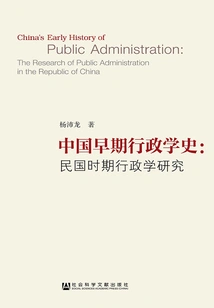
History of Early Chinese Administration: Research on Administration During the Republic of China
History中国早期行政学史:民国时期行政学研究
Yang Peilong
This book studies the emergence, publication, research groups and journals, and university teaching and research of administration during the Republic of China. It also examines basic issues such as administrative organization, personnel administration, and administrative efficiency in the administrative circles during the Republic of China, as well as the document and archives reform movement, joint offices, and This paper reviews the research on administrative reform issues such as bureau reform and department reform, administrative supervisory commissioner system, administrative tripartite system, hierarchical responsibility system, chief of staff system, and new county system. It also explains how to understand "administration" and "administrative science", how to promote administrative reform, and promote the localization of administrative science.
This book studies the emergence, publication, research groups and journals, and university teaching and research of administration during the Republic of China. It also examines basic issues such as administrative organization, personnel administration, and administrative efficiency in the administrative circles during the Republic of China, as well as the document and archives reform movement, joint offices, and This paper reviews the research on administrative reform issues such as bureau reform and department reform, administrative supervisory commissioner system, administrative tripartite system, hierarchical responsibility system, chief of staff system, and new county system. It also explains how to understand "administration" and "administrative science", how to promote administrative reform, and promote the localization of administrative science.