Library
Browse and search books
2,273 novels found
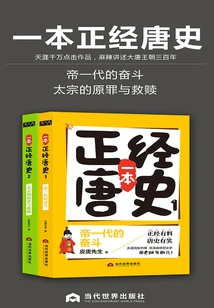
A Serious History of the Tang Dynasty (complete Works)
General Fiction一本正经唐史(全集)
Mr. Pittang
The author uses novel narrative techniques to describe history, integrating historical facts into twists and turns of plot and suspense, and the plot is fascinating. It strives to be broad in scope, clear in level, and easy to read. Even people without a foundation in history can understand it. This book takes Li Yuan, the founding emperor of the Tang Dynasty, as the main line, from Li Yuan's birth to the eve of the Xuanwumen Revolution. It describes Li Yuan's growth, dormancy, raising troops, proclaiming himself emperor, and reunification. During this period, various heroes competed for hegemony, and finally the Li family and his son unified the world.
The author uses novel narrative techniques to describe history, integrating historical facts into twists and turns of plot and suspense, and the plot is fascinating. It strives to be broad in scope, clear in level, and easy to read. Even people without a foundation in history can understand it. This book takes Li Yuan, the founding emperor of the Tang Dynasty, as the main line, from Li Yuan's birth to the eve of the Xuanwumen Revolution. It describes Li Yuan's growth, dormancy, raising troops, proclaiming himself emperor, and reunification. During this period, various heroes competed for hegemony, and finally the Li family and his son unified the world.
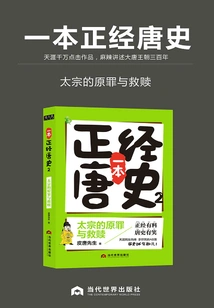
一本正经唐史:太宗的原罪与救赎
Mr. Pittang
The author uses novel narrative techniques to describe history, integrating historical facts into twists and turns of plot and suspense, and the plot is fascinating. It strives to be broad in scope, clear in level, and easy to read. Even people without a foundation in history can understand it. This book takes Li Yuan, the founding emperor of the Tang Dynasty, as the main line, from Li Yuan's birth to the eve of the Xuanwumen Revolution. It describes Li Yuan's growth, dormancy, raising troops, proclaiming himself emperor, and reunification. During this period, various heroes competed for hegemony, and finally the Li family and his son unified the world.
The author uses novel narrative techniques to describe history, integrating historical facts into twists and turns of plot and suspense, and the plot is fascinating. It strives to be broad in scope, clear in level, and easy to read. Even people without a foundation in history can understand it. This book takes Li Yuan, the founding emperor of the Tang Dynasty, as the main line, from Li Yuan's birth to the eve of the Xuanwumen Revolution. It describes Li Yuan's growth, dormancy, raising troops, proclaiming himself emperor, and reunification. During this period, various heroes competed for hegemony, and finally the Li family and his son unified the world.
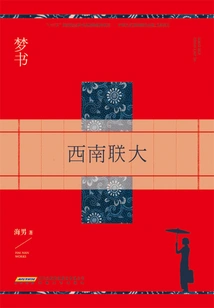
Dream Book: Southwest Associated University
General Fiction梦书:西南联大
Hainan
The author collects a large number of the latest historical materials, and uses the National Southwest Associated University during the Anti-Japanese War and the folk customs of Kunming as the background to epically narrate the life stories of several Union University professors and scholars in the form of a novel against this important humanistic and historical background. This humanistic epic that traverses the history of war is interspersed with their love, resentment, tears, youth and patriotic passion. At the same time, it more delicately presents the unique humanistic style and spiritual pursuit of Southwest Associated University. The work has both historical and literary value. The work has been listed as a quality engineering project in Yunnan Province.
The author collects a large number of the latest historical materials, and uses the National Southwest Associated University during the Anti-Japanese War and the folk customs of Kunming as the background to epically narrate the life stories of several Union University professors and scholars in the form of a novel against this important humanistic and historical background. This humanistic epic that traverses the history of war is interspersed with their love, resentment, tears, youth and patriotic passion. At the same time, it more delicately presents the unique humanistic style and spiritual pursuit of Southwest Associated University. The work has both historical and literary value. The work has been listed as a quality engineering project in Yunnan Province.
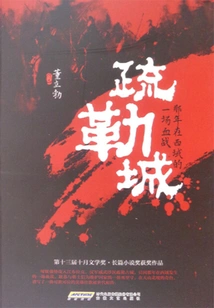
Shule City: a Bloody Battle in the Western Regions That Year
General Fiction疏勒城:那年在西域的一场血战
Dong Libo
This book won the 13th October Literature Award·Novel Award. It is a historical novel based on the historical facts of the Han Dynasty. It is an excellent text published on the theme of "One Belt and One Road". This book truly reproduces the arduous battle that Eastern Han general Geng Gong fought against the Huns in the Shule City Defense Battle in Shichengzi, Qitai County, which is the Shule City recorded in the "Book of the Later Han". From spring to winter, 300 people fought bloody battles with tens of thousands of cavalry, preferring to die of hunger and thirst rather than retreat, escape, or surrender. In the end, only 26 people were left, guarding the military flag at the top of the city until reinforcements arrived. It not only proves that the Western Regions became part of the Chinese territory as early as the Han Dynasty more than 2,000 years ago, but also demonstrates the unyielding dedication and sacrifice of the Chinese people in order to safeguard the dignity of the motherland.
This book won the 13th October Literature Award·Novel Award. It is a historical novel based on the historical facts of the Han Dynasty. It is an excellent text published on the theme of "One Belt and One Road". This book truly reproduces the arduous battle that Eastern Han general Geng Gong fought against the Huns in the Shule City Defense Battle in Shichengzi, Qitai County, which is the Shule City recorded in the "Book of the Later Han". From spring to winter, 300 people fought bloody battles with tens of thousands of cavalry, preferring to die of hunger and thirst rather than retreat, escape, or surrender. In the end, only 26 people were left, guarding the military flag at the top of the city until reinforcements arrived. It not only proves that the Western Regions became part of the Chinese territory as early as the Han Dynasty more than 2,000 years ago, but also demonstrates the unyielding dedication and sacrifice of the Chinese people in order to safeguard the dignity of the motherland.
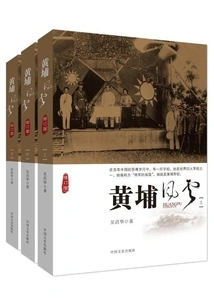
Huangpu Storm (complete Collection)
General Fiction黄埔风云(全集)
Wu Changhua
Huangpu Military Academy was founded in the 1920s on the initiative of Sun Yat-sen and the first cooperation between the Kuomintang and the Communist Party. This military academy is one of the four most famous military academies in the world. It has trained and created a large number of outstanding military and political talents for the Chinese revolution. This book reproduces the tumultuous history before and after the founding of Whampoa Military Academy in vivid and delicate writing. The author of the book and his father are both from the older generation of Huangpu people. They have been engaged in history, especially the research and writing of Huangpu history for a long time, and have certain authority in this field. The book is rich in detailed content and has been published in multiple editions for more than ten years and has been a bestseller.
Huangpu Military Academy was founded in the 1920s on the initiative of Sun Yat-sen and the first cooperation between the Kuomintang and the Communist Party. This military academy is one of the four most famous military academies in the world. It has trained and created a large number of outstanding military and political talents for the Chinese revolution. This book reproduces the tumultuous history before and after the founding of Whampoa Military Academy in vivid and delicate writing. The author of the book and his father are both from the older generation of Huangpu people. They have been engaged in history, especially the research and writing of Huangpu history for a long time, and have certain authority in this field. The book is rich in detailed content and has been published in multiple editions for more than ten years and has been a bestseller.
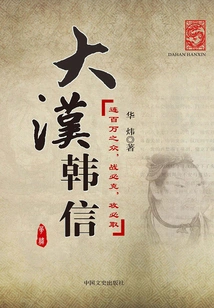
Han Xin
General Fiction大汉韩信
Hua Wei
"Han Han Xin" has been very popular among readers since its first publication in 2016. In less than two years, it has been sold out in major bookstores across the country. The love of readers has forced me to face the reprint with a more respectful attitude. The revision focuses on the following three aspects: First, adding or deleting some content. Since the draft of the first edition was compiled in a hurry, some slightly rough text was revised and polished in the second edition, and pictures and text descriptions that were not in the first edition were added. The second is to strive for consistency. Biography is a popular reading. In order to clearly express the author's tendency, he cannot do too much research and cannot avoid it. The content of his own research must be reflected in the work. For example, the description in the book of "Building plank roads in the open and visiting Chencang in secret" was only recorded in the Yuan Dynasty. However, in subsequent dialogues, it was stated many times and changed to "Leaving Longxi in the open and visiting Chencang in secret". The third is to unify the names of places and people. As a general biographical work, Chen Sheng's title is used more widely, and "Chen She" is changed to "Chen Sheng". In response to the inconsistent way of writing the Battle of the Giant Deer, the word "Ju" was changed to "Ju", etc.
"Han Han Xin" has been very popular among readers since its first publication in 2016. In less than two years, it has been sold out in major bookstores across the country. The love of readers has forced me to face the reprint with a more respectful attitude. The revision focuses on the following three aspects: First, adding or deleting some content. Since the draft of the first edition was compiled in a hurry, some slightly rough text was revised and polished in the second edition, and pictures and text descriptions that were not in the first edition were added. The second is to strive for consistency. Biography is a popular reading. In order to clearly express the author's tendency, he cannot do too much research and cannot avoid it. The content of his own research must be reflected in the work. For example, the description in the book of "Building plank roads in the open and visiting Chencang in secret" was only recorded in the Yuan Dynasty. However, in subsequent dialogues, it was stated many times and changed to "Leaving Longxi in the open and visiting Chencang in secret". The third is to unify the names of places and people. As a general biographical work, Chen Sheng's title is used more widely, and "Chen She" is changed to "Chen Sheng". In response to the inconsistent way of writing the Battle of the Giant Deer, the word "Ju" was changed to "Ju", etc.

从乞丐到将军:陆荣廷传奇(全集)
M
At the end of the Qing Dynasty and the beginning of the Republic of China, in these troubled times where heroes emerged in large numbers, Lu Rongting, who was born in the Zhuang ethnic group of Guangxi, was a trend-setter on the cusp of this bloody storm. He rose from an orphan and a beggar to become a high-ranking member of the Qing Dynasty - the governor of Guangxi, the patrol envoy of Guangdong and Guangxi, and a veritable ambassador to the border areas. He also established a strong military, political and powerful Guangxi clique system. He dominated the southwestern part of China and started a disparity in strength with the elite and powerful Beiyang Army. Through Lu Rongting's military career, it shows the desperate struggle between the northern and southern warlords and the turbulent gangs. Lu Rongting not only played a very important role in the history of Guangxi, but also in the modern history of China. The Gui Clan he founded, also known as the "Old Gui Clan", is a military faction worth studying and laid the foundation for the rise of the new Gui Clan giants Li Zongren and Bai Chongxi in the future. It is a pity that this period of history has been almost forgotten by the world, and future generations do not know that Li Zongren, the Guangxi army that made Americans give thumbs up and praise him for being good at fighting hard battles, was founded by Lu Rongting. Without the old Guizhou system, how can we have the new Guizhou system? In the form of a novel, this book shows the world those historical facts that are unknown to the public, including the heroes of the north and south, dusty old relationships, the past of the ancient caravan road, the rise, contribution and decline of the Guangxi warlords, the politics and military affairs of Guangxi, Guangdong, Hunan and other southwest regions in the late Qing Dynasty and the early Republic of China, as well as the rich customs and customs.
At the end of the Qing Dynasty and the beginning of the Republic of China, in these troubled times where heroes emerged in large numbers, Lu Rongting, who was born in the Zhuang ethnic group of Guangxi, was a trend-setter on the cusp of this bloody storm. He rose from an orphan and a beggar to become a high-ranking member of the Qing Dynasty - the governor of Guangxi, the patrol envoy of Guangdong and Guangxi, and a veritable ambassador to the border areas. He also established a strong military, political and powerful Guangxi clique system. He dominated the southwestern part of China and started a disparity in strength with the elite and powerful Beiyang Army. Through Lu Rongting's military career, it shows the desperate struggle between the northern and southern warlords and the turbulent gangs. Lu Rongting not only played a very important role in the history of Guangxi, but also in the modern history of China. The Gui Clan he founded, also known as the "Old Gui Clan", is a military faction worth studying and laid the foundation for the rise of the new Gui Clan giants Li Zongren and Bai Chongxi in the future. It is a pity that this period of history has been almost forgotten by the world, and future generations do not know that Li Zongren, the Guangxi army that made Americans give thumbs up and praise him for being good at fighting hard battles, was founded by Lu Rongting. Without the old Guizhou system, how can we have the new Guizhou system? In the form of a novel, this book shows the world those historical facts that are unknown to the public, including the heroes of the north and south, dusty old relationships, the past of the ancient caravan road, the rise, contribution and decline of the Guangxi warlords, the politics and military affairs of Guangxi, Guangdong, Hunan and other southwest regions in the late Qing Dynasty and the early Republic of China, as well as the rich customs and customs.
Sound Cannon
General Fiction响炮
Yang Zhongqing Zhan Xiujuan
As a long documentary novel in the historical genre, the biggest highlight of "Sounding Cannon" is that the protagonist is not only an eyewitness to the bloody battle, but also has a very special identity - he is the cousin of the last emperor Puyi. He also served as a confidential secretary to Chiang Ching-kuo, the son of the KMT president Chiang Yu-shih. Most importantly, he was a member of the Communist Party of China who joined the Communist Party of China in his early years. Therefore, in these aspects alone, it is different from the common works of the same genre. The publication of such a work should naturally become the main theme and positive energy of the propaganda of the times.
As a long documentary novel in the historical genre, the biggest highlight of "Sounding Cannon" is that the protagonist is not only an eyewitness to the bloody battle, but also has a very special identity - he is the cousin of the last emperor Puyi. He also served as a confidential secretary to Chiang Ching-kuo, the son of the KMT president Chiang Yu-shih. Most importantly, he was a member of the Communist Party of China who joined the Communist Party of China in his early years. Therefore, in these aspects alone, it is different from the common works of the same genre. The publication of such a work should naturally become the main theme and positive energy of the propaganda of the times.
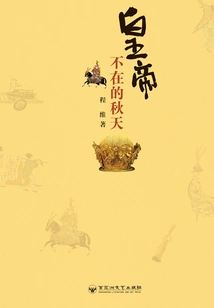
The Autumn When the Emperor is Away
General Fiction皇帝不在的秋天
Cheng Wei
This is a new historical novel written by the writer Cheng Wei using modern concepts to narrate historical facts. The story is based on the mid-Ming Dynasty, when the emperor was romantic, the eunuchs were in power, and the vassal kings tried to repeat the story of the Qing emperor in the early Ming Dynasty.
This is a new historical novel written by the writer Cheng Wei using modern concepts to narrate historical facts. The story is based on the mid-Ming Dynasty, when the emperor was romantic, the eunuchs were in power, and the vassal kings tried to repeat the story of the Qing emperor in the early Ming Dynasty.
Q
R
Q
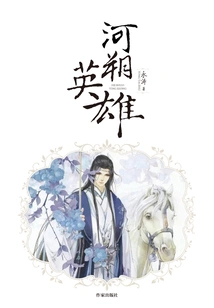
Heroes of Heshuo
General Fiction河朔英雄
Hao Yongtao
AD 397, the Southern and Northern Dynasties period. The Eastern Jin Dynasty was settled in the south of the Yangtze River, where barbarians were chasing deer, and war was everywhere in the Central Plains. In order to consolidate his power, Murong Bao, the king of Yan Kingdom, let his eldest son Murong Sheng marry the daughter of Lan Han, the patriarch of Lan tribe. Lan Han was so ambitious that he killed the King of Heaven and seized the Kingdom of Yan. As a result, bloody revenge and true love accompanied several young people into the trap.
AD 397, the Southern and Northern Dynasties period. The Eastern Jin Dynasty was settled in the south of the Yangtze River, where barbarians were chasing deer, and war was everywhere in the Central Plains. In order to consolidate his power, Murong Bao, the king of Yan Kingdom, let his eldest son Murong Sheng marry the daughter of Lan Han, the patriarch of Lan tribe. Lan Han was so ambitious that he killed the King of Heaven and seized the Kingdom of Yan. As a result, bloody revenge and true love accompanied several young people into the trap.
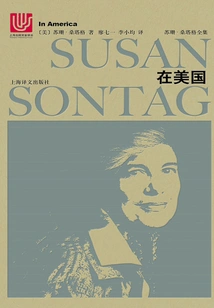
In America (2018 Edition)
General Fiction在美国(2018年版)
H
This book is a kind of "The Complete Works of Susan Sontag". This book has won the National Book Award and the Jerusalem Prize. It is one of Sontag's few novels and has brought her such honors. In the form of a historical biography, the novel reinterprets the process of self-transformation and spiritual recovery of the Polish "stage queen" Modjeska after she immigrated to the United States. It is an organic combination of historical details and modern consciousness.
This book is a kind of "The Complete Works of Susan Sontag". This book has won the National Book Award and the Jerusalem Prize. It is one of Sontag's few novels and has brought her such honors. In the form of a historical biography, the novel reinterprets the process of self-transformation and spiritual recovery of the Polish "stage queen" Modjeska after she immigrated to the United States. It is an organic combination of historical details and modern consciousness.
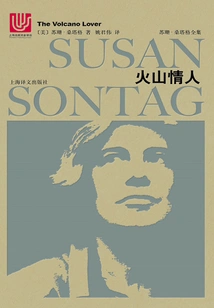
Volcano Lover: a Romance (2018 Edition)
General Fiction火山情人:一部罗曼司(2018年版)
H
"The Volcano Lover" is Susan Sontag's most famous historical novel. It traces the decades of history before and after the 1799 Naples Revolution through the actions of the British ambassador to Naples, the ambassador's wife and her lover the British admiral. He criticized the dissoluteness of the British forces and the Naples feudal dynasty, the inhumanity of suppressing the revolution, and sympathized with and praised the revolution.
"The Volcano Lover" is Susan Sontag's most famous historical novel. It traces the decades of history before and after the 1799 Naples Revolution through the actions of the British ambassador to Naples, the ambassador's wife and her lover the British admiral. He criticized the dissoluteness of the British forces and the Naples feudal dynasty, the inhumanity of suppressing the revolution, and sympathized with and praised the revolution.
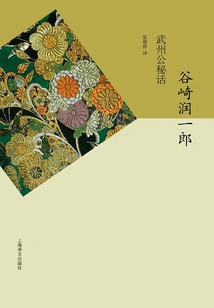
Wuzhou Public Secrets
General Fiction武州公秘话
H
This novel is another attempt by the aestheticist writer Junichiro Tanizaki to challenge the ancient literary form of "monogatari". Taking the Warring States Period as the background, the fictional protagonist is placed in a mixture of fictional and factual research and historical materials, which demonstrates the unique charm of fictional writing. As the son of the Musashi Shou Kiryu family, Wuzhou Gonghuisheng has been a hostage in Olu Mountain Castle since he was a child. When he was thirteen years old, Oshikayama Castle was under siege. Terusaki witnessed the strange scene of a young girl holding the enemy's head, and developed a lifelong weird sexual fetish... This book is equipped with 838 illustrations by the famous painter Kimura Hachisaki of the Taisho and Showa periods, which fully demonstrates the sensual beauty of Tanizaki's works.
This novel is another attempt by the aestheticist writer Junichiro Tanizaki to challenge the ancient literary form of "monogatari". Taking the Warring States Period as the background, the fictional protagonist is placed in a mixture of fictional and factual research and historical materials, which demonstrates the unique charm of fictional writing. As the son of the Musashi Shou Kiryu family, Wuzhou Gonghuisheng has been a hostage in Olu Mountain Castle since he was a child. When he was thirteen years old, Oshikayama Castle was under siege. Terusaki witnessed the strange scene of a young girl holding the enemy's head, and developed a lifelong weird sexual fetish... This book is equipped with 838 illustrations by the famous painter Kimura Hachisaki of the Taisho and Showa periods, which fully demonstrates the sensual beauty of Tanizaki's works.
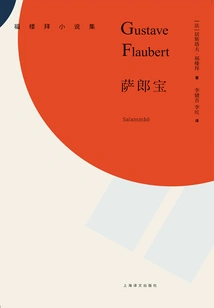
Salangbao
General Fiction萨郎宝
H
"Salangbao" is a classic work by French realist writer Flaubert in the 19th century. Its artistic integrity and exquisiteness are almost impeccable. The author spent five years writing this historical novel, which integrates background, characters and adventure full of emotions and mystery. It is as majestic as an epic and as exquisite as an antique. Like an archaeologist excavating ancient sites, the author is diligent in his investigation and textual research. He has consulted more than 90 kinds of literature about Carthage, written countless notes, and made on-site inspections of the Carthage ruins in North Africa. The novel describes that Carthage was defeated by Rome in the First Punic War and had to bear huge indemnities. The ruling class was shameless and extravagant, resulting in an empty treasury and an inability to pay the military pay owed to the mercenaries. The mercenaries, led by the Libyan Mato, mutinied and surrounded the city of Carthage. Mato fell in love with Salangbao, the daughter of the Carthaginian commander Hamilcar. Under the guidance of the Greek slave Spendius, he sneaked into the city of Carthage and stole the sacred garment that protected the city of Carthage that Salanbao was responsible for guarding. Hamilcar returned to rescue the city of Carthage, but lost the first battle. Fortunately, Salangbao walked into Mato's camp alone and retrieved the divine clothing, which turned the situation around. Hamilcar used tricks to surround the rebel army, and then used methods of dividing and disintegrating the rebels and buying off the traitors to defeat them one by one and completely eliminate them. Ma Tuo was captured and brutally executed. After Salang Bao's eyes met Ma Tuo's, he fell to the ground and died as if struck by lightning. The work has been adapted twice for the screen and has been adapted into an opera and performed in various places.
"Salangbao" is a classic work by French realist writer Flaubert in the 19th century. Its artistic integrity and exquisiteness are almost impeccable. The author spent five years writing this historical novel, which integrates background, characters and adventure full of emotions and mystery. It is as majestic as an epic and as exquisite as an antique. Like an archaeologist excavating ancient sites, the author is diligent in his investigation and textual research. He has consulted more than 90 kinds of literature about Carthage, written countless notes, and made on-site inspections of the Carthage ruins in North Africa. The novel describes that Carthage was defeated by Rome in the First Punic War and had to bear huge indemnities. The ruling class was shameless and extravagant, resulting in an empty treasury and an inability to pay the military pay owed to the mercenaries. The mercenaries, led by the Libyan Mato, mutinied and surrounded the city of Carthage. Mato fell in love with Salangbao, the daughter of the Carthaginian commander Hamilcar. Under the guidance of the Greek slave Spendius, he sneaked into the city of Carthage and stole the sacred garment that protected the city of Carthage that Salanbao was responsible for guarding. Hamilcar returned to rescue the city of Carthage, but lost the first battle. Fortunately, Salangbao walked into Mato's camp alone and retrieved the divine clothing, which turned the situation around. Hamilcar used tricks to surround the rebel army, and then used methods of dividing and disintegrating the rebels and buying off the traitors to defeat them one by one and completely eliminate them. Ma Tuo was captured and brutally executed. After Salang Bao's eyes met Ma Tuo's, he fell to the ground and died as if struck by lightning. The work has been adapted twice for the screen and has been adapted into an opera and performed in various places.
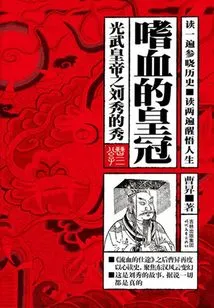
The Bloodthirsty Crown: the Show of Emperor Guangwu Liu Xiu
General Fiction嗜血的皇冠:光武皇帝之刘秀的秀
Cao Sheng
The new work "The Bloodthirsty Crown: Liu Xiu's Show of Emperor Guangwu", under Cao Shengtian's unconstrained writing, reproduces the historical events from the late New Dynasty to the early Eastern Han Dynasty. The bloody turmoil of history brings Liu Xiu, Liu Yan, and Wang Mang to readers over a long period of time, giving us another realm of understanding history. Compared with Qin Shihuang, I don't mess around; compared with Liu Bang, I'm not a hooligan; compared with Wang Mang, I don't slap my head; compared with Li Shimin, I love my brothers; compared with Zhao Kuangyin, I unified China; compared with Zhu Yuanzhang, I don't kill heroes. I am Liu Xiu, the founding emperor of the Eastern Han Dynasty. This is my story. I don't believe that bad money drives out good money. If bad people are in power in the world, it's just because good people don't work hard enough. "The Bloodthirsty Crown: The Show of Emperor Guangwu Liu Xiu" is suitable for: history lovers, especially college students, white-collar workers, and civil servants.
The new work "The Bloodthirsty Crown: Liu Xiu's Show of Emperor Guangwu", under Cao Shengtian's unconstrained writing, reproduces the historical events from the late New Dynasty to the early Eastern Han Dynasty. The bloody turmoil of history brings Liu Xiu, Liu Yan, and Wang Mang to readers over a long period of time, giving us another realm of understanding history. Compared with Qin Shihuang, I don't mess around; compared with Liu Bang, I'm not a hooligan; compared with Wang Mang, I don't slap my head; compared with Li Shimin, I love my brothers; compared with Zhao Kuangyin, I unified China; compared with Zhu Yuanzhang, I don't kill heroes. I am Liu Xiu, the founding emperor of the Eastern Han Dynasty. This is my story. I don't believe that bad money drives out good money. If bad people are in power in the world, it's just because good people don't work hard enough. "The Bloodthirsty Crown: The Show of Emperor Guangwu Liu Xiu" is suitable for: history lovers, especially college students, white-collar workers, and civil servants.
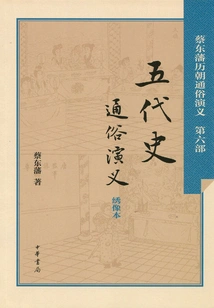
Popular Romance of the Five Dynasties History (popular Romance of Cai Dongfan's Past Dynasties)
General Fiction五代史通俗演义(蔡东藩历朝通俗演义)
Cai Dongfan
"Popular Romance of the History of the Five Dynasties" is one of the series of "Popular Romance of Cai Dongfan's Past Dynasties". It narrates the history of the Five Dynasties and Ten Kingdoms in which "the head of state is like playing chess, and the country is like passing down a family", and the lives were devastated and bloodshed. What the author describes is not only the chaos of this period, but also aims to reveal its roots, and connects the social reality of warlords' melee in the early years of the Republic of China with the perspective of historians, which is a lesson learned from the mistakes made before. This book's historical materials are carefully selected, and its creation is full of distinctive features of romance novels. It is a representative work of popular literature that transcends the times.
"Popular Romance of the History of the Five Dynasties" is one of the series of "Popular Romance of Cai Dongfan's Past Dynasties". It narrates the history of the Five Dynasties and Ten Kingdoms in which "the head of state is like playing chess, and the country is like passing down a family", and the lives were devastated and bloodshed. What the author describes is not only the chaos of this period, but also aims to reveal its roots, and connects the social reality of warlords' melee in the early years of the Republic of China with the perspective of historians, which is a lesson learned from the mistakes made before. This book's historical materials are carefully selected, and its creation is full of distinctive features of romance novels. It is a representative work of popular literature that transcends the times.
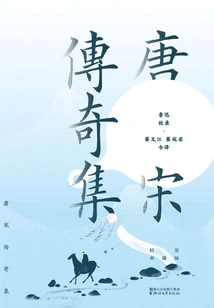
唐宋传奇集(精装典藏版)
Cai Yijiang Cai Wanruo Proofed By Lu Xun
The highest peak of classical legendary novels, a "fantasy urban literature" that spans thousands of years; the creative source of "Legend of the Demon Cat" by Japanese writer Yumezhen Tapir, and the original script of "The Assassin" by Taiwanese director Hou Hsiao-hsien; jointly recommended by best-selling author Feng Tang × well-known scholar Qian Wenzhong. A classic that restores the fantasy situation and emotional life of people in the Tang and Song Dynasties, it is known as "the highest peak of Chinese classical Chinese novels". Lu Xun spent 15 years selecting the essence of 48 pieces from thousands of "legends of the Tang and Song Dynasties". Cai Yijiang, a well-known scholar on Tang and Song Dynasties, translated it word for word with 60 years of profound knowledge. The comparison of text and white enables readers to fully understand the inner essence of "Tang and Song urban literature". The book is based on the first edition of Shanghai Beixin Bookstore in 1927 and 1928. It refers to the manuscript of Lu Xun's "Collection of Legends of the Tang and Song Dynasties" and is carefully edited and translated. It reproduces the splendid lives of the Tang and Song people from multiple perspectives such as life, love, literature, history, chivalry, gods and monsters, and allows you to experience the touching feelings and inner throbbing written by the romantic scribes.
The highest peak of classical legendary novels, a "fantasy urban literature" that spans thousands of years; the creative source of "Legend of the Demon Cat" by Japanese writer Yumezhen Tapir, and the original script of "The Assassin" by Taiwanese director Hou Hsiao-hsien; jointly recommended by best-selling author Feng Tang × well-known scholar Qian Wenzhong. A classic that restores the fantasy situation and emotional life of people in the Tang and Song Dynasties, it is known as "the highest peak of Chinese classical Chinese novels". Lu Xun spent 15 years selecting the essence of 48 pieces from thousands of "legends of the Tang and Song Dynasties". Cai Yijiang, a well-known scholar on Tang and Song Dynasties, translated it word for word with 60 years of profound knowledge. The comparison of text and white enables readers to fully understand the inner essence of "Tang and Song urban literature". The book is based on the first edition of Shanghai Beixin Bookstore in 1927 and 1928. It refers to the manuscript of Lu Xun's "Collection of Legends of the Tang and Song Dynasties" and is carefully edited and translated. It reproduces the splendid lives of the Tang and Song people from multiple perspectives such as life, love, literature, history, chivalry, gods and monsters, and allows you to experience the touching feelings and inner throbbing written by the romantic scribes.
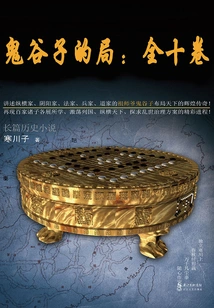
Guiguzi's Game (ten Volumes in Total)
General Fiction鬼谷子的局(全十卷)
Hanchuanzi
The "Game of Wisdom" series "Guiguzi's Game: Ten Volumes" is a full-length historical novel. It tells the glorious legend of Gui Guzi, the founder of the strategist, yin-yang family, fortune teller, military strategist, and Taoist family, who organized the world! During the Warring States Period, in a mountain called Qingxi Guigu (today's Hebi City, Henan), there lived an old man (whose real name was Wang Xu) who was respectfully called Guiguzi. He read, meditated, and meditated on the mountain every day. He did not interact with the world and lived an isolated life. However, for more than two thousand years, military strategists have respected him as a saint, political strategists have respected him as the ancestor, fortune tellers and fortune tellers have respected him as the ancestor, and Taoism has ranked him with Laozi and respected him as the ancestor of Wang Chan.
The "Game of Wisdom" series "Guiguzi's Game: Ten Volumes" is a full-length historical novel. It tells the glorious legend of Gui Guzi, the founder of the strategist, yin-yang family, fortune teller, military strategist, and Taoist family, who organized the world! During the Warring States Period, in a mountain called Qingxi Guigu (today's Hebi City, Henan), there lived an old man (whose real name was Wang Xu) who was respectfully called Guiguzi. He read, meditated, and meditated on the mountain every day. He did not interact with the world and lived an isolated life. However, for more than two thousand years, military strategists have respected him as a saint, political strategists have respected him as the ancestor, fortune tellers and fortune tellers have respected him as the ancestor, and Taoism has ranked him with Laozi and respected him as the ancestor of Wang Chan.
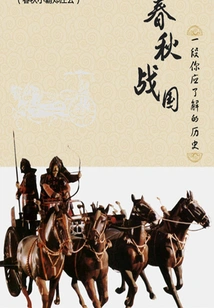
春秋战国:一段你应了解的历史(一)(千种豆瓣高分原创作品·品历史)
Thatched Cottage Xiaosheng
I am not "Those Things in the Ming Dynasty", nor am I "The Qin Empire"! The work is Chapter 1 of the first volume of "Spring and Autumn and Warring States: A History You Should Know": Zheng Zhuanggong, the little tyrant in the Spring and Autumn Period. This work begins with the establishment of the Eastern Zhou Dynasty and tells the story of how the "black-bellied man" Zheng Zhuanggong broke through the dilemma of betrayal by his relatives and interference by foreign powers, and developed Zheng into a formidable power. This series is divided into five volumes, the Spring and Autumn Overlord Volume, the Zhao State Volume, the Qi State Volume, the Qin State Volume and the Zhuzi Baijia Volume. In an easy-to-understand way, it will take you through the magnificent history of more than 500 years of the Spring and Autumn Period and the Warring States Period, and experience the wonderful lives of heroes. The history of the Spring and Autumn Period and the Warring States Period is both familiar and unfamiliar to us ordinary people. What is familiar is that there were familiar historical figures in that era, such as Gou Jian and Qu Yuan; what is unfamiliar is that that era is too far away from us, and the stories and background of this period of history are almost blank to us. Although it is very far away and unfamiliar, the history of the Spring and Autumn Period and the Warring States Period is the period of history that we should most understand and learn from. China's thousands of years of feudal culture and national culture originated here. It is the "childhood" of our Chinese culture and has profoundly influenced the politics, thought and culture of our Chinese people. A humble boy born in the 1980s, an advertising man born in the 1980s, a history buff, and an Internet writer. To create this work, I read no less than 30 historical books and screened out errors in many historical materials from the Spring and Autumn and Warring States periods to ensure the rigor and accuracy of the work.
I am not "Those Things in the Ming Dynasty", nor am I "The Qin Empire"! The work is Chapter 1 of the first volume of "Spring and Autumn and Warring States: A History You Should Know": Zheng Zhuanggong, the little tyrant in the Spring and Autumn Period. This work begins with the establishment of the Eastern Zhou Dynasty and tells the story of how the "black-bellied man" Zheng Zhuanggong broke through the dilemma of betrayal by his relatives and interference by foreign powers, and developed Zheng into a formidable power. This series is divided into five volumes, the Spring and Autumn Overlord Volume, the Zhao State Volume, the Qi State Volume, the Qin State Volume and the Zhuzi Baijia Volume. In an easy-to-understand way, it will take you through the magnificent history of more than 500 years of the Spring and Autumn Period and the Warring States Period, and experience the wonderful lives of heroes. The history of the Spring and Autumn Period and the Warring States Period is both familiar and unfamiliar to us ordinary people. What is familiar is that there were familiar historical figures in that era, such as Gou Jian and Qu Yuan; what is unfamiliar is that that era is too far away from us, and the stories and background of this period of history are almost blank to us. Although it is very far away and unfamiliar, the history of the Spring and Autumn Period and the Warring States Period is the period of history that we should most understand and learn from. China's thousands of years of feudal culture and national culture originated here. It is the "childhood" of our Chinese culture and has profoundly influenced the politics, thought and culture of our Chinese people. A humble boy born in the 1980s, an advertising man born in the 1980s, a history buff, and an Internet writer. To create this work, I read no less than 30 historical books and screened out errors in many historical materials from the Spring and Autumn and Warring States periods to ensure the rigor and accuracy of the work.
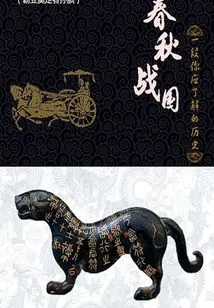
春秋战国:一段你应了解的历史(十五)(千种豆瓣高分原创作品·品历史)
Thatched Cottage Xiaosheng
I am not "Those Things in the Ming Dynasty", nor am I "The Qin Empire"! The work is Chapter 3 of Volume 3 of "Spring and Autumn and Warring States: A History You Should Know": Wu Qi, the founder of hegemony. This chapter tells the story of Sun Bin, who was born in poverty and was brutally murdered by his classmate Pang Juan. However, he was physically disabled and determined to take revenge, and finally defeated his enemy and established the dominance of Qi State. This series is divided into five volumes, the Spring and Autumn Overlord Volume, the Zhao State Volume, the Qi State Volume, the Qin State Volume and the Zhuzi Baijia Volume. In an easy-to-understand way, it will take you through the magnificent history of more than 500 years of the Spring and Autumn Period and the Warring States Period, and experience the wonderful lives of heroes. The history of the Spring and Autumn Period and the Warring States Period is both familiar and unfamiliar to us ordinary people. What is familiar is that there were familiar historical figures in that era, such as Gou Jian and Qu Yuan; what is unfamiliar is that that era is too far away from us, and the stories and background of this period of history are almost blank to us. Although it is very far away and unfamiliar, the history of the Spring and Autumn Period and the Warring States Period is the period of history that we should most understand and learn from. China's thousands of years of feudal culture and national culture originated here. It is the "childhood" of our Chinese culture and has profoundly influenced the politics, thought and culture of our Chinese people.
I am not "Those Things in the Ming Dynasty", nor am I "The Qin Empire"! The work is Chapter 3 of Volume 3 of "Spring and Autumn and Warring States: A History You Should Know": Wu Qi, the founder of hegemony. This chapter tells the story of Sun Bin, who was born in poverty and was brutally murdered by his classmate Pang Juan. However, he was physically disabled and determined to take revenge, and finally defeated his enemy and established the dominance of Qi State. This series is divided into five volumes, the Spring and Autumn Overlord Volume, the Zhao State Volume, the Qi State Volume, the Qin State Volume and the Zhuzi Baijia Volume. In an easy-to-understand way, it will take you through the magnificent history of more than 500 years of the Spring and Autumn Period and the Warring States Period, and experience the wonderful lives of heroes. The history of the Spring and Autumn Period and the Warring States Period is both familiar and unfamiliar to us ordinary people. What is familiar is that there were familiar historical figures in that era, such as Gou Jian and Qu Yuan; what is unfamiliar is that that era is too far away from us, and the stories and background of this period of history are almost blank to us. Although it is very far away and unfamiliar, the history of the Spring and Autumn Period and the Warring States Period is the period of history that we should most understand and learn from. China's thousands of years of feudal culture and national culture originated here. It is the "childhood" of our Chinese culture and has profoundly influenced the politics, thought and culture of our Chinese people.
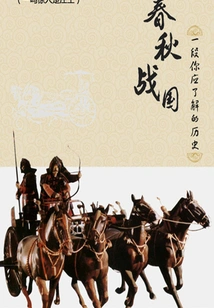
春秋战国:一段你应了解的历史(六)(千种豆瓣高分原创作品·品历史)
Thatched Cottage Xiaosheng
I am not "Those Things in the Ming Dynasty", nor am I "The Qin Empire"! The work is Chapter 6 of Volume 1 of "Spring and Autumn and Warring States: A History You Should Know": A Blockbuster King of Chuzhuang. This chapter begins with the death of King Cheng of Chu, and tells the story of how the cautious King Zhuang of Chu "doesn't make a sound, but makes a blockbuster", transforming himself from a "foolish king" who ignored the government's affairs, defeating a series of powerful enemies at home and abroad, and finally regaining the hegemony of the world for Chu. This series is divided into five volumes, the Spring and Autumn Overlord Volume, the Zhao State Volume, the Qi State Volume, the Qin State Volume and the Zhuzi Baijia Volume. In an easy-to-understand way, it will take you through the magnificent history of more than 500 years of the Spring and Autumn Period and the Warring States Period, and experience the wonderful lives of heroes. The history of the Spring and Autumn Period and the Warring States Period is both familiar and unfamiliar to us ordinary people. What is familiar is that there were familiar historical figures in that era, such as Gou Jian and Qu Yuan; what is unfamiliar is that that era is too far away from us, and the stories and background of this period of history are almost blank to us. Although it is very far away and unfamiliar, the history of the Spring and Autumn Period and the Warring States Period is the period of history that we should most understand and learn from. China's thousands of years of feudal culture and national culture originated here. It is the "childhood" of our Chinese culture and has profoundly influenced the politics, thought and culture of our Chinese people. A humble boy born in the 1980s, an advertising man born in the 1980s, a history buff, and an internet writer. To create this work, I read no less than 30 historical books and screened out errors in many historical materials from the Spring and Autumn and Warring States periods to ensure the rigor and accuracy of the work.
I am not "Those Things in the Ming Dynasty", nor am I "The Qin Empire"! The work is Chapter 6 of Volume 1 of "Spring and Autumn and Warring States: A History You Should Know": A Blockbuster King of Chuzhuang. This chapter begins with the death of King Cheng of Chu, and tells the story of how the cautious King Zhuang of Chu "doesn't make a sound, but makes a blockbuster", transforming himself from a "foolish king" who ignored the government's affairs, defeating a series of powerful enemies at home and abroad, and finally regaining the hegemony of the world for Chu. This series is divided into five volumes, the Spring and Autumn Overlord Volume, the Zhao State Volume, the Qi State Volume, the Qin State Volume and the Zhuzi Baijia Volume. In an easy-to-understand way, it will take you through the magnificent history of more than 500 years of the Spring and Autumn Period and the Warring States Period, and experience the wonderful lives of heroes. The history of the Spring and Autumn Period and the Warring States Period is both familiar and unfamiliar to us ordinary people. What is familiar is that there were familiar historical figures in that era, such as Gou Jian and Qu Yuan; what is unfamiliar is that that era is too far away from us, and the stories and background of this period of history are almost blank to us. Although it is very far away and unfamiliar, the history of the Spring and Autumn Period and the Warring States Period is the period of history that we should most understand and learn from. China's thousands of years of feudal culture and national culture originated here. It is the "childhood" of our Chinese culture and has profoundly influenced the politics, thought and culture of our Chinese people. A humble boy born in the 1980s, an advertising man born in the 1980s, a history buff, and an internet writer. To create this work, I read no less than 30 historical books and screened out errors in many historical materials from the Spring and Autumn and Warring States periods to ensure the rigor and accuracy of the work.
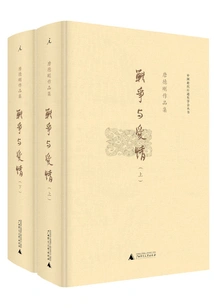
War and Love
General Fiction战争与爱情
Tang Degang
This is Tang Degang's only full-length novel, and together with "Memoirs of Li Zongren", it is known as "the two gems in literature and history". The original title of the novel was "Three Days and Two Nights", with the first part "How Much I Know of the Past" and the second part "Last Night's Dream". The story begins after the normalization of relations between China and the United States. Over the course of three days and two nights, China's changes in half a century are described in flashback. "Although it is a novel, it is also a comprehensive report of some real stories that I have seen and heard." It only serves as a testimony to the troubled modern China and the nightmare of those little people who have gone through many vicissitudes and suffered a lot; it leaves some traces of the lost society, things that will never come back, and the tragic "War of Resistance". In this 600,000-word long work, Tang Degang was the first to mention the history of "comfort women." Later, the issue of "comfort women" became more heated, and the Japanese also noticed the material in this book. This is a portrayal of the great times, a story of the Chinese people; it is both a documentary novel and an oral history.
This is Tang Degang's only full-length novel, and together with "Memoirs of Li Zongren", it is known as "the two gems in literature and history". The original title of the novel was "Three Days and Two Nights", with the first part "How Much I Know of the Past" and the second part "Last Night's Dream". The story begins after the normalization of relations between China and the United States. Over the course of three days and two nights, China's changes in half a century are described in flashback. "Although it is a novel, it is also a comprehensive report of some real stories that I have seen and heard." It only serves as a testimony to the troubled modern China and the nightmare of those little people who have gone through many vicissitudes and suffered a lot; it leaves some traces of the lost society, things that will never come back, and the tragic "War of Resistance". In this 600,000-word long work, Tang Degang was the first to mention the history of "comfort women." Later, the issue of "comfort women" became more heated, and the Japanese also noticed the material in this book. This is a portrayal of the great times, a story of the Chinese people; it is both a documentary novel and an oral history.
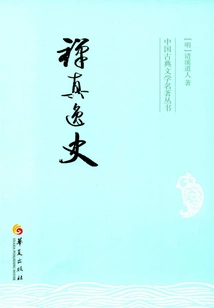
The True History of Zen
General Fiction禅真逸史
Qingxi Taoist
"Zhen Zhen Yi Shi", a historical novel of martial arts in the Ming Dynasty, also known as "The Outer History of Can Liang" and "The Complete Biography of Miao Xiang Temple"). The book consists of eight volumes and forty chapters. It is written about the Northern and Southern Dynasties. The characters in the book, such as Gao Huan, Gao Cheng, Hou Jing, Ding He, Xiao Zhengde, Xie Ju, Zhu Yi, He Shikai, etc., All exist in history; Xue Ju, Du Fuwei, and Zhang Shanxiang are all famous generals, and they are biographies in both the new and old "Book of Tang"; only Dan Ran and Zhong Shoujing are fictional. The events of the Northern and Southern Dynasties in the first half of the book are roughly based on historical facts, while the second half is about Du Fuwei and other personnel, which is far from historical facts. Generally speaking, this book can be regarded as a variant of historical novel.
"Zhen Zhen Yi Shi", a historical novel of martial arts in the Ming Dynasty, also known as "The Outer History of Can Liang" and "The Complete Biography of Miao Xiang Temple"). The book consists of eight volumes and forty chapters. It is written about the Northern and Southern Dynasties. The characters in the book, such as Gao Huan, Gao Cheng, Hou Jing, Ding He, Xiao Zhengde, Xie Ju, Zhu Yi, He Shikai, etc., All exist in history; Xue Ju, Du Fuwei, and Zhang Shanxiang are all famous generals, and they are biographies in both the new and old "Book of Tang"; only Dan Ran and Zhong Shoujing are fictional. The events of the Northern and Southern Dynasties in the first half of the book are roughly based on historical facts, while the second half is about Du Fuwei and other personnel, which is far from historical facts. Generally speaking, this book can be regarded as a variant of historical novel.
春秋战国:一段你应了解的历史(七)(千种豆瓣高分原创作品·品历史)
Thatched Cottage Xiaosheng
I am not "Those Things in the Ming Dynasty", nor am I "The Qin Empire"! The work is Chapter 7 of Volume 1 of "Spring and Autumn and Warring States: A History You Should Know": The Fierce Overlord Helu. This chapter begins with the establishment of the Wu State and tells the story of He Lu, a cruel character, who created a military miracle to defeat the Chu State and became the overlord of the south with the assistance of Wu Zixu, Sun Wu and other worldly talents based on the foundation laid by his father and ancestors for generations. This series is divided into five volumes, the Spring and Autumn Overlord Volume, the Zhao State Volume, the Qi State Volume, the Qin State Volume and the Zhuzi Baijia Volume. In an easy-to-understand way, it will take you through the magnificent history of more than 500 years of the Spring and Autumn Period and the Warring States Period, and experience the wonderful lives of heroes. The history of the Spring and Autumn Period and the Warring States Period is both familiar and unfamiliar to us ordinary people. What is familiar is that there were familiar historical figures in that era, such as Gou Jian and Qu Yuan; what is unfamiliar is that that era is too far away from us, and the stories and background of this period of history are almost blank to us. Although it is very far away and unfamiliar, the history of the Spring and Autumn Period and the Warring States Period is the period of history that we should most understand and learn from. China's thousands of years of feudal culture and national culture originated here. It is the "childhood" of our Chinese culture and has profoundly influenced the politics, thought and culture of our Chinese people. A humble boy born in the 1980s, an advertising man born in the 1980s, a history buff, and an Internet writer. To create this work, I read no less than 30 historical books and screened out errors in many historical materials from the Spring and Autumn and Warring States periods to ensure the rigor and accuracy of the work.
I am not "Those Things in the Ming Dynasty", nor am I "The Qin Empire"! The work is Chapter 7 of Volume 1 of "Spring and Autumn and Warring States: A History You Should Know": The Fierce Overlord Helu. This chapter begins with the establishment of the Wu State and tells the story of He Lu, a cruel character, who created a military miracle to defeat the Chu State and became the overlord of the south with the assistance of Wu Zixu, Sun Wu and other worldly talents based on the foundation laid by his father and ancestors for generations. This series is divided into five volumes, the Spring and Autumn Overlord Volume, the Zhao State Volume, the Qi State Volume, the Qin State Volume and the Zhuzi Baijia Volume. In an easy-to-understand way, it will take you through the magnificent history of more than 500 years of the Spring and Autumn Period and the Warring States Period, and experience the wonderful lives of heroes. The history of the Spring and Autumn Period and the Warring States Period is both familiar and unfamiliar to us ordinary people. What is familiar is that there were familiar historical figures in that era, such as Gou Jian and Qu Yuan; what is unfamiliar is that that era is too far away from us, and the stories and background of this period of history are almost blank to us. Although it is very far away and unfamiliar, the history of the Spring and Autumn Period and the Warring States Period is the period of history that we should most understand and learn from. China's thousands of years of feudal culture and national culture originated here. It is the "childhood" of our Chinese culture and has profoundly influenced the politics, thought and culture of our Chinese people. A humble boy born in the 1980s, an advertising man born in the 1980s, a history buff, and an Internet writer. To create this work, I read no less than 30 historical books and screened out errors in many historical materials from the Spring and Autumn and Warring States periods to ensure the rigor and accuracy of the work.
春秋战国:一段你应了解的历史(八)(千种豆瓣高分原创作品·品历史)
Thatched Cottage Xiaosheng
I am not "Those Things in the Ming Dynasty", nor am I "The Qin Empire"! The work is Chapter 8 of Volume 1 of "Spring and Autumn and Warring States: A History You Should Know": Gou Jian, the last overlord. This work begins with the establishment of the Yue Kingdom and tells the story of the calm and introverted Gou Jian, who endured humiliation and hardship through hard work and hardship, and finally eliminated the powerful enemy Wu Kingdom and became the last overlord of the Spring and Autumn Period. This series is divided into five volumes, the Spring and Autumn Overlord Volume, the Zhao State Volume, the Qi State Volume, the Qin State Volume and the Zhuzi Baijia Volume. In an easy-to-understand way, it will take you through the magnificent history of more than 500 years of the Spring and Autumn Period and the Warring States Period, and experience the wonderful lives of heroes. The history of the Spring and Autumn Period and the Warring States Period is both familiar and unfamiliar to us ordinary people. What is familiar is that there were familiar historical figures in that era, such as Gou Jian and Qu Yuan; what is unfamiliar is that that era is too far away from us, and the stories and background of this period of history are almost blank to us. Although it is very far away and unfamiliar, the history of the Spring and Autumn Period and the Warring States Period is the period of history that we should most understand and learn from. China's thousands of years of feudal culture and national culture originated here. It is the "childhood" of our Chinese culture and has profoundly influenced the politics, thought and culture of our Chinese people. A humble boy born in the 1980s, an advertising man born in the 1980s, a history buff, and an Internet writer. To create this work, I read no less than 30 historical books and screened out errors in many historical materials from the Spring and Autumn and Warring States periods to ensure the rigor and accuracy of the work.
I am not "Those Things in the Ming Dynasty", nor am I "The Qin Empire"! The work is Chapter 8 of Volume 1 of "Spring and Autumn and Warring States: A History You Should Know": Gou Jian, the last overlord. This work begins with the establishment of the Yue Kingdom and tells the story of the calm and introverted Gou Jian, who endured humiliation and hardship through hard work and hardship, and finally eliminated the powerful enemy Wu Kingdom and became the last overlord of the Spring and Autumn Period. This series is divided into five volumes, the Spring and Autumn Overlord Volume, the Zhao State Volume, the Qi State Volume, the Qin State Volume and the Zhuzi Baijia Volume. In an easy-to-understand way, it will take you through the magnificent history of more than 500 years of the Spring and Autumn Period and the Warring States Period, and experience the wonderful lives of heroes. The history of the Spring and Autumn Period and the Warring States Period is both familiar and unfamiliar to us ordinary people. What is familiar is that there were familiar historical figures in that era, such as Gou Jian and Qu Yuan; what is unfamiliar is that that era is too far away from us, and the stories and background of this period of history are almost blank to us. Although it is very far away and unfamiliar, the history of the Spring and Autumn Period and the Warring States Period is the period of history that we should most understand and learn from. China's thousands of years of feudal culture and national culture originated here. It is the "childhood" of our Chinese culture and has profoundly influenced the politics, thought and culture of our Chinese people. A humble boy born in the 1980s, an advertising man born in the 1980s, a history buff, and an Internet writer. To create this work, I read no less than 30 historical books and screened out errors in many historical materials from the Spring and Autumn and Warring States periods to ensure the rigor and accuracy of the work.
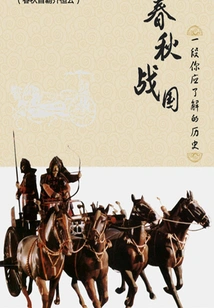
春秋战国:一段你应了解的历史(二)(千种豆瓣高分原创作品·品历史)
Thatched Cottage Xiaosheng
I am not "Those Things in the Ming Dynasty", nor am I "The Qin Empire"! The work is Chapter 2 of Volume 1 of "Spring and Autumn and Warring States: A History You Should Know": Duke Huan of Qi, the first tyrant in the Spring and Autumn Period. This work begins with the establishment of the Qi State and tells how the "playboy" Duke Huan of Qi developed the Qi State into a country recognized as the hegemon in the world based on the foundation laid by his ancestors and with the assistance of the wizard Guan Zhong. This series is divided into five volumes, the Spring and Autumn Overlord Volume, the Zhao State Volume, the Qi State Volume, the Qin State Volume and the Zhuzi Baijia Volume. In an easy-to-understand way, it will take you through the magnificent history of more than 500 years of the Spring and Autumn Period and the Warring States Period, and experience the wonderful lives of heroes. The history of the Spring and Autumn Period and the Warring States Period is both familiar and unfamiliar to us ordinary people. What is familiar is that there were familiar historical figures in that era, such as Gou Jian and Qu Yuan; what is unfamiliar is that that era is too far away from us, and the stories and background of this period of history are almost blank to us. Although it is very far away and unfamiliar, the history of the Spring and Autumn Period and the Warring States Period is the period of history that we should most understand and learn from. China's thousands of years of feudal culture and national culture originated here. It is the "childhood" of our Chinese culture and has profoundly influenced the politics, thought and culture of our Chinese people. A humble boy born in the 1980s, an advertising man born in the 1980s, a history buff, and an Internet writer. To create this work, I read no less than 30 historical books and screened out errors in many historical materials from the Spring and Autumn and Warring States periods to ensure the rigor and accuracy of the work.
I am not "Those Things in the Ming Dynasty", nor am I "The Qin Empire"! The work is Chapter 2 of Volume 1 of "Spring and Autumn and Warring States: A History You Should Know": Duke Huan of Qi, the first tyrant in the Spring and Autumn Period. This work begins with the establishment of the Qi State and tells how the "playboy" Duke Huan of Qi developed the Qi State into a country recognized as the hegemon in the world based on the foundation laid by his ancestors and with the assistance of the wizard Guan Zhong. This series is divided into five volumes, the Spring and Autumn Overlord Volume, the Zhao State Volume, the Qi State Volume, the Qin State Volume and the Zhuzi Baijia Volume. In an easy-to-understand way, it will take you through the magnificent history of more than 500 years of the Spring and Autumn Period and the Warring States Period, and experience the wonderful lives of heroes. The history of the Spring and Autumn Period and the Warring States Period is both familiar and unfamiliar to us ordinary people. What is familiar is that there were familiar historical figures in that era, such as Gou Jian and Qu Yuan; what is unfamiliar is that that era is too far away from us, and the stories and background of this period of history are almost blank to us. Although it is very far away and unfamiliar, the history of the Spring and Autumn Period and the Warring States Period is the period of history that we should most understand and learn from. China's thousands of years of feudal culture and national culture originated here. It is the "childhood" of our Chinese culture and has profoundly influenced the politics, thought and culture of our Chinese people. A humble boy born in the 1980s, an advertising man born in the 1980s, a history buff, and an Internet writer. To create this work, I read no less than 30 historical books and screened out errors in many historical materials from the Spring and Autumn and Warring States periods to ensure the rigor and accuracy of the work.
春秋战国:一段你应了解的历史(四)(千种豆瓣高分原创作品·品历史)
Thatched Cottage Xiaosheng
I am not "Those Things in the Ming Dynasty", nor am I "The Qin Empire"! The work is Chapter 4 of Volume 1 of "Spring and Autumn and Warring States: A History You Should Know": The legendary overlord Jin Wengong. This work begins with the establishment of the Jin Kingdom, and tells the story of the originally cowardly and honest Duke Wen of Jin, who was framed and wandered, and finally grew up and defeated the powerful enemy King Chu Cheng, and gained hegemony in the world. This series is divided into five volumes, the Spring and Autumn Overlord Volume, the Zhao State Volume, the Qi State Volume, the Qin State Volume and the Zhuzi Baijia Volume. In an easy-to-understand way, it will take you through the magnificent history of more than 500 years of the Spring and Autumn Period and the Warring States Period, and experience the wonderful lives of heroes. The history of the Spring and Autumn Period and the Warring States Period is both familiar and unfamiliar to us ordinary people. What is familiar is that there were familiar historical figures in that era, such as Gou Jian and Qu Yuan; what is unfamiliar is that that era is too far away from us, and the stories and background of this period of history are almost blank to us. Although it is very far away and unfamiliar, the history of the Spring and Autumn Period and the Warring States Period is the period of history that we should most understand and learn from. China's thousands of years of feudal culture and national culture originated here. It is the "childhood" of our Chinese culture and has profoundly influenced the politics, thought and culture of our Chinese people. A humble boy born in the 1980s, an advertising man born in the 1980s, a history buff, and an internet writer. To create this work, I read no less than 30 historical books and screened out errors in many historical materials from the Spring and Autumn and Warring States periods to ensure the rigor and accuracy of the work.
I am not "Those Things in the Ming Dynasty", nor am I "The Qin Empire"! The work is Chapter 4 of Volume 1 of "Spring and Autumn and Warring States: A History You Should Know": The legendary overlord Jin Wengong. This work begins with the establishment of the Jin Kingdom, and tells the story of the originally cowardly and honest Duke Wen of Jin, who was framed and wandered, and finally grew up and defeated the powerful enemy King Chu Cheng, and gained hegemony in the world. This series is divided into five volumes, the Spring and Autumn Overlord Volume, the Zhao State Volume, the Qi State Volume, the Qin State Volume and the Zhuzi Baijia Volume. In an easy-to-understand way, it will take you through the magnificent history of more than 500 years of the Spring and Autumn Period and the Warring States Period, and experience the wonderful lives of heroes. The history of the Spring and Autumn Period and the Warring States Period is both familiar and unfamiliar to us ordinary people. What is familiar is that there were familiar historical figures in that era, such as Gou Jian and Qu Yuan; what is unfamiliar is that that era is too far away from us, and the stories and background of this period of history are almost blank to us. Although it is very far away and unfamiliar, the history of the Spring and Autumn Period and the Warring States Period is the period of history that we should most understand and learn from. China's thousands of years of feudal culture and national culture originated here. It is the "childhood" of our Chinese culture and has profoundly influenced the politics, thought and culture of our Chinese people. A humble boy born in the 1980s, an advertising man born in the 1980s, a history buff, and an internet writer. To create this work, I read no less than 30 historical books and screened out errors in many historical materials from the Spring and Autumn and Warring States periods to ensure the rigor and accuracy of the work.
From Homer's Epic to the Roman Empire (thousands of Douban High-scoring Original Works and History)
General Fiction从荷马史诗到罗马帝国(千种豆瓣高分原创作品·品历史)
Iliad
I am not "Those Things in the Ming Dynasty", nor am I "The Qin Empire"! Philosophers, poets, soldiers, reading, farming, fighting, fragments of life in ancient Greece and Rome, through the words of people at that time, can make your afternoon leisure more historical thinking. Ancient Greece and ancient Rome are collectively called the classical world in Western studies. Their languages (ancient Greek and Latin) are no longer used by anyone, but there are many works that have been handed down, but not many have been translated into Chinese. I extract interesting people and events from Latin works (and ancient Greek), tell some short stories about the classical world, and share them with those who are interested.
I am not "Those Things in the Ming Dynasty", nor am I "The Qin Empire"! Philosophers, poets, soldiers, reading, farming, fighting, fragments of life in ancient Greece and Rome, through the words of people at that time, can make your afternoon leisure more historical thinking. Ancient Greece and ancient Rome are collectively called the classical world in Western studies. Their languages (ancient Greek and Latin) are no longer used by anyone, but there are many works that have been handed down, but not many have been translated into Chinese. I extract interesting people and events from Latin works (and ancient Greek), tell some short stories about the classical world, and share them with those who are interested.
春秋战国:一段你应了解的历史(十)(千种豆瓣高分原创作品·品历史)
Thatched Cottage Xiaosheng
I am not "Those Things in the Ming Dynasty", nor am I "The Qin Empire"! The work is Chapter 2 of Volume 2 of "Spring and Autumn and Warring States: A History You Should Know": The Changing Hero Zhao Jianzi. This work begins with the growth of Zhao Yang, the son of Zhao Jian, and tells the story of the originally gentle and courteous Zhao Yang who was bullied by other families, transformed into a cunning tycoon, and finally defeated his enemies and strengthened the Zhao family. This series is divided into five volumes, the Spring and Autumn Overlord Volume, the Zhao State Volume, the Qi State Volume, the Qin State Volume and the Zhuzi Baijia Volume. In an easy-to-understand way, it will take you through the magnificent history of more than 500 years of the Spring and Autumn Period and the Warring States Period, and experience the wonderful lives of heroes. The history of the Spring and Autumn Period and the Warring States Period is both familiar and unfamiliar to us ordinary people. What is familiar is that there were familiar historical figures in that era, such as Gou Jian and Qu Yuan; what is unfamiliar is that that era is too far away from us, and the stories and background of this period of history are almost blank to us. Although it is very far away and unfamiliar, the history of the Spring and Autumn Period and the Warring States Period is the period of history that we should most understand and learn from. China's thousands of years of feudal culture and national culture originated here. It is the "childhood" of our Chinese culture and has profoundly influenced the politics, thought and culture of our Chinese people. A humble boy born in the 1980s, an advertising man born in the 1980s, a history buff, and an Internet writer. To create this work, I read no less than 30 historical books and screened out errors in many historical materials from the Spring and Autumn and Warring States periods to ensure the rigor and accuracy of the work.
I am not "Those Things in the Ming Dynasty", nor am I "The Qin Empire"! The work is Chapter 2 of Volume 2 of "Spring and Autumn and Warring States: A History You Should Know": The Changing Hero Zhao Jianzi. This work begins with the growth of Zhao Yang, the son of Zhao Jian, and tells the story of the originally gentle and courteous Zhao Yang who was bullied by other families, transformed into a cunning tycoon, and finally defeated his enemies and strengthened the Zhao family. This series is divided into five volumes, the Spring and Autumn Overlord Volume, the Zhao State Volume, the Qi State Volume, the Qin State Volume and the Zhuzi Baijia Volume. In an easy-to-understand way, it will take you through the magnificent history of more than 500 years of the Spring and Autumn Period and the Warring States Period, and experience the wonderful lives of heroes. The history of the Spring and Autumn Period and the Warring States Period is both familiar and unfamiliar to us ordinary people. What is familiar is that there were familiar historical figures in that era, such as Gou Jian and Qu Yuan; what is unfamiliar is that that era is too far away from us, and the stories and background of this period of history are almost blank to us. Although it is very far away and unfamiliar, the history of the Spring and Autumn Period and the Warring States Period is the period of history that we should most understand and learn from. China's thousands of years of feudal culture and national culture originated here. It is the "childhood" of our Chinese culture and has profoundly influenced the politics, thought and culture of our Chinese people. A humble boy born in the 1980s, an advertising man born in the 1980s, a history buff, and an Internet writer. To create this work, I read no less than 30 historical books and screened out errors in many historical materials from the Spring and Autumn and Warring States periods to ensure the rigor and accuracy of the work.
则阳(千种豆瓣高分原创作品·品历史)
Random And Unfavorable
I am not "Those Things in the Ming Dynasty", nor am I "The Qin Empire"! The "Zhuangzi and the Warring States" series is based on the characters and events recorded in Zhuangzi, combined with other reliable documentary materials, in order to show the true history of some early Warring States periods. It includes some characters and deeds of various schools of thought, as well as some fragments of the literary and martial arts in the Xuanwei era, the only era of governance in the legendary Spring and Autumn and Warring States periods. "Zeyang" is a history written after summarizing a series of events that occurred in Jin, Chu, Qin, Qi and other countries in the 21st and 22nd years of King Xian of Zhou Dynasty, that is, 348 and 347 BC. The main content is the story of what happened when the young Zhuang Zhou returned to his old Chu State from the Song State after the Chu State was invaded by the Wei State. And a full historical interpretation of the Zeyang Chapter.
I am not "Those Things in the Ming Dynasty", nor am I "The Qin Empire"! The "Zhuangzi and the Warring States" series is based on the characters and events recorded in Zhuangzi, combined with other reliable documentary materials, in order to show the true history of some early Warring States periods. It includes some characters and deeds of various schools of thought, as well as some fragments of the literary and martial arts in the Xuanwei era, the only era of governance in the legendary Spring and Autumn and Warring States periods. "Zeyang" is a history written after summarizing a series of events that occurred in Jin, Chu, Qin, Qi and other countries in the 21st and 22nd years of King Xian of Zhou Dynasty, that is, 348 and 347 BC. The main content is the story of what happened when the young Zhuang Zhou returned to his old Chu State from the Song State after the Chu State was invaded by the Wei State. And a full historical interpretation of the Zeyang Chapter.
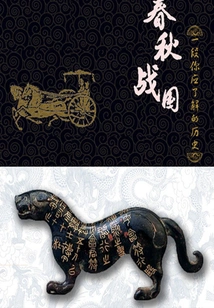
春秋战国:一段你应了解的历史(第三卷)(千种豆瓣高分原创作品·品历史)
Thatched Cottage Xiaosheng
I am not "Those Things in the Ming Dynasty", nor am I "The Qin Empire"! This collection includes "Spring and Autumn and Warring States: A History You Should Know" (13) ~ (17), which is the third volume. Chapter 1: Yanzi, the wise minister through the ages. This chapter begins with the famous allusion of Yan Zi's mission to Chu, telling the story of how Yan Zi survived the internal strife among Qi's ministers and officials, and managed the Qi State with his noble ethics and outstanding ingenuity. Chapter 2: Wu Qi, the God of War. This chapter tells the story of Wu Qi, who was born as a playboy, experienced family changes and workplace hardships, and used his military genius to make Wei and Chu strong, but failed to get a good death. Chapter 3: Wu Qi, the founder of hegemony. This chapter tells the story of Sun Bin, who was born in poverty and was brutally murdered by his classmate Pang Juan. However, he was physically disabled and determined to take revenge, and finally defeated his enemy and established the dominance of Qi State. Chapter 4: The number one spy Su Qin. This chapter tells about Su Qin from a personal point of view, which is completely different from what is recorded in traditional history books. Su Qin used his identity as a political strategist as a cover to secretly carry out espionage missions to undermine Qi's internal affairs and diplomacy, and helped Yan complete its revenge on Qi. Chapter 5: Patriot Tian Dan. This chapter tells the story of Tian Dan, who was originally just a small figure, who stepped forward during the national crisis and turned the tide to regain the motherland. This series is divided into five volumes, the Spring and Autumn Overlord Volume, the Zhao State Volume, the Qi State Volume, the Qin State Volume and the Zhuzi Baijia Volume. In an easy-to-understand way, it will take you through the magnificent history of more than 500 years of the Spring and Autumn Period and the Warring States Period, and experience the wonderful lives of heroes. The history of the Spring and Autumn Period and the Warring States Period is both familiar and unfamiliar to us ordinary people. What is familiar is that there were familiar historical figures in that era, such as Gou Jian and Qu Yuan; what is unfamiliar is that that era is too far away from us, and the stories and background of this period of history are almost blank to us. Although it is very far away and unfamiliar, the history of the Spring and Autumn Period and the Warring States Period is the period of history that we should most understand and learn from. China's thousands of years of feudal culture and national culture originated here. It is the "childhood" of our Chinese culture and has profoundly influenced the politics, thought and culture of our Chinese people.
I am not "Those Things in the Ming Dynasty", nor am I "The Qin Empire"! This collection includes "Spring and Autumn and Warring States: A History You Should Know" (13) ~ (17), which is the third volume. Chapter 1: Yanzi, the wise minister through the ages. This chapter begins with the famous allusion of Yan Zi's mission to Chu, telling the story of how Yan Zi survived the internal strife among Qi's ministers and officials, and managed the Qi State with his noble ethics and outstanding ingenuity. Chapter 2: Wu Qi, the God of War. This chapter tells the story of Wu Qi, who was born as a playboy, experienced family changes and workplace hardships, and used his military genius to make Wei and Chu strong, but failed to get a good death. Chapter 3: Wu Qi, the founder of hegemony. This chapter tells the story of Sun Bin, who was born in poverty and was brutally murdered by his classmate Pang Juan. However, he was physically disabled and determined to take revenge, and finally defeated his enemy and established the dominance of Qi State. Chapter 4: The number one spy Su Qin. This chapter tells about Su Qin from a personal point of view, which is completely different from what is recorded in traditional history books. Su Qin used his identity as a political strategist as a cover to secretly carry out espionage missions to undermine Qi's internal affairs and diplomacy, and helped Yan complete its revenge on Qi. Chapter 5: Patriot Tian Dan. This chapter tells the story of Tian Dan, who was originally just a small figure, who stepped forward during the national crisis and turned the tide to regain the motherland. This series is divided into five volumes, the Spring and Autumn Overlord Volume, the Zhao State Volume, the Qi State Volume, the Qin State Volume and the Zhuzi Baijia Volume. In an easy-to-understand way, it will take you through the magnificent history of more than 500 years of the Spring and Autumn Period and the Warring States Period, and experience the wonderful lives of heroes. The history of the Spring and Autumn Period and the Warring States Period is both familiar and unfamiliar to us ordinary people. What is familiar is that there were familiar historical figures in that era, such as Gou Jian and Qu Yuan; what is unfamiliar is that that era is too far away from us, and the stories and background of this period of history are almost blank to us. Although it is very far away and unfamiliar, the history of the Spring and Autumn Period and the Warring States Period is the period of history that we should most understand and learn from. China's thousands of years of feudal culture and national culture originated here. It is the "childhood" of our Chinese culture and has profoundly influenced the politics, thought and culture of our Chinese people.
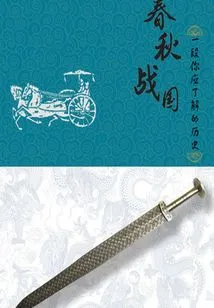
春秋战国:一段你应了解的历史(第一卷)(千种豆瓣高分原创作品·品历史)
Thatched Cottage Xiaosheng
I am not "Those Things in the Ming Dynasty", nor am I "The Qin Empire"! This collection includes "Spring and Autumn and Warring States: A History You Should Know" (1) ~ (8), which is the first volume. Chapter 1: The little tyrant Zheng Zhuanggong in the Spring and Autumn Period. This chapter begins with the establishment of the Eastern Zhou Dynasty and tells the story of how the "black-bellied man" Zheng Zhuanggong broke through the dilemma of family betrayal and interference from foreign powers and developed Zheng into a formidable power. Chapter 2: Duke Huan of Qi, the first tyrant of the Spring and Autumn Period. This chapter begins with the establishment of the State of Qi and tells how the "playboy" Qi Huangong developed the State of Qi into a country recognized as the hegemon in the world based on the foundation laid by his ancestors and with the assistance of the wizard Guan Zhong. Chapter 3: The false "overlord" Song Xianggong. This chapter begins with the establishment of the Song Dynasty and tells the story of the "nerdy" Song Xianggong who overestimated his capabilities and competed with King Chu Cheng for hegemony, and was ultimately defeated and died because of his adherence to the old rules. Chapter 4: The legendary overlord Jin Wengong. This chapter begins with the establishment of the Jin Kingdom and tells the story of how the originally cowardly and honest Duke Wen of Jin was framed and wandered, but finally grew up and defeated the powerful enemy King Chu Cheng, and gained hegemony in the world. Chapter 5: Qin Mugong, the overlord of Xirong. This chapter begins with the establishment of the Qin State and tells the story of how the heroic and kind-hearted Qin Mugong sought talents with an open mind and finally developed the Qin State into a powerful country in the west after going through many setbacks. Chapter Six: The King of Chuzhuang became a blockbuster. This chapter begins with the death of King Cheng of Chu, and tells the story of how the cautious King Zhuang of Chu "said nothing but made a big splash", transformed himself from a "foolish king" who ignored the government's affairs, defeated a series of powerful enemies at home and abroad, and finally regained the hegemony of the world for Chu. Chapter 7: The fierce overlord Helu. This chapter begins with the establishment of the Wu State and tells the story of the cruel He Lu, who created a military miracle to defeat the Chu State and became the overlord of the south through the assistance of Wu Zixu, Sun Wu and other wise men and women, based on the foundation laid by his father and ancestors for generations. Chapter 8: Gou Jian, the last overlord. This chapter begins with the establishment of the Yue State, and tells the story of the calm and introverted Gou Jian, who endured humiliation and hardship through hard work, finally annihilated the powerful enemy Wu State, and became the last overlord of the Spring and Autumn Period. This series is divided into five volumes, the Spring and Autumn Overlord Volume, the Zhao State Volume, the Qi State Volume, the Qin State Volume and the Zhuzi Baijia Volume. In an easy-to-understand way, it will take you through the magnificent history of more than 500 years of the Spring and Autumn Period and the Warring States Period, and experience the wonderful lives of heroes. The history of the Spring and Autumn Period and the Warring States Period is both familiar and unfamiliar to us ordinary people. What is familiar is that there were familiar historical figures in that era, such as Gou Jian and Qu Yuan; what is unfamiliar is that that era is too far away from us, and the stories and background of this period of history are almost blank to us. Although it is very far away and unfamiliar, the history of the Spring and Autumn Period and the Warring States Period is the period of history that we should most understand and learn from. China's thousands of years of feudal culture and national culture originated here. It is the "childhood" of our Chinese culture and has profoundly influenced the politics, thought and culture of our Chinese people.
I am not "Those Things in the Ming Dynasty", nor am I "The Qin Empire"! This collection includes "Spring and Autumn and Warring States: A History You Should Know" (1) ~ (8), which is the first volume. Chapter 1: The little tyrant Zheng Zhuanggong in the Spring and Autumn Period. This chapter begins with the establishment of the Eastern Zhou Dynasty and tells the story of how the "black-bellied man" Zheng Zhuanggong broke through the dilemma of family betrayal and interference from foreign powers and developed Zheng into a formidable power. Chapter 2: Duke Huan of Qi, the first tyrant of the Spring and Autumn Period. This chapter begins with the establishment of the State of Qi and tells how the "playboy" Qi Huangong developed the State of Qi into a country recognized as the hegemon in the world based on the foundation laid by his ancestors and with the assistance of the wizard Guan Zhong. Chapter 3: The false "overlord" Song Xianggong. This chapter begins with the establishment of the Song Dynasty and tells the story of the "nerdy" Song Xianggong who overestimated his capabilities and competed with King Chu Cheng for hegemony, and was ultimately defeated and died because of his adherence to the old rules. Chapter 4: The legendary overlord Jin Wengong. This chapter begins with the establishment of the Jin Kingdom and tells the story of how the originally cowardly and honest Duke Wen of Jin was framed and wandered, but finally grew up and defeated the powerful enemy King Chu Cheng, and gained hegemony in the world. Chapter 5: Qin Mugong, the overlord of Xirong. This chapter begins with the establishment of the Qin State and tells the story of how the heroic and kind-hearted Qin Mugong sought talents with an open mind and finally developed the Qin State into a powerful country in the west after going through many setbacks. Chapter Six: The King of Chuzhuang became a blockbuster. This chapter begins with the death of King Cheng of Chu, and tells the story of how the cautious King Zhuang of Chu "said nothing but made a big splash", transformed himself from a "foolish king" who ignored the government's affairs, defeated a series of powerful enemies at home and abroad, and finally regained the hegemony of the world for Chu. Chapter 7: The fierce overlord Helu. This chapter begins with the establishment of the Wu State and tells the story of the cruel He Lu, who created a military miracle to defeat the Chu State and became the overlord of the south through the assistance of Wu Zixu, Sun Wu and other wise men and women, based on the foundation laid by his father and ancestors for generations. Chapter 8: Gou Jian, the last overlord. This chapter begins with the establishment of the Yue State, and tells the story of the calm and introverted Gou Jian, who endured humiliation and hardship through hard work, finally annihilated the powerful enemy Wu State, and became the last overlord of the Spring and Autumn Period. This series is divided into five volumes, the Spring and Autumn Overlord Volume, the Zhao State Volume, the Qi State Volume, the Qin State Volume and the Zhuzi Baijia Volume. In an easy-to-understand way, it will take you through the magnificent history of more than 500 years of the Spring and Autumn Period and the Warring States Period, and experience the wonderful lives of heroes. The history of the Spring and Autumn Period and the Warring States Period is both familiar and unfamiliar to us ordinary people. What is familiar is that there were familiar historical figures in that era, such as Gou Jian and Qu Yuan; what is unfamiliar is that that era is too far away from us, and the stories and background of this period of history are almost blank to us. Although it is very far away and unfamiliar, the history of the Spring and Autumn Period and the Warring States Period is the period of history that we should most understand and learn from. China's thousands of years of feudal culture and national culture originated here. It is the "childhood" of our Chinese culture and has profoundly influenced the politics, thought and culture of our Chinese people.
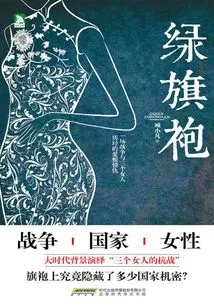
Green Cheongsam
General Fiction绿旗袍
Zang Xiaofan
This book is a full-length novel, set in Nanjing during the Anti-Japanese War. It mainly tells the touching story of three women fighting against the Japanese. At the end of 1937, after the Japanese army invaded Shanghai and Nanjing, they set up a "Committee for Receiving Books and Documents from the Occupied Areas" to plunder ancient Chinese cultural heritage. The leader, Masano Asano, found out that there was a secret vault under the Chaotian Palace in Nanjing, which contained a large number of precious ancient classics. He also learned that Shen Yibing, a professor at Shanghai Aurora University, had participated in the hiding and transportation of ancient books, so he broke into the professor's house and tried to pry open the Chaotian Palace basement door from the professor. The professor was righteous and flatly refused. His wife Jiang Shuihan was brutally murdered by Asano, while Professor Shen's three daughters Shen Lan, Shen Xue, and Shen Man escaped from the backyard. They wore cheongsams of different colors, and each cheongsam had a beautifully embroidered picture on the left breast. None of them knew that the cheongsams they wore concealed secrets...
This book is a full-length novel, set in Nanjing during the Anti-Japanese War. It mainly tells the touching story of three women fighting against the Japanese. At the end of 1937, after the Japanese army invaded Shanghai and Nanjing, they set up a "Committee for Receiving Books and Documents from the Occupied Areas" to plunder ancient Chinese cultural heritage. The leader, Masano Asano, found out that there was a secret vault under the Chaotian Palace in Nanjing, which contained a large number of precious ancient classics. He also learned that Shen Yibing, a professor at Shanghai Aurora University, had participated in the hiding and transportation of ancient books, so he broke into the professor's house and tried to pry open the Chaotian Palace basement door from the professor. The professor was righteous and flatly refused. His wife Jiang Shuihan was brutally murdered by Asano, while Professor Shen's three daughters Shen Lan, Shen Xue, and Shen Man escaped from the backyard. They wore cheongsams of different colors, and each cheongsam had a beautifully embroidered picture on the left breast. None of them knew that the cheongsams they wore concealed secrets...
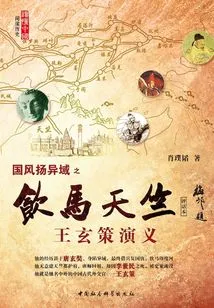
The Country's Customs Spread to a Foreign Country: Drinking Horses in Tianzhu: the Romance of Wang Xuance (commentary Edition)
General Fiction国风扬异域之饮马天竺:王玄策演义(评话本)
Xiao Pudao
In the 22nd year of Zhenguan, Wang Xuance made his second mission to India along the Silk Road. King Harsha, who had been friendly with the Tang Dynasty before, died suddenly. The rebel king Aronashun who usurped the throne sent heavy troops to attack Wang Xuance's mission, and almost all members of the mission were wiped out. The envoy Wang Xuance and his deputy Jiang Shiren fled to Tubo alone. They sought help from Songtsan Gampo and led the Tibetan and Nibala (Nepal) troops to counterattack India. After several battles, they defeated and captured the rebel king Aronashun...
In the 22nd year of Zhenguan, Wang Xuance made his second mission to India along the Silk Road. King Harsha, who had been friendly with the Tang Dynasty before, died suddenly. The rebel king Aronashun who usurped the throne sent heavy troops to attack Wang Xuance's mission, and almost all members of the mission were wiped out. The envoy Wang Xuance and his deputy Jiang Shiren fled to Tubo alone. They sought help from Songtsan Gampo and led the Tibetan and Nibala (Nepal) troops to counterattack India. After several battles, they defeated and captured the rebel king Aronashun...
The Story in the Shaobing Song (part 1)
General Fiction烧饼歌里的故事(第一部)
Li Zhenqing
"The Story in the Song of Shaobing" is the first part of "The Story in the Song of Shaobing", which tells the story of the Ming and Qing Dynasties. It has 2 chapters and 31 sections, about 330,000 words. According to the needs of readers, the second and third parts of this book will be published in due course. Li Zhenqing hopes that by narrating the historical story of "The Story of Shaobing Song", Liu Bowen's "Shaobing Song", a treasure that embodies the mysterious Eastern culture, will shine brightly around the world. At the same time, it will also lay a solid foundation for the revival of Chinese traditional culture, the rise of national cultural soft power, the accumulation of positive energy, and the realization of the "Chinese Dream."
"The Story in the Song of Shaobing" is the first part of "The Story in the Song of Shaobing", which tells the story of the Ming and Qing Dynasties. It has 2 chapters and 31 sections, about 330,000 words. According to the needs of readers, the second and third parts of this book will be published in due course. Li Zhenqing hopes that by narrating the historical story of "The Story of Shaobing Song", Liu Bowen's "Shaobing Song", a treasure that embodies the mysterious Eastern culture, will shine brightly around the world. At the same time, it will also lay a solid foundation for the revival of Chinese traditional culture, the rise of national cultural soft power, the accumulation of positive energy, and the realization of the "Chinese Dream."
Binggou Daughter Red Legend
General Fiction兵沟女儿红传奇
Feng Zengxiu
In that era of raging wars, in those specific years when "strong men looked forward half-dressed, fishing for lovesickness at the end of the water moon ditch", in Xiaoyangzhuang, not far from Hunhuaizhan, almost all the adult men went to serve as soldiers, leaving only the lonely elderly, women and children to guard their homes. The unique geographical environment of Xiaoyangzhuang, as well as the appearance of Liu Guangguan's Zhuangyuan Green Wine and Yang Widow's Daughter's Red Wine, thus interpret the love story of a pair of young people and their legendary life path. Our story begins in Xiaoyangzhuang...
In that era of raging wars, in those specific years when "strong men looked forward half-dressed, fishing for lovesickness at the end of the water moon ditch", in Xiaoyangzhuang, not far from Hunhuaizhan, almost all the adult men went to serve as soldiers, leaving only the lonely elderly, women and children to guard their homes. The unique geographical environment of Xiaoyangzhuang, as well as the appearance of Liu Guangguan's Zhuangyuan Green Wine and Yang Widow's Daughter's Red Wine, thus interpret the love story of a pair of young people and their legendary life path. Our story begins in Xiaoyangzhuang...
The Three Queens of Fu Family
General Fiction符氏三皇后
Li Naiqing
The Five Dynasties and Ten Kingdoms period was a turbulent time in Chinese history, full of changes and turbulence. The three daughters of Fu Yanqing, a native of Chenzhou, Fu Jinyu, Fu Jinhuan, and Fu Jinding successively assisted Chai Rong, the emperor of the Later Zhou Dynasty, and Zhao Guangyi, Emperor Taizong of the Song Dynasty. One accompanied her husband in the battles and helped to unify the world; one listened behind the curtain and governed the country with his son; the other understood the righteousness and helped the emperor achieve his imperial career. The story of one sect and three empresses is the most unknown in Chinese history. They are loyal, virtuous, smart, and favored by the court. They can be called the most noble ministers, but they are in troubled times and have a tragic fate! This book reflects the life and destiny of the three Fu sisters, provides an in-depth interpretation of palace politics, and reflects the exchange, collision and integration of various cultures during the great historical turmoil. It is a historical novel with vivid characters, legendary stories, strong readability, and unique value.
The Five Dynasties and Ten Kingdoms period was a turbulent time in Chinese history, full of changes and turbulence. The three daughters of Fu Yanqing, a native of Chenzhou, Fu Jinyu, Fu Jinhuan, and Fu Jinding successively assisted Chai Rong, the emperor of the Later Zhou Dynasty, and Zhao Guangyi, Emperor Taizong of the Song Dynasty. One accompanied her husband in the battles and helped to unify the world; one listened behind the curtain and governed the country with his son; the other understood the righteousness and helped the emperor achieve his imperial career. The story of one sect and three empresses is the most unknown in Chinese history. They are loyal, virtuous, smart, and favored by the court. They can be called the most noble ministers, but they are in troubled times and have a tragic fate! This book reflects the life and destiny of the three Fu sisters, provides an in-depth interpretation of palace politics, and reflects the exchange, collision and integration of various cultures during the great historical turmoil. It is a historical novel with vivid characters, legendary stories, strong readability, and unique value.
Imperfect Storm: 30 Years of Cia Counterterrorism
General Fiction不完美风暴:美国中央情报局反恐30年
(u. S.) Michael Morel Bill Harlow
The United States has a huge and complex intelligence circle in the world today. The battle against terrorism by the U. S. Intelligence community, led by the Central Intelligence Agency, is, in the author's opinion, the great war of this era. Michael Morell, the former deputy director of the CIA, has been in the center of the "anti-terrorism" storm - the CIA for 33 years. He has personally experienced the Afghanistan War, the 9.11 Incident, the Benghazi incident and the operation to kill bin Laden. He disclosed the inside story of the CIA's intelligence work and reflected on the mechanisms and motivations behind the "intelligence failures": Why did the United States insist on launching the Iraq War? Can the CIA bear the blame? The network is not in the intelligence community, but on Wall Street? Why are American politicians indifferent to national security crises? What lessons should the United States learn from Benghazi? Readers can feel the real scenes of being in the "intelligence empire" from the text, from fighting against "Al Qaeda" and ISIS to the hardships of actual intelligence work. The author also pays tribute to the unknown public servants who participate in "anti-terrorism" intelligence work. Protecting homeland security and preventing another terrorist attack is the mission of intelligence work.
The United States has a huge and complex intelligence circle in the world today. The battle against terrorism by the U. S. Intelligence community, led by the Central Intelligence Agency, is, in the author's opinion, the great war of this era. Michael Morell, the former deputy director of the CIA, has been in the center of the "anti-terrorism" storm - the CIA for 33 years. He has personally experienced the Afghanistan War, the 9.11 Incident, the Benghazi incident and the operation to kill bin Laden. He disclosed the inside story of the CIA's intelligence work and reflected on the mechanisms and motivations behind the "intelligence failures": Why did the United States insist on launching the Iraq War? Can the CIA bear the blame? The network is not in the intelligence community, but on Wall Street? Why are American politicians indifferent to national security crises? What lessons should the United States learn from Benghazi? Readers can feel the real scenes of being in the "intelligence empire" from the text, from fighting against "Al Qaeda" and ISIS to the hardships of actual intelligence work. The author also pays tribute to the unknown public servants who participate in "anti-terrorism" intelligence work. Protecting homeland security and preventing another terrorist attack is the mission of intelligence work.
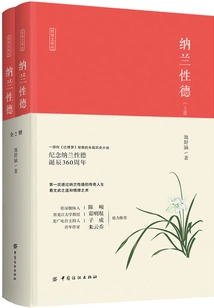
Nalan Xingde (complete Works)
General Fiction纳兰性德(全集)
Chi Shuhan
The full-length masterpiece "Nalan Xingde" takes the life events of Nalan Xingde, a famous poet in the Qing Dynasty, as the main line. It uses vivid and realistic writing to tell the story of a talented man with both literary and military skills and deep affection in real history. In addition to the protagonist, the work "Nalan Xingde" also depicts vivid and full characters such as Kangxi, Mingzhu, Suo'etu, Cao Yin, Zhang Chunxiu, Gu Zhenguan, Wu Zhaoqian, Zhu Yizun, and Ru Xuan, Wei Qing, Yu Ludai, Yan'er, etc. The vivid characters, life-like language, exquisite scene descriptions, and one after another conflicts will give readers an unstoppable reading experience.
The full-length masterpiece "Nalan Xingde" takes the life events of Nalan Xingde, a famous poet in the Qing Dynasty, as the main line. It uses vivid and realistic writing to tell the story of a talented man with both literary and military skills and deep affection in real history. In addition to the protagonist, the work "Nalan Xingde" also depicts vivid and full characters such as Kangxi, Mingzhu, Suo'etu, Cao Yin, Zhang Chunxiu, Gu Zhenguan, Wu Zhaoqian, Zhu Yizun, and Ru Xuan, Wei Qing, Yu Ludai, Yan'er, etc. The vivid characters, life-like language, exquisite scene descriptions, and one after another conflicts will give readers an unstoppable reading experience.
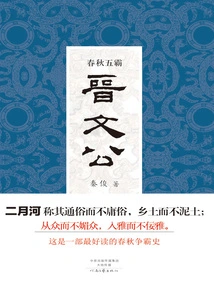
春秋五霸:晋文公
Qin Jun
Duke Wen of Jin, named Chong'er, was persecuted by Lady Li in the fourth year of Lu Xi's reign and was exiled for nineteen years. After he became the king, he quelled the rebellion, stabilized the situation, eliminated bad governance, appointed talents, rewarded production, developed commerce, and soon made Jin rich and powerful. Among the five hegemons of the Spring and Autumn Period, Duke Wen of Jin had the most ambitious career. He was greedy for comfort, indulged in beauty, and had great ambitions. His literary skills, Taoist and military strategies were beyond the reach of ordinary people. Deception and loyalty were originally water and fire, ice and charcoal, but they were perfectly unified in him.
Duke Wen of Jin, named Chong'er, was persecuted by Lady Li in the fourth year of Lu Xi's reign and was exiled for nineteen years. After he became the king, he quelled the rebellion, stabilized the situation, eliminated bad governance, appointed talents, rewarded production, developed commerce, and soon made Jin rich and powerful. Among the five hegemons of the Spring and Autumn Period, Duke Wen of Jin had the most ambitious career. He was greedy for comfort, indulged in beauty, and had great ambitions. His literary skills, Taoist and military strategies were beyond the reach of ordinary people. Deception and loyalty were originally water and fire, ice and charcoal, but they were perfectly unified in him.
春秋五霸:秦穆公
Qin Jun
Duke Mu of Qin has a good reputation. During his tenure, he gradually destroyed more than a dozen countries established by the Western Rong people and opened up more than a thousand miles of territory, laying the foundation for the future unification of China by Qin. Duke Mu of Qin was the most versatile. He is a wise and foolish gentleman who is blessed by suffering losses. He has been promoted to the throne three times and even helped his opponent ascend to the position of overlord. He is an overlord who breaks the shackles and uses five sheepskins to lift a hundred miles among the slaves. The king and his ministers work hard to unify the world. He is a great husband who transcends personal feelings and trusts Yao Yuanyuan, the woman who once betrayed him. He is a kind elder who pardons the peasants' mistakes and gives them horse meat seasoning.
Duke Mu of Qin has a good reputation. During his tenure, he gradually destroyed more than a dozen countries established by the Western Rong people and opened up more than a thousand miles of territory, laying the foundation for the future unification of China by Qin. Duke Mu of Qin was the most versatile. He is a wise and foolish gentleman who is blessed by suffering losses. He has been promoted to the throne three times and even helped his opponent ascend to the position of overlord. He is an overlord who breaks the shackles and uses five sheepskins to lift a hundred miles among the slaves. The king and his ministers work hard to unify the world. He is a great husband who transcends personal feelings and trusts Yao Yuanyuan, the woman who once betrayed him. He is a kind elder who pardons the peasants' mistakes and gives them horse meat seasoning.
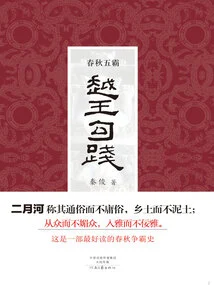
春秋五霸:越王勾践
Qin Jun
Gou Jian is the most complex character. He was both a king of subjugation and a king of revival. While a slave in the Wu Kingdom, he suffered humiliation that ordinary people could not bear. After returning to the country, he worked hard and put himself in a humble position to respect the officials and gather people's plans. After ten years of gathering and ten years of lessons, he finally turned weak into strong and destroyed the powerful Wu. He immediately went north to gather the princes in Shuzhou and became the overlord of the Central Plains.
Gou Jian is the most complex character. He was both a king of subjugation and a king of revival. While a slave in the Wu Kingdom, he suffered humiliation that ordinary people could not bear. After returning to the country, he worked hard and put himself in a humble position to respect the officials and gather people's plans. After ten years of gathering and ten years of lessons, he finally turned weak into strong and destroyed the powerful Wu. He immediately went north to gather the princes in Shuzhou and became the overlord of the Central Plains.
Why Did the Ming Dynasty Perish? (snail "moment")
General Fiction明朝为什么灭亡?(蜗牛「片刻」)
Netease Snail Reading
Interpreting the demise of the Ming Dynasty, you can see the leopard in the tube. Agricultural science can talk about potatoes, earth science can talk about climate, physics can talk about artillery... The eight immortals crossed the sea, each showing his magical powers. This interdisciplinary knowledge feast is not to be missed by Ming history lovers, hurry up and watch!
Interpreting the demise of the Ming Dynasty, you can see the leopard in the tube. Agricultural science can talk about potatoes, earth science can talk about climate, physics can talk about artillery... The eight immortals crossed the sea, each showing his magical powers. This interdisciplinary knowledge feast is not to be missed by Ming history lovers, hurry up and watch!
Concise Chinese Studies Outline
General Fiction简明国学大纲
Xie Weifeng
The whole book is divided into five parts, namely Confucian classics, philology, philosophy, history, and literature. It can be said that there are no exhaustive examples of Chinese studies. The characteristic of the whole book is that it uses simple words to describe complex things, so that readers can understand it at a glance and understand it easily. This book has a detailed description of the origins and changes of Chinese studies, which has benefited scholars a lot. It is very convenient for beginners to read. Only the conclusion is stated, or only the legend is written, and the objections are omitted. In terms of style, it is summarized concisely in the form of tables and explanations, which is very organized, clear and easy to read and remember. After reading this book, you will know the general outline of Chinese studies, and it will also open the door for further in-depth study of Chinese studies. It is a rare introductory book on Chinese studies.
The whole book is divided into five parts, namely Confucian classics, philology, philosophy, history, and literature. It can be said that there are no exhaustive examples of Chinese studies. The characteristic of the whole book is that it uses simple words to describe complex things, so that readers can understand it at a glance and understand it easily. This book has a detailed description of the origins and changes of Chinese studies, which has benefited scholars a lot. It is very convenient for beginners to read. Only the conclusion is stated, or only the legend is written, and the objections are omitted. In terms of style, it is summarized concisely in the form of tables and explanations, which is very organized, clear and easy to read and remember. After reading this book, you will know the general outline of Chinese studies, and it will also open the door for further in-depth study of Chinese studies. It is a rare introductory book on Chinese studies.
献给世界的壮丽史诗—外国人看长征
Editor-in-chief Zhao Siyang
The Long March is a miracle in human military history and a magnificent epic that China has contributed to the world! Since the 1930s, foreign reports and works on the Long March of the Chinese Workers' and Peasants' Red Army have continued to emerge. From an academic research perspective, foreign scholars' research on the Long March has a certain depth and breadth. This book examines the historical value and practical significance of the Long March from an international perspective, and considers the impact of the Long March spirit on the world. The book is divided into four parts: 1. A review of foreign works and historical materials on the Long March in different periods; 2. Hot issues in foreign research on the Long March; 3. Foreign reviews of important figures and key events during the Long March; 4. The value and limitations of foreign Long March research. The publication of this book is of great significance to the study of the important position of the Long March in the history of the Chinese revolution and the history of our army. It has high academic research value for the overseas dissemination of the Long March spirit and Long March culture. It plays an important role in broadening the horizons of Long March research and comprehensively reflecting the significance of the Long March!
The Long March is a miracle in human military history and a magnificent epic that China has contributed to the world! Since the 1930s, foreign reports and works on the Long March of the Chinese Workers' and Peasants' Red Army have continued to emerge. From an academic research perspective, foreign scholars' research on the Long March has a certain depth and breadth. This book examines the historical value and practical significance of the Long March from an international perspective, and considers the impact of the Long March spirit on the world. The book is divided into four parts: 1. A review of foreign works and historical materials on the Long March in different periods; 2. Hot issues in foreign research on the Long March; 3. Foreign reviews of important figures and key events during the Long March; 4. The value and limitations of foreign Long March research. The publication of this book is of great significance to the study of the important position of the Long March in the history of the Chinese revolution and the history of our army. It has high academic research value for the overseas dissemination of the Long March spirit and Long March culture. It plays an important role in broadening the horizons of Long March research and comprehensively reflecting the significance of the Long March!
A Concise Outline of World History
General Fiction简明世界史大纲
Ye Yunrui
The book is divided into five parts, covering content ranging from ancient times to the adjustment of the world structure after World War I. The whole book is concisely summarized and sorted out in the form of tables and explanations. It is very organized, clear and easy to read and remember. In the book, many things are traced back to their origins, their facts are detailed, their results are described, and their influences are studied, in order to gain the concept of this thing. It is very suitable for readers who have a quick understanding of the development of world history.
The book is divided into five parts, covering content ranging from ancient times to the adjustment of the world structure after World War I. The whole book is concisely summarized and sorted out in the form of tables and explanations. It is very organized, clear and easy to read and remember. In the book, many things are traced back to their origins, their facts are detailed, their results are described, and their influences are studied, in order to gain the concept of this thing. It is very suitable for readers who have a quick understanding of the development of world history.