Library
Browse and search books
3,417 novels found
新编历史小丛书:明代援朝抗倭战争
Zhou Liang
The War to Aid Korea and Anti-Japanese War during the Wanli Period of the Ming Dynasty was an international war that had a profound impact on the political and military structure of East Asia. This book details the reasons, process, results, and impact of aiding Korea to fight against the Japanese. This war exposed many institutional flaws of the Ming Dynasty. This book has an objective point of view, detailed information, and vivid descriptions. It fully shows the panoramic view of the war and has great reference value for future generations to study the history of the Ming Dynasty.
The War to Aid Korea and Anti-Japanese War during the Wanli Period of the Ming Dynasty was an international war that had a profound impact on the political and military structure of East Asia. This book details the reasons, process, results, and impact of aiding Korea to fight against the Japanese. This war exposed many institutional flaws of the Ming Dynasty. This book has an objective point of view, detailed information, and vivid descriptions. It fully shows the panoramic view of the war and has great reference value for future generations to study the history of the Ming Dynasty.
New History Series: Yu Qian
History新编历史小丛书:于谦
Yan Chongnian
This article discusses Yu Qian's life course, and there are four realms: being struck out of the mountains with thousands of hammers, being burned by fire as if it were nothing, not afraid of being shattered into pieces, and wanting to leave his innocence in the world. Before he stepped onto the stage of history, Yu Qian was tempered by thousands of blows and entered his official career; when he stepped onto the stage of history, he was tempered by the burning fire and became iron-clad; before he stepped onto the top of the stage of history, he endured the torture of being broken into pieces and became a hero; after exiting the stage of history, he finally left his innocence in the world and will be remembered in history forever. The four realms of Yu Qian's life are the spiritual wealth he left to future generations and have universal social significance.
This article discusses Yu Qian's life course, and there are four realms: being struck out of the mountains with thousands of hammers, being burned by fire as if it were nothing, not afraid of being shattered into pieces, and wanting to leave his innocence in the world. Before he stepped onto the stage of history, Yu Qian was tempered by thousands of blows and entered his official career; when he stepped onto the stage of history, he was tempered by the burning fire and became iron-clad; before he stepped onto the top of the stage of history, he endured the torture of being broken into pieces and became a hero; after exiting the stage of history, he finally left his innocence in the world and will be remembered in history forever. The four realms of Yu Qian's life are the spiritual wealth he left to future generations and have universal social significance.
新编历史小丛书:康熙大帝
Yan Chongnian
This book starts with the historical evaluation of Emperor Kangxi, and proposes that Emperor Kangxi is an emperor in the history of Chinese dynasties for a thousand years in terms of his historical achievements and personal character. It also introduces Emperor Kangxi's historical contributions from political, economic, cultural, social and other aspects. In addition, this book also focuses on the influence of Emperor Kangxi's diligent study and emphasis on the education of his descendants, and introduces Kangxi's way of reading from the perspectives of four stages, four realms, and four points of experience. Finally, the author also summarizes several reasons for the emergence of the Kangxi era.
This book starts with the historical evaluation of Emperor Kangxi, and proposes that Emperor Kangxi is an emperor in the history of Chinese dynasties for a thousand years in terms of his historical achievements and personal character. It also introduces Emperor Kangxi's historical contributions from political, economic, cultural, social and other aspects. In addition, this book also focuses on the influence of Emperor Kangxi's diligent study and emphasis on the education of his descendants, and introduces Kangxi's way of reading from the perspectives of four stages, four realms, and four points of experience. Finally, the author also summarizes several reasons for the emergence of the Kangxi era.
新编历史小丛书:海瑞的故事
Wu Han
Hai Rui (1514-1587), also known as Ruxian and Gangfeng, was a native of Qiongshan, Hainan (now Haikou City). A famous upright official in the Ming Dynasty. Hai Rui experienced the four dynasties of Zhengde, Jiajing, Longqing and Wanli in his life. In 1549 (the 28th year of the Jiajing reign), Hai Rui passed the provincial examination and was first appointed as the Jiaoyu of Nanping, Fujian Province. Later, he was promoted to the magistrate of Chun'an, Zhejiang and Xingguo County, Jiangxi. He promoted clearing the heads and leveling taxes, repeatedly redressed unjust, false and wrong cases, and cracked down on corrupt officials, winning the hearts of the people. After being promoted, he successively held the positions of prefectural judge, head of the Ministry of Household Affairs, head of the Ministry of War, Shang Baocheng, general administrator of the two capitals, and censor of Youqiandu. He cracked down on tyrants, dredged rivers, built water conservancy projects, advocated severe punishment of corrupt officials, prohibited taking bribes for personal gain, and implemented a whip law to force corrupt officials to return their fields to the people, thus earning him the reputation of "Haiqingtian". In 1587 (the fifteenth year of Wanli), Hai Rui died of illness in his official residence in Nanjing. As a gift to the crown prince and Taibao, he was given the posthumous title Zhongjie. After Hai Rui's death, legends about him were widely circulated among the people.
Hai Rui (1514-1587), also known as Ruxian and Gangfeng, was a native of Qiongshan, Hainan (now Haikou City). A famous upright official in the Ming Dynasty. Hai Rui experienced the four dynasties of Zhengde, Jiajing, Longqing and Wanli in his life. In 1549 (the 28th year of the Jiajing reign), Hai Rui passed the provincial examination and was first appointed as the Jiaoyu of Nanping, Fujian Province. Later, he was promoted to the magistrate of Chun'an, Zhejiang and Xingguo County, Jiangxi. He promoted clearing the heads and leveling taxes, repeatedly redressed unjust, false and wrong cases, and cracked down on corrupt officials, winning the hearts of the people. After being promoted, he successively held the positions of prefectural judge, head of the Ministry of Household Affairs, head of the Ministry of War, Shang Baocheng, general administrator of the two capitals, and censor of Youqiandu. He cracked down on tyrants, dredged rivers, built water conservancy projects, advocated severe punishment of corrupt officials, prohibited taking bribes for personal gain, and implemented a whip law to force corrupt officials to return their fields to the people, thus earning him the reputation of "Haiqingtian". In 1587 (the fifteenth year of Wanli), Hai Rui died of illness in his official residence in Nanjing. As a gift to the crown prince and Taibao, he was given the posthumous title Zhongjie. After Hai Rui's death, legends about him were widely circulated among the people.
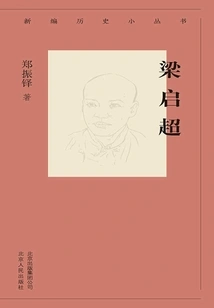
新编历史小丛书:梁启超
Zheng Zhenduo
This book is a biography of Liang Qichao written by Zheng Zhenduo. Liang Qichao (February 23, 1873 - January 19, 1929), also known as Zhuoru, Renfu, Rengong, also known as the master of Yinbingshi, Yinbingzi, Ai Shike, a new citizen of China, and the master of Free Zhai. During the Guangxu period of the Qing Dynasty, he was a thinker, politician, educator, historian and writer in modern China. One of the leaders of the Reform Movement of 1898 (Hundred Days Reform), a representative figure of modern Chinese reformists and neo-Legalists.
This book is a biography of Liang Qichao written by Zheng Zhenduo. Liang Qichao (February 23, 1873 - January 19, 1929), also known as Zhuoru, Renfu, Rengong, also known as the master of Yinbingshi, Yinbingzi, Ai Shike, a new citizen of China, and the master of Free Zhai. During the Guangxu period of the Qing Dynasty, he was a thinker, politician, educator, historian and writer in modern China. One of the leaders of the Reform Movement of 1898 (Hundred Days Reform), a representative figure of modern Chinese reformists and neo-Legalists.
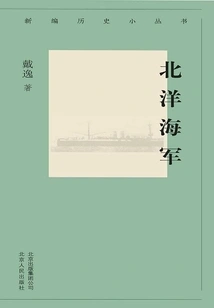
新编历史小丛书:北洋海军
Dai Yi
The Beiyang Navy, formally established in 1888, is a modern naval fleet established by China. It is also the strongest and largest of the four modern navies established by the Qing Dynasty. This book narrates historical facts such as shipbuilding and purchase, the establishment of the Beiyang Navy, the Yellow Sea War, the fall of Lushunkou and Weihaiwei, and the destruction of the Beiyang Navy. The views are objective and fair, and the descriptions are vivid and exciting. It shows the epic growth and combat experience of the Chinese Navy in the late Qing Dynasty, and has great reference and reference significance.
The Beiyang Navy, formally established in 1888, is a modern naval fleet established by China. It is also the strongest and largest of the four modern navies established by the Qing Dynasty. This book narrates historical facts such as shipbuilding and purchase, the establishment of the Beiyang Navy, the Yellow Sea War, the fall of Lushunkou and Weihaiwei, and the destruction of the Beiyang Navy. The views are objective and fair, and the descriptions are vivid and exciting. It shows the epic growth and combat experience of the Chinese Navy in the late Qing Dynasty, and has great reference and reference significance.
新编历史小丛书:黄巢起义
Rather
The Huangchao Uprising, also known as the Huangchao Rebellion, refers to the civil uprising led by Huang Chao from the fifth year of Qianfu (878 AD) to the fourth year of Zhonghe (884 AD). It is the follow-up to Wang Xianzhi's uprising. It was also the longest-lasting, most widespread, and most far-reaching peasant uprising among the civil uprisings in the late Tang Dynasty. However, due to long-term mobile operations, no stable rear, lack of economic guarantee and mass base, it was difficult to last for a long time, which led to the final failure of the rebel army. This book introduces in detail the ins and outs of the Huangchao Uprising and its impact on later generations.
The Huangchao Uprising, also known as the Huangchao Rebellion, refers to the civil uprising led by Huang Chao from the fifth year of Qianfu (878 AD) to the fourth year of Zhonghe (884 AD). It is the follow-up to Wang Xianzhi's uprising. It was also the longest-lasting, most widespread, and most far-reaching peasant uprising among the civil uprisings in the late Tang Dynasty. However, due to long-term mobile operations, no stable rear, lack of economic guarantee and mass base, it was difficult to last for a long time, which led to the final failure of the rebel army. This book introduces in detail the ins and outs of the Huangchao Uprising and its impact on later generations.
New Historical Mini-series: Stories from the Spring and Autumn Period and the Warring States Period
History新编历史小丛书:春秋战国史话
Zhang Chuanxi
The whole book uses less than 40,000 words and concisely summarizes the basic laws of the development of ancient Chinese society in the Spring and Autumn and Warring States periods and the basic features of society in the past dynasties, as well as the main political and economic systems, major historical events, major historical figures, ethnic relations, important cultural achievements, etc. Due to the appropriate weight, it is suitable for teaching and learning, the content is systematic and the key points are prominent; the viewpoint is novel and does not follow the old theory; it is easy to understand and highly readable. In addition, this book also makes the necessary absorption of some new research results and new archaeological discoveries in the academic world.
The whole book uses less than 40,000 words and concisely summarizes the basic laws of the development of ancient Chinese society in the Spring and Autumn and Warring States periods and the basic features of society in the past dynasties, as well as the main political and economic systems, major historical events, major historical figures, ethnic relations, important cultural achievements, etc. Due to the appropriate weight, it is suitable for teaching and learning, the content is systematic and the key points are prominent; the viewpoint is novel and does not follow the old theory; it is easy to understand and highly readable. In addition, this book also makes the necessary absorption of some new research results and new archaeological discoveries in the academic world.
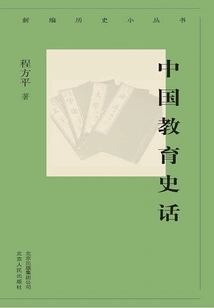
新编历史小丛书:中国教育史话
Cheng Fangping
This book concisely introduces the education situation in China from ancient times to the present, discusses the changes in educational ideas, changes in education forms, changes in educated people, changes in teaching content over more than two thousand years, etc., And tells the impact of Chinese education on politics, culture, society and other aspects from ancient times to the present. This book combs the development history of education in my country for the first time, actively advocates the importance of education, and discusses the future development direction of education in China, new forms of education and other issues.
This book concisely introduces the education situation in China from ancient times to the present, discusses the changes in educational ideas, changes in education forms, changes in educated people, changes in teaching content over more than two thousand years, etc., And tells the impact of Chinese education on politics, culture, society and other aspects from ancient times to the present. This book combs the development history of education in my country for the first time, actively advocates the importance of education, and discusses the future development direction of education in China, new forms of education and other issues.
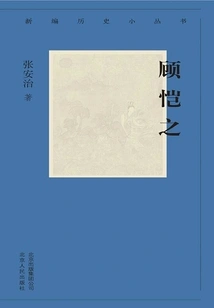
新编历史小丛书:顾恺之
Zhang Anzhi
This book systematically introduces Gu Kaizhi, a famous painter in ancient my country, and introduces Gu Kaizhi's life, Gu Kaizhi's "Three Wonders", Gu Kaizhi's mural creation in his youth, Gu Kaizhi's theory on figure painting, and several of his important existing works, such as "Luo Shen Fu Tu" and "Nv Shi Proverbs". It analyzes specific works to better introduce the important value of the paintings, and finally introduces Gu Kaizhi's important contribution to landscape painting.
This book systematically introduces Gu Kaizhi, a famous painter in ancient my country, and introduces Gu Kaizhi's life, Gu Kaizhi's "Three Wonders", Gu Kaizhi's mural creation in his youth, Gu Kaizhi's theory on figure painting, and several of his important existing works, such as "Luo Shen Fu Tu" and "Nv Shi Proverbs". It analyzes specific works to better introduce the important value of the paintings, and finally introduces Gu Kaizhi's important contribution to landscape painting.
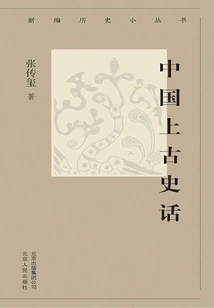
新编历史小丛书:中国上古史话
Zhang Chuanxi
Based on historical materialism, this book outlines the basic laws of historical development from primitive society to the Western Zhou Dynasty, the basic social situation of the main dynasties or historical stages, the main political and economic systems, major events and main figures, national history and national relations, important cultural achievements and cultural exchanges between China and foreign countries, etc. It can provide readers with basic knowledge about ancient Chinese history. The point of view is clear, the content is specific, and the writing is easy to understand. For the convenience of reading, the content of the book is divided into several parts, chapters, sections, headings, sub-headings, etc., With titles for each, making it clear at a glance.
Based on historical materialism, this book outlines the basic laws of historical development from primitive society to the Western Zhou Dynasty, the basic social situation of the main dynasties or historical stages, the main political and economic systems, major events and main figures, national history and national relations, important cultural achievements and cultural exchanges between China and foreign countries, etc. It can provide readers with basic knowledge about ancient Chinese history. The point of view is clear, the content is specific, and the writing is easy to understand. For the convenience of reading, the content of the book is divided into several parts, chapters, sections, headings, sub-headings, etc., With titles for each, making it clear at a glance.

新编历史小丛书:北京史话
Yan Chongnian
This book uses simple and vivid language to comprehensively and briefly introduce the history of Beijing. The author first starts with the "Beijing people" in the Paleolithic Age, pointing out the long history of Beijing, and then introduces in historical order the history of Jicheng, the capital of Yan, an important northern town from the Qin and Han Dynasties to the Sui and Tang Dynasties, Nanjing, the companion capital of the Liao Dynasty, Zhongdu of the Jin Dynasty, the capital of the Yuan Dynasty, the city of Beijing in the Ming and Qing Dynasties, Peking in the Republic of China, and even the history of Beijing after the founding of New China. This book not only introduces the historical development context, but also introduces Beijing's important historical monuments, beautiful gardens, famous historical figures and splendid cultural heritage.
This book uses simple and vivid language to comprehensively and briefly introduce the history of Beijing. The author first starts with the "Beijing people" in the Paleolithic Age, pointing out the long history of Beijing, and then introduces in historical order the history of Jicheng, the capital of Yan, an important northern town from the Qin and Han Dynasties to the Sui and Tang Dynasties, Nanjing, the companion capital of the Liao Dynasty, Zhongdu of the Jin Dynasty, the capital of the Yuan Dynasty, the city of Beijing in the Ming and Qing Dynasties, Peking in the Republic of China, and even the history of Beijing after the founding of New China. This book not only introduces the historical development context, but also introduces Beijing's important historical monuments, beautiful gardens, famous historical figures and splendid cultural heritage.
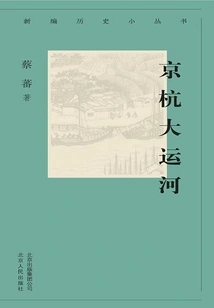
新编历史小丛书:京杭大运河
Cai Fan
This book uses a combination of historical documents and on-the-spot investigation to comprehensively sort out and introduce the history of the Beijing-Hangzhou Grand Canal based on the author's academic research results over the years. The book also runs through the techniques, important events, successes and failures of the ancients in building the Grand Canal, providing reference for today's protection and development.
This book uses a combination of historical documents and on-the-spot investigation to comprehensively sort out and introduce the history of the Beijing-Hangzhou Grand Canal based on the author's academic research results over the years. The book also runs through the techniques, important events, successes and failures of the ancients in building the Grand Canal, providing reference for today's protection and development.
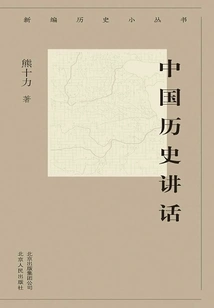
新编历史小丛书:中国历史讲话
Xiong Shili
"Chinese History Speech" was created during the Anti-Japanese War. It aims to carry forward the national spirit through the discussion of Chinese history and provide historical basis for the unity of all ethnic groups in the Anti-Japanese War. The first part of this book, "Ethnic Inference," attempts to prove that the five ethnic groups, Han, Manchu, Mongolian, Hui, and Tibetan, have the same origin. Although it is not very scientific, it fully reflects the author's sense of worry and national sentiment. The second part, "Discussions on the Compilation of the General History of China," was written to clean up the general history of China. The points that should be paid attention to when writing history and the views on Neo-Confucianism of the Song and Ming Dynasties all reveal the author's national outlook, historical outlook and academic historical outlook.
"Chinese History Speech" was created during the Anti-Japanese War. It aims to carry forward the national spirit through the discussion of Chinese history and provide historical basis for the unity of all ethnic groups in the Anti-Japanese War. The first part of this book, "Ethnic Inference," attempts to prove that the five ethnic groups, Han, Manchu, Mongolian, Hui, and Tibetan, have the same origin. Although it is not very scientific, it fully reflects the author's sense of worry and national sentiment. The second part, "Discussions on the Compilation of the General History of China," was written to clean up the general history of China. The points that should be paid attention to when writing history and the views on Neo-Confucianism of the Song and Ming Dynasties all reveal the author's national outlook, historical outlook and academic historical outlook.
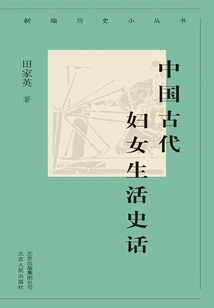
新编历史小丛书:中国古代妇女生活史话
Tian Jiaying
This book is a brief history of women's life in ancient China written by Tian Jiaying. It tells about women's issues in ancient Chinese society from the aspects of society, system and culture, such as the social status of women in ancient China, daily life of women in ancient China, material culture related to women in ancient China, etc., And outlines the social picture and family life of women in ancient China.
This book is a brief history of women's life in ancient China written by Tian Jiaying. It tells about women's issues in ancient Chinese society from the aspects of society, system and culture, such as the social status of women in ancient China, daily life of women in ancient China, material culture related to women in ancient China, etc., And outlines the social picture and family life of women in ancient China.
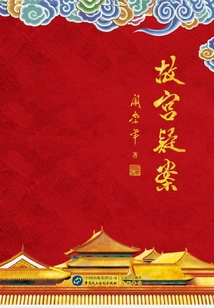
Forbidden City Mystery
History故宫疑案
Yan Chongnian
This book mainly revolves around the mysteries and secrets of the Forbidden City in the Qing Dynasty. For example, the origin of the surname Aixinjueluo of the ruler of the Qing Dynasty, the battle for the throne of Emperor Taizong Huang Taiji of the Qing Dynasty, Emperor Kangxi's establishment of a prince, the assassination of the Forbidden City during the reign of Emperor Jiaqing, the cause of death of Emperor Guangxu, the education of the princes of the Qing Dynasty, etc. From a time point of view, these mysterious cases run through the entire Qing Dynasty; from a geographical point of view, they involve Xingjing Hetuala, Shengjing, Shenyang and Beijing. In terms of content scope, it involves national affairs and the emperor's family affairs. The secrets of these mysterious cases are either to avoid being kept secret by the venerable, or due to unclear historical records, there are many explanations, and it is difficult for outsiders to know the details. In addition, there are different opinions in unofficial historical novels, so it is even more confusing. Based on the perspective of official history, the author uses first-hand historical materials and the latest archaeological research and scientific research results to conduct detailed analysis and detailed research to explore the clues of history and discover the truth behind it. This book is equipped with more than 200 high-definition and exquisite pictures, with solid and rich content.
This book mainly revolves around the mysteries and secrets of the Forbidden City in the Qing Dynasty. For example, the origin of the surname Aixinjueluo of the ruler of the Qing Dynasty, the battle for the throne of Emperor Taizong Huang Taiji of the Qing Dynasty, Emperor Kangxi's establishment of a prince, the assassination of the Forbidden City during the reign of Emperor Jiaqing, the cause of death of Emperor Guangxu, the education of the princes of the Qing Dynasty, etc. From a time point of view, these mysterious cases run through the entire Qing Dynasty; from a geographical point of view, they involve Xingjing Hetuala, Shengjing, Shenyang and Beijing. In terms of content scope, it involves national affairs and the emperor's family affairs. The secrets of these mysterious cases are either to avoid being kept secret by the venerable, or due to unclear historical records, there are many explanations, and it is difficult for outsiders to know the details. In addition, there are different opinions in unofficial historical novels, so it is even more confusing. Based on the perspective of official history, the author uses first-hand historical materials and the latest archaeological research and scientific research results to conduct detailed analysis and detailed research to explore the clues of history and discover the truth behind it. This book is equipped with more than 200 high-definition and exquisite pictures, with solid and rich content.
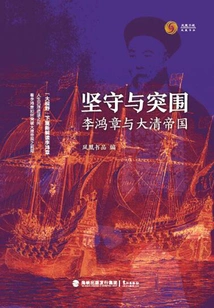
坚守与突围:李鸿章与大清帝国
Phoenix Books
"Persistence and Breakthrough: Li Hongzhang and the Qing Empire" reviews the history of Li Hongzhang from his time as a disciple of Zeng Guofan to his death in his twilight years. It analyzes Li Hongzhang's gains and losses, merits and demerits, sins and regrets as a minister in power, and affirms Li Hongzhang's objective image as a reformer in the late Qing Dynasty. He was idle in his early years and served as Zeng Guofan's staff but had no ambitions. Later, he founded the Huai Army, made extraordinary achievements in suppressing the Taiping Army, and became a feudal official. The Westernization Movement brought his reputation to its peak, but the Sino-Japanese War shattered his dream of becoming a powerful country, and he quickly declined from prosperity. He could only deal with the diplomatic arena of the great powers, and "repair" the Qing government with a heart that endured humiliation and heavy burdens until his death. Li Hongzhang is regarded as a famous official of the ZTE who "re-created Xuanhuang" and was the "paper" and "searchlight" of the Qing Empire. His life is not only a portrayal of the decades of the late Qing Dynasty, but also a microcosm of China's modern history. His failure was the failure of the late Qing government. It was the inevitable outcome of the late Qing government's failure to understand the general trend of the world and the development of history. The whole book clearly shows the fate and struggle of individuals in the political situation under the great history. It is tragic, vivid, ups and downs, and fascinating.
"Persistence and Breakthrough: Li Hongzhang and the Qing Empire" reviews the history of Li Hongzhang from his time as a disciple of Zeng Guofan to his death in his twilight years. It analyzes Li Hongzhang's gains and losses, merits and demerits, sins and regrets as a minister in power, and affirms Li Hongzhang's objective image as a reformer in the late Qing Dynasty. He was idle in his early years and served as Zeng Guofan's staff but had no ambitions. Later, he founded the Huai Army, made extraordinary achievements in suppressing the Taiping Army, and became a feudal official. The Westernization Movement brought his reputation to its peak, but the Sino-Japanese War shattered his dream of becoming a powerful country, and he quickly declined from prosperity. He could only deal with the diplomatic arena of the great powers, and "repair" the Qing government with a heart that endured humiliation and heavy burdens until his death. Li Hongzhang is regarded as a famous official of the ZTE who "re-created Xuanhuang" and was the "paper" and "searchlight" of the Qing Empire. His life is not only a portrayal of the decades of the late Qing Dynasty, but also a microcosm of China's modern history. His failure was the failure of the late Qing government. It was the inevitable outcome of the late Qing government's failure to understand the general trend of the world and the development of history. The whole book clearly shows the fate and struggle of individuals in the political situation under the great history. It is tragic, vivid, ups and downs, and fascinating.
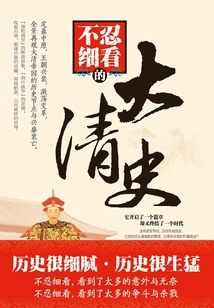
不忍细看的大清史
Yang Lili
The Qing Dynasty was a controversial dynasty. It had both the glorious scene of the "Kangxi and Qianlong Dynasties" and the tragic record of the "Opium War"; it had the glory of recovering Taiwan and expelling Tsarist Russia, but also the humiliation of ceding land and indemnity, and the destruction of mountains and rivers; it had the founder of the country, the emperor of the world, the mediocre king, and even the fallen emperor. It inherited the feudal monarchy that lasted for thousands of years, and initiated the torrent of democratic republic.
The Qing Dynasty was a controversial dynasty. It had both the glorious scene of the "Kangxi and Qianlong Dynasties" and the tragic record of the "Opium War"; it had the glory of recovering Taiwan and expelling Tsarist Russia, but also the humiliation of ceding land and indemnity, and the destruction of mountains and rivers; it had the founder of the country, the emperor of the world, the mediocre king, and even the fallen emperor. It inherited the feudal monarchy that lasted for thousands of years, and initiated the torrent of democratic republic.
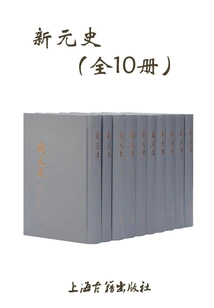
新元史(全十册)
(qing Dynasty) Written By Ke Shaomin Zhang Jinghua Huang Shuhui Head School
"New History of the Yuan Dynasty" was written by Ke Shaobin at the end of the Qing Dynasty and the beginning of the Republic of China. It was based on the "History of the Yuan Dynasty" and was compiled again after considering the profits and losses. It took thirty years to complete. There are 257 volumes in total, including 26 volumes of chronicles, 7 volumes of tables, 70 volumes of chronicles, and 154 volumes of biographies. It is a huge chronological history in modern times.
"New History of the Yuan Dynasty" was written by Ke Shaobin at the end of the Qing Dynasty and the beginning of the Republic of China. It was based on the "History of the Yuan Dynasty" and was compiled again after considering the profits and losses. It took thirty years to complete. There are 257 volumes in total, including 26 volumes of chronicles, 7 volumes of tables, 70 volumes of chronicles, and 154 volumes of biographies. It is a huge chronological history in modern times.
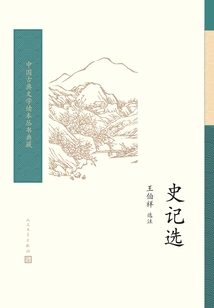
Selected Historical Records
History史记选
Selected Notes By Wang Boxiang
The book "Selected Historical Records" incorporates Mr. Wang Boxiang's lifelong efforts in studying "Records of the Historian". So far, this "Selected Historical Records" is still the highest academic level among the anthologies of "Records of the Historian" published at home and abroad. The "Preface" at the beginning of this book systematically discusses Sima Qian's life, the great historical and literary achievements, far-reaching influence and version knowledge of "Historical Records". It is a unique insightful discussion of "Historical Records" and an enlightening research guide to "Historical Records". This book has been reprinted in the 1980s, 1990s and the beginning of this century. This time it is planned to be reprinted as one of the excellent brand series "Chinese Classical Literature Reader Series Collection".
The book "Selected Historical Records" incorporates Mr. Wang Boxiang's lifelong efforts in studying "Records of the Historian". So far, this "Selected Historical Records" is still the highest academic level among the anthologies of "Records of the Historian" published at home and abroad. The "Preface" at the beginning of this book systematically discusses Sima Qian's life, the great historical and literary achievements, far-reaching influence and version knowledge of "Historical Records". It is a unique insightful discussion of "Historical Records" and an enlightening research guide to "Historical Records". This book has been reprinted in the 1980s, 1990s and the beginning of this century. This time it is planned to be reprinted as one of the excellent brand series "Chinese Classical Literature Reader Series Collection".
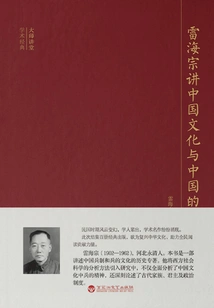
雷海宗讲中国文化与中国的兵
Lei Haizong
This book is a collection of many academic papers by the famous scholar Lei Haizong. The author Lei Haizong comprehensively discusses his research results on the Chinese military system and Chinese culture. This is a book that comprehensively understands the Chinese military system and the culture of "soldiers", that is, the history of "martial ethics". There are many traditional books on the military system, but Lei Haizong introduced the analytical methods of Western social sciences into the study, and conducted an in-depth and comprehensive analysis of the spirit of soldiers in Chinese culture. Starting from this, he explored many noteworthy characteristics of the entire Chinese culture, and keenly foresaw the renaissance of the Chinese army. His views are refreshing.
This book is a collection of many academic papers by the famous scholar Lei Haizong. The author Lei Haizong comprehensively discusses his research results on the Chinese military system and Chinese culture. This is a book that comprehensively understands the Chinese military system and the culture of "soldiers", that is, the history of "martial ethics". There are many traditional books on the military system, but Lei Haizong introduced the analytical methods of Western social sciences into the study, and conducted an in-depth and comprehensive analysis of the spirit of soldiers in Chinese culture. Starting from this, he explored many noteworthy characteristics of the entire Chinese culture, and keenly foresaw the renaissance of the Chinese army. His views are refreshing.
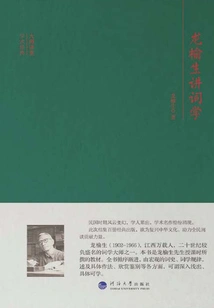
龙榆生讲词学
Long Yusheng
Textbooks written by Long Yusheng, a master of Ci poetry in the Republic of China, including macro history of Ci, rules of Ci, appreciation and identification, etc.
Textbooks written by Long Yusheng, a master of Ci poetry in the Republic of China, including macro history of Ci, rules of Ci, appreciation and identification, etc.
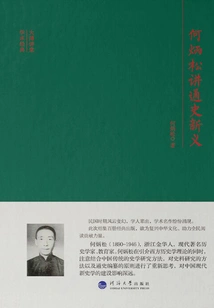
何炳松讲通史新义
He Bingsong
Famous contemporary historians and educators introduce Western history, combine it with Chinese tradition, and rethink history.
Famous contemporary historians and educators introduce Western history, combine it with Chinese tradition, and rethink history.
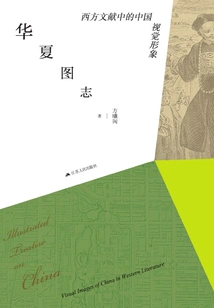
华夏图志:西方文献中的中国视觉形象
Fang Ximin
This book starts from the perspective of architecture (including the Great Wall, the Forbidden City, the Pagoda of Baoen Temple, Marco Polo Bridge, and archways), people (including emperors, officials, soldiers, artists, and philosophers), animals (including cormorants, musk deer, turtles, and phoenixes), and plants (ginseng, rhubarb, etc.) , Tea, fruit trees), customs (including celebrations, funerals, punishments), transportation (including cars, boats, sedan chairs) and Chinese characters, it analyzes the visual image of China and its cultural exchanges in European documents from the 15th to the 18th century with pictures and texts.
This book starts from the perspective of architecture (including the Great Wall, the Forbidden City, the Pagoda of Baoen Temple, Marco Polo Bridge, and archways), people (including emperors, officials, soldiers, artists, and philosophers), animals (including cormorants, musk deer, turtles, and phoenixes), and plants (ginseng, rhubarb, etc.) , Tea, fruit trees), customs (including celebrations, funerals, punishments), transportation (including cars, boats, sedan chairs) and Chinese characters, it analyzes the visual image of China and its cultural exchanges in European documents from the 15th to the 18th century with pictures and texts.
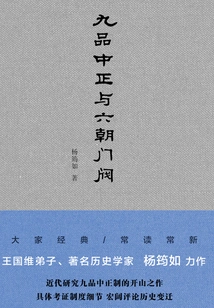
九品中正与六朝门阀
Yang Junru
This book collects the works of the famous historian Yang Junru on the Nine-Rank Zhongzheng System, and includes 4 appendices. Among them, "Nine Ranks of Zhongzheng and the Families of the Six Dynasties" makes a preliminary exploration of the reasons, contents, pros and cons of the emergence of the Nine Ranks of Zhongzheng system and its relationship with the clan system. It is the pioneer work of modern Chinese scholars studying the Nine Ranks of Zhongzheng system. In the first half of the 20th century, as Western learning spread eastward, Chinese scholars' understanding of the Tu people in the Six Dynasties began to go beyond the Qing's superficial summary of "the Jiangzuo gentry had no meritorious officials" and began to sort out relevant historical materials from aspects such as institutions and marriages. The appendix contains the chronology of Yang Junru's deeds by the late Confucian classics master He Guangfeng, which can give readers a clearer understanding of Mr. Yang Junru.
This book collects the works of the famous historian Yang Junru on the Nine-Rank Zhongzheng System, and includes 4 appendices. Among them, "Nine Ranks of Zhongzheng and the Families of the Six Dynasties" makes a preliminary exploration of the reasons, contents, pros and cons of the emergence of the Nine Ranks of Zhongzheng system and its relationship with the clan system. It is the pioneer work of modern Chinese scholars studying the Nine Ranks of Zhongzheng system. In the first half of the 20th century, as Western learning spread eastward, Chinese scholars' understanding of the Tu people in the Six Dynasties began to go beyond the Qing's superficial summary of "the Jiangzuo gentry had no meritorious officials" and began to sort out relevant historical materials from aspects such as institutions and marriages. The appendix contains the chronology of Yang Junru's deeds by the late Confucian classics master He Guangfeng, which can give readers a clearer understanding of Mr. Yang Junru.
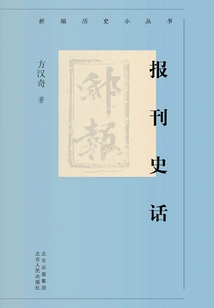
新编历史小丛书:报刊史话
Fang Hanqi
This book was first published in 1979 as one of the "Chinese History Series" of Zhonghua Book Company, and has not been reprinted since. This time it is included in the "New History Series", and the author himself will appropriately supplement historical materials and make substantive fine-tuning to some parts of the original content. The author concisely introduces the history of changes in newspapers and periodicals in my country over 1,300 years from five parts: early newspapers, foreign newspaper activities in my country, forums advocating reform, trumpets for democratic revolution, and newspapers after the Revolution of 1911.
This book was first published in 1979 as one of the "Chinese History Series" of Zhonghua Book Company, and has not been reprinted since. This time it is included in the "New History Series", and the author himself will appropriately supplement historical materials and make substantive fine-tuning to some parts of the original content. The author concisely introduces the history of changes in newspapers and periodicals in my country over 1,300 years from five parts: early newspapers, foreign newspaper activities in my country, forums advocating reform, trumpets for democratic revolution, and newspapers after the Revolution of 1911.
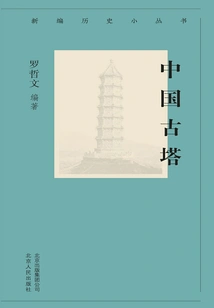
新编历史小丛书:中国古塔
Luo Zhewen
China's ancient pagodas are one of the carriers of China's five thousand-year civilization history. Ancient pagodas add luster to the cities, mountains and forests of the motherland. The ancient pagodas standing in the north and south of the Yangtze River are known as the outstanding high-rise buildings in ancient China. Mr. Luo Zhewen introduced the origin, spread, shape, regional distribution and other issues of ancient Chinese pagodas in the form of a combination of pictures and texts. All the pictures in this book were taken by Mr. Luo Zhewen himself during his inspection, and the textual research on the construction age of the ancient pagoda in the book is particularly valuable.
China's ancient pagodas are one of the carriers of China's five thousand-year civilization history. Ancient pagodas add luster to the cities, mountains and forests of the motherland. The ancient pagodas standing in the north and south of the Yangtze River are known as the outstanding high-rise buildings in ancient China. Mr. Luo Zhewen introduced the origin, spread, shape, regional distribution and other issues of ancient Chinese pagodas in the form of a combination of pictures and texts. All the pictures in this book were taken by Mr. Luo Zhewen himself during his inspection, and the textual research on the construction age of the ancient pagoda in the book is particularly valuable.
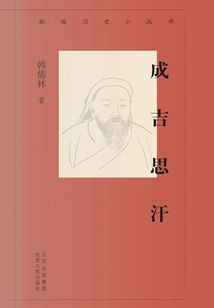
新编历史小丛书:成吉思汗
Han Rulin
Genghis Khan was an outstanding statesman and military strategist in the history of our country, with outstanding achievements in his life. The book briefly describes Genghis Khan's historical achievements, from the initial unification of all Mongolian tribes, to the conquest of Xixia and the Jin Kingdom, and the westward expedition, until he died of illness during the journey. It introduces Genghis Khan's contribution to the advancement of history to inspire readers' national pride.
Genghis Khan was an outstanding statesman and military strategist in the history of our country, with outstanding achievements in his life. The book briefly describes Genghis Khan's historical achievements, from the initial unification of all Mongolian tribes, to the conquest of Xixia and the Jin Kingdom, and the westward expedition, until he died of illness during the journey. It introduces Genghis Khan's contribution to the advancement of history to inspire readers' national pride.
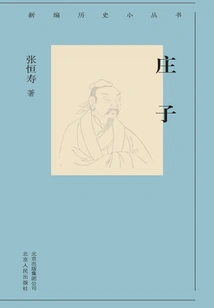
New History Series: Zhuangzi
History新编历史小丛书:庄子
Zhang Hengshou
Zhuangzi (approximately 369 BC - 286 BC), a philosopher in the mid-Warring States Period, was a great thinker, philosopher, and writer in the pre-Qin period of my country, and the main founder of Taoism. Zhuangzi and Laozi, the founder of Taoism, are both known as "Laozi and Zhuangzi", and their philosophical system of thought is respected as "Laozi and Zhuangzi philosophy" by the academic circle of thought. By combing historical materials and integrating personal research experience, the author introduces Zhuangzi's life and thoughts in a short space of time. The discussion is dense and rigorous, the writing is concise, and the writing is lucid. It is both academic and informative and very suitable for reading.
Zhuangzi (approximately 369 BC - 286 BC), a philosopher in the mid-Warring States Period, was a great thinker, philosopher, and writer in the pre-Qin period of my country, and the main founder of Taoism. Zhuangzi and Laozi, the founder of Taoism, are both known as "Laozi and Zhuangzi", and their philosophical system of thought is respected as "Laozi and Zhuangzi philosophy" by the academic circle of thought. By combing historical materials and integrating personal research experience, the author introduces Zhuangzi's life and thoughts in a short space of time. The discussion is dense and rigorous, the writing is concise, and the writing is lucid. It is both academic and informative and very suitable for reading.
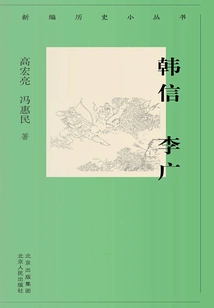
新编历史小丛书:韩信 李广
Gao Hongliang Feng Huimin
Han Xin (approximately 231 BC - 196 BC), Han nationality, native of Huaiyin (formerly Huaiyin County, Jiangsu Province, now Huaiyin District), was a founding hero of the Western Han Dynasty, an outstanding military strategist in Chinese history, and one of the Three Heroes of the Early Han Dynasty along with Xiao He and Zhang Liang. Li Guang (-119 BC), Han nationality, was born in Chengji, Longxi (now Qin'an County, Tianshui, Gansu Province). He was a famous general in China's Western Han Dynasty. When he was appointed as the prefect of Youbeiping County (Zhipinggang County, southwest of today's Ningcheng, Inner Mongolia), the Huns were afraid of him and called him a flying general. They did not dare to invade for several years. This book is a collection of Han Xin's biographies and Li Guang's biographies.
Han Xin (approximately 231 BC - 196 BC), Han nationality, native of Huaiyin (formerly Huaiyin County, Jiangsu Province, now Huaiyin District), was a founding hero of the Western Han Dynasty, an outstanding military strategist in Chinese history, and one of the Three Heroes of the Early Han Dynasty along with Xiao He and Zhang Liang. Li Guang (-119 BC), Han nationality, was born in Chengji, Longxi (now Qin'an County, Tianshui, Gansu Province). He was a famous general in China's Western Han Dynasty. When he was appointed as the prefect of Youbeiping County (Zhipinggang County, southwest of today's Ningcheng, Inner Mongolia), the Huns were afraid of him and called him a flying general. They did not dare to invade for several years. This book is a collection of Han Xin's biographies and Li Guang's biographies.
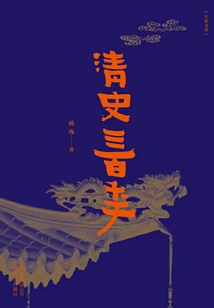
大家文丛:清史三百年
Dai Yi
This book is an overview of Qing history by Mr. Dai Yi, a well-known expert on Qing and modern history in my country. It tells the development of the Qing Dynasty over three hundred years in chronological order. It has a rigorous structure and careful argumentation, closely follows the development of the times, pays attention to major issues in the process of China's modern history, and provides useful experience and reference for China's modernization path to be more convenient, smooth, and reasonable. This book has clear viewpoints, substantial content, rich historical materials, vivid writing, and a perfect unity of ideological and academic aspects.
This book is an overview of Qing history by Mr. Dai Yi, a well-known expert on Qing and modern history in my country. It tells the development of the Qing Dynasty over three hundred years in chronological order. It has a rigorous structure and careful argumentation, closely follows the development of the times, pays attention to major issues in the process of China's modern history, and provides useful experience and reference for China's modernization path to be more convenient, smooth, and reasonable. This book has clear viewpoints, substantial content, rich historical materials, vivid writing, and a perfect unity of ideological and academic aspects.
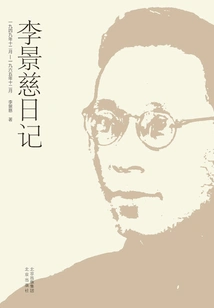
Li Jingci's Diary
History李景慈日记
Li Jingci
Mr. Li Jingci had the habit of keeping a diary, and the preserved diary began in October 1949. These diaries record the editing and publishing work in the process from the private public bookstore to the public-private joint venture Beijing Public Bookstore Publishing House to the state-owned Beijing Publishing House, which is very helpful for future generations to study the development history of Beijing Publishing House. The diary records the situation of social and cultural life at that time, pays attention to social and cultural hot spots, and records the details of all aspects of clothing, food, housing and transportation, depicting a vivid scroll of life, which is of high value for future generations to study and understand the social life of that era.
Mr. Li Jingci had the habit of keeping a diary, and the preserved diary began in October 1949. These diaries record the editing and publishing work in the process from the private public bookstore to the public-private joint venture Beijing Public Bookstore Publishing House to the state-owned Beijing Publishing House, which is very helpful for future generations to study the development history of Beijing Publishing House. The diary records the situation of social and cultural life at that time, pays attention to social and cultural hot spots, and records the details of all aspects of clothing, food, housing and transportation, depicting a vivid scroll of life, which is of high value for future generations to study and understand the social life of that era.
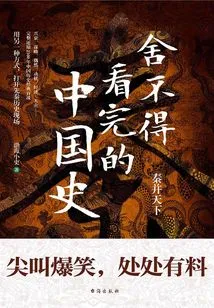
舍不得看完的中国史
Bohai Official
In our memory, all memories of history are ultimately wars. All the rise and fall, accidents, motives, strategies, economies, and natural disasters were all prepared to direct the wars that changed history. It was also these wars that condensed all our views, impressions, ridicules, and imaginations about history. Through these descriptions, the author connects the thread of ancient Chinese history. "The History of China I Can't Want to Read: Qin Unifies the World" takes the rise and fall of the three families from the Jin Dynasty to the unification of the world in the Qin Dynasty as the outline, and tells history through twelve famous battles. After reading to the end, we found that there are too many last resorts in history. The kings who subjugate their country are not necessarily bastards. The traitors and sycophants in power are not necessarily so hateful. Loyal ministers and filial sons must also be looked at separately. When they were making choices, when they were doing things that determined the rise and fall of their country and the people's lives, they had many options, and no major choice was easy. After reading to the end, we will inevitably put ourselves in your shoes and think about what you would choose if you faced this kind of situation in the future, and what the outcome will be after the choice is made.
In our memory, all memories of history are ultimately wars. All the rise and fall, accidents, motives, strategies, economies, and natural disasters were all prepared to direct the wars that changed history. It was also these wars that condensed all our views, impressions, ridicules, and imaginations about history. Through these descriptions, the author connects the thread of ancient Chinese history. "The History of China I Can't Want to Read: Qin Unifies the World" takes the rise and fall of the three families from the Jin Dynasty to the unification of the world in the Qin Dynasty as the outline, and tells history through twelve famous battles. After reading to the end, we found that there are too many last resorts in history. The kings who subjugate their country are not necessarily bastards. The traitors and sycophants in power are not necessarily so hateful. Loyal ministers and filial sons must also be looked at separately. When they were making choices, when they were doing things that determined the rise and fall of their country and the people's lives, they had many options, and no major choice was easy. After reading to the end, we will inevitably put ourselves in your shoes and think about what you would choose if you faced this kind of situation in the future, and what the outcome will be after the choice is made.
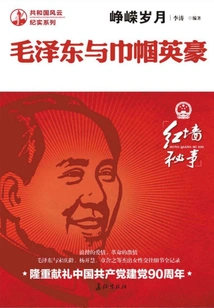
峥嵘岁月:毛泽东与巾帼英豪
Li Tao
Mao Zedong and Soong Ching Ling: "Dear eldest sister, how are you? Did you sleep well?" Mao Zedong and Yang Kaihui: "We are your best friends in the world." Mao Zedong and Ding Ling: "Yesterday Miss Wen is today General Wu." Mao Zedong said: "Times have changed, and men and women are the same." Mao Zedong also said: "Women can hold up half the sky." This is what Mao Zedong said and what he did. This book uses a large number of authoritative documents, precious historical photos and personal experiences of the parties involved, and uses documentary techniques and detailed and vivid language to record the interaction between Mao Zedong and more than a dozen women, including Song Qingling, Yang Kaihui, Zhu Zhongli, Zeng Zhi, Liu Ying, Zhang Wenqiu, Liu Siqi, Mao Zejian, Zhang Hanzhi, Hou Bo, etc. It reproduces the unique personality charm and unparalleled interpersonal art of a generation of great men. During it, there are otherworldly love, soul-stirring family affection, overwhelming pride, and heart-to-heart friendship... Full of legendary color, tear-jerking and breathtaking.
Mao Zedong and Soong Ching Ling: "Dear eldest sister, how are you? Did you sleep well?" Mao Zedong and Yang Kaihui: "We are your best friends in the world." Mao Zedong and Ding Ling: "Yesterday Miss Wen is today General Wu." Mao Zedong said: "Times have changed, and men and women are the same." Mao Zedong also said: "Women can hold up half the sky." This is what Mao Zedong said and what he did. This book uses a large number of authoritative documents, precious historical photos and personal experiences of the parties involved, and uses documentary techniques and detailed and vivid language to record the interaction between Mao Zedong and more than a dozen women, including Song Qingling, Yang Kaihui, Zhu Zhongli, Zeng Zhi, Liu Ying, Zhang Wenqiu, Liu Siqi, Mao Zejian, Zhang Hanzhi, Hou Bo, etc. It reproduces the unique personality charm and unparalleled interpersonal art of a generation of great men. During it, there are otherworldly love, soul-stirring family affection, overwhelming pride, and heart-to-heart friendship... Full of legendary color, tear-jerking and breathtaking.
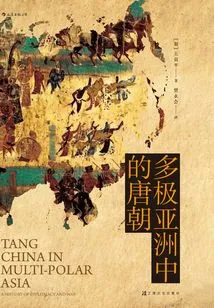
多极亚洲中的唐朝
(added) Wang Zhenping
This book is a monograph on the military diplomacy of the Tang Dynasty by Professor Wang Zhenping, a famous scholar of Tang history. This book cites numerous sources and narrates the complex and ever-changing relationship of "mutual benefit" and "interdependence" between the Tang Dynasty and neighboring regimes such as the Turks, Uighurs, Korea, Nanzhao, and Tubo in "multipolar" Asia. It also provides an incisive and original analysis of the central and local dual management system of the Tang Dynasty's foreign relations, as well as the role of "morality" and "righteousness" in foreign policy thinking.
This book is a monograph on the military diplomacy of the Tang Dynasty by Professor Wang Zhenping, a famous scholar of Tang history. This book cites numerous sources and narrates the complex and ever-changing relationship of "mutual benefit" and "interdependence" between the Tang Dynasty and neighboring regimes such as the Turks, Uighurs, Korea, Nanzhao, and Tubo in "multipolar" Asia. It also provides an incisive and original analysis of the central and local dual management system of the Tang Dynasty's foreign relations, as well as the role of "morality" and "righteousness" in foreign policy thinking.
中国现代史(第三版)
Editor-in-chief Chen Tingxiang
After the first two editions of the book were successfully published, the author compiled and improved the latest scientific research results based on the collection of new historical materials. It took five years to re-compile the book and provide it to college teachers and students as a "21st century course material." The author of this book adopts a Marxist historical perspective to narrate and analyze the history from the establishment of the Republic of China and the rule of the Beiyang Government, the Northern Expedition and the National Revolutionary Movement, the rule of the Nanjing National Government, the rise of the Chinese Soviet Movement, the development and growth of the Chinese Workers' and Peasants' Red Army, the Anti-Japanese War, the full-scale outbreak of the Chinese Civil War, the People's Liberation Army's shift to strategic offensive, the collapse of the Kuomintang's mainland rule, the collapse of the Nanjing National Government on the mainland, and the founding of the People's Republic of China. The internal use involves politics, economy, culture, and military. This book has been selected by many universities as a "21st century course textbook" for undergraduates, junior college students, and graduate students.
After the first two editions of the book were successfully published, the author compiled and improved the latest scientific research results based on the collection of new historical materials. It took five years to re-compile the book and provide it to college teachers and students as a "21st century course material." The author of this book adopts a Marxist historical perspective to narrate and analyze the history from the establishment of the Republic of China and the rule of the Beiyang Government, the Northern Expedition and the National Revolutionary Movement, the rule of the Nanjing National Government, the rise of the Chinese Soviet Movement, the development and growth of the Chinese Workers' and Peasants' Red Army, the Anti-Japanese War, the full-scale outbreak of the Chinese Civil War, the People's Liberation Army's shift to strategic offensive, the collapse of the Kuomintang's mainland rule, the collapse of the Nanjing National Government on the mainland, and the founding of the People's Republic of China. The internal use involves politics, economy, culture, and military. This book has been selected by many universities as a "21st century course textbook" for undergraduates, junior college students, and graduate students.
辽金元:金戈铁马
Zhang Yichen
The Liao, Jin, and Yuan dynasties, as dynasties governed by ethnic minorities in Chinese history, are a part of history that cannot be ignored. Therefore, the historical stories of the Liao, Jin, and Yuan dynasties compiled in this book not only restore the splendor of history, but are also of great significance to the further exploration of history.
The Liao, Jin, and Yuan dynasties, as dynasties governed by ethnic minorities in Chinese history, are a part of history that cannot be ignored. Therefore, the historical stories of the Liao, Jin, and Yuan dynasties compiled in this book not only restore the splendor of history, but are also of great significance to the further exploration of history.
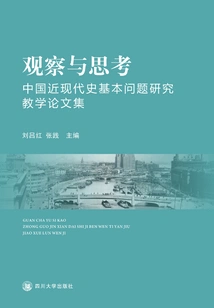
观察与思考:中国近现代史基本问题研究教学论文集
Liu Luhong Zhang Jian
This book takes the analysis of China's reform and opening up as the starting point, makes a special review of China's great achievements in political, economic, diplomatic and social development since the reform and opening up, and discusses China's development path and the road to rejuvenation as a great power. The discussion is specific and profound, the analysis is rational and comprehensive, closely follows the Chinese model, Chinese experience, Chinese path and Chinese values in the practice of reform and opening up, puts forward in-depth theoretical thinking and academic viewpoints, and makes new theoretical contributions to further deepening reform, expanding opening up, actively promoting the development of my country's modernization cause, and comprehensively realizing the governance of a major country.
This book takes the analysis of China's reform and opening up as the starting point, makes a special review of China's great achievements in political, economic, diplomatic and social development since the reform and opening up, and discusses China's development path and the road to rejuvenation as a great power. The discussion is specific and profound, the analysis is rational and comprehensive, closely follows the Chinese model, Chinese experience, Chinese path and Chinese values in the practice of reform and opening up, puts forward in-depth theoretical thinking and academic viewpoints, and makes new theoretical contributions to further deepening reform, expanding opening up, actively promoting the development of my country's modernization cause, and comprehensively realizing the governance of a major country.
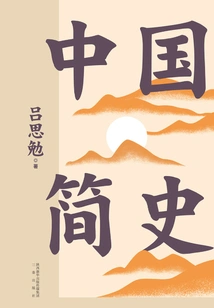
A Brief History of China
History中国简史
Lu Simian
"A Brief History of China" is an introductory book on Chinese history written by Lu Simian. It tells the 5,000-year history of China in simple and concise language. The content of the book is easy to understand and well organized, and is highly praised by famous writers. Once published, it was warmly welcomed by readers, and the first edition was reprinted nearly 200 times.
"A Brief History of China" is an introductory book on Chinese history written by Lu Simian. It tells the 5,000-year history of China in simple and concise language. The content of the book is easy to understand and well organized, and is highly praised by famous writers. Once published, it was warmly welcomed by readers, and the first edition was reprinted nearly 200 times.
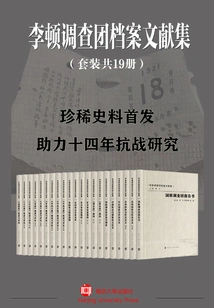
李顿调查团档案文献集(套装共19册)
Guo Zhaozhao Sun Hongjun Tang Yang Et Al.
"The Archives and Documents of the Lytton Investigation" is the first collection of precious historical materials in China that systematically and comprehensively collects and organizes a large number of domestic and foreign archives, investigation reports, submissions, newspapers, etc. Surrounding the September 18th Incident and the Lytton Investigation. The author team went to the League of Nations and the United Nations Archives in Geneva, Switzerland, to sort out the translation series of archives. It is of extremely high historical value for studying the history of Sino-Japanese relations and the history of the 14-year Anti-Japanese War.
"The Archives and Documents of the Lytton Investigation" is the first collection of precious historical materials in China that systematically and comprehensively collects and organizes a large number of domestic and foreign archives, investigation reports, submissions, newspapers, etc. Surrounding the September 18th Incident and the Lytton Investigation. The author team went to the League of Nations and the United Nations Archives in Geneva, Switzerland, to sort out the translation series of archives. It is of extremely high historical value for studying the history of Sino-Japanese relations and the history of the 14-year Anti-Japanese War.
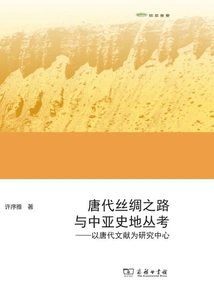
唐代丝绸之路与中亚史地研究
Xu Xuya
This book focuses on four documents of the Tang Dynasty, as well as other related records of the Tang Dynasty. Focusing on the major topic of "Tang Dynasty and Central Asia", this book explores the changes in the Silk Road in the Tang Dynasty, the location and route of the cities in Central Asia, and the political development of the Central Asian barbarians in the 7th and 8th centuries. Development, the evolution of the political relationship between the Central Asian barbarians and the Tang Dynasty, the political relationship between the Central Asian barbarians, the Tang Dynasty and Dashi, the role of the Tang Dynasty in supporting the barbarians in Central Asia in their struggle against the Dashi, the extent to which the Tang people understood the Central Asian barbarians, and the credibility of the Chinese records. In terms of research methods, we strive to compare Arab-Islamic geographical documents, Central Asian archaeological data and Tang Dynasty documentary records, and analyze the results of previous research.
This book focuses on four documents of the Tang Dynasty, as well as other related records of the Tang Dynasty. Focusing on the major topic of "Tang Dynasty and Central Asia", this book explores the changes in the Silk Road in the Tang Dynasty, the location and route of the cities in Central Asia, and the political development of the Central Asian barbarians in the 7th and 8th centuries. Development, the evolution of the political relationship between the Central Asian barbarians and the Tang Dynasty, the political relationship between the Central Asian barbarians, the Tang Dynasty and Dashi, the role of the Tang Dynasty in supporting the barbarians in Central Asia in their struggle against the Dashi, the extent to which the Tang people understood the Central Asian barbarians, and the credibility of the Chinese records. In terms of research methods, we strive to compare Arab-Islamic geographical documents, Central Asian archaeological data and Tang Dynasty documentary records, and analyze the results of previous research.
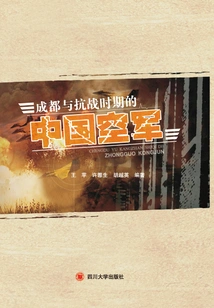
成都与抗战时期的中国空军
Wang Ping Xu Rongsheng Hu Yueying
This book is a study of the status, role and influence of Chengdu in the Chinese Air Force's operations against Japan. As an important base in the rear area of the Anti-Japanese War, Chengdu played a special and key role in all aspects of the Chinese Air Force's operations against Japan. Completing this manuscript on the 70th anniversary of the victory of the Anti-Japanese War has important practical significance, academic value and social benefits. This project is the research result of researcher Wang Ping of the Chengdu Academy of Social Sciences and her team. It has a solid research foundation, clear research ideas, standardized research design, rich research materials, scientific research methods, and rich research content.
This book is a study of the status, role and influence of Chengdu in the Chinese Air Force's operations against Japan. As an important base in the rear area of the Anti-Japanese War, Chengdu played a special and key role in all aspects of the Chinese Air Force's operations against Japan. Completing this manuscript on the 70th anniversary of the victory of the Anti-Japanese War has important practical significance, academic value and social benefits. This project is the research result of researcher Wang Ping of the Chengdu Academy of Social Sciences and her team. It has a solid research foundation, clear research ideas, standardized research design, rich research materials, scientific research methods, and rich research content.
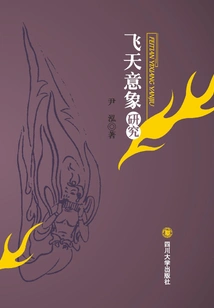
飞天意象研究
Yin Hong
Feitian is a decorative art image that appears in Buddhist art in the form of paintings, sculptures, etc. It is also the most distinctive decorative painting in Dunhuang murals. This book borrows the three categories of "image", "word" and "meaning" from ancient Chinese aesthetics to structure the full text. After tracing the origin of the concept of Feitian, it examines Feitian from three aspects: the image of Feitian in murals, the myth of Chang'e flying to the moon in literature, and the intrinsic connection between Feitian and Chinese culture. It explores the Chinese cultural genes of Feitian and explores the deep reasons why Feitian is a Chinese cultural symbol.
Feitian is a decorative art image that appears in Buddhist art in the form of paintings, sculptures, etc. It is also the most distinctive decorative painting in Dunhuang murals. This book borrows the three categories of "image", "word" and "meaning" from ancient Chinese aesthetics to structure the full text. After tracing the origin of the concept of Feitian, it examines Feitian from three aspects: the image of Feitian in murals, the myth of Chang'e flying to the moon in literature, and the intrinsic connection between Feitian and Chinese culture. It explores the Chinese cultural genes of Feitian and explores the deep reasons why Feitian is a Chinese cultural symbol.
中华优秀传统文化
Ministry Of Justice Bureau Of Prisons
This book combines the essence of the classics and history of China's excellent traditional culture and covers the classics that criminals need to know in their rehabilitation. It is divided into 16 chapters, including shame, self-examination, reform, advocating the law, cultivating morality, upholding integrity, cultivating ethics, remembering kindness, patriotism, benevolence, filial piety, integrity, friendship, frugality, responsibility, and harmony. It also has columns for appreciation, inspiration, and extended reading. These columns analyze famous Chinese classics from different angles and levels, extract the gist of the famous sentences, tell the stories behind the classics, interpret and comment on the rigorous and obscure traditional culture in a popular and realistic way, and provide exquisite pictures that fit the meaning of the text, showing the classic style in a three-dimensional image.
This book combines the essence of the classics and history of China's excellent traditional culture and covers the classics that criminals need to know in their rehabilitation. It is divided into 16 chapters, including shame, self-examination, reform, advocating the law, cultivating morality, upholding integrity, cultivating ethics, remembering kindness, patriotism, benevolence, filial piety, integrity, friendship, frugality, responsibility, and harmony. It also has columns for appreciation, inspiration, and extended reading. These columns analyze famous Chinese classics from different angles and levels, extract the gist of the famous sentences, tell the stories behind the classics, interpret and comment on the rigorous and obscure traditional culture in a popular and realistic way, and provide exquisite pictures that fit the meaning of the text, showing the classic style in a three-dimensional image.
中国新文化思想史纲
Chen Tingxiang Li Rui Li Huiyu
This book serves as a textbook for graduate students at Sichuan University. The main content is: After the Opium War in 1840, faced with the great social changes brought about by modern industrial culture that have not been seen in thousands of years, generations of advanced groups of the Chinese nation made choices about contemporary history in their respective eras. The Westernizationists chose pure economic reform, the reform leaders chose political reform and constitutional monarchy, the revolutionaries chose democracy and republic, and the advanced intellectuals of the New Culture Movement chose the comprehensive absorption of Western culture and the comprehensive criticism of local culture. Since the May 4th New Culture Movement, the comprehensive embrace of Western social theories has broken the previous basic choice pattern, and a situation has emerged in which various social ideals coexist. After the May 4th Movement, after a certain period of differentiation and reorganization, many ideological schools were formed. However, among them, there are both theoretical systems and ideal social plans. It seems that only five major schools have expressed their intention to choose the future society. Namely (1) Nationalist faction. It advocates building a powerful nation-state based on the bourgeois nationalist theoretical system that gives up personal freedom and practices the morality of nation supremacy and state supremacy. (2) Rural social revivalists. It advocates the comprehensive revival of China's inherent agricultural civilization and the emergence of a new type of country from the high development of agricultural civilization. (3) Liberals. It advocates following the example of Western democracies and building a modern industrialized China based on individualistic social relations. (4) Cultural conciliationist faction (the Kuomintang in the Chiang Kai-shek era). It advocates the establishment of a modern country characterized by industrialization on the basis of traditional concept culture. (5) New Democracy. It advocates building China's modern industrialized society on the basis of Marxist theory and moving towards an ideal communist society. History ultimately chose the New Democratic Thought of the Communist Party of China and founded the People's Republic of China along this ideological system. This book provides a comprehensive analysis and exposition of the thoughts of each of the above periods. Finally, we came to the conclusion that without the Communist Party, there would be no new China, and only socialism can save China. This book has great publishing value.
This book serves as a textbook for graduate students at Sichuan University. The main content is: After the Opium War in 1840, faced with the great social changes brought about by modern industrial culture that have not been seen in thousands of years, generations of advanced groups of the Chinese nation made choices about contemporary history in their respective eras. The Westernizationists chose pure economic reform, the reform leaders chose political reform and constitutional monarchy, the revolutionaries chose democracy and republic, and the advanced intellectuals of the New Culture Movement chose the comprehensive absorption of Western culture and the comprehensive criticism of local culture. Since the May 4th New Culture Movement, the comprehensive embrace of Western social theories has broken the previous basic choice pattern, and a situation has emerged in which various social ideals coexist. After the May 4th Movement, after a certain period of differentiation and reorganization, many ideological schools were formed. However, among them, there are both theoretical systems and ideal social plans. It seems that only five major schools have expressed their intention to choose the future society. Namely (1) Nationalist faction. It advocates building a powerful nation-state based on the bourgeois nationalist theoretical system that gives up personal freedom and practices the morality of nation supremacy and state supremacy. (2) Rural social revivalists. It advocates the comprehensive revival of China's inherent agricultural civilization and the emergence of a new type of country from the high development of agricultural civilization. (3) Liberals. It advocates following the example of Western democracies and building a modern industrialized China based on individualistic social relations. (4) Cultural conciliationist faction (the Kuomintang in the Chiang Kai-shek era). It advocates the establishment of a modern country characterized by industrialization on the basis of traditional concept culture. (5) New Democracy. It advocates building China's modern industrialized society on the basis of Marxist theory and moving towards an ideal communist society. History ultimately chose the New Democratic Thought of the Communist Party of China and founded the People's Republic of China along this ideological system. This book provides a comprehensive analysis and exposition of the thoughts of each of the above periods. Finally, we came to the conclusion that without the Communist Party, there would be no new China, and only socialism can save China. This book has great publishing value.
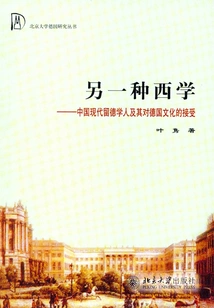
另一种西学:中国现代留德学人及其对德国文化的接受
Ye Jun
The concept of "the spread of Western learning to the East" often used by academic circles in the past is too broad, because the ideological and cultural resources of each country are different. In particular, German thought, which is different from the "British and American tradition" and "Soviet resources", has distinctive characteristics. Similarly, in the process of "the spread of Western learning to the East", the differences in the recipients often determine the major differences in the taste and value orientation of the recipients. When examining the entry of German ideological resources into modern China, the role of scholars studying in Germany plays a crucial role. It is based on the above thinking that this paper chooses modern scholars studying in Germany as the research object. In the specific writing, Ma Junwu, Zong Baihua, Chen Quan and Feng Zhi in the first half of the 20th century are taken as key cases; when appropriate, it will also examine the influential scholars studying in Germany in the same period.
The concept of "the spread of Western learning to the East" often used by academic circles in the past is too broad, because the ideological and cultural resources of each country are different. In particular, German thought, which is different from the "British and American tradition" and "Soviet resources", has distinctive characteristics. Similarly, in the process of "the spread of Western learning to the East", the differences in the recipients often determine the major differences in the taste and value orientation of the recipients. When examining the entry of German ideological resources into modern China, the role of scholars studying in Germany plays a crucial role. It is based on the above thinking that this paper chooses modern scholars studying in Germany as the research object. In the specific writing, Ma Junwu, Zong Baihua, Chen Quan and Feng Zhi in the first half of the 20th century are taken as key cases; when appropriate, it will also examine the influential scholars studying in Germany in the same period.
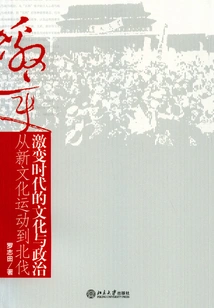
激变时代的文化与政治:从新文化运动到北伐
Luo Zhitian
"Culture and Politics in an Era of Radical Changes: From the New Culture Movement to the Northern Expedition" discusses the culture and politics of the era of radical changes from the New Culture Movement to the Northern Expedition, from the connection between scholar mentality and politics on the eve of the May Fourth Movement, to the competition between various ideological concepts, behavioral orientations, and political forces after the May Fourth Movement, as well as the interaction of these factors in the competition.
"Culture and Politics in an Era of Radical Changes: From the New Culture Movement to the Northern Expedition" discusses the culture and politics of the era of radical changes from the New Culture Movement to the Northern Expedition, from the connection between scholar mentality and politics on the eve of the May Fourth Movement, to the competition between various ideological concepts, behavioral orientations, and political forces after the May Fourth Movement, as well as the interaction of these factors in the competition.
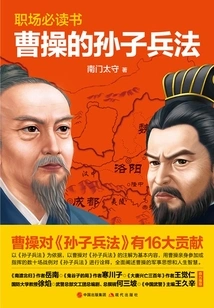
Cao Cao's Art of War
History曹操的孙子兵法
Nanmen Prefect
"Cao Cao's Art of War by Sun Tzu" is a work by the best-selling author Nanmen Taishou. "Art of War by Sun Tzu" is a sacred text of military science and is regarded as the "first of martial arts" or "Bing Jing". Sun Wu is also revered as the "Sage of War" by later generations. "Sun Tzu's Art of War" is the highest achievement of ancient Chinese military theory and a world-renowned holy book of oriental military science. This book selects a complete manuscript, retains the original appearance of the ancient text, and punctuates it in accordance with today's prevailing standards. Use classic battles or cases that Cao Cao personally participated in or commanded to explain the secrets and essence of "The Art of War". Each chapter of this book is composed of five parts: the original text, annotations, translations, classic wars, and analysis of the art of war. The text is contrasted and the annotations are detailed, making it easy to read. The text is translated word for word and corresponds to the original text and annotations, so you can quickly understand the meaning of the original text.
"Cao Cao's Art of War by Sun Tzu" is a work by the best-selling author Nanmen Taishou. "Art of War by Sun Tzu" is a sacred text of military science and is regarded as the "first of martial arts" or "Bing Jing". Sun Wu is also revered as the "Sage of War" by later generations. "Sun Tzu's Art of War" is the highest achievement of ancient Chinese military theory and a world-renowned holy book of oriental military science. This book selects a complete manuscript, retains the original appearance of the ancient text, and punctuates it in accordance with today's prevailing standards. Use classic battles or cases that Cao Cao personally participated in or commanded to explain the secrets and essence of "The Art of War". Each chapter of this book is composed of five parts: the original text, annotations, translations, classic wars, and analysis of the art of war. The text is contrasted and the annotations are detailed, making it easy to read. The text is translated word for word and corresponds to the original text and annotations, so you can quickly understand the meaning of the original text.
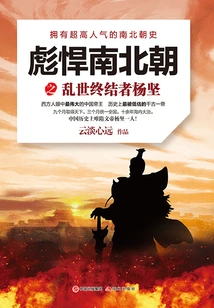
Yang Jian, the Mighty Terminator of the Troubled Times of the Southern and Northern Dynasties
History彪悍南北朝之乱世终结者杨坚
The Clouds Are Calm And The Heart Is Far Away
It took nine months to conquer the world; three months to unify the country; more than ten years to achieve great domestic rule. Only Yang Jian, Emperor Wen of the Sui Dynasty, achieved such an achievement in Chinese history! How did he do it? As an emperor, what we read in Yang Jian is not only the birth vision of the real dragon emperor such as the room filled with red light and the five pillars reaching the ceiling, nor the legend of the fateful meeting of the heroic lord and capable ministers, but also the calm mind, strong will, precise foresight, impeccable strategic planning, and team building of experts like an entrepreneur as an entrepreneur. Therefore, Yang Jian achieved achievements that were difficult for previous emperors to achieve. He made his dynasty the most innovative era. Various institutional initiatives and reform measures established the basic structure of China's feudal regime; under his rule, China ushered in the peak period of agricultural civilization in human history. When this book was serialized in the Tianya community, it was highly praised by countless fans and was hailed as "one of the best histories of the Southern and Northern Dynasties"!
It took nine months to conquer the world; three months to unify the country; more than ten years to achieve great domestic rule. Only Yang Jian, Emperor Wen of the Sui Dynasty, achieved such an achievement in Chinese history! How did he do it? As an emperor, what we read in Yang Jian is not only the birth vision of the real dragon emperor such as the room filled with red light and the five pillars reaching the ceiling, nor the legend of the fateful meeting of the heroic lord and capable ministers, but also the calm mind, strong will, precise foresight, impeccable strategic planning, and team building of experts like an entrepreneur as an entrepreneur. Therefore, Yang Jian achieved achievements that were difficult for previous emperors to achieve. He made his dynasty the most innovative era. Various institutional initiatives and reform measures established the basic structure of China's feudal regime; under his rule, China ushered in the peak period of agricultural civilization in human history. When this book was serialized in the Tianya community, it was highly praised by countless fans and was hailed as "one of the best histories of the Southern and Northern Dynasties"!