Library
Browse and search books
895 novels found
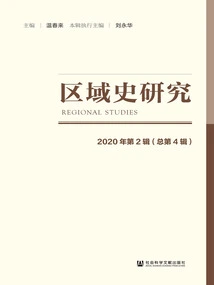
区域史研究(2020年第2辑\u002F总第4辑)
Editor-in-chief Wen Chunlai
"Regional History Research" is an academic journal jointly founded by a group of scholars with common academic interests from nine universities including Sun Yat-sen University. Since Skenya broke the paradigm of dynastic and national historical narratives and proposed the theory of explaining China's historical structure from a regional context, the study of regional history has become one of the important research directions for scholars trying to deepen their understanding of national history and even global history. The core question is how people's interactions in history form "areas" that are meaningful from a certain perspective. This journal hopes to provide researchers with a new platform to showcase the current trends, thinking and latest achievements in regional history research.
"Regional History Research" is an academic journal jointly founded by a group of scholars with common academic interests from nine universities including Sun Yat-sen University. Since Skenya broke the paradigm of dynastic and national historical narratives and proposed the theory of explaining China's historical structure from a regional context, the study of regional history has become one of the important research directions for scholars trying to deepen their understanding of national history and even global history. The core question is how people's interactions in history form "areas" that are meaningful from a certain perspective. This journal hopes to provide researchers with a new platform to showcase the current trends, thinking and latest achievements in regional history research.
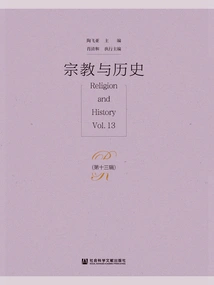
宗教与历史(第13辑)
Editor-in-chief Tao Feiya
"Religion and History (Thirteenth Series)" has four columns: keynote speeches, texts, thoughts and interpretations, maps, books and documents, characters, etiquette and cultural exchanges, which respectively publish Nicolas Standaert and Thierry Meynard), Li Tiangang, and young and middle-aged scholars in the field of Catholicism and Sino-Western cultural exchanges in the Ming and Qing dynasties. They focus on the exchange of books between China and the West in the Ming and Qing dynasties, maps, etiquette, text and ideological interpretation, etc., Displaying the latest achievements in cultural exchanges between China and the West in the Ming and Qing dynasties, and Catholic studies in the Ming and Qing dynasties.
"Religion and History (Thirteenth Series)" has four columns: keynote speeches, texts, thoughts and interpretations, maps, books and documents, characters, etiquette and cultural exchanges, which respectively publish Nicolas Standaert and Thierry Meynard), Li Tiangang, and young and middle-aged scholars in the field of Catholicism and Sino-Western cultural exchanges in the Ming and Qing dynasties. They focus on the exchange of books between China and the West in the Ming and Qing dynasties, maps, etiquette, text and ideological interpretation, etc., Displaying the latest achievements in cultural exchanges between China and the West in the Ming and Qing dynasties, and Catholic studies in the Ming and Qing dynasties.
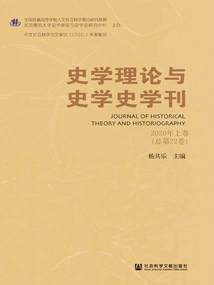
史学理论与史学史学刊(2020年上卷\u002F总第22卷)
Editor-in-chief Yang Gongle
"Journal of Historical Theory and Historiography" is an academic journal sponsored by the Research Center for Historical Theory and Historiography of Beijing Normal University. This volume is the 22nd in total. It has columns such as "Commemorating the 20th Anniversary of the Death of Mr. Bai Shouyi", "Research on Basic Theoretical Issues in History with Chinese Characteristics in the New Era", "Research on Ancient Chinese History", "Research on Modern and Contemporary Chinese History", "Research on Foreign History", "Research on Discipline Construction", "Review of Contemporary History", and "Conference Review". It publishes 22 articles, reflecting the academic concerns and cutting-edge results of current historical theory and historical research.
"Journal of Historical Theory and Historiography" is an academic journal sponsored by the Research Center for Historical Theory and Historiography of Beijing Normal University. This volume is the 22nd in total. It has columns such as "Commemorating the 20th Anniversary of the Death of Mr. Bai Shouyi", "Research on Basic Theoretical Issues in History with Chinese Characteristics in the New Era", "Research on Ancient Chinese History", "Research on Modern and Contemporary Chinese History", "Research on Foreign History", "Research on Discipline Construction", "Review of Contemporary History", and "Conference Review". It publishes 22 articles, reflecting the academic concerns and cutting-edge results of current historical theory and historical research.
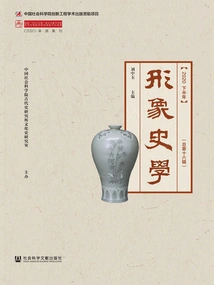
形象史学(2020下半年\u002F总第16辑)
Editor-in-chief Liu Zhongyu
"Image History" is a Chinese academic journal sponsored by the Cultural History Research Office of the Institute of History, Chinese Academy of Social Sciences. The papers collected mainly focus on different forms of material culture in various periods in ancient Chinese history. The collection breaks the boundaries of disciplines, and under the guidance of materialist dialectics, combines the commonalities and particularities of history, archeology, art history and other disciplines, and combines the textual research in the study of ancient Chinese history with methodologies such as iconography and new cultural history to sort out the evolution of human civilization from multiple angles and levels, further expanding the path and vision of historical research.
"Image History" is a Chinese academic journal sponsored by the Cultural History Research Office of the Institute of History, Chinese Academy of Social Sciences. The papers collected mainly focus on different forms of material culture in various periods in ancient Chinese history. The collection breaks the boundaries of disciplines, and under the guidance of materialist dialectics, combines the commonalities and particularities of history, archeology, art history and other disciplines, and combines the textual research in the study of ancient Chinese history with methodologies such as iconography and new cultural history to sort out the evolution of human civilization from multiple angles and levels, further expanding the path and vision of historical research.
国际史学研究论丛(第2辑)
Editor-in-chief Chen Qineng
The focus of this series of discussions is on the new development issues of contemporary history, which came into being in order to adapt to the development of the times and the rapid changes in international history. It provides new developments in all aspects of international historiography, research results on all continents, major countries, major fields, and related issues, as well as extensive and rich content such as interviews with famous historians, debates on difficult issues, and the release of first-hand historical materials.
The focus of this series of discussions is on the new development issues of contemporary history, which came into being in order to adapt to the development of the times and the rapid changes in international history. It provides new developments in all aspects of international historiography, research results on all continents, major countries, major fields, and related issues, as well as extensive and rich content such as interviews with famous historians, debates on difficult issues, and the release of first-hand historical materials.
关系中的国家(第2卷):地域—血缘关系中的帝制国家
Xu Yong
With the theme of "Region-Imperial State in Blood Relations", this book explains that after Qin Shihuang unified China, China's state and national governance went beyond the dominance of blood relations and transformed into the dominance of regional relations, forming a super-large regional territorial state. The imperial system that maintained this country included a series of new institutional factors such as centralization represented by imperial power, county bureaucracy, administrative cities, household integration, and national laws and regulations. The book consists of fifteen chapters, which explore the country and its governance process and internal dominance relationships from the unification of China by Qin Shihuang to the late Qing Dynasty in the form of special topics.
With the theme of "Region-Imperial State in Blood Relations", this book explains that after Qin Shihuang unified China, China's state and national governance went beyond the dominance of blood relations and transformed into the dominance of regional relations, forming a super-large regional territorial state. The imperial system that maintained this country included a series of new institutional factors such as centralization represented by imperial power, county bureaucracy, administrative cities, household integration, and national laws and regulations. The book consists of fifteen chapters, which explore the country and its governance process and internal dominance relationships from the unification of China by Qin Shihuang to the late Qing Dynasty in the form of special topics.
大争之世:论中国文明重建
Sun Haohui
This book is a new collection of historical essays after Sun Haohui's novel "The Qin Empire". The book provides an in-depth analysis of Qin's strategic logic and institutional innovation in destroying six kingdoms, reorganizing Lingnan, and unifying the world. It explores the resilience of Chinese civilization that has endured thousands of years of impact, and reveals how Chinese civilization can break through the current international changes from the dimensions of diplomacy, rule of law, and national integration.
This book is a new collection of historical essays after Sun Haohui's novel "The Qin Empire". The book provides an in-depth analysis of Qin's strategic logic and institutional innovation in destroying six kingdoms, reorganizing Lingnan, and unifying the world. It explores the resilience of Chinese civilization that has endured thousands of years of impact, and reveals how Chinese civilization can break through the current international changes from the dimensions of diplomacy, rule of law, and national integration.
The Perspective of Historical Materials in the Study of Modern and Contemporary Chinese Literature
History中国现当代文学研究的史料视域
Liu Yang
From the compilation of the "Chinese New Literature Series (1917-1927)" to the publication of several monographs on the study of historical materials of modern and contemporary Chinese literature, the role of historical materials in the academic development of Chinese literature has received more and more attention. The "historical materials craze" has become an eye-catching phenomenon in the field of modern and contemporary Chinese literature research in the past decade. Through theoretical analysis and specific research examples, the author of this book deeply discusses the experience and problems in the collection and use of historical materials in the practice of literary history research. At the same time, he analyzes how the perspective of historical materials can further activate and enrich the study of writers' works, literary trends of thought, and literary history. The book goes from macro to meso to micro. It not only clarifies the academic relationship between historical materials and literary history research, as well as the macro characteristics of historical materials, but also summarizes the historical experience in key areas of existing research and analyzes how to break through weak links. As a kind of "academic preparation", this book integrates the author's recent thoughts on how historical materials, theories, and texts can be organically unified in the study of literary history.
From the compilation of the "Chinese New Literature Series (1917-1927)" to the publication of several monographs on the study of historical materials of modern and contemporary Chinese literature, the role of historical materials in the academic development of Chinese literature has received more and more attention. The "historical materials craze" has become an eye-catching phenomenon in the field of modern and contemporary Chinese literature research in the past decade. Through theoretical analysis and specific research examples, the author of this book deeply discusses the experience and problems in the collection and use of historical materials in the practice of literary history research. At the same time, he analyzes how the perspective of historical materials can further activate and enrich the study of writers' works, literary trends of thought, and literary history. The book goes from macro to meso to micro. It not only clarifies the academic relationship between historical materials and literary history research, as well as the macro characteristics of historical materials, but also summarizes the historical experience in key areas of existing research and analyzes how to break through weak links. As a kind of "academic preparation", this book integrates the author's recent thoughts on how historical materials, theories, and texts can be organically unified in the study of literary history.
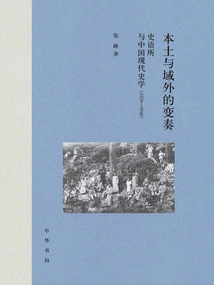
本土与域外的变奏:史语所与中国现代史学(1928—1948)
Zhang Feng
The Institute of History and Philology of Academia Sinica, founded in 1928, is a famous academic research institution in modern China and is closely related to the development of modern Chinese historiography. This book takes the Institute of History and Linguistics from 1928 to 1948 as the research object, and comprehensively examines the formation, operating mechanism, novelty trends, discourse construction, scholarly characteristics, academic contributions, extraterritorial influence and research limitations of the Institute of History and Linguistics' new paradigm, etc., And presents a more complete historical picture of the Institute of History and Linguistics' promotion of the construction of the discourse system of modern Chinese historiography. Focusing on the dual perspectives of "local" and "foreign", and observing the relationship between the Institute of History and Philology and modern Chinese historiography from the perspective of historical exchanges between China and foreign countries, it examines how Western academic concepts are intertwined and forged with traditional Chinese historiography, thereby promoting the transformation of Chinese historiography from tradition to modernity; at the same time, the relatively systematic use of relevant archival materials increases the original value of the research results.
The Institute of History and Philology of Academia Sinica, founded in 1928, is a famous academic research institution in modern China and is closely related to the development of modern Chinese historiography. This book takes the Institute of History and Linguistics from 1928 to 1948 as the research object, and comprehensively examines the formation, operating mechanism, novelty trends, discourse construction, scholarly characteristics, academic contributions, extraterritorial influence and research limitations of the Institute of History and Linguistics' new paradigm, etc., And presents a more complete historical picture of the Institute of History and Linguistics' promotion of the construction of the discourse system of modern Chinese historiography. Focusing on the dual perspectives of "local" and "foreign", and observing the relationship between the Institute of History and Philology and modern Chinese historiography from the perspective of historical exchanges between China and foreign countries, it examines how Western academic concepts are intertwined and forged with traditional Chinese historiography, thereby promoting the transformation of Chinese historiography from tradition to modernity; at the same time, the relatively systematic use of relevant archival materials increases the original value of the research results.
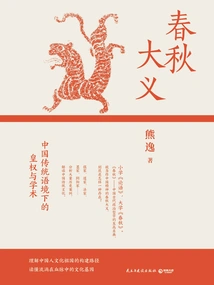
春秋大义:中国传统语境下的皇权与学术(2025版)
Xiong Yi
"Spring and Autumn" has long been revered as the supreme holy book of political philosophy in ancient China, and is considered to be the only Confucian classic compiled by Confucius himself. However, the "Spring and Autumn Annals" uses subtle words and great meanings to hide praise and criticism, which is very difficult to understand, especially as it has become more and more complicated after interpretations by classics scholars of the past dynasties. So how did "Spring and Autumn" and related classics play a practical role in an authoritarian society for two thousand years, and even influence the wind and rain? What kind of existence is the Spring and Autumn Period, which has always been regarded as the Chinese spirit? Xiong Yi starts from a murder case in the Tang Dynasty. Through a large number of vivid historical cases, using detailed textual research and meticulous logic, he reveals layer by layer how Chinese classic culture dating back to the Spring and Autumn Period, including "Spring and Autumn", "One Classic and Three Transmissions", "The Analects" and "Laozi", were distorted into tools of power under imperial politics. Xiong Yi plucked thousands of years of historical facts and classics at his fingertips, and allowed emperors, sages, dignitaries, generals, scribes and other people from different eras to have conversations across the air.
"Spring and Autumn" has long been revered as the supreme holy book of political philosophy in ancient China, and is considered to be the only Confucian classic compiled by Confucius himself. However, the "Spring and Autumn Annals" uses subtle words and great meanings to hide praise and criticism, which is very difficult to understand, especially as it has become more and more complicated after interpretations by classics scholars of the past dynasties. So how did "Spring and Autumn" and related classics play a practical role in an authoritarian society for two thousand years, and even influence the wind and rain? What kind of existence is the Spring and Autumn Period, which has always been regarded as the Chinese spirit? Xiong Yi starts from a murder case in the Tang Dynasty. Through a large number of vivid historical cases, using detailed textual research and meticulous logic, he reveals layer by layer how Chinese classic culture dating back to the Spring and Autumn Period, including "Spring and Autumn", "One Classic and Three Transmissions", "The Analects" and "Laozi", were distorted into tools of power under imperial politics. Xiong Yi plucked thousands of years of historical facts and classics at his fingertips, and allowed emperors, sages, dignitaries, generals, scribes and other people from different eras to have conversations across the air.
古史辨运动的兴起:一个思想史的分析(修订版)
Wang Fansen
This book describes the ancient history debate movement as a historical phenomenon in the development of modern academic thought. It mainly explores why the movement broke out, what style it took, and what impact it brought, etc. In the history of modern thought. This book believes that the most critical factor that led to the emergence of the movement was the historical interpretation of Jinwen writers in the Qing Dynasty, and the complex ideological and academic environment in the late Qing Dynasty and the early Republic of China was particularly important. Gu Jiegang's personal "striking blow to the sky" was the catalyst for the movement. In addition, this book also examines issues on three levels: the first level, what are the original ideas of thinkers, and what is the relationship between these ideas and the ideological tradition in which they live; the second level, what the thinkers really accomplished; the third level, in the process of historical development, what impact did the thinkers' achievements have, and how do later people understand their actions.
This book describes the ancient history debate movement as a historical phenomenon in the development of modern academic thought. It mainly explores why the movement broke out, what style it took, and what impact it brought, etc. In the history of modern thought. This book believes that the most critical factor that led to the emergence of the movement was the historical interpretation of Jinwen writers in the Qing Dynasty, and the complex ideological and academic environment in the late Qing Dynasty and the early Republic of China was particularly important. Gu Jiegang's personal "striking blow to the sky" was the catalyst for the movement. In addition, this book also examines issues on three levels: the first level, what are the original ideas of thinkers, and what is the relationship between these ideas and the ideological tradition in which they live; the second level, what the thinkers really accomplished; the third level, in the process of historical development, what impact did the thinkers' achievements have, and how do later people understand their actions.
暨南史学(第二十辑)
Editor-in-chief Ma Jianchun
This book contains 18 articles, covering ancient economic research, transportation history research, etc. It can be roughly divided into two categories: one is the exposition of historical facts, such as "The "Cai Fa Ma" System in the Ming Dynasty and the Changes of Local Order in Hehuang and Taoma", "The Public and Private Contacts between Guo Songtao and Wade as Ministers", "The Transformation of Social Weather Concepts in Modern China" "Type" and "Studying the Local Concepts of Chaozhou Overseas Chinese in Siam Using Overseas Chinese Batch as Historical Materials"; the second category is historical research, such as "A Study on the Owners of the Mural Tombs in Bayannuo'er, Mongolia", "A Study on the "Separated by the Uighurs" in Xijiasi", "A Study on Sichuan's Literature in the Early Northern Song Dynasty", etc. There is also a special article introducing Mr. Geng Sheng's contribution to the translation of the history of the Western Regions.
This book contains 18 articles, covering ancient economic research, transportation history research, etc. It can be roughly divided into two categories: one is the exposition of historical facts, such as "The "Cai Fa Ma" System in the Ming Dynasty and the Changes of Local Order in Hehuang and Taoma", "The Public and Private Contacts between Guo Songtao and Wade as Ministers", "The Transformation of Social Weather Concepts in Modern China" "Type" and "Studying the Local Concepts of Chaozhou Overseas Chinese in Siam Using Overseas Chinese Batch as Historical Materials"; the second category is historical research, such as "A Study on the Owners of the Mural Tombs in Bayannuo'er, Mongolia", "A Study on the "Separated by the Uighurs" in Xijiasi", "A Study on Sichuan's Literature in the Early Northern Song Dynasty", etc. There is also a special article introducing Mr. Geng Sheng's contribution to the translation of the history of the Western Regions.
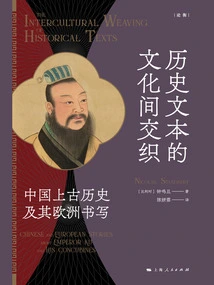
Intercultural Interweaving of Historical Texts: Ancient Chinese History and Its European Writings
History历史文本的文化间交织:中国上古历史及其欧洲书写
W
This book is one of the research results of the famous sinologist Professor Nicolas Standaert on the exchanges of historiography and historical chronology between China and Europe in the seventeenth and eighteenth centuries. It mainly examines the role of a special genre of history books that appeared in the late Ming and early Qing Dynasties - "Gangjian style" historical books - in the cultural exchanges between China and the West, and its impact on Western writing of ancient Chinese history. This book is mainly divided into two parts. The first part discusses the genealogy of Gangjian's historical works in the late Ming and early Qing dynasties and the narratives of Chinese history and chronology by Europeans who came to China, as well as their sources of Chinese historical materials. Based on the comparison of the two, the core point of the book is introduced - the interweaving of cultures in Chinese history writing; the second part focuses on ancient Chinese history. Focusing on the Chinese Emperor Ku and his wives and concubines, we trace Ku's life trajectory and the legend of his wives' "miraculous birth" through different records in different texts, and use this as a main clue to reconstruct the genealogy of historical texts and the differences between different types of historical books, and explore Europeans' interpretation of Chinese historical texts from the perspective of cross-cultural hermeneutics.
This book is one of the research results of the famous sinologist Professor Nicolas Standaert on the exchanges of historiography and historical chronology between China and Europe in the seventeenth and eighteenth centuries. It mainly examines the role of a special genre of history books that appeared in the late Ming and early Qing Dynasties - "Gangjian style" historical books - in the cultural exchanges between China and the West, and its impact on Western writing of ancient Chinese history. This book is mainly divided into two parts. The first part discusses the genealogy of Gangjian's historical works in the late Ming and early Qing dynasties and the narratives of Chinese history and chronology by Europeans who came to China, as well as their sources of Chinese historical materials. Based on the comparison of the two, the core point of the book is introduced - the interweaving of cultures in Chinese history writing; the second part focuses on ancient Chinese history. Focusing on the Chinese Emperor Ku and his wives and concubines, we trace Ku's life trajectory and the legend of his wives' "miraculous birth" through different records in different texts, and use this as a main clue to reconstruct the genealogy of historical texts and the differences between different types of historical books, and explore Europeans' interpretation of Chinese historical texts from the perspective of cross-cultural hermeneutics.
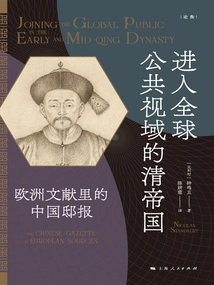
进入全球公共视域的清帝国:欧洲文献里的中国邸报
W
This book is a study by the famous sinologist Nicolas Standaert on the spread of "Di Bao" in Europe during the Qing Dynasty. The sources of existing Dibao documents dating back to 1800 are mainly European-language documents compiled by Europeans living in China in the early Qing Dynasty. After being compiled in China, these documents were sent to Europe in the form of personal letters, reports, and translations, and most of them were included in anthologies about Chinese culture. On the one hand, they record the actual appearance, specifications, format, content and usage of Di Bao in the early Qing Dynasty, and cover information not recorded in Chinese historical materials; on the other hand, they also show how Europeans read Di Bao in China and how they, as global agents, introduced China to Europe, thereby allowing Di Bao to join the global information network. The author selects representative cases from Kang, Yong, and Qian dynasties to analyze this process in detail, confirming that the Enlightenment's important views on China's political system and governance were based on texts directly related to Di Bao, indicating that Di Bao and the ideas it carried entered the global public domain much earlier than we thought.
This book is a study by the famous sinologist Nicolas Standaert on the spread of "Di Bao" in Europe during the Qing Dynasty. The sources of existing Dibao documents dating back to 1800 are mainly European-language documents compiled by Europeans living in China in the early Qing Dynasty. After being compiled in China, these documents were sent to Europe in the form of personal letters, reports, and translations, and most of them were included in anthologies about Chinese culture. On the one hand, they record the actual appearance, specifications, format, content and usage of Di Bao in the early Qing Dynasty, and cover information not recorded in Chinese historical materials; on the other hand, they also show how Europeans read Di Bao in China and how they, as global agents, introduced China to Europe, thereby allowing Di Bao to join the global information network. The author selects representative cases from Kang, Yong, and Qian dynasties to analyze this process in detail, confirming that the Enlightenment's important views on China's political system and governance were based on texts directly related to Di Bao, indicating that Di Bao and the ideas it carried entered the global public domain much earlier than we thought.
中国社会史(全二册)
Lu Simian
"Chinese Social History" is one of Mr. Lu's important historical treatises. The book takes eighteen topics such as agriculture, industry, commerce, property, and coins as its warp and time as its latitude. It provides an in-depth and systematic summary of my country's historically important social and economic systems and political systems. It has always been an important reference monograph for studying and researching ancient Chinese laws and regulations. Most of the various aspects of social culture and systems discussed in it range from ancient society to the Republic of China, that is, the modern era when the author lived and wrote. It has the characteristics of linking ancient and modern times, tracing its origins, and detailing its evolution.
"Chinese Social History" is one of Mr. Lu's important historical treatises. The book takes eighteen topics such as agriculture, industry, commerce, property, and coins as its warp and time as its latitude. It provides an in-depth and systematic summary of my country's historically important social and economic systems and political systems. It has always been an important reference monograph for studying and researching ancient Chinese laws and regulations. Most of the various aspects of social culture and systems discussed in it range from ancient society to the Republic of China, that is, the modern era when the author lived and wrote. It has the characteristics of linking ancient and modern times, tracing its origins, and detailing its evolution.
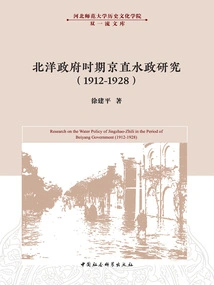
北洋政府时期京直水政研究(1912—1928)
Xu Jianping
This book takes the water resources in Beijing and Zhizhi during the Beiyang Government as an entry point, conducts a detailed review of the landforms, climate, water resources distribution and characteristics of the Beijing and Zhizhi area, and conducts a systematic analysis of the spatiotemporal distribution characteristics, causes and effects of floods and droughts in Beijing and Zhizhi. During the Beiyang Government, the local government in Beijing and directly under the Central Government strengthened the management of water affairs in Beijing and directly through measures such as improving water affairs institutions, cultivating water affairs talents, intensifying water law enforcement, mediating water disputes, and establishing water conservancy committees. Through water conservancy construction such as water conservancy surveying, farmland water conservancy projects, flood control projects, shipping water conservancy projects, and water conservancy hub projects, it promoted the socioeconomic development of the Beijing directly under the Central Government. This book deepens the research on the history of water conservancy in the Beijing-Zhizhi area and has important academic value and practical significance.
This book takes the water resources in Beijing and Zhizhi during the Beiyang Government as an entry point, conducts a detailed review of the landforms, climate, water resources distribution and characteristics of the Beijing and Zhizhi area, and conducts a systematic analysis of the spatiotemporal distribution characteristics, causes and effects of floods and droughts in Beijing and Zhizhi. During the Beiyang Government, the local government in Beijing and directly under the Central Government strengthened the management of water affairs in Beijing and directly through measures such as improving water affairs institutions, cultivating water affairs talents, intensifying water law enforcement, mediating water disputes, and establishing water conservancy committees. Through water conservancy construction such as water conservancy surveying, farmland water conservancy projects, flood control projects, shipping water conservancy projects, and water conservancy hub projects, it promoted the socioeconomic development of the Beijing directly under the Central Government. This book deepens the research on the history of water conservancy in the Beijing-Zhizhi area and has important academic value and practical significance.
汉代农业社会诸问题研究
Huang Jinyan
Agriculture, farmers and rural areas in the Han Dynasty are traditional topics in Chinese historical research. For a long time, academic circles have done a lot of academic research on agricultural policies, land systems, peasant uprisings, marriage and family, clans and patriarchal laws in the Han Dynasty. However, at the same time, there are still many issues worthy of in-depth discussion. This book focuses on various issues in the agricultural society of the Han Dynasty. In terms of agriculture, it focuses on discussing the time and implementation of the national agrarian policy; in terms of farmers, it mainly discusses issues such as the composition of farmers and their production and operation characteristics, farmers' rights and burdens, and the economic income and expenditure status of self-cultivators; in terms of rural areas, it focuses on issues such as rural settlements, market trade, private loans, and private poverty alleviation and mutual assistance in the Han Dynasty.
Agriculture, farmers and rural areas in the Han Dynasty are traditional topics in Chinese historical research. For a long time, academic circles have done a lot of academic research on agricultural policies, land systems, peasant uprisings, marriage and family, clans and patriarchal laws in the Han Dynasty. However, at the same time, there are still many issues worthy of in-depth discussion. This book focuses on various issues in the agricultural society of the Han Dynasty. In terms of agriculture, it focuses on discussing the time and implementation of the national agrarian policy; in terms of farmers, it mainly discusses issues such as the composition of farmers and their production and operation characteristics, farmers' rights and burdens, and the economic income and expenditure status of self-cultivators; in terms of rural areas, it focuses on issues such as rural settlements, market trade, private loans, and private poverty alleviation and mutual assistance in the Han Dynasty.
简牍文书与汉代西北边政
Editor-in-chief Li Yingchun
The Han Dynasty bamboo slips in the Northwest are dominated by bamboo slips. Documents, administrative systems, and frontier affairs operations have been issues of long-term concern in the bamboo slips discipline of Northwest Normal University, and a large number of excellent treatises have emerged. This book contains 27 bamboo slip studies papers written by teachers and students of Northwest Normal University since 1963 and related to the themes of "documents" and "border affairs". It consists of four parts: document research, slip research, Han Dynasty border society research, and Han Dynasty Hexi garrison research. Among them are many famous works that are difficult to find nowadays, such as Jin Shaoying's "Function on Han Bamboo Bamboo Bamboo Slips". These articles reflect the continuous thinking of the slip scholars of Northwest Normal University on related topics and reflect their academic inheritance.
The Han Dynasty bamboo slips in the Northwest are dominated by bamboo slips. Documents, administrative systems, and frontier affairs operations have been issues of long-term concern in the bamboo slips discipline of Northwest Normal University, and a large number of excellent treatises have emerged. This book contains 27 bamboo slip studies papers written by teachers and students of Northwest Normal University since 1963 and related to the themes of "documents" and "border affairs". It consists of four parts: document research, slip research, Han Dynasty border society research, and Han Dynasty Hexi garrison research. Among them are many famous works that are difficult to find nowadays, such as Jin Shaoying's "Function on Han Bamboo Bamboo Bamboo Slips". These articles reflect the continuous thinking of the slip scholars of Northwest Normal University on related topics and reflect their academic inheritance.
宋史研究论文集(2022)
Editor-in-chief: Li Huarui, Zou Jinliang, Chen Yunfei
"Song History Research Papers (2022)" is a collection of papers from the "'History of the Two Song Dynasties and Wang Anshi' Academic Seminar and the 19th Annual Conference of the Chinese Song History Research Association". It includes the conference's opening speech, the conference's theme report, the new president's annual conference speech, closing speech and 23 academic papers. These related thematic reports, academic papers, etc., To a certain extent, reflect the current research trends and new academic research perspectives on the history of Song, Liao, Jin, and even the history of the Five Dynasties. They have good academic value and significance for further promoting the expansion of the research field and deepening the research content of the history of the Song, Liao, Jin, and even the history of the Five Dynasties.
"Song History Research Papers (2022)" is a collection of papers from the "'History of the Two Song Dynasties and Wang Anshi' Academic Seminar and the 19th Annual Conference of the Chinese Song History Research Association". It includes the conference's opening speech, the conference's theme report, the new president's annual conference speech, closing speech and 23 academic papers. These related thematic reports, academic papers, etc., To a certain extent, reflect the current research trends and new academic research perspectives on the history of Song, Liao, Jin, and even the history of the Five Dynasties. They have good academic value and significance for further promoting the expansion of the research field and deepening the research content of the history of the Song, Liao, Jin, and even the history of the Five Dynasties.
Research on the Mentality and Creation of Fujian Remaining Scholars in the Early Qing Dynasty
History清初福建遗民文人心态及其创作研究
Zhang Xiaoqin
This book uses the synchronic diversified mentality characteristics and the diachronic mentality evolution of the Fujian survivors and literati in the early Qing Dynasty as clues to construct a dual network structure of the survivor groups. Focusing on the writings of the survivors and scholars, focusing on the cultural qualities of the survivors such as loyalty, filial piety, benevolence, righteousness, patriotism and bravery, we conduct research and thinking in different dimensions on the integrity of the survivors and feelings of family and country under the historical memory and identity awareness of this group, and explore the spread significance of the discrete writings of the survivors during the Yi Dynasty. This book will help further expand the research perspective on survivor literature, promote the modernization of the cultural thoughts and literary production value of survivors, and promote the cultural exchange, integration and development of Fujian and Taiwan.
This book uses the synchronic diversified mentality characteristics and the diachronic mentality evolution of the Fujian survivors and literati in the early Qing Dynasty as clues to construct a dual network structure of the survivor groups. Focusing on the writings of the survivors and scholars, focusing on the cultural qualities of the survivors such as loyalty, filial piety, benevolence, righteousness, patriotism and bravery, we conduct research and thinking in different dimensions on the integrity of the survivors and feelings of family and country under the historical memory and identity awareness of this group, and explore the spread significance of the discrete writings of the survivors during the Yi Dynasty. This book will help further expand the research perspective on survivor literature, promote the modernization of the cultural thoughts and literary production value of survivors, and promote the cultural exchange, integration and development of Fujian and Taiwan.
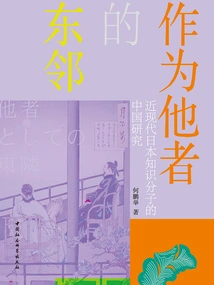
作为他者的东邻:近现代日本知识分子的中国研究
He Pengju
This book focuses on the observation and research of contemporary Japanese intellectuals on contemporary Chinese issues, sorting out and analyzing how those observers who are others understand, analyze, and evaluate China's historical changes. This book selects Nakae Zhaomin, Ariga Nagao, Naito Konan, Nakae Chouyoshi, Tachibana Po, Takeuchi Yoshi, Mizoguchi Yuzo, etc., To critically analyze the thoughts of typical figures and examine their China research around theoretical topics such as political truth and excellent political system, inheritance of civilization and nation-state construction, transformation of traditional society and modern transformation of traditional ideas, revolution and modernity, particularity and universality. This book helps to improve the knowledge system in the academic field of China studies of modern Japanese intellectuals, and also helps Japanese academic circles reflect on the biases and deficiencies in their studies of modern China.
This book focuses on the observation and research of contemporary Japanese intellectuals on contemporary Chinese issues, sorting out and analyzing how those observers who are others understand, analyze, and evaluate China's historical changes. This book selects Nakae Zhaomin, Ariga Nagao, Naito Konan, Nakae Chouyoshi, Tachibana Po, Takeuchi Yoshi, Mizoguchi Yuzo, etc., To critically analyze the thoughts of typical figures and examine their China research around theoretical topics such as political truth and excellent political system, inheritance of civilization and nation-state construction, transformation of traditional society and modern transformation of traditional ideas, revolution and modernity, particularity and universality. This book helps to improve the knowledge system in the academic field of China studies of modern Japanese intellectuals, and also helps Japanese academic circles reflect on the biases and deficiencies in their studies of modern China.
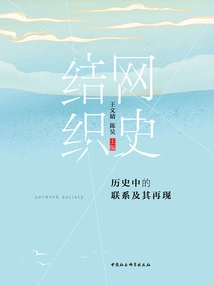
结网织史:历史中的联系及其再现
Editor-in-chief Wang Wenjing Chen Hao
In this era, network metaphors are increasingly important. The information age we live in has been called a network society. In the space we live in, the Internet is everywhere. These networks vary widely, from the biological webs of hyphae connecting fungi, to railway networks, to the invisible electromagnetic binary networks with which modern humans communicate. In contemporary society, the significance of the Internet has broken through the boundaries of academia. It became a verb, and to network became a core concept in contemporary professional and private interpersonal interactions. Various social media based on this concept have greatly changed the lives of the public in the past 30 years. This book is a collection of the results of the third conference in the "Writing History: Reflections in Practice" series of conferences held in 2017, "Weaving History - Connections and Representations in History." It shows how researchers in history and other humanities and social sciences pursue the ancient and novel metaphor of the network and turn it into a way of telling the past and the current world.
In this era, network metaphors are increasingly important. The information age we live in has been called a network society. In the space we live in, the Internet is everywhere. These networks vary widely, from the biological webs of hyphae connecting fungi, to railway networks, to the invisible electromagnetic binary networks with which modern humans communicate. In contemporary society, the significance of the Internet has broken through the boundaries of academia. It became a verb, and to network became a core concept in contemporary professional and private interpersonal interactions. Various social media based on this concept have greatly changed the lives of the public in the past 30 years. This book is a collection of the results of the third conference in the "Writing History: Reflections in Practice" series of conferences held in 2017, "Weaving History - Connections and Representations in History." It shows how researchers in history and other humanities and social sciences pursue the ancient and novel metaphor of the network and turn it into a way of telling the past and the current world.
言不尽异:差异与当下历史写作
Editor-in-chief Chen Hao
Differences are ubiquitous in current historical research. Differences diversify our research objects and themes. Differences are changing our questioning methods. More importantly, the connection between differences and identity makes us have a more complex relationship with the research objects. This book is a collection of the results of the discussion on "Difference and Current Historical Writing", the second of the series of conferences "Writing History: Reflections in Practice" held in 2016. It shows the possibility of current historical research and also shows that differences emerge at different stages and levels of historical writing. Asking about difference is also asking, in historical writing, what is its antonym, and how do the entanglements of meaning associated with it emerge? The semantic changes of difference are caused by the accumulation of academic history and have penetrated into the daily practice of historians. From encountering "historical materials" to searching for explanations, and even encountering research results with readers, every step is closely related to difference.
Differences are ubiquitous in current historical research. Differences diversify our research objects and themes. Differences are changing our questioning methods. More importantly, the connection between differences and identity makes us have a more complex relationship with the research objects. This book is a collection of the results of the discussion on "Difference and Current Historical Writing", the second of the series of conferences "Writing History: Reflections in Practice" held in 2016. It shows the possibility of current historical research and also shows that differences emerge at different stages and levels of historical writing. Asking about difference is also asking, in historical writing, what is its antonym, and how do the entanglements of meaning associated with it emerge? The semantic changes of difference are caused by the accumulation of academic history and have penetrated into the daily practice of historians. From encountering "historical materials" to searching for explanations, and even encountering research results with readers, every step is closely related to difference.
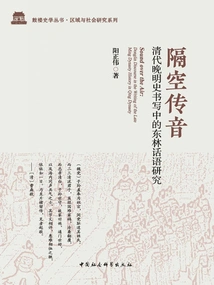
隔空传音:清代晚明史书写中的东林话语研究
Yang Zhengwei
In the minds of the world, the Donglin Party members mainly have a positive image of loyalty, uprightness, and majesty. Later generations generally have sympathy and admiration for them. This image of Donglin has its own process of formation, shaping, acceptance, dissemination and solidification. The late Ming Dynasty of Donglin's activities was naturally an important stage in this process. The general acceptance and dissemination of this image by officials and people in the Qing Dynasty not only inherited the existing tone of the late Ming Dynasty, but also inspired modern times. It influenced the modern and contemporary comments on Donglin, non-Donglin, and party disputes in the late Ming Dynasty. It is still in the ascendant today. The first part of this book mainly examines the many performances of Donglin people and their supporters in shaping and maintaining the image of Donglin in the late Ming Dynasty. The second part focuses on the writing situation and reasons of Donglin in the Qing revision of "History of the Ming Dynasty". "History of the Ming Dynasty" generally establishes a good biography of Dong Lin, and the characters who are opposed to Dong Lin are included in the "Biography of the Eunuch" and "The Biography of the Traitor", which represents the attitude towards the two parties and their fighting history in the late Ming Dynasty, and also greatly affected later generations' judgment on this issue. However, his acceptance and dissemination of Donglin's words were selective. On the one hand, he established a good reputation for Donglin in the mainstream and praised the noble character and loyal actions of some people in Donglin; on the other hand, there were often so-called "cadences" between the lines, criticizing Donglin's lectures and party-building behavior. This was mainly due to the fact that the Qing Dynasty made flexible use of the historical resource of Donglin based on its actual needs.
In the minds of the world, the Donglin Party members mainly have a positive image of loyalty, uprightness, and majesty. Later generations generally have sympathy and admiration for them. This image of Donglin has its own process of formation, shaping, acceptance, dissemination and solidification. The late Ming Dynasty of Donglin's activities was naturally an important stage in this process. The general acceptance and dissemination of this image by officials and people in the Qing Dynasty not only inherited the existing tone of the late Ming Dynasty, but also inspired modern times. It influenced the modern and contemporary comments on Donglin, non-Donglin, and party disputes in the late Ming Dynasty. It is still in the ascendant today. The first part of this book mainly examines the many performances of Donglin people and their supporters in shaping and maintaining the image of Donglin in the late Ming Dynasty. The second part focuses on the writing situation and reasons of Donglin in the Qing revision of "History of the Ming Dynasty". "History of the Ming Dynasty" generally establishes a good biography of Dong Lin, and the characters who are opposed to Dong Lin are included in the "Biography of the Eunuch" and "The Biography of the Traitor", which represents the attitude towards the two parties and their fighting history in the late Ming Dynasty, and also greatly affected later generations' judgment on this issue. However, his acceptance and dissemination of Donglin's words were selective. On the one hand, he established a good reputation for Donglin in the mainstream and praised the noble character and loyal actions of some people in Donglin; on the other hand, there were often so-called "cadences" between the lines, criticizing Donglin's lectures and party-building behavior. This was mainly due to the fact that the Qing Dynasty made flexible use of the historical resource of Donglin based on its actual needs.
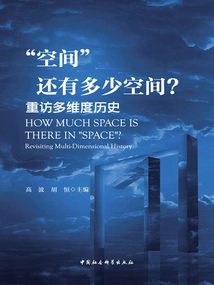
“空间”还有多少空间?:重访多维度历史
Gao Bo Editor-in-chief Hu Heng
"Space" is one of the most basic categories in modern humanities, and has always been subject to in-depth research in various professional fields. Titled "How Much Space Is There for 'Space'?", This book invites more than ten young scholars currently active in the fields of environmental history, urban history, anthropology, art history, archaeology, political history, historical geography, etc. To write articles to present the diversity of current "space" research and explore the possibility of echoes, interactions, and cooperation between various fields. According to the problem awareness and research direction, this book is divided into five parts, namely "the mutual shaping of settlement, nature and culture", "spatial presentation in images", "painted land divisions and dynastic governance", "information flow, discourse expression and power space" and "multiple structures of the burial domain". What the editors and authors hope to discuss with readers is not only the space of "space" research, but also the space of humanities itself in the modern world. Based on the openness of this topic, the division of the above five parts and even the order within each part are variable during reading. Readers are invited to explore freely according to their interests.
"Space" is one of the most basic categories in modern humanities, and has always been subject to in-depth research in various professional fields. Titled "How Much Space Is There for 'Space'?", This book invites more than ten young scholars currently active in the fields of environmental history, urban history, anthropology, art history, archaeology, political history, historical geography, etc. To write articles to present the diversity of current "space" research and explore the possibility of echoes, interactions, and cooperation between various fields. According to the problem awareness and research direction, this book is divided into five parts, namely "the mutual shaping of settlement, nature and culture", "spatial presentation in images", "painted land divisions and dynastic governance", "information flow, discourse expression and power space" and "multiple structures of the burial domain". What the editors and authors hope to discuss with readers is not only the space of "space" research, but also the space of humanities itself in the modern world. Based on the openness of this topic, the division of the above five parts and even the order within each part are variable during reading. Readers are invited to explore freely according to their interests.
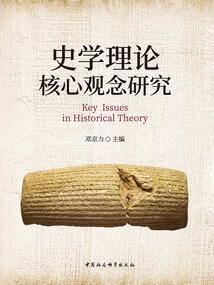
史学理论核心观念研究
Editor-in-chief Deng Jingli
This book aims to reflect the main research results of the core concepts of the discipline in the field of domestic history theory since the new century, to form a more comprehensive understanding and grasp of the research situation in this field, and to make systematic and in-depth thinking on some of the major historical theoretical issues. In this way, we can promote the creative development of current Chinese historical theory and stimulate the disciplinary ability to conduct international academic dialogue. This book goes from an overall explanation of the core concepts of historical theory to an analysis of individual cases based on countries, historians, and theorists. These contents not only present the breakthrough development of the theoretical discipline construction of history in the 21st century as a whole, but also effectively and concretely explain the foundation of the construction of the theoretical discipline system, academic system and discourse system of Chinese history theory.
This book aims to reflect the main research results of the core concepts of the discipline in the field of domestic history theory since the new century, to form a more comprehensive understanding and grasp of the research situation in this field, and to make systematic and in-depth thinking on some of the major historical theoretical issues. In this way, we can promote the creative development of current Chinese historical theory and stimulate the disciplinary ability to conduct international academic dialogue. This book goes from an overall explanation of the core concepts of historical theory to an analysis of individual cases based on countries, historians, and theorists. These contents not only present the breakthrough development of the theoretical discipline construction of history in the 21st century as a whole, but also effectively and concretely explain the foundation of the construction of the theoretical discipline system, academic system and discourse system of Chinese history theory.
王锺翰史学研究
Li Chunbao
Mr. Wang Zhonghan (1913-2007) is a famous expert on Qing and Manchu history in modern China. This book provides an in-depth analysis and study of Wang Zhonghan's academic path and historical achievements, revealing that his historical style is both rooted in traditional Chinese historiography and influenced by modern historical ideas and methods; it has both the characteristics of the times and his personal characteristics. This book is not only an individual study of Wang Zhonghan, but also a further exploration of the context and patterns of the development of modern Chinese historiography through individual cases.
Mr. Wang Zhonghan (1913-2007) is a famous expert on Qing and Manchu history in modern China. This book provides an in-depth analysis and study of Wang Zhonghan's academic path and historical achievements, revealing that his historical style is both rooted in traditional Chinese historiography and influenced by modern historical ideas and methods; it has both the characteristics of the times and his personal characteristics. This book is not only an individual study of Wang Zhonghan, but also a further exploration of the context and patterns of the development of modern Chinese historiography through individual cases.
《史记》讲义
Liu Guomin
The manuscript selects and interprets twenty articles from "Historical Records". Centered on the text of "Historical Records". Careful reading of the text is the core content of the manuscript, ensuring the origin, reliability, and authenticity of the stories we tell about historical figures. Only through careful reading of the text can readers travel through historical time and space and truly experience, feel and grasp the lives of historical figures. On the one hand, it attaches great importance to the explanation of words, sentences and the system of names and objects, and strives to be concise, accurate and clear; on the other hand, it further explores the moral connotation of the text and strives to better combine the methods of literature research and the method of moral research.
The manuscript selects and interprets twenty articles from "Historical Records". Centered on the text of "Historical Records". Careful reading of the text is the core content of the manuscript, ensuring the origin, reliability, and authenticity of the stories we tell about historical figures. Only through careful reading of the text can readers travel through historical time and space and truly experience, feel and grasp the lives of historical figures. On the one hand, it attaches great importance to the explanation of words, sentences and the system of names and objects, and strives to be concise, accurate and clear; on the other hand, it further explores the moral connotation of the text and strives to better combine the methods of literature research and the method of moral research.
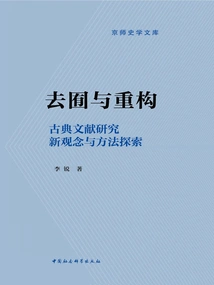
去囿与重构:古典文献研究新观念与方法探索
Li Rui
This book focuses on some basic concepts and methods involved in studying the history of academic thought on classic documents and pre-Qin history, with both reflection and exploration. It advocates using hundreds of schools to examine schools, using scholars to examine scholars during their official careers, and using "main parts" and "thematic ideas" to examine the formation of ancient books. At the same time, it proposes the theory of homology, origin of family, theory of public and private meaning, diachronic research method, rules of double evidence method, rhyming method, etc. Some of them are not the author's invention, but are just expanded discussions and special names on the basis of previous sages and philosophers to highlight their importance and promote them, such as the investigation of the scholars' travels during their official career, the theory of the same text and the same origin, etc.
This book focuses on some basic concepts and methods involved in studying the history of academic thought on classic documents and pre-Qin history, with both reflection and exploration. It advocates using hundreds of schools to examine schools, using scholars to examine scholars during their official careers, and using "main parts" and "thematic ideas" to examine the formation of ancient books. At the same time, it proposes the theory of homology, origin of family, theory of public and private meaning, diachronic research method, rules of double evidence method, rhyming method, etc. Some of them are not the author's invention, but are just expanded discussions and special names on the basis of previous sages and philosophers to highlight their importance and promote them, such as the investigation of the scholars' travels during their official career, the theory of the same text and the same origin, etc.
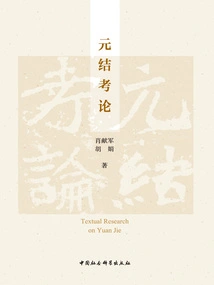
Essay on Yuan Jie
History元结考论
Xiao Xianjun Hu Juan
This book conducts relevant research on Yuan Jie's life, deeds and works, supplements Yuan Jie's life and deeds, and compiles some of his lost works; it systematically discusses Yuan Jie's thoughts on comics, clean government, filial piety, and governance of barbarians, and reveals the complexity of Yuan Jie's thoughts. Complexity and profundity; at the same time, the literary thoughts and literary achievements of Yuan Jie were studied, and the breakthroughs and innovations of Yuan Jie in the preface and landscape inscriptions were pointed out; finally, the creative background, theme, dissemination and acceptance of "Ode to the Zhongxing of the Tang Dynasty" were discussed. This book conducts a comprehensive study of Yuan Jie's life, thoughts, and literary creation, trying to reveal Yuan Jie's many achievements.
This book conducts relevant research on Yuan Jie's life, deeds and works, supplements Yuan Jie's life and deeds, and compiles some of his lost works; it systematically discusses Yuan Jie's thoughts on comics, clean government, filial piety, and governance of barbarians, and reveals the complexity of Yuan Jie's thoughts. Complexity and profundity; at the same time, the literary thoughts and literary achievements of Yuan Jie were studied, and the breakthroughs and innovations of Yuan Jie in the preface and landscape inscriptions were pointed out; finally, the creative background, theme, dissemination and acceptance of "Ode to the Zhongxing of the Tang Dynasty" were discussed. This book conducts a comprehensive study of Yuan Jie's life, thoughts, and literary creation, trying to reveal Yuan Jie's many achievements.
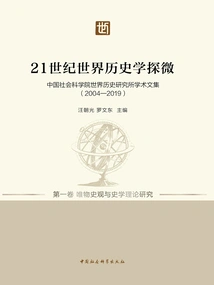
21世纪世界历史学探微:中国社会科学院世界历史研究所学术文集(2004—2019·第一卷)
Editor-in-chief Wang Chaoguang Luo Wendong
The manuscript is a collection of essays written by teachers who worked at the Institute of World History from 2004 to 2019. The papers have been published. The manuscript is divided into five volumes, namely "Study of Ancient Medieval Times", "Study of Russian and Central Asia", "Study of European and American History", "Study of Asia, Africa and Latin America" and "Study of Historical Theory". The manuscript mainly includes the following articles: Yi Jianping's "Re-understanding of the Definition of Country", Liu Jian's "Ritual Characteristics and Functions of Hittite Kilam Festival Activities", Lu Houliang's "Ephibian Culture in the Classical Period of Athens", Zhu Hongjun's "Citizens' Assembly in Ancient Sparta", Wang Chaohua's "Analysis of the Legal Status of Servants in Medieval England", etc.
The manuscript is a collection of essays written by teachers who worked at the Institute of World History from 2004 to 2019. The papers have been published. The manuscript is divided into five volumes, namely "Study of Ancient Medieval Times", "Study of Russian and Central Asia", "Study of European and American History", "Study of Asia, Africa and Latin America" and "Study of Historical Theory". The manuscript mainly includes the following articles: Yi Jianping's "Re-understanding of the Definition of Country", Liu Jian's "Ritual Characteristics and Functions of Hittite Kilam Festival Activities", Lu Houliang's "Ephibian Culture in the Classical Period of Athens", Zhu Hongjun's "Citizens' Assembly in Ancient Sparta", Wang Chaohua's "Analysis of the Legal Status of Servants in Medieval England", etc.
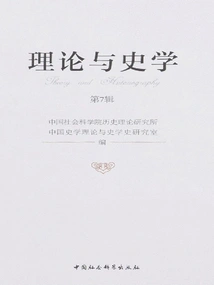
理论与史学(第7辑)
Editor: Chinese Historiography Theory And Historiography Research Office, Institute Of Historical Theory, Chinese Academy Of Social Sciences
This book adheres to Marxist historical materialism, seeks truth from facts, integrates theory with practice, and implements the policy of "letting a hundred flowers bloom and a hundred schools of thought contend". It pays attention to historical theory, focuses on major academic issues in Chinese history, and advocates academic debate in order to prosper and promote the healthy development of historical science. This book mainly publishes representative academic papers in the fields of historical theory, Chinese historical research, and historical philology.
This book adheres to Marxist historical materialism, seeks truth from facts, integrates theory with practice, and implements the policy of "letting a hundred flowers bloom and a hundred schools of thought contend". It pays attention to historical theory, focuses on major academic issues in Chinese history, and advocates academic debate in order to prosper and promote the healthy development of historical science. This book mainly publishes representative academic papers in the fields of historical theory, Chinese historical research, and historical philology.
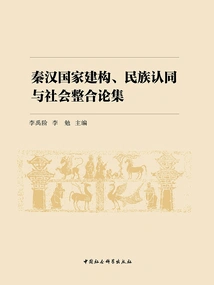
秦汉国家建构、民族认同与社会整合论集
Li Yujie Editor-in-chief Li Mian
The Qin and Han dynasties were an era of earth-shaking changes in ancient China since the Xia, Shang and Zhou dynasties. The establishment of the unified state of Qin and Han was a new starting point for the formation of China's unified dynastic state and the Han nation. It was a pivotal period in the transformation from the patriarchal feudal state government and the early Chinese nation marked by "Zhuxia" to a unified monarchy and centralized state and a unified Han nation. It has epoch-making milestone significance. However, the process of state construction, national identity, and social integration during the Qin and Han Dynasties did not develop in a linear manner, but experienced a tortuous and reciprocating process. This book contains a total of 18 papers, starting from the state construction, social integration, and the interactive relationship between the state and society during the Qin and Han Dynasties, and studying the Qin and Han systems, Qin and Han national consciousness, Qin and Han grassroots social integration, and the development and evolution of various classes in the Qin and Han Dynasties. This book has important academic value for in-depth understanding of the unified relationship and dynamic characteristics of the country, nation, and society in ancient China.
The Qin and Han dynasties were an era of earth-shaking changes in ancient China since the Xia, Shang and Zhou dynasties. The establishment of the unified state of Qin and Han was a new starting point for the formation of China's unified dynastic state and the Han nation. It was a pivotal period in the transformation from the patriarchal feudal state government and the early Chinese nation marked by "Zhuxia" to a unified monarchy and centralized state and a unified Han nation. It has epoch-making milestone significance. However, the process of state construction, national identity, and social integration during the Qin and Han Dynasties did not develop in a linear manner, but experienced a tortuous and reciprocating process. This book contains a total of 18 papers, starting from the state construction, social integration, and the interactive relationship between the state and society during the Qin and Han Dynasties, and studying the Qin and Han systems, Qin and Han national consciousness, Qin and Han grassroots social integration, and the development and evolution of various classes in the Qin and Han Dynasties. This book has important academic value for in-depth understanding of the unified relationship and dynamic characteristics of the country, nation, and society in ancient China.
新时代历史理论研究前沿丛书(第四卷)
Editor-in-chief Xia Chuntao
This series is a collection of the Institute of Historical Theory of the Chinese Academy of Social Sciences. It is composed of important articles selected from the institute's journal "Historical Theoretical Research". It consists of five volumes, namely "Historical Materialism and Historical Research", "Marxist Historiography and Historians", "Chinese Historical Theory and Historiography", "Foreign Historical Theory and Historiography" and "New Issues and Trends in Historical Theoretical Research". Under the guidance of Marxist historical materialism, this collection has important academic and practical significance in discovering and summarizing the theoretical heritage in the Chinese historical tradition, introducing and summarizing the development experience and contemporary trends of Chinese historical theory abroad, promoting the exchange of historical theories at home and abroad in China, cultivating historical theoretical talents, and promoting the construction of a historical theoretical system suitable for China's conditions.
This series is a collection of the Institute of Historical Theory of the Chinese Academy of Social Sciences. It is composed of important articles selected from the institute's journal "Historical Theoretical Research". It consists of five volumes, namely "Historical Materialism and Historical Research", "Marxist Historiography and Historians", "Chinese Historical Theory and Historiography", "Foreign Historical Theory and Historiography" and "New Issues and Trends in Historical Theoretical Research". Under the guidance of Marxist historical materialism, this collection has important academic and practical significance in discovering and summarizing the theoretical heritage in the Chinese historical tradition, introducing and summarizing the development experience and contemporary trends of Chinese historical theory abroad, promoting the exchange of historical theories at home and abroad in China, cultivating historical theoretical talents, and promoting the construction of a historical theoretical system suitable for China's conditions.
国民政府全国粮食管理局研究
Wang Ronghua Zheng Wanghui
This book takes the National Grain Administration, a central-level specialized grain administration agency first established by the National Government from August 1940 to July 1941, as the research object. Focusing on the important transitional node from "freedom" to "control" of food during wartime, this book conducts a comprehensive investigation of the establishment and development, personnel changes, grain policy implementation, interactive games, and role play of the National Grain Administration. This book points out that the establishment of the National Grain Management Bureau was not only an "emergency" means to deal with the food crisis in an increasingly tense war situation, a useful exploration to support the Anti-Japanese War, but also played a "buffering" role in integrating food management into the wartime economic system. However, the National Grain Management Bureau failed to achieve "immediate results". In addition, factional struggles within the Kuomintang and the food crisis further intensified. It was abolished in less than a year and replaced by the Ministry of Grain. Certain policies of the National Grain Management Bureau laid the foundation for the Ministry of Grain to control grain.
This book takes the National Grain Administration, a central-level specialized grain administration agency first established by the National Government from August 1940 to July 1941, as the research object. Focusing on the important transitional node from "freedom" to "control" of food during wartime, this book conducts a comprehensive investigation of the establishment and development, personnel changes, grain policy implementation, interactive games, and role play of the National Grain Administration. This book points out that the establishment of the National Grain Management Bureau was not only an "emergency" means to deal with the food crisis in an increasingly tense war situation, a useful exploration to support the Anti-Japanese War, but also played a "buffering" role in integrating food management into the wartime economic system. However, the National Grain Management Bureau failed to achieve "immediate results". In addition, factional struggles within the Kuomintang and the food crisis further intensified. It was abolished in less than a year and replaced by the Ministry of Grain. Certain policies of the National Grain Management Bureau laid the foundation for the Ministry of Grain to control grain.
费孝通与中国历史社会学
Zhou Dandan Li Ruohui
In recent years, the study of Chinese historical sociology has been in the ascendant. If the construction of Chinese sociological discourse system is the historical mission of contemporary Chinese sociology, the exploration of Chinese historical sociology is the foundation and soul of constructing the Chinese sociological discourse system. The methodology and case studies of Chinese historical sociology, which connect ancient and modern times and forge social reality and deep historical consciousness and structures, will deepen and expand the explanatory power of sociological theory, thereby constructing an explanatory framework and theoretical system rooted in Chinese local society. Based on this, this book strives to comprehensively present Fei Xiaotong's pioneering contributions in Chinese historical sociology, comprehensively introduce Fei Xiaotong's academic contributions in historical sociology, and deeply explore the classic concepts, theoretical systems and research methodologies of historical sociology proposed by Fei Xiaotong. Rediscover the overlooked or underestimated historical aspects and historical perspectives in Fei Xiaotong's thoughts, thereby continuing the academic trend of localization of sociology and starting the journey of Chinese historical sociology.
In recent years, the study of Chinese historical sociology has been in the ascendant. If the construction of Chinese sociological discourse system is the historical mission of contemporary Chinese sociology, the exploration of Chinese historical sociology is the foundation and soul of constructing the Chinese sociological discourse system. The methodology and case studies of Chinese historical sociology, which connect ancient and modern times and forge social reality and deep historical consciousness and structures, will deepen and expand the explanatory power of sociological theory, thereby constructing an explanatory framework and theoretical system rooted in Chinese local society. Based on this, this book strives to comprehensively present Fei Xiaotong's pioneering contributions in Chinese historical sociology, comprehensively introduce Fei Xiaotong's academic contributions in historical sociology, and deeply explore the classic concepts, theoretical systems and research methodologies of historical sociology proposed by Fei Xiaotong. Rediscover the overlooked or underestimated historical aspects and historical perspectives in Fei Xiaotong's thoughts, thereby continuing the academic trend of localization of sociology and starting the journey of Chinese historical sociology.
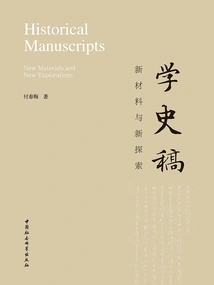
学史稿:新材料与新探索
Fu Chunmei
This book is divided into two parts. The first part is an examination of new materials such as the Song Dynasty documents on the backs of Chinese books collected by Japan's Tenri Library, the Qing Dynasty pamphlet documents collected by Japan's Waseda University Library, and the new issues found in materials such as "Records of a Pilgrimage to the Tang Dynasty to Seek Dharma." The second part is a compilation of newly discovered Binzhou folk documents.
This book is divided into two parts. The first part is an examination of new materials such as the Song Dynasty documents on the backs of Chinese books collected by Japan's Tenri Library, the Qing Dynasty pamphlet documents collected by Japan's Waseda University Library, and the new issues found in materials such as "Records of a Pilgrimage to the Tang Dynasty to Seek Dharma." The second part is a compilation of newly discovered Binzhou folk documents.
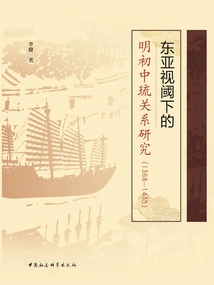
东亚视阈下的明初中琉关系研究(1368—1435)
Li Jian
This book examines the nearly 70-year relationship between China and Ryukyu in the early Ming Dynasty from the overall perspective of the evolution of the East Asian regional order. By searching relevant historical materials and relying on important exchange events such as Fengtianmen Xiaoyu, Yang Zaikong, Li Hao Shima, Liang Min's envoy, Dibaonu migration, Lu Yuan's envoy, Chaishan's crossing to Ryukyu, etc., We analyze the development and evolution of the relationship between the Ming Dynasty and Ryukyu, and also With its inherent connections with the Northern Yuan Dynasty, Goryeo, Korea, Japan, Japanese pirates, etc., We try to construct a three-dimensional, dynamic, and systematic "relationship between China and Ryukyu in the early Ming Dynasty" to highlight the extensive linkage of relations between East Asian countries in the early Ming Dynasty and the complex process of regional order construction.
This book examines the nearly 70-year relationship between China and Ryukyu in the early Ming Dynasty from the overall perspective of the evolution of the East Asian regional order. By searching relevant historical materials and relying on important exchange events such as Fengtianmen Xiaoyu, Yang Zaikong, Li Hao Shima, Liang Min's envoy, Dibaonu migration, Lu Yuan's envoy, Chaishan's crossing to Ryukyu, etc., We analyze the development and evolution of the relationship between the Ming Dynasty and Ryukyu, and also With its inherent connections with the Northern Yuan Dynasty, Goryeo, Korea, Japan, Japanese pirates, etc., We try to construct a three-dimensional, dynamic, and systematic "relationship between China and Ryukyu in the early Ming Dynasty" to highlight the extensive linkage of relations between East Asian countries in the early Ming Dynasty and the complex process of regional order construction.
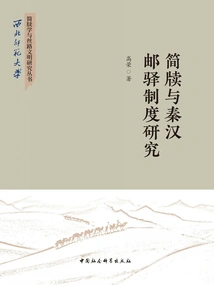
简牍与秦汉邮驿制度研究
Gao Rong
This book contains 24 articles, which mainly include four parts. The first part discusses the origin, evolution, functions and mutual relationships of postal institutions in Qin and Han dynasties based on sorting out academic history; the second part mainly discusses the sending, receiving, delivery and management of official documents in Qin and Han dynasties; the third part is a miscellaneous examination of postal staff, involving The history of county governors, frontier fortresses, prisoners serving in various post agencies, and the Chinese Qiang people; the fourth part examines the migration of Wuwei prefectures and the establishment of Juyan counties in the Han Dynasty. Its content is closely related to the management of post offices, so it is placed at the end of the article as an "Appendix".
This book contains 24 articles, which mainly include four parts. The first part discusses the origin, evolution, functions and mutual relationships of postal institutions in Qin and Han dynasties based on sorting out academic history; the second part mainly discusses the sending, receiving, delivery and management of official documents in Qin and Han dynasties; the third part is a miscellaneous examination of postal staff, involving The history of county governors, frontier fortresses, prisoners serving in various post agencies, and the Chinese Qiang people; the fourth part examines the migration of Wuwei prefectures and the establishment of Juyan counties in the Han Dynasty. Its content is closely related to the management of post offices, so it is placed at the end of the article as an "Appendix".
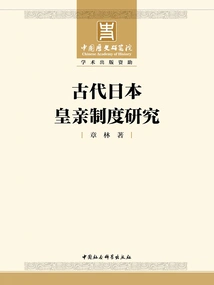
古代日本皇亲制度研究
Zhang Lin
This book conducts a systematic study of the imperial family system in Japan during the historical period from the maturity of royal power in the Asuka period to the end of the ancient emperor system in the Heian period. On the one hand, it comprehensively analyzes the relationship between imperial relatives and the ancient emperor system in different periods vertically and its status and role in ancient political and social life; on the other hand, it systematically examines the imperial succession system, title designation system, official appointment system, fiefdom system, marriage system, surname granting system and Saio system related to imperial relatives horizontally, and explores the relationship between these systems and the ancient emperor system. While examining the development and evolution of the imperial family system in ancient Japan, this book also pays as much attention as possible to the similarities and differences between the imperial family systems in ancient China and Japan.
This book conducts a systematic study of the imperial family system in Japan during the historical period from the maturity of royal power in the Asuka period to the end of the ancient emperor system in the Heian period. On the one hand, it comprehensively analyzes the relationship between imperial relatives and the ancient emperor system in different periods vertically and its status and role in ancient political and social life; on the other hand, it systematically examines the imperial succession system, title designation system, official appointment system, fiefdom system, marriage system, surname granting system and Saio system related to imperial relatives horizontally, and explores the relationship between these systems and the ancient emperor system. While examining the development and evolution of the imperial family system in ancient Japan, this book also pays as much attention as possible to the similarities and differences between the imperial family systems in ancient China and Japan.
王权、法律与神祇:萨珊波斯与古代中国
Zhang Xiaogui
The whole book is divided into two parts. The first part contains ten papers, which examine the political and religious relations, legal documents and Zoroastrian wind gods in Sasanian Persia. At the same time, the Sogdian marriage contract in Mugshan and the legal status of Sogdian women in medieval times were studied. The article also touches on the issue of Nestorianism and Manichaeism, which also originated in Persia, being introduced into China along the Silk Road. The opening chapter commemorates Mr. Cai Hongsheng, as well as the ten book reviews and conference summaries included in the second part. They mainly review several works related to the Silk Road and East-West cultural exchanges, especially the spread of ancient Iranian civilization to the east, in order to illustrate the author's academic connection with the study of Persian civilization and ancient China.
The whole book is divided into two parts. The first part contains ten papers, which examine the political and religious relations, legal documents and Zoroastrian wind gods in Sasanian Persia. At the same time, the Sogdian marriage contract in Mugshan and the legal status of Sogdian women in medieval times were studied. The article also touches on the issue of Nestorianism and Manichaeism, which also originated in Persia, being introduced into China along the Silk Road. The opening chapter commemorates Mr. Cai Hongsheng, as well as the ten book reviews and conference summaries included in the second part. They mainly review several works related to the Silk Road and East-West cultural exchanges, especially the spread of ancient Iranian civilization to the east, in order to illustrate the author's academic connection with the study of Persian civilization and ancient China.
集聚视角下的清代山西城镇研究
Qiao Nan
On the basis of fully absorbing previous research results, based on detailed historical materials, and based on agglomeration economics, this book examines and theoretically analyzes issues such as industrial agglomeration, capital agglomeration, and population agglomeration in Shanxi during the Qing Dynasty, as well as the urban agglomeration ultimately caused by the above agglomeration phenomena. , While enriching the research results of Shanxi towns in the Qing Dynasty, it also conducts an in-depth analysis of the characteristics of the formation of the contemporary Shanxi urban system, which reflects the endogenous characteristics of China's social and economic development at that time, and allows readers to have a more comprehensive understanding of the urban development status of central China in the Qing Dynasty. While providing a new perspective for the study of regional economic history, it also draws lessons from the past and provides reference for contemporary resource-based provinces to take the path of centralized urbanization development and the development of regional industrial clusters in the future.
On the basis of fully absorbing previous research results, based on detailed historical materials, and based on agglomeration economics, this book examines and theoretically analyzes issues such as industrial agglomeration, capital agglomeration, and population agglomeration in Shanxi during the Qing Dynasty, as well as the urban agglomeration ultimately caused by the above agglomeration phenomena. , While enriching the research results of Shanxi towns in the Qing Dynasty, it also conducts an in-depth analysis of the characteristics of the formation of the contemporary Shanxi urban system, which reflects the endogenous characteristics of China's social and economic development at that time, and allows readers to have a more comprehensive understanding of the urban development status of central China in the Qing Dynasty. While providing a new perspective for the study of regional economic history, it also draws lessons from the past and provides reference for contemporary resource-based provinces to take the path of centralized urbanization development and the development of regional industrial clusters in the future.
Sino-japanese Historiography
History中日史学史脞论
Li Jun
This book is an academic treatise on the history of Chinese and Japanese historiography and historical thought from a comparative cultural perspective. The book takes "historical materials", "historians", "historical uses", "historical sayings" and "historiography" as its five major themes. It identifies a number of key points and characteristic topics in the development of Chinese and Japanese historiography, analyzes them one by one, and discusses them together, in order to outline the basic features of the evolution of traditional historiography and the transformation of modern historiography in China and Japan in the context of global historiography.
This book is an academic treatise on the history of Chinese and Japanese historiography and historical thought from a comparative cultural perspective. The book takes "historical materials", "historians", "historical uses", "historical sayings" and "historiography" as its five major themes. It identifies a number of key points and characteristic topics in the development of Chinese and Japanese historiography, analyzes them one by one, and discusses them together, in order to outline the basic features of the evolution of traditional historiography and the transformation of modern historiography in China and Japan in the context of global historiography.
北魏在中华文明连续发展链条中的地位研究
Hookson
The Wei, Jin, Southern and Northern Dynasties were a period of long-term ethnic divisions that followed the unification of the Qin and Han dynasties. The Western Jin Dynasty fell, and the Han nationality was forced to move out of the Yellow River Basin. It was replaced by the rise of many Hu nationality regimes in the Central Plains. Chinese culture faced the danger of interrupting its development. It was the Tuoba tribe who took advantage of the time and established the Northern Wei Empire. They shouldered the historical mission of ending the Sixteen Kingdoms, unifying the Yellow River Basin, and starting a new unification of the Sui and Tang Dynasties, so that Chinese civilization could continue, enrich and develop. The Northern Wei Empire occupied a very important historical position in continuing the continuous development of Chinese civilization. The reason why the Northern Wei Empire was able to complete this historical mission was that it recognized Chinese orthodoxy, boldly carried out Sinicization reforms, bravely absorbed Han culture, and found its own historical position from traditional Chinese culture. This book collects a total of 7 articles, of which 5 were published in various journals and 2 were published for the first time. Although these articles were written and published at different times, they express the theme of the Northern Wei Dynasty's position in the continuous development of Chinese civilization with strict logic and interlocking with each other. Therefore, they were published under the title "Research on the Position of the Northern Wei Dynasty in the Chain of the Continuous Development of Chinese Civilization".
The Wei, Jin, Southern and Northern Dynasties were a period of long-term ethnic divisions that followed the unification of the Qin and Han dynasties. The Western Jin Dynasty fell, and the Han nationality was forced to move out of the Yellow River Basin. It was replaced by the rise of many Hu nationality regimes in the Central Plains. Chinese culture faced the danger of interrupting its development. It was the Tuoba tribe who took advantage of the time and established the Northern Wei Empire. They shouldered the historical mission of ending the Sixteen Kingdoms, unifying the Yellow River Basin, and starting a new unification of the Sui and Tang Dynasties, so that Chinese civilization could continue, enrich and develop. The Northern Wei Empire occupied a very important historical position in continuing the continuous development of Chinese civilization. The reason why the Northern Wei Empire was able to complete this historical mission was that it recognized Chinese orthodoxy, boldly carried out Sinicization reforms, bravely absorbed Han culture, and found its own historical position from traditional Chinese culture. This book collects a total of 7 articles, of which 5 were published in various journals and 2 were published for the first time. Although these articles were written and published at different times, they express the theme of the Northern Wei Dynasty's position in the continuous development of Chinese civilization with strict logic and interlocking with each other. Therefore, they were published under the title "Research on the Position of the Northern Wei Dynasty in the Chain of the Continuous Development of Chinese Civilization".
戎祀之间:唐代军礼研究
Chen Feifei
This book mainly studies the content and implementation of military rituals in the Tang Dynasty. Whether they are military rituals that are included in rituals such as "The Kaiyuan Rites of the Tang Dynasty" or other military rituals that are not recorded, in-depth analysis and research are needed to clarify the dialectical relationship between the ritual content and actual practice, and to provide an in-depth interpretation and explanation of its characteristics and significance. Although the discussion in this book focuses on the military rituals of the Tang Dynasty, the narrative process is not limited to the Tang Dynasty, but extends forward and backward, in order to place it within the context of the evolution and development of military rituals throughout the medieval era, fully display the specific details and historical status of its inheritance and evolution, and provide a comprehensive understanding of the military rituals and military rituals of the Tang Dynasty. The relationship between law, military rituals and military music, the social phenomenon of using soldiers as a salute in the Tang Dynasty, and the mixture of vehicle uniforms, bureaucracy, and other good and bad etiquette in the Tang Dynasty military rituals will be demonstrated in detail to comprehensively understand the implementation scope and characteristics of the Tang Dynasty military rituals, as well as the original social history of the Tang Dynasty that it reflects.
This book mainly studies the content and implementation of military rituals in the Tang Dynasty. Whether they are military rituals that are included in rituals such as "The Kaiyuan Rites of the Tang Dynasty" or other military rituals that are not recorded, in-depth analysis and research are needed to clarify the dialectical relationship between the ritual content and actual practice, and to provide an in-depth interpretation and explanation of its characteristics and significance. Although the discussion in this book focuses on the military rituals of the Tang Dynasty, the narrative process is not limited to the Tang Dynasty, but extends forward and backward, in order to place it within the context of the evolution and development of military rituals throughout the medieval era, fully display the specific details and historical status of its inheritance and evolution, and provide a comprehensive understanding of the military rituals and military rituals of the Tang Dynasty. The relationship between law, military rituals and military music, the social phenomenon of using soldiers as a salute in the Tang Dynasty, and the mixture of vehicle uniforms, bureaucracy, and other good and bad etiquette in the Tang Dynasty military rituals will be demonstrated in detail to comprehensively understand the implementation scope and characteristics of the Tang Dynasty military rituals, as well as the original social history of the Tang Dynasty that it reflects.
阐释生成与历史阐释
Li Hongyan
This book is based on Marx's saying that "philosophers only explain the world in different ways, and the problem is to change the world." It combines philosophical hermeneutics to examine the theoretical relationship between thinking forms and interpretive behavior, conducts semantic analysis of the basic concepts of hermeneutics, examines the occurrence and initial shape of human interpretive behavior, leads to the generation mechanism and original form of human thought, and extracts the leaping characteristics of civilization development. Reveal the foundational role of perceptual intuition and "seeing" behavior in early human thought, describe the basic process from the emergence of language to the emergence of text, reproduce the conceptual facts of mankind's first great separation of politics and religion and the first great renewal of the relationship between man and God, explore the ideographic nature and cognitive significance of Chinese characters, examine the original form of history and the early gradual relationship between quality and text, and indicate that recording events in poetry is a common practice in the early history of the world. The whole book focuses on examining the generation of interpretive behavior. Through comparison between China and the West, it cites Chinese and Western classics in multi-disciplinary integration, highlighting the unity and commonality of human concepts. The author has a high position, a broad vision, a combination of history and theory, and in-depth thinking. He strives to achieve an organic combination of ideological and academic aspects. It has reference value for historical theory, history of history, history of thought, hermeneutics and other related research.
This book is based on Marx's saying that "philosophers only explain the world in different ways, and the problem is to change the world." It combines philosophical hermeneutics to examine the theoretical relationship between thinking forms and interpretive behavior, conducts semantic analysis of the basic concepts of hermeneutics, examines the occurrence and initial shape of human interpretive behavior, leads to the generation mechanism and original form of human thought, and extracts the leaping characteristics of civilization development. Reveal the foundational role of perceptual intuition and "seeing" behavior in early human thought, describe the basic process from the emergence of language to the emergence of text, reproduce the conceptual facts of mankind's first great separation of politics and religion and the first great renewal of the relationship between man and God, explore the ideographic nature and cognitive significance of Chinese characters, examine the original form of history and the early gradual relationship between quality and text, and indicate that recording events in poetry is a common practice in the early history of the world. The whole book focuses on examining the generation of interpretive behavior. Through comparison between China and the West, it cites Chinese and Western classics in multi-disciplinary integration, highlighting the unity and commonality of human concepts. The author has a high position, a broad vision, a combination of history and theory, and in-depth thinking. He strives to achieve an organic combination of ideological and academic aspects. It has reference value for historical theory, history of history, history of thought, hermeneutics and other related research.
湖南华洋筹赈会辛酉旱赈湘西研究
Cao Jingwen
In the early years of the Republic of China, drought and famine were severe in Xinyou, Hunan, especially in the west of Xiangxi. The Hunan Huayang Relief Association, which was in charge of the relief work, decided to wait for the disaster-stricken counties in western Hunan based on the situation of smoke and seedlings. The officials and gentry in western Hunan made a lot of efforts to obtain funds for the Xinyou Relief Road, and the first construction of the Tanbao section frustrated the hope of relief. The West Road, along with the Central and South Roads who shared the same feelings of injustice, continued to question the Board of Directors while controversies continued on the road boundary around relief issues such as disaster assessment standards, work relief objectives and goals, etc. The overall deep poverty in Xiangxi is actually caused by the long-term corruption of the region by military, banditry, and drug abuse and other social anomies, and cannot be cured by the Huayang Society during the warlord separatist period. Only by relying on the correct guidance of the "targeted poverty alleviation" strategy, the state's strong support for local economy, culture and education and other undertakings, and the burst of the people's endogenous motivation to get rid of poverty, has the overall deep poverty in Western Hunan been completely eliminated today.
In the early years of the Republic of China, drought and famine were severe in Xinyou, Hunan, especially in the west of Xiangxi. The Hunan Huayang Relief Association, which was in charge of the relief work, decided to wait for the disaster-stricken counties in western Hunan based on the situation of smoke and seedlings. The officials and gentry in western Hunan made a lot of efforts to obtain funds for the Xinyou Relief Road, and the first construction of the Tanbao section frustrated the hope of relief. The West Road, along with the Central and South Roads who shared the same feelings of injustice, continued to question the Board of Directors while controversies continued on the road boundary around relief issues such as disaster assessment standards, work relief objectives and goals, etc. The overall deep poverty in Xiangxi is actually caused by the long-term corruption of the region by military, banditry, and drug abuse and other social anomies, and cannot be cured by the Huayang Society during the warlord separatist period. Only by relying on the correct guidance of the "targeted poverty alleviation" strategy, the state's strong support for local economy, culture and education and other undertakings, and the burst of the people's endogenous motivation to get rid of poverty, has the overall deep poverty in Western Hunan been completely eliminated today.
中国历史文摘(2020年第1期·总第1期)
Editor-in-chief Li Jun
"Chinese Historical Digest" is an academic digest founded by the School of History of Northwest University. It is published once a year by China Social Sciences Press. This article excerpts from the major relevant historical journals, university journals and comprehensive journals published in China from September 2019 to August 2020, and selects masterpieces that put forward innovative insights into the research on major issues in various periods and fields of Chinese history. It overall reflects the progress of Chinese history research in the past year. New breakthroughs in basic theories and basic issues present the latest trends and cutting-edge trends in Chinese history research, adding impetus to the in-depth development of current Chinese history research and the construction of a historical discipline system, academic system, and discourse system with Chinese characteristics, Chinese style, and Chinese style.
"Chinese Historical Digest" is an academic digest founded by the School of History of Northwest University. It is published once a year by China Social Sciences Press. This article excerpts from the major relevant historical journals, university journals and comprehensive journals published in China from September 2019 to August 2020, and selects masterpieces that put forward innovative insights into the research on major issues in various periods and fields of Chinese history. It overall reflects the progress of Chinese history research in the past year. New breakthroughs in basic theories and basic issues present the latest trends and cutting-edge trends in Chinese history research, adding impetus to the in-depth development of current Chinese history research and the construction of a historical discipline system, academic system, and discourse system with Chinese characteristics, Chinese style, and Chinese style.
东北古代历史文化论稿
Wang Wenyi
This book is divided into three parts: the upper, middle and lower parts. The first part, "Ancient Nations and Early States," not only involves case studies on the historical and geographical issues of the ancient peoples in Northeast China, but also reviews and summarizes relevant theories on the origin and formation of early states, as well as specifically sorting out the current status of research on the origins of early states in the western Liaoning region. The middle volume of "Archaeological Culture and Historical Relics" focuses on archaeological materials such as jade ritual vessels, tombs, city sites, settlements, and ancient pagodas. It focuses on issues such as the origin of rituals, social forms, ancient architecture, and the relationship between man and land in the Northeast. It also uses the evaluation of tourism resources of local historical relics as a case to tentatively explore ways to protect and develop cultural relics. The second part, "Regional Culture and Historical Documents", takes the origin and connotation of place names and ancient ethnic titles as the starting point, focuses on discussing the regional cultural symbols of the Northeast, and combs or updates the relevant official historical documents and local chronicles of the ancient ethnic groups in the Northeast.
This book is divided into three parts: the upper, middle and lower parts. The first part, "Ancient Nations and Early States," not only involves case studies on the historical and geographical issues of the ancient peoples in Northeast China, but also reviews and summarizes relevant theories on the origin and formation of early states, as well as specifically sorting out the current status of research on the origins of early states in the western Liaoning region. The middle volume of "Archaeological Culture and Historical Relics" focuses on archaeological materials such as jade ritual vessels, tombs, city sites, settlements, and ancient pagodas. It focuses on issues such as the origin of rituals, social forms, ancient architecture, and the relationship between man and land in the Northeast. It also uses the evaluation of tourism resources of local historical relics as a case to tentatively explore ways to protect and develop cultural relics. The second part, "Regional Culture and Historical Documents", takes the origin and connotation of place names and ancient ethnic titles as the starting point, focuses on discussing the regional cultural symbols of the Northeast, and combs or updates the relevant official historical documents and local chronicles of the ancient ethnic groups in the Northeast.