Library
Browse and search books
3,417 novels found
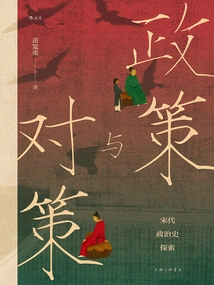
政策与对策:宋代政治史探索
Huang Kuanzhong
This book takes "policy" and "countermeasures" as the pivot, and through the multi-dimensional mutual verification of imperial edicts, local memorials and administrative archives, it shows the complete chain of policy formulation, implementation and feedback from the Five Dynasties to the Song and Yuan Dynasties. It shows that the system is neither a one-way rigid constraint nor a simple game, but maintains the balance between the central and local governments through dynamic adjustment. The author abandons the static convention of "discussing institutions based on institutions" in traditional institutional history, and instead places institutions in dynamic political operations, revealing their linkage with human affairs and current situations. The book combines empirical research and interdisciplinary theory to redraw a three-dimensional picture of the political ecology from the Five Dynasties to the Song and Yuan Dynasties.
This book takes "policy" and "countermeasures" as the pivot, and through the multi-dimensional mutual verification of imperial edicts, local memorials and administrative archives, it shows the complete chain of policy formulation, implementation and feedback from the Five Dynasties to the Song and Yuan Dynasties. It shows that the system is neither a one-way rigid constraint nor a simple game, but maintains the balance between the central and local governments through dynamic adjustment. The author abandons the static convention of "discussing institutions based on institutions" in traditional institutional history, and instead places institutions in dynamic political operations, revealing their linkage with human affairs and current situations. The book combines empirical research and interdisciplinary theory to redraw a three-dimensional picture of the political ecology from the Five Dynasties to the Song and Yuan Dynasties.
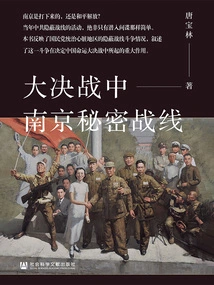
大决战中南京秘密战线
Tang Baolin
Was Nanjing captured or liberated peacefully? The activities of the CCP's hidden front back then were by no means as simple as sneaking in spies. This book reflects the hidden front struggle in the heart of the Kuomintang rule and describes the important role this struggle played in the decisive battle that determined China's fate.
Was Nanjing captured or liberated peacefully? The activities of the CCP's hidden front back then were by no means as simple as sneaking in spies. This book reflects the hidden front struggle in the heart of the Kuomintang rule and describes the important role this struggle played in the decisive battle that determined China's fate.
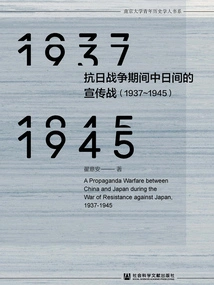
抗日战争期间中日间的宣传战(1937~1945)
Zhai Yi'an
During the Anti-Japanese War, in addition to the contest of force on the battlefield, China and Japan also launched a large number of propaganda wars. This book discusses the progress of the propaganda war between China and Japan during the Anti-Japanese War, discusses the establishment and improvement process of the propaganda systems of China and Japan, respectively elaborates on the propaganda policies, propaganda effects and reasons of the Communist Party of China, the Chinese Kuomintang and Japan on the "enemy, ourselves, and third parties" during the Anti-Japanese War, and then discusses the role and influence of propaganda in modern war.
During the Anti-Japanese War, in addition to the contest of force on the battlefield, China and Japan also launched a large number of propaganda wars. This book discusses the progress of the propaganda war between China and Japan during the Anti-Japanese War, discusses the establishment and improvement process of the propaganda systems of China and Japan, respectively elaborates on the propaganda policies, propaganda effects and reasons of the Communist Party of China, the Chinese Kuomintang and Japan on the "enemy, ourselves, and third parties" during the Anti-Japanese War, and then discusses the role and influence of propaganda in modern war.
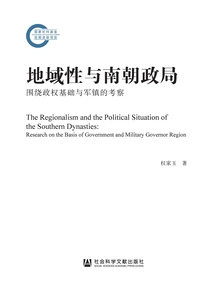
地域性与南朝政局:围绕政权基础与军镇的考察
Quan Jiayu
This book is divided into two parts. The first part explores the Yangzhou internal circulation model embodied by the Southern Dynasty regime centered on Jiankang from the perspective of political power. It focuses on analyzing the dependence of the Jiankang regime on Yangzhou and its financial crisis from a financial perspective, as well as the related poverty problem of scholars. At the same time, starting from the relationship between monarchs and ministers, we discuss the relationship between monarchs and ministers in the Southern Dynasties, showing the self-enclosed nature of the regime and the rapid consumption of effective forces in the process of transferring imperial power, thus drawing the conclusion that the regime began to decline after the rise of the metropolitan area and took over Jiankang. The following part starts with the metropolitan area. Analyzing the formation of the independence of the Southern Dynasty's metropolitan areas, the confrontation with the Northern Dynasties allowed the military power to be maintained, and the governorship allowed it to gain financial independence. The relative autonomy of the officials in the jurisdiction and the supply of ordnance from the headquarters made the Southern Dynasty's metropolitan areas evolve into a highly independent "vassal-like town" form.
This book is divided into two parts. The first part explores the Yangzhou internal circulation model embodied by the Southern Dynasty regime centered on Jiankang from the perspective of political power. It focuses on analyzing the dependence of the Jiankang regime on Yangzhou and its financial crisis from a financial perspective, as well as the related poverty problem of scholars. At the same time, starting from the relationship between monarchs and ministers, we discuss the relationship between monarchs and ministers in the Southern Dynasties, showing the self-enclosed nature of the regime and the rapid consumption of effective forces in the process of transferring imperial power, thus drawing the conclusion that the regime began to decline after the rise of the metropolitan area and took over Jiankang. The following part starts with the metropolitan area. Analyzing the formation of the independence of the Southern Dynasty's metropolitan areas, the confrontation with the Northern Dynasties allowed the military power to be maintained, and the governorship allowed it to gain financial independence. The relative autonomy of the officials in the jurisdiction and the supply of ordnance from the headquarters made the Southern Dynasty's metropolitan areas evolve into a highly independent "vassal-like town" form.
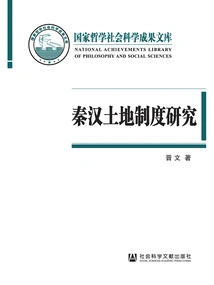
秦汉土地制度研究
Jinwen
This book combines handed down documents to discuss the land system in the bamboo slips, especially the difficult issues that are controversial or unresolved in the academic circles. The book not only studies the land system in the Warring States, Qin and Han Dynasties in detail, further expanding the depth and breadth of historical research, but also explores historical laws, strives to reveal the inner connection between the land system and ancient Chinese society, and summarizes historical experiences and lessons to provide some reference for today's social development. In terms of research methods, this book adheres to the guidance of Marxist historical materialism. On the basis of full possession of historical materials, it uses the dual evidence method and draws on relevant theories and methods such as economics, law, sociology, mathematics, etc. To conduct a comprehensive discussion on the issues related to the land system in the Warring States, Qin and Han Dynasties from three aspects: macro, meso and micro.
This book combines handed down documents to discuss the land system in the bamboo slips, especially the difficult issues that are controversial or unresolved in the academic circles. The book not only studies the land system in the Warring States, Qin and Han Dynasties in detail, further expanding the depth and breadth of historical research, but also explores historical laws, strives to reveal the inner connection between the land system and ancient Chinese society, and summarizes historical experiences and lessons to provide some reference for today's social development. In terms of research methods, this book adheres to the guidance of Marxist historical materialism. On the basis of full possession of historical materials, it uses the dual evidence method and draws on relevant theories and methods such as economics, law, sociology, mathematics, etc. To conduct a comprehensive discussion on the issues related to the land system in the Warring States, Qin and Han Dynasties from three aspects: macro, meso and micro.
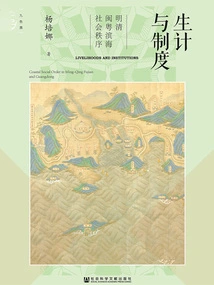
生计与制度:明清闽粤滨海社会秩序
Yang Peina
This book understands the changes in rural society in Guangdong and Fujian in the Ming and Qing dynasties from the perspective of marine economy, emphasizing that the sea-based production and survival mode has unique rhythms and characteristics; at the same time, coastal areas cannot simply be regarded as a zone dividing the sea and land, but should be regarded as an activity area containing various people with different livelihoods. It advocates re-examining the relationship between people, sea and land from the perspective of water-land interaction. The book attempts to explore how the local people living at the junction of water and land, and the boundary between Fujian and Guangdong, created their living space and social order under the dynasty's military, political, and economic and social policies from the early Ming to the early Qing Dynasty, from the aspects of household registration status, economic production, social organization, and even ideological concepts of the people in the coastal areas of Guangdong and Fujian during the Ming and Qing dynasties. It also explains the relationship between the transformation of the dynastic system and the changes in the production and living patterns and social organization of the people in the coastal areas.
This book understands the changes in rural society in Guangdong and Fujian in the Ming and Qing dynasties from the perspective of marine economy, emphasizing that the sea-based production and survival mode has unique rhythms and characteristics; at the same time, coastal areas cannot simply be regarded as a zone dividing the sea and land, but should be regarded as an activity area containing various people with different livelihoods. It advocates re-examining the relationship between people, sea and land from the perspective of water-land interaction. The book attempts to explore how the local people living at the junction of water and land, and the boundary between Fujian and Guangdong, created their living space and social order under the dynasty's military, political, and economic and social policies from the early Ming to the early Qing Dynasty, from the aspects of household registration status, economic production, social organization, and even ideological concepts of the people in the coastal areas of Guangdong and Fujian during the Ming and Qing dynasties. It also explains the relationship between the transformation of the dynastic system and the changes in the production and living patterns and social organization of the people in the coastal areas.
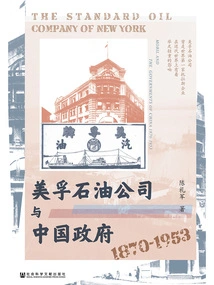
美孚石油公司与中国政府(1870~1953)
Chen Lijun
Mobil Oil Company was once the world's first trust company and had a decisive influence in the modern world. Since it entered China in the late Qing Dynasty, it was called a "giant spirit" by Liang Qichao. But there are big difficulties. As a company, although Mobil Oil maintains a high degree of autonomy, it is often restricted not only by the U. S. Government, but also by the governments of trade importing countries and investment host countries. In the context of the changing international political situation and the ever-changing situation in China, Mobil Oil's operations in China need to consider its own global business strategy, and also need to deal with various relationships with the US and Chinese governments and even local governments. Many decisions affect the whole body. Under the influence of various combined forces, this giant's operations in China began with the popularization of kerosene and ended with the oil embargo against China. This book focuses on the main events between Mobil and the Chinese government in modern times, showing the interest negotiations, mutual understanding and external influence between Mobil and the Chinese government in various historical periods, and revealing the extensive, complex and unique relationship between Mobil Oil Company, which is essentially a capitalist private enterprise, and the Chinese and U. S. Governments. At some important historical moments, the above-mentioned relationship not only reflected the role of Mobil Oil Company under the change of U. S. Policy towards China, but also influenced the Chinese government's petroleum industry concepts and actions to a certain extent. Therefore, understanding the development history of Mobil Oil Company in modern China also has certain reference significance for contemporary political economy. This book uses rich historical materials to provide vivid examples of the interaction between powerful American multinational corporations and the modern Chinese government.
Mobil Oil Company was once the world's first trust company and had a decisive influence in the modern world. Since it entered China in the late Qing Dynasty, it was called a "giant spirit" by Liang Qichao. But there are big difficulties. As a company, although Mobil Oil maintains a high degree of autonomy, it is often restricted not only by the U. S. Government, but also by the governments of trade importing countries and investment host countries. In the context of the changing international political situation and the ever-changing situation in China, Mobil Oil's operations in China need to consider its own global business strategy, and also need to deal with various relationships with the US and Chinese governments and even local governments. Many decisions affect the whole body. Under the influence of various combined forces, this giant's operations in China began with the popularization of kerosene and ended with the oil embargo against China. This book focuses on the main events between Mobil and the Chinese government in modern times, showing the interest negotiations, mutual understanding and external influence between Mobil and the Chinese government in various historical periods, and revealing the extensive, complex and unique relationship between Mobil Oil Company, which is essentially a capitalist private enterprise, and the Chinese and U. S. Governments. At some important historical moments, the above-mentioned relationship not only reflected the role of Mobil Oil Company under the change of U. S. Policy towards China, but also influenced the Chinese government's petroleum industry concepts and actions to a certain extent. Therefore, understanding the development history of Mobil Oil Company in modern China also has certain reference significance for contemporary political economy. This book uses rich historical materials to provide vivid examples of the interaction between powerful American multinational corporations and the modern Chinese government.
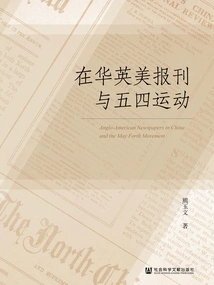
在华英美报刊与五四运动
Xiong Yuwen
After the May 4th Movement occurred, British and American newspapers in China at that time in Shanghai, Beijing, Guangzhou, Tianjin and other places conducted a large number of follow-up reports on it. Judging from the reports of British and American newspapers at the time, they basically abided by the principle of journalistic authenticity and observed the movement from the unique perspective of bystanders. At the same time, these newspapers run by British and American people in China are inextricably linked to their own governments. Many of their reports also reflect the attitudes of their own governments towards this movement. They are the public opinion propaganda media of British and American countries in China. The author's observations of the May Fourth Movement by British and American people in China and newspapers have enriched our understanding of the multiple aspects of the May Fourth Movement. It also facilitated foreign readers at the time to understand the true situation of the movement, and helped to promote further in-depth related research.
After the May 4th Movement occurred, British and American newspapers in China at that time in Shanghai, Beijing, Guangzhou, Tianjin and other places conducted a large number of follow-up reports on it. Judging from the reports of British and American newspapers at the time, they basically abided by the principle of journalistic authenticity and observed the movement from the unique perspective of bystanders. At the same time, these newspapers run by British and American people in China are inextricably linked to their own governments. Many of their reports also reflect the attitudes of their own governments towards this movement. They are the public opinion propaganda media of British and American countries in China. The author's observations of the May Fourth Movement by British and American people in China and newspapers have enriched our understanding of the multiple aspects of the May Fourth Movement. It also facilitated foreign readers at the time to understand the true situation of the movement, and helped to promote further in-depth related research.
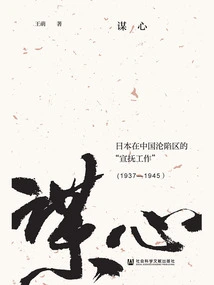
谋心:日本在中国沦陷区的“宣抚工作”(1937—1945)
Wang Meng
"Xuanfu" refers to the propaganda and "pacification work" carried out by the Japanese and puppet authorities during the Anti-Japanese War to the people in the Japanese-occupied areas in order to make the people in the occupied areas "submit" to colonial rule. This book uses a large number of Japanese historical materials, including the archives of the Japanese invaders in China currently stored in the Defense Research Institute of the Ministry of Defense and the Diplomatic Historical Archives of the Ministry of Foreign Affairs, as well as a large number of diaries, memoirs and other materials of Japanese military personnel ("propaganda members") who were engaged in specific "propaganda work" in China's occupied areas at that time. It analyzes the Japanese army's aggressive strategy, the changes in the "Xuanfu" system, the specific content of "Xuanfu", and the personal perceptions of the "Xuanfu", especially the reality of life, mentality and resistance of the Chinese people in the occupied areas under Japanese and puppet colonial rule that they observed, and then reveals the nature of Japanese aggression.
"Xuanfu" refers to the propaganda and "pacification work" carried out by the Japanese and puppet authorities during the Anti-Japanese War to the people in the Japanese-occupied areas in order to make the people in the occupied areas "submit" to colonial rule. This book uses a large number of Japanese historical materials, including the archives of the Japanese invaders in China currently stored in the Defense Research Institute of the Ministry of Defense and the Diplomatic Historical Archives of the Ministry of Foreign Affairs, as well as a large number of diaries, memoirs and other materials of Japanese military personnel ("propaganda members") who were engaged in specific "propaganda work" in China's occupied areas at that time. It analyzes the Japanese army's aggressive strategy, the changes in the "Xuanfu" system, the specific content of "Xuanfu", and the personal perceptions of the "Xuanfu", especially the reality of life, mentality and resistance of the Chinese people in the occupied areas under Japanese and puppet colonial rule that they observed, and then reveals the nature of Japanese aggression.
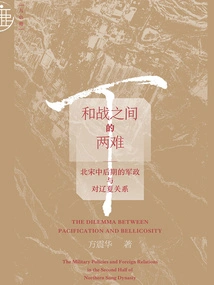
和战之间的两难:北宋中后期的军政与对辽夏关系
Fang Zhenhua
Since the surrender of the Renzong Dynasty, the Northern Song Dynasty government has carried out various military and political reforms with the goal of "strengthening the army" in response to threats from the west and the north. Relevant military policies not only formed long-lasting systems such as martial arts, martial arts, and armor protection, but also changed the foreign policy with "harmony" as the core. Starting from the Shenzong Dynasty, border expansion operations were actively carried out, changing the border defense situation that was previously controlled by the enemy. However, foreign wars consumed a large amount of materials and manpower, but achieved very limited results. This triggered fierce disputes about peace and war within the ruling class and became an unsolvable political problem. Therefore, the military and political reforms committed by the Song government had a far-reaching impact and are an issue that must be paid attention to in understanding the historical development of the second half of the Northern Song Dynasty.
Since the surrender of the Renzong Dynasty, the Northern Song Dynasty government has carried out various military and political reforms with the goal of "strengthening the army" in response to threats from the west and the north. Relevant military policies not only formed long-lasting systems such as martial arts, martial arts, and armor protection, but also changed the foreign policy with "harmony" as the core. Starting from the Shenzong Dynasty, border expansion operations were actively carried out, changing the border defense situation that was previously controlled by the enemy. However, foreign wars consumed a large amount of materials and manpower, but achieved very limited results. This triggered fierce disputes about peace and war within the ruling class and became an unsolvable political problem. Therefore, the military and political reforms committed by the Song government had a far-reaching impact and are an issue that must be paid attention to in understanding the historical development of the second half of the Northern Song Dynasty.
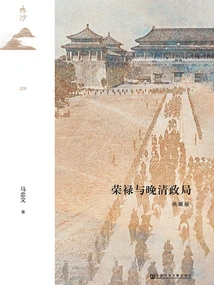
荣禄与晚清政局(典藏版)
Ma Zhongwen
In 1894, the Sino-Japanese War of 1894-1894 broke out, and by 1904, calls for the establishment of a constitution were rising. Modern Chinese society experienced a critical turning point. In the past ten years, internal and external troubles were frequent, which led to fluctuations in the Qing court and political tides. During this period, Ronglu, a Manchu dignitary who was deeply trusted by Cixi, played an extremely important role. This book is a revised version of "Rong Lu and the Political Situation of the Late Qing Dynasty". The author has made many revisions and added some pictures. By studying and analyzing the complex performance of Ronglu during this period, the book has great significance for understanding the changes and trends of politics in the late Qing Dynasty.
In 1894, the Sino-Japanese War of 1894-1894 broke out, and by 1904, calls for the establishment of a constitution were rising. Modern Chinese society experienced a critical turning point. In the past ten years, internal and external troubles were frequent, which led to fluctuations in the Qing court and political tides. During this period, Ronglu, a Manchu dignitary who was deeply trusted by Cixi, played an extremely important role. This book is a revised version of "Rong Lu and the Political Situation of the Late Qing Dynasty". The author has made many revisions and added some pictures. By studying and analyzing the complex performance of Ronglu during this period, the book has great significance for understanding the changes and trends of politics in the late Qing Dynasty.
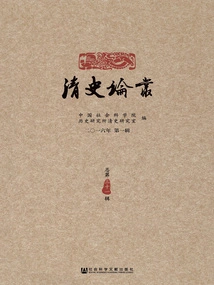
清史论丛(2016年第1辑\u002F总第31辑)
Compiled By Qing History Research Office, Institute Of History, Chinese Academy Of Social Sciences
"Qing History Series" is sponsored by the Qing History Research Office of the Institute of History, Chinese Academy of Social Sciences. It is a collection of academic papers on Qing history research at home and abroad. It was founded in 1979. This collection has wide influence at home and abroad, and is highly valued by the academic community. Its important features are concentrated research, rigorous academic style, and grasp of academic frontiers. The articles included in the book include both research articles on the critical history of the Qing Dynasty and research articles on the academic history of the Qing Dynasty. It includes both erudite Hongci research on the traditional culture of the Qing Dynasty and articles on the exchange of local Chinese and Western cultures in the Qing Dynasty.
"Qing History Series" is sponsored by the Qing History Research Office of the Institute of History, Chinese Academy of Social Sciences. It is a collection of academic papers on Qing history research at home and abroad. It was founded in 1979. This collection has wide influence at home and abroad, and is highly valued by the academic community. Its important features are concentrated research, rigorous academic style, and grasp of academic frontiers. The articles included in the book include both research articles on the critical history of the Qing Dynasty and research articles on the academic history of the Qing Dynasty. It includes both erudite Hongci research on the traditional culture of the Qing Dynasty and articles on the exchange of local Chinese and Western cultures in the Qing Dynasty.
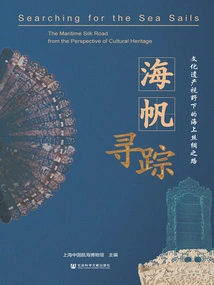
海帆寻踪:文化遗产视野下的海上丝绸之路
Chief Editor, Shanghai China Maritime Museum
The academic symposium "Searching for the Sails: The Maritime Silk Road from the Perspective of Cultural Heritage" was jointly organized by the China Maritime Museum in Shanghai, Shanghai Normal University, the Maritime History and Culture Research Committee of the Chinese Maritime Society, and the Maritime Museum Professional Committee of the Chinese Museum Association. It was held on October 17-18, 2020 at Held in Shanghai, it further explains the history and culture of the "Maritime Silk Road" from the perspective of cultural heritage from many perspectives such as "Maritime Silk Road" artifacts and archeology, "Maritime Silk Road" trade and institutions, "Maritime Silk Road" routes and documents, "Maritime Silk Road" culture and society, etc., And promotes cooperation and exchanges in related research fields. This collection of papers is composed of selected papers from the conference.
The academic symposium "Searching for the Sails: The Maritime Silk Road from the Perspective of Cultural Heritage" was jointly organized by the China Maritime Museum in Shanghai, Shanghai Normal University, the Maritime History and Culture Research Committee of the Chinese Maritime Society, and the Maritime Museum Professional Committee of the Chinese Museum Association. It was held on October 17-18, 2020 at Held in Shanghai, it further explains the history and culture of the "Maritime Silk Road" from the perspective of cultural heritage from many perspectives such as "Maritime Silk Road" artifacts and archeology, "Maritime Silk Road" trade and institutions, "Maritime Silk Road" routes and documents, "Maritime Silk Road" culture and society, etc., And promotes cooperation and exchanges in related research fields. This collection of papers is composed of selected papers from the conference.
清史论丛(2021年第2辑\u002F总第42辑)
Compiled By Qing History Research Office, Institute Of History, Chinese Academy Of Social Sciences
"Qing History Series" is sponsored by the Qing History Research Office of the Institute of History, Chinese Academy of Social Sciences. It is a collection of academic papers on Qing history research at home and abroad. It was founded in 1979. This collection has wide influence at home and abroad, and is highly valued by the academic community. Its important features are concentrated research, rigorous academic style, and grasp of academic frontiers. The articles included in the book include both research articles on the critical history of the Qing Dynasty and research articles on the academic history of the Qing Dynasty. It includes both erudite Hongci research on the traditional culture of the Qing Dynasty and articles on the exchange of local Chinese and Western cultures in the Qing Dynasty.
"Qing History Series" is sponsored by the Qing History Research Office of the Institute of History, Chinese Academy of Social Sciences. It is a collection of academic papers on Qing history research at home and abroad. It was founded in 1979. This collection has wide influence at home and abroad, and is highly valued by the academic community. Its important features are concentrated research, rigorous academic style, and grasp of academic frontiers. The articles included in the book include both research articles on the critical history of the Qing Dynasty and research articles on the academic history of the Qing Dynasty. It includes both erudite Hongci research on the traditional culture of the Qing Dynasty and articles on the exchange of local Chinese and Western cultures in the Qing Dynasty.
清史论丛(2018年第2辑\u002F总第36辑)
Compiled By Qing History Research Office, Institute Of History, Chinese Academy Of Social Sciences
"Qing History Series" is sponsored by the Qing History Research Office of the Institute of History, Chinese Academy of Social Sciences. It is a collection of academic papers on Qing history research at home and abroad. It was founded in 1979. This collection has wide influence at home and abroad, and is highly valued by the academic community. Its important features are concentrated research, rigorous academic style, and grasp of academic frontiers. The articles included in the book include both research articles on the critical history of the Qing Dynasty and research articles on the academic history of the Qing Dynasty. It includes both erudite Hongci research on the traditional culture of the Qing Dynasty and articles on the exchange of local Chinese and Western cultures in the Qing Dynasty.
"Qing History Series" is sponsored by the Qing History Research Office of the Institute of History, Chinese Academy of Social Sciences. It is a collection of academic papers on Qing history research at home and abroad. It was founded in 1979. This collection has wide influence at home and abroad, and is highly valued by the academic community. Its important features are concentrated research, rigorous academic style, and grasp of academic frontiers. The articles included in the book include both research articles on the critical history of the Qing Dynasty and research articles on the academic history of the Qing Dynasty. It includes both erudite Hongci research on the traditional culture of the Qing Dynasty and articles on the exchange of local Chinese and Western cultures in the Qing Dynasty.
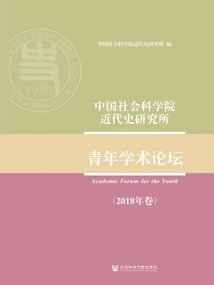
中国社会科学院近代史研究所青年学术论坛(2018年卷)
Compiled By The Institute Of Modern History, Chinese Academy Of Social Sciences
The Institute of Modern History of the Chinese Academy of Social Sciences holds a youth academic symposium every year, and collects and publishes papers submitted by participants. It has been published continuously since 2000, which can be described as a record of the growth of young scholars at the Institute of Modern History. This book is a 2018 volume and contains 13 papers. It is mainly based on empirical case studies and covers many topics such as the politics and diplomacy of the Qing Dynasty, the ideological history of the late Qing and the Republic of China, academic history, institutional history, military history, etc.
The Institute of Modern History of the Chinese Academy of Social Sciences holds a youth academic symposium every year, and collects and publishes papers submitted by participants. It has been published continuously since 2000, which can be described as a record of the growth of young scholars at the Institute of Modern History. This book is a 2018 volume and contains 13 papers. It is mainly based on empirical case studies and covers many topics such as the politics and diplomacy of the Qing Dynasty, the ideological history of the late Qing and the Republic of China, academic history, institutional history, military history, etc.
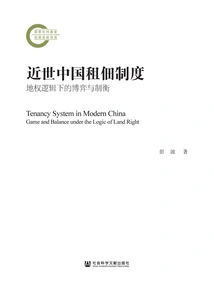
近世中国租佃制度:地权逻辑下的博弈与制衡
Peng Bo
The land tenancy system has lasted for thousands of years in Chinese history, covering at least one-third of the land and population in modern times. It forms an important foundation for traditional Chinese society and is an important part of understanding traditional Chinese society. Based on previous research, this book discusses some important issues of the land tenancy system in modern China and puts forward several different viewpoints. Through in-depth and detailed research, the book proves that although the land tenancy system in modern China had its inherent flaws, it was a relatively effective system that adapted to the specific social and economic conditions of modern China.
The land tenancy system has lasted for thousands of years in Chinese history, covering at least one-third of the land and population in modern times. It forms an important foundation for traditional Chinese society and is an important part of understanding traditional Chinese society. Based on previous research, this book discusses some important issues of the land tenancy system in modern China and puts forward several different viewpoints. Through in-depth and detailed research, the book proves that although the land tenancy system in modern China had its inherent flaws, it was a relatively effective system that adapted to the specific social and economic conditions of modern China.
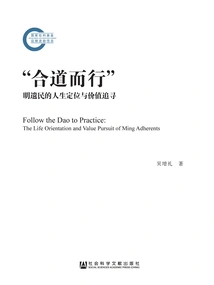
“合道而行”:明遗民的人生定位与价值追寻
Wu Zengli
After the fall of the Ming Dynasty, the Ming survivors and the Qing court engaged in a political contest for nearly half a century. This was not only a process of interaction and adjustment between the Ming survivors and the Qing court, but also a process in which the Ming survivors' firm stance withstood the passage of time and dilution. During this period, although the survivors of the Ming Dynasty had a strong sense of identity, insisted on being physically and mentally loyal to the old king of their motherland, and deliberately shaped themselves, the difficulties in life and the depression of spirit forced them to constantly explore the "acting in line with the Tao" in their lives. Therefore, in terms of life management practices and social interactions, Ming survivors showed various forms; in terms of considering "Tao", they were more "focused on the end", re-constructing the rationality and legitimacy of survival in the Qing Dynasty, and pursuing a new self-positioning and life value.
After the fall of the Ming Dynasty, the Ming survivors and the Qing court engaged in a political contest for nearly half a century. This was not only a process of interaction and adjustment between the Ming survivors and the Qing court, but also a process in which the Ming survivors' firm stance withstood the passage of time and dilution. During this period, although the survivors of the Ming Dynasty had a strong sense of identity, insisted on being physically and mentally loyal to the old king of their motherland, and deliberately shaped themselves, the difficulties in life and the depression of spirit forced them to constantly explore the "acting in line with the Tao" in their lives. Therefore, in terms of life management practices and social interactions, Ming survivors showed various forms; in terms of considering "Tao", they were more "focused on the end", re-constructing the rationality and legitimacy of survival in the Qing Dynasty, and pursuing a new self-positioning and life value.
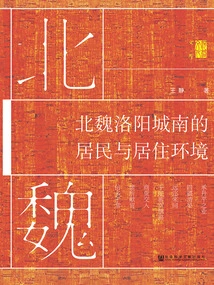
北魏洛阳城南的居民与居住环境
Wang Jing
Luoyang in the Northern Wei Dynasty played an important role in the history of Chinese capital development. In particular, it made epoch-making changes in the expansion of the south of the city. It set a precedent for the construction of Luoyang across the Luoshui River in the Sui and Tang Dynasties and had a great influence on later generations. However, compared with the prosperity of research on palaces, squares, markets, temples, gardens, etc., The research on the southern part of Luoyang City in the Northern Wei Dynasty was slightly quiet. This book uses relevant literature and archaeological data, and uses the core theory of historical geography - man-land relations, from the perspective of the relationship between residents and the living environment, to try to reveal that the rich and colorful history and culture in the south of Luoyang City in the Northern Wei Dynasty was the product of the residents' different utilization levels and methods of the living environment.
Luoyang in the Northern Wei Dynasty played an important role in the history of Chinese capital development. In particular, it made epoch-making changes in the expansion of the south of the city. It set a precedent for the construction of Luoyang across the Luoshui River in the Sui and Tang Dynasties and had a great influence on later generations. However, compared with the prosperity of research on palaces, squares, markets, temples, gardens, etc., The research on the southern part of Luoyang City in the Northern Wei Dynasty was slightly quiet. This book uses relevant literature and archaeological data, and uses the core theory of historical geography - man-land relations, from the perspective of the relationship between residents and the living environment, to try to reveal that the rich and colorful history and culture in the south of Luoyang City in the Northern Wei Dynasty was the product of the residents' different utilization levels and methods of the living environment.
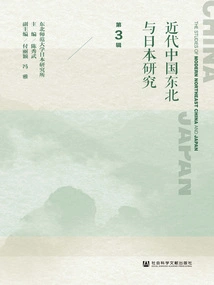
近代中国东北与日本研究(第3辑)
Editor-in-chief Chen Xiuwu
"Modern Northeastern China and Japanese Studies" is sponsored by the Institute of Japanese Studies at Northeast Normal University. It is based on Northeastern China, integrates research resources on Manchukuo and Japan in the Northeastern region, and is committed to the study of politics, economy, society and other aspects of Northeastern China in modern times. This book is the third volume. It discloses modern Japan's territorial aggression, ideological control, economic plunder, and cultural control in Northeast China from the ideological, political, economic, social, and cultural fields.
"Modern Northeastern China and Japanese Studies" is sponsored by the Institute of Japanese Studies at Northeast Normal University. It is based on Northeastern China, integrates research resources on Manchukuo and Japan in the Northeastern region, and is committed to the study of politics, economy, society and other aspects of Northeastern China in modern times. This book is the third volume. It discloses modern Japan's territorial aggression, ideological control, economic plunder, and cultural control in Northeast China from the ideological, political, economic, social, and cultural fields.
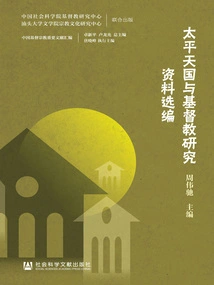
太平天国与基督教研究资料选编
Editor-in-chief Zhou Weichi
This book brings together important arguments on the relationship between the Taiping Heavenly Kingdom and Christianity. It is one of the series of books "Compilation of Important Documents on Chinese Christianity". The content involves a review of the historical status and nature of the Taiping Heavenly Kingdom, a discussion of the relationship between Taiping Heavenly Kingdom Catholicism and Christian forms, a study of the relationship between Taiping Heavenly Kingdom religious concepts and the text of the Bible, and a comparison of the thoughts of Hong Xiuquan, Hong Rengan, Kang Youwei and other figures. A total of 31 articles are included, including representative views of famous scholars such as Feng Youlan, Li Zehou, Luo Ergang, Jian Youwen, Wang Qingcheng, and Xia Chuntao. Centered on the two giants of Taixue, Luo Ergang and Jian Youwen, various arguments about the relationship between the Taiping Heavenly Kingdom and Christianity are presented in this collection.
This book brings together important arguments on the relationship between the Taiping Heavenly Kingdom and Christianity. It is one of the series of books "Compilation of Important Documents on Chinese Christianity". The content involves a review of the historical status and nature of the Taiping Heavenly Kingdom, a discussion of the relationship between Taiping Heavenly Kingdom Catholicism and Christian forms, a study of the relationship between Taiping Heavenly Kingdom religious concepts and the text of the Bible, and a comparison of the thoughts of Hong Xiuquan, Hong Rengan, Kang Youwei and other figures. A total of 31 articles are included, including representative views of famous scholars such as Feng Youlan, Li Zehou, Luo Ergang, Jian Youwen, Wang Qingcheng, and Xia Chuntao. Centered on the two giants of Taixue, Luo Ergang and Jian Youwen, various arguments about the relationship between the Taiping Heavenly Kingdom and Christianity are presented in this collection.
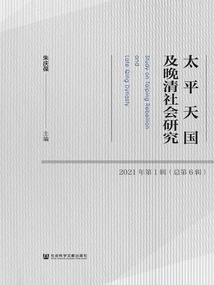
太平天国及晚清社会研究(2021年第1辑\u002F总第6辑)
Editor-in-chief Zhu Qingbao
"Research on Taiping Rebellion and Late Qing Society" is an academic special issue sponsored by the China Taiping Rebellion History Research Association, a national first-level society approved by the Ministry of Civil Affairs. This journal mainly publishes research articles on relevant historical facts and theories about the Taiping Heavenly Kingdom and the late Qing Dynasty (1840-1911). Its purpose is to maintain a rigorous and solid academic style and expand the breadth and depth of research on the Taiping Heavenly Kingdom and the late Qing history with objective and rational research concepts. This collection contains a total of 15 articles, divided into five parts: "Research on the History of the Taiping Heavenly Kingdom and the Late Qing Dynasty", "Reminiscence of the Forefathers", "Compilation and Research of Materials", "Academic Review" and "Book Review".
"Research on Taiping Rebellion and Late Qing Society" is an academic special issue sponsored by the China Taiping Rebellion History Research Association, a national first-level society approved by the Ministry of Civil Affairs. This journal mainly publishes research articles on relevant historical facts and theories about the Taiping Heavenly Kingdom and the late Qing Dynasty (1840-1911). Its purpose is to maintain a rigorous and solid academic style and expand the breadth and depth of research on the Taiping Heavenly Kingdom and the late Qing history with objective and rational research concepts. This collection contains a total of 15 articles, divided into five parts: "Research on the History of the Taiping Heavenly Kingdom and the Late Qing Dynasty", "Reminiscence of the Forefathers", "Compilation and Research of Materials", "Academic Review" and "Book Review".
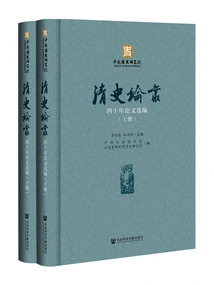
《清史论丛》四十年论文选编(全2册)
Li Shiyu Editor-in-chief Lin Cunyang
"Qing History Essays" reaches 2019, it has been 40 years. Although the academic journey over the past forty years has gone through ups and downs, the journal's steady progress relies on a group of teachers and colleagues who have firm ideals, sincere feelings, and the courage to devote themselves to scientific research. In order to commemorate the 40th anniversary of the founding of this journal, the Qing History Research Office of the Institute of Ancient History has selected representative articles that highlight the research trends of Qing history from the articles published in the past 40 years, so as to more fully present the scientific research level and academic style of Qing history scholars over the past 40 years, outline the academic development trajectory of Qing history research over the past century, and provide useful reference for contemporary scholars.
"Qing History Essays" reaches 2019, it has been 40 years. Although the academic journey over the past forty years has gone through ups and downs, the journal's steady progress relies on a group of teachers and colleagues who have firm ideals, sincere feelings, and the courage to devote themselves to scientific research. In order to commemorate the 40th anniversary of the founding of this journal, the Qing History Research Office of the Institute of Ancient History has selected representative articles that highlight the research trends of Qing history from the articles published in the past 40 years, so as to more fully present the scientific research level and academic style of Qing history scholars over the past 40 years, outline the academic development trajectory of Qing history research over the past century, and provide useful reference for contemporary scholars.
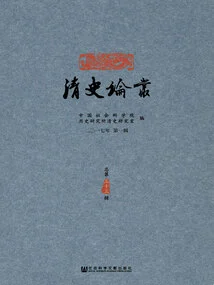
清史论丛(2017年第1辑\u002F总第33辑)
Compiled By Qing History Research Office, Institute Of History, Chinese Academy Of Social Sciences
"Qing History Series" is sponsored by the Qing History Research Office of the Institute of History, Chinese Academy of Social Sciences. It is a collection of academic papers on Qing history research at home and abroad. It was founded in 1979. This collection has wide influence at home and abroad, and is highly valued by the academic community. Its important features are concentrated research, rigorous academic style, and grasp of academic frontiers. The articles included in the book include both research articles on the critical history of the Qing Dynasty and research articles on the academic history of the Qing Dynasty. It includes both erudite Hongci research on the traditional culture of the Qing Dynasty and articles on the exchange of local Chinese and Western cultures in the Qing Dynasty.
"Qing History Series" is sponsored by the Qing History Research Office of the Institute of History, Chinese Academy of Social Sciences. It is a collection of academic papers on Qing history research at home and abroad. It was founded in 1979. This collection has wide influence at home and abroad, and is highly valued by the academic community. Its important features are concentrated research, rigorous academic style, and grasp of academic frontiers. The articles included in the book include both research articles on the critical history of the Qing Dynasty and research articles on the academic history of the Qing Dynasty. It includes both erudite Hongci research on the traditional culture of the Qing Dynasty and articles on the exchange of local Chinese and Western cultures in the Qing Dynasty.
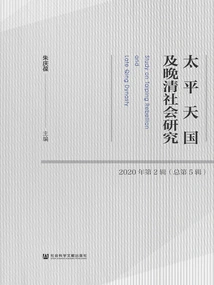
太平天国及晚清社会研究(2020年第2辑\u002F总第5辑)
Editor-in-chief Zhu Qingbao
"Research on Taiping Rebellion and Late Qing Society" is an academic special issue sponsored by the China Taiping Rebellion History Research Association, a national first-level society approved by the Ministry of Civil Affairs. This journal mainly publishes research articles on relevant historical facts and theories about the Taiping Heavenly Kingdom and the late Qing Dynasty (1840-1911). Its purpose is to maintain a rigorous and solid academic style and expand the breadth and depth of research on the Taiping Heavenly Kingdom and the late Qing history with objective and rational research concepts. This collection contains a total of 14 articles, divided into four parts: "Research on the History of the Taiping Rebellion", "Research on the Society of the Late Qing Dynasty", "Notes on Historical Reading", "Academic Review" and "Selected Historical Materials".
"Research on Taiping Rebellion and Late Qing Society" is an academic special issue sponsored by the China Taiping Rebellion History Research Association, a national first-level society approved by the Ministry of Civil Affairs. This journal mainly publishes research articles on relevant historical facts and theories about the Taiping Heavenly Kingdom and the late Qing Dynasty (1840-1911). Its purpose is to maintain a rigorous and solid academic style and expand the breadth and depth of research on the Taiping Heavenly Kingdom and the late Qing history with objective and rational research concepts. This collection contains a total of 14 articles, divided into four parts: "Research on the History of the Taiping Rebellion", "Research on the Society of the Late Qing Dynasty", "Notes on Historical Reading", "Academic Review" and "Selected Historical Materials".
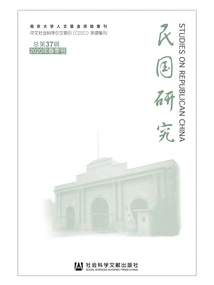
民国研究(2020年春季号\u002F总第37辑)
Editor-in-chief Zhu Qingbao
"Republic of China Studies" is an academic special issue sponsored by the Research Center for the History of the Republic of China at Nanjing University, a key research base in the humanities and social sciences of the Ministry of Education. It mainly publishes research articles on relevant historical facts and theories about the Republic of China period (1912-1949). It is now a CSSCI source publication. This volume is the 37th in total, with a total of 16 articles. It is divided into six columns: research on the history of the Anti-Japanese War, society and culture of the Republic of China, economy of the Republic of China, review of academic history, book reviews, and review of overseas historical materials. The content covers the politics, economy, thought, culture and other aspects of the Republic of China.
"Republic of China Studies" is an academic special issue sponsored by the Research Center for the History of the Republic of China at Nanjing University, a key research base in the humanities and social sciences of the Ministry of Education. It mainly publishes research articles on relevant historical facts and theories about the Republic of China period (1912-1949). It is now a CSSCI source publication. This volume is the 37th in total, with a total of 16 articles. It is divided into six columns: research on the history of the Anti-Japanese War, society and culture of the Republic of China, economy of the Republic of China, review of academic history, book reviews, and review of overseas historical materials. The content covers the politics, economy, thought, culture and other aspects of the Republic of China.
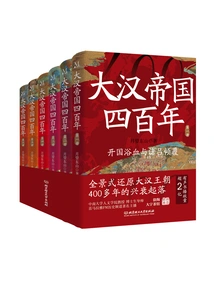
大汉帝国四百年(全6册)
The Moon Looks At Dongshan
"Four Hundred Years of the Han Empire" is a set of popular books about the history of the Han Dynasty, with a total of 6 volumes. This work reproduces the vicissitudes and glory of the Han Dynasty for more than 400 years in an easy-to-understand style. This is a gripping historical masterpiece that will lead readers on a journey through the complicated history of the Han Dynasty. This 6-volume masterpiece depicts the great era of the Han Dynasty in detail, vividly and interestingly. The book combines fascinating historical stories such as the conquest of the Western Regions, the disaster of the Party, Dong Zhuo's rebellion against the Han Dynasty, and the Battle of Guandu. The characters are vivid and flesh-and-blood, and the language is humorous. It is an excellent work for understanding the history of the Han Dynasty. Through vivid descriptions and wonderful narration, the author allows readers to understand the 400-year rise and decline of the Han Dynasty in a relaxed and enjoyable way, and learn from history to gain insights into life.
"Four Hundred Years of the Han Empire" is a set of popular books about the history of the Han Dynasty, with a total of 6 volumes. This work reproduces the vicissitudes and glory of the Han Dynasty for more than 400 years in an easy-to-understand style. This is a gripping historical masterpiece that will lead readers on a journey through the complicated history of the Han Dynasty. This 6-volume masterpiece depicts the great era of the Han Dynasty in detail, vividly and interestingly. The book combines fascinating historical stories such as the conquest of the Western Regions, the disaster of the Party, Dong Zhuo's rebellion against the Han Dynasty, and the Battle of Guandu. The characters are vivid and flesh-and-blood, and the language is humorous. It is an excellent work for understanding the history of the Han Dynasty. Through vivid descriptions and wonderful narration, the author allows readers to understand the 400-year rise and decline of the Han Dynasty in a relaxed and enjoyable way, and learn from history to gain insights into life.
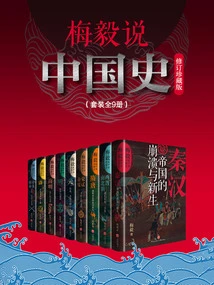
梅毅说中国史(修订珍藏版·全9册)
Mei Yi
This book is a popular history classic that Mei Yi completed over ten years. The series began in the Qin and Han Dynasties, passed through the Jin and Southern and Northern Dynasties, the Sui and Tang Dynasties, the Song, Liao, Jin, Xia, Yuan, Ming and Qing dynasties, and ended with the Revolution of 1911, continuing almost from generation to generation. Mei Yi is based on historical truth and takes heroic characters as the main line. He inherits the legacy of historical literature and the spirit of judging historical facts created by Tai Shi Gong. He imitates the structural layout and deductive style of historical novelists. He is devoted to prose and the novelist's skills of capturing details and describing feelings, and blends them together. The work is both literary and historical, exquisite and beautiful, unrestrained and soul-stirring. It can be called a landmark work on the general history of China after Cai Dongfan.
This book is a popular history classic that Mei Yi completed over ten years. The series began in the Qin and Han Dynasties, passed through the Jin and Southern and Northern Dynasties, the Sui and Tang Dynasties, the Song, Liao, Jin, Xia, Yuan, Ming and Qing dynasties, and ended with the Revolution of 1911, continuing almost from generation to generation. Mei Yi is based on historical truth and takes heroic characters as the main line. He inherits the legacy of historical literature and the spirit of judging historical facts created by Tai Shi Gong. He imitates the structural layout and deductive style of historical novelists. He is devoted to prose and the novelist's skills of capturing details and describing feelings, and blends them together. The work is both literary and historical, exquisite and beautiful, unrestrained and soul-stirring. It can be called a landmark work on the general history of China after Cai Dongfan.
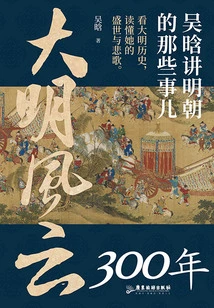
大明风云300年:吴晗讲明朝的那些事儿
Wu Han
This book contains two important monographs on the history of the Ming Dynasty written by Wu Han during his lifetime, one is the unpublished "History of the Ming Dynasty" (unfinished) and the other is "A Brief Introduction to the History of the Ming Dynasty". These two works examine some major events and important issues in the Ming Dynasty, such as Zhu Yuanzhang's conquests and founding of the country, Ming Chengzu moving the capital to Beijing, Zheng He's voyages to the West, etc. The views are in-depth and enlightening. It also includes a number of Ming history papers, displaying Wu Han's discussions on different issues in the 300-year history of the Ming Dynasty from various aspects, allowing readers to have a systematic and comprehensive understanding of Ming history.
This book contains two important monographs on the history of the Ming Dynasty written by Wu Han during his lifetime, one is the unpublished "History of the Ming Dynasty" (unfinished) and the other is "A Brief Introduction to the History of the Ming Dynasty". These two works examine some major events and important issues in the Ming Dynasty, such as Zhu Yuanzhang's conquests and founding of the country, Ming Chengzu moving the capital to Beijing, Zheng He's voyages to the West, etc. The views are in-depth and enlightening. It also includes a number of Ming history papers, displaying Wu Han's discussions on different issues in the 300-year history of the Ming Dynasty from various aspects, allowing readers to have a systematic and comprehensive understanding of Ming history.
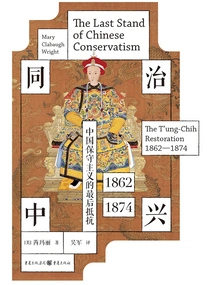
同治中兴:中国保守主义的最后抵抗(1862—1874)
(us) Ray Marie
This book is a masterpiece by the late Yale University professor Mary Ray. The author discusses in detail the various efforts made by central and local officials of the Qing government during the Tongzhi period to "support the building before it collapsed", involving military, political, economic, cultural, educational, diplomatic and other aspects, as well as how modern Western countries treat these reform measures, explains the social and historical conditions on which "Zhongxing" is based, and reveals He pointed out that "their vision was limited to the local situation and practical problems, and they could not see through the details accumulated over thousands of years to identify the basis for the continued existence of the Confucian system. They insisted on retaining the existing order as a whole, but doing so would only lead to its total loss."
This book is a masterpiece by the late Yale University professor Mary Ray. The author discusses in detail the various efforts made by central and local officials of the Qing government during the Tongzhi period to "support the building before it collapsed", involving military, political, economic, cultural, educational, diplomatic and other aspects, as well as how modern Western countries treat these reform measures, explains the social and historical conditions on which "Zhongxing" is based, and reveals He pointed out that "their vision was limited to the local situation and practical problems, and they could not see through the details accumulated over thousands of years to identify the basis for the continued existence of the Confucian system. They insisted on retaining the existing order as a whole, but doing so would only lead to its total loss."
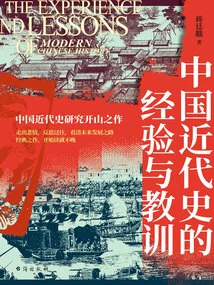
中国近代史的经验与教训
Jiang Tingfu
This book is considered to be the pioneering work in the study of modern Chinese history. The author starts from the basic situation of Sino-foreign relations in the late Qing Dynasty, tells the ins and outs of important historical events in the following nearly a hundred years, and introduces important historical figures at that time. With a rigorous academic attitude and unique research perspective, the author conducts an in-depth analysis of historical materials. Using the latest theories of historical research at that time and an international perspective, the author conducts detailed narration and rigorous analysis of important events and main figures in China's modern history, as well as issues in military, diplomatic and other fields. It allows readers to understand the development context of modern Chinese history and at the same time understand the origin and inner logic of historical events. In this book, the author describes in detail the successes and failures in the development of China's modern history, as well as the gains and losses in the decision-making process. As the book unfolds, the magnificent history reappears in front of readers, inspiring readers to think, allowing readers to lament the lessons of history, and at the same time see our path more clearly, giving us more confidence in the future.
This book is considered to be the pioneering work in the study of modern Chinese history. The author starts from the basic situation of Sino-foreign relations in the late Qing Dynasty, tells the ins and outs of important historical events in the following nearly a hundred years, and introduces important historical figures at that time. With a rigorous academic attitude and unique research perspective, the author conducts an in-depth analysis of historical materials. Using the latest theories of historical research at that time and an international perspective, the author conducts detailed narration and rigorous analysis of important events and main figures in China's modern history, as well as issues in military, diplomatic and other fields. It allows readers to understand the development context of modern Chinese history and at the same time understand the origin and inner logic of historical events. In this book, the author describes in detail the successes and failures in the development of China's modern history, as well as the gains and losses in the decision-making process. As the book unfolds, the magnificent history reappears in front of readers, inspiring readers to think, allowing readers to lament the lessons of history, and at the same time see our path more clearly, giving us more confidence in the future.
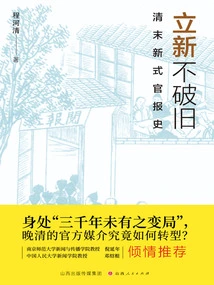
Build New and Not Old
History立新不破旧
Cheng Heqing
In ancient China, until the end of the Qing Dynasty, the official (court) newspapers had been Di Bao, Tang Bao, and Gongmen Chao. There were no newspapers in the modern sense. After the New Deal in the late Qing Dynasty, governors and governors from various places began to establish modern official newspapers, such as "Beiyang Official News", "Nanyang Official News", "Qinzhong Bookstore Report", "Hubei Official News", "Bingzhou Official News" and so on. The establishment of official newspapers is to circulate information and contribute to the progress of the times. However, local states and counties often default on newspaper fees and postage, which also makes many official newspapers unable to make ends meet and on the verge of bankruptcy. This period highlights the contradiction and conflict between the "new" and the "old". The value of this book lies in sorting out the historical context of official newspapers in the late Qing Dynasty, reproducing the difficult process of late Qing official newspapers starting from scratch, and interpreting the different attitudes of feudal officials and important ministers towards modern official media at that time, as well as how modern news newspapers and periodicals influenced the historical trend.
In ancient China, until the end of the Qing Dynasty, the official (court) newspapers had been Di Bao, Tang Bao, and Gongmen Chao. There were no newspapers in the modern sense. After the New Deal in the late Qing Dynasty, governors and governors from various places began to establish modern official newspapers, such as "Beiyang Official News", "Nanyang Official News", "Qinzhong Bookstore Report", "Hubei Official News", "Bingzhou Official News" and so on. The establishment of official newspapers is to circulate information and contribute to the progress of the times. However, local states and counties often default on newspaper fees and postage, which also makes many official newspapers unable to make ends meet and on the verge of bankruptcy. This period highlights the contradiction and conflict between the "new" and the "old". The value of this book lies in sorting out the historical context of official newspapers in the late Qing Dynasty, reproducing the difficult process of late Qing official newspapers starting from scratch, and interpreting the different attitudes of feudal officials and important ministers towards modern official media at that time, as well as how modern news newspapers and periodicals influenced the historical trend.
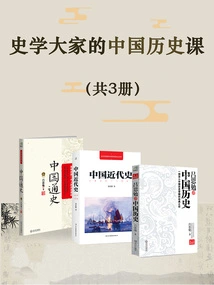
史学大家的中国历史课(套装共3册)
Jiang Tingfu Lu Simian
This is a set of classic Chinese history textbooks, including "General History of China", "Modern History of China", and "Lu Simian Lectures on Chinese History". Whether you are a history buff or a professional, it is worth studying carefully. The full name of "General History of China" is "Self-study and Applicable Vernacular History of the Country", which was perfected by Mr. Lu Simian on the basis of teaching lectures and historical research over the years. The book describes in detail the history of China from ancient times to the Washington Conference in the 11th year of the Republic of China (1922). It is a comprehensive history of China in a complete sense. "Modern History of China" is an outline work. It is the representative work of Mr. Jiang Tingfu, a historian and diplomat of the Republic of China who is known as "the talent of Tai Shigong and the ambition of Zhang Qian". This history book records the evolution and characters of nearly a hundred years from the Opium War to the Revolution of 1911. There is no boring textual research or accumulation of historical materials, but it fully shows the fate of the family and the country and the trend of social development. The historical framework and chronological history system it constructed once led the trend of modern history research and were highly praised by later researchers. It is called the pioneering work of modern Chinese history research. "Lu Simian Lectures on Chinese History" is one of Mr. Lu Simian's two major general history masterpieces, and it is also the highlight of the study of Chinese cultural history during the Republic of China.
This is a set of classic Chinese history textbooks, including "General History of China", "Modern History of China", and "Lu Simian Lectures on Chinese History". Whether you are a history buff or a professional, it is worth studying carefully. The full name of "General History of China" is "Self-study and Applicable Vernacular History of the Country", which was perfected by Mr. Lu Simian on the basis of teaching lectures and historical research over the years. The book describes in detail the history of China from ancient times to the Washington Conference in the 11th year of the Republic of China (1922). It is a comprehensive history of China in a complete sense. "Modern History of China" is an outline work. It is the representative work of Mr. Jiang Tingfu, a historian and diplomat of the Republic of China who is known as "the talent of Tai Shigong and the ambition of Zhang Qian". This history book records the evolution and characters of nearly a hundred years from the Opium War to the Revolution of 1911. There is no boring textual research or accumulation of historical materials, but it fully shows the fate of the family and the country and the trend of social development. The historical framework and chronological history system it constructed once led the trend of modern history research and were highly praised by later researchers. It is called the pioneering work of modern Chinese history research. "Lu Simian Lectures on Chinese History" is one of Mr. Lu Simian's two major general history masterpieces, and it is also the highlight of the study of Chinese cultural history during the Republic of China.
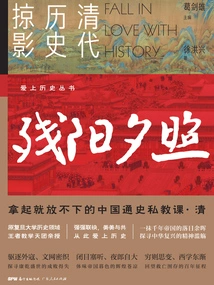
残阳夕照:清代历史掠影
Xu Hongxing
The Qing Dynasty was the last centralized autocratic monarchy in Chinese history. It laid the territorial foundation of modern China. It was also during the Qing Dynasty that China was dragged into the global whirlpool of modernization and began the modern process of coexistence of humiliation and resistance. At this time, China is like an old man staggering into the last stage of his journey after a long period of time. This is an era of rapid changes: dynasty-changing wars, talented and ambitious emperors, unprecedented territories, the "prosperity" of killing hearts and minds, the suppression of ideology and culture, the ugliness of corrupt officials, the invasion of Western powers, the flames of peasant wars, the self-rescue of enlightened scholars, the spread of foreign cultures to the east, attempts at reform and reform, revolutions that overthrew the monarchy... All of these have left us with too many thought-provoking stories.
The Qing Dynasty was the last centralized autocratic monarchy in Chinese history. It laid the territorial foundation of modern China. It was also during the Qing Dynasty that China was dragged into the global whirlpool of modernization and began the modern process of coexistence of humiliation and resistance. At this time, China is like an old man staggering into the last stage of his journey after a long period of time. This is an era of rapid changes: dynasty-changing wars, talented and ambitious emperors, unprecedented territories, the "prosperity" of killing hearts and minds, the suppression of ideology and culture, the ugliness of corrupt officials, the invasion of Western powers, the flames of peasant wars, the self-rescue of enlightened scholars, the spread of foreign cultures to the east, attempts at reform and reform, revolutions that overthrew the monarchy... All of these have left us with too many thought-provoking stories.
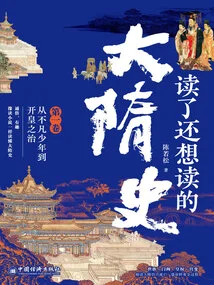
读了还想读的大隋史第一卷:从不凡少年到开皇之治
Chen Ruosong
This book is mainly for people who are interested in history. It has three volumes and tells the entire history of the Sui Dynasty. The Sui Dynasty (581-618) was a unified dynasty in Chinese history with two emperors and lasted for 38 years. The Sui Dynasty carried out reforms in the fields of politics, economy, culture and diplomacy, created the three-province and six-ministry system, consolidated centralization, formally implemented the imperial examination system, selected outstanding talents, weakened the monopoly of officials by aristocratic families, and established the political hall discussion system, supervision system, performance appraisal system, etc. With time as the main line and history as the context, this book tells the entire history from 581, when Emperor Jing of the Northern Zhou Dynasty abdicated to Prime Minister Yang Jian, the fall of the Northern Zhou Dynasty, and Emperor Wen of the Sui Dynasty Yang Jian's country was named "Sui", to 618, when Li Yuan and Yang You abdicated, and the Sui Dynasty fell. The text of this book is humorous and lively, the illustrations are simple, the historical facts are rigorous, and it has a certain degree of readability.
This book is mainly for people who are interested in history. It has three volumes and tells the entire history of the Sui Dynasty. The Sui Dynasty (581-618) was a unified dynasty in Chinese history with two emperors and lasted for 38 years. The Sui Dynasty carried out reforms in the fields of politics, economy, culture and diplomacy, created the three-province and six-ministry system, consolidated centralization, formally implemented the imperial examination system, selected outstanding talents, weakened the monopoly of officials by aristocratic families, and established the political hall discussion system, supervision system, performance appraisal system, etc. With time as the main line and history as the context, this book tells the entire history from 581, when Emperor Jing of the Northern Zhou Dynasty abdicated to Prime Minister Yang Jian, the fall of the Northern Zhou Dynasty, and Emperor Wen of the Sui Dynasty Yang Jian's country was named "Sui", to 618, when Li Yuan and Yang You abdicated, and the Sui Dynasty fell. The text of this book is humorous and lively, the illustrations are simple, the historical facts are rigorous, and it has a certain degree of readability.
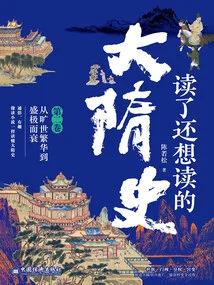
读了还想读的大隋史第二卷:从旷世繁华到盛极而衰
Chen Ruosong
This book is mainly for people who are interested in history. It has three volumes and tells the entire history of the Sui Dynasty. The Sui Dynasty (581-618) was a unified dynasty in Chinese history with two emperors and lasted for 38 years. The Sui Dynasty carried out reforms in the fields of politics, economy, culture and diplomacy, created the three-province and six-ministry system, consolidated centralization, formally implemented the imperial examination system, selected outstanding talents, weakened the monopoly of officials by aristocratic families, and established the political hall discussion system, supervision system, performance appraisal system, etc. With time as the main line and history as the context, this book tells the entire history from 581, when Emperor Jing of the Northern Zhou Dynasty abdicated to Prime Minister Yang Jian, the fall of the Northern Zhou Dynasty, and Emperor Wen of the Sui Dynasty Yang Jian's country was named "Sui", to 618, when Li Yuan and Yang You abdicated, and the Sui Dynasty fell. The text of this book is humorous and lively, the illustrations are simple, the historical facts are rigorous, and it has a certain degree of readability.
This book is mainly for people who are interested in history. It has three volumes and tells the entire history of the Sui Dynasty. The Sui Dynasty (581-618) was a unified dynasty in Chinese history with two emperors and lasted for 38 years. The Sui Dynasty carried out reforms in the fields of politics, economy, culture and diplomacy, created the three-province and six-ministry system, consolidated centralization, formally implemented the imperial examination system, selected outstanding talents, weakened the monopoly of officials by aristocratic families, and established the political hall discussion system, supervision system, performance appraisal system, etc. With time as the main line and history as the context, this book tells the entire history from 581, when Emperor Jing of the Northern Zhou Dynasty abdicated to Prime Minister Yang Jian, the fall of the Northern Zhou Dynasty, and Emperor Wen of the Sui Dynasty Yang Jian's country was named "Sui", to 618, when Li Yuan and Yang You abdicated, and the Sui Dynasty fell. The text of this book is humorous and lively, the illustrations are simple, the historical facts are rigorous, and it has a certain degree of readability.
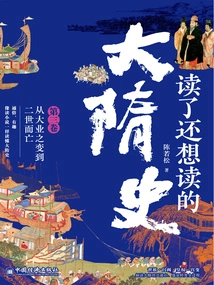
读了还想读的大隋史第三卷:从大业之变到二世而亡
Chen Ruosong
This book is mainly for people who are interested in history. It has three volumes and tells the entire history of the Sui Dynasty. The Sui Dynasty (581-618) was a unified dynasty in Chinese history with two emperors and lasted for 38 years. The Sui Dynasty carried out reforms in the fields of politics, economy, culture and diplomacy, created the three-province and six-ministry system, consolidated centralization, formally implemented the imperial examination system, selected outstanding talents, weakened the monopoly of officials by aristocratic families, and established the political hall discussion system, supervision system, performance appraisal system, etc. With time as the main line and history as the context, this book tells the entire history from 581, when Emperor Jing of the Northern Zhou Dynasty abdicated to Prime Minister Yang Jian, the fall of the Northern Zhou Dynasty, and Emperor Wen of the Sui Dynasty Yang Jian's country was named "Sui", to 618, when Li Yuan and Yang You abdicated, and the Sui Dynasty fell. The text of this book is humorous and lively, the illustrations are simple, the historical facts are rigorous, and it has a certain degree of readability.
This book is mainly for people who are interested in history. It has three volumes and tells the entire history of the Sui Dynasty. The Sui Dynasty (581-618) was a unified dynasty in Chinese history with two emperors and lasted for 38 years. The Sui Dynasty carried out reforms in the fields of politics, economy, culture and diplomacy, created the three-province and six-ministry system, consolidated centralization, formally implemented the imperial examination system, selected outstanding talents, weakened the monopoly of officials by aristocratic families, and established the political hall discussion system, supervision system, performance appraisal system, etc. With time as the main line and history as the context, this book tells the entire history from 581, when Emperor Jing of the Northern Zhou Dynasty abdicated to Prime Minister Yang Jian, the fall of the Northern Zhou Dynasty, and Emperor Wen of the Sui Dynasty Yang Jian's country was named "Sui", to 618, when Li Yuan and Yang You abdicated, and the Sui Dynasty fell. The text of this book is humorous and lively, the illustrations are simple, the historical facts are rigorous, and it has a certain degree of readability.
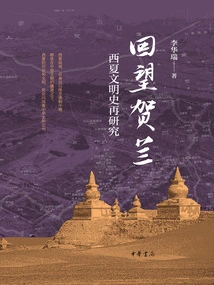
回望贺兰:西夏文明史再研究
Li Huarui
Focusing on the grand theme of the attributes and historical status of the Xixia civilization, this book conducts comprehensive and systematic observations and discussions on the aspects of ethnicity, religion, politics, law, history, literature, art, language, characters and historical background on the basis of sorting out the fruitful results achieved in the study of Xixia history at home and abroad. It puts forward the view that the Xixia civilization from the 11th to the 13th century is a reconstruction of the Chinese civilization of the Han and Tang Dynasties. With rich content and broad vision, it represents an important breakthrough and significant progress in the field of Xixia history research.
Focusing on the grand theme of the attributes and historical status of the Xixia civilization, this book conducts comprehensive and systematic observations and discussions on the aspects of ethnicity, religion, politics, law, history, literature, art, language, characters and historical background on the basis of sorting out the fruitful results achieved in the study of Xixia history at home and abroad. It puts forward the view that the Xixia civilization from the 11th to the 13th century is a reconstruction of the Chinese civilization of the Han and Tang Dynasties. With rich content and broad vision, it represents an important breakthrough and significant progress in the field of Xixia history research.
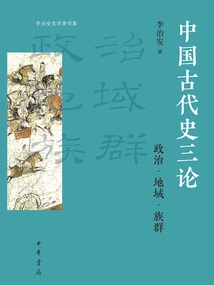
中国古代史三论:政治·地域·族群(李治安史学著作集)
Li Zhian
Professor Li Zhian is a famous Yuan historian and is known for his research on the political system and political culture of the Yuan Dynasty. In recent years, his academic vision has expanded to a longer period of discussion of medieval history, striving to combine microscopic textual research with macroscopic longitudinal analysis, trying to change the bias of trivial fragmentation. This book contains 11 historical papers published by the author in "Historical Research", "Chinese Social Sciences", "Literature, History and Philosophy" and other publications. With a comprehensive perspective, the focus is on clarifying the ins and outs of the three topics of political domination, northern and southern regions, and ethnic integration and their manifestations in each period, focusing on grasping the intricate interweaving or mutual influence of political domination, regional differences, and ethnic relations, and making informed decisions. The author attaches equal importance to textual evidence and theoretical thinking, abandons the deduction of concepts and terms, and comprehensively promotes the re-understanding of medieval history with new methods, new questions, and new perspectives through multi-dimensional integrated research.
Professor Li Zhian is a famous Yuan historian and is known for his research on the political system and political culture of the Yuan Dynasty. In recent years, his academic vision has expanded to a longer period of discussion of medieval history, striving to combine microscopic textual research with macroscopic longitudinal analysis, trying to change the bias of trivial fragmentation. This book contains 11 historical papers published by the author in "Historical Research", "Chinese Social Sciences", "Literature, History and Philosophy" and other publications. With a comprehensive perspective, the focus is on clarifying the ins and outs of the three topics of political domination, northern and southern regions, and ethnic integration and their manifestations in each period, focusing on grasping the intricate interweaving or mutual influence of political domination, regional differences, and ethnic relations, and making informed decisions. The author attaches equal importance to textual evidence and theoretical thinking, abandons the deduction of concepts and terms, and comprehensively promotes the re-understanding of medieval history with new methods, new questions, and new perspectives through multi-dimensional integrated research.
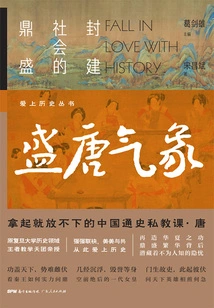
盛唐气象:封建社会的鼎盛(爱上历史丛书)
Song Changbin
This book selects a number of nodes from the long history of the Sui and Tang Dynasties. It focuses on the introduction of well-known historical figures such as Emperor Yang of the Sui Dynasty, Emperor Taizong of the Tang Dynasty, and Wu Zetian. It provides precise reviews of feudal governance such as the "Reign of Zhenguan" and "Yuanhe Zhongxing", as well as in-depth analysis of major historical events such as the "Xuanwumen Incident" and "Anshi Rebellion". The analysis and comprehensive discussion of the development and evolution of the land equalization system, the military service system, the imperial examination system and other legal systems outline a grand picture of the "prosperity of the Tang Dynasty" from different aspects. It provides an excellent entry point for us to comprehensively and systematically understand the history of the Sui and Tang Dynasties. At the same time, we hope that readers can benefit from it.
This book selects a number of nodes from the long history of the Sui and Tang Dynasties. It focuses on the introduction of well-known historical figures such as Emperor Yang of the Sui Dynasty, Emperor Taizong of the Tang Dynasty, and Wu Zetian. It provides precise reviews of feudal governance such as the "Reign of Zhenguan" and "Yuanhe Zhongxing", as well as in-depth analysis of major historical events such as the "Xuanwumen Incident" and "Anshi Rebellion". The analysis and comprehensive discussion of the development and evolution of the land equalization system, the military service system, the imperial examination system and other legal systems outline a grand picture of the "prosperity of the Tang Dynasty" from different aspects. It provides an excellent entry point for us to comprehensively and systematically understand the history of the Sui and Tang Dynasties. At the same time, we hope that readers can benefit from it.
六合一统:中华帝国的崛起(爱上历史丛书)
Yang Zhigang
This book provides a profound analysis of a series of major events that occurred in the process of the Qin Dynasty, the first unified empire in Chinese history, rising from a barbaric land step by step with difficulty, then sweeping across the six kingdoms of Shandong and unifying the world, and then quickly falling apart. Against the background of the rapid transformation of the state during the Spring and Autumn Period and the Warring States Period, this article explains the rise and fall of the Qin State - the Qin Dynasty - from various levels including politics, economy, military, ideology, geographical environment, regional culture, and the personal roles of certain figures, and understands and grasps the pulse and development trajectory of this period of history. It also uses simple and easy-to-understand language and vivid and detailed cases to alert the world.
This book provides a profound analysis of a series of major events that occurred in the process of the Qin Dynasty, the first unified empire in Chinese history, rising from a barbaric land step by step with difficulty, then sweeping across the six kingdoms of Shandong and unifying the world, and then quickly falling apart. Against the background of the rapid transformation of the state during the Spring and Autumn Period and the Warring States Period, this article explains the rise and fall of the Qin State - the Qin Dynasty - from various levels including politics, economy, military, ideology, geographical environment, regional culture, and the personal roles of certain figures, and understands and grasps the pulse and development trajectory of this period of history. It also uses simple and easy-to-understand language and vivid and detailed cases to alert the world.
大明风云:明朝兴亡启示录(爱上历史丛书)
An Zhen
The Ming Dynasty was an important dynasty in the late feudal society of China. It was born in the smoke of the vigorous peasant war in the late Yuan Dynasty, and was submerged by the magnificent peasant uprising in the late Ming Dynasty. More than two hundred and seventy years of vicissitudes have left countless lamentable stories: centralization of power has been greatly strengthened, exchanges between China and the West have continued to deepen, the seeds of capitalism have begun to appear, and citizen culture has unprecedented prosperity... All of these demonstrate the complexity and richness of this period of history. Based on this, this book strives to get rid of the shackles of traditional history books and conduct in-depth analysis and interpretation of major events and important figures in the history of the Ming Dynasty from different angles and levels. It hopes to present readers with a general history of the Ming Dynasty that is very different from similar works.
The Ming Dynasty was an important dynasty in the late feudal society of China. It was born in the smoke of the vigorous peasant war in the late Yuan Dynasty, and was submerged by the magnificent peasant uprising in the late Ming Dynasty. More than two hundred and seventy years of vicissitudes have left countless lamentable stories: centralization of power has been greatly strengthened, exchanges between China and the West have continued to deepen, the seeds of capitalism have begun to appear, and citizen culture has unprecedented prosperity... All of these demonstrate the complexity and richness of this period of history. Based on this, this book strives to get rid of the shackles of traditional history books and conduct in-depth analysis and interpretation of major events and important figures in the history of the Ming Dynasty from different angles and levels. It hopes to present readers with a general history of the Ming Dynasty that is very different from similar works.
文盛武衰:宋朝历史一瞥(爱上历史丛书)
Xu Hongxing Yao Rongtao
Regarding the Song Dynasty, people's impressions are inevitably stereotyped. They believe that the Song Dynasty valued literature over military affairs and was weak. However, it is undeniable that its economic prosperity and cultural prosperity were unprecedented in history. The political and military decline formed an extremely sharp contrast with the economic and cultural glory. They seemed to coexist in disharmony, which triggered very different evaluations from history readers of the past generations. This book focuses on major historical events or social phenomena such as the end of the wars of the Five Dynasties, the strengthening of centralization of power, and the implementation of the policy of right culture and restraint of force. At the same time, it re-examines the history of the two Song Dynasties from various aspects such as politics, economy, culture, diplomacy, science and technology, hoping to arouse the resonance of readers.
Regarding the Song Dynasty, people's impressions are inevitably stereotyped. They believe that the Song Dynasty valued literature over military affairs and was weak. However, it is undeniable that its economic prosperity and cultural prosperity were unprecedented in history. The political and military decline formed an extremely sharp contrast with the economic and cultural glory. They seemed to coexist in disharmony, which triggered very different evaluations from history readers of the past generations. This book focuses on major historical events or social phenomena such as the end of the wars of the Five Dynasties, the strengthening of centralization of power, and the implementation of the policy of right culture and restraint of force. At the same time, it re-examines the history of the two Song Dynasties from various aspects such as politics, economy, culture, diplomacy, science and technology, hoping to arouse the resonance of readers.
tianma" Nan Mu: Society and Culture of the Yuan Dynasty (falling in Love with History Series)
History“天马”南牧:元朝的社会与文化(爱上历史丛书)
Yao Dali
As the first national political power established by ethnic minorities in Chinese history, the Yuan Dynasty not only had a vast territory, but also made unprecedented achievements in cultural exchanges between China and the West. Through more than a hundred years of ups and downs, the prototype of a multi-ethnic unified country has emerged before us. This book organizes this complex history into a volume in the form of series of narratives, with clear outlines and precise expositions. The three Western Expeditions, Tubo prefectures and counties, and the Red Turban Uprising are all analyzed in detail. The manuscript not only pays attention to readability and interest, but also takes into account the reference and guidance value of history on life and society. It is suitable for both refined and popular people, and explains the profound things in simple terms. It is hoped that it can arouse the thinking and resonance of more readers.
As the first national political power established by ethnic minorities in Chinese history, the Yuan Dynasty not only had a vast territory, but also made unprecedented achievements in cultural exchanges between China and the West. Through more than a hundred years of ups and downs, the prototype of a multi-ethnic unified country has emerged before us. This book organizes this complex history into a volume in the form of series of narratives, with clear outlines and precise expositions. The three Western Expeditions, Tubo prefectures and counties, and the Red Turban Uprising are all analyzed in detail. The manuscript not only pays attention to readability and interest, but also takes into account the reference and guidance value of history on life and society. It is suitable for both refined and popular people, and explains the profound things in simple terms. It is hoped that it can arouse the thinking and resonance of more readers.
汉末晋初之际政治研究(增订本)
Liu Chunxin
This book is a political history work based on a monograph. It deeply explores the political changes in the approximately one hundred years from Wang Gang's unification of New York at the end of the Han Dynasty to the reunification of the Western Jin Dynasty. The book discusses the development, evolution and struggles of ruling groups such as the Yuan regime, Cao Cao regime, Cao Shuang group, and Sima regime in the late Han Dynasty from the perspectives of macro situation, social atmosphere, political culture, institutional structure, political events, and family cases. It also analyzes the governance policies of rulers at different stages, such as Cao Cao, Emperor Wen of Wei, Emperor Ming of Wei, and Emperor Wu of Jin, as well as their pros and cons. From the chaotic historical events, we stick to the simple and avoid the complex, select major issues related to the political structure at that time and even the characteristics of the entire era, and conduct case studies. Each chapter is independent of each other, but also logically connected and linked to each other, outlining the basic clues and overall appearance of the political evolution of the late Han, Wei, and Jin Dynasties. In this reprint, the organizer has added several articles according to the author's plan during his lifetime, which more comprehensively demonstrates the author's academic achievements in the field of political history of the Wei, Jin, Southern and Northern Dynasties.
This book is a political history work based on a monograph. It deeply explores the political changes in the approximately one hundred years from Wang Gang's unification of New York at the end of the Han Dynasty to the reunification of the Western Jin Dynasty. The book discusses the development, evolution and struggles of ruling groups such as the Yuan regime, Cao Cao regime, Cao Shuang group, and Sima regime in the late Han Dynasty from the perspectives of macro situation, social atmosphere, political culture, institutional structure, political events, and family cases. It also analyzes the governance policies of rulers at different stages, such as Cao Cao, Emperor Wen of Wei, Emperor Ming of Wei, and Emperor Wu of Jin, as well as their pros and cons. From the chaotic historical events, we stick to the simple and avoid the complex, select major issues related to the political structure at that time and even the characteristics of the entire era, and conduct case studies. Each chapter is independent of each other, but also logically connected and linked to each other, outlining the basic clues and overall appearance of the political evolution of the late Han, Wei, and Jin Dynasties. In this reprint, the organizer has added several articles according to the author's plan during his lifetime, which more comprehensively demonstrates the author's academic achievements in the field of political history of the Wei, Jin, Southern and Northern Dynasties.
三国史
Ma Zhijie
This book is a chronological history work that tells the story of the Three Kingdoms era in a broad sense, that is, the historical events from the end of the Eastern Han Dynasty to the unification of the Western Jin Dynasty for nearly a hundred years. The book gives a detailed description of the separatist rule at the end of the Han Dynasty and the rise and fall of the Wei, Shu and Wu kingdoms, and analyzes the important figures and historical events. Based on historical records, it corrects some errors in common statements. It also sorts out the institutional changes and innovations, the development of agriculture, industry and commerce, and the achievements of academic culture and literary creation in the Three Kingdoms era, comprehensively showing the appearance of the Three Kingdoms era. This book has solid historical materials, rigorous exposition, and concise and fluent language. It is a chronological history work that is both rich in academic weight and fluent and easy to read. It has high publication value.
This book is a chronological history work that tells the story of the Three Kingdoms era in a broad sense, that is, the historical events from the end of the Eastern Han Dynasty to the unification of the Western Jin Dynasty for nearly a hundred years. The book gives a detailed description of the separatist rule at the end of the Han Dynasty and the rise and fall of the Wei, Shu and Wu kingdoms, and analyzes the important figures and historical events. Based on historical records, it corrects some errors in common statements. It also sorts out the institutional changes and innovations, the development of agriculture, industry and commerce, and the achievements of academic culture and literary creation in the Three Kingdoms era, comprehensively showing the appearance of the Three Kingdoms era. This book has solid historical materials, rigorous exposition, and concise and fluent language. It is a chronological history work that is both rich in academic weight and fluent and easy to read. It has high publication value.
失败的胜利:大秦最后的50年
Luo Sanyang
An unprecedented unification war made the Qin people proud and proud after more than 500 years of struggle, creating a great era with the theme of "great unification". Qin Shihuang was ambitious and carried out drastic measures to eradicate the old and innovate. However, in just the past 14 years, the emerging Qin Dynasty fell into the abyss of national subjugation, and the dream of "one lineage for all generations" was shattered. Why was the Qin State able to defeat the Six Kingdoms, but the Qin Dynasty collapsed in the blink of an eye? Why is the rule of the Qin Dynasty not accepted, but the Qin system can be passed down for thousands of years? The answer lies in the last 50 years of Qin's history.
An unprecedented unification war made the Qin people proud and proud after more than 500 years of struggle, creating a great era with the theme of "great unification". Qin Shihuang was ambitious and carried out drastic measures to eradicate the old and innovate. However, in just the past 14 years, the emerging Qin Dynasty fell into the abyss of national subjugation, and the dream of "one lineage for all generations" was shattered. Why was the Qin State able to defeat the Six Kingdoms, but the Qin Dynasty collapsed in the blink of an eye? Why is the rule of the Qin Dynasty not accepted, but the Qin system can be passed down for thousands of years? The answer lies in the last 50 years of Qin's history.
被低估的短命王朝:隋朝37年
Qin Yiming
He unified the north and south, established the imperial examination, and established the system of three provinces and six ministries; he dug canals and reopened the Western Regions, attracting all nations to come to court. After more than 300 years of division and chaos, the Sui Dynasty made a high-profile appearance, ushering in the second era of great unification in Chinese history, and its achievements have benefited thousands of years. Seeing the building rise, everything is full of vitality again. However, in an instant, the building was in danger. The construction of Daxing City, the construction of the Eastern Capital, the northern inspection of the grasslands, three expeditions to the south of the Yangtze River, and three expeditions to Goguryeo... Various measures taken by the Sui Dynasty overwhelmed the people, and the uprising spread rapidly across the country. In the end, the Sui Dynasty only lasted for two generations and came to an end in 37 years, becoming a meteor in Chinese history. Why was a pioneering and forward-looking dynasty overwhelmed by its grand ambitions? And why did a dynasty that only lasted for 37 years influence future generations for thousands of years? This is the question this book seeks to answer.
He unified the north and south, established the imperial examination, and established the system of three provinces and six ministries; he dug canals and reopened the Western Regions, attracting all nations to come to court. After more than 300 years of division and chaos, the Sui Dynasty made a high-profile appearance, ushering in the second era of great unification in Chinese history, and its achievements have benefited thousands of years. Seeing the building rise, everything is full of vitality again. However, in an instant, the building was in danger. The construction of Daxing City, the construction of the Eastern Capital, the northern inspection of the grasslands, three expeditions to the south of the Yangtze River, and three expeditions to Goguryeo... Various measures taken by the Sui Dynasty overwhelmed the people, and the uprising spread rapidly across the country. In the end, the Sui Dynasty only lasted for two generations and came to an end in 37 years, becoming a meteor in Chinese history. Why was a pioneering and forward-looking dynasty overwhelmed by its grand ambitions? And why did a dynasty that only lasted for 37 years influence future generations for thousands of years? This is the question this book seeks to answer.
血与火的50年:昙花一现的西晋
Zhang Qidi
The Western Jin Dynasty ended the era of division of the Three Kingdoms and once again achieved national unification. However, the internal power structure of the Western Jin Dynasty was very fragile, and it faced serious external threats. Under internal and external difficulties, the Western Jin Dynasty quickly collapsed, which ushered in nearly three hundred years of chaos and division. Politics, culture, and ideas were all reconstructed and reborn in the collision, which affected the subsequent prosperity of the Sui and Tang Dynasties. This book is divided into two volumes, starting from Wei Ming Emperor Cao Ruituogu, and completely restores the history of the Western Jin Dynasty from the Sima family's rise to power to the establishment of the Wei Dynasty and the establishment of the Jin Dynasty, to the Rebellion of the Eight Kings, and finally the rapid collapse of the Western Jin Dynasty. It analyzes in detail how this fragile dynasty came to its demise step by step from various aspects such as political structure, power struggle, and ethnic migration, and explores the transcendent significance behind the rise and fall of the Western Jin Dynasty, allowing readers to have a deeper understanding of the history of the Western Jin Dynasty.
The Western Jin Dynasty ended the era of division of the Three Kingdoms and once again achieved national unification. However, the internal power structure of the Western Jin Dynasty was very fragile, and it faced serious external threats. Under internal and external difficulties, the Western Jin Dynasty quickly collapsed, which ushered in nearly three hundred years of chaos and division. Politics, culture, and ideas were all reconstructed and reborn in the collision, which affected the subsequent prosperity of the Sui and Tang Dynasties. This book is divided into two volumes, starting from Wei Ming Emperor Cao Ruituogu, and completely restores the history of the Western Jin Dynasty from the Sima family's rise to power to the establishment of the Wei Dynasty and the establishment of the Jin Dynasty, to the Rebellion of the Eight Kings, and finally the rapid collapse of the Western Jin Dynasty. It analyzes in detail how this fragile dynasty came to its demise step by step from various aspects such as political structure, power struggle, and ethnic migration, and explores the transcendent significance behind the rise and fall of the Western Jin Dynasty, allowing readers to have a deeper understanding of the history of the Western Jin Dynasty.