Library
Browse and search books
2,273 novels found
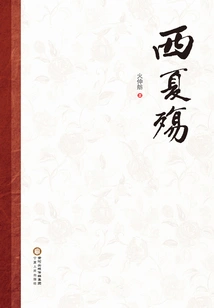
Xixia Shang
General Fiction西夏殇
Huo Zhongfang
This book is a long historical novel that revolves around the Battle of Haoshuichuan between Song and Xia. It mainly uses the stories of the Nan family, Zhang Yuan, Yuan Hao, Yang Jiajiang, Wang Qiang and other characters as clues to show a small-scale historical scene of war and peace between Song and Xia, as well as the tragic ending of the characters in the book in the context of the war. The plot of the novel is cleverly conceived and intriguing.
This book is a long historical novel that revolves around the Battle of Haoshuichuan between Song and Xia. It mainly uses the stories of the Nan family, Zhang Yuan, Yuan Hao, Yang Jiajiang, Wang Qiang and other characters as clues to show a small-scale historical scene of war and peace between Song and Xia, as well as the tragic ending of the characters in the book in the context of the war. The plot of the novel is cleverly conceived and intriguing.
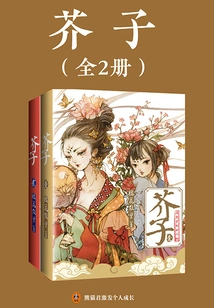
Mustard Seed (2 Volumes in Total)
General Fiction芥子(全2册)
Orange Blossoms
A classic masterpiece by Juhua Sanli, the author of "The General is Here"! 24 Little people around historical celebrities. Xumi hides mustard seeds, and mustard seeds absorb Xumi - in the three thousand worlds, everyone is a mustard seed. From the Spring and Autumn Period to the Republic of China, from palace maids and guards to merchants and children, little people took on the role of protagonists, performing a life that has not been recorded in history: Huang Gouer could assassinate Jing Ke for his beloved sister, and Niu Dali and Hua Mulan had an unknown relationship. Knowing the secret, the humble Lu Liuer will fight hard to survive, and the slave girl who pretends to be the real Daji turns out to be a witch who overthrows a country... The little people may not have names, they will live in history in another way.
A classic masterpiece by Juhua Sanli, the author of "The General is Here"! 24 Little people around historical celebrities. Xumi hides mustard seeds, and mustard seeds absorb Xumi - in the three thousand worlds, everyone is a mustard seed. From the Spring and Autumn Period to the Republic of China, from palace maids and guards to merchants and children, little people took on the role of protagonists, performing a life that has not been recorded in history: Huang Gouer could assassinate Jing Ke for his beloved sister, and Niu Dali and Hua Mulan had an unknown relationship. Knowing the secret, the humble Lu Liuer will fight hard to survive, and the slave girl who pretends to be the real Daji turns out to be a witch who overthrows a country... The little people may not have names, they will live in history in another way.
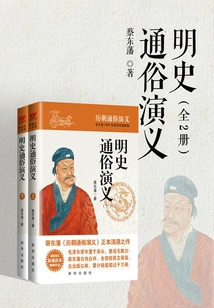
Popular Romance of the Past Dynasties: Popular Romance of the Ming Dynasty (complete Collection)
General Fiction历朝通俗演义:明史通俗演义(全集)
Cai Dongfan
This book is the simplified version of "The Popular Romance of Cai Dongfan's Past Dynasties" printed by Huiwentang in 1935. The Ming Dynasty, the last Central Plains dynasty in history, with Han as the main body, overthrew the rule of the Mongolian and Yuan Empire and restored the established political power. The history of the Ming Dynasty begins with the founding of the country by the civilian emperor Zhu Yuanzhang and ends with the death of Emperor Sizong of the Ming Dynasty. The Mongolian people were angry, so Zhu Yuanzhang rose to the occasion. Within a few years, he expelled Emperor Yuan and unified China. He finally drove the foreigners out of China, but he was afraid of constant harassment, so he had to build the Great Wall high and thick. It was only at this time that Zheng He, who made seven voyages to the West, appeared, and his huge fleet greatly promoted the power of the Ming Empire.
This book is the simplified version of "The Popular Romance of Cai Dongfan's Past Dynasties" printed by Huiwentang in 1935. The Ming Dynasty, the last Central Plains dynasty in history, with Han as the main body, overthrew the rule of the Mongolian and Yuan Empire and restored the established political power. The history of the Ming Dynasty begins with the founding of the country by the civilian emperor Zhu Yuanzhang and ends with the death of Emperor Sizong of the Ming Dynasty. The Mongolian people were angry, so Zhu Yuanzhang rose to the occasion. Within a few years, he expelled Emperor Yuan and unified China. He finally drove the foreigners out of China, but he was afraid of constant harassment, so he had to build the Great Wall high and thick. It was only at this time that Zheng He, who made seven voyages to the West, appeared, and his huge fleet greatly promoted the power of the Ming Empire.
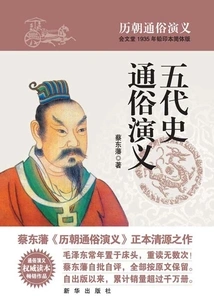
历朝通俗演义:五代史通俗演义
Cai Dongfan
This book is the simplified version of "The Popular Romance of Cai Dongfan's Past Dynasties" printed by Huiwentang in 1935. The history of the Five Dynasties begins with the establishment of the Later Liang Dynasty by Zhu Quanzhong and ends with the establishment of the Song Dynasty by Zhao Kuangyin on behalf of the Zhou Dynasty. In this era, the situation was chaotic and warlords easily proclaimed themselves emperors. Zhu Quanzhong established the Later Liang regime, but was defeated by another feudal warlord, Li Cunxu, who established the Later Tang regime. Emperor Shi Jingtang relied on Khitan to establish the Later Jin regime, but the regime died at the hands of Khitan. Liu Zhiyuan of the Later Han Dynasty expelled the Khitan, but was replaced by the powerful Guo Wei. The same fate happened the following week, and Zhao Kuangyin became the end of the era.
This book is the simplified version of "The Popular Romance of Cai Dongfan's Past Dynasties" printed by Huiwentang in 1935. The history of the Five Dynasties begins with the establishment of the Later Liang Dynasty by Zhu Quanzhong and ends with the establishment of the Song Dynasty by Zhao Kuangyin on behalf of the Zhou Dynasty. In this era, the situation was chaotic and warlords easily proclaimed themselves emperors. Zhu Quanzhong established the Later Liang regime, but was defeated by another feudal warlord, Li Cunxu, who established the Later Tang regime. Emperor Shi Jingtang relied on Khitan to establish the Later Jin regime, but the regime died at the hands of Khitan. Liu Zhiyuan of the Later Han Dynasty expelled the Khitan, but was replaced by the powerful Guo Wei. The same fate happened the following week, and Zhao Kuangyin became the end of the era.
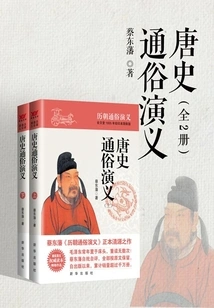
Popular Romance of the Past Dynasties: Popular Romance of Tang History (complete Collection)
General Fiction历朝通俗演义:唐史通俗演义(全集)
Cai Dongfan
This book is the simplified version of "The Popular Romance of Cai Dongfan's Past Dynasties" printed by Huiwentang in 1935. The ancestors of the Li family were able to maintain their strength amidst the chaos at the end of the Sui Dynasty and conquered the world in one fell swoop. Taizong Li Shimin is well known for the establishment of the Tang Empire. He successfully obtained the throne despite weak opposition and initiated the rule of Zhenguan. Later, the unprecedented female emperor Wu Zetian continued the empire's prosperity. Tang Xuanzong's Kaiyuan Tianbao Reign followed immediately, and the empire dominated all corners of the world in the land of Middle-Earth. After the Anshi Rebellion, the Tang Empire began to decline. The separatist rule of vassal towns, the exclusive power of eunuchs, and crony warfare became the cancer of Tang Dynasty politics. Eunuchs controlled the fate of this crumbling empire. While the central characters inadvertently escaped from history, in order to end the war, the opposition forces were legalized on the spot. Coupled with the disobedient warlords of the feudal towns, the empire happened to be very aware of the current affairs and muddle along. During a long period of calm contemplation, the out-of-control empire also had reverie to cheer up, but in the end it could not be restored.
This book is the simplified version of "The Popular Romance of Cai Dongfan's Past Dynasties" printed by Huiwentang in 1935. The ancestors of the Li family were able to maintain their strength amidst the chaos at the end of the Sui Dynasty and conquered the world in one fell swoop. Taizong Li Shimin is well known for the establishment of the Tang Empire. He successfully obtained the throne despite weak opposition and initiated the rule of Zhenguan. Later, the unprecedented female emperor Wu Zetian continued the empire's prosperity. Tang Xuanzong's Kaiyuan Tianbao Reign followed immediately, and the empire dominated all corners of the world in the land of Middle-Earth. After the Anshi Rebellion, the Tang Empire began to decline. The separatist rule of vassal towns, the exclusive power of eunuchs, and crony warfare became the cancer of Tang Dynasty politics. Eunuchs controlled the fate of this crumbling empire. While the central characters inadvertently escaped from history, in order to end the war, the opposition forces were legalized on the spot. Coupled with the disobedient warlords of the feudal towns, the empire happened to be very aware of the current affairs and muddle along. During a long period of calm contemplation, the out-of-control empire also had reverie to cheer up, but in the end it could not be restored.
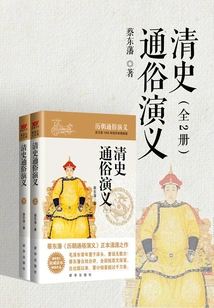
Popular Romance of the Past Dynasties: Popular Romance of Qing History (complete Collection)
General Fiction历朝通俗演义:清史通俗演义(全集)
Cai Dongfan
This book is the simplified version of "The Popular Romance of Cai Dongfan's Past Dynasties" printed by Huiwentang in 1935. After the Qing army entered the customs, it became the second foreign regime after the Mongols. It established the heyday of Kang, Yongzong and Qianlong and determined the territory of modern China. While the Western world was undergoing rapid changes due to the Industrial Revolution, the Qing Empire, which was in a state of stagnation, could not escape reality after all. The people are suffering, and the West is coveting it. An Opium War pulled China into the category of modern history. In the next half century, China suffered from internal and external troubles and wars, which severely damaged its vitality. Although there were later reforms such as the Westernization Movement and the Reform Movement, they ended up being blocked by the conservative faction. The anti-foreign movement also led to the invasion of the Eight-Power Allied Forces, which eventually ceded territory and paid indemnities, leaving the Qing Empire unable to revive. In the end, the battle of Wuchang ruined the Qing Dynasty, and also ended the imperial era of more than two thousand years.
This book is the simplified version of "The Popular Romance of Cai Dongfan's Past Dynasties" printed by Huiwentang in 1935. After the Qing army entered the customs, it became the second foreign regime after the Mongols. It established the heyday of Kang, Yongzong and Qianlong and determined the territory of modern China. While the Western world was undergoing rapid changes due to the Industrial Revolution, the Qing Empire, which was in a state of stagnation, could not escape reality after all. The people are suffering, and the West is coveting it. An Opium War pulled China into the category of modern history. In the next half century, China suffered from internal and external troubles and wars, which severely damaged its vitality. Although there were later reforms such as the Westernization Movement and the Reform Movement, they ended up being blocked by the conservative faction. The anti-foreign movement also led to the invasion of the Eight-Power Allied Forces, which eventually ceded territory and paid indemnities, leaving the Qing Empire unable to revive. In the end, the battle of Wuchang ruined the Qing Dynasty, and also ended the imperial era of more than two thousand years.
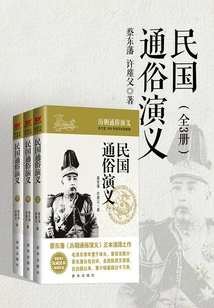
Popular Romance of the Past Dynasties: Popular Romance of the Republic of China (complete Collection)
General Fiction历朝通俗演义:民国通俗演义(全集)
Cai Dongfan
This book is the simplified version of "The Popular Romance of Cai Dongfan's Past Dynasties" printed by Huiwentang in 1935. The Qing Empire collapsed and the imperial system was buried. The founding of the Republic of China was different from the previous monarchy. It was a republic established through the struggle of bourgeois democratic revolution. After the corruption of the late Qing dynasty and the invasion of capital powers, and the failure of the Sino-Japanese Sino-Japanese War of 1894-1898, China fell into a national crisis. The advanced Chinese people tried to save the nation, and the emerging bourgeois political forces began to enter the Chinese political stage. A group of people with lofty ideals headed by Sun Yat-sen began to revolutionize and save the country. Since then, the democratic revolution has begun. The establishment of the Republic of China originated from the revolution. At that time, various revolutionary uprisings emerged one after another, and eventually the Republic of China was born.
This book is the simplified version of "The Popular Romance of Cai Dongfan's Past Dynasties" printed by Huiwentang in 1935. The Qing Empire collapsed and the imperial system was buried. The founding of the Republic of China was different from the previous monarchy. It was a republic established through the struggle of bourgeois democratic revolution. After the corruption of the late Qing dynasty and the invasion of capital powers, and the failure of the Sino-Japanese Sino-Japanese War of 1894-1898, China fell into a national crisis. The advanced Chinese people tried to save the nation, and the emerging bourgeois political forces began to enter the Chinese political stage. A group of people with lofty ideals headed by Sun Yat-sen began to revolutionize and save the country. Since then, the democratic revolution has begun. The establishment of the Republic of China originated from the revolution. At that time, various revolutionary uprisings emerged one after another, and eventually the Republic of China was born.
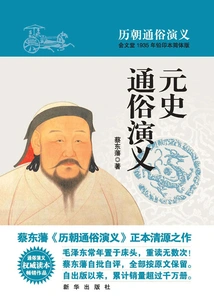
历朝通俗演义:元史通俗演义
Cai Dongfan
This book is the simplified version of "The Popular Romance of Cai Dongfan's Past Dynasties" printed by Huiwentang in 1935. The Great Yuan Dynasty began with Genghis Khan and ended with Zhu Yuanzhang. It was the first dynasty in history to establish and rule the country with the Mongolian minority. It was also the dynasty with the most extensive territory in history, and it was the first dynasty to conquer the entire country. First, Genghis Khan unified Mongolia, and then Emperor Shizu of the Yuan Dynasty defeated the Southern Song Dynasty and established the Yuan Dynasty. During the Yuan Dynasty, the Mongolian rulers repeatedly exploited the Han people, and even fought for years to expand their territory. As a result, the people were in dire straits and revolted one after another. In addition, they fought for power and war with each other internally, accelerating the demise of the Yuan Dynasty. Cai Gong discussed history and reproduced the rise and fall of the Yuan Dynasty with popular articles and witty comments.
This book is the simplified version of "The Popular Romance of Cai Dongfan's Past Dynasties" printed by Huiwentang in 1935. The Great Yuan Dynasty began with Genghis Khan and ended with Zhu Yuanzhang. It was the first dynasty in history to establish and rule the country with the Mongolian minority. It was also the dynasty with the most extensive territory in history, and it was the first dynasty to conquer the entire country. First, Genghis Khan unified Mongolia, and then Emperor Shizu of the Yuan Dynasty defeated the Southern Song Dynasty and established the Yuan Dynasty. During the Yuan Dynasty, the Mongolian rulers repeatedly exploited the Han people, and even fought for years to expand their territory. As a result, the people were in dire straits and revolted one after another. In addition, they fought for power and war with each other internally, accelerating the demise of the Yuan Dynasty. Cai Gong discussed history and reproduced the rise and fall of the Yuan Dynasty with popular articles and witty comments.
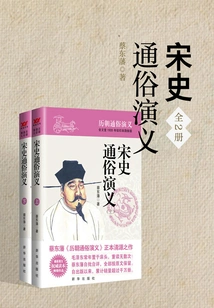
Popular Romance of the Past Dynasties: Popular Romance of Song Dynasty (complete Collection)
General Fiction历朝通俗演义:宋史通俗演义(全集)
Cai Dongfan
This book is the simplified version of "The Popular Romance of Cai Dongfan's Past Dynasties" printed by Huiwentang in 1935. The Song Dynasty inherited the Five Dynasties and Ten Kingdoms and the Yuan Dynasty. After a long journey through the Five Dynasties and Ten Kingdoms, the late Zhou general Zhao Kuangyin wore a yellow robe and established the Song Dynasty. In the early Northern Song Dynasty, in order to avoid the separatism of feudal vassal towns and the chaos of eunuchs since the late Tang Dynasty, the government adopted a policy of emphasizing culture and suppressing military force. On the one hand, it strengthened the centralization of power, and on the other hand, the economy and culture prospered unprecedentedly. Song Zhenzong and Song Renzong entered a prosperous period. Later, Jin soldiers invaded the south in a large scale. Strong neighbors in the north of the Great Wall continued to have foreign troubles. Half of the country was lost in the Jingkang disaster. After Jingkang, Emperor Gaozong and Zhao Gou rebuilt the empire in Suzhou and Hangzhou under heaven, and lost the illusion of returning to China.
This book is the simplified version of "The Popular Romance of Cai Dongfan's Past Dynasties" printed by Huiwentang in 1935. The Song Dynasty inherited the Five Dynasties and Ten Kingdoms and the Yuan Dynasty. After a long journey through the Five Dynasties and Ten Kingdoms, the late Zhou general Zhao Kuangyin wore a yellow robe and established the Song Dynasty. In the early Northern Song Dynasty, in order to avoid the separatism of feudal vassal towns and the chaos of eunuchs since the late Tang Dynasty, the government adopted a policy of emphasizing culture and suppressing military force. On the one hand, it strengthened the centralization of power, and on the other hand, the economy and culture prospered unprecedentedly. Song Zhenzong and Song Renzong entered a prosperous period. Later, Jin soldiers invaded the south in a large scale. Strong neighbors in the north of the Great Wall continued to have foreign troubles. Half of the country was lost in the Jingkang disaster. After Jingkang, Emperor Gaozong and Zhao Gou rebuilt the empire in Suzhou and Hangzhou under heaven, and lost the illusion of returning to China.
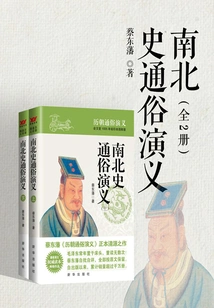
Popular Romance of the Past Dynasties: Popular Romance of Northern and Southern History (complete Collection)
General Fiction历朝通俗演义:南北史通俗演义(全集)
Cai Dongfan
This book is the simplified version of "The Popular Romance of Cai Dongfan's Past Dynasties" printed by Huiwentang in 1935. The Northern and Southern Dynasties was a famous period of division and confrontation in Chinese history. It extended from the Eastern Jin Dynasty and the Five Hus and Sixteen Kingdoms, to the Sui Dynasty, which suffered the fate of subjugation less than 40 years after its establishment. During this period, there were frequent regime changes, chaos and ups and downs, which are very memorable. During this period, the north and the south of China were divided and in conflict with each other. The Northern Dynasties were ruled by the Xianbei people and the Huhua Han people. The Southern Dynasties were a history of the rise and fall of the noble gentry. Even as the wheel of history rolled, a group of local tyrants in the south began to become separatist forces. Due to the change of dynasties, Chinese culture and humanistic customs have undergone great changes during the Southern and Northern Dynasties. It must be said that this is also a disguised development.
This book is the simplified version of "The Popular Romance of Cai Dongfan's Past Dynasties" printed by Huiwentang in 1935. The Northern and Southern Dynasties was a famous period of division and confrontation in Chinese history. It extended from the Eastern Jin Dynasty and the Five Hus and Sixteen Kingdoms, to the Sui Dynasty, which suffered the fate of subjugation less than 40 years after its establishment. During this period, there were frequent regime changes, chaos and ups and downs, which are very memorable. During this period, the north and the south of China were divided and in conflict with each other. The Northern Dynasties were ruled by the Xianbei people and the Huhua Han people. The Southern Dynasties were a history of the rise and fall of the noble gentry. Even as the wheel of history rolled, a group of local tyrants in the south began to become separatist forces. Due to the change of dynasties, Chinese culture and humanistic customs have undergone great changes during the Southern and Northern Dynasties. It must be said that this is also a disguised development.
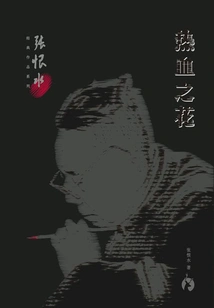
Flower of Passion
General Fiction热血之花
Zhang Henshui
This book is a classic masterpiece of Zhang Henshui's anti-war novels. This book was written in Peiping after the "January 28th Incident" in 1932, pioneering the patriotic spy war theme. The heroine of the novel, Shu Jianhua, is a spy of the military and police intelligence agency. She accepts the order of the garrison commander to spy on the enemy's secrets. She interacts with Yu Heming, the captain of the pirate team, which causes the leader of the volunteer army, Hua Guoxiong, to misunderstand and break with Shu Jianhua. However, Hua Guoxiong did not know that the reason why their volunteer army was able to defeat the pirates at Jia Shikou was precisely because Shu Jianhua obtained information from Yu Heming in advance. When the pirates were about to launch a massive counterattack, Shu was ordered to sneak into the county to spy on the enemy's military situation. Unfortunately, he fell into the clutches of Yu Heming and died heroically.
This book is a classic masterpiece of Zhang Henshui's anti-war novels. This book was written in Peiping after the "January 28th Incident" in 1932, pioneering the patriotic spy war theme. The heroine of the novel, Shu Jianhua, is a spy of the military and police intelligence agency. She accepts the order of the garrison commander to spy on the enemy's secrets. She interacts with Yu Heming, the captain of the pirate team, which causes the leader of the volunteer army, Hua Guoxiong, to misunderstand and break with Shu Jianhua. However, Hua Guoxiong did not know that the reason why their volunteer army was able to defeat the pirates at Jia Shikou was precisely because Shu Jianhua obtained information from Yu Heming in advance. When the pirates were about to launch a massive counterattack, Shu was ordered to sneak into the county to spy on the enemy's military situation. Unfortunately, he fell into the clutches of Yu Heming and died heroically.
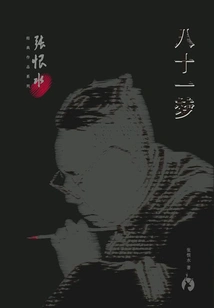
Eighty-one Dreams
General Fiction八十一梦
Zhang Henshui
This book was Mr. Zhang Henshui's most influential and popular novel during the Anti-Japanese War, and was also the best-selling novel in the rear area. The literary world praised the book as a "wonderful book"! The author uses the technique of "nineteen fables based on dreams", and the writing is smooth and free. The whole book is full of strange and mysterious suspense, covering the ancient and modern times, vertically and horizontally, and illuminates those issues that are indirectly helpful to the victory of the Anti-Japanese War and those that are directly harmful to the Anti-Japanese War. After the Nanjing Massacre, Zhang Henshui submitted a request to the government to fight guerrillas in the mountains. After getting no results, he put his strong patriotic fervor and loneliness on paper and created a large number of realistic and spiritual works.
This book was Mr. Zhang Henshui's most influential and popular novel during the Anti-Japanese War, and was also the best-selling novel in the rear area. The literary world praised the book as a "wonderful book"! The author uses the technique of "nineteen fables based on dreams", and the writing is smooth and free. The whole book is full of strange and mysterious suspense, covering the ancient and modern times, vertically and horizontally, and illuminates those issues that are indirectly helpful to the victory of the Anti-Japanese War and those that are directly harmful to the Anti-Japanese War. After the Nanjing Massacre, Zhang Henshui submitted a request to the government to fight guerrillas in the mountains. After getting no results, he put his strong patriotic fervor and loneliness on paper and created a large number of realistic and spiritual works.
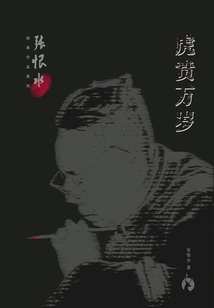
Long Live Huben
General Fiction虎贲万岁
Zhang Henshui
This book was written in 1945 and is China's first modern war history novel. The book directly describes the battle conditions of the famous battle - the Battle of Changde. The 57th Division of the 74th Army, code-named "Hu Ben", fought hard for more than ten days and fought bloody battles with the Japanese invaders for more than ten days while being surrounded by more than 60,000 Japanese troops. Only 83 of the division's 8,000 men survived in the end. The tone of the book is tragic, generous and majestic.
This book was written in 1945 and is China's first modern war history novel. The book directly describes the battle conditions of the famous battle - the Battle of Changde. The 57th Division of the 74th Army, code-named "Hu Ben", fought hard for more than ten days and fought bloody battles with the Japanese invaders for more than ten days while being surrounded by more than 60,000 Japanese troops. Only 83 of the division's 8,000 men survived in the end. The tone of the book is tragic, generous and majestic.
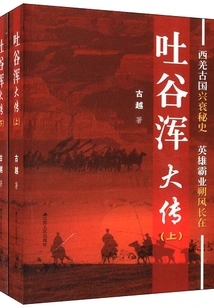
The Great Biography of Tuyuhun
General Fiction吐谷浑大传
Guyue
At the end of the Western Jin Dynasty, Tuyuhun, the leader of the Murong tribe of the Xianbei tribe in Liaodong, led thousands of tribesmen and traveled westward. They successively conquered Qinghai, Gannan, western Sichuan, and Dibuzao, and established the Tuyuhun Kingdom. Subsequently, the Central Plains fell into more than a hundred years of fighting among the Sixteen Kingdoms. The young prince regarded it as a black man and inherited the ancestral empire. They fought internal disputes, defended against powerful enemies externally, worked hard to govern, strengthened the country, and never forgot to safeguard the unity of the motherland. They expressed their intention to "come to the emperor from afar" and fulfill their "faithful duties" in the borderlands. They created their own glory in the borderlands and made unique contributions to Chinese history.
At the end of the Western Jin Dynasty, Tuyuhun, the leader of the Murong tribe of the Xianbei tribe in Liaodong, led thousands of tribesmen and traveled westward. They successively conquered Qinghai, Gannan, western Sichuan, and Dibuzao, and established the Tuyuhun Kingdom. Subsequently, the Central Plains fell into more than a hundred years of fighting among the Sixteen Kingdoms. The young prince regarded it as a black man and inherited the ancestral empire. They fought internal disputes, defended against powerful enemies externally, worked hard to govern, strengthened the country, and never forgot to safeguard the unity of the motherland. They expressed their intention to "come to the emperor from afar" and fulfill their "faithful duties" in the borderlands. They created their own glory in the borderlands and made unique contributions to Chinese history.
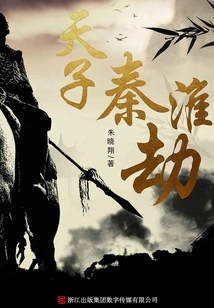
Emperor Qinhuai Tribulation (the Reasoning Crime Factory)
General Fiction天子秦淮劫(推理罪工场)
Zhu Xiaoxiang
Geng Di was once the champion of martial arts in the Ming Dynasty, but later because of the lecherous Emperor Zhengde, he sent people to the people to rape civilian girls. Seeing this, Geng Di shot and killed the Dongchang lackey who had raped the girl, and was arrested and imprisoned. Later, Brother Geng Di, Qiao Baiyan, who was the Minister of the Ministry of War, interceded for him to save his life, but he lost all his titles and became a commoner. One day, Qiao Baiyan quietly came to Geng Di's home and asked Geng Di for help. It turned out that Emperor Zhengde suddenly disappeared while on a tour in Nanjing. As Geng Di traced the emperor's whereabouts, he discovered layers of palace mysteries...
Geng Di was once the champion of martial arts in the Ming Dynasty, but later because of the lecherous Emperor Zhengde, he sent people to the people to rape civilian girls. Seeing this, Geng Di shot and killed the Dongchang lackey who had raped the girl, and was arrested and imprisoned. Later, Brother Geng Di, Qiao Baiyan, who was the Minister of the Ministry of War, interceded for him to save his life, but he lost all his titles and became a commoner. One day, Qiao Baiyan quietly came to Geng Di's home and asked Geng Di for help. It turned out that Emperor Zhengde suddenly disappeared while on a tour in Nanjing. As Geng Di traced the emperor's whereabouts, he discovered layers of palace mysteries...
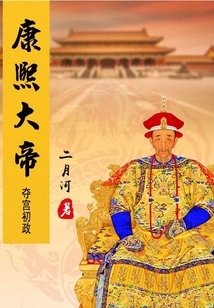
Emperor Kangxi (1) Seized the Palace and First Took Power
General Fiction康熙大帝(1)夺宫初政
February River
Kangxi ascended the throne at the age of eight, and was ordered by Shunzhi to serve as his assistant ministers. Among them, Ao Bai was arrogant and domineering. After his old minister Sony died of illness, he roped in Yi Bilong and executed Suk Saha who refused to cooperate with him. He even dominated the government, often roaring at the Golden Palace, and forcing Kangxi to submit to his will. Kangxi came into power at the age of fourteen, but Obai not only refused to return power to the emperor, but instead formed a clique for personal gain, wooed his best friends, and plotted to kill the emperor and establish himself on his own. Kangxi was smart and precocious since childhood. On the one hand, he secretly worshiped Wu Ciyou, a talented man from the south of the Yangtze River, as his disciple, and diligently studied the governance experience of previous emperors; on the other hand, with his personal guard Wei Dongting as the core, he carefully selected and trained more than a dozen young warriors in the name of practicing martial arts, waiting for the opportunity to eliminate the biggest hidden dangers around him. In May of the eighth year of Kangxi's reign, after careful planning and careful arrangements, Kangxi summoned Ao Bai alone in Yuqing Palace. Using his bodyguards, he captured Ao Bai, who was highly skilled in martial arts, with lightning speed, and wiped out the rest of the party. From then on. Kangxi personally took over the imperial power and laid a solid political foundation for the revitalization of the Qing Dynasty.
Kangxi ascended the throne at the age of eight, and was ordered by Shunzhi to serve as his assistant ministers. Among them, Ao Bai was arrogant and domineering. After his old minister Sony died of illness, he roped in Yi Bilong and executed Suk Saha who refused to cooperate with him. He even dominated the government, often roaring at the Golden Palace, and forcing Kangxi to submit to his will. Kangxi came into power at the age of fourteen, but Obai not only refused to return power to the emperor, but instead formed a clique for personal gain, wooed his best friends, and plotted to kill the emperor and establish himself on his own. Kangxi was smart and precocious since childhood. On the one hand, he secretly worshiped Wu Ciyou, a talented man from the south of the Yangtze River, as his disciple, and diligently studied the governance experience of previous emperors; on the other hand, with his personal guard Wei Dongting as the core, he carefully selected and trained more than a dozen young warriors in the name of practicing martial arts, waiting for the opportunity to eliminate the biggest hidden dangers around him. In May of the eighth year of Kangxi's reign, after careful planning and careful arrangements, Kangxi summoned Ao Bai alone in Yuqing Palace. Using his bodyguards, he captured Ao Bai, who was highly skilled in martial arts, with lightning speed, and wiped out the rest of the party. From then on. Kangxi personally took over the imperial power and laid a solid political foundation for the revitalization of the Qing Dynasty.
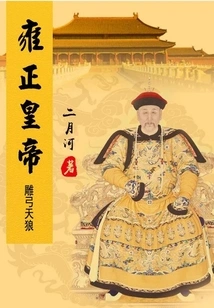
Emperor Yongzheng (2) the Heavenly Wolf with the Carved Bow
General Fiction雍正皇帝(2)雕弓天狼
February River
Nine kings seized the throne, Yongzheng narrowly won, and the old talisman was replaced with a new peach in the Forbidden City. But the tree wants to be quiet but the wind has not stopped. Inside and outside the imperial city, north and south of the river, murderous intent is still everywhere. The Ba Ye party is dead but not dead, and they are aggressive in their desire to replace them; General Nian Gengyao is proud of his merits and supports the army in politics; even Longkodo, the lonely and important minister, has two boats and is good at sending soldiers into the forbidden garden. For a time, the wind was strong and the waves were dangerous, and the floating clouds blocked the sun. The sea is flowing across the sea, and the emperor's talents are being tested. Yongzheng relied on Fang Bao and other important ministers to clean up the history and promote new people such as Tian Wenjing and Liu Molin. They inspected the Yellow River defense regardless of safety and sympathized with the people. Taking advantage of the victory in Qinghai, Diaogong Qingshu smashed the coup conspiracy of the Eighth Ye Party and the Fourteenth Brother, imprisoned Longkodo, and gave Nian Gengyao a gift to kill.
Nine kings seized the throne, Yongzheng narrowly won, and the old talisman was replaced with a new peach in the Forbidden City. But the tree wants to be quiet but the wind has not stopped. Inside and outside the imperial city, north and south of the river, murderous intent is still everywhere. The Ba Ye party is dead but not dead, and they are aggressive in their desire to replace them; General Nian Gengyao is proud of his merits and supports the army in politics; even Longkodo, the lonely and important minister, has two boats and is good at sending soldiers into the forbidden garden. For a time, the wind was strong and the waves were dangerous, and the floating clouds blocked the sun. The sea is flowing across the sea, and the emperor's talents are being tested. Yongzheng relied on Fang Bao and other important ministers to clean up the history and promote new people such as Tian Wenjing and Liu Molin. They inspected the Yellow River defense regardless of safety and sympathized with the people. Taking advantage of the victory in Qinghai, Diaogong Qingshu smashed the coup conspiracy of the Eighth Ye Party and the Fourteenth Brother, imprisoned Longkodo, and gave Nian Gengyao a gift to kill.
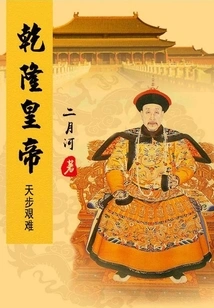
Emperor Qianlong (4) Faced Difficulties
General Fiction乾隆皇帝(4)天步艰难
February River
Emperor Qianlong, who entered his prime of life, excelled in civil and military affairs and worked hard to create and save the glorious and prosperous age of the Qing Dynasty. Qianlong went south to the south of the Yangtze River, Fu Heng ordered troops from Chengdu, and marched into Jinchuan and Jinchuan; the imperial envoys Fu Kang'an and Liu Yong paid a private visit incognito, and captured the remaining members of the female leader "Yizhihua", but accidentally discovered Ji Yun's murder case; at this time, He Shen, Hong Zhou, A Gui and others started a series of desperate battles with Gansu Governors Le Erjin and Wang Danwang. Just as Qianlong was on his way to the south to visit Beijing, the virtuous rich queen was dying in Dezhou, while the beloved concubine took the body of Liujia to avoid disaster, and the infant brother was hit by the smallpox epidemic...
Emperor Qianlong, who entered his prime of life, excelled in civil and military affairs and worked hard to create and save the glorious and prosperous age of the Qing Dynasty. Qianlong went south to the south of the Yangtze River, Fu Heng ordered troops from Chengdu, and marched into Jinchuan and Jinchuan; the imperial envoys Fu Kang'an and Liu Yong paid a private visit incognito, and captured the remaining members of the female leader "Yizhihua", but accidentally discovered Ji Yun's murder case; at this time, He Shen, Hong Zhou, A Gui and others started a series of desperate battles with Gansu Governors Le Erjin and Wang Danwang. Just as Qianlong was on his way to the south to visit Beijing, the virtuous rich queen was dying in Dezhou, while the beloved concubine took the body of Liujia to avoid disaster, and the infant brother was hit by the smallpox epidemic...
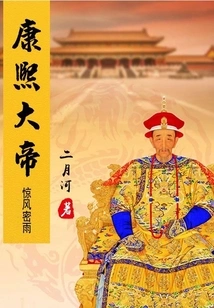
Emperor Kangxi (2) Storm and Rain
General Fiction康熙大帝(2)惊风密雨
February River
After the evil forces of Aobei were eliminated, the young Kangxi took charge of the government. However, the treasury was empty and people's hearts were floating. It could be said that he was besieged on all sides: in the south, the "Three Feuds" headed by Wu Sangui gathered millions of troops and rebelled and proclaimed themselves emperor; in the north, Chahar rebelled against the Qing cavalry and took advantage of the opportunity to attack Beijing; in the west, Wang Shirong massacred the imperial envoys and led to the Chang'an mutiny. The "Zhong Sanlang" Xianghui, whose purpose was to fight against the Qing Dynasty and restore the Ming Dynasty, had millions of members, secretly colluded everywhere, and instigated dozens of eunuchs to act as internal agents. They conspired to raise fire as a signal, and started rebellions at the same time to overthrow the Qing Dynasty. Kangxi was really a man who did not panic when a building was about to collapse, and did not panic when the earth collapsed. He did not avoid hardships and dangers and paid private visits in secret on many occasions to monitor the public sentiment and punish corrupt officials. He had a keen eye for talents and used talents such as Zhou Peigong in an eclectic way. He maneuvered vertically and horizontally, strategized, and won the battle thousands of miles away. After several thrilling struggles, various anti-Qing forces were finally wiped out and the political power was consolidated. The young emperor's foresight and the heroic talents of a generation of heroes were fully demonstrated.
After the evil forces of Aobei were eliminated, the young Kangxi took charge of the government. However, the treasury was empty and people's hearts were floating. It could be said that he was besieged on all sides: in the south, the "Three Feuds" headed by Wu Sangui gathered millions of troops and rebelled and proclaimed themselves emperor; in the north, Chahar rebelled against the Qing cavalry and took advantage of the opportunity to attack Beijing; in the west, Wang Shirong massacred the imperial envoys and led to the Chang'an mutiny. The "Zhong Sanlang" Xianghui, whose purpose was to fight against the Qing Dynasty and restore the Ming Dynasty, had millions of members, secretly colluded everywhere, and instigated dozens of eunuchs to act as internal agents. They conspired to raise fire as a signal, and started rebellions at the same time to overthrow the Qing Dynasty. Kangxi was really a man who did not panic when a building was about to collapse, and did not panic when the earth collapsed. He did not avoid hardships and dangers and paid private visits in secret on many occasions to monitor the public sentiment and punish corrupt officials. He had a keen eye for talents and used talents such as Zhou Peigong in an eclectic way. He maneuvered vertically and horizontally, strategized, and won the battle thousands of miles away. After several thrilling struggles, various anti-Qing forces were finally wiped out and the political power was consolidated. The young emperor's foresight and the heroic talents of a generation of heroes were fully demonstrated.
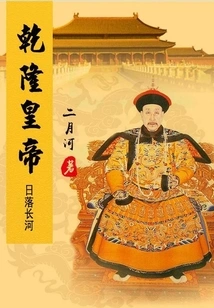
Emperor Qianlong (3) Sunset River
General Fiction乾隆皇帝(3)日落长河
February River
Although Emperor Qianlong had great ambitions, worked diligently and severely punished corruption, he was unable to save the embarrassing situation that Qianlong's prosperous period had fallen into decline. In terms of national affairs, the Qing Dynasty's national power has reached its peak at this time, people's livelihood is prosperous, and the world is at peace. It can be said to be the most powerful period since the founding of the country, and in Chinese history, it can also be compared to the prosperous periods of the Han and Tang Dynasties. However, the Battle of Jinchuan and Jinchuan has not been successful for many years, which has always been a major worry in Qianlong's heart. After the military defeat of the commander Neqin, he deceived Qianlong about the truth, which made him even more angry. On the other hand, as the country has been enjoying peace for a long time, most officials have become slack, and corruption has become rampant again. In the end, even Fu Heng, who was an imperial relative and a close official of Qianlong, was involved in corruption. After the incident, Qianlong, who had always "ruled with leniency", was extremely angry. Also because the treasury was full, Qianlong's life gradually became arrogant and luxurious. He built a large palace and added new gardens such as the Old Summer Palace. However, as the harem grew larger and larger, the queen became frail and sick and was unable to control her. Many scandals inevitably arose, and there was even an incident where someone wanted to murder the prince.
Although Emperor Qianlong had great ambitions, worked diligently and severely punished corruption, he was unable to save the embarrassing situation that Qianlong's prosperous period had fallen into decline. In terms of national affairs, the Qing Dynasty's national power has reached its peak at this time, people's livelihood is prosperous, and the world is at peace. It can be said to be the most powerful period since the founding of the country, and in Chinese history, it can also be compared to the prosperous periods of the Han and Tang Dynasties. However, the Battle of Jinchuan and Jinchuan has not been successful for many years, which has always been a major worry in Qianlong's heart. After the military defeat of the commander Neqin, he deceived Qianlong about the truth, which made him even more angry. On the other hand, as the country has been enjoying peace for a long time, most officials have become slack, and corruption has become rampant again. In the end, even Fu Heng, who was an imperial relative and a close official of Qianlong, was involved in corruption. After the incident, Qianlong, who had always "ruled with leniency", was extremely angry. Also because the treasury was full, Qianlong's life gradually became arrogant and luxurious. He built a large palace and added new gardens such as the Old Summer Palace. However, as the harem grew larger and larger, the queen became frail and sick and was unable to control her. Many scandals inevitably arose, and there was even an incident where someone wanted to murder the prince.
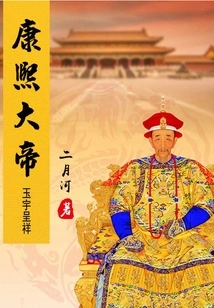
Emperor Kangxi (3) Yuyu Chengxiang
General Fiction康熙大帝(3)玉宇呈祥
February River
After quelling the rebellion of the "Three Feudatories", Kangxi went around looking for ministers who could manage rivers. He went to Bianliang in person to inspect the Yellow River, and appointed capable ministers to dredge water transportation, which finally made the Yellow River clear; As a minister, he eased ethnic conflicts; he visited Jinling in the south to worship Taizu of the Ming Dynasty and united with the elders of the former Ming Dynasty; he accepted loyal advice, rectified the administration of officials, punished corrupt officials, and created a new trend; he visited Shengjing in the north to form an alliance with the kings of Eastern Mongolia, and then conquered Galdan in the west to complete the great cause of unifying China. Another batch of new artistic images in this volume are active in front of readers: such as the romantic and suave Gao Shiqi, the incorruptible and stubborn Yu Chenglong, the unfaithful Guo Xiu, the weather-beating Chen Huang, the arrow-picking Shi Lang, the "fragrant beauty" begging on the street, the shrewd "native mother-in-law", etc. Through the portrayal of these artistic images, the social sentiments of the early Qing Dynasty and the historical style of Yu Yu's auspicious return to unity are reproduced.
After quelling the rebellion of the "Three Feudatories", Kangxi went around looking for ministers who could manage rivers. He went to Bianliang in person to inspect the Yellow River, and appointed capable ministers to dredge water transportation, which finally made the Yellow River clear; As a minister, he eased ethnic conflicts; he visited Jinling in the south to worship Taizu of the Ming Dynasty and united with the elders of the former Ming Dynasty; he accepted loyal advice, rectified the administration of officials, punished corrupt officials, and created a new trend; he visited Shengjing in the north to form an alliance with the kings of Eastern Mongolia, and then conquered Galdan in the west to complete the great cause of unifying China. Another batch of new artistic images in this volume are active in front of readers: such as the romantic and suave Gao Shiqi, the incorruptible and stubborn Yu Chenglong, the unfaithful Guo Xiu, the weather-beating Chen Huang, the arrow-picking Shi Lang, the "fragrant beauty" begging on the street, the shrewd "native mother-in-law", etc. Through the portrayal of these artistic images, the social sentiments of the early Qing Dynasty and the historical style of Yu Yu's auspicious return to unity are reproduced.
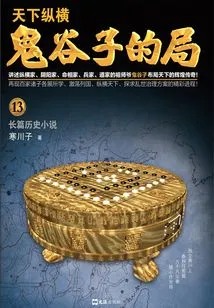
Guiguzi's Bureau·volume 13
General Fiction鬼谷子的局·卷十三
Hanchuanzi
When he learned that Qi's salt was about to be transported to Ying, Lord Ji Ling quickly gathered the goods to pay Qin's debt and made a huge profit. For buying salt at an inexplicable exorbitant price, Qin Chaotang criticized him one after another. Zhang Yi asked Chu to make amends. The Chu system was entrenched and it was difficult to return. Qu Yuan gained the trust of King Huai and took charge of reform matters. Regardless of the previous deception, Zhang Yi proposed to marry Mi Yue in order to marry the prince; without any plan to deal with his political enemy Qu Yuan, Zhang Yi proposed a plan and Jin Shang killed him one by one; fearing that he would fall out of favor, Zhang Yi came up with a plan and Zheng Xiu worried about the king's concerns. Wang Qin, Jin Shang, and Zheng Xiu therefore believed in Zhang Yi. At the beginning of the reform, Qu Yuan gave the first order to cut redundancies. Wang Qin and Zhang Yi joined forces to support Qu Yuan's restructuring in Zhaoyang Ding. King Huai issued an edict to implement the first constitutional decree. The prince was frightened and urged Zhang Yi to replace Zhaoyang Ling Yin. All the clans came to protest the redundancy order in person, and Zhaoyang asked Yin to resign. Because the former Qu Yuan failed to fulfill his wish to follow Qin's law, King Huai followed the trend and condescended to Zhang Yi. On the eve of the first sacrifice, Qu Yuan casually composed a poem for Wuxian Temple in Chu Palace while fasting, which became a masterpiece. During the tour of northern Xinjiang incognito, he met Le Yi, a descendant of Le Yang. King Zhao Wuling was like a fish in water and entrusted him with important tasks. He also heard about the movements of Yan Palace and was secretly happy. When the new king Kuai took office, Prince Ping and Zi Zhi of Yan formed a clique to fight against the government and the opposition. Zi Zhi sent his in-law Su Qin's younger brother to accompany Prince Ping to envoy Qi to maintain good neighborliness. In order to cause Yan to be in chaos, he took advantage of the situation and took advantage of the situation. King Xuan of Qi treated the prince as a prince. Shocked by the dramatic changes in Yan Palace, Prince Ping received support from his uncle, King Qi Xuan, and vowed to fight to the death to regain his status. King Wuling of Zhao issued an edict to enforce Hu uniforms throughout the country, but the government and the public could not agree on what to do, so he persuaded the important ministers Anyang Jun, Wang Shu Zhao Zao and others to set an example for him. The exiled son of Yan was bullied by the children of the Zhao nobles. Ji Su Feifei went to rescue him when he saw the injustice. The two sides fought, but Feifei lost to the dandies. Fortunately, Empress Yan rescued the siege in time. Knowing that Feifei was the daughter of Su Qin, the Queen of Yan came to visit with her son Zhi, expressed her sorrow and asked Su Qin to be her tutor. Su Qin knew that it was urgent to save the Yan Kingdom from the critical situation, so he agreed to leave the Empress of Yan and follow Ji Xue to Ji. Regardless of Prince Ping's advice, King Yan relinquished the country to his son, and the abdication ceremony was routine. Su Qin was delayed on the way to get sick and could not stop it. Qu Gai detailed the long-standing disadvantages of Chu and it was difficult to recover from them, and advised Qu Yuan to rein in the situation. Qu Yuan adhered to the original intention of the reform. The reform got off to a bad start, Zhaoyang listened to Chen Zhen's plan and supported Qu Yuan. Zhang Yi intended to use commerce to change the territory of Chu, destroy Qi, and unite Qin, and King Huai longed for it. Zhaoyang set up a serial bureau to make Zhaoshu confess the truth about the Qi Salt robbery. Lord Ji Ling heard the news and poisoned Zhaoshu first, and falsely accused Zhaoyang. Qu Yuan used suspicious clues to figure out the mastermind behind it, and asked King Huai to warn the prince, so as to take back the exclusive power of salt and iron. There were many flaws in the perjury and poisoning of Zhao Shu, so Zhang Yi asked Ji Lingjun to target Qu Yuan. Chen Zhen warned that the government was isolated and that the implementation of the constitution must be assisted by Zhaoyang. Qu Yuan suddenly understood and was about to enter the palace to discuss the details with Zhaoyang and King Huai. The draft of the constitution was secretly read by Jin Shang, but Qu Yuan disagreed. After stealing the information, Zhang Yi arranged for the unpromulgated constitutional order to be made public, and falsely claimed to King Huai that Qu Yuan had done it. King Huai was furious. Qu Yuan and Jin Shang confronted each other in court, but King Huai dismissed him. Lord Ji Ling preemptively mobilized clan troops to kill Zhaoyang, Zhaoyang mobilized his troops, Chen Zhen advised Zhaoyang not to cause civil strife in Chu and benefit Qin, so Qu Yuan advised Lord Ji Ling to rein in the situation. Jin Shang sent Zheng Xiu to lie to King Huai about the fact that Xiangyang City was destroyed. King Huai believed it and drove Zhaoyang away angrily. Zhaoyang left Ying with hatred and asked Chen Zhen to assist Qu Yuan in order to revive Chu. Chen Zhen proposed to assassinate Zhang Yi, but Qu Yuan refused and ordered him not to kill him. The alliance between Qin and Chu was imminent, Zhang Yi devised a plan to drive away Qu Yuan, and fought against Chen Zhen alone in the court, and finally made an agreement with Chu that Qin would send Chu territory and Chu would end the alliance simultaneously. On the way back, Zhang Yi asked Mi Yue and her sister to recognize their biological father Wei Zhang. Unfortunately, he suffered a broken bone when they arrived in Xianyang. During their wedding, Mi Yue accidentally broke into King Qin Hui's study and behaved strangely. King Qin Hui's childlike innocence sprouted and she set up a situation to make things difficult. Mi Yue dealt with it skillfully and won the king's favor. Most of the courtiers supported the prince, and the prince appealed to Wang Kuai, who went to court and announced that the new prince would purge all officials. Tai Ziping was determined to take a pre-emptive strike, causing Jiangjun City to be attacked by Jiwang City at night. Zi Zhi had already prepared, and after several rounds of strong attacks by the Prince's army, Tai Shang Wang Kuai came forward to instigate a counterattack. The city was betrayed, the prince was stabbed to death in secret, and the city died due to guilt. Su Qin persuaded his son to return the throne, but his son was perfunctory. When the prince was practicing martial arts with Ji Su Feifei, he encountered an assassin sent by his son. Fortunately, he was rescued by Mo Zhi. General Kuang Zhang of Qi was worried about attacking Yan, but Mencius gave his full support. During Zi's rebellion against Yan, King Wuling of Zhao listened to Su Qin's plan and pretended to be a good neighbor to Zhongshan. He waited for Zhongshan to compete for profits eastward and become enemies with Qi, waiting for an opportunity to use all his strength to destroy it in one fell swoop. When Zi rebelled against Yan, Zhongshan followed Qi to defeat Yan, and Zhao remained neutral. Meng Ke, the military counselor who strictly enforced military discipline, was in the lead, and the commander of the Qi army marched straight into the Yan territory. When the army approached the city, Zi's peace negotiations failed, so he held on desperately, hoping that the enemy would run out of food and reinforcements and retreat. Hearing that the Qi army had broken through the city and entered, Zi Zhi killed the Supreme Prince Wang Kuai and was killed by Meng Ke with an arrow while escaping in disguise. The Gengzi flood hit the land of Qin and Chu. The shamans of Beiming asked the main peak of Zhongnan to blame Qin's disaster on Chu. King Hui of Qin thought about it again and again and agreed. When the floods were approaching, King Huai summoned Qu Yuan and Bai Yun back to Ying to discuss matters. Qin Chi refused to hand over the land to the Shang Dynasty, so King Huai sent his envoys to deliver the goods quickly. The Gengzi flood came as expected, thundering against Chu's ancient temples. Qu Yuan and Bai Yun sacrificed their lives to protect the temples. Qin took advantage of its neighbors and blamed its neighbors on Chu. King Huai urgently ordered Qu Yuan to return to Ying. Chu's new envoy Song Yi replaced Chen Zhen and cut off Qi's friendship. The court humiliated King Xuan of Qi. King Xuan cooked him up angrily and summoned Kuang Zhang to return to his army to prepare for an attack on Chu. Chu broke off the alliance with Qi, but Qin broke the treaty and refused to separate Shang. When Qu Yuan returned to Ying in response to the imperial edict, the rain stopped, and a plague broke out. King Huai urgently ordered the city to be closed, and only Bai Yun was allowed into the palace to discuss matters. Qu Yuan was convicted of Gong Gong and suffered from the plague. His life was hanging by a thread. Bai Yun and Hei Jin made a contract, exchanging their souls for the lives of Qu Yuan and all Chu people who suffered from the plague.
When he learned that Qi's salt was about to be transported to Ying, Lord Ji Ling quickly gathered the goods to pay Qin's debt and made a huge profit. For buying salt at an inexplicable exorbitant price, Qin Chaotang criticized him one after another. Zhang Yi asked Chu to make amends. The Chu system was entrenched and it was difficult to return. Qu Yuan gained the trust of King Huai and took charge of reform matters. Regardless of the previous deception, Zhang Yi proposed to marry Mi Yue in order to marry the prince; without any plan to deal with his political enemy Qu Yuan, Zhang Yi proposed a plan and Jin Shang killed him one by one; fearing that he would fall out of favor, Zhang Yi came up with a plan and Zheng Xiu worried about the king's concerns. Wang Qin, Jin Shang, and Zheng Xiu therefore believed in Zhang Yi. At the beginning of the reform, Qu Yuan gave the first order to cut redundancies. Wang Qin and Zhang Yi joined forces to support Qu Yuan's restructuring in Zhaoyang Ding. King Huai issued an edict to implement the first constitutional decree. The prince was frightened and urged Zhang Yi to replace Zhaoyang Ling Yin. All the clans came to protest the redundancy order in person, and Zhaoyang asked Yin to resign. Because the former Qu Yuan failed to fulfill his wish to follow Qin's law, King Huai followed the trend and condescended to Zhang Yi. On the eve of the first sacrifice, Qu Yuan casually composed a poem for Wuxian Temple in Chu Palace while fasting, which became a masterpiece. During the tour of northern Xinjiang incognito, he met Le Yi, a descendant of Le Yang. King Zhao Wuling was like a fish in water and entrusted him with important tasks. He also heard about the movements of Yan Palace and was secretly happy. When the new king Kuai took office, Prince Ping and Zi Zhi of Yan formed a clique to fight against the government and the opposition. Zi Zhi sent his in-law Su Qin's younger brother to accompany Prince Ping to envoy Qi to maintain good neighborliness. In order to cause Yan to be in chaos, he took advantage of the situation and took advantage of the situation. King Xuan of Qi treated the prince as a prince. Shocked by the dramatic changes in Yan Palace, Prince Ping received support from his uncle, King Qi Xuan, and vowed to fight to the death to regain his status. King Wuling of Zhao issued an edict to enforce Hu uniforms throughout the country, but the government and the public could not agree on what to do, so he persuaded the important ministers Anyang Jun, Wang Shu Zhao Zao and others to set an example for him. The exiled son of Yan was bullied by the children of the Zhao nobles. Ji Su Feifei went to rescue him when he saw the injustice. The two sides fought, but Feifei lost to the dandies. Fortunately, Empress Yan rescued the siege in time. Knowing that Feifei was the daughter of Su Qin, the Queen of Yan came to visit with her son Zhi, expressed her sorrow and asked Su Qin to be her tutor. Su Qin knew that it was urgent to save the Yan Kingdom from the critical situation, so he agreed to leave the Empress of Yan and follow Ji Xue to Ji. Regardless of Prince Ping's advice, King Yan relinquished the country to his son, and the abdication ceremony was routine. Su Qin was delayed on the way to get sick and could not stop it. Qu Gai detailed the long-standing disadvantages of Chu and it was difficult to recover from them, and advised Qu Yuan to rein in the situation. Qu Yuan adhered to the original intention of the reform. The reform got off to a bad start, Zhaoyang listened to Chen Zhen's plan and supported Qu Yuan. Zhang Yi intended to use commerce to change the territory of Chu, destroy Qi, and unite Qin, and King Huai longed for it. Zhaoyang set up a serial bureau to make Zhaoshu confess the truth about the Qi Salt robbery. Lord Ji Ling heard the news and poisoned Zhaoshu first, and falsely accused Zhaoyang. Qu Yuan used suspicious clues to figure out the mastermind behind it, and asked King Huai to warn the prince, so as to take back the exclusive power of salt and iron. There were many flaws in the perjury and poisoning of Zhao Shu, so Zhang Yi asked Ji Lingjun to target Qu Yuan. Chen Zhen warned that the government was isolated and that the implementation of the constitution must be assisted by Zhaoyang. Qu Yuan suddenly understood and was about to enter the palace to discuss the details with Zhaoyang and King Huai. The draft of the constitution was secretly read by Jin Shang, but Qu Yuan disagreed. After stealing the information, Zhang Yi arranged for the unpromulgated constitutional order to be made public, and falsely claimed to King Huai that Qu Yuan had done it. King Huai was furious. Qu Yuan and Jin Shang confronted each other in court, but King Huai dismissed him. Lord Ji Ling preemptively mobilized clan troops to kill Zhaoyang, Zhaoyang mobilized his troops, Chen Zhen advised Zhaoyang not to cause civil strife in Chu and benefit Qin, so Qu Yuan advised Lord Ji Ling to rein in the situation. Jin Shang sent Zheng Xiu to lie to King Huai about the fact that Xiangyang City was destroyed. King Huai believed it and drove Zhaoyang away angrily. Zhaoyang left Ying with hatred and asked Chen Zhen to assist Qu Yuan in order to revive Chu. Chen Zhen proposed to assassinate Zhang Yi, but Qu Yuan refused and ordered him not to kill him. The alliance between Qin and Chu was imminent, Zhang Yi devised a plan to drive away Qu Yuan, and fought against Chen Zhen alone in the court, and finally made an agreement with Chu that Qin would send Chu territory and Chu would end the alliance simultaneously. On the way back, Zhang Yi asked Mi Yue and her sister to recognize their biological father Wei Zhang. Unfortunately, he suffered a broken bone when they arrived in Xianyang. During their wedding, Mi Yue accidentally broke into King Qin Hui's study and behaved strangely. King Qin Hui's childlike innocence sprouted and she set up a situation to make things difficult. Mi Yue dealt with it skillfully and won the king's favor. Most of the courtiers supported the prince, and the prince appealed to Wang Kuai, who went to court and announced that the new prince would purge all officials. Tai Ziping was determined to take a pre-emptive strike, causing Jiangjun City to be attacked by Jiwang City at night. Zi Zhi had already prepared, and after several rounds of strong attacks by the Prince's army, Tai Shang Wang Kuai came forward to instigate a counterattack. The city was betrayed, the prince was stabbed to death in secret, and the city died due to guilt. Su Qin persuaded his son to return the throne, but his son was perfunctory. When the prince was practicing martial arts with Ji Su Feifei, he encountered an assassin sent by his son. Fortunately, he was rescued by Mo Zhi. General Kuang Zhang of Qi was worried about attacking Yan, but Mencius gave his full support. During Zi's rebellion against Yan, King Wuling of Zhao listened to Su Qin's plan and pretended to be a good neighbor to Zhongshan. He waited for Zhongshan to compete for profits eastward and become enemies with Qi, waiting for an opportunity to use all his strength to destroy it in one fell swoop. When Zi rebelled against Yan, Zhongshan followed Qi to defeat Yan, and Zhao remained neutral. Meng Ke, the military counselor who strictly enforced military discipline, was in the lead, and the commander of the Qi army marched straight into the Yan territory. When the army approached the city, Zi's peace negotiations failed, so he held on desperately, hoping that the enemy would run out of food and reinforcements and retreat. Hearing that the Qi army had broken through the city and entered, Zi Zhi killed the Supreme Prince Wang Kuai and was killed by Meng Ke with an arrow while escaping in disguise. The Gengzi flood hit the land of Qin and Chu. The shamans of Beiming asked the main peak of Zhongnan to blame Qin's disaster on Chu. King Hui of Qin thought about it again and again and agreed. When the floods were approaching, King Huai summoned Qu Yuan and Bai Yun back to Ying to discuss matters. Qin Chi refused to hand over the land to the Shang Dynasty, so King Huai sent his envoys to deliver the goods quickly. The Gengzi flood came as expected, thundering against Chu's ancient temples. Qu Yuan and Bai Yun sacrificed their lives to protect the temples. Qin took advantage of its neighbors and blamed its neighbors on Chu. King Huai urgently ordered Qu Yuan to return to Ying. Chu's new envoy Song Yi replaced Chen Zhen and cut off Qi's friendship. The court humiliated King Xuan of Qi. King Xuan cooked him up angrily and summoned Kuang Zhang to return to his army to prepare for an attack on Chu. Chu broke off the alliance with Qi, but Qin broke the treaty and refused to separate Shang. When Qu Yuan returned to Ying in response to the imperial edict, the rain stopped, and a plague broke out. King Huai urgently ordered the city to be closed, and only Bai Yun was allowed into the palace to discuss matters. Qu Yuan was convicted of Gong Gong and suffered from the plague. His life was hanging by a thread. Bai Yun and Hei Jin made a contract, exchanging their souls for the lives of Qu Yuan and all Chu people who suffered from the plague.
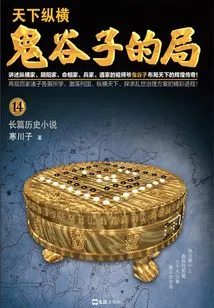
Guiguzi's Game·volume 14
General Fiction鬼谷子的局·卷十四
Hanchuanzi
The Eastern version of "Game of Thrones" "Warring States Period: Guiguzi's Game" is a full-length historical novel. It tells the glorious legend of Gui Guzi, the founder of the strategist, yin-yang family, fortune teller, military strategist, and Taoist family, who organized the world! During the Warring States Period, in a mountain called Qingxi Guigu (today's Hebi City, Henan), there lived an old man (whose real name was Wang Xu) who was respectfully called Guiguzi. He read, meditated, and meditated on the mountain every day. He did not interact with the world and lived an isolated life. However, for more than two thousand years, military strategists have respected him as a saint, political strategists have respected him as the ancestor, fortune tellers and fortune tellers have respected him as the ancestor, and Taoism has ranked him with Laozi and respected him as the ancestor of Wang Chan.
The Eastern version of "Game of Thrones" "Warring States Period: Guiguzi's Game" is a full-length historical novel. It tells the glorious legend of Gui Guzi, the founder of the strategist, yin-yang family, fortune teller, military strategist, and Taoist family, who organized the world! During the Warring States Period, in a mountain called Qingxi Guigu (today's Hebi City, Henan), there lived an old man (whose real name was Wang Xu) who was respectfully called Guiguzi. He read, meditated, and meditated on the mountain every day. He did not interact with the world and lived an isolated life. However, for more than two thousand years, military strategists have respected him as a saint, political strategists have respected him as the ancestor, fortune tellers and fortune tellers have respected him as the ancestor, and Taoism has ranked him with Laozi and respected him as the ancestor of Wang Chan.
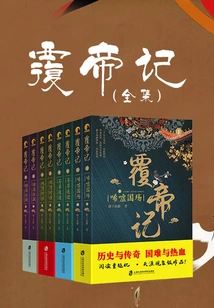
The Overthrow of the Emperor (complete Collection)
General Fiction覆帝记(全集)
Xian Yu Ye Tu
The complete collection of Tianya's annual work "The Overthrow of the Emperor" in 2018. At the end of the Qing Dynasty, the land of China experienced great changes in the past five thousand years. Powers were looking around from outside and wars were frequent inside. Faced with such a critical situation, Li Hongzhang, an important minister of the imperial court, established the Beiyang Navy and recruited talented people from all over the world to try to support the collapse of the building. Li Baian, a strange man in the world of martial arts, was recruited into his account and served on the Beiyang flagship Haoyang. Things are changing. During the Jiawu period, the Japanese invaders attacked. The Beiyang Fleet, which Li Hongzhang worked so hard to manage, had a fierce war with the Japanese army. Although Li Baian tried to use martial arts to turn the tide, manpower was ultimately no match for muskets and cannons.
The complete collection of Tianya's annual work "The Overthrow of the Emperor" in 2018. At the end of the Qing Dynasty, the land of China experienced great changes in the past five thousand years. Powers were looking around from outside and wars were frequent inside. Faced with such a critical situation, Li Hongzhang, an important minister of the imperial court, established the Beiyang Navy and recruited talented people from all over the world to try to support the collapse of the building. Li Baian, a strange man in the world of martial arts, was recruited into his account and served on the Beiyang flagship Haoyang. Things are changing. During the Jiawu period, the Japanese invaders attacked. The Beiyang Fleet, which Li Hongzhang worked so hard to manage, had a fierce war with the Japanese army. Although Li Baian tried to use martial arts to turn the tide, manpower was ultimately no match for muskets and cannons.
U
General Fictionu
H
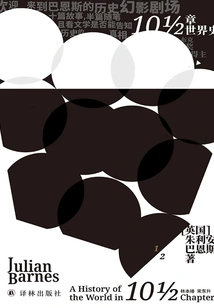
History keeps repeating itself, "the first time is a tragedy, the second time is a farce." At the end of the world last time, a wood beetle got into Noah's ark. What it saw Noah doing was very different from what was recorded in the book. The Ark reappears repeatedly in human history, whether it is a robbed cruise ship, a Titanic, or a lone boat on the sea in a nuclear panic... This stowaway has not left. It looks coldly at how history is distorted, and how the distortion can become "real" history; it possesses Barnes's wonderful writing, teaching him to collage a seemingly absurd but enlightening world history with pieces of wonderful articles.
History keeps repeating itself, "the first time is a tragedy, the second time is a farce." At the end of the world last time, a wood beetle got into Noah's ark. What it saw Noah doing was very different from what was recorded in the book. The Ark reappears repeatedly in human history, whether it is a robbed cruise ship, a Titanic, or a lone boat on the sea in a nuclear panic... This stowaway has not left. It looks coldly at how history is distorted, and how the distortion can become "real" history; it possesses Barnes's wonderful writing, teaching him to collage a seemingly absurd but enlightening world history with pieces of wonderful articles.
Sunrise on Dongjiang River
General Fiction日出东江
Tiansu
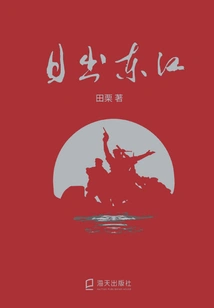
The story takes the Anti-Japanese War as the background, the Anti-Japanese War as the theme, and the search for relatives as the main line. It tells the story of three little girls, Ahao, Achan, and Shunnu, aged 5 to 11, who were separated from their families to avoid the war due to the Japanese invasion of China. The novel has created a group of flesh-and-blood ordinary people such as Liu Sheng, Guo Zhen, Bi Gang, Gui Shou, and Aunt Gui. They were concerned about the fate of the country and the nation. They persisted in resisting the Japanese invaders for a long time with their feelings for their family and country and their ambition to serve the country. Finally, under the leadership of the Dongjiang guerrillas of the Communist Party, they finally ushered in the dawn of victory and achieved a complete revolutionary victory. It reminds the people not to forget the national humiliation, and hopes that people will remember history, cherish peace, and work unremittingly.
The story takes the Anti-Japanese War as the background, the Anti-Japanese War as the theme, and the search for relatives as the main line. It tells the story of three little girls, Ahao, Achan, and Shunnu, aged 5 to 11, who were separated from their families to avoid the war due to the Japanese invasion of China. The novel has created a group of flesh-and-blood ordinary people such as Liu Sheng, Guo Zhen, Bi Gang, Gui Shou, and Aunt Gui. They were concerned about the fate of the country and the nation. They persisted in resisting the Japanese invaders for a long time with their feelings for their family and country and their ambition to serve the country. Finally, under the leadership of the Dongjiang guerrillas of the Communist Party, they finally ushered in the dawn of victory and achieved a complete revolutionary victory. It reminds the people not to forget the national humiliation, and hopes that people will remember history, cherish peace, and work unremittingly.
Emperor Qianlong (2) Sunset on the Empty Mountain
General Fiction乾隆皇帝(2)夕照空山
February River
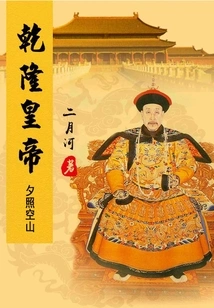
This book describes Qianlong's tireless efforts in government affairs in his prime. Queen Fucha's health often worried Qianlong, and her only surviving son died of smallpox, which made Qianlong give up the idea of establishing his legitimate son as prince. Qianlong has always regarded Kangxi's great achievements as his goal. Therefore, he wanted to search for all the rare books in the world and edit them (Sikuquanshu). He also wanted to open up new territories and rival Kangxi in terms of literary, political and martial arts.
This book describes Qianlong's tireless efforts in government affairs in his prime. Queen Fucha's health often worried Qianlong, and her only surviving son died of smallpox, which made Qianlong give up the idea of establishing his legitimate son as prince. Qianlong has always regarded Kangxi's great achievements as his goal. Therefore, he wanted to search for all the rare books in the world and edit them (Sikuquanshu). He also wanted to open up new territories and rival Kangxi in terms of literary, political and martial arts.
Emperor Qianlong (1) First Showed His Splendor
General Fiction乾隆皇帝(1)风华初露
February River
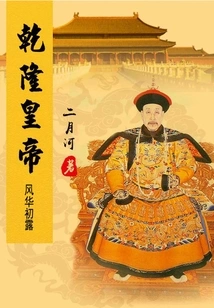
Emperor Yongzheng died unexpectedly, and the twenty-five-year-old Hongli succeeded to the throne, changing the reign of Emperor Qianlong. Qianlong was in his prime, he had great ambitions and was dedicated to creating a prosperous period for the Qing Dynasty. He had a strategic mind and implemented the policy of "governing with leniency", abolished the harsh and abusive policies of the previous dynasty, corrected Yongzheng Yinding's pretext, rectified the administration of officials, and punished several corrupt ministers. He is chic, elegant, suave, and a passionate emperor.
Emperor Yongzheng died unexpectedly, and the twenty-five-year-old Hongli succeeded to the throne, changing the reign of Emperor Qianlong. Qianlong was in his prime, he had great ambitions and was dedicated to creating a prosperous period for the Qing Dynasty. He had a strategic mind and implemented the policy of "governing with leniency", abolished the harsh and abusive policies of the previous dynasty, corrected Yongzheng Yinding's pretext, rectified the administration of officials, and punished several corrupt ministers. He is chic, elegant, suave, and a passionate emperor.
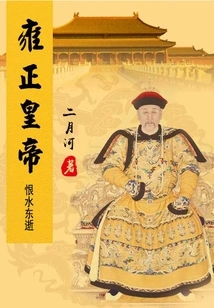
Emperor Yongzheng (3) Hated the Passing of Water to the East
General Fiction雍正皇帝(3)恨水东逝
February River
Nian Gengyao granted death and Long Keduo was imprisoned, but the remaining power of the Ba Ye Party was not exhausted. The palace secretly discussed and wanted to use the Iron Hat King to force Yongzheng to abdicate. In the Qianqing Palace, there were constant arguments and turmoil. On one side is the mighty Emperor Yongzheng, who severely punishes his brothers. On the other side is the lingering and lingering sister-in-law who looks exactly like her old lover. It was God's retribution, or it was accidental events in the world, but Cheng Huan served you as the flesh and blood of the Heavenly family. The torment of incest, the destruction of elixirs, and the hauntings of the undead. Just now, he was energetic and pointed out the country, but in the blink of an eye, the white tiger and jade rabbit went to Dazhen together. The shadow of the cauldron candle is an eternal mystery, hidden in the clouds and mist.
Nian Gengyao granted death and Long Keduo was imprisoned, but the remaining power of the Ba Ye Party was not exhausted. The palace secretly discussed and wanted to use the Iron Hat King to force Yongzheng to abdicate. In the Qianqing Palace, there were constant arguments and turmoil. On one side is the mighty Emperor Yongzheng, who severely punishes his brothers. On the other side is the lingering and lingering sister-in-law who looks exactly like her old lover. It was God's retribution, or it was accidental events in the world, but Cheng Huan served you as the flesh and blood of the Heavenly family. The torment of incest, the destruction of elixirs, and the hauntings of the undead. Just now, he was energetic and pointed out the country, but in the blink of an eye, the white tiger and jade rabbit went to Dazhen together. The shadow of the cauldron candle is an eternal mystery, hidden in the clouds and mist.
Emperor Qianlong (6) Autumn Sound Aster
General Fiction乾隆皇帝(6)秋声紫苑
February River
In the later years of Emperor Qianlong, the prosperous age of the Qing Dynasty gradually came to an end. On the one hand, various evil cults incited people's hearts and civil unrest occurred all over the country, which threatened to disintegrate. Qianlong had no choice but to send Fu Heng's son Fukangan to suppress it everywhere. First, they pacified Shandong, then fought against Jinchuan and Jinchuan, and then went to Taiwan to quell the Lin Shuangwen Incident. Hailancha and others put down the Huojizhan rebellion in Xinjiang. However, as Qianlong got older, he inevitably failed to hire people. He listened to the words of his sycophant ministers and dismissed Ji Yun, Li Shifu and others. He also followed the advice of treacherous ministers and Shen Yan, which made the officialdom even more filthy. Qianlong once vowed that his reign would never exceed the sixty-one years of his grandfather Kangxi. But as the time approached, he gradually became attached to the throne and did not want to hand over the jade seal to the prince. A group of loyal ministers worked hard for this.
In the later years of Emperor Qianlong, the prosperous age of the Qing Dynasty gradually came to an end. On the one hand, various evil cults incited people's hearts and civil unrest occurred all over the country, which threatened to disintegrate. Qianlong had no choice but to send Fu Heng's son Fukangan to suppress it everywhere. First, they pacified Shandong, then fought against Jinchuan and Jinchuan, and then went to Taiwan to quell the Lin Shuangwen Incident. Hailancha and others put down the Huojizhan rebellion in Xinjiang. However, as Qianlong got older, he inevitably failed to hire people. He listened to the words of his sycophant ministers and dismissed Ji Yun, Li Shifu and others. He also followed the advice of treacherous ministers and Shen Yan, which made the officialdom even more filthy. Qianlong once vowed that his reign would never exceed the sixty-one years of his grandfather Kangxi. But as the time approached, he gradually became attached to the throne and did not want to hand over the jade seal to the prince. A group of loyal ministers worked hard for this.
Emperor Yongzheng (1) Nine Kings Seize the Heir
General Fiction雍正皇帝(1)九王夺嫡
February River
This book describes the little-known life of the Qing court, but it is not limited to the small Forbidden City. The elder brother's faction fights, murderous intent looms, Longting changes hands, and Yongzheng narrowly wins. Change the imperial edict, say patricide, say succession? A period of history that is full of doubts, confusing and difficult to decipher. The author writes articles with a historical pen and establishes history with a writing pen. No matter how high the temple is, or how far the rivers and lakes are, he can capture everything under his pen. From the rules and regulations, palace construction, food and clothing, etiquette and music, it is narrated in a eloquent way, with a strong sense of writing; down to the Goulan tile houses, temples and halls, markets and countryside, travelers and ancient ferry, it unfolds slowly and has various styles. The elder brother chases the legitimate son, fighting openly and secretly, every word is about power and deceit; the female singer sings, the lingering sound is lingering, and every sentence is soul-stirring.
This book describes the little-known life of the Qing court, but it is not limited to the small Forbidden City. The elder brother's faction fights, murderous intent looms, Longting changes hands, and Yongzheng narrowly wins. Change the imperial edict, say patricide, say succession? A period of history that is full of doubts, confusing and difficult to decipher. The author writes articles with a historical pen and establishes history with a writing pen. No matter how high the temple is, or how far the rivers and lakes are, he can capture everything under his pen. From the rules and regulations, palace construction, food and clothing, etiquette and music, it is narrated in a eloquent way, with a strong sense of writing; down to the Goulan tile houses, temples and halls, markets and countryside, travelers and ancient ferry, it unfolds slowly and has various styles. The elder brother chases the legitimate son, fighting openly and secretly, every word is about power and deceit; the female singer sings, the lingering sound is lingering, and every sentence is soul-stirring.
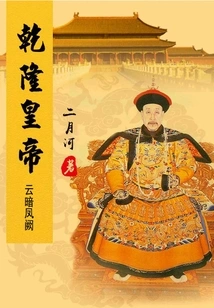
Emperor Qianlong (5) Yunnan Fengque
General Fiction乾隆皇帝(5)云暗凤阙
February River
Although Emperor Qianlong wanted to work hard to restore the prosperity of the Qing Dynasty, it had been more than a hundred years since the founding of the Qing Dynasty, and various crises were emerging one by one. The harem was filthy and chaotic, and corrupt officials were rampant, making Qianlong troubled both internally and externally. The only consolation was that although Fu Heng, the minister who had made countless contributions, was seriously ill, he was still vigilant and loyal, which moved Qianlong deeply. However, on the other hand, the treacherous minister Heshen used clever words and tricks to gain Qianlong's trust. He was first in charge of customs duties at Chongwenmen and then the construction of the Old Summer Palace. He handled large sums of public funds and made profits from them. He was good at winning over people's hearts and won praise from people inside and outside the palace, so he was promoted step by step. At this time, there were religious uprisings in the mainland and Huo Jizhan in the Western Regions. Faced with this situation, Qianlong did not dare to be careless at all. He asked his fifteenth elder brother to go out to the Forbidden City to practice, and reused Agui, Liu Yong and others, hoping to turn the tide and create a new situation.
Although Emperor Qianlong wanted to work hard to restore the prosperity of the Qing Dynasty, it had been more than a hundred years since the founding of the Qing Dynasty, and various crises were emerging one by one. The harem was filthy and chaotic, and corrupt officials were rampant, making Qianlong troubled both internally and externally. The only consolation was that although Fu Heng, the minister who had made countless contributions, was seriously ill, he was still vigilant and loyal, which moved Qianlong deeply. However, on the other hand, the treacherous minister Heshen used clever words and tricks to gain Qianlong's trust. He was first in charge of customs duties at Chongwenmen and then the construction of the Old Summer Palace. He handled large sums of public funds and made profits from them. He was good at winning over people's hearts and won praise from people inside and outside the palace, so he was promoted step by step. At this time, there were religious uprisings in the mainland and Huo Jizhan in the Western Regions. Faced with this situation, Qianlong did not dare to be careless at all. He asked his fifteenth elder brother to go out to the Forbidden City to practice, and reused Agui, Liu Yong and others, hoping to turn the tide and create a new situation.
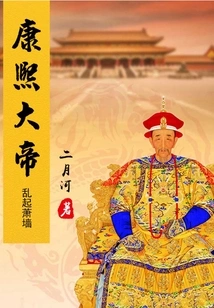
Emperor Kangxi (4) Caused Chaos in Xiao Qiang
General Fiction康熙大帝(4)乱起萧墙
February River
This book focuses on Kangxi's selection of the crown prince and the rivalry between the princes to become the crown prince. There were many bad policies in Kangxi's later years. For example, officials were corrupt and perverted the law, and unjust cases occurred one after another; the royal family and old honorees borrowed money from the treasury, resulting in a national treasury deficit; land taxes were uneven and land was highly concentrated. Kangxi sent people to clean up and rectify many times, but because the crown prince was cowardly and incompetent, greedy and lustful, not familiar with government affairs, and busy with party disputes, he had to give up halfway. Kangxi was very dissatisfied with this and had to depose him, then establish him again, establish him again, and then depose him. The princes took the opportunity to cause chaos, formed cliques, and competed to become the crown prince, which caused a feud among the brothers. Kangxi later simply "released the deer in the Central Plains" and allowed them to compete with each other.
This book focuses on Kangxi's selection of the crown prince and the rivalry between the princes to become the crown prince. There were many bad policies in Kangxi's later years. For example, officials were corrupt and perverted the law, and unjust cases occurred one after another; the royal family and old honorees borrowed money from the treasury, resulting in a national treasury deficit; land taxes were uneven and land was highly concentrated. Kangxi sent people to clean up and rectify many times, but because the crown prince was cowardly and incompetent, greedy and lustful, not familiar with government affairs, and busy with party disputes, he had to give up halfway. Kangxi was very dissatisfied with this and had to depose him, then establish him again, establish him again, and then depose him. The princes took the opportunity to cause chaos, formed cliques, and competed to become the crown prince, which caused a feud among the brothers. Kangxi later simply "released the deer in the Central Plains" and allowed them to compete with each other.

The Last Tudor (collector's Edition)
General Fiction最后的都铎(珍藏版)
H
Power and love are always difficult to have at the same time, but truth and death go hand in hand - in the spring of 1553, Jane and her sister Catherine held their wedding at the same time. This was the starting point of the Gray sisters' happiness, but their fate was overturned by the early death of King Edward. Henry VIII had no more heirs, and his daughters, who had lost their titles as princesses, regarded the Gray family as pretenders to the throne and wanted to get rid of them. The devout Jane serves God wholeheartedly, the romantic Catherine just wants to spend this life with her lover, and the younger sister Mary, who was born with a disability, strives to live an ordinary life. The three people who originally had nothing to do with power disputes are about to embark on a completely different path under the burden of the Tudor crown... The translation has been comprehensively revised to improve accuracy and fluency, and the overall unified translation has improved the deficiencies of the old translation. The reprinted character relationship diagram and supplementary annotations make it easier for readers to read without any threshold.
Power and love are always difficult to have at the same time, but truth and death go hand in hand - in the spring of 1553, Jane and her sister Catherine held their wedding at the same time. This was the starting point of the Gray sisters' happiness, but their fate was overturned by the early death of King Edward. Henry VIII had no more heirs, and his daughters, who had lost their titles as princesses, regarded the Gray family as pretenders to the throne and wanted to get rid of them. The devout Jane serves God wholeheartedly, the romantic Catherine just wants to spend this life with her lover, and the younger sister Mary, who was born with a disability, strives to live an ordinary life. The three people who originally had nothing to do with power disputes are about to embark on a completely different path under the burden of the Tudor crown... The translation has been comprehensively revised to improve accuracy and fluency, and the overall unified translation has improved the deficiencies of the old translation. The reprinted character relationship diagram and supplementary annotations make it easier for readers to read without any threshold.
Eternal Princess (collector's Edition)
General Fiction永恒的王妃(珍藏版)
H
Power and love are always difficult to have at the same time, but truth and death go hand in hand - In the winter of 1501, the cold sun climbed into the gray sky, and the beautiful Spanish princess Catherine married the English prince Arthur. Is this a happy ritual or the beginning of a curse? Firm faith and true love eventually turn into heavy shackles on a sad soul. From an innocent girl to a political victim, see how Catherine, the mother of "Bloody Mary", fell into the quagmire of royal battles step by step... The translation has been significantly revised in all aspects to improve accuracy and fluency. The overall unified translation has improved the deficiencies of the old translation. The reprinted character relationship diagram and additional annotations make it easier for readers to read without any threshold.
Power and love are always difficult to have at the same time, but truth and death go hand in hand - In the winter of 1501, the cold sun climbed into the gray sky, and the beautiful Spanish princess Catherine married the English prince Arthur. Is this a happy ritual or the beginning of a curse? Firm faith and true love eventually turn into heavy shackles on a sad soul. From an innocent girl to a political victim, see how Catherine, the mother of "Bloody Mary", fell into the quagmire of royal battles step by step... The translation has been significantly revised in all aspects to improve accuracy and fluency. The overall unified translation has improved the deficiencies of the old translation. The reprinted character relationship diagram and additional annotations make it easier for readers to read without any threshold.
The Kingmaker's Daughter (collector's Edition)
General Fiction拥王者的女儿(珍藏版)
H
Power and love are always difficult to have at the same time, but truth and death go hand in hand - in May 1471, the "Kingmaker" Earl Warwick was killed by the boy who helped him to the throne. The fate of his two daughters was turned upside down from then on - Isabel's life was shrouded in the cloud of poison, and Anne's marriage was crumbling on the way to the throne step by step. The irresolvable blood feud, the precarious throne, the unfortunate heir who died prematurely... Anne finally discovered that what she had was not the crown she dreamed of, but the vicious curse of the witch. Whose name was written in blood in Queen Elizabeth's secret box? The translation has been significantly revised in all aspects to improve accuracy and fluency. The overall unified translation has improved the deficiencies of the old translation. The reprinted character relationship diagram and supplementary annotations make it easier for readers to read without any threshold.
Power and love are always difficult to have at the same time, but truth and death go hand in hand - in May 1471, the "Kingmaker" Earl Warwick was killed by the boy who helped him to the throne. The fate of his two daughters was turned upside down from then on - Isabel's life was shrouded in the cloud of poison, and Anne's marriage was crumbling on the way to the throne step by step. The irresolvable blood feud, the precarious throne, the unfortunate heir who died prematurely... Anne finally discovered that what she had was not the crown she dreamed of, but the vicious curse of the witch. Whose name was written in blood in Queen Elizabeth's secret box? The translation has been significantly revised in all aspects to improve accuracy and fluency. The overall unified translation has improved the deficiencies of the old translation. The reprinted character relationship diagram and supplementary annotations make it easier for readers to read without any threshold.
The White Princess (collector's Edition)
General Fiction白公主(珍藏版)
H
Power and love are always difficult to have at the same time, but truth and death go hand in hand. In January 1486, a hopeless love affair ended. Princess Elizabeth of York wore a blood-red wedding dress and became the bride of Henry Tudor. However, this political marriage full of suspicion was full of thorns from the beginning. The York boy who was rumored to have died suddenly appears overseas. Is he a conspirator with evil intentions, or is he the legitimate heir to England? Internal and external troubles, disputes abound, and war is about to break out... White roses or red roses, what choice will Elizabeth make? The translation has been significantly revised in all aspects to improve accuracy and fluency. The overall unified translation has improved the deficiencies of the old translation. The reprinted character relationship diagram and supplementary annotations make it easier for readers to read without any threshold.
Power and love are always difficult to have at the same time, but truth and death go hand in hand. In January 1486, a hopeless love affair ended. Princess Elizabeth of York wore a blood-red wedding dress and became the bride of Henry Tudor. However, this political marriage full of suspicion was full of thorns from the beginning. The York boy who was rumored to have died suddenly appears overseas. Is he a conspirator with evil intentions, or is he the legitimate heir to England? Internal and external troubles, disputes abound, and war is about to break out... White roses or red roses, what choice will Elizabeth make? The translation has been significantly revised in all aspects to improve accuracy and fluency. The overall unified translation has improved the deficiencies of the old translation. The reprinted character relationship diagram and supplementary annotations make it easier for readers to read without any threshold.
The Queen's Rigoletto (collector's Edition)
General Fiction女王的弄臣(珍藏版)
(uk) Philippa Gregory
Power and love are always difficult to have at the same time, but truth and death go hand in hand. In the summer of 1548, two girls with their own secrets met for the first time in the Tudor court: one was a princess who had an affair with her stepfather, and the other was a Jewish descendant who was avoiding religious trials. I thought it was just a one-time relationship, but who knew the two were destined to meet again. Hannah, who was born with the ability of psychic vision, became the jester in the palace and witnessed the story behind the change of the throne: the murderous "Bloody Mary" was once a compassionate king, but Elizabeth, a wise king, had a cold heart... How do the desire for power and fighting distort people's hearts and bury the truth? The translation has been significantly revised in all aspects to improve accuracy and fluency. The overall unified translation has improved the deficiencies of the old translation. The reprinted character relationship diagram and supplementary annotations make it easier for readers to read without any threshold.
Power and love are always difficult to have at the same time, but truth and death go hand in hand. In the summer of 1548, two girls with their own secrets met for the first time in the Tudor court: one was a princess who had an affair with her stepfather, and the other was a Jewish descendant who was avoiding religious trials. I thought it was just a one-time relationship, but who knew the two were destined to meet again. Hannah, who was born with the ability of psychic vision, became the jester in the palace and witnessed the story behind the change of the throne: the murderous "Bloody Mary" was once a compassionate king, but Elizabeth, a wise king, had a cold heart... How do the desire for power and fighting distort people's hearts and bury the truth? The translation has been significantly revised in all aspects to improve accuracy and fluency. The overall unified translation has improved the deficiencies of the old translation. The reprinted character relationship diagram and supplementary annotations make it easier for readers to read without any threshold.

Daughter of the River (collector's Edition)
General Fiction河流之女(珍藏版)
(uk) Philippa Gregory
Power and love are always difficult to have at the same time, but truth and death go hand in hand - in the summer of 1431, Joan of Arc stood on the stake. Tongues of fire climbed up the girl's back, but there was no miracle to save her. The "Wheel of Fortune" gives people the power to command the king, and it can also push people into the abyss of painful death at the next moment. Yageta, who was on the side of the execution ground, witnessed all this and predicted all this. Having inherited the blood of the river goddess, can she break free from the chains of fate and survive the cruel palace battles? The translation has been significantly revised in all aspects to improve accuracy and fluency. The overall unified translation has improved the deficiencies of the old translation. The reprinted character relationship diagram and supplementary annotations make it easier for readers to read without any threshold.
Power and love are always difficult to have at the same time, but truth and death go hand in hand - in the summer of 1431, Joan of Arc stood on the stake. Tongues of fire climbed up the girl's back, but there was no miracle to save her. The "Wheel of Fortune" gives people the power to command the king, and it can also push people into the abyss of painful death at the next moment. Yageta, who was on the side of the execution ground, witnessed all this and predicted all this. Having inherited the blood of the river goddess, can she break free from the chains of fate and survive the cruel palace battles? The translation has been significantly revised in all aspects to improve accuracy and fluency. The overall unified translation has improved the deficiencies of the old translation. The reprinted character relationship diagram and supplementary annotations make it easier for readers to read without any threshold.
Plantagenet and Tudor Series (set of 7 Volumes)
General Fiction金雀花与都铎系列(套装7册)
H
This set of books is part of the Plantagenet and Tudor series, including: "The River Daughter", "The Kingmaker's Daughter", "The Red Queen", "The White Princess", "The Eternal Princess", "The Queen's Fool" and "The Last Tudor", a total of 7 volumes. Focusing on the British royal women in the late Middle Ages, writing "her history" from a first-person perspective, and comprehensively showing the disputes behind the "War of the Roses" and "Tudor Dynasty".
This set of books is part of the Plantagenet and Tudor series, including: "The River Daughter", "The Kingmaker's Daughter", "The Red Queen", "The White Princess", "The Eternal Princess", "The Queen's Fool" and "The Last Tudor", a total of 7 volumes. Focusing on the British royal women in the late Middle Ages, writing "her history" from a first-person perspective, and comprehensively showing the disputes behind the "War of the Roses" and "Tudor Dynasty".
The Wise Prime Minister Zhao Ruyu
General Fiction贤相赵汝愚
Shen Xinfu
In the second year of Jingkang, the Jin soldiers captured Bianliang and the Northern Song Dynasty was destroyed. Zhao Shanying, the Superintendent of the Military and Horse Command of Jiangxi Province, and his family traveled south with King Kang and settled in Zhouqian, Chongde County. His son, Zhao Ruyu, ranked first in the imperial examination and entered the Hanlin Academy. He was ordered to eliminate the tyrants in Shuhu Lake in Fuzhou and command the rebels in Chengdu. He repeatedly performed extraordinary feats and was promoted to Minister of the Ministry of Civil Affairs. In the fifth year of Shaoxi's reign, he decided to practice internal Zen. Emperor Ningzong of the Song Dynasty promoted him to the right prime minister. He was ordered to discuss meritorious deeds and reward, but he offended the country's relatives and clan ministers and was framed. He was killed in Hengzhou on the way to demotion. After the injustice was overturned, his descendants continued his legacy, benefited the people, and became famous for generations to come.
In the second year of Jingkang, the Jin soldiers captured Bianliang and the Northern Song Dynasty was destroyed. Zhao Shanying, the Superintendent of the Military and Horse Command of Jiangxi Province, and his family traveled south with King Kang and settled in Zhouqian, Chongde County. His son, Zhao Ruyu, ranked first in the imperial examination and entered the Hanlin Academy. He was ordered to eliminate the tyrants in Shuhu Lake in Fuzhou and command the rebels in Chengdu. He repeatedly performed extraordinary feats and was promoted to Minister of the Ministry of Civil Affairs. In the fifth year of Shaoxi's reign, he decided to practice internal Zen. Emperor Ningzong of the Song Dynasty promoted him to the right prime minister. He was ordered to discuss meritorious deeds and reward, but he offended the country's relatives and clan ministers and was framed. He was killed in Hengzhou on the way to demotion. After the injustice was overturned, his descendants continued his legacy, benefited the people, and became famous for generations to come.
Lantai Dream Comes True: Ban Gu's Biography
General Fiction兰台圆梦:班固传
Quan Haifan
During the Eastern Han Dynasty, Ban Gu followed the "Historical Records" written by Sima Qian, the Taishi of the Western Han Dynasty, and complied with the last wish of his father Ban Biao to write the "Book of Han". This book is a biography of Ban Gu. It uses vivid literary language to write about his life, clarify his aspirations, and reproduce Ban Gu's tortuous and extraordinary life. It aims to carry forward its huge cultural and academic contributions as well as its cultural personality and academic spirit of not admiring glory, being unswerving, poor, self-sufficient, and miserable in business. These qualities are in the same vein as Sima Qian, the author of "Historical Records", who is "the swan song of historians and the rhymeless lisao".
During the Eastern Han Dynasty, Ban Gu followed the "Historical Records" written by Sima Qian, the Taishi of the Western Han Dynasty, and complied with the last wish of his father Ban Biao to write the "Book of Han". This book is a biography of Ban Gu. It uses vivid literary language to write about his life, clarify his aspirations, and reproduce Ban Gu's tortuous and extraordinary life. It aims to carry forward its huge cultural and academic contributions as well as its cultural personality and academic spirit of not admiring glory, being unswerving, poor, self-sufficient, and miserable in business. These qualities are in the same vein as Sima Qian, the author of "Historical Records", who is "the swan song of historians and the rhymeless lisao".
Cen Shen
General Fiction岑参
Xia Guanzhou
The novel takes the life trajectory, emotional experience and the creation process of dozens of famous frontier fortress poems of Cen Shen, the representative poet of the Tang Dynasty's frontier fortress poetry, during his military service in the Western Regions as story clues, and the "Anshi Rebellion" in the last years of Tianbao as the background. It shows the political tragedy and character tragedy of an upright, noble and talented frontier fortress poet.
The novel takes the life trajectory, emotional experience and the creation process of dozens of famous frontier fortress poems of Cen Shen, the representative poet of the Tang Dynasty's frontier fortress poetry, during his military service in the Western Regions as story clues, and the "Anshi Rebellion" in the last years of Tianbao as the background. It shows the political tragedy and character tragedy of an upright, noble and talented frontier fortress poet.
Romance of Yuan Dynasty
General Fiction元史演义
Cai Dongfan
Mongolia was originally the Shiwei branch of the Tang Dynasty. It lived in northern China, made a living by hunting, and formed its own tribe. He first served as the commander of the Jin State, and when Temujin was born, he took charge of all Mongolian tribes and developed his power. The Mongolian cavalry then went west to conquer Europe and soon went south to destroy the Jin Dynasty and invade the Song Dynasty. After the fall of the Southern Song Dynasty and the destruction of the Central Plains by the Mongol Khan, the emperor and his courtiers actually served as the emperor of China for eighty-nine years. This is truly a first in history! Little did they know that the Mongolian people had a cruel temperament, treated the people harshly, and the world was tired. They actually provoked countless civil uprisings, and one Zhu Yuanzhang emerged and took away all the people in the Yuan Dynasty. Some say it was destiny, some say it was man-made. The boy is baffled, so he can only discuss the rise and fall of Mongolia based on history.
Mongolia was originally the Shiwei branch of the Tang Dynasty. It lived in northern China, made a living by hunting, and formed its own tribe. He first served as the commander of the Jin State, and when Temujin was born, he took charge of all Mongolian tribes and developed his power. The Mongolian cavalry then went west to conquer Europe and soon went south to destroy the Jin Dynasty and invade the Song Dynasty. After the fall of the Southern Song Dynasty and the destruction of the Central Plains by the Mongol Khan, the emperor and his courtiers actually served as the emperor of China for eighty-nine years. This is truly a first in history! Little did they know that the Mongolian people had a cruel temperament, treated the people harshly, and the world was tired. They actually provoked countless civil uprisings, and one Zhu Yuanzhang emerged and took away all the people in the Yuan Dynasty. Some say it was destiny, some say it was man-made. The boy is baffled, so he can only discuss the rise and fall of Mongolia based on history.
Six Horses and Wind and Smoke
General Fiction六骏风烟
Wang Qiufu
This book begins with the "Six Horses of Zhaoling" during the Tang Dynasty, and then moves forward to the early 20th century. Centering on the "Six Horses of Zhaoling", the personal destiny of the protagonist Wang Shanmin and others is closely intertwined with the fate of his family and country. This book adopts simple and realistic techniques and stands against the historical background to tell the story behind the "Six Horses of Zhaoling". From these stories, we see the political corruption, poverty and backwardness of the time, the warlords and bandits running rampant, the collusion between foreign traitors and internal traitors, the unremitting efforts and sacrifices made by people with lofty ideals to protect the "Six Horses of Zhaoling", as well as the people's love for their homeland, their cherishment of the fruits of their ancestors' labor, and their deep yearning for a peaceful and prosperous life...
This book begins with the "Six Horses of Zhaoling" during the Tang Dynasty, and then moves forward to the early 20th century. Centering on the "Six Horses of Zhaoling", the personal destiny of the protagonist Wang Shanmin and others is closely intertwined with the fate of his family and country. This book adopts simple and realistic techniques and stands against the historical background to tell the story behind the "Six Horses of Zhaoling". From these stories, we see the political corruption, poverty and backwardness of the time, the warlords and bandits running rampant, the collusion between foreign traitors and internal traitors, the unremitting efforts and sacrifices made by people with lofty ideals to protect the "Six Horses of Zhaoling", as well as the people's love for their homeland, their cherishment of the fruits of their ancestors' labor, and their deep yearning for a peaceful and prosperous life...

Cangjie
General Fiction仓颉
Zhou Xuanpu Zhang Xiaoyang
This book uses limited historical documents and a large number of folklore to tell the story of Cangjie's glorious and legendary life. Cangjie was born in the Hougang tribe on the Loess Plateau of Weibei. He was talented and talented. He showed strong curiosity about all things in nature since he was a child. He observed everything in the world and was diligent in using his brain to help the tribe leader defeat the invasion of foreign tribes. After the death of the tribe Datan in battle, the young Cangjie took up the position of the tribe leader. He led his tribe to migrate to the rainy land of Luonan, where he harmoniously regained more clans, invented writing, and ended the history of knotting ropes to record events. Assisting Shennong Dashi in attacking Huangdi. His wisdom and bravery were appreciated by Huangdi. Later, he helped the Yellow Emperor defeat Chi You in the south and complete the first great integration of the Chinese nation.
This book uses limited historical documents and a large number of folklore to tell the story of Cangjie's glorious and legendary life. Cangjie was born in the Hougang tribe on the Loess Plateau of Weibei. He was talented and talented. He showed strong curiosity about all things in nature since he was a child. He observed everything in the world and was diligent in using his brain to help the tribe leader defeat the invasion of foreign tribes. After the death of the tribe Datan in battle, the young Cangjie took up the position of the tribe leader. He led his tribe to migrate to the rainy land of Luonan, where he harmoniously regained more clans, invented writing, and ended the history of knotting ropes to record events. Assisting Shennong Dashi in attacking Huangdi. His wisdom and bravery were appreciated by Huangdi. Later, he helped the Yellow Emperor defeat Chi You in the south and complete the first great integration of the Chinese nation.
Grand Governor: Zhou Yu
General Fiction大都督:周瑜
Call Tao
Zhou Yu was eager to learn since he was a child. After returning to his hometown from Luoyang, he began to travel and study. By chance, he met Sun Ce, a close friend of the same age, and the two supported each other since then. When Sun Ce's father passed away, the two had to rely on Yuan Shu. With their efforts, they established their own power. Then he crossed the Yangtze River and went south to seek independence. The two men unified Jiangdong with their extraordinary strategies. After Sun Ce's death, Zhou Yu assisted Sun Quan. When Cao Cao went south, Zhou Yu led his troops to a complete victory. In order to divide the world into two parts, Zhou Yu finally fell on the road to attack Yizhou. From now on, there will be no more Zhou Lang in the world.
Zhou Yu was eager to learn since he was a child. After returning to his hometown from Luoyang, he began to travel and study. By chance, he met Sun Ce, a close friend of the same age, and the two supported each other since then. When Sun Ce's father passed away, the two had to rely on Yuan Shu. With their efforts, they established their own power. Then he crossed the Yangtze River and went south to seek independence. The two men unified Jiangdong with their extraordinary strategies. After Sun Ce's death, Zhou Yu assisted Sun Quan. When Cao Cao went south, Zhou Yu led his troops to a complete victory. In order to divide the world into two parts, Zhou Yu finally fell on the road to attack Yizhou. From now on, there will be no more Zhou Lang in the world.
Sen No Rikyu: Honkakubo's Posthumous Writings
General Fiction千利休:本觉坊遗文
(japan) Inoue Yasushi
"Sen no Rikyu: The Posthumous Writings of Honkakubo" is one of the representative works of the late Japanese writer Yasu Inoue. The novel is based on a famous event at the end of the Warring States Period in Japan: Sen no Rikyu, a tea sage, was killed by Toyotomi Hideyoshi. As Toyotomi Hideyoshi's tea head, Sen no Rikyu's death has always been a mystery. How Rikyu angered Hideyoshi and was actually ordered to commit seppuku by the person he had been serving for so long has been a topic of discussion among historians and history buffs for hundreds of years, as well as a source of inspiration for novelists. Most novelists explain Rikyu's seppuku incident from various aspects such as historical background, interpersonal relationships, conspiracies and intrigues. There has never been a shortage of discussions on major life issues such as life and death in Japanese literature. In this book, Rikyu does not use the tea ceremony to understand life and death, but uses life and death to understand the tea ceremony, so that the "silent tea" he has pursued throughout his life can truly be realized.
"Sen no Rikyu: The Posthumous Writings of Honkakubo" is one of the representative works of the late Japanese writer Yasu Inoue. The novel is based on a famous event at the end of the Warring States Period in Japan: Sen no Rikyu, a tea sage, was killed by Toyotomi Hideyoshi. As Toyotomi Hideyoshi's tea head, Sen no Rikyu's death has always been a mystery. How Rikyu angered Hideyoshi and was actually ordered to commit seppuku by the person he had been serving for so long has been a topic of discussion among historians and history buffs for hundreds of years, as well as a source of inspiration for novelists. Most novelists explain Rikyu's seppuku incident from various aspects such as historical background, interpersonal relationships, conspiracies and intrigues. There has never been a shortage of discussions on major life issues such as life and death in Japanese literature. In this book, Rikyu does not use the tea ceremony to understand life and death, but uses life and death to understand the tea ceremony, so that the "silent tea" he has pursued throughout his life can truly be realized.
Twenty Years Later (set Volume 1 and 2)
General Fiction二十年后(套装上下册)
I
"Twenty Years Later (Set Volume 1 and 2)" is set twenty years after the end of the story told in "The Three Musketeers". Although the first two of Dartagnan, Porthos, Athos and Aramis were working for Prime Minister Mazarin during the Fronde movement in Paris, and the latter two were on the side of the Fronde, they were still loyal to their friendship and united closely as before. They jointly rescued King Charles I of England at the critical moment, and then defeated Mazarin's conspiracy.
"Twenty Years Later (Set Volume 1 and 2)" is set twenty years after the end of the story told in "The Three Musketeers". Although the first two of Dartagnan, Porthos, Athos and Aramis were working for Prime Minister Mazarin during the Fronde movement in Paris, and the latter two were on the side of the Fronde, they were still loyal to their friendship and united closely as before. They jointly rescued King Charles I of England at the critical moment, and then defeated Mazarin's conspiracy.