Library
Browse and search books
2,037 novels found
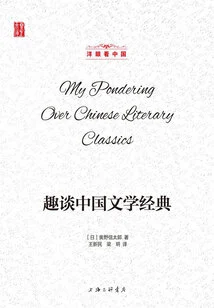
趣谈中国文学经典(洋眼看中国)
(japan) Shintaro Okuno
Mr. Okuno began giving continuous lectures on "Twelve Chapters on Chinese Literature" on Japan's NHK radio station in 1964. Later, his students compiled, edited and published the book "Interesting Talk about Chinese Literature Classics" based on the lecture content. This book selects translations of the best works and tells the story of Chinese literary classics from past dynasties. Mr. Okuno talked from "The Book of Songs" and "Chu Ci" to "Water Margin" and "Red Mansions", from the prose of the Six Dynasties to poetry and drama, from the legends of the Tang Dynasty to the chapters of the Ming and Qing Dynasties, from "Journey to the West" to "The Plum in the Golden Vase", from Wang Zhaojun to the White Snake, from Wang Yanhong to Lin Yutang... From this we can see the overall development of Chinese literature, and appreciate the most colorful chapters. Mr. Okuno's personalized and interesting interpretation and colorful pen and ink bring a new voice and color to Chinese literary classics.
Mr. Okuno began giving continuous lectures on "Twelve Chapters on Chinese Literature" on Japan's NHK radio station in 1964. Later, his students compiled, edited and published the book "Interesting Talk about Chinese Literature Classics" based on the lecture content. This book selects translations of the best works and tells the story of Chinese literary classics from past dynasties. Mr. Okuno talked from "The Book of Songs" and "Chu Ci" to "Water Margin" and "Red Mansions", from the prose of the Six Dynasties to poetry and drama, from the legends of the Tang Dynasty to the chapters of the Ming and Qing Dynasties, from "Journey to the West" to "The Plum in the Golden Vase", from Wang Zhaojun to the White Snake, from Wang Yanhong to Lin Yutang... From this we can see the overall development of Chinese literature, and appreciate the most colorful chapters. Mr. Okuno's personalized and interesting interpretation and colorful pen and ink bring a new voice and color to Chinese literary classics.
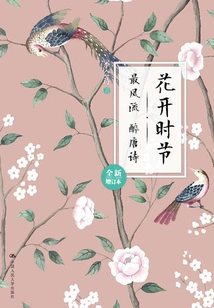
Blooming Season: the Most Romantic Poems of the Drunken Tang Dynasty (new and Updated Edition)
Literature花开时节:最风流 醉唐诗(全新增订本)
Li Huishi
Tang poetry is beautiful. My heart is full of joy when I look at flowers, and my mouth is full of fragrance after reading poems. In Tang poetry, beauties are sentimental, talented men are romantic, soldiers are brave, and hermits are pure. These poets are sentimental and sad, dreamy but also real. In Tang poetry, the poet's life is simple and rich. Such as gatherings, such as lovesickness, such as farewell, such as reunion, such as loneliness. Poets use their short lives and condensed words to record poems that can travel through thousands of years but still move us. This is a magical encounter. The author combines his many years of creative experience and rich emotions. In the process of interpreting Tang poetry, the author adds some favorite gossip or little-known anecdotes, writes those sad and interesting stories into the poems, and presents the interpretation records of Tang poetry in the form of themes, so that readers can feel the charm of Tang poetry more truly and comprehensively.
Tang poetry is beautiful. My heart is full of joy when I look at flowers, and my mouth is full of fragrance after reading poems. In Tang poetry, beauties are sentimental, talented men are romantic, soldiers are brave, and hermits are pure. These poets are sentimental and sad, dreamy but also real. In Tang poetry, the poet's life is simple and rich. Such as gatherings, such as lovesickness, such as farewell, such as reunion, such as loneliness. Poets use their short lives and condensed words to record poems that can travel through thousands of years but still move us. This is a magical encounter. The author combines his many years of creative experience and rich emotions. In the process of interpreting Tang poetry, the author adds some favorite gossip or little-known anecdotes, writes those sad and interesting stories into the poems, and presents the interpretation records of Tang poetry in the form of themes, so that readers can feel the charm of Tang poetry more truly and comprehensively.
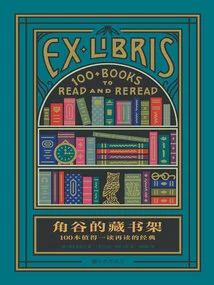
角谷的藏书架:100本值得一读再读的经典
(us) Michiko Kakutani
The first collection of book reviews published by Michiko Kakutani after her retirement is a collection of her private book collection as a "book lover". It recommends hundreds of books and covers a wide range of subjects. It includes literary classics, best-selling novels, poetry collections, history and politics, popular social sciences, drama studies, celebrity biographies, speech collections and memoirs, children's literature and other genres. They are all quality-guaranteed masterpieces in the literary world and provide readers with an authoritative book list that they can refer to.
The first collection of book reviews published by Michiko Kakutani after her retirement is a collection of her private book collection as a "book lover". It recommends hundreds of books and covers a wide range of subjects. It includes literary classics, best-selling novels, poetry collections, history and politics, popular social sciences, drama studies, celebrity biographies, speech collections and memoirs, children's literature and other genres. They are all quality-guaranteed masterpieces in the literary world and provide readers with an authoritative book list that they can refer to.
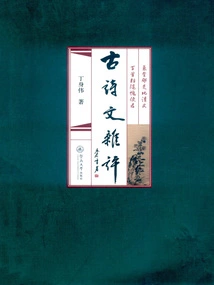
古诗文杂评
Ding Shenwei
The author of this book uses the ancient poetry criticism method and combines many years of literary accumulation to comment and discuss some ancient poetry and essays, and puts forward unique insights. The whole book is divided into two parts: commentary on ancient poetry and textual research.
The author of this book uses the ancient poetry criticism method and combines many years of literary accumulation to comment and discuss some ancient poetry and essays, and puts forward unique insights. The whole book is divided into two parts: commentary on ancient poetry and textual research.
Dream Life
Literature圆梦人生
Cao Linguang
This book appreciates some of Chairman Mao's poems such as "Moon over Xijiang·Jinggangshan", "Bu Suanzi·Yong Mei", "Qing Ping Le·Liupan Mountain", "Shui Tiao Ge Tou·Swimming", "Lang Tao Sha·Beidaihe", etc., And outlines the author's life trajectory from childhood, boyhood, youth, prime and old age and the corresponding changes in the times.
This book appreciates some of Chairman Mao's poems such as "Moon over Xijiang·Jinggangshan", "Bu Suanzi·Yong Mei", "Qing Ping Le·Liupan Mountain", "Shui Tiao Ge Tou·Swimming", "Lang Tao Sha·Beidaihe", etc., And outlines the author's life trajectory from childhood, boyhood, youth, prime and old age and the corresponding changes in the times.
Competing for Wonders and Beauties in a Vast Ocean: an Exploration of Ancient Chinese Novels
Literature争奇斗艳 浩如烟海:中国古代小说探赜
Wan Jia An Xiaoli
This book contains nine chapters. The first chapter is the beginning of the book, focusing on the art of ancient Chinese novels, involving the functions, characteristics, narrative angles, narrative structures, artistic techniques of plot structure, language development and application of ancient Chinese novels, etc., Thus laying the theoretical foundation for the development of the following chapters. Chapters 2 to 10 are the focus of the book, which provide detailed analysis of ancient Chinese classical Chinese novels with unique spiritual features, ancient Chinese vernacular short stories that open up new horizons, ancient Chinese heroic romance novels that create legendary characters, ancient Chinese historical romance novels that present historical biographies, ancient Chinese gods and demon novels with strange themes of gods and demons, ancient Chinese satirical condemnation novels that expose current ills, various types of ancient Chinese public case chivalrous novels, and ancient Chinese worldly affairs novels that describe the human condition of the world.
This book contains nine chapters. The first chapter is the beginning of the book, focusing on the art of ancient Chinese novels, involving the functions, characteristics, narrative angles, narrative structures, artistic techniques of plot structure, language development and application of ancient Chinese novels, etc., Thus laying the theoretical foundation for the development of the following chapters. Chapters 2 to 10 are the focus of the book, which provide detailed analysis of ancient Chinese classical Chinese novels with unique spiritual features, ancient Chinese vernacular short stories that open up new horizons, ancient Chinese heroic romance novels that create legendary characters, ancient Chinese historical romance novels that present historical biographies, ancient Chinese gods and demon novels with strange themes of gods and demons, ancient Chinese satirical condemnation novels that expose current ills, various types of ancient Chinese public case chivalrous novels, and ancient Chinese worldly affairs novels that describe the human condition of the world.
在幻想中反思科学:江晓原科幻评论集
Jiang Xiaoyuan
A collection of reviews of the latest science fiction works by Professor Jiang Xiaoyuan, who founded China's first science history department. This book contains in-depth analysis of famous science fiction works, reviews of some science fiction films and television works, and science fiction novels. It also includes several critical reviews, including "Imagination and Science: The Prospect of the Earth Destroyed by Nuclear Radiation", "Soul and Brain: Which Is Perfect Faster?" "Clara and the Sun: Elegy for Selfless Robots" "The Runaway Player: Who Needs to Worry More About Losing Control" and "Interstellar Voyage: An Exciting Course" Wonderful articles such as "The Frustrating Arithmetic Lesson" not only provide in-depth reflections on various science fiction-themed works, but also propose that the most important value of science fiction works lies in their ideological nature and reflection on science. They also point out that one of the definitions of science fiction works and popular science works lies in "humanistic care". They also analyze the differences between Chinese science fiction and Western science fiction and how science fiction participates in and affects scientific activities.
A collection of reviews of the latest science fiction works by Professor Jiang Xiaoyuan, who founded China's first science history department. This book contains in-depth analysis of famous science fiction works, reviews of some science fiction films and television works, and science fiction novels. It also includes several critical reviews, including "Imagination and Science: The Prospect of the Earth Destroyed by Nuclear Radiation", "Soul and Brain: Which Is Perfect Faster?" "Clara and the Sun: Elegy for Selfless Robots" "The Runaway Player: Who Needs to Worry More About Losing Control" and "Interstellar Voyage: An Exciting Course" Wonderful articles such as "The Frustrating Arithmetic Lesson" not only provide in-depth reflections on various science fiction-themed works, but also propose that the most important value of science fiction works lies in their ideological nature and reflection on science. They also point out that one of the definitions of science fiction works and popular science works lies in "humanistic care". They also analyze the differences between Chinese science fiction and Western science fiction and how science fiction participates in and affects scientific activities.
Ten Essays on Shanghai-style Novels
Literature海派长篇小说十论
Wang Chunlin
The smoke on the Bund is ten miles away, and Shanghai-style culture is growing together. Critic Wang Chunlin used a huge amount of texts as accumulation, focusing on ten novels by six contemporary Shanghai-style writers, and wrote "Ten Essays on Shanghai-style Novels". From Wang Anyi to Jin Yucheng, from Wu Liang, Fan Qian, Xia Shang to Tang Ying, "the most accurate writer about Shanghai", Wang Chunlin peeled off the cocoons of his works through careful reading of the texts, "seeing the most native essence of Chinese culture in the foreign-style Shanghainese in the alley." "The language used by Wang Anyi in "Tianxiang" can be said to be a kind of novel language that is full of elegance, simplicity, simplicity, timelessness and full of bookishness." "The most noteworthy aspect of "Flowers" is that Yu Jin Yucheng, with his years of hidden practice in constructing urban poetics, has made valuable efforts in the construction of modern Chinese urban poetics. Critic Wu Liang's first full-length novel, "Morning Glow" after his magnificent turn, constituted a particularly strong "Shanghai whirlwind" in the literary world. "... Wang Chunlin provides an in-depth and thorough analysis of the historical questioning and daily narrative in Shanghai-style novels, from the perspective of knowledge. From the fate and spirit of the molecules to the long and charming boudoir legend, from the former queen of the Wang Xietang to the erotic wars of Shanghainese in New York, we carefully combed the past and present of Shanghai-style literature, and discovered the continuation and inheritance of Shanghai-style culture that is lively, fragrant, and appreciated by both refined and popular people.
The smoke on the Bund is ten miles away, and Shanghai-style culture is growing together. Critic Wang Chunlin used a huge amount of texts as accumulation, focusing on ten novels by six contemporary Shanghai-style writers, and wrote "Ten Essays on Shanghai-style Novels". From Wang Anyi to Jin Yucheng, from Wu Liang, Fan Qian, Xia Shang to Tang Ying, "the most accurate writer about Shanghai", Wang Chunlin peeled off the cocoons of his works through careful reading of the texts, "seeing the most native essence of Chinese culture in the foreign-style Shanghainese in the alley." "The language used by Wang Anyi in "Tianxiang" can be said to be a kind of novel language that is full of elegance, simplicity, simplicity, timelessness and full of bookishness." "The most noteworthy aspect of "Flowers" is that Yu Jin Yucheng, with his years of hidden practice in constructing urban poetics, has made valuable efforts in the construction of modern Chinese urban poetics. Critic Wu Liang's first full-length novel, "Morning Glow" after his magnificent turn, constituted a particularly strong "Shanghai whirlwind" in the literary world. "... Wang Chunlin provides an in-depth and thorough analysis of the historical questioning and daily narrative in Shanghai-style novels, from the perspective of knowledge. From the fate and spirit of the molecules to the long and charming boudoir legend, from the former queen of the Wang Xietang to the erotic wars of Shanghainese in New York, we carefully combed the past and present of Shanghai-style literature, and discovered the continuation and inheritance of Shanghai-style culture that is lively, fragrant, and appreciated by both refined and popular people.
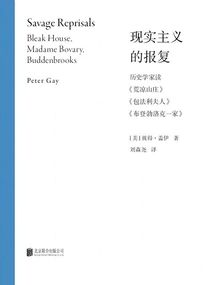
现实主义的报复:历史学家读《荒凉山庄》《包法利夫人》《布登勃洛克一家》
N
Do realistic novels really describe "reality"? In this book, Gay provides a detailed interpretation of three great realist novels: Dickens's "Bleak House," Flaubert's "Madame Bovary" and Thomas Mann's "The Buddenbrooks." The historian believes that these three writers took revenge on the society and era in which they lived through their novels. In this book, Gay combines historical research and literary criticism to analyze the relationship between novelists, novels, and history. This book provides literature lovers and historical researchers with a novel reading method that combines the advantages of the two disciplines, making novels an auxiliary medium for discovering historical truth.
Do realistic novels really describe "reality"? In this book, Gay provides a detailed interpretation of three great realist novels: Dickens's "Bleak House," Flaubert's "Madame Bovary" and Thomas Mann's "The Buddenbrooks." The historian believes that these three writers took revenge on the society and era in which they lived through their novels. In this book, Gay combines historical research and literary criticism to analyze the relationship between novelists, novels, and history. This book provides literature lovers and historical researchers with a novel reading method that combines the advantages of the two disciplines, making novels an auxiliary medium for discovering historical truth.
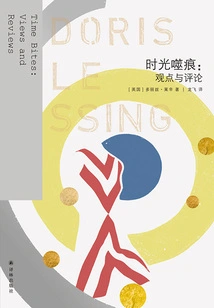
时光噬痕:观点与评论(莱辛作品)
H
"When we were young, an old woman told us that the biggest difficulty young people face is feeling small, powerless and insignificant. They feel that people live in a world controlled by powerful machines. No one should feel small and powerless. She said, remember, in the long history of mankind, what really plays a decisive role is the strength and courage of each person. "The 84-year-old Lessing is not old but wise and sharp. He comments on Jane Austen, Tolstoy, and Woolf, and discovers the buried masterpieces. In addition to literary criticism, this book also includes articles in which she talks about world affairs and shows her insights. In the eyes of this female writer who has always had a high spirit of fighting, times have changed and time has swallowed up many things that have disappeared, leaving only traces in literature. You might as well join Lessing in re-understanding the world through words.
"When we were young, an old woman told us that the biggest difficulty young people face is feeling small, powerless and insignificant. They feel that people live in a world controlled by powerful machines. No one should feel small and powerless. She said, remember, in the long history of mankind, what really plays a decisive role is the strength and courage of each person. "The 84-year-old Lessing is not old but wise and sharp. He comments on Jane Austen, Tolstoy, and Woolf, and discovers the buried masterpieces. In addition to literary criticism, this book also includes articles in which she talks about world affairs and shows her insights. In the eyes of this female writer who has always had a high spirit of fighting, times have changed and time has swallowed up many things that have disappeared, leaving only traces in literature. You might as well join Lessing in re-understanding the world through words.
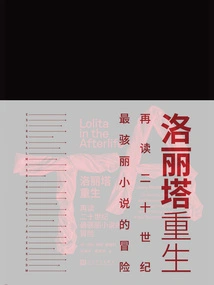
洛丽塔重生:再读二十世纪最骇丽小说的冒险
(us) Jenny Minton Quigley
Nabokov's novel "Lolita" has been a favorite of millions of literary lovers around the world for 60 years since its publication. Topics about it are endless and often new. "Lolita Reborn" published in the United States was written and edited by the daughter of the American publisher of "Lolita". It collects the analysis and reading memories of the novel by 30 writers. The book attempts to uncover the thematic paradox of "Lolita": why is the novel so morally controversial yet capable of endlessly stimulating readers' enthusiasm? While these writers were impressed by Nabokov's superb artistic achievements, they also tried to explore the relationship between this book and themselves, and explore the secrets of reader psychology and reading.
Nabokov's novel "Lolita" has been a favorite of millions of literary lovers around the world for 60 years since its publication. Topics about it are endless and often new. "Lolita Reborn" published in the United States was written and edited by the daughter of the American publisher of "Lolita". It collects the analysis and reading memories of the novel by 30 writers. The book attempts to uncover the thematic paradox of "Lolita": why is the novel so morally controversial yet capable of endlessly stimulating readers' enthusiasm? While these writers were impressed by Nabokov's superb artistic achievements, they also tried to explore the relationship between this book and themselves, and explore the secrets of reader psychology and reading.
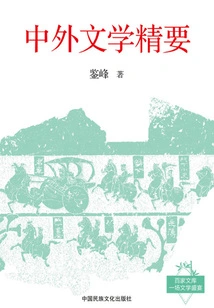
中外文学精要
Jianfeng
Literature has brought touch and laughter to the world, as well as beauty and knowledge, as well as life experience and spiritual wealth. Excellent literary works can last forever, travel through time, space, and borders, and be passed down among generations of readers. Through those immortal classic works, you can feel the soul of a nation and appreciate the crystallization of wisdom of a nation. These works carry the inner world of generations of authors at home and abroad, both ancient and modern, and contain their lifelong wisdom and life insights. "Essentials of Chinese and Foreign Literature" introduces the development process of literature, catalogs famous and representative writers, literary works, and literary knowledge related to various literary schools and movements at home and abroad in ancient and modern times. In addition, it also adds many anecdotes about literature, so that both knowledge and interest can be reflected in this book.
Literature has brought touch and laughter to the world, as well as beauty and knowledge, as well as life experience and spiritual wealth. Excellent literary works can last forever, travel through time, space, and borders, and be passed down among generations of readers. Through those immortal classic works, you can feel the soul of a nation and appreciate the crystallization of wisdom of a nation. These works carry the inner world of generations of authors at home and abroad, both ancient and modern, and contain their lifelong wisdom and life insights. "Essentials of Chinese and Foreign Literature" introduces the development process of literature, catalogs famous and representative writers, literary works, and literary knowledge related to various literary schools and movements at home and abroad in ancient and modern times. In addition, it also adds many anecdotes about literature, so that both knowledge and interest can be reflected in this book.
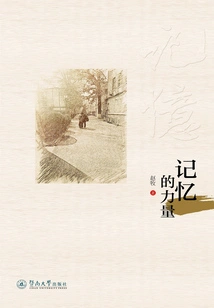
The Power of Memory
Literature记忆的力量
Zhao Mu
This book mainly involves contemporary literature and literary phenomena and the author's comments on them from the perspective of cultural studies. It is divided into three series. The first series is "Comes and Goes from the End of the World", which is mainly narrative prose, with the meaning of "revisiting old things". Some of them are personal and social, and the small ones are big. The second series is "Talking about Chickens and Ducks", which is mainly written in essays and discusses some social or cultural phenomena. The third series is "Shuowen Jiezi", which targets works and phenomena such as literature, film and television, and is more theoretical than the previous two series.
This book mainly involves contemporary literature and literary phenomena and the author's comments on them from the perspective of cultural studies. It is divided into three series. The first series is "Comes and Goes from the End of the World", which is mainly narrative prose, with the meaning of "revisiting old things". Some of them are personal and social, and the small ones are big. The second series is "Talking about Chickens and Ducks", which is mainly written in essays and discusses some social or cultural phenomena. The third series is "Shuowen Jiezi", which targets works and phenomena such as literature, film and television, and is more theoretical than the previous two series.
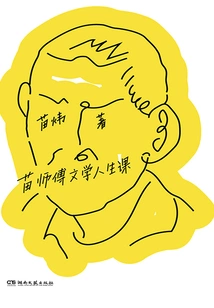
Master Miao's Literary Life Class
Literature苗师傅文学人生课
Miao Wei
Do people need to daydream more when they are awake? In this world, can anyone understand the weird people who don't fit in with the people around them? Is it because there is no better world, so we should cherish the present? ... You may find answers to the problems you encounter in life in books: about childhood, marriage, women's life, daily poetry, tobacco and alcohol, work and consumerism, the possibility of living away from the hustle and bustle... Taking "literary experience" as the guide, Master Miao started a sincere exchange between readers about reading experience. Through literature and film and television works, he still discusses life problems that have no definite answers: children, marriage and family life, consumerism, desires that "cannot be expressed in words", the ability of the five senses to perceive nature, the "salted fish" state of stillness in life, human malice and the good angels in human nature, etc. Talking about the works based on the theme, he jumps and connects between the hundreds of books and movies he has read. What he shares with you is not only his personal reading experience and a heart that is touched and shaken by good works, but also the common experiences of soberness and soul-warming in the world.
Do people need to daydream more when they are awake? In this world, can anyone understand the weird people who don't fit in with the people around them? Is it because there is no better world, so we should cherish the present? ... You may find answers to the problems you encounter in life in books: about childhood, marriage, women's life, daily poetry, tobacco and alcohol, work and consumerism, the possibility of living away from the hustle and bustle... Taking "literary experience" as the guide, Master Miao started a sincere exchange between readers about reading experience. Through literature and film and television works, he still discusses life problems that have no definite answers: children, marriage and family life, consumerism, desires that "cannot be expressed in words", the ability of the five senses to perceive nature, the "salted fish" state of stillness in life, human malice and the good angels in human nature, etc. Talking about the works based on the theme, he jumps and connects between the hundreds of books and movies he has read. What he shares with you is not only his personal reading experience and a heart that is touched and shaken by good works, but also the common experiences of soberness and soul-warming in the world.
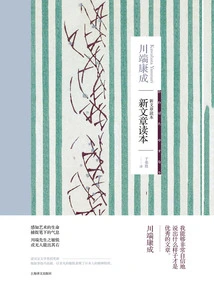
新文章读本(川端康成作品系列)
G
The works of Yasunari Kawabata, the Nobel Prize winner in literature, perceive the life of art and capture the breath of writing. Mr. Kawabata's sensitivity may be unparalleled. "New Articles Reader" is a collection of serials titled "New Articles Lectures" published by Kawabata Yasunari in the magazine "Literary Exchanges" from February 1949 to November 1950. It is a collection of literary criticism by Kawabata Yasunari. Kawabata, who has been familiar with "The Tale of Genji" and "Pillow" since childhood, strongly advocates "living articles" based on his nostalgia. The book is divided into ten chapters, citing articles by Japanese and foreign writers such as Akutagawa Ryunosuke, Ishikawa Jun, Yono Koji, Izumi Kyoka, Nagai Karikaze, Yokomitsu Riichi, Shiga Naoya, Sato Haruo, Kikuchi Hiroshi, Tayama Hanabukuro, Flaubert and other Japanese and foreign writers. It breaks down the entries and analyzes the secrets of masterpieces in language that is easy for ordinary readers to understand. Together with Junichiro Tanizaki and Yukio Mishima's literary review "Article Reader" of the same name, it is the most famous writer's literary review in the history of modern Japanese literature. From it, we can get a glimpse of the author's theory of writers and writing concepts.
The works of Yasunari Kawabata, the Nobel Prize winner in literature, perceive the life of art and capture the breath of writing. Mr. Kawabata's sensitivity may be unparalleled. "New Articles Reader" is a collection of serials titled "New Articles Lectures" published by Kawabata Yasunari in the magazine "Literary Exchanges" from February 1949 to November 1950. It is a collection of literary criticism by Kawabata Yasunari. Kawabata, who has been familiar with "The Tale of Genji" and "Pillow" since childhood, strongly advocates "living articles" based on his nostalgia. The book is divided into ten chapters, citing articles by Japanese and foreign writers such as Akutagawa Ryunosuke, Ishikawa Jun, Yono Koji, Izumi Kyoka, Nagai Karikaze, Yokomitsu Riichi, Shiga Naoya, Sato Haruo, Kikuchi Hiroshi, Tayama Hanabukuro, Flaubert and other Japanese and foreign writers. It breaks down the entries and analyzes the secrets of masterpieces in language that is easy for ordinary readers to understand. Together with Junichiro Tanizaki and Yukio Mishima's literary review "Article Reader" of the same name, it is the most famous writer's literary review in the history of modern Japanese literature. From it, we can get a glimpse of the author's theory of writers and writing concepts.
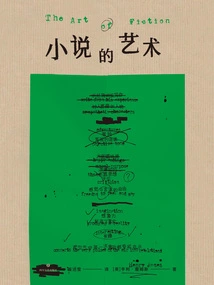
The Art of Fiction
Literature小说的艺术
(english) Henry James
Henry James was a pioneer of modern literature, a teacher of writers, a prodigious bookworm, and a heavy user of paper novels. In this book, he transforms into a diligent reading blogger and generously shares his private reading notes. Analyze the texture of the novel like peeling off cocoons and lead you to find the joy of reading novels. A sharp review of famous works, clearing away all the constraints on characters, plots, and themes in your mind, and getting straight to the truly exciting aspects of a novel. Happy are those who have mastered the art of fiction. As Henry James said: "An outstanding writer is a person who passionately tries to understand everything." After reading this book, you will learn to observe and imagine like a novelist, capture the countless indescribable beauty in life, and turn every subtle moment into a revelation.
Henry James was a pioneer of modern literature, a teacher of writers, a prodigious bookworm, and a heavy user of paper novels. In this book, he transforms into a diligent reading blogger and generously shares his private reading notes. Analyze the texture of the novel like peeling off cocoons and lead you to find the joy of reading novels. A sharp review of famous works, clearing away all the constraints on characters, plots, and themes in your mind, and getting straight to the truly exciting aspects of a novel. Happy are those who have mastered the art of fiction. As Henry James said: "An outstanding writer is a person who passionately tries to understand everything." After reading this book, you will learn to observe and imagine like a novelist, capture the countless indescribable beauty in life, and turn every subtle moment into a revelation.
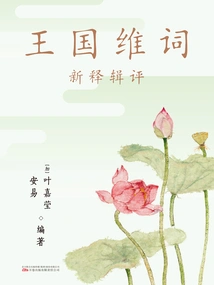
王国维词:新释辑评
(added) Compiled By Ye Jiaying And Others
This book was personally participated and guided by Mr. Ye Jiaying, and co-authored with Ms. An Yi. The book arranges Wang Guowei's poems in the order of publication time, namely: 61 poems in Draft A, 43 poems in Draft B, 3 newly added poems in "Long and Short Sentences" of "Guantang Jilin", and 8 newly added poems in "Tiaohua Ci" of "Guantang Jilin", for a total of 115 poems. Each poem is carefully commented by Mr. Ye Jiaying. In addition, various versions of Wang Guowei's Ci are listed in the appendix at the back of the book. 86 Kinds of articles or monographs about Wang Guowei's Ci by 69 authors are also listed in order of publication time and attached to the back of the book for readers' reference.
This book was personally participated and guided by Mr. Ye Jiaying, and co-authored with Ms. An Yi. The book arranges Wang Guowei's poems in the order of publication time, namely: 61 poems in Draft A, 43 poems in Draft B, 3 newly added poems in "Long and Short Sentences" of "Guantang Jilin", and 8 newly added poems in "Tiaohua Ci" of "Guantang Jilin", for a total of 115 poems. Each poem is carefully commented by Mr. Ye Jiaying. In addition, various versions of Wang Guowei's Ci are listed in the appendix at the back of the book. 86 Kinds of articles or monographs about Wang Guowei's Ci by 69 authors are also listed in order of publication time and attached to the back of the book for readers' reference.
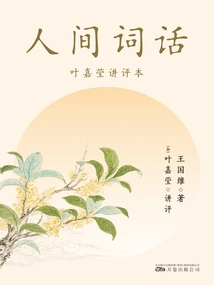
人间词话:叶嘉莹讲评本
Written By Wang Guowei (canada) Commentary By Ye Jiaying
"Human Words" is the representative work of Wang Guowei, a master of modern Chinese studies. In the form of traditional Chinese words, it brings together Western philosophy, literature and aesthetic ideas, and provides a wonderful and unique commentary on traditional Chinese literature. The whole book takes the theory of "realm" as the core, with incisive arguments and a self-contained system. It is a classic work in Chinese classical literary criticism. This book contains 64 final manuscripts and 50 unpublished manuscripts of "Human Words" that Wang Guowei deleted, revised, and revised. Appropriate annotations and textual translations are provided for each article, as well as Mr. Ye Jiaying's interpretation of Wang Guowei's "Human Words", allowing readers to easily understand Wang Guowei's literary and aesthetic thoughts. At the same time, the text is appended with poems, Ci cards, selections from Wang Guowei's "Human Ci", Wang Guowei's life, biography of the poet, etc. The famous painter Lin Xi was invited to draw the cover of this book.
"Human Words" is the representative work of Wang Guowei, a master of modern Chinese studies. In the form of traditional Chinese words, it brings together Western philosophy, literature and aesthetic ideas, and provides a wonderful and unique commentary on traditional Chinese literature. The whole book takes the theory of "realm" as the core, with incisive arguments and a self-contained system. It is a classic work in Chinese classical literary criticism. This book contains 64 final manuscripts and 50 unpublished manuscripts of "Human Words" that Wang Guowei deleted, revised, and revised. Appropriate annotations and textual translations are provided for each article, as well as Mr. Ye Jiaying's interpretation of Wang Guowei's "Human Words", allowing readers to easily understand Wang Guowei's literary and aesthetic thoughts. At the same time, the text is appended with poems, Ci cards, selections from Wang Guowei's "Human Ci", Wang Guowei's life, biography of the poet, etc. The famous painter Lin Xi was invited to draw the cover of this book.
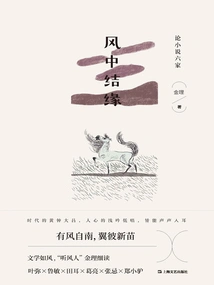
Marriage in the Wind: on Six Novels
Literature风中结缘:论小说六家
Jin Li
There is a wind coming from the south, carrying new sprouts on its wings. A good literary researcher should be such a "listener" who uses the works of writers as a medium, and the Huang Zhongdalu of the times can hear the hums and chants of people's hearts. Writer theory is Jin Li's personal favorite writing method. "It's like having a long conversation with friends, but it's not deliberately looking for or managing it, just like being transported by all kinds of unexpected winds." On the basis of thorough and careful reading of the text, he studied six writers who are active in the contemporary Chinese literary world, namely Ye Mi, Lu Min, Tian Er, Ge Liang, Zhang Ji, and Zheng Xiaolu, to taste the interest in the writers' words and explore their insights into society and people's hearts.
There is a wind coming from the south, carrying new sprouts on its wings. A good literary researcher should be such a "listener" who uses the works of writers as a medium, and the Huang Zhongdalu of the times can hear the hums and chants of people's hearts. Writer theory is Jin Li's personal favorite writing method. "It's like having a long conversation with friends, but it's not deliberately looking for or managing it, just like being transported by all kinds of unexpected winds." On the basis of thorough and careful reading of the text, he studied six writers who are active in the contemporary Chinese literary world, namely Ye Mi, Lu Min, Tian Er, Ge Liang, Zhang Ji, and Zheng Xiaolu, to taste the interest in the writers' words and explore their insights into society and people's hearts.
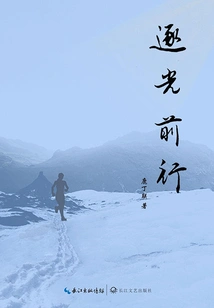
Follow the Light
Literature逐光前行
Luding United
The first volume mainly contains thoughts on education and literature, including some of the author's prose, novel exercises and poems, as well as articles on college entrance examination composition guidance, students' literary growth and college entrance examination marking. The second volume is mainly literary criticism, including some of the author's prose reviews published in newspapers and magazines over the years. The whole book is full of sincere emotions, the language is smooth and fresh, and the connotation is rich and profound.
The first volume mainly contains thoughts on education and literature, including some of the author's prose, novel exercises and poems, as well as articles on college entrance examination composition guidance, students' literary growth and college entrance examination marking. The second volume is mainly literary criticism, including some of the author's prose reviews published in newspapers and magazines over the years. The whole book is full of sincere emotions, the language is smooth and fresh, and the connotation is rich and profound.
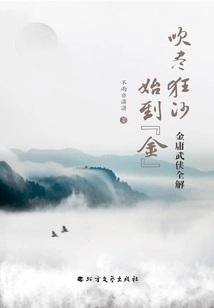
吹尽狂沙始到“金”:金庸武侠全解
Even If It's Not Raining, It's Still Raining
Every martial arts fan is a "everyone in the world", and every martial arts fan has his or her own "Weapon Book" in his or her heart. This book combines factors such as the degree of brilliance, literary level, ideological spirit and other factors to provide a comprehensive interpretation and reasonable ranking of Jin Yong's novels, so as to send "the greatest chivalrous man" from afar.
Every martial arts fan is a "everyone in the world", and every martial arts fan has his or her own "Weapon Book" in his or her heart. This book combines factors such as the degree of brilliance, literary level, ideological spirit and other factors to provide a comprehensive interpretation and reasonable ranking of Jin Yong's novels, so as to send "the greatest chivalrous man" from afar.
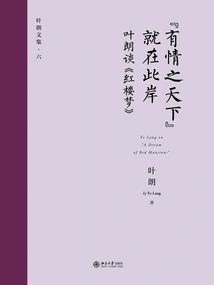
“有情之天下”就在此岸:叶朗谈《红楼梦》
Ye Lang
This book is a collection of essays by Ye Lang discussing "A Dream of Red Mansions" from an aesthetic perspective. The book mainly talks about two contents. One is the metaphysical implication of "Dream of Red Mansions". Cao Xueqin's pursuit of the ultimate meaning of life is to affirm the value of "emotion", pursue the liberation of "emotion", pursue the dignity of love, and pursue the equality of people. In summary, it is the pursuit of "a world with feelings." "The world of sentient beings" is not an illusory existence, but a real existence. "The world of sentient beings" is here, so life is meaningful. This is the "enlightenment" that "A Dream of Red Mansions" gives readers. Another content is the tragedy of "Dream of Red Mansions". The tragedy of "Dream of Red Mansions" is not the decline of the noble family, but the destruction of the "sentimental world". In Lin Daiyu's poem, it is "the cold moon buries the flower soul". In addition, the book also talks about the influence of Ye Xie and Jin Shengtan on "A Dream of Red Mansions", Zhi Yanzhai's comments, and the novel's aesthetics such as "the finishing touch" and "idle brushwork".
This book is a collection of essays by Ye Lang discussing "A Dream of Red Mansions" from an aesthetic perspective. The book mainly talks about two contents. One is the metaphysical implication of "Dream of Red Mansions". Cao Xueqin's pursuit of the ultimate meaning of life is to affirm the value of "emotion", pursue the liberation of "emotion", pursue the dignity of love, and pursue the equality of people. In summary, it is the pursuit of "a world with feelings." "The world of sentient beings" is not an illusory existence, but a real existence. "The world of sentient beings" is here, so life is meaningful. This is the "enlightenment" that "A Dream of Red Mansions" gives readers. Another content is the tragedy of "Dream of Red Mansions". The tragedy of "Dream of Red Mansions" is not the decline of the noble family, but the destruction of the "sentimental world". In Lin Daiyu's poem, it is "the cold moon buries the flower soul". In addition, the book also talks about the influence of Ye Xie and Jin Shengtan on "A Dream of Red Mansions", Zhi Yanzhai's comments, and the novel's aesthetics such as "the finishing touch" and "idle brushwork".
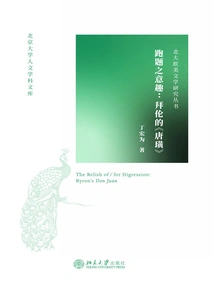
跑题之意趣:拜伦的《唐璜》
Ding Hongwei
The 19th-century British romantic poet Byron's long poem "Don Juan" is a famous masterpiece in British poetry. It is 16,000 lines long and is unfinished. The poem uses the legend of Don Juan in European history as a carrier, but it breaks through various boundaries. The direction of the story is often unexpected, and part of the context is also slanted. It frequently incorporates seemingly unrelated content, including the poet's own pleasant comments on current hot issues. In the end, it becomes a whole of its own, belonging to its own era, but also incompatible. It becomes a classic because of its "alien". The work is such that it still leaves room for interpretation. This academic work uses the concept of "digression" to cover various related phenomena in this long poem. It treats digression in a broad sense as an object of inquiry rich in literary and philosophical significance. It uses the history of thought, Western epic tradition, literary trends, irony techniques, religious culture, ideographic formulas, and female focal figures to explore the specific meanings of digression at different levels, scales, and natures. The book's development process also had many interactions with internationally representative critical opinions, and used this to outline the author's own thinking perspective. Overall, it formed an academic discourse that crosses cultural boundaries and uses important Western literary works as the working surface.
The 19th-century British romantic poet Byron's long poem "Don Juan" is a famous masterpiece in British poetry. It is 16,000 lines long and is unfinished. The poem uses the legend of Don Juan in European history as a carrier, but it breaks through various boundaries. The direction of the story is often unexpected, and part of the context is also slanted. It frequently incorporates seemingly unrelated content, including the poet's own pleasant comments on current hot issues. In the end, it becomes a whole of its own, belonging to its own era, but also incompatible. It becomes a classic because of its "alien". The work is such that it still leaves room for interpretation. This academic work uses the concept of "digression" to cover various related phenomena in this long poem. It treats digression in a broad sense as an object of inquiry rich in literary and philosophical significance. It uses the history of thought, Western epic tradition, literary trends, irony techniques, religious culture, ideographic formulas, and female focal figures to explore the specific meanings of digression at different levels, scales, and natures. The book's development process also had many interactions with internationally representative critical opinions, and used this to outline the author's own thinking perspective. Overall, it formed an academic discourse that crosses cultural boundaries and uses important Western literary works as the working surface.
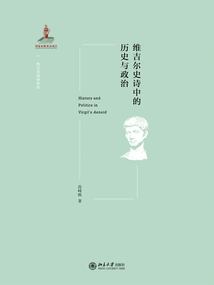
History and Politics in Virgil's Epic
Literature维吉尔史诗中的历史与政治
Gaofengfeng
The Aeneid, the epic poem by the ancient Roman poet Virgil, is a classic of Latin literature. It tells the story of the Trojan prince Aeneas who led the remaining people of his tribe to wander on the sea for many years and finally arrived in Italy, laying the foundation for the future Roman Empire. Virgil elaborated the legend of the founding of Rome in literature, and also wrote the political entanglements during the Roman Civil War into his poems. This epic is not only a literary classic, but also fully demonstrates many major issues such as Roman politics and national identity construction during the Augustus dynasty. "History and Politics in Virgil's Epic" mainly focuses on the political and historical issues contained in the epic, including the relationship between Virgil and Augustus, the political implications of the protagonist Aeneas, the political allusion of the image of Queen Dido, how the gods in the epic reflect the religious concepts of the Augustus era, and other issues. In addition to the historical and political analysis of the epic, "History and Politics in Virgil's Epic" will also analyze and evaluate the pessimistic interpretation and traditional "Augustinian" interpretation that have had a great impact in the 20th century.
The Aeneid, the epic poem by the ancient Roman poet Virgil, is a classic of Latin literature. It tells the story of the Trojan prince Aeneas who led the remaining people of his tribe to wander on the sea for many years and finally arrived in Italy, laying the foundation for the future Roman Empire. Virgil elaborated the legend of the founding of Rome in literature, and also wrote the political entanglements during the Roman Civil War into his poems. This epic is not only a literary classic, but also fully demonstrates many major issues such as Roman politics and national identity construction during the Augustus dynasty. "History and Politics in Virgil's Epic" mainly focuses on the political and historical issues contained in the epic, including the relationship between Virgil and Augustus, the political implications of the protagonist Aeneas, the political allusion of the image of Queen Dido, how the gods in the epic reflect the religious concepts of the Augustus era, and other issues. In addition to the historical and political analysis of the epic, "History and Politics in Virgil's Epic" will also analyze and evaluate the pessimistic interpretation and traditional "Augustinian" interpretation that have had a great impact in the 20th century.
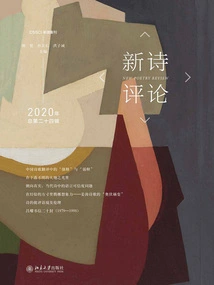
新诗评论2020年(总第二十四辑)
Editor-in-chief Xie Mian And Others
The articles included in "New Poetry Review 2020 (Total 24th Series)" can be roughly classified into six aspects. "Modern Chinese Poetry Translation into English" is a special topic of this volume, which brings together professional discussions in this field by American sinologists and translators Ke Xiazhi, Fei Zhenghua, Ling Jingyi and Gu Ailing. It shows the cutting-edge exploration of Chinese poetry in translation cognition and practice with a serious yet personal attitude. "My Reading History" invites four poets and scholars who grew up in different eras to embark on a journey of memory. In a friendly, relaxed and immersive non-academic style, they review the landmark reading history of their respective learning eras. The special topic "Issues and Events" in this issue continues to organize written discussions around Jing Wendong's two long critical articles. The discussion articles by young scholars Yi Xing and Wang Dongdong settled the debate and contributed extended and inclusive academic propositions, pushing this "new poetics case" into a new field of poetic theory construction. "Poet Studies" includes the latest masterpieces of six young and middle-aged scholars, aiming to showcase the cutting-edge vision and multi-faceted interface of case studies of contemporary poets. Zhong Ming is a representative poet of the "third generation poetry" and an important participant, witness and observer of the contemporary poetry movement. This collection includes an interview he completed in the summer of 2019, focusing on "the critical context and ethics of poetry" to contribute a vigorous, magnificent, and penetrating diagnostic report on contemporary poetry. In order to commemorate the 20th anniversary of the death of the poet Chang Yao, this issue has specially opened a special topic to publish 20 letters from Chang Yao to his friends that have been excavated and compiled by later generations. This batch of letters and the letters in the "Appendix" part of "Chang Yao's Collection of Poems and Prose" can be regarded as a whole, becoming a sincere footnote to the poet's "Book of Destiny".
The articles included in "New Poetry Review 2020 (Total 24th Series)" can be roughly classified into six aspects. "Modern Chinese Poetry Translation into English" is a special topic of this volume, which brings together professional discussions in this field by American sinologists and translators Ke Xiazhi, Fei Zhenghua, Ling Jingyi and Gu Ailing. It shows the cutting-edge exploration of Chinese poetry in translation cognition and practice with a serious yet personal attitude. "My Reading History" invites four poets and scholars who grew up in different eras to embark on a journey of memory. In a friendly, relaxed and immersive non-academic style, they review the landmark reading history of their respective learning eras. The special topic "Issues and Events" in this issue continues to organize written discussions around Jing Wendong's two long critical articles. The discussion articles by young scholars Yi Xing and Wang Dongdong settled the debate and contributed extended and inclusive academic propositions, pushing this "new poetics case" into a new field of poetic theory construction. "Poet Studies" includes the latest masterpieces of six young and middle-aged scholars, aiming to showcase the cutting-edge vision and multi-faceted interface of case studies of contemporary poets. Zhong Ming is a representative poet of the "third generation poetry" and an important participant, witness and observer of the contemporary poetry movement. This collection includes an interview he completed in the summer of 2019, focusing on "the critical context and ethics of poetry" to contribute a vigorous, magnificent, and penetrating diagnostic report on contemporary poetry. In order to commemorate the 20th anniversary of the death of the poet Chang Yao, this issue has specially opened a special topic to publish 20 letters from Chang Yao to his friends that have been excavated and compiled by later generations. This batch of letters and the letters in the "Appendix" part of "Chang Yao's Collection of Poems and Prose" can be regarded as a whole, becoming a sincere footnote to the poet's "Book of Destiny".
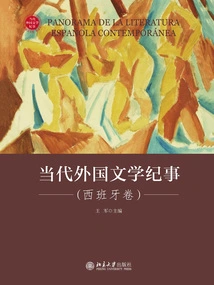
当代外国文学纪事(西班牙卷)
Editor-in-chief Wang Jun
"Chronicles of Contemporary Foreign Literature (Spanish Volume)" is the main result of "Chronicles of Contemporary Spanish Literature", a sub-project of the "Chronicles of Contemporary Foreign Literature", a key project of the National Social Science Fund undertaken by the School of Foreign Languages at Peking University. It aims to present the trends and development of Spanish literature from the late 20th century to the early 21st century. "Chronicles of Contemporary Foreign Literature (Spanish Volume)" includes a total of 87 contemporary Spanish writers, covering the old, middle and young generations. It focuses on introducing and commenting on novelists, poets and dramatists active in today's Spanish literary world, and strives to present the trend of Spanish literature to Chinese readers. In terms of style, "Chronicles of Contemporary Foreign Literature (Spanish Volume)" writes entries based on the writer as a unit, and sorts them alphabetically by the writer's surname. In addition to commenting on each writer's life and overall creative situation, there is also an entry for his works, most of which are representative works of the writers that have been published since the 21st century. "Chronicles of Contemporary Foreign Literature (Spanish Volume)" focuses on the study of writers and works by highlighting the word "new", new perspectives, new information, and new translations, with a view to providing a comprehensive archive of Spanish literature for the domestic academic community.
"Chronicles of Contemporary Foreign Literature (Spanish Volume)" is the main result of "Chronicles of Contemporary Spanish Literature", a sub-project of the "Chronicles of Contemporary Foreign Literature", a key project of the National Social Science Fund undertaken by the School of Foreign Languages at Peking University. It aims to present the trends and development of Spanish literature from the late 20th century to the early 21st century. "Chronicles of Contemporary Foreign Literature (Spanish Volume)" includes a total of 87 contemporary Spanish writers, covering the old, middle and young generations. It focuses on introducing and commenting on novelists, poets and dramatists active in today's Spanish literary world, and strives to present the trend of Spanish literature to Chinese readers. In terms of style, "Chronicles of Contemporary Foreign Literature (Spanish Volume)" writes entries based on the writer as a unit, and sorts them alphabetically by the writer's surname. In addition to commenting on each writer's life and overall creative situation, there is also an entry for his works, most of which are representative works of the writers that have been published since the 21st century. "Chronicles of Contemporary Foreign Literature (Spanish Volume)" focuses on the study of writers and works by highlighting the word "new", new perspectives, new information, and new translations, with a view to providing a comprehensive archive of Spanish literature for the domestic academic community.
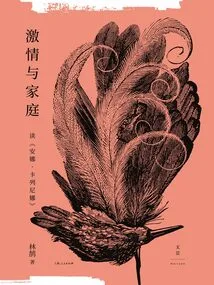
激情与家庭:读《安娜·卡列尼娜》
Lin Hu
A key to getting started with a classic, a journey of reflection on modern marriage and family! This book is the author's reading experience and personal interpretation of Tolstoy's masterpiece "Anna Karenina". Starting from the famous saying "All happy families are alike, but every unhappy family is unhappy in its own way", the author sorted out the relationships of each family in the book according to the plot sequence of the original work, analyzed the personality and psychological characteristics of the main characters, and combined with the comments of many scholars, conducted an in-depth exploration of Tolstoy's views on marriage, family, and aristocracy in this book, trying to break away from the traditional interpretation perspective and provide a new interpretation of this classic text from the perspective of family sociology.
A key to getting started with a classic, a journey of reflection on modern marriage and family! This book is the author's reading experience and personal interpretation of Tolstoy's masterpiece "Anna Karenina". Starting from the famous saying "All happy families are alike, but every unhappy family is unhappy in its own way", the author sorted out the relationships of each family in the book according to the plot sequence of the original work, analyzed the personality and psychological characteristics of the main characters, and combined with the comments of many scholars, conducted an in-depth exploration of Tolstoy's views on marriage, family, and aristocracy in this book, trying to break away from the traditional interpretation perspective and provide a new interpretation of this classic text from the perspective of family sociology.
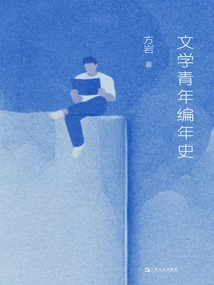
Chronicle of Literary Youth
Literature文学青年编年史
Fang Yan
This book contains some reviews of the author's novels in recent years, divided into three series: the first series is a close reading of the text; the second series is a short criticism; the third series focuses on the historical form and recent phenomena of the novel. These articles not only cover important novels in recent years, such as "Kaogong Ji", "Morning Glow", "Yamamoto", "Fog Walker", "A Brief History of Gray Clothes", "Scenery Here", "Suzaku", etc.; They also focus on the typicality and influence of writers across generations, such as Wang Meng, Wu Liang, Wang Anyi, Jia Pingwa, Mai Jia, Chi Li, Ye Mi, Lu Nei, Ge Liang, Li Hongwei, etc.
This book contains some reviews of the author's novels in recent years, divided into three series: the first series is a close reading of the text; the second series is a short criticism; the third series focuses on the historical form and recent phenomena of the novel. These articles not only cover important novels in recent years, such as "Kaogong Ji", "Morning Glow", "Yamamoto", "Fog Walker", "A Brief History of Gray Clothes", "Scenery Here", "Suzaku", etc.; They also focus on the typicality and influence of writers across generations, such as Wang Meng, Wu Liang, Wang Anyi, Jia Pingwa, Mai Jia, Chi Li, Ye Mi, Lu Nei, Ge Liang, Li Hongwei, etc.
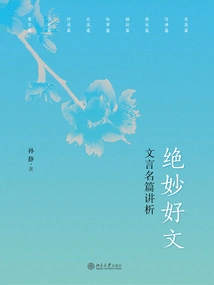
绝妙好文:文言名篇讲析
Sun Jing
When vernacular writing was on the rise, famous classic vernacular writers such as Hu Shi, Zhu Guangqian, Zhu Ziqing, etc. All had a profound foundation in ancient Chinese writing, so their writing was concise, clear, white and meaningful. The role of the foundation of ancient Chinese in improving the level of writing expression is fully reflected in these famous masters. This small book is intended to show the charm of ancient prose and its role that cannot be ignored in improving writing skills. It is hoped that more readers will know and understand the value of ancient prose. "Excellent and Good Prose-Analysis of Famous Classical Chinese Poems" is intended to be a companion to the previously published "Excellent and Good Poetry" and is a popular reading book for the appreciation of classical Chinese.
When vernacular writing was on the rise, famous classic vernacular writers such as Hu Shi, Zhu Guangqian, Zhu Ziqing, etc. All had a profound foundation in ancient Chinese writing, so their writing was concise, clear, white and meaningful. The role of the foundation of ancient Chinese in improving the level of writing expression is fully reflected in these famous masters. This small book is intended to show the charm of ancient prose and its role that cannot be ignored in improving writing skills. It is hoped that more readers will know and understand the value of ancient prose. "Excellent and Good Prose-Analysis of Famous Classical Chinese Poems" is intended to be a companion to the previously published "Excellent and Good Poetry" and is a popular reading book for the appreciation of classical Chinese.
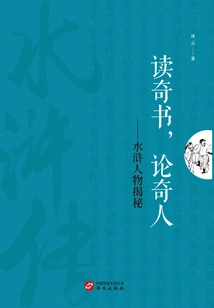
Read Strange Books and Discuss Strange People: Revealing the Secrets of Water Margin Characters
Literature读奇书,论奇人:水浒人物揭秘
Bingyun
This book is not a high-level academic treatise that examines the author, year of writing, story evolution, version differences and other issues of "Water Margin". Instead, it is based on the existing text of "Water Margin" and takes the characters of Water Margin as the object. It selects some topics with significance, doubts, controversy and interest to comment on, and provides a reasonable and refreshing interpretation of the familiar Water Margin characters. Among them are comments on the behavior and image of the Liangshan characters, an explanation of the contrast between the Liangshan characters' talents (not just martial arts), military exploits, personalities and rankings; there are also criticisms of some of the outdated values and cruelty and bloodthirsty aspects conveyed in "Water Margin"; an analysis of the storyline highlights and artistic flaws of "Water Margin;" The whole book has analysis, argumentation, textual research, and unique insights. It has the scientificity and rigor of academic works, but also the readability and interest of knowledge books. It will help people read, appreciate, and understand the "wonderful and eternal" world of Water Margin with joy and hatred more deeply and comprehensively.
This book is not a high-level academic treatise that examines the author, year of writing, story evolution, version differences and other issues of "Water Margin". Instead, it is based on the existing text of "Water Margin" and takes the characters of Water Margin as the object. It selects some topics with significance, doubts, controversy and interest to comment on, and provides a reasonable and refreshing interpretation of the familiar Water Margin characters. Among them are comments on the behavior and image of the Liangshan characters, an explanation of the contrast between the Liangshan characters' talents (not just martial arts), military exploits, personalities and rankings; there are also criticisms of some of the outdated values and cruelty and bloodthirsty aspects conveyed in "Water Margin"; an analysis of the storyline highlights and artistic flaws of "Water Margin;" The whole book has analysis, argumentation, textual research, and unique insights. It has the scientificity and rigor of academic works, but also the readability and interest of knowledge books. It will help people read, appreciate, and understand the "wonderful and eternal" world of Water Margin with joy and hatred more deeply and comprehensively.
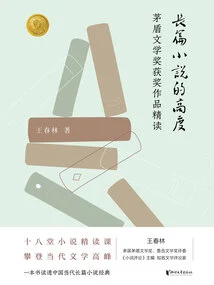
长篇小说的高度:茅盾文学奖获奖作品精读
Wang Chunlin
This book is a close reading and analysis of the Mao Dun Literature Award-winning works by the famous contemporary literary critic Wang Chunlin. It includes his interpretations of 18 award-winning works that are widely welcomed by readers, such as "In the World", "Massage", "White Deer Plain", "Frog", "One Sentence is Worth Ten Thousand Sentences" and "Flowers". The Mao Dun Literature Award is one of the most authoritative and influential literary awards in contemporary China, representing the height of contemporary Chinese novel creation. Since its inception, the Mao Dun Literature Award has lasted for 40 years and has awarded nearly 50 novels with their own characteristics. Wang Chunlin has served as a judge for several important literary awards such as the Mao Dun Literature Award and the Lu Xun Literature Award. He has long been engaged in the research and criticism of modern and contemporary Chinese literature and has in-depth and unique insights into contemporary Chinese literature. In this book, he guides readers to appreciate and appreciate the rich connotation and artistic charm of these award-winning works from multiple perspectives such as the novel's structure, narrative techniques, language features, and main themes.
This book is a close reading and analysis of the Mao Dun Literature Award-winning works by the famous contemporary literary critic Wang Chunlin. It includes his interpretations of 18 award-winning works that are widely welcomed by readers, such as "In the World", "Massage", "White Deer Plain", "Frog", "One Sentence is Worth Ten Thousand Sentences" and "Flowers". The Mao Dun Literature Award is one of the most authoritative and influential literary awards in contemporary China, representing the height of contemporary Chinese novel creation. Since its inception, the Mao Dun Literature Award has lasted for 40 years and has awarded nearly 50 novels with their own characteristics. Wang Chunlin has served as a judge for several important literary awards such as the Mao Dun Literature Award and the Lu Xun Literature Award. He has long been engaged in the research and criticism of modern and contemporary Chinese literature and has in-depth and unique insights into contemporary Chinese literature. In this book, he guides readers to appreciate and appreciate the rich connotation and artistic charm of these award-winning works from multiple perspectives such as the novel's structure, narrative techniques, language features, and main themes.
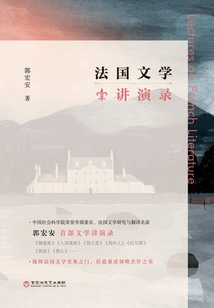
Lectures on French Literature
Literature法国文学讲演录
Guo Hongan
Mr. Guo Hongan is a famous translator and writer. His translations of "Flowers of Evil" and "The Plague" are regarded as models by domestic and foreign literary readers. He has also given nearly a hundred lectures in major universities and academic institutions across the country. This book collects the essence of his lectures on French literature over the years, including a total of 10 articles including "Montaigne and His Essays" and "Talk about Balzac", which fully demonstrates Mr. Guo Hongan's ideological spark and life wisdom.
Mr. Guo Hongan is a famous translator and writer. His translations of "Flowers of Evil" and "The Plague" are regarded as models by domestic and foreign literary readers. He has also given nearly a hundred lectures in major universities and academic institutions across the country. This book collects the essence of his lectures on French literature over the years, including a total of 10 articles including "Montaigne and His Essays" and "Talk about Balzac", which fully demonstrates Mr. Guo Hongan's ideological spark and life wisdom.
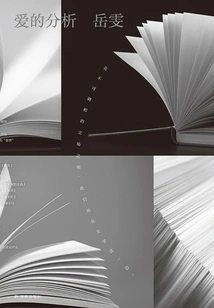
Analysis of Love
Literature爱的分析
Yue Wen
"Analysis of Love" is the latest collection of literary criticism by critic Yue Wen, divided into three volumes. The first volume depicts the landscape of novels in the 20 years of the 21st century from a macro perspective, studying female consciousness and female writing in the new era, changes in the definition of "good people", changes in the beginning of novels, etc., Thus reflecting the novelist's easier understanding of the world and the era we live in. The second volume is an analysis of the writers' works, focusing on eight writers: Feng Jicai, Liang Xiaosheng, Jin Yucheng, Wang Anyi, Deng Yiguang, Alai, Feng Liang, and Ye Zhou, showing Yue Wen's vivid literary criticism style in recent years. The third volume is a smart essay, talking about "A Dream of Red Mansions", the literary genre she loves, and her encounter with literature... From the big to the small, it completes a complete explanation of the literary life of critic Yue Wen.
"Analysis of Love" is the latest collection of literary criticism by critic Yue Wen, divided into three volumes. The first volume depicts the landscape of novels in the 20 years of the 21st century from a macro perspective, studying female consciousness and female writing in the new era, changes in the definition of "good people", changes in the beginning of novels, etc., Thus reflecting the novelist's easier understanding of the world and the era we live in. The second volume is an analysis of the writers' works, focusing on eight writers: Feng Jicai, Liang Xiaosheng, Jin Yucheng, Wang Anyi, Deng Yiguang, Alai, Feng Liang, and Ye Zhou, showing Yue Wen's vivid literary criticism style in recent years. The third volume is a smart essay, talking about "A Dream of Red Mansions", the literary genre she loves, and her encounter with literature... From the big to the small, it completes a complete explanation of the literary life of critic Yue Wen.
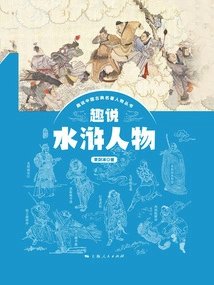
趣说水浒人物
Li Jianbing
"Water Margin" is one of China's four famous novels. It mainly describes the story of 108 heroes led by Song Jiang who gathered in Liangshan, Shandong Province in the late Northern Song Dynasty. It is a chapter-style novel of heroic legends. After the publication of "Water Margin", it had a huge impact on society. Many characters in Water Margin have also been criticized by people of all ages. This book is the culmination of the author's many years of thinking and research. The book is in the form of essays and is divided into four parts: Tiangang chapter, Disha chapter, Huequ chapter and Bowai chapter. It uses modern concepts and thinking on the characters of "Water Margin" to interpret the life experience, experience, personality, abilities and endings of nearly a hundred characters in the book.
"Water Margin" is one of China's four famous novels. It mainly describes the story of 108 heroes led by Song Jiang who gathered in Liangshan, Shandong Province in the late Northern Song Dynasty. It is a chapter-style novel of heroic legends. After the publication of "Water Margin", it had a huge impact on society. Many characters in Water Margin have also been criticized by people of all ages. This book is the culmination of the author's many years of thinking and research. The book is in the form of essays and is divided into four parts: Tiangang chapter, Disha chapter, Huequ chapter and Bowai chapter. It uses modern concepts and thinking on the characters of "Water Margin" to interpret the life experience, experience, personality, abilities and endings of nearly a hundred characters in the book.
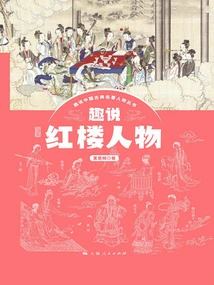
趣说红楼人物
Wang Yiru
"A Dream of Red Mansions" is universally recognized as the pinnacle of Chinese classical novels, an encyclopedia of Chinese feudal society, and a masterpiece of traditional culture. Reading "A Dream of Red Mansions" is like walking into a corridor of characters, with hundreds of lifelike characters ready to emerge. The characters in "A Dream of Red Mansions" are all protagonists, and they are vividly portrayed. In order to better understand "Dream of Red Mansions", the author of this book wrote the book "Interesting Stories about the Characters of Red Mansions" based on his deep understanding of the characters in "Dream of Red Mansions". The book is divided into six parts: the Twelve Hairpins of Jinling, the master of the Jia family, the maids and concubines, the relatives of the Jia family, the servants and wives, and the outside of the two houses. It uses modern people's concepts and thinking to explain the life experience, experience, character, abilities and endings of nearly a hundred characters in the book.
"A Dream of Red Mansions" is universally recognized as the pinnacle of Chinese classical novels, an encyclopedia of Chinese feudal society, and a masterpiece of traditional culture. Reading "A Dream of Red Mansions" is like walking into a corridor of characters, with hundreds of lifelike characters ready to emerge. The characters in "A Dream of Red Mansions" are all protagonists, and they are vividly portrayed. In order to better understand "Dream of Red Mansions", the author of this book wrote the book "Interesting Stories about the Characters of Red Mansions" based on his deep understanding of the characters in "Dream of Red Mansions". The book is divided into six parts: the Twelve Hairpins of Jinling, the master of the Jia family, the maids and concubines, the relatives of the Jia family, the servants and wives, and the outside of the two houses. It uses modern people's concepts and thinking to explain the life experience, experience, character, abilities and endings of nearly a hundred characters in the book.
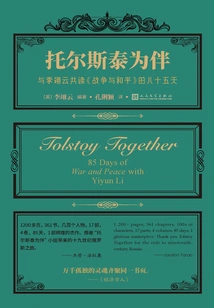
托尔斯泰为伴:与李翊云共读《战争与和平》的八十五天
(us) Compiled By Li Yiyun
Li Yiyun read "War and Peace" during the epidemic. She found that "the more unpredictable life is, the more stability and structure "War and Peace" provides." In this book, the author summarizes the ten major inspirations that "War and Peace" brought her in writing: (1) Simple and clear structure; (2) Narration and flashback; (3) Description of actions; (4) Returning the environment to its original nature; (5) Turning decay into magic; (6) Actions turning into activities; (7) Characters' uncharacteristic behavior; (8) Animals telling human stories; (9) Changing the script for the characters; (10) A certain landmark in the character's field of vision. Li Yiyun's 85 diary-style interpretations of "War and Peace" are both an understanding of "War and Peace" and a dialogue with Tolstoy. It is also an explanation of her personal understanding of Tolstoy's writing skills. For readers who like Tolstoy and "War and Peace", they will have a different reading experience.
Li Yiyun read "War and Peace" during the epidemic. She found that "the more unpredictable life is, the more stability and structure "War and Peace" provides." In this book, the author summarizes the ten major inspirations that "War and Peace" brought her in writing: (1) Simple and clear structure; (2) Narration and flashback; (3) Description of actions; (4) Returning the environment to its original nature; (5) Turning decay into magic; (6) Actions turning into activities; (7) Characters' uncharacteristic behavior; (8) Animals telling human stories; (9) Changing the script for the characters; (10) A certain landmark in the character's field of vision. Li Yiyun's 85 diary-style interpretations of "War and Peace" are both an understanding of "War and Peace" and a dialogue with Tolstoy. It is also an explanation of her personal understanding of Tolstoy's writing skills. For readers who like Tolstoy and "War and Peace", they will have a different reading experience.
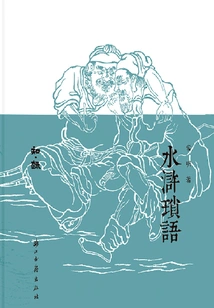
Water Margin Idioms
Literature水浒琐语
Chang Ming
This book is one of the "Zhiqu" series and is a literary essay about "Water Margin". The author uses the form of commentary to carefully read "Water Margin" around the two key words of "power" and "humanity", and integrates personal values and understanding of society into his comments on the events and characters in the book. The whole book is divided into "inner chapters" and "outer chapters". The "inner part" analyzes the individual cases of the characters in "Water Margin", and the "outer part" generally describes the era and society as the background of "Water Margin", and the two parts echo each other. The language is simple and fluent, and there is no shortage of original insights.
This book is one of the "Zhiqu" series and is a literary essay about "Water Margin". The author uses the form of commentary to carefully read "Water Margin" around the two key words of "power" and "humanity", and integrates personal values and understanding of society into his comments on the events and characters in the book. The whole book is divided into "inner chapters" and "outer chapters". The "inner part" analyzes the individual cases of the characters in "Water Margin", and the "outer part" generally describes the era and society as the background of "Water Margin", and the two parts echo each other. The language is simple and fluent, and there is no shortage of original insights.
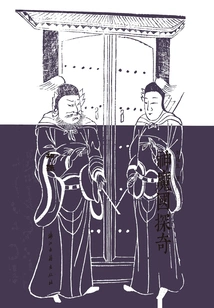
Exploring the Kingdom of Gods and Demons
Literature神魔国探奇
Liu Yisheng
This book is one of the Zhi·Qu series. The Ming and Qing Dynasties were the peak period of my country's novels about gods and demons, represented by "The Romance of the Gods" and "Journey to the West". The bizarre society and human relationships in the novel may seem absurd, but in fact they have a long historical evolution process. Mr. Liu Yisheng, the founder of the Lingnan School of Appreciation, tried to use a scientific research method to explore the causes and characters of the Kingdom of Gods and Demons in his book "Exploration of the Kingdom of Gods and Demons". This book is both ancient and modern, both literature and history; it is diverse and suitable for both elegance and vulgarity. It is a model work that combines traditional knowledge with fun.
This book is one of the Zhi·Qu series. The Ming and Qing Dynasties were the peak period of my country's novels about gods and demons, represented by "The Romance of the Gods" and "Journey to the West". The bizarre society and human relationships in the novel may seem absurd, but in fact they have a long historical evolution process. Mr. Liu Yisheng, the founder of the Lingnan School of Appreciation, tried to use a scientific research method to explore the causes and characters of the Kingdom of Gods and Demons in his book "Exploration of the Kingdom of Gods and Demons". This book is both ancient and modern, both literature and history; it is diverse and suitable for both elegance and vulgarity. It is a model work that combines traditional knowledge with fun.
魏晋南北朝诗鉴赏
Editor-in-chief Han Jingtai Commentary By Qian Zhixi
The "1000 Newly Selected Chinese Famous Poems" series is edited by Han Jingtai, a distinguished professor at Beijing Language and Culture University, and written by famous contemporary scholars Zhao Minli, Qian Zhixi, Ge Xiaoyin, Mo Lizhen, Zhang Jing, Zuo Dongling, Jiang Yin, and Zhang Fugui , the author uses dynasties as the basic unit, selects 1,000 famous poems from the vast history of Chinese poetry, and provides detailed annotations and wonderful appreciation to help readers appreciate the ideological connotation and artistic characteristics of Chinese poetry. "Appreciation of Poems of the Wei, Jin, Southern and Northern Dynasties" was compiled and annotated by Mr. Qian Zhixi, a famous professor of the Chinese Department of Peking University. This book contains 100 selected poems, covering the essence of poetry in this historical period. The author's brief analysis is particularly wonderful, which can well guide ordinary readers to appreciate the artistic style of five-character poems, Yuefu poems and other works in the medieval period.
The "1000 Newly Selected Chinese Famous Poems" series is edited by Han Jingtai, a distinguished professor at Beijing Language and Culture University, and written by famous contemporary scholars Zhao Minli, Qian Zhixi, Ge Xiaoyin, Mo Lizhen, Zhang Jing, Zuo Dongling, Jiang Yin, and Zhang Fugui , the author uses dynasties as the basic unit, selects 1,000 famous poems from the vast history of Chinese poetry, and provides detailed annotations and wonderful appreciation to help readers appreciate the ideological connotation and artistic characteristics of Chinese poetry. "Appreciation of Poems of the Wei, Jin, Southern and Northern Dynasties" was compiled and annotated by Mr. Qian Zhixi, a famous professor of the Chinese Department of Peking University. This book contains 100 selected poems, covering the essence of poetry in this historical period. The author's brief analysis is particularly wonderful, which can well guide ordinary readers to appreciate the artistic style of five-character poems, Yuefu poems and other works in the medieval period.
浦江清讲透四大名著
Pujiangqing
This book is a book on the appreciation of Chinese classical literature that is both scientific and artistic. It is compiled from the lecture notes on the history of classical literature compiled by Mr. Pu Jiangqing. It covers a collection of literary thoughts accumulated by him while teaching at Tsinghua University, Southwest Associated University, and Peking University for many years. After repeated deliberation and revision, it has unique insights, novel arguments, and eloquent explanations. It has both depth and breadth, ideological and artistic qualities, and comprehensively reveals the essence and true meaning of the four great classics, from macroscopic ancient political thoughts to microscopic story plots and character analysis. In a language you can understand, it will take you through time and space, have long conversations with the masters of the Ming and Qing Dynasties, and truly appreciate the immortal classical charm of the "Four Great Classics".
This book is a book on the appreciation of Chinese classical literature that is both scientific and artistic. It is compiled from the lecture notes on the history of classical literature compiled by Mr. Pu Jiangqing. It covers a collection of literary thoughts accumulated by him while teaching at Tsinghua University, Southwest Associated University, and Peking University for many years. After repeated deliberation and revision, it has unique insights, novel arguments, and eloquent explanations. It has both depth and breadth, ideological and artistic qualities, and comprehensively reveals the essence and true meaning of the four great classics, from macroscopic ancient political thoughts to microscopic story plots and character analysis. In a language you can understand, it will take you through time and space, have long conversations with the masters of the Ming and Qing Dynasties, and truly appreciate the immortal classical charm of the "Four Great Classics".
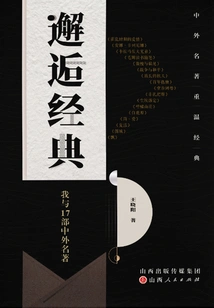
邂逅经典:我与17部中外名著
Wang Xiaoyang
This book contains a total of 17 articles, divided into two parts: upper and lower. The first part "Reading Foreign Classics" mainly focuses on reading first-class works by some first-class foreign writers; the second part "Reading Chinese Classics" mainly focuses on reading classic works by some famous Chinese writers. This book is different from the general review-style reading notes and has formed its own characteristics. It is not only a comprehensive interpretation of 17 Chinese and foreign classics, but also the author's unique personal reading experience. There are descriptions of little-known details, detailed analysis of in-depth thoughts, and precise interpretations of artistic techniques. It is not only a reading exchange with readers who have read these famous works, but also an introduction for readers who have not yet had time to read these famous works. The author guides us to discover the power of classics in a book.
This book contains a total of 17 articles, divided into two parts: upper and lower. The first part "Reading Foreign Classics" mainly focuses on reading first-class works by some first-class foreign writers; the second part "Reading Chinese Classics" mainly focuses on reading classic works by some famous Chinese writers. This book is different from the general review-style reading notes and has formed its own characteristics. It is not only a comprehensive interpretation of 17 Chinese and foreign classics, but also the author's unique personal reading experience. There are descriptions of little-known details, detailed analysis of in-depth thoughts, and precise interpretations of artistic techniques. It is not only a reading exchange with readers who have read these famous works, but also an introduction for readers who have not yet had time to read these famous works. The author guides us to discover the power of classics in a book.
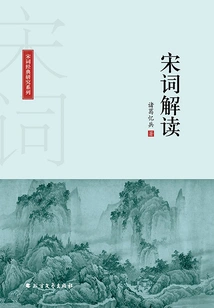
Interpretation of Song Ci
Literature宋词解读
Zhuge Yibing
Song poetry has always been compared with Tang poetry. From the beginning, Song poetry focused on personal enjoyment and private life, highlighting the delicate sensory feelings, secluded spiritual experiences, and tortuous emotional processes of the lyrical subject enjoying life, forming the literary characteristics of "romance" and "side beauty". For thousands of years, countless readers have fallen in love with Song Ci. Its famous poems and lines are even more popular and become household names. This book contains a total of 334 selected works. The annotations are as concise as possible and the interpretation is relatively detailed. Sharing the experience of reading Song Ci with readers is to guide readers to understand and appreciate Song Ci more comprehensively, broadly and deeply. At the same time, this book is easy to understand and takes into account the content requirements of academic research and ordinary readers.
Song poetry has always been compared with Tang poetry. From the beginning, Song poetry focused on personal enjoyment and private life, highlighting the delicate sensory feelings, secluded spiritual experiences, and tortuous emotional processes of the lyrical subject enjoying life, forming the literary characteristics of "romance" and "side beauty". For thousands of years, countless readers have fallen in love with Song Ci. Its famous poems and lines are even more popular and become household names. This book contains a total of 334 selected works. The annotations are as concise as possible and the interpretation is relatively detailed. Sharing the experience of reading Song Ci with readers is to guide readers to understand and appreciate Song Ci more comprehensively, broadly and deeply. At the same time, this book is easy to understand and takes into account the content requirements of academic research and ordinary readers.
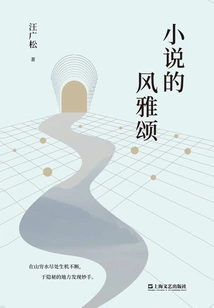
Ode to Elegance in Novels
Literature小说的风雅颂
Wang Guangsong
"Ode to the Elegance of Novels" is a collection of literary criticism by scholar Wang Guangsong. This book collects Wang Guangsong's modern and contemporary Chinese literary criticism works published since 2006, including an analysis of the Two Views and Three Lines in Lu Xun's "Wild Grass", etiquette and benevolence in Zhou Zuoren's novels, Konoha's poetic criticism, media investigation of oral works, etc. Literary criticism is also literature, and "Ode to the Elegance of Novel" aims to discover the masterpieces and masterstrokes, true feelings and philosophical thoughts, explicitness and subtlety in literary works. In the lines of concrete and perceptible words, Wang Guangsong possesses a pair of invisible, soft and sensitive tentacles. With his love for literature, these tentacles touch and wander in the context and texture of the works, searching for the writer's originality and discovering the unique aesthetic charm of the works.
"Ode to the Elegance of Novels" is a collection of literary criticism by scholar Wang Guangsong. This book collects Wang Guangsong's modern and contemporary Chinese literary criticism works published since 2006, including an analysis of the Two Views and Three Lines in Lu Xun's "Wild Grass", etiquette and benevolence in Zhou Zuoren's novels, Konoha's poetic criticism, media investigation of oral works, etc. Literary criticism is also literature, and "Ode to the Elegance of Novel" aims to discover the masterpieces and masterstrokes, true feelings and philosophical thoughts, explicitness and subtlety in literary works. In the lines of concrete and perceptible words, Wang Guangsong possesses a pair of invisible, soft and sensitive tentacles. With his love for literature, these tentacles touch and wander in the context and texture of the works, searching for the writer's originality and discovering the unique aesthetic charm of the works.
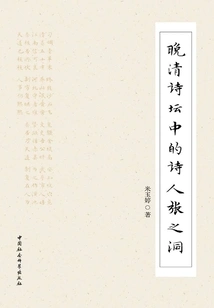
晚清诗坛中的诗人张之洞
Mi Yuting
Zhang Zhidong was not only a famous minister and capable official in the modern political arena, but also a leader in the poetry circle of the late Qing Dynasty and a backbone in the academic and ideological circles. Whether he is writing poems or essays, discussing knowledge or doing things, Zhang Zhidong always aims at being fair, accessible, elegant and solemn. Therefore, the "advocating elegance and uprightness" he emphasizes in poetry is based on his upright temperament and self-cultivation. Zhang Zhidong's contribution to poetry lies in his ability to reconcile the Tang and Song Dynasties in the late Qing Dynasty when the poetry style of the Song Dynasty was at its peak, advocating "Song style and Tang style" and striving for "moderateness" and elegance. The "Qingqie" theory advocated by him has considerable poetic value, but it also has cognitive limitations. Zhang Zhidong held a high position and was able to break down the barriers between families, tolerate a variety of poetic styles, and his poetic thoughts were rich in unique style. This objectively promoted the exchange of poetry at that time and influenced the atmosphere of the poetry world at that time. This book studies the reform political figure Zhang Zhidong and his poetic contribution from the perspectives of literature and poets.
Zhang Zhidong was not only a famous minister and capable official in the modern political arena, but also a leader in the poetry circle of the late Qing Dynasty and a backbone in the academic and ideological circles. Whether he is writing poems or essays, discussing knowledge or doing things, Zhang Zhidong always aims at being fair, accessible, elegant and solemn. Therefore, the "advocating elegance and uprightness" he emphasizes in poetry is based on his upright temperament and self-cultivation. Zhang Zhidong's contribution to poetry lies in his ability to reconcile the Tang and Song Dynasties in the late Qing Dynasty when the poetry style of the Song Dynasty was at its peak, advocating "Song style and Tang style" and striving for "moderateness" and elegance. The "Qingqie" theory advocated by him has considerable poetic value, but it also has cognitive limitations. Zhang Zhidong held a high position and was able to break down the barriers between families, tolerate a variety of poetic styles, and his poetic thoughts were rich in unique style. This objectively promoted the exchange of poetry at that time and influenced the atmosphere of the poetry world at that time. This book studies the reform political figure Zhang Zhidong and his poetic contribution from the perspectives of literature and poets.
Humanities (volume 6)
Literature人文(第六卷)
Editor Of "humanities" Editorial Department
The academic journal "Humanities" is sponsored by the Institute of Advanced Humanities of Henan University, edited by the editorial department of "Humanities", and published by China Social Sciences Press. "Humanities" adheres to the correct guidance of public opinion and the purpose of publishing the journal, insists on putting social benefits first, and pays attention to content construction and journal quality. "Humanities" centers on humanistic care, highlights academic originality and the dissemination of new knowledge, focuses on empirical research, encourages comprehensive innovation, and strives to integrate various disciplines, explore various academic thoughts and historical and cultural issues, promote in-depth thinking in different knowledge fields, and showcase new achievements in Chinese ideological and academic circles. The journal "Humanities" strives to provide a platform for the academic community to publish high-quality academic results, and to work with academic friends to contribute to the development of Chinese academics in the new era. Humanistic care, academic quality; highlighting new insights, both literary and intellectual beauty. This is our pursuit. A serious and high-grade academic and cultural journal is our goal. The articles published in this journal strive to have a clear awareness of issues, have great theoretical significance, reflect the academic level of the subject, and reflect the research frontiers and hot spots of the subject; the articles strive to have solid materials, full exposition, clear explanations, prove new insights, and suggest things that have not been published before. In addition to the main articles, "Humanities" has additional columns such as "Dialogue", "Xuelin", "Notes", "Books", "Historical Materials" and "Book Reviews" to reflect the research results of scholars in multiple forms and levels. The articles in "Humanities" are mainly academic articles (essays), but ideological academic essays and other forms of academic articles are also welcome. We welcome any article that involves humanities, thought, academia, culture, etc., Has new ideas, is clear and fresh in writing, and is carefully written.
The academic journal "Humanities" is sponsored by the Institute of Advanced Humanities of Henan University, edited by the editorial department of "Humanities", and published by China Social Sciences Press. "Humanities" adheres to the correct guidance of public opinion and the purpose of publishing the journal, insists on putting social benefits first, and pays attention to content construction and journal quality. "Humanities" centers on humanistic care, highlights academic originality and the dissemination of new knowledge, focuses on empirical research, encourages comprehensive innovation, and strives to integrate various disciplines, explore various academic thoughts and historical and cultural issues, promote in-depth thinking in different knowledge fields, and showcase new achievements in Chinese ideological and academic circles. The journal "Humanities" strives to provide a platform for the academic community to publish high-quality academic results, and to work with academic friends to contribute to the development of Chinese academics in the new era. Humanistic care, academic quality; highlighting new insights, both literary and intellectual beauty. This is our pursuit. A serious and high-grade academic and cultural journal is our goal. The articles published in this journal strive to have a clear awareness of issues, have great theoretical significance, reflect the academic level of the subject, and reflect the research frontiers and hot spots of the subject; the articles strive to have solid materials, full exposition, clear explanations, prove new insights, and suggest things that have not been published before. In addition to the main articles, "Humanities" has additional columns such as "Dialogue", "Xuelin", "Notes", "Books", "Historical Materials" and "Book Reviews" to reflect the research results of scholars in multiple forms and levels. The articles in "Humanities" are mainly academic articles (essays), but ideological academic essays and other forms of academic articles are also welcome. We welcome any article that involves humanities, thought, academia, culture, etc., Has new ideas, is clear and fresh in writing, and is carefully written.
亚裔美国文学批评范式与理论关键词研究
Pu Ruoxian Et Al.
Based on an intensive reading of the original classics and literary texts of Asian American criticism, on the one hand, this book conducts a diachronic examination of the process of Asian American literary criticism, grasping the fundamental critical paradigms and theoretical keywords for in-depth analysis and research; on the other hand, it conducts a horizontal comparative study of these critical paradigms and theoretical keywords and closely related contemporary Western literature, cultural trends and theories to reveal its complexity. This book extracts the paradigms, core discourses and theoretical keywords of Asian American literary criticism that have not been touched upon by critics and have not been studied in depth. It systematically explains the historical, social and cultural context of its emergence and its development trajectory, analyzes its historical contribution and limitations to Asian American literary criticism, and its positive and negative effects on the construction of Asian ethnic subjectivity and ethnic development.
Based on an intensive reading of the original classics and literary texts of Asian American criticism, on the one hand, this book conducts a diachronic examination of the process of Asian American literary criticism, grasping the fundamental critical paradigms and theoretical keywords for in-depth analysis and research; on the other hand, it conducts a horizontal comparative study of these critical paradigms and theoretical keywords and closely related contemporary Western literature, cultural trends and theories to reveal its complexity. This book extracts the paradigms, core discourses and theoretical keywords of Asian American literary criticism that have not been touched upon by critics and have not been studied in depth. It systematically explains the historical, social and cultural context of its emergence and its development trajectory, analyzes its historical contribution and limitations to Asian American literary criticism, and its positive and negative effects on the construction of Asian ethnic subjectivity and ethnic development.
戏海拾贝:戴平戏剧评论选(2012—2021)
Dai Ping
This book is the author's second collection of drama criticism, which collects some of the drama criticism articles written by the author in the past ten years. These articles were mainly published in major mainstream media and professional drama magazines in Shanghai and Beijing, totaling more than 170 articles, covering dramas, children's plays, burlesques, radio dramas, and operas and folk arts such as Beijing, Kunming, Yue, Shanghai, Huai, Guangdong, Shanxi, Qinqiang, Huangmei, Pingtan and other operas. Most of these drama reviews have made comprehensive or focused perspectives and reviews on the drama's script, direction, performance, scenery, lighting, music, character modeling, etc. From the perspective of drama aesthetics. The article contains the author's own unique insights, fully affirming the artistic achievements of the work and pointing out its shortcomings, with enthusiastic praise and encouragement as well as sincere criticism and suggestions. The author compares them to a number of colorful shells picked up in the sea of drama, and carefully appreciates and polishes them carefully.
This book is the author's second collection of drama criticism, which collects some of the drama criticism articles written by the author in the past ten years. These articles were mainly published in major mainstream media and professional drama magazines in Shanghai and Beijing, totaling more than 170 articles, covering dramas, children's plays, burlesques, radio dramas, and operas and folk arts such as Beijing, Kunming, Yue, Shanghai, Huai, Guangdong, Shanxi, Qinqiang, Huangmei, Pingtan and other operas. Most of these drama reviews have made comprehensive or focused perspectives and reviews on the drama's script, direction, performance, scenery, lighting, music, character modeling, etc. From the perspective of drama aesthetics. The article contains the author's own unique insights, fully affirming the artistic achievements of the work and pointing out its shortcomings, with enthusiastic praise and encouragement as well as sincere criticism and suggestions. The author compares them to a number of colorful shells picked up in the sea of drama, and carefully appreciates and polishes them carefully.
大话西游:西游记奇葩阅读指南
Donglang
This is a deconstruction of the famous work "Journey to the West". Readers who are interested in this classic may wish to read it. The work is imaginative and full of imagination, revealing six unknown "mysteries" that make people wonder: it reveals that the author of "Journey to the West" is not the well-known Wu Cheng'en, but more likely the great eunuch Feng Bao of the Ming Dynasty. It reveals the mystery of the version. In the Journey to the West, Tang Seng and his disciples are not familiar at all, but a different and subversive performance. It reveals the mystery of the connotation. The seemingly independent stories of the Nine-Nine-Eighty-One Dilemma actually have precise logical connections, aiming to explain destiny to the world. It reveals the mystery of the plot, and the unusual plot in the book is actually a political story full of satire. It reveals the mystery of the characters. It is Tang Monk who cares about trivial matters, but it is Sun Wukong who deeply understands Buddhism. The latter's growth is the core of Journey to the West. Finally, the mystery of the background is revealed - the various struggles between heavenly officials, Buddha and Taoism, casting a lingering shadow on the story of Journey to the West. After reading this book, readers will have a hearty and enlightened feeling. By following the classics, but not being superstitious about them, and treating them rationally and with a normal heart, we will eventually understand, love and spread the essence of our culture better.
This is a deconstruction of the famous work "Journey to the West". Readers who are interested in this classic may wish to read it. The work is imaginative and full of imagination, revealing six unknown "mysteries" that make people wonder: it reveals that the author of "Journey to the West" is not the well-known Wu Cheng'en, but more likely the great eunuch Feng Bao of the Ming Dynasty. It reveals the mystery of the version. In the Journey to the West, Tang Seng and his disciples are not familiar at all, but a different and subversive performance. It reveals the mystery of the connotation. The seemingly independent stories of the Nine-Nine-Eighty-One Dilemma actually have precise logical connections, aiming to explain destiny to the world. It reveals the mystery of the plot, and the unusual plot in the book is actually a political story full of satire. It reveals the mystery of the characters. It is Tang Monk who cares about trivial matters, but it is Sun Wukong who deeply understands Buddhism. The latter's growth is the core of Journey to the West. Finally, the mystery of the background is revealed - the various struggles between heavenly officials, Buddha and Taoism, casting a lingering shadow on the story of Journey to the West. After reading this book, readers will have a hearty and enlightened feeling. By following the classics, but not being superstitious about them, and treating them rationally and with a normal heart, we will eventually understand, love and spread the essence of our culture better.
Outside the Times: Machiavelli
Literature时局之外:马基雅维利
(france)patrick Boujon
Every time in history, Machiavelli is paid attention to again when the storm is coming, because he is a person who is good at philosophizing in the storm. Let us follow in the footsteps of Patrick Boujon, the author of "History of the French World", to get to know the real Machiavelli and his writings, and it will suddenly become clear to him in the winding path.
Every time in history, Machiavelli is paid attention to again when the storm is coming, because he is a person who is good at philosophizing in the storm. Let us follow in the footsteps of Patrick Boujon, the author of "History of the French World", to get to know the real Machiavelli and his writings, and it will suddenly become clear to him in the winding path.