Library
Browse and search books
204 novels found
民族史文丛(第2辑)
Zhou Song Cai Rang Chief Editor
The main contents of this book include character research, textual interpretation, analysis of Buddhist images, collection of folk tales, and analysis and restoration of historical events. In terms of character research, the author examines the identity, status and clan affiliation of the master translator Facheng, and briefly describes the main deeds in the life of Shanghe Xin'er, the Prime Minister of Tubo. In terms of textual research and interpretation, the paper takes Uighur contracts and story fragments as examples to discuss the mutual influence of Uighur culture, Han culture and Mongolian culture; in terms of Buddhist image analysis, it discusses the distribution, image origin and evolution of Kalingbinga in China, and supplements and analyzes the content of the story painting of the Sumati girl in Mogao Grottoes in Dunhuang and its relationship with it. The relationship between Buddhist sects; in the collection of folk tales, the classification and interpretation of the Jinhuaxiangu treasure scroll collected on the spot; in the analysis of historical events, including the investigation of the establishment time, responsibilities and functions of Zhuang Lang's military training, the movements of the Chubo clan during the westward journey, the political interaction between the Yuan Dynasty and the Chagatai Khanate, and the identity of the master of Yinan, etc.
The main contents of this book include character research, textual interpretation, analysis of Buddhist images, collection of folk tales, and analysis and restoration of historical events. In terms of character research, the author examines the identity, status and clan affiliation of the master translator Facheng, and briefly describes the main deeds in the life of Shanghe Xin'er, the Prime Minister of Tubo. In terms of textual research and interpretation, the paper takes Uighur contracts and story fragments as examples to discuss the mutual influence of Uighur culture, Han culture and Mongolian culture; in terms of Buddhist image analysis, it discusses the distribution, image origin and evolution of Kalingbinga in China, and supplements and analyzes the content of the story painting of the Sumati girl in Mogao Grottoes in Dunhuang and its relationship with it. The relationship between Buddhist sects; in the collection of folk tales, the classification and interpretation of the Jinhuaxiangu treasure scroll collected on the spot; in the analysis of historical events, including the investigation of the establishment time, responsibilities and functions of Zhuang Lang's military training, the movements of the Chubo clan during the westward journey, the political interaction between the Yuan Dynasty and the Chagatai Khanate, and the identity of the master of Yinan, etc.
老挝赫蒙族(Hmong)迁徙、离散与认同
Hao Guoqiang
Based on field investigation and literature review, this book restores the historical process of the Miao people's diaspora from China to Laos, and then from Laos to the West. It also describes the current migration trend of the Hmong people within Laos. This book selects three typical villages to discuss the actual situation of the Hmong in Laos, the country where they live, from three perspectives: economic interaction, religious change, and marriage evolution. It reveals the survival strategies of the Hmong in Laos at different stages of development, analyzes their family identity, ethnic identity, and national identity in different scenarios, and explains the dialectical relationship between Hmong cultural separation and identity, ethnic boundaries, and cultural strategies.
Based on field investigation and literature review, this book restores the historical process of the Miao people's diaspora from China to Laos, and then from Laos to the West. It also describes the current migration trend of the Hmong people within Laos. This book selects three typical villages to discuss the actual situation of the Hmong in Laos, the country where they live, from three perspectives: economic interaction, religious change, and marriage evolution. It reveals the survival strategies of the Hmong in Laos at different stages of development, analyzes their family identity, ethnic identity, and national identity in different scenarios, and explains the dialectical relationship between Hmong cultural separation and identity, ethnic boundaries, and cultural strategies.
我们如何成为今天的我们:德意志民族简史
(germany) Heinrich August Winkler
Frank-Walter Steinmeier, the current president of Germany, commented: "It is Winkler's contribution that our country can remain ideologically open to freedom and democracy." Indeed, we need a great historian to accurately focus on all the development threads of the German national history and translate them into lessons that can be learned from today's political practice. There are many ethnic histories in the world that are easier to read than this one. The heavy disasters that occurred in the 20th century have undoubtedly shaped the self-perception of generations of people after the war, and they have always affected current public opinion and the country's political landscape within the framework of the European Union and global cooperation. And some older things, such as the ancient idea of empire, the revolution and reform of the 19th century, and the repeated pull between unity and freedom, have never lost their practical significance. How did we become who we are today? The journey of looking back at thousands of years of history is ultimately a journey of self-discovery. Does a special road belonging to Germany really exist? The brief history of the nation written by Winkler to answer this question may also serve as a mirror for enlightened and progressive citizens around the world.
Frank-Walter Steinmeier, the current president of Germany, commented: "It is Winkler's contribution that our country can remain ideologically open to freedom and democracy." Indeed, we need a great historian to accurately focus on all the development threads of the German national history and translate them into lessons that can be learned from today's political practice. There are many ethnic histories in the world that are easier to read than this one. The heavy disasters that occurred in the 20th century have undoubtedly shaped the self-perception of generations of people after the war, and they have always affected current public opinion and the country's political landscape within the framework of the European Union and global cooperation. And some older things, such as the ancient idea of empire, the revolution and reform of the 19th century, and the repeated pull between unity and freedom, have never lost their practical significance. How did we become who we are today? The journey of looking back at thousands of years of history is ultimately a journey of self-discovery. Does a special road belonging to Germany really exist? The brief history of the nation written by Winkler to answer this question may also serve as a mirror for enlightened and progressive citizens around the world.
西北民族论丛(第13辑)
Editor-in-chief Zhou Weizhou
"Northwestern Ethnic Studies Series" is an academic collection focusing on the fields of the history of ethnic groups in northwest China, the history of economic and cultural exchanges between ethnic groups in northwest China and neighboring countries, and the natural environment of ethnic minority areas in northwest China. The content of this collection includes the archaeological aspects of "Silk Enters Tibet: Archaeological Observations and Its Cultural and Historical Significance", "The Evidence and Supplement to the Epitaphs of Qifu Linghe and his Couple", etc., And the historical textual research of "Shuangxi Zuiyin Collection" edited by Wu Changyuan Banknote "Research and Interpretation of Names of Persons and Places", "Rediscussing the Huns' Punishment of "Robbing"", etc., As well as "Rediscussing Loulan 03LE Mural Tomb" and "Four Topics on the Study of Xinjiang School Education System in the Late Qing Dynasty" involving the fields of minority culture, art, education, etc.
"Northwestern Ethnic Studies Series" is an academic collection focusing on the fields of the history of ethnic groups in northwest China, the history of economic and cultural exchanges between ethnic groups in northwest China and neighboring countries, and the natural environment of ethnic minority areas in northwest China. The content of this collection includes the archaeological aspects of "Silk Enters Tibet: Archaeological Observations and Its Cultural and Historical Significance", "The Evidence and Supplement to the Epitaphs of Qifu Linghe and his Couple", etc., And the historical textual research of "Shuangxi Zuiyin Collection" edited by Wu Changyuan Banknote "Research and Interpretation of Names of Persons and Places", "Rediscussing the Huns' Punishment of "Robbing"", etc., As well as "Rediscussing Loulan 03LE Mural Tomb" and "Four Topics on the Study of Xinjiang School Education System in the Late Qing Dynasty" involving the fields of minority culture, art, education, etc.
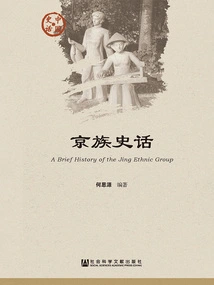
Jing Nationality History
History京族史话
Compiled By He Siyuan
The Jing ethnic group is one of the ethnic groups with a small population in China. They are mainly distributed in Shanxin, Wei and Wutou in Dongxing City, Fangchenggang City, Guangxi Zhuang Autonomous Region, as well as in Hengwang, Tanji, Hongkan and Zhushan areas. The Jing nationality has a unique national language, literature and art, customs and habits, etc. Through beautiful and vivid words, concise and popular language, and pictures and texts, this book introduces the nation's rich and colorful culture, the ups and downs of its historical development trajectory, and its spiritual quality of self-improvement. It has important reference value for readers to understand the Jing culture.
The Jing ethnic group is one of the ethnic groups with a small population in China. They are mainly distributed in Shanxin, Wei and Wutou in Dongxing City, Fangchenggang City, Guangxi Zhuang Autonomous Region, as well as in Hengwang, Tanji, Hongkan and Zhushan areas. The Jing nationality has a unique national language, literature and art, customs and habits, etc. Through beautiful and vivid words, concise and popular language, and pictures and texts, this book introduces the nation's rich and colorful culture, the ups and downs of its historical development trajectory, and its spiritual quality of self-improvement. It has important reference value for readers to understand the Jing culture.
西北民族论丛(第20辑)
Editor-in-chief Zhou Weizhou
"Northwestern Ethnic Studies Series" focuses on "Northwestern Ethnicities" and its main directions include the history of ethnic groups and ethnic relations in the Northwest, the history of exchanges between ethnic groups in the Northwest and neighboring countries, the study of ethnic religious culture in the Northwest, and the study of the natural environment and social development of ethnic minority areas in the Northwest. In terms of disciplines, Northwest Ethnic Studies not only involves the history of ethnic groups, history of Sino-foreign relations, historical geography, historical philology, history of science and technology, cultural relics and archaeology, but also involves ethnology, sociology, geography, law, economics and other humanities and social sciences disciplines, reflecting the highest research level in related fields at home and abroad.
"Northwestern Ethnic Studies Series" focuses on "Northwestern Ethnicities" and its main directions include the history of ethnic groups and ethnic relations in the Northwest, the history of exchanges between ethnic groups in the Northwest and neighboring countries, the study of ethnic religious culture in the Northwest, and the study of the natural environment and social development of ethnic minority areas in the Northwest. In terms of disciplines, Northwest Ethnic Studies not only involves the history of ethnic groups, history of Sino-foreign relations, historical geography, historical philology, history of science and technology, cultural relics and archaeology, but also involves ethnology, sociology, geography, law, economics and other humanities and social sciences disciplines, reflecting the highest research level in related fields at home and abroad.
西北民族论丛(第19辑)
Editor-in-chief Zhou Weizhou
"Northwestern Ethnic Studies Series" focuses on "Northwestern Ethnicities" and its main directions include the history of ethnic groups and ethnic relations in the Northwest, the history of exchanges between ethnic groups in the Northwest and neighboring countries, the study of ethnic religious culture in the Northwest, and the study of the natural environment and social development of ethnic minority areas in the Northwest. In terms of disciplines, Northwest Ethnic Studies not only involves the history of ethnic groups, history of Sino-foreign relations, historical geography, historical philology, history of science and technology, cultural relics and archaeology, but also involves ethnology, sociology, geography, law, economics and other humanities and social sciences disciplines, reflecting the highest research level in related fields at home and abroad.
"Northwestern Ethnic Studies Series" focuses on "Northwestern Ethnicities" and its main directions include the history of ethnic groups and ethnic relations in the Northwest, the history of exchanges between ethnic groups in the Northwest and neighboring countries, the study of ethnic religious culture in the Northwest, and the study of the natural environment and social development of ethnic minority areas in the Northwest. In terms of disciplines, Northwest Ethnic Studies not only involves the history of ethnic groups, history of Sino-foreign relations, historical geography, historical philology, history of science and technology, cultural relics and archaeology, but also involves ethnology, sociology, geography, law, economics and other humanities and social sciences disciplines, reflecting the highest research level in related fields at home and abroad.
西北民族论丛(第18辑)
Editor-in-chief Zhou Weizhou
"Northwestern Ethnic Studies Series" focuses on "Northwestern Ethnicities" and its main directions include the history of ethnic groups and ethnic relations in the Northwest, the history of exchanges between ethnic groups in the Northwest and neighboring countries, the study of ethnic religious culture in the Northwest, and the study of the natural environment and social development of ethnic minority areas in the Northwest. In terms of disciplines, Northwest Ethnic Studies not only involves the history of ethnic groups, history of Sino-foreign relations, historical geography, historical philology, history of science and technology, cultural relics and archaeology, but also involves ethnology, sociology, geography, law, economics and other humanities and social sciences disciplines, reflecting the highest research level in related fields at home and abroad.
"Northwestern Ethnic Studies Series" focuses on "Northwestern Ethnicities" and its main directions include the history of ethnic groups and ethnic relations in the Northwest, the history of exchanges between ethnic groups in the Northwest and neighboring countries, the study of ethnic religious culture in the Northwest, and the study of the natural environment and social development of ethnic minority areas in the Northwest. In terms of disciplines, Northwest Ethnic Studies not only involves the history of ethnic groups, history of Sino-foreign relations, historical geography, historical philology, history of science and technology, cultural relics and archaeology, but also involves ethnology, sociology, geography, law, economics and other humanities and social sciences disciplines, reflecting the highest research level in related fields at home and abroad.
契丹王朝政治军事制度研究(修订版)
Yang Ruowei
This book explores the unique political and military system of the Khitan Dynasty (907-1125). The author makes a new interpretation of historical controversial issues such as the governance of Oruduo and its prefectures and counties, the characteristics and functions of the central government agencies, the establishment of the Five Capitals, the Imperial Guard system, and the "Zhen Army". This provides a new historical perspective and a new way of research for in-depth observation and understanding of the ruling system of the Liao regime established by the nomadic Khitan people. The appendix of this book, in addition to supplementary research on the Khitan official name "Xianwen", the imperial examination in the Liao Dynasty, the stay in the five capitals, and the Liao emperor's visit to the five capitals, also discusses the evolution of the Chinese "er" sound in the Liao, Jin, and Yuan dynasties. From a linguistic perspective, it provides a glimpse of the evolution of Chinese pronunciation brought about by the multi-ethnic language contact in the northern region during the Khitan rule, and thus provides new evidence for the source of some historical materials in "History of Liao".
This book explores the unique political and military system of the Khitan Dynasty (907-1125). The author makes a new interpretation of historical controversial issues such as the governance of Oruduo and its prefectures and counties, the characteristics and functions of the central government agencies, the establishment of the Five Capitals, the Imperial Guard system, and the "Zhen Army". This provides a new historical perspective and a new way of research for in-depth observation and understanding of the ruling system of the Liao regime established by the nomadic Khitan people. The appendix of this book, in addition to supplementary research on the Khitan official name "Xianwen", the imperial examination in the Liao Dynasty, the stay in the five capitals, and the Liao emperor's visit to the five capitals, also discusses the evolution of the Chinese "er" sound in the Liao, Jin, and Yuan dynasties. From a linguistic perspective, it provides a glimpse of the evolution of Chinese pronunciation brought about by the multi-ethnic language contact in the northern region during the Khitan rule, and thus provides new evidence for the source of some historical materials in "History of Liao".
丹尼斯·塞诺内亚研究文选
(us) Dennis Senor
Dennis Senor (1916-2011) was a leading scholar in the study of European, American and Inner Asian languages and history in the second half of the 20th century. His influence continues to this day, and he is still the target of several generations of scholars in the same field to catch up. This book selects 20 papers on the history of Inner Asia written in English recommended by Seno and translates them into Chinese, which can slightly reflect the breadth and depth of his research in the field of Inner Asia history. At the back of the book, there is also a table of contents compiled by Seno himself.
Dennis Senor (1916-2011) was a leading scholar in the study of European, American and Inner Asian languages and history in the second half of the 20th century. His influence continues to this day, and he is still the target of several generations of scholars in the same field to catch up. This book selects 20 papers on the history of Inner Asia written in English recommended by Seno and translates them into Chinese, which can slightly reflect the breadth and depth of his research in the field of Inner Asia history. At the back of the book, there is also a table of contents compiled by Seno himself.
云南少数民族口述档案采集研究
Zhang Zhidong Xu Guoying
In recent years, oral archives have received more and more attention from academia and archives departments. They have not only become an important source of current archives, but their indispensable importance has gradually become apparent. Through field investigation and personal participation in the collection of oral archives of ethnic minorities in Yunnan, this book analyzes and summarizes the needs and current situation, goals and measures, norms and methods of collecting oral archives of ethnic minorities in Yunnan, and discusses the collection methods of oral archives of ethnic minorities in Yunnan.
In recent years, oral archives have received more and more attention from academia and archives departments. They have not only become an important source of current archives, but their indispensable importance has gradually become apparent. Through field investigation and personal participation in the collection of oral archives of ethnic minorities in Yunnan, this book analyzes and summarizes the needs and current situation, goals and measures, norms and methods of collecting oral archives of ethnic minorities in Yunnan, and discusses the collection methods of oral archives of ethnic minorities in Yunnan.
Dunhuang National History
History敦煌民族史
Wang Dong Hu Rong Yang Fuxue Zhang Haijuan
Dunhuang has been a metropolis where multi-ethnic economies and cultures blended together since ancient times. Dunhuang culture was jointly created by people of all ethnic groups in ancient times. It is not only the crystallization of their common wisdom, but also the product of cultural exchanges between China and the West. This book is the first general history of the Dunhuang nation at home and abroad, and is also the first academic monograph to comprehensively and systematically discuss the history and culture of the Dunhuang nation. From a certain perspective, it has the significance of filling the gaps. It conducts comprehensive research by combining linguistics, archeology and history to deeply study the nature of the history and culture of the Dunhuang nation, and then deeply explores the historical and cultural relationships between different ethnic groups, focusing on elaborating on the dynamic role of the ancient Dunhuang nation.
Dunhuang has been a metropolis where multi-ethnic economies and cultures blended together since ancient times. Dunhuang culture was jointly created by people of all ethnic groups in ancient times. It is not only the crystallization of their common wisdom, but also the product of cultural exchanges between China and the West. This book is the first general history of the Dunhuang nation at home and abroad, and is also the first academic monograph to comprehensively and systematically discuss the history and culture of the Dunhuang nation. From a certain perspective, it has the significance of filling the gaps. It conducts comprehensive research by combining linguistics, archeology and history to deeply study the nature of the history and culture of the Dunhuang nation, and then deeply explores the historical and cultural relationships between different ethnic groups, focusing on elaborating on the dynamic role of the ancient Dunhuang nation.
魂归伤膝谷:美国西部印第安人史
(us) Dee Brown
"Return to Wounded Knee" is the masterpiece of American writer Dee Brown. It is an immortal masterpiece that shows the simplicity and tenacity of the Indians and the bloody cruelty of the United States' westward expansion. Combining eyewitness accounts, tribal histories, and other archival documents, the author compiles a history of America's deadly late 19th-century frontier conflict from an American Indian perspective. This remarkable work chronicles how American Indians lost their land, lives, and freedom in the face of white westward expansion and colonization. In this work full of cruelty, betrayal and violent charm, famous figures of the Indian resistance movement such as Sitting Bull, Cochise, Crazy Horse and Geronimo come to life vividly on the page.
"Return to Wounded Knee" is the masterpiece of American writer Dee Brown. It is an immortal masterpiece that shows the simplicity and tenacity of the Indians and the bloody cruelty of the United States' westward expansion. Combining eyewitness accounts, tribal histories, and other archival documents, the author compiles a history of America's deadly late 19th-century frontier conflict from an American Indian perspective. This remarkable work chronicles how American Indians lost their land, lives, and freedom in the face of white westward expansion and colonization. In this work full of cruelty, betrayal and violent charm, famous figures of the Indian resistance movement such as Sitting Bull, Cochise, Crazy Horse and Geronimo come to life vividly on the page.
清季云南回民起义始末
(france) Amiriel Rocher
The Hui Uprising in Yunnan during the Qing Dynasty lasted for eighteen years from 1855 to 1873. The war spread throughout Yunnan and affected all southwestern provinces. It was a major event in history. It was only recorded in official documents and deliberately distorted, while private records were deliberately protected, so the facts were unclear and the truth was not revealed until today. Although there were scholars who wanted to express their opinions on this matter, they were limited by time and place, limited by what they had seen and heard, and there was no way to start, so it was difficult to fulfill their wishes. In fact, the end of this matter was only eighty years ago. The secret vehicle must have been preserved for a long time, so the old man may still be alive. If you search diligently, you will get more. The results obtained by Mr. Bai Shouyi's visits in recent years are a clear example. What's more, now that the people's government is implementing the correct policy of national unity, it will definitely be more convenient to interview and study the historical facts of the previously oppressed nations. If people with lofty ideals from all parties work together and work together, then the full disclosure of this public case to the world will only be a matter of personal consideration.
The Hui Uprising in Yunnan during the Qing Dynasty lasted for eighteen years from 1855 to 1873. The war spread throughout Yunnan and affected all southwestern provinces. It was a major event in history. It was only recorded in official documents and deliberately distorted, while private records were deliberately protected, so the facts were unclear and the truth was not revealed until today. Although there were scholars who wanted to express their opinions on this matter, they were limited by time and place, limited by what they had seen and heard, and there was no way to start, so it was difficult to fulfill their wishes. In fact, the end of this matter was only eighty years ago. The secret vehicle must have been preserved for a long time, so the old man may still be alive. If you search diligently, you will get more. The results obtained by Mr. Bai Shouyi's visits in recent years are a clear example. What's more, now that the people's government is implementing the correct policy of national unity, it will definitely be more convenient to interview and study the historical facts of the previously oppressed nations. If people with lofty ideals from all parties work together and work together, then the full disclosure of this public case to the world will only be a matter of personal consideration.
内北国而外中国:蒙元史研究
Xiao Qiqing
This book contains more than 20 representative papers in the field of Mongolian Yuan history research personally selected by Mr. Xiao Qiqing, an academician of Taiwan's "Academia Sinica", and conducts an in-depth exploration of Mongolian Yuan history from the aspects of politics, military, economy, society, ethnic culture and characters. Not only has there been many breakthroughs in microscopic investigation and solved many questions in related fields, which has become the basis for academic conclusions or further research, but it also attaches great importance to the macroscopic issues such as the nature of the Yuan Dynasty's regime and its historical positioning. It not only examines the particularity of the Yuan Dynasty in Chinese history, but also attaches great importance to the continuity and identity of the Yuan Dynasty in Chinese history. It is of great significance for understanding the history of the development of the Chinese nation community and is a must-read for the study of Mongolian and Yuan history.
This book contains more than 20 representative papers in the field of Mongolian Yuan history research personally selected by Mr. Xiao Qiqing, an academician of Taiwan's "Academia Sinica", and conducts an in-depth exploration of Mongolian Yuan history from the aspects of politics, military, economy, society, ethnic culture and characters. Not only has there been many breakthroughs in microscopic investigation and solved many questions in related fields, which has become the basis for academic conclusions or further research, but it also attaches great importance to the macroscopic issues such as the nature of the Yuan Dynasty's regime and its historical positioning. It not only examines the particularity of the Yuan Dynasty in Chinese history, but also attaches great importance to the continuity and identity of the Yuan Dynasty in Chinese history. It is of great significance for understanding the history of the development of the Chinese nation community and is a must-read for the study of Mongolian and Yuan history.
清代贵州客民与地方社会变迁
Yuan Yifeng
This book is the final result of the general project of the Social Science Fund "Research on Guest People and Local Social Changes in Guizhou during the Qing Dynasty" (15BZS119). The author examines the guest groups in the regional society as a whole, and studies the migration and distribution of the guest people, guest people and local development, guest people and regional social changes, national and local social governance, guest indigenization and regional identity and national identity, etc., Focusing on the discussion of guest indigenization and local national identity. The interactive relationship between domestication points out that the guest people have achieved regional identity in the process of indigenization, while the dynastic power has continued to deepen in local society and completed the "unified" national order. The two go hand in hand, providing a new explanation path for understanding the dual integration of "state and society".
This book is the final result of the general project of the Social Science Fund "Research on Guest People and Local Social Changes in Guizhou during the Qing Dynasty" (15BZS119). The author examines the guest groups in the regional society as a whole, and studies the migration and distribution of the guest people, guest people and local development, guest people and regional social changes, national and local social governance, guest indigenization and regional identity and national identity, etc., Focusing on the discussion of guest indigenization and local national identity. The interactive relationship between domestication points out that the guest people have achieved regional identity in the process of indigenization, while the dynastic power has continued to deepen in local society and completed the "unified" national order. The two go hand in hand, providing a new explanation path for understanding the dual integration of "state and society".
战国秦汉西南民族地理的格局与观念研究
Sun Jun
This book takes the pattern and concepts of ethnic geography in the southwest during the Warring States, Qin, and Han Dynasties as the research object. It aims to sort out and study in detail the evolutionary pattern of ethnic groups and the impact of the "Hua-Yi distinction" thought on the construction of ethnic space, reveal the construction path of the ethnic geography view, and clarify the connection between the ethnic geography view and the spatial construction of a unified multi-ethnic country. Based on the combing of Chinese historical records, Chinese-translated Yi historical records, archaeology, inscriptions, environmental archaeology and other materials, and the use of methods such as document analysis, iconography, environmental history, and conceptual history, the study reveals: (1) The evolution of southwest ethnic groups in the Warring States, Qin, and Han Dynasties has dual characteristics of regionality and ethnic origin, and the "regional plurality" of the evolution of southwest ethnic groups and the "holistic plurality" of the evolution of the Chinese nation have formed a coordinated evolution pattern; (2) The concept of ethnogeography and ethnic space are the space of a unified multi-ethnic country. The construction process of the multi-pattern ethnogeographic view is a process of constructing ethnic political geographical space that is structured, ordered and characterized by "differential patterns"; (3) The construction of the ethnogeographic view is the product of the realistic ethnic evolution pattern, the classic "people of five directions" ethnic cognitive model, and the need for the spatial construction of a unified multi-ethnic country. It reflects the coordinated evolution of national and regional ethnic groups and the spatial construction situation of a unified multi-ethnic country. In summary, this book attempts to clarify that the concept of ethnogeography should be an important research content in historical ethnography, preliminarily constructs a research path for the concept of ethnogeography in the Warring States, Qin, and Han Dynasties and Southwest China, and emphasizes the significance of the concept of ethnogeography in the spatial construction of a unified multi-ethnic country.
This book takes the pattern and concepts of ethnic geography in the southwest during the Warring States, Qin, and Han Dynasties as the research object. It aims to sort out and study in detail the evolutionary pattern of ethnic groups and the impact of the "Hua-Yi distinction" thought on the construction of ethnic space, reveal the construction path of the ethnic geography view, and clarify the connection between the ethnic geography view and the spatial construction of a unified multi-ethnic country. Based on the combing of Chinese historical records, Chinese-translated Yi historical records, archaeology, inscriptions, environmental archaeology and other materials, and the use of methods such as document analysis, iconography, environmental history, and conceptual history, the study reveals: (1) The evolution of southwest ethnic groups in the Warring States, Qin, and Han Dynasties has dual characteristics of regionality and ethnic origin, and the "regional plurality" of the evolution of southwest ethnic groups and the "holistic plurality" of the evolution of the Chinese nation have formed a coordinated evolution pattern; (2) The concept of ethnogeography and ethnic space are the space of a unified multi-ethnic country. The construction process of the multi-pattern ethnogeographic view is a process of constructing ethnic political geographical space that is structured, ordered and characterized by "differential patterns"; (3) The construction of the ethnogeographic view is the product of the realistic ethnic evolution pattern, the classic "people of five directions" ethnic cognitive model, and the need for the spatial construction of a unified multi-ethnic country. It reflects the coordinated evolution of national and regional ethnic groups and the spatial construction situation of a unified multi-ethnic country. In summary, this book attempts to clarify that the concept of ethnogeography should be an important research content in historical ethnography, preliminarily constructs a research path for the concept of ethnogeography in the Warring States, Qin, and Han Dynasties and Southwest China, and emphasizes the significance of the concept of ethnogeography in the spatial construction of a unified multi-ethnic country.
Anthology of Heroic Epics
History英雄史诗论集
Rinchen Dorji
When the Mongolian nation had not yet been formed, let alone the ancient age of the country, when scattered Mongolian clans and tribes lived together in Southern Siberia and Central Asia, heroic epics appeared and gradually developed, reflecting the marital struggles and foreign wars of the Mongolian clans and tribes. During those long years, many brave and fearless heroes appeared in the Mongolian clans and tribes. In order to defend their hometown and people, they fought long and arduous struggles against foreign provocateurs and invaders. The epic poems eulogized their perseverance and heroic spirit. These epics are of high ideological, visual and artistic quality. This book is based on the author's research on living Mongolian epics and singing artists. Through a series of papers, this book explores the origin and development of primitive epics from multiple angles.
When the Mongolian nation had not yet been formed, let alone the ancient age of the country, when scattered Mongolian clans and tribes lived together in Southern Siberia and Central Asia, heroic epics appeared and gradually developed, reflecting the marital struggles and foreign wars of the Mongolian clans and tribes. During those long years, many brave and fearless heroes appeared in the Mongolian clans and tribes. In order to defend their hometown and people, they fought long and arduous struggles against foreign provocateurs and invaders. The epic poems eulogized their perseverance and heroic spirit. These epics are of high ideological, visual and artistic quality. This book is based on the author's research on living Mongolian epics and singing artists. Through a series of papers, this book explores the origin and development of primitive epics from multiple angles.
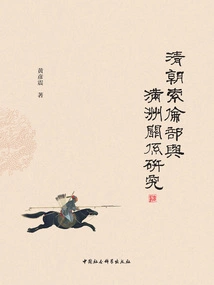
清朝索伦部与满洲关系研究
Huang Yanzhen
Starting from the perspective of ethnic relations, this book dynamically studies the relationship between the Sauron tribe and Manchuria, follows the process of ethnic evolution and development, pays attention to the changes in national consciousness, focuses on the influence of ethnic elites on ethnic decision-making, and demonstrates the superb wisdom of the Manchu rulers in expanding territories and integrating ethnic groups in the process of unifying the country in the Qing Dynasty. Pay attention to the ethnic policies implemented by the Qing Dynasty, analyze the models and methods of ethnic alliance, summarize and evaluate the nature and characteristics of the relationship between the Sauron tribe and Manchuria. Through the phenomenon, we can find out the characteristics, summarize the rules, absorb the historical experience of the Qing Dynasty in solving ethnic issues, inherit the cultural heritage of the Chinese nation, and provide reference for contemporary ethnic work.
Starting from the perspective of ethnic relations, this book dynamically studies the relationship between the Sauron tribe and Manchuria, follows the process of ethnic evolution and development, pays attention to the changes in national consciousness, focuses on the influence of ethnic elites on ethnic decision-making, and demonstrates the superb wisdom of the Manchu rulers in expanding territories and integrating ethnic groups in the process of unifying the country in the Qing Dynasty. Pay attention to the ethnic policies implemented by the Qing Dynasty, analyze the models and methods of ethnic alliance, summarize and evaluate the nature and characteristics of the relationship between the Sauron tribe and Manchuria. Through the phenomenon, we can find out the characteristics, summarize the rules, absorb the historical experience of the Qing Dynasty in solving ethnic issues, inherit the cultural heritage of the Chinese nation, and provide reference for contemporary ethnic work.
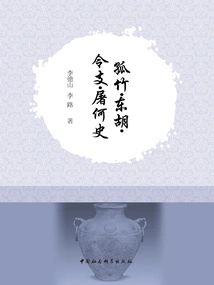
孤竹·东胡·令支·屠何史
Li Deshan Li Lu
The four ancient ethnic groups of Guzhu, Donghu, Lingzhi and Tuhe lived in the west and northwest of Northeast China during the Shang, Zhou, Qin and Han dynasties, and were at the strategic crossroads between the Central Plains and the Northeast. They were not only the pioneers and founders of ancient civilization in the western and northwestern parts of Northeast China, but also made outstanding contributions to the spread of Central Plains civilization to the Northeast and the integration of Northeastern frontier culture and Central Plains culture. This book mainly discusses the history of these four ethnic groups based on handed down documents and references archaeological data, and comprehensively summarizes their status and influence in the history of the Chinese nation, the history of Chinese civilization and the history of Northeast China.
The four ancient ethnic groups of Guzhu, Donghu, Lingzhi and Tuhe lived in the west and northwest of Northeast China during the Shang, Zhou, Qin and Han dynasties, and were at the strategic crossroads between the Central Plains and the Northeast. They were not only the pioneers and founders of ancient civilization in the western and northwestern parts of Northeast China, but also made outstanding contributions to the spread of Central Plains civilization to the Northeast and the integration of Northeastern frontier culture and Central Plains culture. This book mainly discusses the history of these four ethnic groups based on handed down documents and references archaeological data, and comprehensively summarizes their status and influence in the history of the Chinese nation, the history of Chinese civilization and the history of Northeast China.
壮族社会文化发展史(上册)
Bai Yaotian
Culture is the essential characteristic that distinguishes humans from animals and is the source of differences between nations. This book chronicles the evolution and differentiation of the cultural development of the Yue people. With this book in hand, you can not only have an overview of how the Zhuang people developed and changed within the circle of Han culture, but also reveal the mainstream and divergence of the development of Yue people's culture. It details the original group, primitive matriarchy, and early patriarchal culture of the Yue people. It can be seen how the Yue people adjusted their relationship with the objective nature and exerted their own creativity to overcome many hurdles and developed, and made their own contributions to history.
Culture is the essential characteristic that distinguishes humans from animals and is the source of differences between nations. This book chronicles the evolution and differentiation of the cultural development of the Yue people. With this book in hand, you can not only have an overview of how the Zhuang people developed and changed within the circle of Han culture, but also reveal the mainstream and divergence of the development of Yue people's culture. It details the original group, primitive matriarchy, and early patriarchal culture of the Yue people. It can be seen how the Yue people adjusted their relationship with the objective nature and exerted their own creativity to overcome many hurdles and developed, and made their own contributions to history.
History of Dongdan
History东丹史
Du Xingzhi
The Dongdan Kingdom was a local political power established by Emperor Taizu of the Liao Dynasty after he destroyed the Bohai Kingdom. It was a vassal state of the Liao Dynasty and was abolished 57 years after its founding. In the past, academic research on Dongdan Kingdom has always been relatively weak and unsystematic. Writing the history of Dongdan is a new attempt and a subject that has never been touched upon by previous scholars. This "History of Dongdan" is a pioneering work. The content of this book involves the politics, economy, culture, folk customs and important historical figures of Dongdan Kingdom. In terms of research on issues such as the name of the Dongdan Kingdom, the surnames of the noble families, the time when the citizens moved south, the official system, and the time when the Dongdan Kingdom was abolished, different views and perspectives were obtained from previous studies. In addition, the flow of nationals in Dongdan and related historical and geographical issues were discussed and verified.
The Dongdan Kingdom was a local political power established by Emperor Taizu of the Liao Dynasty after he destroyed the Bohai Kingdom. It was a vassal state of the Liao Dynasty and was abolished 57 years after its founding. In the past, academic research on Dongdan Kingdom has always been relatively weak and unsystematic. Writing the history of Dongdan is a new attempt and a subject that has never been touched upon by previous scholars. This "History of Dongdan" is a pioneering work. The content of this book involves the politics, economy, culture, folk customs and important historical figures of Dongdan Kingdom. In terms of research on issues such as the name of the Dongdan Kingdom, the surnames of the noble families, the time when the citizens moved south, the official system, and the time when the Dongdan Kingdom was abolished, different views and perspectives were obtained from previous studies. In addition, the flow of nationals in Dongdan and related historical and geographical issues were discussed and verified.
壮族社会文化发展史(下册)
Bai Yaotian
Culture is the essential characteristic that distinguishes humans from animals and is the source of differences between nations. This book chronicles the evolution and differentiation of the cultural development of the Yue people. With this book in hand, you can not only have an overview of how the Zhuang people developed and changed within the circle of Han culture, but also reveal the mainstream and divergence of the development of Yue people's culture. It details the original group, primitive matriarchy, and early patriarchal culture of the Yue people. It can be seen how the Yue people adjusted their relationship with the objective nature and exerted their own creativity to overcome many hurdles and developed, and made their own contributions to history.
Culture is the essential characteristic that distinguishes humans from animals and is the source of differences between nations. This book chronicles the evolution and differentiation of the cultural development of the Yue people. With this book in hand, you can not only have an overview of how the Zhuang people developed and changed within the circle of Han culture, but also reveal the mainstream and divergence of the development of Yue people's culture. It details the original group, primitive matriarchy, and early patriarchal culture of the Yue people. It can be seen how the Yue people adjusted their relationship with the objective nature and exerted their own creativity to overcome many hurdles and developed, and made their own contributions to history.
民族史文丛(2019年第1辑\u002F总第1辑)
Zhou Song Cai Rang Chief Editor
"Ethnic History Collection" is sponsored by the Institute of Social Sciences of Northwest University for Nationalities. It is based on the fundamentals of ethnic history research in Northwest China and focuses on the publication, arrangement and research of archival documents and rare documents, as well as the translation and interpretation of ethnic minority historical documents. This book is the first volume in 2019. The main contents include the examination of Tibetan historical materials in the Russian genealogy, the influence of Tubo on the construction of Dunhuang Grottoes during the Tubo administration of Dunhuang, a review of the research on the official system of the Tubo Dynasty, and Nicholas Vitson's Tibetan-Chinese The research track of mirror inscriptions in foreign countries, the grape growing industry and wine production during the Gaochang Uighur period, the evolution of the elephant-riding Bodhisattva and Zunge at the Mogao Grottoes in Dunhuang, the northwest strategy from the abolition of military guards and the return of generals to the border to the Sai king guarding the border in the early Ming Dynasty, etc.
"Ethnic History Collection" is sponsored by the Institute of Social Sciences of Northwest University for Nationalities. It is based on the fundamentals of ethnic history research in Northwest China and focuses on the publication, arrangement and research of archival documents and rare documents, as well as the translation and interpretation of ethnic minority historical documents. This book is the first volume in 2019. The main contents include the examination of Tibetan historical materials in the Russian genealogy, the influence of Tubo on the construction of Dunhuang Grottoes during the Tubo administration of Dunhuang, a review of the research on the official system of the Tubo Dynasty, and Nicholas Vitson's Tibetan-Chinese The research track of mirror inscriptions in foreign countries, the grape growing industry and wine production during the Gaochang Uighur period, the evolution of the elephant-riding Bodhisattva and Zunge at the Mogao Grottoes in Dunhuang, the northwest strategy from the abolition of military guards and the return of generals to the border to the Sai king guarding the border in the early Ming Dynasty, etc.
Historical Events and Historical Sources: the Mongolian and Yuan Dynasties in "tongjian Sequel
History史事与史源:《通鉴续编》中的蒙元王朝
Cao Jincheng
For a long time, academic circles have lacked a systematic understanding of the historical events of the Mongolian and Yuan Dynasties in the "Tongjian Sequel" written by Chen Kuang at the end of the Yuan Dynasty. This book comprehensively examines the historical events of the Mongolian and Yuan Dynasties in "Tongjian Sequel", mainly explores and analyzes the sources of its historical materials, and clarifies the literary background of Chen Huang's writing. At the same time, the content with unique historical value is excavated and interpreted to provide new materials for the study of Mongol and Yuan history; the basic aspects of the Mongol and Yuan dynasties are outlined to rethink the narrative issues of Mongol and Yuan history; the subsequent documentary inheritance of the recorded Mongol and Yuan historical events is identified, and the general trajectory of the transfer of ancient outline-style history books from private to official revision is traced.
For a long time, academic circles have lacked a systematic understanding of the historical events of the Mongolian and Yuan Dynasties in the "Tongjian Sequel" written by Chen Kuang at the end of the Yuan Dynasty. This book comprehensively examines the historical events of the Mongolian and Yuan Dynasties in "Tongjian Sequel", mainly explores and analyzes the sources of its historical materials, and clarifies the literary background of Chen Huang's writing. At the same time, the content with unique historical value is excavated and interpreted to provide new materials for the study of Mongol and Yuan history; the basic aspects of the Mongol and Yuan dynasties are outlined to rethink the narrative issues of Mongol and Yuan history; the subsequent documentary inheritance of the recorded Mongol and Yuan historical events is identified, and the general trajectory of the transfer of ancient outline-style history books from private to official revision is traced.
内亚渊源:中古北族名号研究
Luo Xin
This book focuses on the author's research on various names closely associated with various peoples in Inner Asia during the Middle Ages. By analyzing the structure, function, etymology, application and evolution of these Inner Asian names, some difficult-to-understand transliterations of Chinese characters in traditional documents are sorted out, so that they can play a role in revealing the complex aspects of history.
This book focuses on the author's research on various names closely associated with various peoples in Inner Asia during the Middle Ages. By analyzing the structure, function, etymology, application and evolution of these Inner Asian names, some difficult-to-understand transliterations of Chinese characters in traditional documents are sorted out, so that they can play a role in revealing the complex aspects of history.
西北民族论丛(第17辑)
Editor-in-chief Zhou Weizhou
"Northwestern Ethnic Studies Series" focuses on "Northwestern Ethnicities" and its main directions include the history of ethnic groups and ethnic relations in the Northwest, the history of exchanges between ethnic groups in the Northwest and neighboring countries, the study of ethnic religious culture in the Northwest, and the study of the natural environment and social development of ethnic minority areas in the Northwest. In terms of disciplines, Northwest Ethnic Studies not only involves the history of ethnic groups, history of Sino-foreign relations, historical geography, historical philology, history of science and technology, cultural relics and archaeology, but also involves ethnology, sociology, geography, law, economics and other humanities and social sciences disciplines, reflecting the highest research level in related fields at home and abroad.
"Northwestern Ethnic Studies Series" focuses on "Northwestern Ethnicities" and its main directions include the history of ethnic groups and ethnic relations in the Northwest, the history of exchanges between ethnic groups in the Northwest and neighboring countries, the study of ethnic religious culture in the Northwest, and the study of the natural environment and social development of ethnic minority areas in the Northwest. In terms of disciplines, Northwest Ethnic Studies not only involves the history of ethnic groups, history of Sino-foreign relations, historical geography, historical philology, history of science and technology, cultural relics and archaeology, but also involves ethnology, sociology, geography, law, economics and other humanities and social sciences disciplines, reflecting the highest research level in related fields at home and abroad.
金源女真的英雄时代
Li Xiulian
Every cultural nation has its own heroic era, which often means a dramatic transformation of society. The research scope of this book covers the entire process of the Jinyuan Jurchens from their birth to their demise. It is based on historical materialism, focuses on the history of the Jurchen heroes fighting for the "Great Jin Kingdom", and reveals the profound historical reasons why the Jin Dynasty regime declined immediately after its rise, and finally ended with the "Heroic Age" of the "Golden Family" of Borzjin. This book extensively uses theories from linguistics, history, geography and other disciplines, reflecting the author's rich theoretical reserves and profound historical accomplishments.
Every cultural nation has its own heroic era, which often means a dramatic transformation of society. The research scope of this book covers the entire process of the Jinyuan Jurchens from their birth to their demise. It is based on historical materialism, focuses on the history of the Jurchen heroes fighting for the "Great Jin Kingdom", and reveals the profound historical reasons why the Jin Dynasty regime declined immediately after its rise, and finally ended with the "Heroic Age" of the "Golden Family" of Borzjin. This book extensively uses theories from linguistics, history, geography and other disciplines, reflecting the author's rich theoretical reserves and profound historical accomplishments.
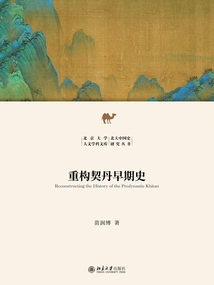
重构契丹早期史
Miao Runbo
This book aims to re-understand the early Khitan historical materials through review and criticism of the early Khitan historical materials from three levels: micro (historical factual research), meso (research methods), and macro (overall understanding); and based on this and starting point, it goes deep into the Khitan\u002F Liao itself, especially the shaping of Khitan historical memory by its ruling group, the Abaoji family, and then attempts to restore and explore the pre-history of the founding of the Khitan to a certain extent. The book is divided into two parts. The first part is textual criticism, and the second part is reconstruction of historical facts. The conclusion part takes the early history of Khitan as an example to discuss its typical significance in historical research. The appendix at the end of the book summarizes the updated issues and paradigm shifts in the study of early Khitan history over the past century.
This book aims to re-understand the early Khitan historical materials through review and criticism of the early Khitan historical materials from three levels: micro (historical factual research), meso (research methods), and macro (overall understanding); and based on this and starting point, it goes deep into the Khitan\u002F Liao itself, especially the shaping of Khitan historical memory by its ruling group, the Abaoji family, and then attempts to restore and explore the pre-history of the founding of the Khitan to a certain extent. The book is divided into two parts. The first part is textual criticism, and the second part is reconstruction of historical facts. The conclusion part takes the early history of Khitan as an example to discuss its typical significance in historical research. The appendix at the end of the book summarizes the updated issues and paradigm shifts in the study of early Khitan history over the past century.
东胡系民族基本史料辨析研究:东胡系民族资料汇编
Zhang Jiuhe Et Al.
"Analysis and Research on Basic Historical Materials of the Donghu Ethnic Group" includes "Analysis of Basic Historical Materials of Wuhuan", "Analysis of Basic Historical Materials of Xianbei in the Two Han and Three Kingdoms Period", "Analysis of Basic Historical Materials of Murong Xianbei", "Analysis of Basic Historical Materials of Yuwen Xianbei", "Analysis of Basic Historical Materials of Duanbu Xianbei", "Analysis of Basic Historical Materials of Tuoba Xianbei", "Analysis of Basic Historical Materials of Tufa Xianbei", "Analysis of Basic Historical Materials of Qifu Xianbei" and "Analysis of Basic Historical Materials of Tuyuhun". Thirteen articles including "Analysis of Rouran Basic Historical Materials", "Analysis of Basic Khitan Historical Materials", "Analysis of Kumoxi Basic Historical Materials", "Analysis of Basic Historical Materials of Shiwei" and other research results on the analysis of historical materials of the Donghu ethnic group strive to comprehensively use historical philology, collation, edition bibliography, national history and philology and other methods to systematically and fully analyze the basic historical materials of the Donghu ethnic group on the basis of full possession of historical documents.
"Analysis and Research on Basic Historical Materials of the Donghu Ethnic Group" includes "Analysis of Basic Historical Materials of Wuhuan", "Analysis of Basic Historical Materials of Xianbei in the Two Han and Three Kingdoms Period", "Analysis of Basic Historical Materials of Murong Xianbei", "Analysis of Basic Historical Materials of Yuwen Xianbei", "Analysis of Basic Historical Materials of Duanbu Xianbei", "Analysis of Basic Historical Materials of Tuoba Xianbei", "Analysis of Basic Historical Materials of Tufa Xianbei", "Analysis of Basic Historical Materials of Qifu Xianbei" and "Analysis of Basic Historical Materials of Tuyuhun". Thirteen articles including "Analysis of Rouran Basic Historical Materials", "Analysis of Basic Khitan Historical Materials", "Analysis of Kumoxi Basic Historical Materials", "Analysis of Basic Historical Materials of Shiwei" and other research results on the analysis of historical materials of the Donghu ethnic group strive to comprehensively use historical philology, collation, edition bibliography, national history and philology and other methods to systematically and fully analyze the basic historical materials of the Donghu ethnic group on the basis of full possession of historical documents.
契丹资料辑录:东胡系民族资料汇编
Edited By Xiao Aimin
"Khitan Materials Collection" mainly compiles historical materials of the Northern Wei, Eastern Wei, Western Wei, Northern Qi, Northern Zhou, Sui, Tang and the early Five Dynasties about 500 years ago. The collection time starts from the year 378 (the third year of Taiyuan in the Eastern Jin Dynasty and the eighth year of King Xiaosulin of Goguryeo) when the name of Khitan was first recorded in the "Historical Records of the Three Kingdoms", and ends in 907 (the fourth year of Tianyou in the Tang Dynasty and the first year of Kaiping in the Later Liang Dynasty) when Yelu Abaoji replaced the Yaonan family and established the country.
"Khitan Materials Collection" mainly compiles historical materials of the Northern Wei, Eastern Wei, Western Wei, Northern Qi, Northern Zhou, Sui, Tang and the early Five Dynasties about 500 years ago. The collection time starts from the year 378 (the third year of Taiyuan in the Eastern Jin Dynasty and the eighth year of King Xiaosulin of Goguryeo) when the name of Khitan was first recorded in the "Historical Records of the Three Kingdoms", and ends in 907 (the fourth year of Tianyou in the Tang Dynasty and the first year of Kaiping in the Later Liang Dynasty) when Yelu Abaoji replaced the Yaonan family and established the country.
乞伏鲜卑资料辑录:东胡系民族资料汇编
Edited By Zhang Jiuhe And Yu Bole
"Collection of Materials on Begging to Fu Xianbei" collects historical records from the beginning of Qifu Xianbei to the eighth year of Yuanjia and Liu Song Dynasties, the Northern Wei Dynasty? In four years (431), the Western Qin regime established by Qifu Xianbei perished. It comprehensively collects information about the Qifu Xianbei from biographical, chronological, and canonical history books, as well as large-scale books and general geographical annals. All kinds of classics that have the words "begging for a blessing" or "begging for the Buddha", and those that do not have the word "begging for a blessing" but whose content records the deeds of begging for Xianbei, will be included. As well as the records clearly indicating that the Xianbei people were begging for refuge in the classics, they are also included. The information collected will be divided into paragraphs as appropriate, and punctuation will be added if there is no punctuation.
"Collection of Materials on Begging to Fu Xianbei" collects historical records from the beginning of Qifu Xianbei to the eighth year of Yuanjia and Liu Song Dynasties, the Northern Wei Dynasty? In four years (431), the Western Qin regime established by Qifu Xianbei perished. It comprehensively collects information about the Qifu Xianbei from biographical, chronological, and canonical history books, as well as large-scale books and general geographical annals. All kinds of classics that have the words "begging for a blessing" or "begging for the Buddha", and those that do not have the word "begging for a blessing" but whose content records the deeds of begging for Xianbei, will be included. As well as the records clearly indicating that the Xianbei people were begging for refuge in the classics, they are also included. The information collected will be divided into paragraphs as appropriate, and punctuation will be added if there is no punctuation.
秃发鲜卑资料辑录:东胡系民族资料汇编
Edited By Zhang Jiuhe And Zhang Yu
The collection of "Tufa Xianbei Data Collection" generally starts from the fourth year of Taishi (268), the reign of Emperor Wu of the Western Jin Dynasty, when the Bald-haired Tree powerfully conquered the Hexi region and is seen in historical records, and ends in the tenth year of Yixi (414), the tenth year of Emperor An of the Eastern Jin Dynasty (414), when Qifu Chipan attacked Ledu City in the Western Qin Dynasty, and the Nanliang regime established by Tufa Xianbei perished. Since then, if there are any recollections of previous events, they will be included as appropriate. It comprehensively collects information about Tufa Xianbei from biographical, chronological, and canonical history books, as well as large-scale books and general geographical annals.
The collection of "Tufa Xianbei Data Collection" generally starts from the fourth year of Taishi (268), the reign of Emperor Wu of the Western Jin Dynasty, when the Bald-haired Tree powerfully conquered the Hexi region and is seen in historical records, and ends in the tenth year of Yixi (414), the tenth year of Emperor An of the Eastern Jin Dynasty (414), when Qifu Chipan attacked Ledu City in the Western Qin Dynasty, and the Nanliang regime established by Tufa Xianbei perished. Since then, if there are any recollections of previous events, they will be included as appropriate. It comprehensively collects information about Tufa Xianbei from biographical, chronological, and canonical history books, as well as large-scale books and general geographical annals.
远渡加勒比:彼岸的祖父
Luo Minjun
The content written by Luo Minjun in "A Journey to the Caribbean" took place from the mid-19th century to the early 20th century, which was the most tragic period for China. In the era after the "Treaty of Nanjing" in 1840, the Qing government was forced to lift the maritime ban under pressure from foreign powers. Starting around 1845, Xiamen Port in Fujian Province and Guangzhou and Shantou Ports in Guangdong Province began the "trade" of exporting coolies to the Americas. After 1852, foreign firms in Hong Kong and Macau also participated in the "coolie trade", transporting Chinese laborers to Nanyang and South America. Chinese workers mainly come from Fujian and Guangdong provinces. Luo Minjun's grandfather, Luo Dingchao, became a member of the Chinese labor movement in America from 1906 to 1910.
The content written by Luo Minjun in "A Journey to the Caribbean" took place from the mid-19th century to the early 20th century, which was the most tragic period for China. In the era after the "Treaty of Nanjing" in 1840, the Qing government was forced to lift the maritime ban under pressure from foreign powers. Starting around 1845, Xiamen Port in Fujian Province and Guangzhou and Shantou Ports in Guangdong Province began the "trade" of exporting coolies to the Americas. After 1852, foreign firms in Hong Kong and Macau also participated in the "coolie trade", transporting Chinese laborers to Nanyang and South America. Chinese workers mainly come from Fujian and Guangdong provinces. Luo Minjun's grandfather, Luo Dingchao, became a member of the Chinese labor movement in America from 1906 to 1910.
云南种人图说考释
Compiled By Chen Zidan, Li Mengke And Yang Xia
The hand-painted version of "Illustrated Description of the Races of Yunnan" is a Qing Dynasty manuscript and is now in the library of Yunnan University. The album is preceded by the preface to the "Mountains and Rivers Examination" in the fifty-eighth year of Kangxi's reign, and was copied in the eighteenth year of Guangxu's reign in the Qing Dynasty (1892). It is estimated that this album was completed at or before this time. The author is unknown. It is the only copy at home and abroad. It has high historical value, edition value and academic value. The album briefly introduces the main distribution areas, social economy, cultural life, clothing, food, housing and transportation of each ethnic group and its branches. This book has carefully examined the picture album, carefully edited it, and provided detailed annotations and explanations. The first part is explained based on the 22 color pictures in the album, and the second part is a brief explanation of the text introductions of various people (68 types).
The hand-painted version of "Illustrated Description of the Races of Yunnan" is a Qing Dynasty manuscript and is now in the library of Yunnan University. The album is preceded by the preface to the "Mountains and Rivers Examination" in the fifty-eighth year of Kangxi's reign, and was copied in the eighteenth year of Guangxu's reign in the Qing Dynasty (1892). It is estimated that this album was completed at or before this time. The author is unknown. It is the only copy at home and abroad. It has high historical value, edition value and academic value. The album briefly introduces the main distribution areas, social economy, cultural life, clothing, food, housing and transportation of each ethnic group and its branches. This book has carefully examined the picture album, carefully edited it, and provided detailed annotations and explanations. The first part is explained based on the 22 color pictures in the album, and the second part is a brief explanation of the text introductions of various people (68 types).
唐代黠戛斯历史研究
Wang Jie
The Xijias were one of the northern ethnic groups in the Tang Dynasty. They were active in the upper reaches of the Jianhe River (today's Yenisei River). They were the ancestors of the Kirgiz people and the Kyrgyz people in Central Asia in what is now Xinjiang, China. In the Western Han Dynasty, Xiugasi first appeared in the annals of Chinese history under the name of Jiankun. After the Wei, Jin, and Sui and Tang dynasties, Xijiasi established contact with the Tang Dynasty. In the fifth year of Emperor Wenzong's reign in the Tang Dynasty (840), Xijias defeated the Uighur Khanate that ruled Mobei and forced the remaining Uighurs to move westward, which had a major impact on the history of the Mongolian Plateau and even Central Asia. The history of ancient Xijiasi has both the general commonality of the northern grassland peoples and its own characteristics: Politically, the Xijiasi has a complex social structure, with multiple official systems of northern ethnic groups and Central Plains dynasties coexisting in parallel; economically, the Xijiasi is a mixed economy in the forest-steppe transition zone, with the development of agriculture, animal husbandry, commerce, and handicrafts, and is deeply involved in the development of the Prairie Silk Road. Trade activities; militarily, Higas fought against tribal regimes such as Turks, Uighurs, and Tubos, and defeated the Mobei Uighurs in 840, which shocked the interior of Asia; culturally, the handed down Yenisey inscriptions show that Higas used ancient Turkic characters, and the calendar used both Turkic and Central Plains. In short, the history of Higas in the Tang Dynasty reveals the complex characteristics of its culture. The Tang Dynasty was the most important stage in the historical development of the Xijiasi nation. The Central Plains dynasty with which they had direct contact for the first time, entered the Tang Dynasty during the reign of Emperor Taizong of the Tang Dynasty and was granted the title of Governor of Jiankun, and resumed contact with the Tang Dynasty during the Wuzong Dynasty of the Tang Dynasty. In addition, the Xijiasi also established their own tribe's khanate for the first time during this period, and competed with the Northern Uighur Khanate in the Momo, which shocked the grasslands and the Central Plains. Whether in the history of this nation or in the history of East Asia as a whole, the history of the Tang Dynasty Xijiasi is of great significance.
The Xijias were one of the northern ethnic groups in the Tang Dynasty. They were active in the upper reaches of the Jianhe River (today's Yenisei River). They were the ancestors of the Kirgiz people and the Kyrgyz people in Central Asia in what is now Xinjiang, China. In the Western Han Dynasty, Xiugasi first appeared in the annals of Chinese history under the name of Jiankun. After the Wei, Jin, and Sui and Tang dynasties, Xijiasi established contact with the Tang Dynasty. In the fifth year of Emperor Wenzong's reign in the Tang Dynasty (840), Xijias defeated the Uighur Khanate that ruled Mobei and forced the remaining Uighurs to move westward, which had a major impact on the history of the Mongolian Plateau and even Central Asia. The history of ancient Xijiasi has both the general commonality of the northern grassland peoples and its own characteristics: Politically, the Xijiasi has a complex social structure, with multiple official systems of northern ethnic groups and Central Plains dynasties coexisting in parallel; economically, the Xijiasi is a mixed economy in the forest-steppe transition zone, with the development of agriculture, animal husbandry, commerce, and handicrafts, and is deeply involved in the development of the Prairie Silk Road. Trade activities; militarily, Higas fought against tribal regimes such as Turks, Uighurs, and Tubos, and defeated the Mobei Uighurs in 840, which shocked the interior of Asia; culturally, the handed down Yenisey inscriptions show that Higas used ancient Turkic characters, and the calendar used both Turkic and Central Plains. In short, the history of Higas in the Tang Dynasty reveals the complex characteristics of its culture. The Tang Dynasty was the most important stage in the historical development of the Xijiasi nation. The Central Plains dynasty with which they had direct contact for the first time, entered the Tang Dynasty during the reign of Emperor Taizong of the Tang Dynasty and was granted the title of Governor of Jiankun, and resumed contact with the Tang Dynasty during the Wuzong Dynasty of the Tang Dynasty. In addition, the Xijiasi also established their own tribe's khanate for the first time during this period, and competed with the Northern Uighur Khanate in the Momo, which shocked the grasslands and the Central Plains. Whether in the history of this nation or in the history of East Asia as a whole, the history of the Tang Dynasty Xijiasi is of great significance.
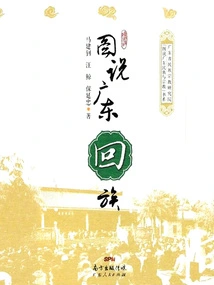
图说广东回族
Guangdong Provincial Institute Of Ethnic And Religious Studies
This book is one of the series "Illustrated Ethnicities and Religions of Guangdong". The Hui people are one of the five major ethnic minorities in Guangdong. They are the most populous and widely distributed ethnic group among the ethnic minorities in China. There are three main sources of the Hui people in Guangdong: first, they are the descendants of the Persians who believed in Islam and the food merchants who came to Guangdong for trade during the Tang and Song Dynasties; second, they were garrison sergeants, businessmen and religious professionals from various places during the Ming and Qing Dynasties; third, they were Hui people from all walks of life who settled in Guangdong from the Republic of China to the founding of the People's Republic of China. Its humanities, customs, art and culture all have a unique aspect. The "Illustrated Ethnic Religions in Guangdong" series will comprehensively present the history, culture, customs, and landscapes of Guangdong's ethnic minorities in the form of illustrated illustrations, as well as religious history, culture, characters, architecture, etc. The series is divided into ten volumes, namely Guangdong Yao, Guangdong Zhuang, Guangdong Hui, Guangdong Manchu, Guangdong She, Guangdong Buddhism, Guangdong Taoism, Guangdong Islam, Guangdong Christianity, and Guangdong folk beliefs. This series strives to preserve history through pictures, and collects precious pictures of Guangdong's ethnic and religious aspects, which may have historical value, have practical significance, reflect events, or represent characters. Each picture is accompanied by a picture description written by experts so that readers can obtain a holographic image of Guangdong's ethnic religions. The whole book is about 200 pages.
This book is one of the series "Illustrated Ethnicities and Religions of Guangdong". The Hui people are one of the five major ethnic minorities in Guangdong. They are the most populous and widely distributed ethnic group among the ethnic minorities in China. There are three main sources of the Hui people in Guangdong: first, they are the descendants of the Persians who believed in Islam and the food merchants who came to Guangdong for trade during the Tang and Song Dynasties; second, they were garrison sergeants, businessmen and religious professionals from various places during the Ming and Qing Dynasties; third, they were Hui people from all walks of life who settled in Guangdong from the Republic of China to the founding of the People's Republic of China. Its humanities, customs, art and culture all have a unique aspect. The "Illustrated Ethnic Religions in Guangdong" series will comprehensively present the history, culture, customs, and landscapes of Guangdong's ethnic minorities in the form of illustrated illustrations, as well as religious history, culture, characters, architecture, etc. The series is divided into ten volumes, namely Guangdong Yao, Guangdong Zhuang, Guangdong Hui, Guangdong Manchu, Guangdong She, Guangdong Buddhism, Guangdong Taoism, Guangdong Islam, Guangdong Christianity, and Guangdong folk beliefs. This series strives to preserve history through pictures, and collects precious pictures of Guangdong's ethnic and religious aspects, which may have historical value, have practical significance, reflect events, or represent characters. Each picture is accompanied by a picture description written by experts so that readers can obtain a holographic image of Guangdong's ethnic religions. The whole book is about 200 pages.
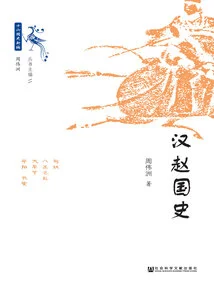
汉赵国史
Zhou Weizhou
The Han-Zhao Kingdom was the first political power established in the mainland by the Xiongnu, a minority ethnic group that moved inland, in Chinese history. It was also one of the earlier political powers established by the Sixteen Kingdoms. When the economy of the Central Plains region was severely damaged in the late Western Jin Dynasty, the rulers of the Han and Zhao Dynasties took some measures that were conducive to the recovery and development of production, so that the economy of Pingyang and Chang'an areas in Kyoto could recover and develop. Based on existing historical records and cultural relics and archaeological data, this book discusses the activities of the Xiongnu who migrated inland since the end of the Eastern Han Dynasty and the changes in their social status, narrates the history of the rise and fall of the Han and Zhao kingdoms, and boldly discusses their political systems and social forms.
The Han-Zhao Kingdom was the first political power established in the mainland by the Xiongnu, a minority ethnic group that moved inland, in Chinese history. It was also one of the earlier political powers established by the Sixteen Kingdoms. When the economy of the Central Plains region was severely damaged in the late Western Jin Dynasty, the rulers of the Han and Zhao Dynasties took some measures that were conducive to the recovery and development of production, so that the economy of Pingyang and Chang'an areas in Kyoto could recover and develop. Based on existing historical records and cultural relics and archaeological data, this book discusses the activities of the Xiongnu who migrated inland since the end of the Eastern Han Dynasty and the changes in their social status, narrates the history of the rise and fall of the Han and Zhao kingdoms, and boldly discusses their political systems and social forms.
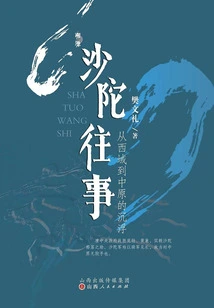
沙陀往事:从西域到中原的沉浮
Fan Wenli
This book is a general historical reading about the Shatuo people. The Shatuo people were one of the ethnic minorities in the Tang and Five Dynasties. With the changes in the political situation in the late Tang Dynasty, the Shatuo people continued to grow in power from the Western Regions to the Central Plains. Since Li Keyong became the governor of Hedong in the third year of Emperor Xizong's reign in the Tang Dynasty (883), the Shatuo people established a separate local government. They successively established the "Three Shatuo Dynasties" of the Later Tang, the Later Jin, and the Later Han Dynasty, as well as the Northern Han Dynasty, one of the Ten Kingdoms of the Five Dynasties. They ruled in northern China or parts of the north for nearly a century. Based on previous research, this book uses relatively popular language to trace and interpret the history of the Shatuo people, sorting out the entire process of Shatuo's origin, migration, development and decline. It is a special book about the history of Shatuo, with both academic rigor and narrative fluency.
This book is a general historical reading about the Shatuo people. The Shatuo people were one of the ethnic minorities in the Tang and Five Dynasties. With the changes in the political situation in the late Tang Dynasty, the Shatuo people continued to grow in power from the Western Regions to the Central Plains. Since Li Keyong became the governor of Hedong in the third year of Emperor Xizong's reign in the Tang Dynasty (883), the Shatuo people established a separate local government. They successively established the "Three Shatuo Dynasties" of the Later Tang, the Later Jin, and the Later Han Dynasty, as well as the Northern Han Dynasty, one of the Ten Kingdoms of the Five Dynasties. They ruled in northern China or parts of the north for nearly a century. Based on previous research, this book uses relatively popular language to trace and interpret the history of the Shatuo people, sorting out the entire process of Shatuo's origin, migration, development and decline. It is a special book about the history of Shatuo, with both academic rigor and narrative fluency.
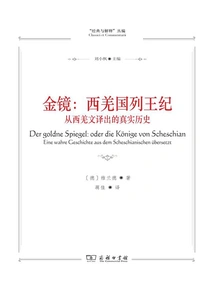
金镜:西羌国列王纪
(germany) Wieland
"The Golden Mirror: The Chronicles of the Kings of the Western Qiang Kingdom" is Wieland's masterpiece in his mature period. In Wieland's writing, the Chinese translator translated this "history book" from the Indian language, which tells the story of the Western Qiang Kingdom from prehistoric times to the establishment of a unified dynasty, and then gradually declined and completely destroyed after its heyday. This book uses the night conversations in the harem between the Sultan of Hindustan, his queen, and his favorites as a narrative framework. Through the perspectives, opinions, and attitudes of different characters toward the history of the Western Qiang Kingdom, this book constructs a masterpiece of literary thought that integrates politics, economy, religion, philosophy, and moral instruction. It profoundly expounds Wieland's thoughts on nature and virtue, political ethics and political systems, and the impact of institutions and ethics on the destiny of the country. Taking history as a mirror, the lessons of the rise and fall of countries in history are the best mirrors for future generations of rulers. "The Chronicles of the Kings of the West Qiang Kingdom" ranged from a reading from the Hindustan court to an alternative "Zi Zhi Tong Jian" of the Chinese emperor. After being translated into Latin, Wieland translated it into German. This book is not only profound in thought, but also has countless remarkable points in its narrative techniques.
"The Golden Mirror: The Chronicles of the Kings of the Western Qiang Kingdom" is Wieland's masterpiece in his mature period. In Wieland's writing, the Chinese translator translated this "history book" from the Indian language, which tells the story of the Western Qiang Kingdom from prehistoric times to the establishment of a unified dynasty, and then gradually declined and completely destroyed after its heyday. This book uses the night conversations in the harem between the Sultan of Hindustan, his queen, and his favorites as a narrative framework. Through the perspectives, opinions, and attitudes of different characters toward the history of the Western Qiang Kingdom, this book constructs a masterpiece of literary thought that integrates politics, economy, religion, philosophy, and moral instruction. It profoundly expounds Wieland's thoughts on nature and virtue, political ethics and political systems, and the impact of institutions and ethics on the destiny of the country. Taking history as a mirror, the lessons of the rise and fall of countries in history are the best mirrors for future generations of rulers. "The Chronicles of the Kings of the West Qiang Kingdom" ranged from a reading from the Hindustan court to an alternative "Zi Zhi Tong Jian" of the Chinese emperor. After being translated into Latin, Wieland translated it into German. This book is not only profound in thought, but also has countless remarkable points in its narrative techniques.
匈奴简史
Changfeng
The Xiongnu were an important ethnic minority in the north in the history of our country. They rose in the 3rd century BC and declined in the 1st century BC. They were the founders and inheritors of steppe civilization and played a huge influence in the historical process of the Eurasian continent. On the basis of respecting history and serious textual research, the author Changfeng gave a brief and complete description of the cultural customs, production methods, economic life, social structure, political organization, national rise and fall, and Han-Hungarian relations of the Huns who were active on the historical stage.
The Xiongnu were an important ethnic minority in the north in the history of our country. They rose in the 3rd century BC and declined in the 1st century BC. They were the founders and inheritors of steppe civilization and played a huge influence in the historical process of the Eurasian continent. On the basis of respecting history and serious textual research, the author Changfeng gave a brief and complete description of the cultural customs, production methods, economic life, social structure, political organization, national rise and fall, and Han-Hungarian relations of the Huns who were active on the historical stage.
横行草原的柔然:从黄河到莱茵河
Luo Sanyang
More than 1,700 years ago, Rouran, a descendant of the sun god Apollo, suddenly appeared on the Mongolian Plateau at an unusual speed, galloping across the Eurasian continent tens of thousands of miles away. After 828, European history books unanimously declared that this once-prominent nation had been completely destroyed. In Russia, there are still more than 600,000 people who claim to be descendants of Avar (Rouran). This book narrates the history and civilization of Rouran to readers, and unfolds a three-dimensional and vivid picture of the ancient nomadic country in front of readers, allowing readers to feel as if they are in that era and experience the rise and fall of a generation of overlords in the Mongolian grasslands.
More than 1,700 years ago, Rouran, a descendant of the sun god Apollo, suddenly appeared on the Mongolian Plateau at an unusual speed, galloping across the Eurasian continent tens of thousands of miles away. After 828, European history books unanimously declared that this once-prominent nation had been completely destroyed. In Russia, there are still more than 600,000 people who claim to be descendants of Avar (Rouran). This book narrates the history and civilization of Rouran to readers, and unfolds a three-dimensional and vivid picture of the ancient nomadic country in front of readers, allowing readers to feel as if they are in that era and experience the rise and fall of a generation of overlords in the Mongolian grasslands.
瑞士民族的特殊性、多样性的历史考察
Martin
The Swiss nation has always had diversity in the process of national existence, establishment and development, and at the same time it has certain particularities across the European continent. Swiss national conflicts are often entangled with foreign conflicts and religious conflicts. When Switzerland was under dynastic rule in Europe, a group of people of different ethnic groups who longed for the principles of freedom and equality laid a basis for consensus and formed the prototype of the union of their country. This book focuses on the establishment of a republic in Switzerland through the formulation of a policy of neutrality and the baptism of the Reformation and Enlightenment, enabling it to establish a modern "multi-ethnic, non-national state".
The Swiss nation has always had diversity in the process of national existence, establishment and development, and at the same time it has certain particularities across the European continent. Swiss national conflicts are often entangled with foreign conflicts and religious conflicts. When Switzerland was under dynastic rule in Europe, a group of people of different ethnic groups who longed for the principles of freedom and equality laid a basis for consensus and formed the prototype of the union of their country. This book focuses on the establishment of a republic in Switzerland through the formulation of a policy of neutrality and the baptism of the Reformation and Enlightenment, enabling it to establish a modern "multi-ethnic, non-national state".
元代畏兀儿内迁文学家族变迁研究:以偰氏、廉氏家族为中心
Yang Shaogu
This book uses the literary and historical materials of the Yuan Dynasty preserved in my country and South Korea combined with the genealogical documents collected in libraries to conduct a detailed examination of the formation and changes of the two literary families, the Uighur family and the Lian family, who moved inland during the Yuan Dynasty, spanning the Yuan, Ming and Qing dynasties. The Shi and Lian families who migrated from Gaochang Uighurs in the early Yuan Dynasty continued to learn and inherit Confucian culture. Although they later divided into multiple branches belonging to different ethnic groups, the inheritance of family learning has continued for hundreds of years, witnessing the process of Huayi acculturation under the pluralistic unity of the Chinese nation. This book conducts detailed research on the genealogical documents of the Xia and Lian families compiled in the Qing Dynasty, showing the author's solid foundation in document collection and organization. What is particularly rare is the extensive collection of Chinese cultural and historical materials on the branches of the Xia family that moved to the Korean Peninsula, witnessing the huge and lasting influence of Chinese culture with the Chinese language as the carrier on the Korean Peninsula. In short, this book has carefully researched and analyzed the lineage, family traditions and family traditions, personal interactions, literary creation, etc. Of the Uighur family and the Lian family in the Yuan Dynasty. It is currently the most comprehensive and systematic study of these two famous literary families in the Yuan Dynasty.
This book uses the literary and historical materials of the Yuan Dynasty preserved in my country and South Korea combined with the genealogical documents collected in libraries to conduct a detailed examination of the formation and changes of the two literary families, the Uighur family and the Lian family, who moved inland during the Yuan Dynasty, spanning the Yuan, Ming and Qing dynasties. The Shi and Lian families who migrated from Gaochang Uighurs in the early Yuan Dynasty continued to learn and inherit Confucian culture. Although they later divided into multiple branches belonging to different ethnic groups, the inheritance of family learning has continued for hundreds of years, witnessing the process of Huayi acculturation under the pluralistic unity of the Chinese nation. This book conducts detailed research on the genealogical documents of the Xia and Lian families compiled in the Qing Dynasty, showing the author's solid foundation in document collection and organization. What is particularly rare is the extensive collection of Chinese cultural and historical materials on the branches of the Xia family that moved to the Korean Peninsula, witnessing the huge and lasting influence of Chinese culture with the Chinese language as the carrier on the Korean Peninsula. In short, this book has carefully researched and analyzed the lineage, family traditions and family traditions, personal interactions, literary creation, etc. Of the Uighur family and the Lian family in the Yuan Dynasty. It is currently the most comprehensive and systematic study of these two famous literary families in the Yuan Dynasty.
纪念:犹太历史与犹太记忆
(u. S.) Joseph Haim Jerusalem
Why does telling history of events as they actually happened not play a role in Judaism? Why are historians never the first preservers of Jewish collective memory? This book is a historical masterpiece that studies the issue of collective memory. It has won the National Jewish Book Award. The book provides a panoramic survey of Jewish memory and the compilation of Jewish history from ancient times to the present, and systematically summarizes the ways in which the Jewish nation participates in the past. The author makes an important distinction between history and memory. He believes that if Herodotus is the "father of history" in the West, then the Jews are the "father of memory" in the West. The Jews are a nation of memory, not of history. The Jewish nation has a Bible, oral teachings, and oral laws, but almost no history books. This book is written for anyone-Jewish or not-who is curious about the ambiguous relationship between history, nation, and collective memory. In modern society, the important status of history is not necessarily taken for granted, and memory has its own path.
Why does telling history of events as they actually happened not play a role in Judaism? Why are historians never the first preservers of Jewish collective memory? This book is a historical masterpiece that studies the issue of collective memory. It has won the National Jewish Book Award. The book provides a panoramic survey of Jewish memory and the compilation of Jewish history from ancient times to the present, and systematically summarizes the ways in which the Jewish nation participates in the past. The author makes an important distinction between history and memory. He believes that if Herodotus is the "father of history" in the West, then the Jews are the "father of memory" in the West. The Jews are a nation of memory, not of history. The Jewish nation has a Bible, oral teachings, and oral laws, but almost no history books. This book is written for anyone-Jewish or not-who is curious about the ambiguous relationship between history, nation, and collective memory. In modern society, the important status of history is not necessarily taken for granted, and memory has its own path.
西藏百年史研究(全3册)
Editor-in-chief Xirao Nyima
In the modern history of Tibet, the Tibetans, like other fraternal ethnic groups, are faced with a major historical issue, namely, civilization progress and modernization. This book is divided into three volumes, upper, middle and lower, covering the three historical stages of the late Qing Dynasty, the Republic of China and the People's Republic of China. This book combines three periods of Tibetan history into one topic, helping to highlight three main lines: the dramatic changes in Tibetan society over the past century, the struggle of the people across the country, including the Tibetan people, against the imperialist aggressive forces to split Tibet, the Communist Party of China's governance policy on Tibet, and the major historical achievements made in Tibet work.
In the modern history of Tibet, the Tibetans, like other fraternal ethnic groups, are faced with a major historical issue, namely, civilization progress and modernization. This book is divided into three volumes, upper, middle and lower, covering the three historical stages of the late Qing Dynasty, the Republic of China and the People's Republic of China. This book combines three periods of Tibetan history into one topic, helping to highlight three main lines: the dramatic changes in Tibetan society over the past century, the struggle of the people across the country, including the Tibetan people, against the imperialist aggressive forces to split Tibet, the Communist Party of China's governance policy on Tibet, and the major historical achievements made in Tibet work.
满文档案与清代边疆和民族研究
Editor-in-chief Wuyun Bilig
This book is a collection of papers written by some researchers from the Manchu Literature Research Center of the Institute of Qing History, Renmin University of China. Several authors directly use the large number of Manchu archives that have been preserved from the Qing Dynasty to this day to explore the history of the Mongolian, Manchu, and Tibetan ethnic groups and the history of Mongolia, Tibet, Northeast China, and other border areas in the Qing Dynasty. The content is rich and novel. The introduction and use of a large number of Manchu archives have enriched the data for Qing history research and expanded the field of Qing history research.
This book is a collection of papers written by some researchers from the Manchu Literature Research Center of the Institute of Qing History, Renmin University of China. Several authors directly use the large number of Manchu archives that have been preserved from the Qing Dynasty to this day to explore the history of the Mongolian, Manchu, and Tibetan ethnic groups and the history of Mongolia, Tibet, Northeast China, and other border areas in the Qing Dynasty. The content is rich and novel. The introduction and use of a large number of Manchu archives have enriched the data for Qing history research and expanded the field of Qing history research.
以色列:一个奇迹国家的诞生
(israel) Anita Shapira
This book is a representative general history work in the field of Israel studies and is of great value for understanding the politics, diplomacy, economy, culture, religion, and social life of the contemporary Israeli state. This book answers where Israel as a country came from, how it evolved, what ups and downs it has experienced and its glory, why it became the Israel it is today, and what problems and challenges it faces today. During the writing process, the author cited a large number of primary documents and referred to the academic opinions of many well-known Israeli historians, and from a relatively calm and objective perspective, he elaborated and evaluated important issues such as Zionism, the Labor government, the Israeli right wing, immigration and ethnic groups, cultural transformation, church-state relations, the Arab-Israeli conflict, and peace in the Middle East. The author cleverly and skillfully combines the major stage transformations in Israel's history and the evolution of Israel's grand political, social and cultural trends with detailed and vivid descriptions of historical figures, events and plots. The book makes people feel lively and full, and at the same time has significant ideological gains. After its publication, the book won widespread acclaim, winning the 2012 National Jewish Book Award (History) and the 2014 Azrieli Institute Israel Studies Award for Best English (French) Book.
This book is a representative general history work in the field of Israel studies and is of great value for understanding the politics, diplomacy, economy, culture, religion, and social life of the contemporary Israeli state. This book answers where Israel as a country came from, how it evolved, what ups and downs it has experienced and its glory, why it became the Israel it is today, and what problems and challenges it faces today. During the writing process, the author cited a large number of primary documents and referred to the academic opinions of many well-known Israeli historians, and from a relatively calm and objective perspective, he elaborated and evaluated important issues such as Zionism, the Labor government, the Israeli right wing, immigration and ethnic groups, cultural transformation, church-state relations, the Arab-Israeli conflict, and peace in the Middle East. The author cleverly and skillfully combines the major stage transformations in Israel's history and the evolution of Israel's grand political, social and cultural trends with detailed and vivid descriptions of historical figures, events and plots. The book makes people feel lively and full, and at the same time has significant ideological gains. After its publication, the book won widespread acclaim, winning the 2012 National Jewish Book Award (History) and the 2014 Azrieli Institute Israel Studies Award for Best English (French) Book.
吐鲁番地区民族交往与语言接触:以吐鲁番出土文书为中心
Cao Lihua
This book focuses on language contact, using documents unearthed in Turpan, supplemented by handed down documents and unearthed cultural relics, and using methods of history, philology, and linguistics. On the one hand, it examines the mutual borrowing and influence of Chinese and surrounding languages from a linguistic perspective; on the other hand, it analyzes the ethnic relations and characteristics reflected by language from an ethnological perspective. In short, when examining language contact in the historical context of ethnic exchanges, and looking back at history from the perspective of language contact, grand narratives and detailed research are combined to complement each other.
This book focuses on language contact, using documents unearthed in Turpan, supplemented by handed down documents and unearthed cultural relics, and using methods of history, philology, and linguistics. On the one hand, it examines the mutual borrowing and influence of Chinese and surrounding languages from a linguistic perspective; on the other hand, it analyzes the ethnic relations and characteristics reflected by language from an ethnological perspective. In short, when examining language contact in the historical context of ethnic exchanges, and looking back at history from the perspective of language contact, grand narratives and detailed research are combined to complement each other.