Library
Browse and search books
2,037 novels found
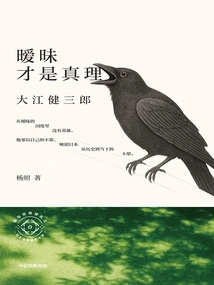
Ambiguity is the Truth: Oe Kenzaburo
Literature暧昧才是真理:大江健三郎
Yang Zhao
This book is a collection of literary criticism by Taiwanese scholar and writer Yang Zhao interpreting Oe Kenzaburo's life and works. It belongs to the second volume of his series "Ten Lectures by Famous Japanese Literary Masters: My Long Struggle with the World". The first volume (five books) of this series has been published. For nearly thirty years, Yang Zhao has continued to study and experience Japanese society, history, and culture. As a generation deeply influenced by Japanese culture, he continues to explore "what Japan is." In 2017, during an unexpected trip, he found an outlet for this problem: exploring Japan through Japanese novelists and their works. In the next five years, Yang Zhao selected 10 Japanese literary giants from different eras: Natsume Soseki, Tanizaki Junichiro, Akutagawa Ryunosuke, Kawabata Yasunari, Dazai Osamu, Mishima Yukio, Endo Shusaku, Oe Kenzaburo, Miyamoto Teru, and Murakami Haruki. Based on social background research, restoration of the mood of the times, original text reading, and excerpts and translations of important passages, he wrote about these 10 literary giants and the century-old Japanese literary history they created.
This book is a collection of literary criticism by Taiwanese scholar and writer Yang Zhao interpreting Oe Kenzaburo's life and works. It belongs to the second volume of his series "Ten Lectures by Famous Japanese Literary Masters: My Long Struggle with the World". The first volume (five books) of this series has been published. For nearly thirty years, Yang Zhao has continued to study and experience Japanese society, history, and culture. As a generation deeply influenced by Japanese culture, he continues to explore "what Japan is." In 2017, during an unexpected trip, he found an outlet for this problem: exploring Japan through Japanese novelists and their works. In the next five years, Yang Zhao selected 10 Japanese literary giants from different eras: Natsume Soseki, Tanizaki Junichiro, Akutagawa Ryunosuke, Kawabata Yasunari, Dazai Osamu, Mishima Yukio, Endo Shusaku, Oe Kenzaburo, Miyamoto Teru, and Murakami Haruki. Based on social background research, restoration of the mood of the times, original text reading, and excerpts and translations of important passages, he wrote about these 10 literary giants and the century-old Japanese literary history they created.
Research on Zhang Zao's Poetry
Literature张枣诗歌研究
Zhao Fei
Zhang Zao is the poet with the most poetic pursuit and research difficulty among contemporary poets. With his outstanding language talent and extraordinary conversion ability, he has pushed modern Chinese poetry to an unprecedented height. This book strives to avoid a monotonous theory of poets, that is, it does not study Zhang Zao's poetry as a closed object, but as an open question, thereby observing how modern Chinese poetry creates a unique tone while breaking through the limitations of form and structure.
Zhang Zao is the poet with the most poetic pursuit and research difficulty among contemporary poets. With his outstanding language talent and extraordinary conversion ability, he has pushed modern Chinese poetry to an unprecedented height. This book strives to avoid a monotonous theory of poets, that is, it does not study Zhang Zao's poetry as a closed object, but as an open question, thereby observing how modern Chinese poetry creates a unique tone while breaking through the limitations of form and structure.
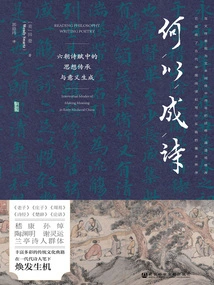
何以成诗:六朝诗赋中的思想传承与意义生成
(us) Tian Ling
The literati class during the Six Dynasties participated in cultural inheritance in a unique and mosaic way and produced exponentially growing cultural wealth. Tian Ling, a professor of Chinese literature at Rutgers University in the United States, used the theory of intertextuality in Western literary theory to examine allusions and citations. He carefully read the poems and poems of Ji Kang, Sun Chuo, Tao Yuanming, Xie Lingyun, and Lanting poets, and explored their complex connections with traditional cultural classics such as Laozi, Zhuangzi, Zhouyi, and even the Book of Songs, Songs of Chu, and the Analects of Confucius. The poets wrote poems between philosophy and literature, creatively used heterogeneous, diverse and ever-changing texts and cultural resources, and demonstrated their colorful creative talents, ideas and inner worlds.
The literati class during the Six Dynasties participated in cultural inheritance in a unique and mosaic way and produced exponentially growing cultural wealth. Tian Ling, a professor of Chinese literature at Rutgers University in the United States, used the theory of intertextuality in Western literary theory to examine allusions and citations. He carefully read the poems and poems of Ji Kang, Sun Chuo, Tao Yuanming, Xie Lingyun, and Lanting poets, and explored their complex connections with traditional cultural classics such as Laozi, Zhuangzi, Zhouyi, and even the Book of Songs, Songs of Chu, and the Analects of Confucius. The poets wrote poems between philosophy and literature, creatively used heterogeneous, diverse and ever-changing texts and cultural resources, and demonstrated their colorful creative talents, ideas and inner worlds.
古代文学前沿与评论(第7辑)
Editor-in-chief Liu Yuejin
"Ancient Literature Frontiers and Commentary" is a professional academic journal sponsored by the ancient literature dominant discipline of the Institute of Literature, Chinese Academy of Social Sciences. It aims to reflect the research status of ancient Chinese literature and its cutting-edge developments. It has columns such as special articles, written talks, book reviews, interviews, special comments, cutting-edge reviews, meeting minutes, project developments, argument collections, new materials, and special collections of documents. This book is the seventh volume and is divided into three parts: "Frontiers of Research on The Book of Songs", "Memories of Literature", and "New Horizons for Research on The Scholars".
"Ancient Literature Frontiers and Commentary" is a professional academic journal sponsored by the ancient literature dominant discipline of the Institute of Literature, Chinese Academy of Social Sciences. It aims to reflect the research status of ancient Chinese literature and its cutting-edge developments. It has columns such as special articles, written talks, book reviews, interviews, special comments, cutting-edge reviews, meeting minutes, project developments, argument collections, new materials, and special collections of documents. This book is the seventh volume and is divided into three parts: "Frontiers of Research on The Book of Songs", "Memories of Literature", and "New Horizons for Research on The Scholars".
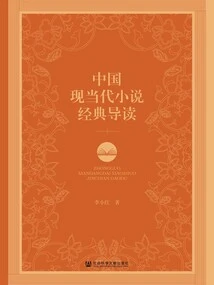
中国现当代小说经典导读
Li Xiaohong
This book is divided into two parts: Chinese modern novels and Chinese contemporary novels. The chapters of the whole book are mainly arranged with time as the longitude and specific writers' works as the latitude. In terms of the selection of chapters, this book covers the major novelists and representative works of different literary schools covered in the course on the history of modern and contemporary Chinese literature. It also includes new works that caused great repercussions in that year or have appeared since the 21st century (mainly works that won the Mao Dun Literature Award). In terms of specific content arrangement, each chapter includes three parts: an introduction to the author, an introduction to the work, and after-class exercises. This book focuses on the analysis of the novel's themes, ideas, and artistic features from two dimensions: writers and works. It aims to guide readers to comprehensively understand the outstanding creative achievements and splendid style of Chinese modern and contemporary novels, grasp the laws of development and evolution of Chinese modern and contemporary novels, and thereby improve readers' ability to analyze and appreciate novels.
This book is divided into two parts: Chinese modern novels and Chinese contemporary novels. The chapters of the whole book are mainly arranged with time as the longitude and specific writers' works as the latitude. In terms of the selection of chapters, this book covers the major novelists and representative works of different literary schools covered in the course on the history of modern and contemporary Chinese literature. It also includes new works that caused great repercussions in that year or have appeared since the 21st century (mainly works that won the Mao Dun Literature Award). In terms of specific content arrangement, each chapter includes three parts: an introduction to the author, an introduction to the work, and after-class exercises. This book focuses on the analysis of the novel's themes, ideas, and artistic features from two dimensions: writers and works. It aims to guide readers to comprehensively understand the outstanding creative achievements and splendid style of Chinese modern and contemporary novels, grasp the laws of development and evolution of Chinese modern and contemporary novels, and thereby improve readers' ability to analyze and appreciate novels.
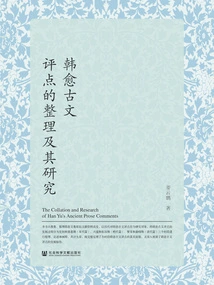
韩愈古文评点的整理及其研究
Jiang Yunpeng
Since the Song Dynasty, Han Yu's collected works have become the focus of compilation, annotation, and criticism by various literary masters. However, compared with the compilation and research results in editing and annotation, the collation and research of its comments have not achieved much results due to long-term neglect by the academic community. This book starts from collecting and sorting out the original documents of Han Yu's collected works, and takes the comments on Han Yu's ancient writings in the past dynasties as the research object. It divides the development process of Han Yu's ancient writings into the beginning and foundation period (Song Dynasty), the prosperity and development period (Ming Dynasty). Chapter), prosperity and peak period (Qing Dynasty chapter), organized, discussed and explained in three periods, with a total of nine chapters, which not only fully presents the true appearance of Han Yu's ancient literary commentaries in each period, but also deeply clarifies the development context of Han Yu's ancient literary commentaries. In addition, this book also contains a variety of rare and precious commentaries by famous writers that have been ignored by the academic community.
Since the Song Dynasty, Han Yu's collected works have become the focus of compilation, annotation, and criticism by various literary masters. However, compared with the compilation and research results in editing and annotation, the collation and research of its comments have not achieved much results due to long-term neglect by the academic community. This book starts from collecting and sorting out the original documents of Han Yu's collected works, and takes the comments on Han Yu's ancient writings in the past dynasties as the research object. It divides the development process of Han Yu's ancient writings into the beginning and foundation period (Song Dynasty), the prosperity and development period (Ming Dynasty). Chapter), prosperity and peak period (Qing Dynasty chapter), organized, discussed and explained in three periods, with a total of nine chapters, which not only fully presents the true appearance of Han Yu's ancient literary commentaries in each period, but also deeply clarifies the development context of Han Yu's ancient literary commentaries. In addition, this book also contains a variety of rare and precious commentaries by famous writers that have been ignored by the academic community.
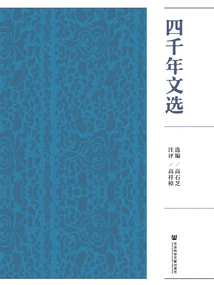
四千年文选
Selections By Gao Shizhi And Commentaries By Gao Xiangzhang
"Four Thousand Years of Writings" is an anthology of Chinese literature from past dynasties, with a total of 102 selected articles starting from the pre-Qin Dynasty to modern times. The book was edited, punctuated, and annotated by Mr. Gao Shizhi. Mr. Gao Shizhi is famous for his poetry and calligraphy. He taught at Sichuan University in the early days of the Anti-Japanese War. He compiled his own ancient prose as lecture notes, which have been passed down to the world and were adopted by schools in Sichuan during the Anti-Japanese War. In 1943, the lecture notes were published under the title "Selected Works of Four Thousand Years" by Fuxing Bookstore in Chengdu, Sichuan. In 1996, Mr. Gao Xiangzhang, a descendant of the Gao family, reorganized the book, added annotations and explanations, and published it in 2003. This time the whole book has been revised and reprinted, which makes this well-selected and thoroughly explained university ancient Chinese textbook of the Republic of China more perfect and presented with a new look.
"Four Thousand Years of Writings" is an anthology of Chinese literature from past dynasties, with a total of 102 selected articles starting from the pre-Qin Dynasty to modern times. The book was edited, punctuated, and annotated by Mr. Gao Shizhi. Mr. Gao Shizhi is famous for his poetry and calligraphy. He taught at Sichuan University in the early days of the Anti-Japanese War. He compiled his own ancient prose as lecture notes, which have been passed down to the world and were adopted by schools in Sichuan during the Anti-Japanese War. In 1943, the lecture notes were published under the title "Selected Works of Four Thousand Years" by Fuxing Bookstore in Chengdu, Sichuan. In 1996, Mr. Gao Xiangzhang, a descendant of the Gao family, reorganized the book, added annotations and explanations, and published it in 2003. This time the whole book has been revised and reprinted, which makes this well-selected and thoroughly explained university ancient Chinese textbook of the Republic of China more perfect and presented with a new look.
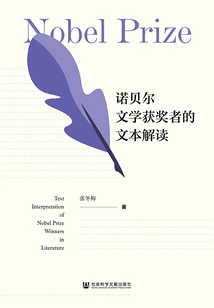
诺贝尔文学获奖者的文本解读
Zhang Dongmei
This book selects representative writers from many Nobel Prize winners in literature, and conducts textual reading and classification analysis of their works. By selecting the main life experiences and emotional tendencies of the writers, establishing connections with the selected works, it tells what the writers inherited and learned from the literary heritage of their own country and other countries, the influence they received from writers of different schools at the same time, and their most important artistic pursuits and interests. Based on the original appearance of the classic translation, this book tells the story of literature, highlights the connections between important plots and events in the work, and directly quotes highlights from the text, striving to enable readers to understand the story connotation and artistic style of the original work in the shortest possible time. At the same time, it pays attention to the text from a cultural perspective, provides different cultural interpretations and cultural dialogues for different texts, and attempts to elaborate on each text in the field of history and culture.
This book selects representative writers from many Nobel Prize winners in literature, and conducts textual reading and classification analysis of their works. By selecting the main life experiences and emotional tendencies of the writers, establishing connections with the selected works, it tells what the writers inherited and learned from the literary heritage of their own country and other countries, the influence they received from writers of different schools at the same time, and their most important artistic pursuits and interests. Based on the original appearance of the classic translation, this book tells the story of literature, highlights the connections between important plots and events in the work, and directly quotes highlights from the text, striving to enable readers to understand the story connotation and artistic style of the original work in the shortest possible time. At the same time, it pays attention to the text from a cultural perspective, provides different cultural interpretations and cultural dialogues for different texts, and attempts to elaborate on each text in the field of history and culture.
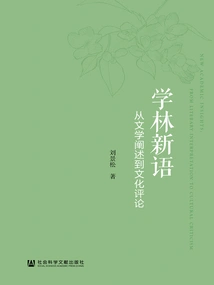
学林新语:从文学阐述到文化评论
Liu Jingsong
This book contains a total of 28 articles, all of which have been published in publications such as "Macau Daily", "Macau Studies", "Journal of Macau Polytechnic", and "Teachers' Magazine". The book is divided into four parts, namely Xue Lin's New Words, Commentary, Creative World, and Interviews with Famous Artists. Xue Lin's new discourse elaborates on the literary value of Lin Zhongying's prose, Lu Xiang's father's cultural pursuit, and the cultural significance of Cheng Xiangwei's poems; the commentary on "Facing the Sea for Thirty Years", "She Said: Happy Cloudy Days", "Lu Xun and Gu Jiegang" "" and other articles provide unique reviews; the "Creative World" chapter collects the author's literary works at different stages, including narratives and life insights, which are quite vivid; the "Interviews with Famous Artists" chapter contains the author's interviews with Yang Yunzhong, Yang Yi, and Jin Guoping.
This book contains a total of 28 articles, all of which have been published in publications such as "Macau Daily", "Macau Studies", "Journal of Macau Polytechnic", and "Teachers' Magazine". The book is divided into four parts, namely Xue Lin's New Words, Commentary, Creative World, and Interviews with Famous Artists. Xue Lin's new discourse elaborates on the literary value of Lin Zhongying's prose, Lu Xiang's father's cultural pursuit, and the cultural significance of Cheng Xiangwei's poems; the commentary on "Facing the Sea for Thirty Years", "She Said: Happy Cloudy Days", "Lu Xun and Gu Jiegang" "" and other articles provide unique reviews; the "Creative World" chapter collects the author's literary works at different stages, including narratives and life insights, which are quite vivid; the "Interviews with Famous Artists" chapter contains the author's interviews with Yang Yunzhong, Yang Yi, and Jin Guoping.
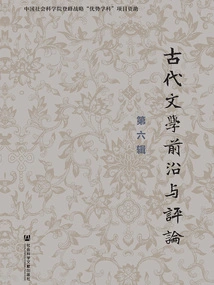
古代文学前沿与评论(第6辑)
Editor-in-chief Liu Yuejin
"Ancient Literature Frontiers and Commentary" is a professional academic journal sponsored by the ancient literature dominant discipline of the Institute of Literature, Chinese Academy of Social Sciences. It aims to reflect the research status of ancient Chinese literature and its cutting-edge developments. It has columns such as special articles, written talks, book reviews, interviews, special comments, cutting-edge reviews, meeting minutes, project developments, argument collections, new materials, and special collections of documents. This book is the sixth volume and is divided into three parts: "Album: Commemorating the 130th Anniversary of the Birth of Mr. Wang Boxiang", "Album: Commemorating the 120th Anniversary of the Birth of Mr. Yu Pingbo", and "Album: Commemorating the 110th Anniversary of the Birth of Mr. Qian Zhongshu".
"Ancient Literature Frontiers and Commentary" is a professional academic journal sponsored by the ancient literature dominant discipline of the Institute of Literature, Chinese Academy of Social Sciences. It aims to reflect the research status of ancient Chinese literature and its cutting-edge developments. It has columns such as special articles, written talks, book reviews, interviews, special comments, cutting-edge reviews, meeting minutes, project developments, argument collections, new materials, and special collections of documents. This book is the sixth volume and is divided into three parts: "Album: Commemorating the 130th Anniversary of the Birth of Mr. Wang Boxiang", "Album: Commemorating the 120th Anniversary of the Birth of Mr. Yu Pingbo", and "Album: Commemorating the 110th Anniversary of the Birth of Mr. Qian Zhongshu".
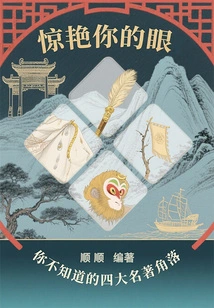
惊艳你的眼:你不知道的四大名著角落
Compiled By Shunshun
Ma Ruifang said: Carrying "Dream of Red Mansions" on your back can travel to the end of the world. Zhou Siyuan said: "Water Margin" is full of masculine genes. Shen Bojun: "The Romance of the Three Kingdoms" has the greatest influence on national character. Qian Wenzhong: "Journey to the West" directly reflects the character of the Han nation. Today, how do we read... Should we look at the characters in famous novels with different eyes? Zhuge Liang is the embodiment of wisdom in people's minds. One of the four classic classics, "The Romance of the Three Kingdoms", has successfully shaped his image. How much do you know about his story? What kind of new interpretation does Li Kui give in "Water Margin"? What we know and what is in books only accounts for a small part of the historical process, and most of it is unknown. Any historian only grasps a piece of the historical sea, and studies only one aspect or a certain field. Life goes on and history cannot repeat itself, but we must look at history with modern eyes. The purpose of this book is not to convey the so-called "knowledge", or what we have recorded in dictionaries, encyclopedias and related reference books, we will not repeat it here. Our proposition is to let readers view our book from a different perspective and trigger new awareness and experience in readers.
Ma Ruifang said: Carrying "Dream of Red Mansions" on your back can travel to the end of the world. Zhou Siyuan said: "Water Margin" is full of masculine genes. Shen Bojun: "The Romance of the Three Kingdoms" has the greatest influence on national character. Qian Wenzhong: "Journey to the West" directly reflects the character of the Han nation. Today, how do we read... Should we look at the characters in famous novels with different eyes? Zhuge Liang is the embodiment of wisdom in people's minds. One of the four classic classics, "The Romance of the Three Kingdoms", has successfully shaped his image. How much do you know about his story? What kind of new interpretation does Li Kui give in "Water Margin"? What we know and what is in books only accounts for a small part of the historical process, and most of it is unknown. Any historian only grasps a piece of the historical sea, and studies only one aspect or a certain field. Life goes on and history cannot repeat itself, but we must look at history with modern eyes. The purpose of this book is not to convey the so-called "knowledge", or what we have recorded in dictionaries, encyclopedias and related reference books, we will not repeat it here. Our proposition is to let readers view our book from a different perspective and trigger new awareness and experience in readers.
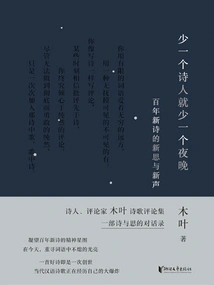
One Less Poet Means One Less Night
Literature少一个诗人就少一个夜晚
Konoha
"One Less Poet, One Less Night: New Thoughts and New Voices in Centennial New Poetry" is a collection of poetry reviews created by poet and critic Konoha in recent years, including his critical texts on important poets and poetic propositions in the context of Centennial New Poetry. The title of the book "One less poet means one less night" comes from a small poem written by Konoha himself, which means that each poem is a unique spark lit by an individual in the darkness. He weaves the warp and weft of the structure with "Poet's Chapter" and "Poetry Thought Chapter", and his eyes travel through the grand star map of century-old new poetry. He not only gazes at the shining poetic constellations such as Feng Zhi, Mu Dan, Haizi, Xichuan, Zheng Min, Bei Dao, Zhai Yongming, etc., But also asks about "future poetics". ", "AI and Poetry" and other fluid and urgent contemporary poetic propositions, especially examining the dispersion of meaning brought about by the rapid development of technology, questioning the uniqueness of human emotions and the vitality of poetry in the game of "AI and Love", and trying to identify a spiritual night sky for habitation.
"One Less Poet, One Less Night: New Thoughts and New Voices in Centennial New Poetry" is a collection of poetry reviews created by poet and critic Konoha in recent years, including his critical texts on important poets and poetic propositions in the context of Centennial New Poetry. The title of the book "One less poet means one less night" comes from a small poem written by Konoha himself, which means that each poem is a unique spark lit by an individual in the darkness. He weaves the warp and weft of the structure with "Poet's Chapter" and "Poetry Thought Chapter", and his eyes travel through the grand star map of century-old new poetry. He not only gazes at the shining poetic constellations such as Feng Zhi, Mu Dan, Haizi, Xichuan, Zheng Min, Bei Dao, Zhai Yongming, etc., But also asks about "future poetics". ", "AI and Poetry" and other fluid and urgent contemporary poetic propositions, especially examining the dispersion of meaning brought about by the rapid development of technology, questioning the uniqueness of human emotions and the vitality of poetry in the game of "AI and Love", and trying to identify a spiritual night sky for habitation.
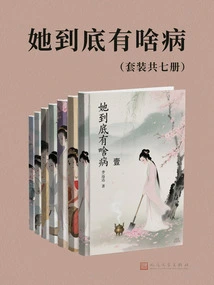
她到底有啥病(套装共七册)
Li Yuanda
The content of this book is based on the illnesses of the characters in Red Mansions. It examines the immortal masterpiece "Dream of Red Mansions" from the perspectives of medical cultural history and narrative medicine, and summarizes the three-dimensional structure of individual illness, family decline, and social crisis. The diseases in "A Dream of Red Mansions" are not just physical troubles, but also spiritual and psychological pain and struggle, and even the pathology of the entire society and culture. It focuses on the person, not the disease itself. I hope this book can also find possible answers to the anxiety prevalent in our current society.
The content of this book is based on the illnesses of the characters in Red Mansions. It examines the immortal masterpiece "Dream of Red Mansions" from the perspectives of medical cultural history and narrative medicine, and summarizes the three-dimensional structure of individual illness, family decline, and social crisis. The diseases in "A Dream of Red Mansions" are not just physical troubles, but also spiritual and psychological pain and struggle, and even the pathology of the entire society and culture. It focuses on the person, not the disease itself. I hope this book can also find possible answers to the anxiety prevalent in our current society.
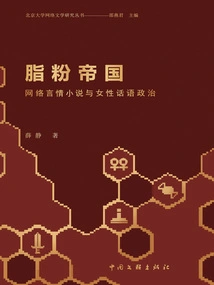
The Empire of Makeup and Powder: Internet Romance Novels and the Politics of Female Discourse
Literature脂粉帝国:网络言情小说与女性话语政治
Xue Jing
A book that thoroughly explains the domestic romance Internet literature. From the traditional Qiong Yao style love to the current "double clean" sweet love style, has it experienced such a complicated evolution? The sadomasochistic CEO story fills the power vacuum with love, Gong Douwen puts aside love and survives with ruthlessness, and the female virtuous story starts a social experiment... We often consume them, but rarely stop to do a serious dismantling. A female scholar goes deep into text and reality and brings a literary research monograph on romance novels and the politics of female discourse. Open this book and decode the seldom-discussed evolution of desire and power behind romance.
A book that thoroughly explains the domestic romance Internet literature. From the traditional Qiong Yao style love to the current "double clean" sweet love style, has it experienced such a complicated evolution? The sadomasochistic CEO story fills the power vacuum with love, Gong Douwen puts aside love and survives with ruthlessness, and the female virtuous story starts a social experiment... We often consume them, but rarely stop to do a serious dismantling. A female scholar goes deep into text and reality and brings a literary research monograph on romance novels and the politics of female discourse. Open this book and decode the seldom-discussed evolution of desire and power behind romance.
论小说十家(赵园文集2)
Zhao Yuan
This book is the most powerful writer theory in literary studies. It focuses on ten people, Yu Dafu, Lao She, Wu Zuxiang, Zhang Tianyi, Shen Congwen, Lu Ling, Luo Binji, Duanmu Hongliang, Xiao Hong, and Zhang Ailing, and analyzes the works of representative writers in the history of modern literature.
This book is the most powerful writer theory in literary studies. It focuses on ten people, Yu Dafu, Lao She, Wu Zuxiang, Zhang Tianyi, Shen Congwen, Lu Ling, Luo Binji, Duanmu Hongliang, Xiao Hong, and Zhang Ailing, and analyzes the works of representative writers in the history of modern literature.
地之子(赵园文集4)
Zhao Yuan
In China, a large agricultural country, the vast number of intellectuals are inextricably linked to the countryside and farmers, and they have deep and profound feelings for the countryside and the earth. Through the analysis and research of a large number of modern and contemporary Chinese literary works, this book explores intellectuals' cultural feelings and spiritual connections with the land and farmers, and reveals the cultural relationships between writers and the countryside and farmers, as well as their literary expression methods.
In China, a large agricultural country, the vast number of intellectuals are inextricably linked to the countryside and farmers, and they have deep and profound feelings for the countryside and the earth. Through the analysis and research of a large number of modern and contemporary Chinese literary works, this book explores intellectuals' cultural feelings and spiritual connections with the land and farmers, and reveals the cultural relationships between writers and the countryside and farmers, as well as their literary expression methods.
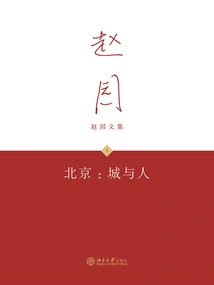
北京:城与人(赵园文集3)
Zhao Yuan
This book takes the literary works describing urban Beijing in the history of modern and contemporary Chinese literature as a kind of pan-local literature, explores the urban cultural character of Beijing in literature, and then explores the various spiritual connections and ways of connection between its residents, depicters and the city through the cultural character of the city, and interprets Beijing culture from one side.
This book takes the literary works describing urban Beijing in the history of modern and contemporary Chinese literature as a kind of pan-local literature, explores the urban cultural character of Beijing in literature, and then explores the various spiritual connections and ways of connection between its residents, depicters and the city through the cultural character of the city, and interprets Beijing culture from one side.
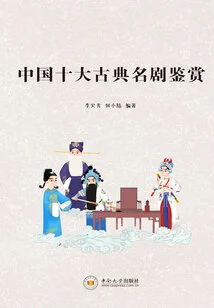
中国十大古典名剧鉴赏
Written By Li Huoxiu And He Xiaolu
This book is oriented to disseminate excellent traditional culture, focusing on classics, knowledge, thought, readability, etc., And selects "The Injustice of Dou E", "Horse on the Wall", "Autumn in the Han Palace", "The Orphan of Zhao", "The Romance of the West Chamber", "The Romance of Jingchai", "The Legend of Pipa", "The Peony Pavilion", The ten famous classical dramas "The Palace of Eternal Life" and "The Peach Blossom Fan" provide an overall description of the author's life experiences, creative achievements, and later influence, and then trace the writing background and characteristics of the times of these dramas to systematically and comprehensively observe the ideological connotation and cultural spirit of the dramas. At the same time, the artistic characteristics and aesthetic tendencies of the ten plays are sorted out, with a view to elaborating the ideological implications and artistic aesthetic characteristics of the classic dramas in a personalized way
This book is oriented to disseminate excellent traditional culture, focusing on classics, knowledge, thought, readability, etc., And selects "The Injustice of Dou E", "Horse on the Wall", "Autumn in the Han Palace", "The Orphan of Zhao", "The Romance of the West Chamber", "The Romance of Jingchai", "The Legend of Pipa", "The Peony Pavilion", The ten famous classical dramas "The Palace of Eternal Life" and "The Peach Blossom Fan" provide an overall description of the author's life experiences, creative achievements, and later influence, and then trace the writing background and characteristics of the times of these dramas to systematically and comprehensively observe the ideological connotation and cultural spirit of the dramas. At the same time, the artistic characteristics and aesthetic tendencies of the ten plays are sorted out, with a view to elaborating the ideological implications and artistic aesthetic characteristics of the classic dramas in a personalized way
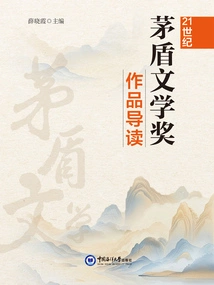
21世纪茅盾文学奖作品导读
Editor-in-chief Xue Xiaoxia
"Introduction to Mao Dun Literature Award Works in the 21st Century" is an elective course for Chinese language and literature majors. It aims to let readers understand the general situation of the creation of contemporary Chinese literary novels and master the ability of literary appreciation. The textbook is divided into ten lectures, and selects ten Mao Dun Literature Award-winning works, including Chi Zijian's "Right Bank of the Ergun River", Mo Yan's "Frog", Liu Zhenyun's "One Sentence is Worth Ten Thousand Sentences", Jin Yucheng's "Flowers", Su Tong's "The Yellow Bird", Liang Xiaosheng's "The World", Chen Yan's "The Protagonist", Qiao Ye's "Bao Shui", and Sun Ganlu's "A Thousand Miles of Rivers and Mountains". It spans multiple themes and shows the richness and in-depth exploration of contemporary Chinese literature. It aims to help students have a deeper understanding and appreciation of classic literary works, appreciate the artistic charm of the works, and deeply feel the vitality and diversity of contemporary Chinese literature.
"Introduction to Mao Dun Literature Award Works in the 21st Century" is an elective course for Chinese language and literature majors. It aims to let readers understand the general situation of the creation of contemporary Chinese literary novels and master the ability of literary appreciation. The textbook is divided into ten lectures, and selects ten Mao Dun Literature Award-winning works, including Chi Zijian's "Right Bank of the Ergun River", Mo Yan's "Frog", Liu Zhenyun's "One Sentence is Worth Ten Thousand Sentences", Jin Yucheng's "Flowers", Su Tong's "The Yellow Bird", Liang Xiaosheng's "The World", Chen Yan's "The Protagonist", Qiao Ye's "Bao Shui", and Sun Ganlu's "A Thousand Miles of Rivers and Mountains". It spans multiple themes and shows the richness and in-depth exploration of contemporary Chinese literature. It aims to help students have a deeper understanding and appreciation of classic literary works, appreciate the artistic charm of the works, and deeply feel the vitality and diversity of contemporary Chinese literature.
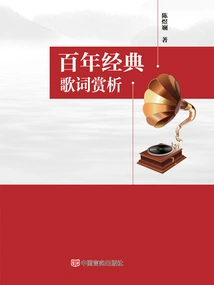
百年经典歌词赏析
Chen Yulan
From the main melody carols "The East Is Red" and "Nanniwan" to popular songs "Pearl of the Orient", "Descendants of the Dragon", "Unforgettable Tonight", etc. These songs have beautiful melodies, are widely sung, and have a deep mass base. The content of the songs covers various periods of revolution, construction, and reform. Combining the school's teaching characteristics, the author selected more than a hundred lyrics from a century old that are full of life, have healthy themes and visual language, and are full of musical beauty that can move their hearts. He guides students to use the basic viewpoints of Marxism and contemporary aesthetic vision to independently appreciate these representative works of different types of lyrics. , To train students to have a firm and correct political direction, good ideological and moral character and a sound personality; to have a correct world outlook, outlook on life and values: to have scientific spirit, humanistic accomplishment, professional quality, social responsibility and a positive attitude towards life; to understand the national conditions, social conditions and people's sentiments, and to practice the core socialist values. At the same time, it also implements the artistic aspects of lyrics such as language, structure, rhythm, and syllables to enhance students' ability to appreciate music and literature from multiple perspectives and help students understand and grasp the cultural connotation and artistic characteristics of each lyric.
From the main melody carols "The East Is Red" and "Nanniwan" to popular songs "Pearl of the Orient", "Descendants of the Dragon", "Unforgettable Tonight", etc. These songs have beautiful melodies, are widely sung, and have a deep mass base. The content of the songs covers various periods of revolution, construction, and reform. Combining the school's teaching characteristics, the author selected more than a hundred lyrics from a century old that are full of life, have healthy themes and visual language, and are full of musical beauty that can move their hearts. He guides students to use the basic viewpoints of Marxism and contemporary aesthetic vision to independently appreciate these representative works of different types of lyrics. , To train students to have a firm and correct political direction, good ideological and moral character and a sound personality; to have a correct world outlook, outlook on life and values: to have scientific spirit, humanistic accomplishment, professional quality, social responsibility and a positive attitude towards life; to understand the national conditions, social conditions and people's sentiments, and to practice the core socialist values. At the same time, it also implements the artistic aspects of lyrics such as language, structure, rhythm, and syllables to enhance students' ability to appreciate music and literature from multiple perspectives and help students understand and grasp the cultural connotation and artistic characteristics of each lyric.
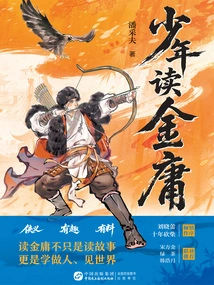
Young People Read Jin Yong
Literature少年读金庸
Pantsev
This book has no political orientation. The author has solid professional skills and the content is lively and interesting. Jin Yong is known as the master of new martial arts novels. He is also a Buddhist expert, a political commentator, a Go master, a doctor of history from Cambridge University, a film screenwriter, and a newspaper critic. His lifelong habit of reading has made his martial arts novels a "treasure bag" that integrates knowledge, weapons, and allusions. Every reader can find points of interest in them. This book guides young readers to immerse themselves in it and understand the historical context, geographical features, poetry and allusions, medicine and diet, etiquette and art philosophy behind martial arts... The author integrates abstract concepts in the textbook into vivid scenes, making traditional culture truly "alive" and helping young people broaden their cognitive boundaries, build an interdisciplinary knowledge framework, cultivate cultural confidence and humanistic literacy, and lay a solid foundation for lifelong learning.
This book has no political orientation. The author has solid professional skills and the content is lively and interesting. Jin Yong is known as the master of new martial arts novels. He is also a Buddhist expert, a political commentator, a Go master, a doctor of history from Cambridge University, a film screenwriter, and a newspaper critic. His lifelong habit of reading has made his martial arts novels a "treasure bag" that integrates knowledge, weapons, and allusions. Every reader can find points of interest in them. This book guides young readers to immerse themselves in it and understand the historical context, geographical features, poetry and allusions, medicine and diet, etiquette and art philosophy behind martial arts... The author integrates abstract concepts in the textbook into vivid scenes, making traditional culture truly "alive" and helping young people broaden their cognitive boundaries, build an interdisciplinary knowledge framework, cultivate cultural confidence and humanistic literacy, and lay a solid foundation for lifelong learning.
万千微尘纷坠心田:文学阅读的生命化
Zhang Qiuzi
Literary reader Zhang Qiuzi's highly acclaimed out-of-print masterpiece has been newly revised to introduce literature into daily life and make life an aesthetic. Treasure literature teacher Zhang Qiuzi breaks away from academic routines and jargon and chooses to be a keen observer. What she takes us to see is not the monuments in the history of literature, but the small but real emotions floating in the classic texts. In an era when everyone is required to be useful and correct, she teaches you how to learn to postpone judgment in literature, loosen up the tight life, allow yourself to stay in the vagueness and complexity for a while, and regain the throbbing of "thousands of dust falling into the heart" in the trivial and mediocre daily life. This book is divided into two parts: the first part takes you to practice a kind of "my" vision and explores how literary reading can become a life-oriented practice. It does not teach you how to recite literary history, but teaches you how to practice "postponing judgment" in a complex world through careful reading and regain the sensibilities that have become increasingly worn out in the fragmented era. The next article, the soul profile of the master of deconstruction, takes you deep into the folds of the text. From Bovary's Hat to the Dictionary of Desire in "Faust", from the fog of memory in "Shadows of the Mountains" to the female awakening under "The Yellow Wallpaper", we will reveal to you the secrets of world building by masters.
Literary reader Zhang Qiuzi's highly acclaimed out-of-print masterpiece has been newly revised to introduce literature into daily life and make life an aesthetic. Treasure literature teacher Zhang Qiuzi breaks away from academic routines and jargon and chooses to be a keen observer. What she takes us to see is not the monuments in the history of literature, but the small but real emotions floating in the classic texts. In an era when everyone is required to be useful and correct, she teaches you how to learn to postpone judgment in literature, loosen up the tight life, allow yourself to stay in the vagueness and complexity for a while, and regain the throbbing of "thousands of dust falling into the heart" in the trivial and mediocre daily life. This book is divided into two parts: the first part takes you to practice a kind of "my" vision and explores how literary reading can become a life-oriented practice. It does not teach you how to recite literary history, but teaches you how to practice "postponing judgment" in a complex world through careful reading and regain the sensibilities that have become increasingly worn out in the fragmented era. The next article, the soul profile of the master of deconstruction, takes you deep into the folds of the text. From Bovary's Hat to the Dictionary of Desire in "Faust", from the fog of memory in "Shadows of the Mountains" to the female awakening under "The Yellow Wallpaper", we will reveal to you the secrets of world building by masters.
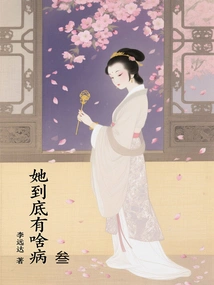
What Disease Does She Have (3)
Literature她到底有啥病(叁)
Li Yuanda
The content of this book is based on the illnesses of the characters in Red Mansions. It examines the immortal masterpiece "Dream of Red Mansions" from the perspectives of medical cultural history and narrative medicine, and summarizes the three-dimensional structure of individual illness, family decline, and social crisis. The diseases in "A Dream of Red Mansions" are not just physical troubles, but also spiritual and psychological pain and struggle, and even the pathology of the entire society and culture. It focuses on the person, not the disease itself. I hope this book can also find possible answers to the anxiety prevalent in our current society.
The content of this book is based on the illnesses of the characters in Red Mansions. It examines the immortal masterpiece "Dream of Red Mansions" from the perspectives of medical cultural history and narrative medicine, and summarizes the three-dimensional structure of individual illness, family decline, and social crisis. The diseases in "A Dream of Red Mansions" are not just physical troubles, but also spiritual and psychological pain and struggle, and even the pathology of the entire society and culture. It focuses on the person, not the disease itself. I hope this book can also find possible answers to the anxiety prevalent in our current society.
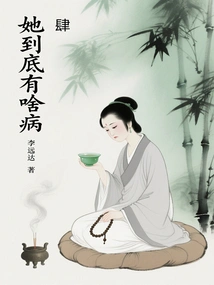
What Disease Does She Have? (4)
Literature她到底有啥病(肆)
Li Yuanda
The content of this book is based on the illnesses of the characters in Red Mansions. It examines the immortal masterpiece "Dream of Red Mansions" from the perspectives of medical cultural history and narrative medicine, and summarizes the three-dimensional structure of individual illness, family decline, and social crisis. The diseases in "A Dream of Red Mansions" are not just physical troubles, but also spiritual and psychological pain and struggle, and even the pathology of the entire society and culture. It focuses on the person, not the disease itself. I hope this book can also find possible answers to the anxiety prevalent in our current society.
The content of this book is based on the illnesses of the characters in Red Mansions. It examines the immortal masterpiece "Dream of Red Mansions" from the perspectives of medical cultural history and narrative medicine, and summarizes the three-dimensional structure of individual illness, family decline, and social crisis. The diseases in "A Dream of Red Mansions" are not just physical troubles, but also spiritual and psychological pain and struggle, and even the pathology of the entire society and culture. It focuses on the person, not the disease itself. I hope this book can also find possible answers to the anxiety prevalent in our current society.
What Disease Does She Have? (7)
Literature她到底有啥病(柒)
Li Yuanda
The content of this book is based on the illnesses of the characters in Red Mansions. It examines the immortal masterpiece "Dream of Red Mansions" from the perspectives of medical cultural history and narrative medicine, and summarizes the three-dimensional structure of individual illness, family decline, and social crisis. The diseases in "A Dream of Red Mansions" are not just physical troubles, but also spiritual and psychological pain and struggle, and even the pathology of the entire society and culture. It focuses on the person, not the disease itself. I hope this book can also find possible answers to the anxiety prevalent in our current society.
The content of this book is based on the illnesses of the characters in Red Mansions. It examines the immortal masterpiece "Dream of Red Mansions" from the perspectives of medical cultural history and narrative medicine, and summarizes the three-dimensional structure of individual illness, family decline, and social crisis. The diseases in "A Dream of Red Mansions" are not just physical troubles, but also spiritual and psychological pain and struggle, and even the pathology of the entire society and culture. It focuses on the person, not the disease itself. I hope this book can also find possible answers to the anxiety prevalent in our current society.
What Disease Does She Have (1)
Literature她到底有啥病(壹)
Li Yuanda
The content of this book is based on the illnesses of the characters in Red Mansions. It examines the immortal masterpiece "Dream of Red Mansions" from the perspectives of medical cultural history and narrative medicine, and summarizes the three-dimensional structure of individual illness, family decline, and social crisis. The diseases in "A Dream of Red Mansions" are not just physical troubles, but also spiritual and psychological pain and struggle, and even the pathology of the entire society and culture. It focuses on the person, not the disease itself. I hope this book can also find possible answers to the anxiety prevalent in our current society.
The content of this book is based on the illnesses of the characters in Red Mansions. It examines the immortal masterpiece "Dream of Red Mansions" from the perspectives of medical cultural history and narrative medicine, and summarizes the three-dimensional structure of individual illness, family decline, and social crisis. The diseases in "A Dream of Red Mansions" are not just physical troubles, but also spiritual and psychological pain and struggle, and even the pathology of the entire society and culture. It focuses on the person, not the disease itself. I hope this book can also find possible answers to the anxiety prevalent in our current society.
What's Wrong with Her (2)
Literature她到底有啥病(贰)
Li Yuanda
The content of this book is based on the illnesses of the characters in Red Mansions. It examines the immortal masterpiece "Dream of Red Mansions" from the perspectives of medical cultural history and narrative medicine, and summarizes the three-dimensional structure of individual illness, family decline, and social crisis. The diseases in "A Dream of Red Mansions" are not just physical troubles, but also spiritual and psychological pain and struggle, and even the pathology of the entire society and culture. It focuses on the person, not the disease itself. I hope this book can also find possible answers to the anxiety prevalent in our current society.
The content of this book is based on the illnesses of the characters in Red Mansions. It examines the immortal masterpiece "Dream of Red Mansions" from the perspectives of medical cultural history and narrative medicine, and summarizes the three-dimensional structure of individual illness, family decline, and social crisis. The diseases in "A Dream of Red Mansions" are not just physical troubles, but also spiritual and psychological pain and struggle, and even the pathology of the entire society and culture. It focuses on the person, not the disease itself. I hope this book can also find possible answers to the anxiety prevalent in our current society.
What Disease Does She Have? (5)
Literature她到底有啥病(伍)
Li Yuanda
The content of this book is based on the illnesses of the characters in Red Mansions. It examines the immortal masterpiece "Dream of Red Mansions" from the perspectives of medical cultural history and narrative medicine, and summarizes the three-dimensional structure of individual illness, family decline, and social crisis. The diseases in "A Dream of Red Mansions" are not just physical troubles, but also spiritual and psychological pain and struggle, and even the pathology of the entire society and culture. It focuses on the person, not the disease itself. I hope this book can also find possible answers to the anxiety prevalent in our current society.
The content of this book is based on the illnesses of the characters in Red Mansions. It examines the immortal masterpiece "Dream of Red Mansions" from the perspectives of medical cultural history and narrative medicine, and summarizes the three-dimensional structure of individual illness, family decline, and social crisis. The diseases in "A Dream of Red Mansions" are not just physical troubles, but also spiritual and psychological pain and struggle, and even the pathology of the entire society and culture. It focuses on the person, not the disease itself. I hope this book can also find possible answers to the anxiety prevalent in our current society.
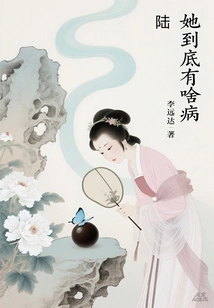
What Disease Does She Have? (Lu)
Literature她到底有啥病(陆)
Li Yuanda
The content of this book is based on the illnesses of the characters in Red Mansions. It examines the immortal masterpiece "Dream of Red Mansions" from the perspectives of medical cultural history and narrative medicine, and summarizes the three-dimensional structure of individual illness, family decline, and social crisis. The diseases in "A Dream of Red Mansions" are not just physical troubles, but also spiritual and psychological pain and struggle, and even the pathology of the entire society and culture. It focuses on the person, not the disease itself. I hope this book can also find possible answers to the anxiety prevalent in our current society.
The content of this book is based on the illnesses of the characters in Red Mansions. It examines the immortal masterpiece "Dream of Red Mansions" from the perspectives of medical cultural history and narrative medicine, and summarizes the three-dimensional structure of individual illness, family decline, and social crisis. The diseases in "A Dream of Red Mansions" are not just physical troubles, but also spiritual and psychological pain and struggle, and even the pathology of the entire society and culture. It focuses on the person, not the disease itself. I hope this book can also find possible answers to the anxiety prevalent in our current society.
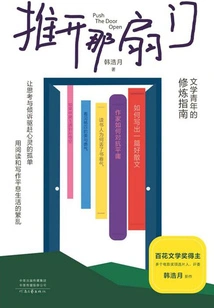
Push That Door Open
Literature推开那扇门
Han Haoyue
This book is a collection of articles written by the writer Han Haoyue in recent years, focusing on writing, reading, book reviews and literary criticism. It is divided into four series: "The story has been told" mainly focuses on character comments, telling the stories of Yang Yi, Ye Jiaying, Yu Hua and other famous cultural figures; "There Should Be Fragrance" focuses on books "The Impossible Book" focuses on commentary and literary casual reflections, analyzing classic literature, women's writing and cultural phenomena; "The Impossible Book" provides in-depth reading discussions and reflects on the meaning of reading and the dilemma of the times; "Pushing That Door Open" focuses on writing experience and explores the creative methodology of essays, novels, and returning home themes.
This book is a collection of articles written by the writer Han Haoyue in recent years, focusing on writing, reading, book reviews and literary criticism. It is divided into four series: "The story has been told" mainly focuses on character comments, telling the stories of Yang Yi, Ye Jiaying, Yu Hua and other famous cultural figures; "There Should Be Fragrance" focuses on books "The Impossible Book" focuses on commentary and literary casual reflections, analyzing classic literature, women's writing and cultural phenomena; "The Impossible Book" provides in-depth reading discussions and reflects on the meaning of reading and the dilemma of the times; "Pushing That Door Open" focuses on writing experience and explores the creative methodology of essays, novels, and returning home themes.
Liushahe Talks About Tang Poetry
Literature流沙河讲唐诗
Liusha River
This book is compiled from Liushahe's Tang poetry lecture recordings. Liushahe selected 187 poems from "Three Hundred Tang Poems", quoted from the poems in plain and humorous spoken language, and interpreted the meaning of the words, sentence meanings, historical background, geographical environment, etc. Word by word in detail. He also integrated his own experience of writing poems and creations for many years into them, leading readers to truly enter the world of Tang poetry.
This book is compiled from Liushahe's Tang poetry lecture recordings. Liushahe selected 187 poems from "Three Hundred Tang Poems", quoted from the poems in plain and humorous spoken language, and interpreted the meaning of the words, sentence meanings, historical background, geographical environment, etc. Word by word in detail. He also integrated his own experience of writing poems and creations for many years into them, leading readers to truly enter the world of Tang poetry.
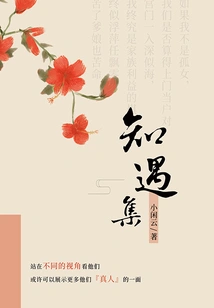
Zhiyuji
Literature知遇集
Xiao Xianyun
Because I "know people", I want to understand them. The collection of treasures from the sea is open to the public. The "Zhiyu" series includes female images from "A Dream of Red Mansions", real people from history, characters from literary works or film and television dramas, etc. Seeing them from different perspectives may show more of their "real" side and resonate with readers.
Because I "know people", I want to understand them. The collection of treasures from the sea is open to the public. The "Zhiyu" series includes female images from "A Dream of Red Mansions", real people from history, characters from literary works or film and television dramas, etc. Seeing them from different perspectives may show more of their "real" side and resonate with readers.
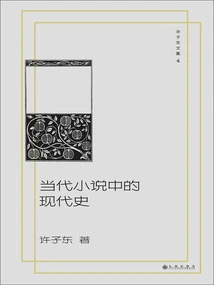
许子东文集04:当代小说中的现代史
Xu Zidong
Cao Yu's "Sunrise", Zhang Henshui's "The Cause of Laughter", and Zhang Ailing's "The First Incense" are actually three ways of telling the same story? "People's Artist" Wang Meng also writes "popular" novels? Ba Jin's "Youth Lyrical Style" continues to this day? It turns out that novels can be used to write "history"! In the 1980s, modernist thought flooded into China again, setting off unprecedented heated literary debates and triggering a "revolution" in literary creation. Famous publications such as "Wenhui Po", "Literary Review", "Shanghai Literature", "Research on Literary Theory" and "Contemporary Literary and Art Exploration" have become important battlegrounds for ideological exchanges. Writers and scholars, works and criticisms intersect and resonate here, and literature truly leads an era. "Modern History in Contemporary Novels" brings together the essence of Professor Xu Zidong's criticism published in these publications during his youth. It seeks new paths in old articles and looks back to hide the future. This book focuses on contemporary mainland literature in this "revolution", from macro-literary trends to specific text interpretations, and provides a detailed analysis of the characters and history written by writers such as Jia Pingwa, Acheng, Wang Meng, Ba Jin, and Wang Anyi. Through in-depth exploration of important phenomena such as revolutionary novels, root-seeking literature, and the mentality of educated youth, it returns to the literary wave of the 1980s to see how literature can bear the spiritual crisis in the transition period and use novels to open up history. These articles are not only the critical practice of a young scholar, but also the testimony of a generation of scholars seeking to renew their discourse. To this day, it still provides a vivid and reliable ideological landmark for us to understand contemporary Chinese writers, as well as literary phenomena such as "root-seeking" and "modernist debates."
Cao Yu's "Sunrise", Zhang Henshui's "The Cause of Laughter", and Zhang Ailing's "The First Incense" are actually three ways of telling the same story? "People's Artist" Wang Meng also writes "popular" novels? Ba Jin's "Youth Lyrical Style" continues to this day? It turns out that novels can be used to write "history"! In the 1980s, modernist thought flooded into China again, setting off unprecedented heated literary debates and triggering a "revolution" in literary creation. Famous publications such as "Wenhui Po", "Literary Review", "Shanghai Literature", "Research on Literary Theory" and "Contemporary Literary and Art Exploration" have become important battlegrounds for ideological exchanges. Writers and scholars, works and criticisms intersect and resonate here, and literature truly leads an era. "Modern History in Contemporary Novels" brings together the essence of Professor Xu Zidong's criticism published in these publications during his youth. It seeks new paths in old articles and looks back to hide the future. This book focuses on contemporary mainland literature in this "revolution", from macro-literary trends to specific text interpretations, and provides a detailed analysis of the characters and history written by writers such as Jia Pingwa, Acheng, Wang Meng, Ba Jin, and Wang Anyi. Through in-depth exploration of important phenomena such as revolutionary novels, root-seeking literature, and the mentality of educated youth, it returns to the literary wave of the 1980s to see how literature can bear the spiritual crisis in the transition period and use novels to open up history. These articles are not only the critical practice of a young scholar, but also the testimony of a generation of scholars seeking to renew their discourse. To this day, it still provides a vivid and reliable ideological landmark for us to understand contemporary Chinese writers, as well as literary phenomena such as "root-seeking" and "modernist debates."
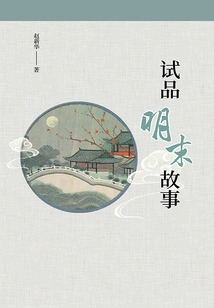
The Story of the Late Ming Dynasty
Literature试品明末故事
Zhao Xinhua
Among the ancient Chinese novels, the evaluation of "Jin Ping Mei" is the most diverse. Based on the content of the novel, the author mainly discusses three points: 1. "Jin Ping Mei" is a cynical book; 2. "Jin Ping Mei" is a mirror for people to understand society; 3. Starting from the economic situation is the correct way to discuss "Jin Ping Mei". This article has eight chapters in total: 1. The social environment in which the characters in "Jin Ping Mei" live; 2. Ximen Qing changing his coat and facial makeup; 3. Ximen Qing from a poor family to a nouveau riche; 4. Ximen Qing finding success under the protection of the government; 5. Ximen Qing being indulgent; 6. Ximen Qing's death in indulgence and the chaos in Ximen Mansion after his death; 7. Pan Jinlian who wanted to be a prostitute but was ruined; 8. Thoughts after the discussion of "Jin Ping Mei".
Among the ancient Chinese novels, the evaluation of "Jin Ping Mei" is the most diverse. Based on the content of the novel, the author mainly discusses three points: 1. "Jin Ping Mei" is a cynical book; 2. "Jin Ping Mei" is a mirror for people to understand society; 3. Starting from the economic situation is the correct way to discuss "Jin Ping Mei". This article has eight chapters in total: 1. The social environment in which the characters in "Jin Ping Mei" live; 2. Ximen Qing changing his coat and facial makeup; 3. Ximen Qing from a poor family to a nouveau riche; 4. Ximen Qing finding success under the protection of the government; 5. Ximen Qing being indulgent; 6. Ximen Qing's death in indulgence and the chaos in Ximen Mansion after his death; 7. Pan Jinlian who wanted to be a prostitute but was ruined; 8. Thoughts after the discussion of "Jin Ping Mei".
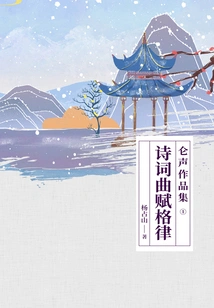
仑声作品集1:诗词曲赋格律
Yang Zhanshan
Poetry today seems to be considered to be seen and read. It is a pity that the ancient poetry style has been passed down, but the music score has not. The essence of the rhythm of poetry is precisely the rhythm. For example, the lyrics of Erhuang and Xipi Liushui in Peking Opera can be arbitrary, but the tune is the same. The words can be changed at will, but the tune cannot be changed. Since the tune has not been handed down, later people can only memorize and recite the text format. There are only two requirements for rhythm: the first is rhyme, and the second is tone. The ancients gave top priority to the rules of level and level. If there is no level of level and level, we should not talk about the rhythm of poetry. This article focuses on the rules of ping and lei, and the four forms of poetry, lyrics, music and fu. The rhythms of poetry and fu seem to be somewhat related, but the poetry is really rigorous. The music mostly follows the lyrics. Regarding Ping and Ze, I have clarified my views in this book. It is good for amateurs not to be too demanding about Ping and Ze. Moreover, the pronunciation of characters in ancient times was not based on today's northern dialects, with Beijing dialect as the standard. At that time, there were also dialects with different pronunciations. As for professionals and scholars, it's a different matter. They must pursue truth, accuracy, and beauty.
Poetry today seems to be considered to be seen and read. It is a pity that the ancient poetry style has been passed down, but the music score has not. The essence of the rhythm of poetry is precisely the rhythm. For example, the lyrics of Erhuang and Xipi Liushui in Peking Opera can be arbitrary, but the tune is the same. The words can be changed at will, but the tune cannot be changed. Since the tune has not been handed down, later people can only memorize and recite the text format. There are only two requirements for rhythm: the first is rhyme, and the second is tone. The ancients gave top priority to the rules of level and level. If there is no level of level and level, we should not talk about the rhythm of poetry. This article focuses on the rules of ping and lei, and the four forms of poetry, lyrics, music and fu. The rhythms of poetry and fu seem to be somewhat related, but the poetry is really rigorous. The music mostly follows the lyrics. Regarding Ping and Ze, I have clarified my views in this book. It is good for amateurs not to be too demanding about Ping and Ze. Moreover, the pronunciation of characters in ancient times was not based on today's northern dialects, with Beijing dialect as the standard. At that time, there were also dialects with different pronunciations. As for professionals and scholars, it's a different matter. They must pursue truth, accuracy, and beauty.
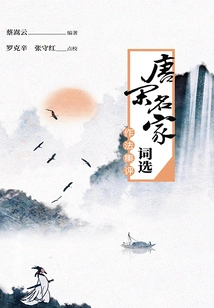
唐宋名家词选:作法集评
Compiled By Cai Songyun
"Selected Poems of Famous Writers of the Tang and Song Dynasties: A Collection of Commentary on Their Practices" is a collection of poems compiled and selected by Cai Songyun, a famous modern lyricist, when he was teaching at Henan University. It was originally used as a lecture course for the Ci Poetry Course of the Department of Chinese Language and Literature of Henan University, and was used as a classroom lecture in the 1930s. It needed to be compiled, and was revised repeatedly and carefully by the editor, and was finally compiled in 1948. The editor's friend Mr. Ha Litang copied it and prepared it for printing. Unfortunately, the editor passed away soon, and this carefully compiled anthology was not published. The purpose of this word selection is to teach people to learn words, so the word selection and exemplification focus on demonstrating the practice of filling words. The anthology is divided into three volumes, namely the Tang and Five Dynasties, the Northern Song Dynasty and the Southern Song Dynasty. The Tang and Five Dynasties selected 40 poems by 13 people, the Northern Song Dynasty selected 89 poems by 27 people, and the Southern Song Dynasty selected 89 poems by 36 people, totaling 76 poets and 218 poems. The book compiles hundreds of lyrics reviews from past dynasties and more than 100 self-written reviews. It provides a detailed explanation and evaluation of the writing methods of the selected classic works by famous writers in the Tang, Five Dynasties and Song Dynasties. It also conducts in-depth discussions and reveals the writing methods, syntax, composition and other rules of the selected words, so that scholars can use this collection to create and appreciate.
"Selected Poems of Famous Writers of the Tang and Song Dynasties: A Collection of Commentary on Their Practices" is a collection of poems compiled and selected by Cai Songyun, a famous modern lyricist, when he was teaching at Henan University. It was originally used as a lecture course for the Ci Poetry Course of the Department of Chinese Language and Literature of Henan University, and was used as a classroom lecture in the 1930s. It needed to be compiled, and was revised repeatedly and carefully by the editor, and was finally compiled in 1948. The editor's friend Mr. Ha Litang copied it and prepared it for printing. Unfortunately, the editor passed away soon, and this carefully compiled anthology was not published. The purpose of this word selection is to teach people to learn words, so the word selection and exemplification focus on demonstrating the practice of filling words. The anthology is divided into three volumes, namely the Tang and Five Dynasties, the Northern Song Dynasty and the Southern Song Dynasty. The Tang and Five Dynasties selected 40 poems by 13 people, the Northern Song Dynasty selected 89 poems by 27 people, and the Southern Song Dynasty selected 89 poems by 36 people, totaling 76 poets and 218 poems. The book compiles hundreds of lyrics reviews from past dynasties and more than 100 self-written reviews. It provides a detailed explanation and evaluation of the writing methods of the selected classic works by famous writers in the Tang, Five Dynasties and Song Dynasties. It also conducts in-depth discussions and reveals the writing methods, syntax, composition and other rules of the selected words, so that scholars can use this collection to create and appreciate.
Reading "a Dream of Red Mansions
Literature正读《红楼梦》
Zhang Zhiguo
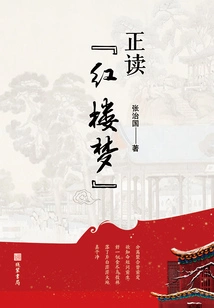
There is no doubt about the artistic achievement of "Dream of Red Mansions", so it has been interpreted by countless people at home and abroad, both at home and abroad. However, these interpretations are often polarized, or influenced by class struggle, the characters are divided into different classes for interpretation, which leads to the facial expression of the characters; or they are interpreted with an extreme emotion. Although this is interesting, it often caters to people's low taste. This is not only a blasphemy to the great book and author, but also irresponsible to the readers. We know that "A Dream of Red Mansions" is Cao Gong's passionate work. It is no exaggeration to say that he spent his life writing this book. Therefore, the author of this article strives to avoid these polarized interpretations and use a neutral and peaceful mentality to analyze the characters in the book based on human nature and human nature. Restore the characters in the book to the world full of humanity. Then use the laws of heaven and human relations to evaluate each person's character, hoping that every reader can gain something from it. "Dengtuzi·Luxe Fu" once said, "If the son of the master is increased by one point, it will be too long; if it is reduced by one point, it will be too short; if it is powdered, it will be too white; if it is applied with red, it will be too red." Although my articles have not reached this level, my heart has been working towards it. Share this with readers.
There is no doubt about the artistic achievement of "Dream of Red Mansions", so it has been interpreted by countless people at home and abroad, both at home and abroad. However, these interpretations are often polarized, or influenced by class struggle, the characters are divided into different classes for interpretation, which leads to the facial expression of the characters; or they are interpreted with an extreme emotion. Although this is interesting, it often caters to people's low taste. This is not only a blasphemy to the great book and author, but also irresponsible to the readers. We know that "A Dream of Red Mansions" is Cao Gong's passionate work. It is no exaggeration to say that he spent his life writing this book. Therefore, the author of this article strives to avoid these polarized interpretations and use a neutral and peaceful mentality to analyze the characters in the book based on human nature and human nature. Restore the characters in the book to the world full of humanity. Then use the laws of heaven and human relations to evaluate each person's character, hoping that every reader can gain something from it. "Dengtuzi·Luxe Fu" once said, "If the son of the master is increased by one point, it will be too long; if it is reduced by one point, it will be too short; if it is powdered, it will be too white; if it is applied with red, it will be too red." Although my articles have not reached this level, my heart has been working towards it. Share this with readers.
The Red Mansion is a Political Book
Literature红楼是本政治书
Hong Bing
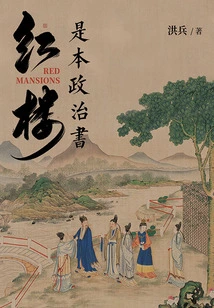
Wherever there are people, there are rivers and lakes, and people are rivers and lakes. The brothers and sisters hiding in the back garden of Jia's house are no exception. Behind the romance of "A Dream of Red Mansions" is a cruel and thrilling secret war and power struggle. In a sense, "Dream of Red Mansions" is a mirror of today's society. We are experiencing the struggle here at any time... To a certain extent, reformers are the embodiment of heroes! Jia Tanchun in "A Dream of Red Mansions" led this vigorous "Prague Spring"-style reform in Rongguo Mansion, but he could only end up marrying far away. Although Tanchun is a fictional character, there are similar scenes both at home and abroad throughout the ages. No exception. Shang Yang's reforms laid the foundation for Qin to dominate the world, but he suffered the torture of breaking a car; Wang Anshi's reforms were blocked by Sima Guang and other conservatives, and they have been both criticized and praised in the past thousand years; Dubcek, who led the real "Prague Spring", sadly stepped down due to the intervention of the Soviet Union. Perhaps this is the tragedy of the common fate of reformers.
Wherever there are people, there are rivers and lakes, and people are rivers and lakes. The brothers and sisters hiding in the back garden of Jia's house are no exception. Behind the romance of "A Dream of Red Mansions" is a cruel and thrilling secret war and power struggle. In a sense, "Dream of Red Mansions" is a mirror of today's society. We are experiencing the struggle here at any time... To a certain extent, reformers are the embodiment of heroes! Jia Tanchun in "A Dream of Red Mansions" led this vigorous "Prague Spring"-style reform in Rongguo Mansion, but he could only end up marrying far away. Although Tanchun is a fictional character, there are similar scenes both at home and abroad throughout the ages. No exception. Shang Yang's reforms laid the foundation for Qin to dominate the world, but he suffered the torture of breaking a car; Wang Anshi's reforms were blocked by Sima Guang and other conservatives, and they have been both criticized and praised in the past thousand years; Dubcek, who led the real "Prague Spring", sadly stepped down due to the intervention of the Soviet Union. Perhaps this is the tragedy of the common fate of reformers.
Fourteen Poets
Literature诗人十四个
Huang Xiaodan
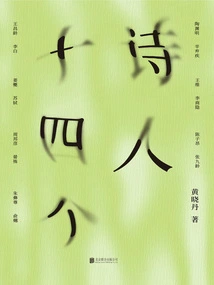
[Ye Jiaying, recommended by CCTV, 2019 Douban Literature of the Year. People who are sincere at heart can always find their own way. Together with Huang Xiaodan, walk into the spring mountains and late nights of fourteen poets: Wang Wei, Tao Yuanming, Li Bai, Su Shi... Fourteen poets, seven spiritual themes, light and bright, easy to read and healing. "Fourteen Poets" is a classic poetry treatise written by Huang Xiaodan combined with modern psychology. Focusing on the image of "spring" and the experience of "youth", ancient poems are used to explain the five life events of friendship, loneliness, lust, death and separation, and the two life attitudes of desire and acceptance. The book is divided into seven chapters based on these themes. Each chapter selects two poets to compare and present different interpretations of poets and poetry, showing the contradictions and possibilities of life - people with sincere hearts can always find their own path. The spiritual difficulties and confusion faced by modern people have been vividly expressed and puzzled by poets in their poems for thousands of years. They and their poems are like the moonlight on a spring night, illuminating us in future generations and echoing countless moments in our lives.
[Ye Jiaying, recommended by CCTV, 2019 Douban Literature of the Year. People who are sincere at heart can always find their own way. Together with Huang Xiaodan, walk into the spring mountains and late nights of fourteen poets: Wang Wei, Tao Yuanming, Li Bai, Su Shi... Fourteen poets, seven spiritual themes, light and bright, easy to read and healing. "Fourteen Poets" is a classic poetry treatise written by Huang Xiaodan combined with modern psychology. Focusing on the image of "spring" and the experience of "youth", ancient poems are used to explain the five life events of friendship, loneliness, lust, death and separation, and the two life attitudes of desire and acceptance. The book is divided into seven chapters based on these themes. Each chapter selects two poets to compare and present different interpretations of poets and poetry, showing the contradictions and possibilities of life - people with sincere hearts can always find their own path. The spiritual difficulties and confusion faced by modern people have been vividly expressed and puzzled by poets in their poems for thousands of years. They and their poems are like the moonlight on a spring night, illuminating us in future generations and echoing countless moments in our lives.
There is Truth in the Poem
Literature诗中有真意
Luo Yuming
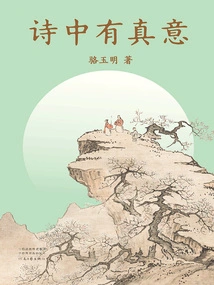
Luo Yuming, a "hard-to-find" teacher in the Chinese Department of Fudan University, will take you through three thousand years of Chinese poetry and experience each scene where poetry blooms. It selects seventy-four ancient poems from the pre-Qin Dynasty to the Ming Dynasty, from Tao Yuanming's leisurely retreat to the countryside, to Du Fu's deep compassion for the country and the people; from the majestic and majestic desert in Wang Wei's works, to Li Bai's homesickness when he listens to the flute on a spring night... Using poetry as a carrier, it leads us to dialogue with poets of different eras and enter the vast poetic world. From the riverside of "Guan Guan Ju Jiu" to the border of "Lonely Smoke in the Desert"; from the huge waves of "Eastern Jieshi" to the solitary boat in "Lingding Ocean" - the three thousand years of Chinese poetry slowly unfolds. This is a spiritual river, and every word reveals the "true meaning"!
Luo Yuming, a "hard-to-find" teacher in the Chinese Department of Fudan University, will take you through three thousand years of Chinese poetry and experience each scene where poetry blooms. It selects seventy-four ancient poems from the pre-Qin Dynasty to the Ming Dynasty, from Tao Yuanming's leisurely retreat to the countryside, to Du Fu's deep compassion for the country and the people; from the majestic and majestic desert in Wang Wei's works, to Li Bai's homesickness when he listens to the flute on a spring night... Using poetry as a carrier, it leads us to dialogue with poets of different eras and enter the vast poetic world. From the riverside of "Guan Guan Ju Jiu" to the border of "Lonely Smoke in the Desert"; from the huge waves of "Eastern Jieshi" to the solitary boat in "Lingding Ocean" - the three thousand years of Chinese poetry slowly unfolds. This is a spiritual river, and every word reveals the "true meaning"!
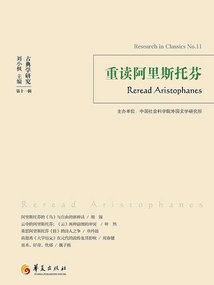
重读阿里斯托芬(古典学研究第十一辑)
Liu Xiaofeng Editor-in-chief He Fangying
"Classics Research" is sponsored by the Institute of Foreign Literature, Chinese Academy of Social Sciences. It is dedicated to the study and interpretation of handed down classics of classical civilization. It aims to promote the re-understanding of Chinese and Western classics by Chinese academic circles, promote mutual learning between Chinese and Western classical civilizations, strive to integrate literature, history, philosophy and classical philology, and study and interpret classic texts from ancient China, ancient Greece and Rome, modern Europe, and even handed down classics from ancient Hebrew and Arabic civilizations. This book is the 11th volume of Classical Studies, with the theme of Aristophanes, the most important comedy writer in ancient Greece. Hu Gao's thesis focuses on Aristophanes' "The Birds" and presents a special group of people represented by Pesetelos and their political actions through playful writing and vivid depictions that touch the soul. Ye Ran's thesis is based on Strauss's research on "Clouds" and promotes the discussion of the surface and deep intentions of "Clouds", showing that there is a conflict between the two intentions, and Aristophanes actually maintains a correct purpose with an unexamined moderation. Zhang Danchen's thesis focuses on the quarrel between the two poets in "Frog", observing Aristophanes' use of wind and air imagery, and rethinking this poet's dispute from a new perspective. Wang Ruixue's paper focuses on the parody of Euripides' Telephus in Aristophanes' "The Mother of God". On the one hand, it explores the advancement of the canonization process of Euripides' drama. On the other hand, it also shows the possibility of interpreting the deconstruction of drama by comedy's identity performance in the new performance context.
"Classics Research" is sponsored by the Institute of Foreign Literature, Chinese Academy of Social Sciences. It is dedicated to the study and interpretation of handed down classics of classical civilization. It aims to promote the re-understanding of Chinese and Western classics by Chinese academic circles, promote mutual learning between Chinese and Western classical civilizations, strive to integrate literature, history, philosophy and classical philology, and study and interpret classic texts from ancient China, ancient Greece and Rome, modern Europe, and even handed down classics from ancient Hebrew and Arabic civilizations. This book is the 11th volume of Classical Studies, with the theme of Aristophanes, the most important comedy writer in ancient Greece. Hu Gao's thesis focuses on Aristophanes' "The Birds" and presents a special group of people represented by Pesetelos and their political actions through playful writing and vivid depictions that touch the soul. Ye Ran's thesis is based on Strauss's research on "Clouds" and promotes the discussion of the surface and deep intentions of "Clouds", showing that there is a conflict between the two intentions, and Aristophanes actually maintains a correct purpose with an unexamined moderation. Zhang Danchen's thesis focuses on the quarrel between the two poets in "Frog", observing Aristophanes' use of wind and air imagery, and rethinking this poet's dispute from a new perspective. Wang Ruixue's paper focuses on the parody of Euripides' Telephus in Aristophanes' "The Mother of God". On the one hand, it explores the advancement of the canonization process of Euripides' drama. On the other hand, it also shows the possibility of interpreting the deconstruction of drama by comedy's identity performance in the new performance context.
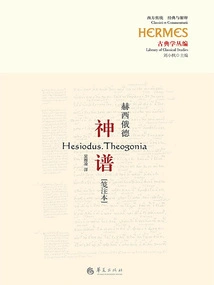
神谱(西方传统:经典与解释)
(ancient Greece) Hesiod
Hesiod's "Theogony" describes the birth of the universe and the gods, telling the history from the birth of the earth god Gaia until the Olympian gods ruled the world. "Theogony" is the only complete Theogony poem that remains so far. It is the first to systematically describe the order of the gods in ancient Greece, and is more systematic than Homer's poems. Although the title of "Theogony" is not original, the poem mainly talks about the family history of the Zeus Gods. Even if it involves the formation of the universe, it is also attached to the theme of the birth of the Zeus Gods. Although Theogony is only about the length of one volume of The Iliad, it is nevertheless a great poem. The content of "Theogony" is complex, with jumping themes and constant changes. The internal connections are obscure and mysterious. Many passages have ambiguous meanings. Many verses are full of ambiguity, which is incomparable with the clarity of Homer's poems. For classics such as "Theogony" that have important classic status but seem to be "broken" in terms of meaning, only a Chinese translation will inevitably make it difficult for readers to understand, so it is necessary to read with the help of commentaries. This "Theogony [Annotated Edition]" is such a reading book. "Theogony [Annotated Edition]" is divided into three parts. First, it introduces the life experience of the poet Hesiod and the main ideological content and version circulation of "Theogony"; secondly, it is a complete translation of the original poem, only accompanied by word explanatory notes in the form of footnotes; finally, it is as detailed as possible annotations and paraphrases.
Hesiod's "Theogony" describes the birth of the universe and the gods, telling the history from the birth of the earth god Gaia until the Olympian gods ruled the world. "Theogony" is the only complete Theogony poem that remains so far. It is the first to systematically describe the order of the gods in ancient Greece, and is more systematic than Homer's poems. Although the title of "Theogony" is not original, the poem mainly talks about the family history of the Zeus Gods. Even if it involves the formation of the universe, it is also attached to the theme of the birth of the Zeus Gods. Although Theogony is only about the length of one volume of The Iliad, it is nevertheless a great poem. The content of "Theogony" is complex, with jumping themes and constant changes. The internal connections are obscure and mysterious. Many passages have ambiguous meanings. Many verses are full of ambiguity, which is incomparable with the clarity of Homer's poems. For classics such as "Theogony" that have important classic status but seem to be "broken" in terms of meaning, only a Chinese translation will inevitably make it difficult for readers to understand, so it is necessary to read with the help of commentaries. This "Theogony [Annotated Edition]" is such a reading book. "Theogony [Annotated Edition]" is divided into three parts. First, it introduces the life experience of the poet Hesiod and the main ideological content and version circulation of "Theogony"; secondly, it is a complete translation of the original poem, only accompanied by word explanatory notes in the form of footnotes; finally, it is as detailed as possible annotations and paraphrases.
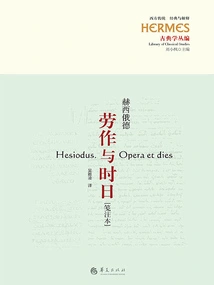
劳作与时日:笺注本(西方传统:经典与解释)
(ancient Greece) Hesiod
"Labour and Time" is a long poem by the ancient Greek poet Hesiod, with a total of 828 lines. "Work and Time" talks about work and time, but it talks most about justice. Hesiod was a master storyteller, and he told a series of righteous stories in his poems. The story of Dicke, the goddess of justice, the story of Prometheus and Pandora, the myth of the human race, the story of the kite and the warbler, the story of the God of Discord and the God of Rumor, as well as the past events of his father and the family property dispute between him and his younger brother. Meditations on justice weave in and out of all these narratives. "Labour and Days" is defined as a didactic poem in which he spoke publicly in front of the whole nation to advise his brothers. The problem he needs to solve is not only the lost youth, but also the corruption of the city-state. The difficulties Hesiod encountered in the 8th century BC are ultimately the eternal dilemmas faced by lovers of wisdom in all ages. This book is an annotated version of "Labor and Time". The whole book is divided into three parts: translation, annotations and explanatory notes.
"Labour and Time" is a long poem by the ancient Greek poet Hesiod, with a total of 828 lines. "Work and Time" talks about work and time, but it talks most about justice. Hesiod was a master storyteller, and he told a series of righteous stories in his poems. The story of Dicke, the goddess of justice, the story of Prometheus and Pandora, the myth of the human race, the story of the kite and the warbler, the story of the God of Discord and the God of Rumor, as well as the past events of his father and the family property dispute between him and his younger brother. Meditations on justice weave in and out of all these narratives. "Labour and Days" is defined as a didactic poem in which he spoke publicly in front of the whole nation to advise his brothers. The problem he needs to solve is not only the lost youth, but also the corruption of the city-state. The difficulties Hesiod encountered in the 8th century BC are ultimately the eternal dilemmas faced by lovers of wisdom in all ages. This book is an annotated version of "Labor and Time". The whole book is divided into three parts: translation, annotations and explanatory notes.
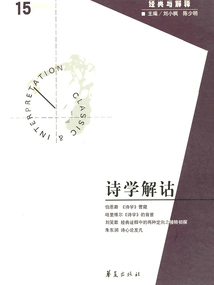
诗学解诂(“经典与解释”第15期)
Liu Xiaofeng Editor-in-chief Chen Shaoming
In "Poetics" we can see how close the understanding of great poets is to that of philosophers. Both Plato and Aristotle said that philosophy begins with wonder, starting from common opinions and recognizing the shortcomings of these opinions. Great poets elicit our surprise by making events happen that defy common opinion and expectation. Tragedy exists not only as a part of political life, but also as a part of the political whole. The perfection of tragedy also depends on how effective it is in connecting human life with the greater whole, that is, nature.
In "Poetics" we can see how close the understanding of great poets is to that of philosophers. Both Plato and Aristotle said that philosophy begins with wonder, starting from common opinions and recognizing the shortcomings of these opinions. Great poets elicit our surprise by making events happen that defy common opinion and expectation. Tragedy exists not only as a part of political life, but also as a part of the political whole. The perfection of tragedy also depends on how effective it is in connecting human life with the greater whole, that is, nature.
俄耳甫斯祷歌(西方传统:经典与解释)
Translation And Annotation By Wu Yaling
Like Homer and Hesiod, Orpheus was a poet who could compose songs. Because no works have survived, his reputation is not as good as that of Homer and Hesiod. In the fifteenth century, European classical scholars unearthed and compiled 88 Orphic hymns from historical documents that had been lost, becoming the only relatively systematic original document of Orphic poetry, which is extremely precious. These prayer songs appeared around the second to third centuries AD and were dedicated to different ancient Greek gods. From these prayer songs, we can see a large family of gods that the ancient Greeks worshiped together. Most of these gods are also found in the works of Homer and Hesiod. Readers may benefit more from comparing them with Homer, Hesiod, Pindar, and Plato.
Like Homer and Hesiod, Orpheus was a poet who could compose songs. Because no works have survived, his reputation is not as good as that of Homer and Hesiod. In the fifteenth century, European classical scholars unearthed and compiled 88 Orphic hymns from historical documents that had been lost, becoming the only relatively systematic original document of Orphic poetry, which is extremely precious. These prayer songs appeared around the second to third centuries AD and were dedicated to different ancient Greek gods. From these prayer songs, we can see a large family of gods that the ancient Greeks worshiped together. Most of these gods are also found in the works of Homer and Hesiod. Readers may benefit more from comparing them with Homer, Hesiod, Pindar, and Plato.
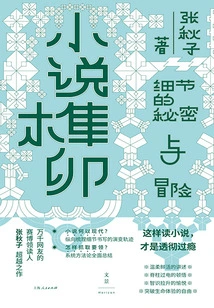
Novel Mortise and Tenon
Literature小说榫卯
Zhang Qiuzi
Why are we so obsessed with details? How have details evolved in the history of literature? When perusing a text, which fragments are worth sifting into details? What kind of mystery is hidden in the actions, environment, wrong sentences, counter-logic, punctuation marks, and passive voice? Why did Chekhov ask the doctor to keep lighting matches? What does this have to do with our desires? Why did a seemingly accidental date become the fate of Marquez's character? After a long working day, Kafka thought that K. Would still work overtime on Sunday? Details constitute the charm of literature and mark the reader's personality. The book is divided into three parts. "A Brief History of Details" is divided into two parts, sorting out the details in literary history according to the chronological context, highlighting the development and evolution of details in different eras. The first part talks from ancient times to the 18th century, and the second part talks from the 19th century to the present, explaining the past and present life of the details of the novel, and vertically outlining the narrative turn of modern novels. The title of "ABC of Details" is modeled after Pound's "ABC of Literature", which classifies, organizes and displays details in literature, focusing on explaining how to identify details in a huge text. The special chapter discusses the detailed connotations of important writers such as Flaubert, Marquez, and Kafka in the same way as the previous article.
Why are we so obsessed with details? How have details evolved in the history of literature? When perusing a text, which fragments are worth sifting into details? What kind of mystery is hidden in the actions, environment, wrong sentences, counter-logic, punctuation marks, and passive voice? Why did Chekhov ask the doctor to keep lighting matches? What does this have to do with our desires? Why did a seemingly accidental date become the fate of Marquez's character? After a long working day, Kafka thought that K. Would still work overtime on Sunday? Details constitute the charm of literature and mark the reader's personality. The book is divided into three parts. "A Brief History of Details" is divided into two parts, sorting out the details in literary history according to the chronological context, highlighting the development and evolution of details in different eras. The first part talks from ancient times to the 18th century, and the second part talks from the 19th century to the present, explaining the past and present life of the details of the novel, and vertically outlining the narrative turn of modern novels. The title of "ABC of Details" is modeled after Pound's "ABC of Literature", which classifies, organizes and displays details in literature, focusing on explaining how to identify details in a huge text. The special chapter discusses the detailed connotations of important writers such as Flaubert, Marquez, and Kafka in the same way as the previous article.
侦探小说:一场跨越180年的理智游戏(清华·通识·写作)
Mao Jun
This book first traces the origin and form of detective novels and explores their characteristics of both popular literature entertainment and high-level literature social concern; secondly, it introduces the historical periods, genres, typical writers and works of classical detective works, and analyzes how detective works embody and reflect on the value of human reason; then, it explores the human nature and social collective behind the themes of crime and punishment in detective works. The relationship between consciousness and moral conscience; the depiction of the crisis of modernity in detective works, especially the social phenomenon in the urban context; in addition, the secret room conspiracies in detective novels are introduced through typical works, and the roles of partners and rivals in detective works are analyzed, and how they reflect the soundness of human nature; finally, the subculture derived from detective literature and its sociological and educational value are discussed.
This book first traces the origin and form of detective novels and explores their characteristics of both popular literature entertainment and high-level literature social concern; secondly, it introduces the historical periods, genres, typical writers and works of classical detective works, and analyzes how detective works embody and reflect on the value of human reason; then, it explores the human nature and social collective behind the themes of crime and punishment in detective works. The relationship between consciousness and moral conscience; the depiction of the crisis of modernity in detective works, especially the social phenomenon in the urban context; in addition, the secret room conspiracies in detective novels are introduced through typical works, and the roles of partners and rivals in detective works are analyzed, and how they reflect the soundness of human nature; finally, the subculture derived from detective literature and its sociological and educational value are discussed.
如何阅读蒙田(大家读经典)
(uk) Terence Cave
This book focuses on the classic chapters of the philosopher Montaigne, and through the interpretation of the famous thinker Terence Cave, his classic theory once again enters the public eye. Montaigne was a French thinker during the Renaissance. He has extensive experience, broad thinking, and unrestrained writing. His prose has a great influence on Francis Bacon, Shakespeare, etc. Terence Cave discusses the "subject", "self" and 10 other key themes in Montaigne's works, and interprets "Montaigne's Essays" from a cognitive level.
This book focuses on the classic chapters of the philosopher Montaigne, and through the interpretation of the famous thinker Terence Cave, his classic theory once again enters the public eye. Montaigne was a French thinker during the Renaissance. He has extensive experience, broad thinking, and unrestrained writing. His prose has a great influence on Francis Bacon, Shakespeare, etc. Terence Cave discusses the "subject", "self" and 10 other key themes in Montaigne's works, and interprets "Montaigne's Essays" from a cognitive level.
文人与明清白话小说
Fu Chengzhou
This book deeply explores the evolution of the writing methods of vernacular novels in the Ming and Qing dynasties and the contributions of literati to the vernacular novels of the Ming and Qing dynasties. Vernacular novels originated from the art of speaking and have evolved over hundreds of years. The role of literati in it is undoubted. The three compilation methods of Zhanghui novels are generational collective creation, literati supplementation and literati original creation. Their creative characteristics and the contributions of literati writers are very different. In the early chapter novels, literati writers used the materials of their predecessors and imitated the art of speaking to create the genre of chapter novels. The supplementary chapters of chapter novels drew on the characters and plots of the original books and imitated the style of the original books. The overall achievements were not high. There are also some writers who borrowed other people's wine glasses to pour themselves. Along the way, some good works have been written; the chapter novels created by literati have brought new changes to this genre. The characters and plots are derived from real life, and the ideas are the independent thinking of the novelist. They represent the development direction of novel creation and push chapter novels to their peak. This result provides a new interpretation and analysis of the works of some novel writers, such as the type of adventure novels that existed in the chapter novels of the Ming and Qing Dynasties. "Jin Ping Mei Ci Hua" is a supplement to the chapter novels. Baoyu's rebellious character is directly related to his adolescence. This has not been published before and is quite influential in the academic world.
This book deeply explores the evolution of the writing methods of vernacular novels in the Ming and Qing dynasties and the contributions of literati to the vernacular novels of the Ming and Qing dynasties. Vernacular novels originated from the art of speaking and have evolved over hundreds of years. The role of literati in it is undoubted. The three compilation methods of Zhanghui novels are generational collective creation, literati supplementation and literati original creation. Their creative characteristics and the contributions of literati writers are very different. In the early chapter novels, literati writers used the materials of their predecessors and imitated the art of speaking to create the genre of chapter novels. The supplementary chapters of chapter novels drew on the characters and plots of the original books and imitated the style of the original books. The overall achievements were not high. There are also some writers who borrowed other people's wine glasses to pour themselves. Along the way, some good works have been written; the chapter novels created by literati have brought new changes to this genre. The characters and plots are derived from real life, and the ideas are the independent thinking of the novelist. They represent the development direction of novel creation and push chapter novels to their peak. This result provides a new interpretation and analysis of the works of some novel writers, such as the type of adventure novels that existed in the chapter novels of the Ming and Qing Dynasties. "Jin Ping Mei Ci Hua" is a supplement to the chapter novels. Baoyu's rebellious character is directly related to his adolescence. This has not been published before and is quite influential in the academic world.