Library
Browse and search books
51,874 novels found
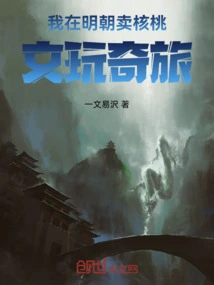
我在明朝卖核桃,文玩奇旅
One Article Yi Zhe
A boy who plays literary works accidentally travels through time and sells walnuts in the Ming Dynasty. Fate is also his destiny. The young man who plays literary works breaks into the Ming Dynasty and creates a different world.
A boy who plays literary works accidentally travels through time and sells walnuts in the Ming Dynasty. Fate is also his destiny. The young man who plays literary works breaks into the Ming Dynasty and creates a different world.
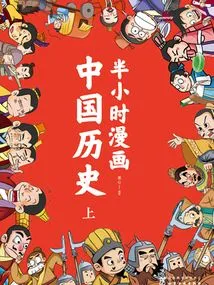
半小时漫画中国历史(上)
Compiled By Childlike Innocence
The "Super Interesting Chinese Classics (Comic Version)" series first introduces the original texts and interpretations of Chinese classics in short words, and then explains the meanings expressed in the Chinese classics in the form of exaggerated and humorous comic stories. It can easily stimulate children's interest in learning and allow children to absorb the essence of Chinese classics in a relaxed and pleasant atmosphere. The complete set includes 10 volumes of "Thirty-six Stratagems", "Sun Tzu's Art of War", "Three Character Classic", "The Analects of Confucius", "Thirty-Six Strategies" (Part 1), "Upper and Lower Five Thousand Years (Part 2)", "Historical Records (Part 1)", "Historical Records (Part 2)", "Records of the Eastern Zhou Dynasties (Part 1)" and "Records of the Eastern Zhou Dynasties (Part 2)".
The "Super Interesting Chinese Classics (Comic Version)" series first introduces the original texts and interpretations of Chinese classics in short words, and then explains the meanings expressed in the Chinese classics in the form of exaggerated and humorous comic stories. It can easily stimulate children's interest in learning and allow children to absorb the essence of Chinese classics in a relaxed and pleasant atmosphere. The complete set includes 10 volumes of "Thirty-six Stratagems", "Sun Tzu's Art of War", "Three Character Classic", "The Analects of Confucius", "Thirty-Six Strategies" (Part 1), "Upper and Lower Five Thousand Years (Part 2)", "Historical Records (Part 1)", "Historical Records (Part 2)", "Records of the Eastern Zhou Dynasties (Part 1)" and "Records of the Eastern Zhou Dynasties (Part 2)".
巴勒克拉夫全球史研究(中国社会科学院文库·历史考古研究系列)
Dong Xinjie
For the first time, this book systematically sorts out the research practice of British historian Geoffrey Barraclough in the field of global history: discussing what global history is; analyzing Barraclough's proposal of global history, European history from the perspective of global history, exploration of global history theories and methods, and the macro interpretation framework of global history. ; Then, on the basis of taking the EU as an example to examine the reality of the nature of international politics in the era of economic globalization, and on the theoretical basis of studying global history from Marx's theory of world history, Barraclough, as the pioneer of Western global history in the mid-20th century, summarizes the academic contribution to the development of global history and its historical limitations.
For the first time, this book systematically sorts out the research practice of British historian Geoffrey Barraclough in the field of global history: discussing what global history is; analyzing Barraclough's proposal of global history, European history from the perspective of global history, exploration of global history theories and methods, and the macro interpretation framework of global history. ; Then, on the basis of taking the EU as an example to examine the reality of the nature of international politics in the era of economic globalization, and on the theoretical basis of studying global history from Marx's theory of world history, Barraclough, as the pioneer of Western global history in the mid-20th century, summarizes the academic contribution to the development of global history and its historical limitations.
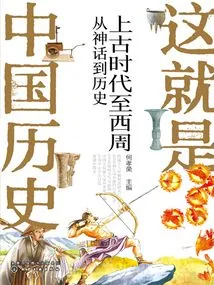
上古时代至西周:从神话到历史(这就是中国历史)
Editor-in-chief He Xiaorong
This series of books records the history from myths and legends: Xia, Shang, Western Zhou - to the end of the Qing Dynasty. It uses a combination of hand-painted style and historical pictures, and selects nearly a thousand color pictures and photos of precious cultural relics. After rigorous research, it uses realistic techniques to express historical events and character costumes, allowing children to be immersed in the scenes, conveying correct historical knowledge, and enriching children's aesthetic experience. This book uses experience and language that children can understand to describe the people, events, times, places, and things that have had a profound impact on Chinese history. It makes the originally abstract and difficult concepts or complex backgrounds lively and interesting, and establishes a clear concept of China's official history for children.
This series of books records the history from myths and legends: Xia, Shang, Western Zhou - to the end of the Qing Dynasty. It uses a combination of hand-painted style and historical pictures, and selects nearly a thousand color pictures and photos of precious cultural relics. After rigorous research, it uses realistic techniques to express historical events and character costumes, allowing children to be immersed in the scenes, conveying correct historical knowledge, and enriching children's aesthetic experience. This book uses experience and language that children can understand to describe the people, events, times, places, and things that have had a profound impact on Chinese history. It makes the originally abstract and difficult concepts or complex backgrounds lively and interesting, and establishes a clear concept of China's official history for children.
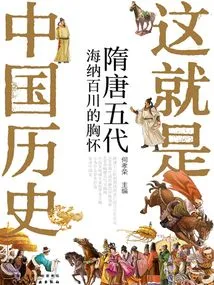
隋唐五代:海纳百川的胸怀(这就是中国历史)
Editor-in-chief He Xiaorong
This series of books records the history from myths and legends: Xia, Shang, Western Zhou - to the end of the Qing Dynasty. It uses a combination of hand-painted style and historical pictures, and selects nearly a thousand color pictures and photos of precious cultural relics. After rigorous research, it uses realistic techniques to express historical events and character costumes, allowing children to be immersed in the scenes, conveying correct historical knowledge, and enriching children's aesthetic experience. This book uses experience and language that children can understand to describe the people, events, times, places, and things that have had a profound impact on Chinese history. It makes the originally abstract and difficult concepts or complex backgrounds lively and interesting, and establishes a clear concept of China's official history for children.
This series of books records the history from myths and legends: Xia, Shang, Western Zhou - to the end of the Qing Dynasty. It uses a combination of hand-painted style and historical pictures, and selects nearly a thousand color pictures and photos of precious cultural relics. After rigorous research, it uses realistic techniques to express historical events and character costumes, allowing children to be immersed in the scenes, conveying correct historical knowledge, and enriching children's aesthetic experience. This book uses experience and language that children can understand to describe the people, events, times, places, and things that have had a profound impact on Chinese history. It makes the originally abstract and difficult concepts or complex backgrounds lively and interesting, and establishes a clear concept of China's official history for children.
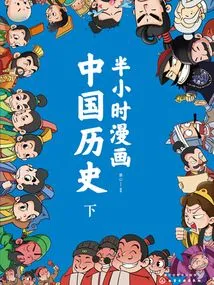
半小时漫画中国历史(下)
Compiled By Childlike Innocence
The "Super Interesting Chinese Classics (Comic Version)" series first introduces the original texts and interpretations of Chinese classics in short words, and then explains the meanings expressed in the Chinese classics in the form of exaggerated and humorous comic stories. It can easily stimulate children's interest in learning and allow children to absorb the essence of Chinese classics in a relaxed and pleasant atmosphere. The complete set includes 10 volumes of "Thirty-six Stratagems", "Sun Tzu's Art of War", "Three Character Classic", "The Analects of Confucius", "Thirty-Six Strategies" (Part 1), "Upper and Lower Five Thousand Years (Part 2)", "Historical Records (Part 1)", "Historical Records (Part 2)", "Records of the Eastern Zhou Dynasties (Part 1)" and "Records of the Eastern Zhou Dynasties (Part 2)".
The "Super Interesting Chinese Classics (Comic Version)" series first introduces the original texts and interpretations of Chinese classics in short words, and then explains the meanings expressed in the Chinese classics in the form of exaggerated and humorous comic stories. It can easily stimulate children's interest in learning and allow children to absorb the essence of Chinese classics in a relaxed and pleasant atmosphere. The complete set includes 10 volumes of "Thirty-six Stratagems", "Sun Tzu's Art of War", "Three Character Classic", "The Analects of Confucius", "Thirty-Six Strategies" (Part 1), "Upper and Lower Five Thousand Years (Part 2)", "Historical Records (Part 1)", "Historical Records (Part 2)", "Records of the Eastern Zhou Dynasties (Part 1)" and "Records of the Eastern Zhou Dynasties (Part 2)".
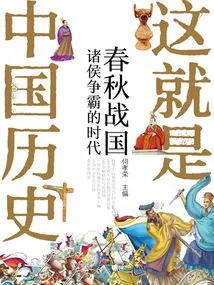
春秋战国:诸侯争霸的时代(这就是中国历史)
Editor-in-chief He Xiaorong
This series of books records the history from myths and legends: Xia, Shang, Western Zhou - to the end of the Qing Dynasty. It uses a combination of hand-painted style and historical pictures, and selects nearly a thousand color pictures and photos of precious cultural relics. After rigorous research, it uses realistic techniques to express historical events and character costumes, allowing children to be immersed in the scenes, conveying correct historical knowledge, and enriching children's aesthetic experience. This book uses experience and language that children can understand to describe the people, events, times, places, and things that have had a profound impact on Chinese history. It makes the originally abstract and difficult concepts or complex backgrounds lively and interesting, and establishes a clear concept of China's official history for children.
This series of books records the history from myths and legends: Xia, Shang, Western Zhou - to the end of the Qing Dynasty. It uses a combination of hand-painted style and historical pictures, and selects nearly a thousand color pictures and photos of precious cultural relics. After rigorous research, it uses realistic techniques to express historical events and character costumes, allowing children to be immersed in the scenes, conveying correct historical knowledge, and enriching children's aesthetic experience. This book uses experience and language that children can understand to describe the people, events, times, places, and things that have had a profound impact on Chinese history. It makes the originally abstract and difficult concepts or complex backgrounds lively and interesting, and establishes a clear concept of China's official history for children.
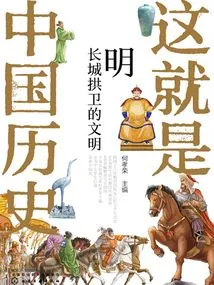
明:长城拱卫的文明(这就是中国历史)
Editor-in-chief He Xiaorong
This series of books records the history from myths and legends: Xia, Shang, Western Zhou - to the end of the Qing Dynasty. It uses a combination of hand-painted style and historical pictures, and selects nearly a thousand color pictures and photos of precious cultural relics. After rigorous research, it uses realistic techniques to express historical events and character costumes, allowing children to be immersed in the scenes, conveying correct historical knowledge, and enriching children's aesthetic experience. This book uses experience and language that children can understand to describe the people, events, times, places, and things that have had a profound impact on Chinese history. It makes the originally abstract and difficult concepts or complex backgrounds lively and interesting, and establishes a clear concept of China's official history for children.
This series of books records the history from myths and legends: Xia, Shang, Western Zhou - to the end of the Qing Dynasty. It uses a combination of hand-painted style and historical pictures, and selects nearly a thousand color pictures and photos of precious cultural relics. After rigorous research, it uses realistic techniques to express historical events and character costumes, allowing children to be immersed in the scenes, conveying correct historical knowledge, and enriching children's aesthetic experience. This book uses experience and language that children can understand to describe the people, events, times, places, and things that have had a profound impact on Chinese history. It makes the originally abstract and difficult concepts or complex backgrounds lively and interesting, and establishes a clear concept of China's official history for children.
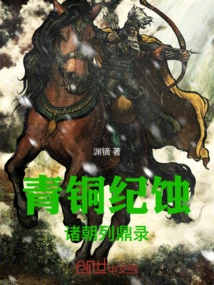
青铜纪蚀:诸朝列鼎录
Yuan Dy
On the night of Yinghuo guarding the heart, the Chinese nine cauldrons sing in unison. When the King of Qin ascended the altar with his Tai'a sword, he saw six strange king's flags reflected in the cauldron-- The Mongolian and Yuan cavalry trampled the Great Wall of Zhao, Yongle's firearms roared into the walls of Wei, and Hanwu's ships crashed into the waves of Chu and Yue. The heroes of the Seven Dynasties took the fragments of the most prosperous civilization and were thrown into the same broken mountains and rivers of the Warring States Period. Here, bronze is alive. The Qin Army's standardized crossbow machine grew mycelium outside Hangu Pass, Kublai Khan's return artillery swallowed up the meteorite iron ore and gave birth to a mechanical wolf soul, and the bronze anchor chain in the bottom of Zheng He's treasure ship was chanted every night. When Zhu Di discovered that the water of the Bian River could make people infinitely powerful but lost his memory, and when Li Longji's Mo Dao team was corroded into monsters by Yunmengze Bronze Mai, all the emperors finally understood: they were fighting not only for territory, but also for the qualifications to fight against this devouring world. Ying Zheng used the iron laws of Legalism to freeze time, Kublai Khan used the secret skills of grassland shamans to redraw the star map, and Kangxi's red cannon blasted away not only the city wall, but also the prophecy buried in the Nine Cauldrons by Emperor Zhou before he fell asleep - "When the dynasties set the cauldron, the common people will turn into copper." This is a huge gamble for the survival of civilization: The elephant soldiers of the Han Dynasty crushed not only the enemy formations, but also the future of "bronze swallowing the sky" predicted by the witch and Gu master; Zheng He's broken compass pointer was pointing to the space-time rift suppressed under Penglai Island; And the last Zhou king, huddled in the ruins of Luoyi, used his last blood to write on the tripod: Kill all the kings and save the common people. The moment the seven king swords penetrated the Jiuding, The land of China resounded with the sibilant sound of civilization's self-destruction.
On the night of Yinghuo guarding the heart, the Chinese nine cauldrons sing in unison. When the King of Qin ascended the altar with his Tai'a sword, he saw six strange king's flags reflected in the cauldron-- The Mongolian and Yuan cavalry trampled the Great Wall of Zhao, Yongle's firearms roared into the walls of Wei, and Hanwu's ships crashed into the waves of Chu and Yue. The heroes of the Seven Dynasties took the fragments of the most prosperous civilization and were thrown into the same broken mountains and rivers of the Warring States Period. Here, bronze is alive. The Qin Army's standardized crossbow machine grew mycelium outside Hangu Pass, Kublai Khan's return artillery swallowed up the meteorite iron ore and gave birth to a mechanical wolf soul, and the bronze anchor chain in the bottom of Zheng He's treasure ship was chanted every night. When Zhu Di discovered that the water of the Bian River could make people infinitely powerful but lost his memory, and when Li Longji's Mo Dao team was corroded into monsters by Yunmengze Bronze Mai, all the emperors finally understood: they were fighting not only for territory, but also for the qualifications to fight against this devouring world. Ying Zheng used the iron laws of Legalism to freeze time, Kublai Khan used the secret skills of grassland shamans to redraw the star map, and Kangxi's red cannon blasted away not only the city wall, but also the prophecy buried in the Nine Cauldrons by Emperor Zhou before he fell asleep - "When the dynasties set the cauldron, the common people will turn into copper." This is a huge gamble for the survival of civilization: The elephant soldiers of the Han Dynasty crushed not only the enemy formations, but also the future of "bronze swallowing the sky" predicted by the witch and Gu master; Zheng He's broken compass pointer was pointing to the space-time rift suppressed under Penglai Island; And the last Zhou king, huddled in the ruins of Luoyi, used his last blood to write on the tripod: Kill all the kings and save the common people. The moment the seven king swords penetrated the Jiuding, The land of China resounded with the sibilant sound of civilization's self-destruction.
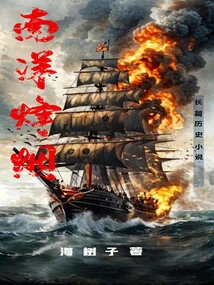
Nanyang Beacon Smoke
History南洋烽烟
Hai Shuzi
Difficulties of the Ming Dynasty's sea ban: The Lin family in Yuegang, Zhangzhou was forced to turn to underground trade due to the sea ban policy. Young Lin Yongchang led his people to break through the blockade and establish the first southern Fujian trading station on Luzon Island. Merchant Ship\
Difficulties of the Ming Dynasty's sea ban: The Lin family in Yuegang, Zhangzhou was forced to turn to underground trade due to the sea ban policy. Young Lin Yongchang led his people to break through the blockade and establish the first southern Fujian trading station on Luzon Island. Merchant Ship\
1848:大德意志之梦
Red Sea Promise
Heinrich, who was an economics student in his previous life, was reborn in Germany in the 1840s and served as a court teacher at Schönbrunn Palace. This is the era of vitality in Germany. From Metternich to Franz Joseph, from Bismarck to William I, the curtain of the entire era is slowly unfolding, and a butterfly, a small butterfly, will add a new piece of firewood and fan a strange wind to the entire political landscape of Europe that will happen in the future. From coaching in Vienna to the dream of Greater Germany
Heinrich, who was an economics student in his previous life, was reborn in Germany in the 1840s and served as a court teacher at Schönbrunn Palace. This is the era of vitality in Germany. From Metternich to Franz Joseph, from Bismarck to William I, the curtain of the entire era is slowly unfolding, and a butterfly, a small butterfly, will add a new piece of firewood and fan a strange wind to the entire political landscape of Europe that will happen in the future. From coaching in Vienna to the dream of Greater Germany
逆世金途
Writerfnwxyv
Come to China Literature's website to read more of my works!
Come to China Literature's website to read more of my works!
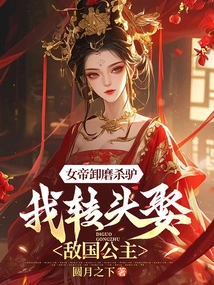
The Empress Killed the Donkey, and I Turned Around and Married the Princess of the Enemy Country
History女帝卸磨杀驴,我转头娶敌国公主
Under The Full Moon
Lin Feng traveled to a parallel time and space, when the three kingdoms of Chu, Wei, and Qi were competing for hegemony. He spent eight years secretly supporting Chu Jun, the fifth princess of Chu, to become the queen of Chu. On the eve of Chu Jun's ascension to the throne, Lin Feng was imprisoned in a dungeon with a secret order, and he became a prisoner from the Dragon Minister overnight... When the news came out, the whole world was shocked, and all forces gathered in Chu Capital. The princess of Qi did not hesitate to risk her own life to rescue Lin Feng... The prince of Wei was willing to exchange Lin Feng's assistance for one person... The mysterious forces were willing to serve him as their master... Only the empress Chu Jun regretted seeing Lin Feng drifting away from her.
Lin Feng traveled to a parallel time and space, when the three kingdoms of Chu, Wei, and Qi were competing for hegemony. He spent eight years secretly supporting Chu Jun, the fifth princess of Chu, to become the queen of Chu. On the eve of Chu Jun's ascension to the throne, Lin Feng was imprisoned in a dungeon with a secret order, and he became a prisoner from the Dragon Minister overnight... When the news came out, the whole world was shocked, and all forces gathered in Chu Capital. The princess of Qi did not hesitate to risk her own life to rescue Lin Feng... The prince of Wei was willing to exchange Lin Feng's assistance for one person... The mysterious forces were willing to serve him as their master... Only the empress Chu Jun regretted seeing Lin Feng drifting away from her.
忠义之三国英烈传奇
The Fool In The World
Cut through the fog of history and walk into a Three Kingdoms that none of us are familiar with... Why did Guo Jia die? Why did Cao Cao, who had been in power for half his life, be defeated in Chibi? Why did Pang Tong die tragically? How could Guan Yu, who was so powerful in China, suddenly be defeated and die? Why did Zhou Yu die so early? How did Sun Ce, who was sweeping across Jiangdong, suddenly be assassinated and die? Restore the historical facts of the Three Kingdoms, show true human nature, and understand the grudges and hatreds of troubled times... Without modern civilization, without love, Some are just legends belonging to that era, and the passion of that group of men... After traveling through the Three Kingdoms, how does the protagonist integrate into history step by step, understand history, influence history, and ultimately change history! Restore Chinese civilization and revive the glory of the Han Dynasty Loyalty, righteousness, bravery, martial arts, benevolence, filial piety, integrity. Intelligence, wisdom, strategy, Confucianism, elegance, sincerity and trust.
Cut through the fog of history and walk into a Three Kingdoms that none of us are familiar with... Why did Guo Jia die? Why did Cao Cao, who had been in power for half his life, be defeated in Chibi? Why did Pang Tong die tragically? How could Guan Yu, who was so powerful in China, suddenly be defeated and die? Why did Zhou Yu die so early? How did Sun Ce, who was sweeping across Jiangdong, suddenly be assassinated and die? Restore the historical facts of the Three Kingdoms, show true human nature, and understand the grudges and hatreds of troubled times... Without modern civilization, without love, Some are just legends belonging to that era, and the passion of that group of men... After traveling through the Three Kingdoms, how does the protagonist integrate into history step by step, understand history, influence history, and ultimately change history! Restore Chinese civilization and revive the glory of the Han Dynasty Loyalty, righteousness, bravery, martial arts, benevolence, filial piety, integrity. Intelligence, wisdom, strategy, Confucianism, elegance, sincerity and trust.
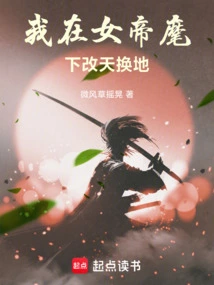
我在女帝麾下改天换地
Breeze Grass Swaying
The story is set in an imaginary ancient world, where many countries coexist and the situation is complicated. As one of the forces, the Western Chu State is facing a severe dilemma of internal and external troubles. Domestically, the court was corrupt, and conservative forces such as Prime Minister Zhao Chong formed cliques for personal gain. They colluded with Liang Wang Xiaohe and Chu Wang Xiao Yi to control the government, resulting in heavy taxes, people's livelihood, and frequent uprisings in various places. Externally, the Dongling Kingdom is eager to expand its territory; the nomadic tribes led by the Northern Desert Khan Wu Tubato often invade the border, posing a serious threat to the security and stability of the Western Chu Kingdom.
The story is set in an imaginary ancient world, where many countries coexist and the situation is complicated. As one of the forces, the Western Chu State is facing a severe dilemma of internal and external troubles. Domestically, the court was corrupt, and conservative forces such as Prime Minister Zhao Chong formed cliques for personal gain. They colluded with Liang Wang Xiaohe and Chu Wang Xiao Yi to control the government, resulting in heavy taxes, people's livelihood, and frequent uprisings in various places. Externally, the Dongling Kingdom is eager to expand its territory; the nomadic tribes led by the Northern Desert Khan Wu Tubato often invade the border, posing a serious threat to the security and stability of the Western Chu Kingdom.
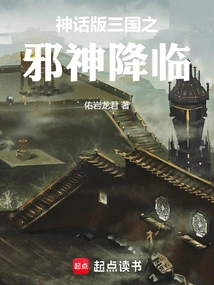
神话版三国之邪神降临
Youyanlongjun
After Yang Ji traveled to the mythical version of the Three Kingdoms world, he was summoned to a different world to become a descendant with only one life. After returning to consciousness, he met Chen Xi, the strongest supporting character in Shensanli. He came specifically to Yang Ji for help. [Shensan is the same person, if there is any offense, please correct me] The new book "Man in God III, but Possible Timeline" has been released.
After Yang Ji traveled to the mythical version of the Three Kingdoms world, he was summoned to a different world to become a descendant with only one life. After returning to consciousness, he met Chen Xi, the strongest supporting character in Shensanli. He came specifically to Yang Ji for help. [Shensan is the same person, if there is any offense, please correct me] The new book "Man in God III, but Possible Timeline" has been released.
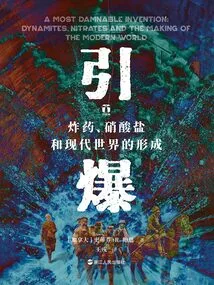
引爆:炸药、硝酸盐和现代世界的形成(好望角丛书)
(add) Stephen R. Bowen
A history of explosives, but also a history of human nature full of contradictions and struggles. With the sharp rise in explosive consumption, countries around the world have launched fierce competition around the scarce natural resource of saltpeter. It can be said that the value of saltpeter in the 19th century is no less than that of oil in the 21st century. Both are the underlying causes of international competition and power struggles. In order to get rid of the constraints of resources, German scientist Fritz Haber solved the technical problem of artificial nitrogen fixation. This breakthrough became the basis for the Green Revolution, which allowed the population to grow dramatically. Haber also developed poison gas during the war and is considered the father of gas warfare. For this reason, when he won the Nobel Prize in Chemistry, the international community expressed strong indignation and condemnation. This book tells a story about human beings, including their obsession with science, their trampling on morality, and the inherent irony of history. This story proves that humans can burst into amazing creativity during war, and it also reminds us that history is cyclical, and past solutions often create new problems that need to be solved.
A history of explosives, but also a history of human nature full of contradictions and struggles. With the sharp rise in explosive consumption, countries around the world have launched fierce competition around the scarce natural resource of saltpeter. It can be said that the value of saltpeter in the 19th century is no less than that of oil in the 21st century. Both are the underlying causes of international competition and power struggles. In order to get rid of the constraints of resources, German scientist Fritz Haber solved the technical problem of artificial nitrogen fixation. This breakthrough became the basis for the Green Revolution, which allowed the population to grow dramatically. Haber also developed poison gas during the war and is considered the father of gas warfare. For this reason, when he won the Nobel Prize in Chemistry, the international community expressed strong indignation and condemnation. This book tells a story about human beings, including their obsession with science, their trampling on morality, and the inherent irony of history. This story proves that humans can burst into amazing creativity during war, and it also reminds us that history is cyclical, and past solutions often create new problems that need to be solved.
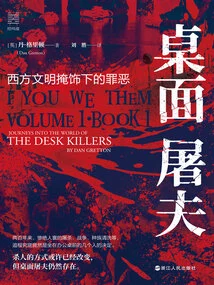
桌面屠夫:西方文明掩饰下的罪恶(经纬度丛书)
S
The ways of killing may have changed, but the desktop butcher is still with us. Over the past century, the brutal massacres, wars, ethnic cleansing, etc. Were ultimately the decisions of a few people sitting in an office. The author of this book spent more than 20 years traveling around the world, reviewing thousands of archival documents and testimonies to write this book. The content includes the murder of local indigenous people in Nigeria by Dutch oil companies, how the Swiss Sula Group provided mobile gas chambers to the Nazis during World War II, the meeting memos and the stories behind the Nazi Wannsee Conference, how the colonists carried out genocide against the indigenous Maori people in Australia, etc. This book gives us an in-depth understanding of the psychological state of these desktop butchers, and is also his personal reflection on capitalism and nationalism. The historical research and analysis in the book are interspersed with the author's walks in the woods reflecting on lost love and the moral dilemmas that humans have continued to face for thousands of years.
The ways of killing may have changed, but the desktop butcher is still with us. Over the past century, the brutal massacres, wars, ethnic cleansing, etc. Were ultimately the decisions of a few people sitting in an office. The author of this book spent more than 20 years traveling around the world, reviewing thousands of archival documents and testimonies to write this book. The content includes the murder of local indigenous people in Nigeria by Dutch oil companies, how the Swiss Sula Group provided mobile gas chambers to the Nazis during World War II, the meeting memos and the stories behind the Nazi Wannsee Conference, how the colonists carried out genocide against the indigenous Maori people in Australia, etc. This book gives us an in-depth understanding of the psychological state of these desktop butchers, and is also his personal reflection on capitalism and nationalism. The historical research and analysis in the book are interspersed with the author's walks in the woods reflecting on lost love and the moral dilemmas that humans have continued to face for thousands of years.
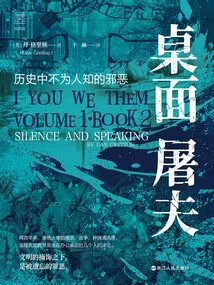
桌面屠夫:历史中不为人知的邪恶(经纬度丛书)
S
Beneath the cover of civilization lies forgotten sin. A book that understands how government officials or business executives kill people at the table, and the moral dilemmas that humans have faced for thousands of years. The author spent more than 20 years traveling around the world, reviewing thousands of archives and testimonies to write this book. The content includes the murder of local indigenous people in Nigeria by Dutch oil companies, how the Swiss Sula Group provided mobile gas chambers to the Nazis during World War II, the meeting memos and the stories behind the Nazi Wannsee Conference, how the colonists carried out genocide against the indigenous Maori people in Australia, etc. This book gives us an in-depth understanding of the psychological state of these desktop butchers, and is also his personal reflection on capitalism and nationalism. The historical research and analysis in the book are interspersed with the author's walks in the woods reflecting on lost love and the moral dilemmas that humans have continued to face for thousands of years.
Beneath the cover of civilization lies forgotten sin. A book that understands how government officials or business executives kill people at the table, and the moral dilemmas that humans have faced for thousands of years. The author spent more than 20 years traveling around the world, reviewing thousands of archives and testimonies to write this book. The content includes the murder of local indigenous people in Nigeria by Dutch oil companies, how the Swiss Sula Group provided mobile gas chambers to the Nazis during World War II, the meeting memos and the stories behind the Nazi Wannsee Conference, how the colonists carried out genocide against the indigenous Maori people in Australia, etc. This book gives us an in-depth understanding of the psychological state of these desktop butchers, and is also his personal reflection on capitalism and nationalism. The historical research and analysis in the book are interspersed with the author's walks in the woods reflecting on lost love and the moral dilemmas that humans have continued to face for thousands of years.
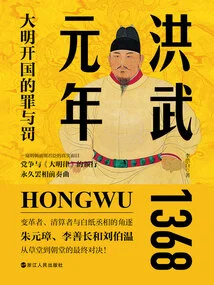
洪武元年:大明开国的罪与罚
Li Haobai
77 days before the establishment of the Ming Dynasty, Zhu Yuanzhang launched a northern expedition to the remaining forces of the Yuan Dynasty, and Prince Zhu Biao stayed in Yingtianfu, Nanjing, the capital. Little did they know that in Nanjing at this time, undercurrents were surging. With the severe drought as the background and the arrest of Li Shanchang's nephew Li Bin for corruption as the trigger, a secret war began surrounding Zhu Yuanzhang, Li Shanchang, Hu Weiyong, and Liu Bowen. Various parties launched an arduous and complicated wrestling on this matter. When three major problems such as driving away the barbarians, eliminating natural disasters, and clearing up the rule of law suddenly hit them, the four people each showed their uprightness, strategy, and ferocity. A small incident suddenly became the biggest case in the early days of the Ming Dynasty. Who is confusing everything? What secrets are hidden behind this corruption case? Why did Liu Bowen resign and go home 11 days after the case ended? Did Hu Weiyong and Li Shanchang really die because of the "Hu Weiyong Case"? All the secrets are within these 77 days!
77 days before the establishment of the Ming Dynasty, Zhu Yuanzhang launched a northern expedition to the remaining forces of the Yuan Dynasty, and Prince Zhu Biao stayed in Yingtianfu, Nanjing, the capital. Little did they know that in Nanjing at this time, undercurrents were surging. With the severe drought as the background and the arrest of Li Shanchang's nephew Li Bin for corruption as the trigger, a secret war began surrounding Zhu Yuanzhang, Li Shanchang, Hu Weiyong, and Liu Bowen. Various parties launched an arduous and complicated wrestling on this matter. When three major problems such as driving away the barbarians, eliminating natural disasters, and clearing up the rule of law suddenly hit them, the four people each showed their uprightness, strategy, and ferocity. A small incident suddenly became the biggest case in the early days of the Ming Dynasty. Who is confusing everything? What secrets are hidden behind this corruption case? Why did Liu Bowen resign and go home 11 days after the case ended? Did Hu Weiyong and Li Shanchang really die because of the "Hu Weiyong Case"? All the secrets are within these 77 days!
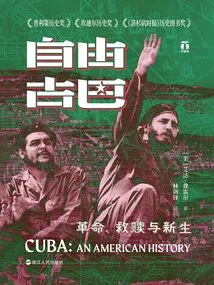
自由古巴:革命、救赎与新生(好望角丛书)
(us) Ida Ferrell
With the Spanish-American War at the end of the 19th century, the Spanish colonists retired sadly, but the newly born Republic of Cuba (1902-1959) was quickly controlled by the United States and became the spoils of the latter's foreign expansion policy. It had to start a new round of struggle for independence and freedom. In 1959, the Cuban revolution led by Castro succeeded, and Cubans finally established the independent country they had longed for. The United States, this dangerous and powerful neighbor, has never taken its eyes off Cuba. In fact, this five-century history of Cuba is not only a history of the Cuban people's pursuit of freedom and liberation, but also a history of slavery, sugar industrial parks, colonialism and national revolution. It is also a history of the intricate relationship between Cuba and the United States. By reading up close the development of Cuba, we will witness her glorious history from conquest and slavery to freedom and independence. The mirror of Cuba also reflects the process of the United States gradually gaining world hegemony over the past 100 years. It is worth mentioning that this book never limits its perspective to individual great figures. Those who sewed under the faint fluorescent light of the slave cabins, those who took up arms in the revolution, those who did not leave their names in official history, are the real protagonists of Cuban history.
With the Spanish-American War at the end of the 19th century, the Spanish colonists retired sadly, but the newly born Republic of Cuba (1902-1959) was quickly controlled by the United States and became the spoils of the latter's foreign expansion policy. It had to start a new round of struggle for independence and freedom. In 1959, the Cuban revolution led by Castro succeeded, and Cubans finally established the independent country they had longed for. The United States, this dangerous and powerful neighbor, has never taken its eyes off Cuba. In fact, this five-century history of Cuba is not only a history of the Cuban people's pursuit of freedom and liberation, but also a history of slavery, sugar industrial parks, colonialism and national revolution. It is also a history of the intricate relationship between Cuba and the United States. By reading up close the development of Cuba, we will witness her glorious history from conquest and slavery to freedom and independence. The mirror of Cuba also reflects the process of the United States gradually gaining world hegemony over the past 100 years. It is worth mentioning that this book never limits its perspective to individual great figures. Those who sewed under the faint fluorescent light of the slave cabins, those who took up arms in the revolution, those who did not leave their names in official history, are the real protagonists of Cuban history.
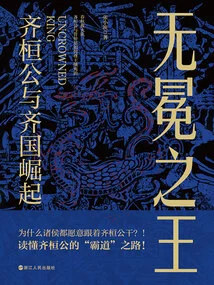
无冕之王:齐桓公与齐国崛起
Zhang Xiaoyang
The Chinese have always talked about the Five Hegemons of the Spring and Autumn Period, but what did these hegemons bring to the Chinese people? This question has never been answered. Qi Huangong's history of hegemony in the Spring and Autumn Period is undoubtedly a vivid lesson - this is an era of great powers competing for hegemony, and its political landscape is the same as today. All great powers are working tirelessly for hegemony. Which one of economy, military, culture, morality and system is the key to the rise of a great power? Overlord Qi Huan will explain the meaning of "overlord" and teach us an interesting lesson. This book describes the life of Duke Huan of Qi, the first overlord of the Spring and Autumn Period. It tells how he won the throne, used Guan Zhong in an important position, worked hard to govern, respected the king and rejected the barbarians, and united the nine princes, making Qi a dominant country, which greatly changed the structure of China at that time and had a profound impact on later generations.
The Chinese have always talked about the Five Hegemons of the Spring and Autumn Period, but what did these hegemons bring to the Chinese people? This question has never been answered. Qi Huangong's history of hegemony in the Spring and Autumn Period is undoubtedly a vivid lesson - this is an era of great powers competing for hegemony, and its political landscape is the same as today. All great powers are working tirelessly for hegemony. Which one of economy, military, culture, morality and system is the key to the rise of a great power? Overlord Qi Huan will explain the meaning of "overlord" and teach us an interesting lesson. This book describes the life of Duke Huan of Qi, the first overlord of the Spring and Autumn Period. It tells how he won the throne, used Guan Zhong in an important position, worked hard to govern, respected the king and rejected the barbarians, and united the nine princes, making Qi a dominant country, which greatly changed the structure of China at that time and had a profound impact on later generations.
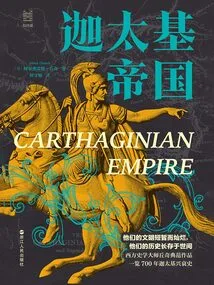
迦太基帝国(经纬度丛书)
(uk) Alfred Church
Why did the once brilliant Carthage Empire collapse after more than 700 years of prosperity? What important implications does its rise and fall have for future generations? In order to answer these questions, modern British historian Alfred Church carefully combed through a large amount of historical materials, explored all the historical fragments of the former Mediterranean overlords, and completed this book describing the history of Carthage. He has worked hard for many years and mastered the classics, carefully sketching the old appearance of Carthage, describing in detail the entire process of Carthage from its establishment, rise to fall, exploring the culture of Carthage and the national characteristics of the Phoenicians, and shaping the image of the famous Carthage general Hannibal as a brave and good warrior, making this book an authoritative work for readers to study and learn the history of Carthage.
Why did the once brilliant Carthage Empire collapse after more than 700 years of prosperity? What important implications does its rise and fall have for future generations? In order to answer these questions, modern British historian Alfred Church carefully combed through a large amount of historical materials, explored all the historical fragments of the former Mediterranean overlords, and completed this book describing the history of Carthage. He has worked hard for many years and mastered the classics, carefully sketching the old appearance of Carthage, describing in detail the entire process of Carthage from its establishment, rise to fall, exploring the culture of Carthage and the national characteristics of the Phoenicians, and shaping the image of the famous Carthage general Hannibal as a brave and good warrior, making this book an authoritative work for readers to study and learn the history of Carthage.
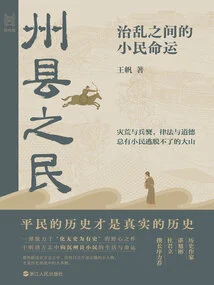
州县之民:治乱之间的小民命运(经纬度丛书)
Wang Fan
Through careful reading of the local chronicles of the Ming and Qing Dynasties, as well as the crawling of imperial edicts, memorials, notes, family trees, inscriptions and other documents, this book salvaged only a few words of records hidden in the documents, and gave a heart-warming portrait of the people of the prefectures and counties. This book takes the Xiqi land in the Guanzhong area as the main research object, mainly the "Qishan County Chronicles" and other local chronicles of Xifu during the Qianlong period, and other documents and archives of the Ming and Qing Dynasties. It starts with typical figures in the prefectures and counties, including the gentle representatives of the students, the wealthy gentry and merchants, the hard-working Qi people, the chaste women and martyrs... Through the analysis of their lives and destiny, it attempts to restore the living conditions of ordinary civilians in the prefectures and counties during the monarchy.
Through careful reading of the local chronicles of the Ming and Qing Dynasties, as well as the crawling of imperial edicts, memorials, notes, family trees, inscriptions and other documents, this book salvaged only a few words of records hidden in the documents, and gave a heart-warming portrait of the people of the prefectures and counties. This book takes the Xiqi land in the Guanzhong area as the main research object, mainly the "Qishan County Chronicles" and other local chronicles of Xifu during the Qianlong period, and other documents and archives of the Ming and Qing Dynasties. It starts with typical figures in the prefectures and counties, including the gentle representatives of the students, the wealthy gentry and merchants, the hard-working Qi people, the chaste women and martyrs... Through the analysis of their lives and destiny, it attempts to restore the living conditions of ordinary civilians in the prefectures and counties during the monarchy.
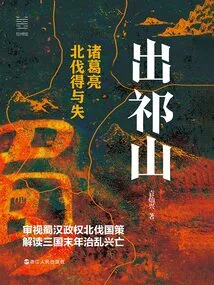
出祁山:诸葛亮北伐得与失(经纬度丛书)
Yuan Canxing
This book focuses on the Shu Han regime's Northern Expedition "out of Qishan" during the Three Kingdoms period, discusses the establishment and strategic planning of Liu Bei's Shu Han regime, and analyzes the reasons for the failure of Zhuge Liang's Northern Expedition through the conscription system, taxation system, and the struggle between Liu Bei's direct lineage and local bureaucrats under Zhuge Liang's rule. While describing the strategy and destiny of the Shu Han regime's "exodus from Qishan", this book also writes about the game between Cao Wei and Sun Wu at the same time and the Shu Han regime. These games not only affected the success or failure of the expedition from Qishan, but also affected the national destiny of the three kingdoms of Wei, Shu and Wu, until the Jin Dynasty finally unified the world. The Three Kingdoms are far away, and a series of stories surrounding the Qishan Mountains have been sung through the ages. Zhuge Liang worked hard to turn the tide and revive the Han Dynasty. But what does the rise of the Han Dynasty have to do with the thousands of people at the bottom? Whether it rises or falls, the people will suffer.
This book focuses on the Shu Han regime's Northern Expedition "out of Qishan" during the Three Kingdoms period, discusses the establishment and strategic planning of Liu Bei's Shu Han regime, and analyzes the reasons for the failure of Zhuge Liang's Northern Expedition through the conscription system, taxation system, and the struggle between Liu Bei's direct lineage and local bureaucrats under Zhuge Liang's rule. While describing the strategy and destiny of the Shu Han regime's "exodus from Qishan", this book also writes about the game between Cao Wei and Sun Wu at the same time and the Shu Han regime. These games not only affected the success or failure of the expedition from Qishan, but also affected the national destiny of the three kingdoms of Wei, Shu and Wu, until the Jin Dynasty finally unified the world. The Three Kingdoms are far away, and a series of stories surrounding the Qishan Mountains have been sung through the ages. Zhuge Liang worked hard to turn the tide and revive the Han Dynasty. But what does the rise of the Han Dynasty have to do with the thousands of people at the bottom? Whether it rises or falls, the people will suffer.
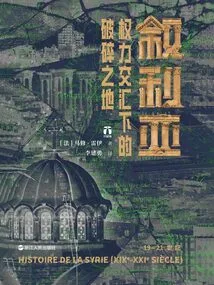
叙利亚:权力交汇下的破碎之地(好望角丛书)
(france) Mathieu Rey
Get a complete understanding of Syria from this book. It is one of the few good books in China that analyzes the modern history of Syria and reveals the root causes of Syria's turmoil. Its time period extends to the present day, and its analysis of the birth of the Syrian state not only explains the foundations of contemporary Syria, but also reveals the roots of Syria's turmoil. It shows in detail the various forces that emerged in Syria due to social, geographical, political and ethnic differences - the confrontation between European forces such as the Ottomans, Egypt, Britain and France, as well as local elite forces, as well as Syria's attempts to establish a national constitutional government after independence, and why the military finally controlled the political discourse. The history of Syria is also a microcosm of many Arab countries.
Get a complete understanding of Syria from this book. It is one of the few good books in China that analyzes the modern history of Syria and reveals the root causes of Syria's turmoil. Its time period extends to the present day, and its analysis of the birth of the Syrian state not only explains the foundations of contemporary Syria, but also reveals the roots of Syria's turmoil. It shows in detail the various forces that emerged in Syria due to social, geographical, political and ethnic differences - the confrontation between European forces such as the Ottomans, Egypt, Britain and France, as well as local elite forces, as well as Syria's attempts to establish a national constitutional government after independence, and why the military finally controlled the political discourse. The history of Syria is also a microcosm of many Arab countries.
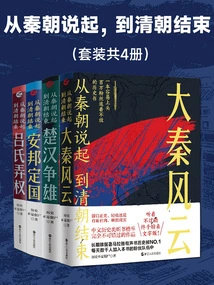
从秦朝说起,到清朝结束(套装共4册)
History Is Not A Zombie
A book to learn about the life and death of the first authoritarian queen in Chinese history! After Liu Banglong passed away, the civil and military officials of the Manchu Dynasty supported Liu Ying as emperor. However, Lu Fei, who had been trapped in the Qin camp and held captive in Pengcheng, knew in his heart that he could only protect himself if he had great power. His extreme desire for power was ready to act, and at this moment he finally showed his fangs. After killing Zhao Wang Ruyi and Mrs. Qi with cruel means, Lu Fei came to power for nearly eight years. He first killed the former young emperor Liu Gong, and then established the second young emperor Liu Hong, playing with imperial power and holding hands. Lu Pheasant continues to produce Liu family heirs, allowing the Lu family to claim the title of king and queen. The Liu family's world is about to become the Lu family's world. Where will the Han Dynasty go...
A book to learn about the life and death of the first authoritarian queen in Chinese history! After Liu Banglong passed away, the civil and military officials of the Manchu Dynasty supported Liu Ying as emperor. However, Lu Fei, who had been trapped in the Qin camp and held captive in Pengcheng, knew in his heart that he could only protect himself if he had great power. His extreme desire for power was ready to act, and at this moment he finally showed his fangs. After killing Zhao Wang Ruyi and Mrs. Qi with cruel means, Lu Fei came to power for nearly eight years. He first killed the former young emperor Liu Gong, and then established the second young emperor Liu Hong, playing with imperial power and holding hands. Lu Pheasant continues to produce Liu family heirs, allowing the Lu family to claim the title of king and queen. The Liu family's world is about to become the Lu family's world. Where will the Han Dynasty go...
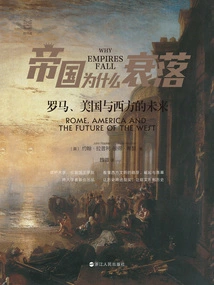
Why Empires Fell: Rome, America, and the Future of the West (latitudes and Longitudes Series)
History帝国为什么衰落:罗马、美国与西方的未来(经纬度丛书)
(us) John Rapley (us) Peter Heather
This book is a humanistic thought work that combines international politics with historical narrative. In the past three centuries, the Western world has risen and dominated the earth. It has led the countries in Asia, Africa and Latin America in science and technology, economy, and culture, and has encouraged other parts of the world to follow their lifestyles and ideas. However, at the turn of the millennium, faced with economic stagnation and internal political divisions, the Western world found itself in decline, much like the Roman Empire. In this book, political economist John Rapley and historian Peter Heather use the history of the Roman Empire to rethink and interpret the crisis state of the contemporary West. From a novel perspective, they use unique case analysis to explore the incredible similarities and differences between Rome and the United States, and deconstruct how Western civilization meets challenges and gains new life. At a time when the world situation is changing rapidly, this book has great reference value for ordinary people to understand history and the current situation.
This book is a humanistic thought work that combines international politics with historical narrative. In the past three centuries, the Western world has risen and dominated the earth. It has led the countries in Asia, Africa and Latin America in science and technology, economy, and culture, and has encouraged other parts of the world to follow their lifestyles and ideas. However, at the turn of the millennium, faced with economic stagnation and internal political divisions, the Western world found itself in decline, much like the Roman Empire. In this book, political economist John Rapley and historian Peter Heather use the history of the Roman Empire to rethink and interpret the crisis state of the contemporary West. From a novel perspective, they use unique case analysis to explore the incredible similarities and differences between Rome and the United States, and deconstruct how Western civilization meets challenges and gains new life. At a time when the world situation is changing rapidly, this book has great reference value for ordinary people to understand history and the current situation.
大明国师
West Lake In The Rain
After witnessing the end of the Battle of Jingnan, Jiang Xinghuo, who was the target of "Executing the Ten Clan", finally breathed a sigh of relief. As a senior time traveler, you can return to modern times and live forever after traveling through nine lifetimes. Jiang Xinghuo, who felt that he was about to be done, was so bored that he started giving lectures in prison, but something gradually seemed to be wrong... Ma Sanbao: What is the Age of Discovery in "On Sea Power"? Yao Guangxiao: "On National Destiny" turned out to be the legendary dragon-slaying technique! Zhu Gaochi: I haven't finished talking about the silver standard in "Chinese Monetary History". Jiang Xinghuo: "I'm going to behead my head tomorrow. I'll tell you about the rest of the lesson." At this time, the walls of the prison collapsed and a voice came. "Mr. Jiang, I am Zhu Di, please be the national master!"
After witnessing the end of the Battle of Jingnan, Jiang Xinghuo, who was the target of "Executing the Ten Clan", finally breathed a sigh of relief. As a senior time traveler, you can return to modern times and live forever after traveling through nine lifetimes. Jiang Xinghuo, who felt that he was about to be done, was so bored that he started giving lectures in prison, but something gradually seemed to be wrong... Ma Sanbao: What is the Age of Discovery in "On Sea Power"? Yao Guangxiao: "On National Destiny" turned out to be the legendary dragon-slaying technique! Zhu Gaochi: I haven't finished talking about the silver standard in "Chinese Monetary History". Jiang Xinghuo: "I'm going to behead my head tomorrow. I'll tell you about the rest of the lesson." At this time, the walls of the prison collapsed and a voice came. "Mr. Jiang, I am Zhu Di, please be the national master!"
洞房花烛夜,娘子奔向白月光
Boiled Shrimp
On the wedding night, Li Jiuxiao's newlywed, Lin Shiwei, left him alone and ran towards Bai Yueguang, who had returned from injury. She angrily accused Li Jiuxiao of not understanding that love between children is generally limited. Everyone was watching Li Jiuxiao's jokes, but Li Jiuxiao rose to the top step by step and became the ruler of the dynasty. Looking back, Lin Shiwei regretted it.
On the wedding night, Li Jiuxiao's newlywed, Lin Shiwei, left him alone and ran towards Bai Yueguang, who had returned from injury. She angrily accused Li Jiuxiao of not understanding that love between children is generally limited. Everyone was watching Li Jiuxiao's jokes, but Li Jiuxiao rose to the top step by step and became the ruler of the dynasty. Looking back, Lin Shiwei regretted it.
修昔底德演说辞及其历史文化价值
Shen Zhi
Speeches occupy about 1\u002F4 of Thucydides' "History of the Peloponnese War" (hereinafter referred to as "History") and are a characteristic of his works. In the tradition of applying orations to historical works, Thucydides' orations stand out. This distinctive writing style has also attracted the attention and disagreement of foreign scholars. This book attempts to analyze the reasons for the extensive use of speeches in Thucydides's "Boss" from the perspective of a large number of speeches in "Boss", explore the authenticity of speeches, and then explain that Thucydides's creative techniques of using a large number of speeches in "Boss" are worthy of attention and reference. This reveals the political, economic, and military conditions of that era reflected in the speech, and reflects Thucydides's ideological concepts, which has considerable historical value and historical and cultural value.
Speeches occupy about 1\u002F4 of Thucydides' "History of the Peloponnese War" (hereinafter referred to as "History") and are a characteristic of his works. In the tradition of applying orations to historical works, Thucydides' orations stand out. This distinctive writing style has also attracted the attention and disagreement of foreign scholars. This book attempts to analyze the reasons for the extensive use of speeches in Thucydides's "Boss" from the perspective of a large number of speeches in "Boss", explore the authenticity of speeches, and then explain that Thucydides's creative techniques of using a large number of speeches in "Boss" are worthy of attention and reference. This reveals the political, economic, and military conditions of that era reflected in the speech, and reflects Thucydides's ideological concepts, which has considerable historical value and historical and cultural value.
Chinese Classics in My Mind
History心目中的华夏典籍
The Wind Makes Clouds And Smoke
I am a systematic program host. The program I hosted today was a face-to-face dialogue with ancient people. In the live broadcast room, they thought they were all actors, but in my world, I really traveled through the past and talked to those emperors.
I am a systematic program host. The program I hosted today was a face-to-face dialogue with ancient people. In the live broadcast room, they thought they were all actors, but in my world, I really traveled through the past and talked to those emperors.
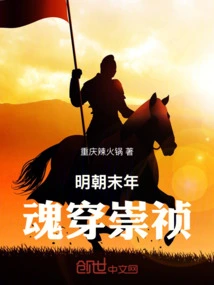
明朝末年,魂穿崇祯
Chongqing Spicy Hot Pot
Chen Xing, an ordinary person in modern society, accidentally traveled to the turbulent late Ming Dynasty. Facing the start of Tianbeng, he was not discouraged. Instead, he was ambitious and determined to make a way out of this troubled world. This book tells how Chen Xing rose from the bottom step by step with his wisdom and courage in the turbulent era of the late Ming Dynasty. He used modern knowledge to ingeniously reform and resolve crises. He also showed amazing talents in farming, science and technology, military and other fields. Chen Xing's journey was full of challenges and adventures. He met all kinds of characters, made life-and-death friends, and encountered cunning and cunning enemies. In this magnificent history, he gradually grew into a true hero.
Chen Xing, an ordinary person in modern society, accidentally traveled to the turbulent late Ming Dynasty. Facing the start of Tianbeng, he was not discouraged. Instead, he was ambitious and determined to make a way out of this troubled world. This book tells how Chen Xing rose from the bottom step by step with his wisdom and courage in the turbulent era of the late Ming Dynasty. He used modern knowledge to ingeniously reform and resolve crises. He also showed amazing talents in farming, science and technology, military and other fields. Chen Xing's journey was full of challenges and adventures. He met all kinds of characters, made life-and-death friends, and encountered cunning and cunning enemies. In this magnificent history, he gradually grew into a true hero.
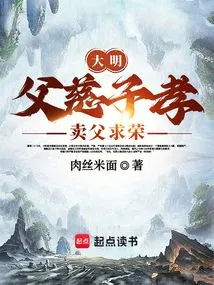
大明1566:摄政天下
Shredded Pork Rice Noodles
I'm good at showing off my authority when I'm in the official position. The court officials accused me of holding six ministries hostage. Qingliu criticized me for corrupting the Dharma. The gentry criticized me for subjugating the country and causing chaos in government. But the two capitals and thirteen provinces of the Ming Dynasty, and all the nine states in the world, are all on my shoulders! I, Yan Shaoting and Yan Songsun, are the new emperor's masters. I am one of the three princes, in charge of the cabinet. I am the governor of the Ming Dynasty, the emperor of the Ming Dynasty, and the administrator on behalf of the emperor!
I'm good at showing off my authority when I'm in the official position. The court officials accused me of holding six ministries hostage. Qingliu criticized me for corrupting the Dharma. The gentry criticized me for subjugating the country and causing chaos in government. But the two capitals and thirteen provinces of the Ming Dynasty, and all the nine states in the world, are all on my shoulders! I, Yan Shaoting and Yan Songsun, are the new emperor's masters. I am one of the three princes, in charge of the cabinet. I am the governor of the Ming Dynasty, the emperor of the Ming Dynasty, and the administrator on behalf of the emperor!
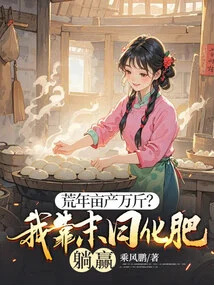
荒年亩产万斤?我靠末日化肥躺赢
Chengfengpeng
[Cyber Farming + Easy Daily Life + Face-Slapping and Cool Articles] Yun Ye, a professor at the Academy of Agricultural Sciences, traveled to ancient times of famine when natural disasters occurred frequently, but was bound to the Doomsday Shennong System. "The golden finger for farming was promised, but why did it only provide nuclear radiation ripening hormone, zombie bone meal fertilizer, robot dog pet, and sonic bird repellent?" In order to fill his stomach, Yun Ye could only use these doomsday black technologies to grow crops with a yield of tens of thousands of kilograms per mu. As a result, warlords from all walks of life who were hungry began to frantically buy his quantum harvesters, and bark-gnawing countries abused their honey traps just to steal his artificial rain bombs! The entire world's technology tree has been distorted! ...
[Cyber Farming + Easy Daily Life + Face-Slapping and Cool Articles] Yun Ye, a professor at the Academy of Agricultural Sciences, traveled to ancient times of famine when natural disasters occurred frequently, but was bound to the Doomsday Shennong System. "The golden finger for farming was promised, but why did it only provide nuclear radiation ripening hormone, zombie bone meal fertilizer, robot dog pet, and sonic bird repellent?" In order to fill his stomach, Yun Ye could only use these doomsday black technologies to grow crops with a yield of tens of thousands of kilograms per mu. As a result, warlords from all walks of life who were hungry began to frantically buy his quantum harvesters, and bark-gnawing countries abused their honey traps just to steal his artificial rain bombs! The entire world's technology tree has been distorted! ...
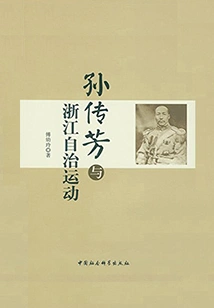
孙传芳与浙江自治运动
Fu Youling
The local autonomy movement during the Republic of China is an important topic in historical research, and it is of great significance to the study of China's early political modernization. The Zhejiang Autonomy Movement in the 1920s was an important part of the national autonomy movement at that time. "Sun Chuanfang and the Zhejiang Autonomy Movement" written by Fu Youling comprehensively demonstrates Sun Chuanfang's attitude and policies towards the autonomy movement in Zhejiang Province during his rule from 1924 to 1926, as well as the impact it had on the Zhejiang autonomy movement.
The local autonomy movement during the Republic of China is an important topic in historical research, and it is of great significance to the study of China's early political modernization. The Zhejiang Autonomy Movement in the 1920s was an important part of the national autonomy movement at that time. "Sun Chuanfang and the Zhejiang Autonomy Movement" written by Fu Youling comprehensively demonstrates Sun Chuanfang's attitude and policies towards the autonomy movement in Zhejiang Province during his rule from 1924 to 1926, as well as the impact it had on the Zhejiang autonomy movement.
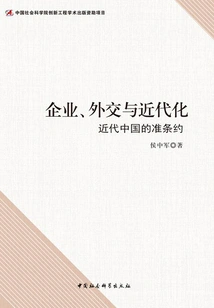
企业、外交与近代化:近代中国的准条约
Hou Zhongjun
The quasi-treaties in modern China were the product of the Westernization Movement that had developed to a certain historical stage. It initially focused on modern industries such as telecommunications, railways, and mining, and was closely related to modernization issues. Since the quasi-treaty involves foreign economic affairs, in the late Qing Dynasty when the division of diplomatic responsibilities was not clear, companies often assumed the function of foreign negotiation, and thus evolved their own characteristics of corporate social responsibility: government responsibility or national responsibility. After the Sino-Japanese War, especially after the Boxer Rebellion, the theme of quasi-treaties closely related to modernization changed. Although quasi-treaties such as telecommunications, roads, and mines still existed, political loans began to appear. During the political reform in the late Qing Dynasty, the Qing government established specialized economic management departments and tried to use institutional efforts to separate the economy from foreign affairs in order to protect interests. After the founding of the Republic of China, it fully inherited the treaties and foreign debts left by the late Qing government, and declared an integrated protection of the vested rights of all outsiders. Quasi-treaties were certainly within this scope. After World War I, the weakening trend of quasi-treaties intensified. Except for radio quasi-treaties, other types of quasi-treaties gradually disappeared. This situation lasted until the end of the Nanjing National Government.
The quasi-treaties in modern China were the product of the Westernization Movement that had developed to a certain historical stage. It initially focused on modern industries such as telecommunications, railways, and mining, and was closely related to modernization issues. Since the quasi-treaty involves foreign economic affairs, in the late Qing Dynasty when the division of diplomatic responsibilities was not clear, companies often assumed the function of foreign negotiation, and thus evolved their own characteristics of corporate social responsibility: government responsibility or national responsibility. After the Sino-Japanese War, especially after the Boxer Rebellion, the theme of quasi-treaties closely related to modernization changed. Although quasi-treaties such as telecommunications, roads, and mines still existed, political loans began to appear. During the political reform in the late Qing Dynasty, the Qing government established specialized economic management departments and tried to use institutional efforts to separate the economy from foreign affairs in order to protect interests. After the founding of the Republic of China, it fully inherited the treaties and foreign debts left by the late Qing government, and declared an integrated protection of the vested rights of all outsiders. Quasi-treaties were certainly within this scope. After World War I, the weakening trend of quasi-treaties intensified. Except for radio quasi-treaties, other types of quasi-treaties gradually disappeared. This situation lasted until the end of the Nanjing National Government.
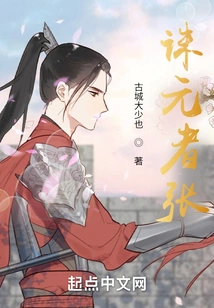
倚天真屠龙
The Elder Of The Ancient City
Zhuang Zhouxiao dreamed of butterflies and did not know where his hometown was. The protagonist is here, he is here, traveling through the fog of history, look, he is taking small steps to the end of the world, just to feel the smell of air conditioning in the summer.
Zhuang Zhouxiao dreamed of butterflies and did not know where his hometown was. The protagonist is here, he is here, traveling through the fog of history, look, he is taking small steps to the end of the world, just to feel the smell of air conditioning in the summer.
Travel to the Sea 1
History沧海行1
Huo Qingshi
During the Yongle period of the Ming Dynasty, Chen Haisheng, a 14-year-old orphan of a boatman, infiltrated Zheng He's treasure fleet with his father's blood-stained Nanyang chart and bronze compass, vowing to uncover the truth about the death of his loved ones in hurricanes. However, the mysterious lame craftsman's astrological secrets, the bronze tiger talisman hiding the blood of Emperor Jianwen, and the whispers of the deep-sea ghost ship "Phantom" drew him into the dynasty's mystery that spanned thirty years. When the eye of the hurricane tears apart the treasure ship, the secret history of Jianwen emerges at the end of the route guided by Xingcha. Haisheng discovers that his crescent moon birthmark is the key to rewriting the fate of the empire. Navigation and intrigue are intertwined. Can the young man find his father's soul lamp that was lost in the sea of stars amidst the undercurrents?
During the Yongle period of the Ming Dynasty, Chen Haisheng, a 14-year-old orphan of a boatman, infiltrated Zheng He's treasure fleet with his father's blood-stained Nanyang chart and bronze compass, vowing to uncover the truth about the death of his loved ones in hurricanes. However, the mysterious lame craftsman's astrological secrets, the bronze tiger talisman hiding the blood of Emperor Jianwen, and the whispers of the deep-sea ghost ship "Phantom" drew him into the dynasty's mystery that spanned thirty years. When the eye of the hurricane tears apart the treasure ship, the secret history of Jianwen emerges at the end of the route guided by Xingcha. Haisheng discovers that his crescent moon birthmark is the key to rewriting the fate of the empire. Navigation and intrigue are intertwined. Can the young man find his father's soul lamp that was lost in the sea of stars amidst the undercurrents?
寒门县令:我在朝堂杀疯了
Maorui
The imperial power has fallen by the wayside, and the aristocratic family is in power. The Liang Dynasty has long been terminally ill! Let's look at the cold-faced county magistrate Lin Zhao, working step by step and figuring out all the plans to uncover the shocking conspiracy that has entangled the dynasty for thousands of years, and reshape the world with a mortal body!
The imperial power has fallen by the wayside, and the aristocratic family is in power. The Liang Dynasty has long been terminally ill! Let's look at the cold-faced county magistrate Lin Zhao, working step by step and figuring out all the plans to uncover the shocking conspiracy that has entangled the dynasty for thousands of years, and reshape the world with a mortal body!
红楼:我为黛玉义兄,功德成仙!
Midnight Beast
Red MansionCultivation of ImmortalityAll heroines includedInvincible Text When Lin Fan woke up, he was transported to the world of Dream of Red Mansions. He also became the adopted son of Yangzhou Yanzheng, Lin Ruhai, and the adopted brother of Lin Daiyu! Fortunately, when you are reborn, you get the "merits and virtues become immortals" system. As long as you cure diseases and save people, punish rapes and eradicate evil, you can accumulate merits and exchange them for magic weapons. Facing his sworn sister Daiyu, he nourished her body with spiritual energy and taught her Taoist breathing skills. Encountering disaster victims on the road, he administered acupuncture and donated medicine to rejuvenate them. Encountered the oppression of powerful people, he was as light as the wind, and while talking and laughing, he shocked Xiaoxiao. Afterwards, Lin Daiyu was escorted to the Rongguo Mansion in Beijing. Lin Fan held the "Taixu Nourishing Qi Jue" in his hand and was equipped with the Qingfeng Footwork. He vowed to use the secret skills of immortality to rewrite the fate of the Red Mansion in this golden gate. From outside the city of Yangzhou, to the illusion of Taixu... From the mundane fireworks to the ethereal fairy road... Lin Fan used his merit as a blade to cut through the wind and frost swords, protecting Langyuan Immortal Pai for the rest of his life!
Red MansionCultivation of ImmortalityAll heroines includedInvincible Text When Lin Fan woke up, he was transported to the world of Dream of Red Mansions. He also became the adopted son of Yangzhou Yanzheng, Lin Ruhai, and the adopted brother of Lin Daiyu! Fortunately, when you are reborn, you get the "merits and virtues become immortals" system. As long as you cure diseases and save people, punish rapes and eradicate evil, you can accumulate merits and exchange them for magic weapons. Facing his sworn sister Daiyu, he nourished her body with spiritual energy and taught her Taoist breathing skills. Encountering disaster victims on the road, he administered acupuncture and donated medicine to rejuvenate them. Encountered the oppression of powerful people, he was as light as the wind, and while talking and laughing, he shocked Xiaoxiao. Afterwards, Lin Daiyu was escorted to the Rongguo Mansion in Beijing. Lin Fan held the "Taixu Nourishing Qi Jue" in his hand and was equipped with the Qingfeng Footwork. He vowed to use the secret skills of immortality to rewrite the fate of the Red Mansion in this golden gate. From outside the city of Yangzhou, to the illusion of Taixu... From the mundane fireworks to the ethereal fairy road... Lin Fan used his merit as a blade to cut through the wind and frost swords, protecting Langyuan Immortal Pai for the rest of his life!
家母吴国太,太好了,是孙权兄弟
Sugar Orange In The Three Kingdoms
My name is Sun Yi, I have just traveled to the Three Kingdoms, and I am the third son of Sun Jian. Speaking of Jiangdong's brotherly rivalry, it's a wonderful one. His eldest brother Sun Ce was assassinated, and Zhang Zhao couldn't wait to recommend his predecessor as the lord of Jiangdong. After Sun Quan came to power, he had trouble sleeping and eating. He tried his best to suppress his predecessor and encouraged the attack on Lingnan. My predecessor had a strong personality and refused to go to Lingnan. He crashed to death in front of his father and brother, which gave me an advantage. I am Sun Yi now. Even if I am lucky enough to be safe in Jiangdong, I will not be able to escape the assassination in a few years. Yes, I suspect that Sun Yi's death in history was also caused by Sun Quan. If he continues to stay in Jiangdong, he will definitely die without a complete body, so he might as well go to Lingnan to make a living. After I settled down, I was the first to pick up my sister-in-law, Jie Jie Jie. Sun Quan stole Liu Bei's butt, I stole Sun Quan's butt, Jie Jie Jie. Soochow is hopeless, what does it have to do with Yue Chu?
My name is Sun Yi, I have just traveled to the Three Kingdoms, and I am the third son of Sun Jian. Speaking of Jiangdong's brotherly rivalry, it's a wonderful one. His eldest brother Sun Ce was assassinated, and Zhang Zhao couldn't wait to recommend his predecessor as the lord of Jiangdong. After Sun Quan came to power, he had trouble sleeping and eating. He tried his best to suppress his predecessor and encouraged the attack on Lingnan. My predecessor had a strong personality and refused to go to Lingnan. He crashed to death in front of his father and brother, which gave me an advantage. I am Sun Yi now. Even if I am lucky enough to be safe in Jiangdong, I will not be able to escape the assassination in a few years. Yes, I suspect that Sun Yi's death in history was also caused by Sun Quan. If he continues to stay in Jiangdong, he will definitely die without a complete body, so he might as well go to Lingnan to make a living. After I settled down, I was the first to pick up my sister-in-law, Jie Jie Jie. Sun Quan stole Liu Bei's butt, I stole Sun Quan's butt, Jie Jie Jie. Soochow is hopeless, what does it have to do with Yue Chu?
三国:朕,刘协,今日造反!
Newbie Playing For The First Time
Liu Xie, who was under the surveillance of the Cao family until his death, found himself reborn back to the day when Dong Zhuo was killed! He stood at the door of the palace, with a deep smile on his lips: "In this life, I am like a bird flying up to the sky or a fish swimming into the sea. I will no longer be fettered!" "I want to get back what belongs to me, and I don't have to look at the faces of the Cao family anymore!" "I will personally take charge of rebuilding the big man!" "Wei Kingdom and Wu Kingdom? False Emperor Yuan Shu? I am rebelling now, who dares to stop me?" Seeing that Wang Yun was about to kill Cai Yong again, he sternly stopped him and accepted Cai Yong's daughter Cai Wenji as his concubine! Seeing that Wang Yun was unwilling to pardon Li Jue and Guo Fan, he directly drew his sword and put it on the opponent's neck: "Do you want to be a powerful minister? First try to see if my sword is sharp!" Jia Xu originally wanted to persuade Li Jue and Guo Fan to continue attacking Chang'an, but at this time, a personal letter from the emperor suddenly arrived. After reading the letter, Jia Xu sighed happily: "With this emperor, the Han Dynasty can prosper!" Liu Xie, who regained military power, re-appointed Lu Bu, the most powerful general in the world, and asked Jia Xu to advise him! He also recruited Liu Guan, Zhang Zhao into the city, and tried his best to recruit outstanding talents who had not yet emerged! I thought that in this life, he could use the prestige of the Han Dynasty and the experience of his previous life to revive the country. But he never thought that a strange person would appear under Yuan Shao's command in Jizhou. "Mr. Yuan, this thing is a thunder jar made of black gunpowder. It can kill an enemy army in an instant!" "This thing is called a hot air balloon. It can fly high into the sky, ignore the city walls and pass, drop thunder cans, and kill the enemy within the city walls!" Liu Xie never thought that in his new life, he would encounter a powerful enemy from later generations...
Liu Xie, who was under the surveillance of the Cao family until his death, found himself reborn back to the day when Dong Zhuo was killed! He stood at the door of the palace, with a deep smile on his lips: "In this life, I am like a bird flying up to the sky or a fish swimming into the sea. I will no longer be fettered!" "I want to get back what belongs to me, and I don't have to look at the faces of the Cao family anymore!" "I will personally take charge of rebuilding the big man!" "Wei Kingdom and Wu Kingdom? False Emperor Yuan Shu? I am rebelling now, who dares to stop me?" Seeing that Wang Yun was about to kill Cai Yong again, he sternly stopped him and accepted Cai Yong's daughter Cai Wenji as his concubine! Seeing that Wang Yun was unwilling to pardon Li Jue and Guo Fan, he directly drew his sword and put it on the opponent's neck: "Do you want to be a powerful minister? First try to see if my sword is sharp!" Jia Xu originally wanted to persuade Li Jue and Guo Fan to continue attacking Chang'an, but at this time, a personal letter from the emperor suddenly arrived. After reading the letter, Jia Xu sighed happily: "With this emperor, the Han Dynasty can prosper!" Liu Xie, who regained military power, re-appointed Lu Bu, the most powerful general in the world, and asked Jia Xu to advise him! He also recruited Liu Guan, Zhang Zhao into the city, and tried his best to recruit outstanding talents who had not yet emerged! I thought that in this life, he could use the prestige of the Han Dynasty and the experience of his previous life to revive the country. But he never thought that a strange person would appear under Yuan Shao's command in Jizhou. "Mr. Yuan, this thing is a thunder jar made of black gunpowder. It can kill an enemy army in an instant!" "This thing is called a hot air balloon. It can fly high into the sky, ignore the city walls and pass, drop thunder cans, and kill the enemy within the city walls!" Liu Xie never thought that in his new life, he would encounter a powerful enemy from later generations...
Save the French Empire
History拯救法兰西帝国
Ah Jian And Atong
During the Seven Years' War between Britain and France from 1756 to 1763, the British-Prussian Alliance was formed against the French-Austrian Alliance. In the end, the Franco-Austrian alliance failed, and France was losing its bid for global colonial hegemony. From then on, Britain firmly occupied the top spot as the maritime hegemon in Shanghai. In 1774, Louis XVI took over the scepter of the French King from Louis XV. Unwilling to fail, he mobilized all French resources to create the "Resist Britain and Aid America" strategy that shocked the world at that time, and supported the strategy of independence of the thirteen American states from British rule. Louis XVI's strategy was successful, and the United States became independent. Unfortunately, France did not get anything in return after Washington tried to balance it, and it even became heavily in debt and the people were in dire straits. In 1788, there was a drought and public sentiment fluctuated. In 1789, a year after Eugène traveled to this world, he discovered that his father would be guillotined with Louis XVI in four years. Mother Josephine will marry Napoleon six years later. Eugene: Should I lie down and become the future Prince Eugene? Or change the fate of the family?
During the Seven Years' War between Britain and France from 1756 to 1763, the British-Prussian Alliance was formed against the French-Austrian Alliance. In the end, the Franco-Austrian alliance failed, and France was losing its bid for global colonial hegemony. From then on, Britain firmly occupied the top spot as the maritime hegemon in Shanghai. In 1774, Louis XVI took over the scepter of the French King from Louis XV. Unwilling to fail, he mobilized all French resources to create the "Resist Britain and Aid America" strategy that shocked the world at that time, and supported the strategy of independence of the thirteen American states from British rule. Louis XVI's strategy was successful, and the United States became independent. Unfortunately, France did not get anything in return after Washington tried to balance it, and it even became heavily in debt and the people were in dire straits. In 1788, there was a drought and public sentiment fluctuated. In 1789, a year after Eugène traveled to this world, he discovered that his father would be guillotined with Louis XVI in four years. Mother Josephine will marry Napoleon six years later. Eugene: Should I lie down and become the future Prince Eugene? Or change the fate of the family?
清末乱穿
Heshuo Fanyang 155
Come to China Literature's website to read more of my works!
Come to China Literature's website to read more of my works!
崇祯:中兴大明从诛灭魏阉开始
Drunken Dream Traveler
Seven years after the Apocalypse, there were only seventeen short years before the demise of the Ming Dynasty. At this time, the Ming Empire was in turmoil and terminally ill... The eunuch slaves of the eunuch party are causing trouble in the world, the slaves of Liaodong are eyeing the enemy, the rebels are raging in the hinterland, the powerful gentry are annexing, and the emperor of the Apocalypse, Zhu Youxiao, has just passed away. At this time, Li Qiming traveled back to King Xin Zhu Youjian, who was about to ascend the throne. What? How dare a eunuch seek to conquer the world? You have a way to die! Your Donglin Party is so rich that you tell me that you don't have military pay? I have never seen such a shameless person! Huang Taiji, how many cavalry do you think is too much? Chuang Wang? He's just a courier boy, but he dares to be so presumptuous! ....... The building will collapse, but Li Qiming will not agree! That is, the throne of emperor, reviving the Ming Dynasty! "How can the Han people give up the world and make it easy for them to establish slaves? Drive out the Tartars and restore China! Send an order to the three armies to leave the country and start the Northern Expedition!"
Seven years after the Apocalypse, there were only seventeen short years before the demise of the Ming Dynasty. At this time, the Ming Empire was in turmoil and terminally ill... The eunuch slaves of the eunuch party are causing trouble in the world, the slaves of Liaodong are eyeing the enemy, the rebels are raging in the hinterland, the powerful gentry are annexing, and the emperor of the Apocalypse, Zhu Youxiao, has just passed away. At this time, Li Qiming traveled back to King Xin Zhu Youjian, who was about to ascend the throne. What? How dare a eunuch seek to conquer the world? You have a way to die! Your Donglin Party is so rich that you tell me that you don't have military pay? I have never seen such a shameless person! Huang Taiji, how many cavalry do you think is too much? Chuang Wang? He's just a courier boy, but he dares to be so presumptuous! ....... The building will collapse, but Li Qiming will not agree! That is, the throne of emperor, reviving the Ming Dynasty! "How can the Han people give up the world and make it easy for them to establish slaves? Drive out the Tartars and restore China! Send an order to the three armies to leave the country and start the Northern Expedition!"
奥斯曼帝国传
I Don't Know Much About Writing
Come to China Literature's website to read more of my works!
Come to China Literature's website to read more of my works!
三国:我给昏君当替身
The River Waves Are Wide
In the fifth year of Zhongping in the Han Dynasty, Emperor Ling of the Han Dynasty Liu Hong was seriously ill and could not manage the affairs of the court. I wanted to find a substitute to walk around and handle things for me temporarily. To calm the hearts of people inside and outside the imperial court. But the substitute he chose was a soul that traveled through time two thousand years later. When you are a stand-in for Hun Jun, you have to reproduce Hun Jun's greatest characteristics. Emperor Ling of the Han Dynasty: Damn it, I asked you to be a substitute, what did you do? The civil and military officials of the Manchu Dynasty said: This emperor is a bit fierce! ............ The new book "Ximen Qing Travels Through Liu Bei" has been released, welcome to taste it!
In the fifth year of Zhongping in the Han Dynasty, Emperor Ling of the Han Dynasty Liu Hong was seriously ill and could not manage the affairs of the court. I wanted to find a substitute to walk around and handle things for me temporarily. To calm the hearts of people inside and outside the imperial court. But the substitute he chose was a soul that traveled through time two thousand years later. When you are a stand-in for Hun Jun, you have to reproduce Hun Jun's greatest characteristics. Emperor Ling of the Han Dynasty: Damn it, I asked you to be a substitute, what did you do? The civil and military officials of the Manchu Dynasty said: This emperor is a bit fierce! ............ The new book "Ximen Qing Travels Through Liu Bei" has been released, welcome to taste it!
我用嫁衣盘扣,炸了日军的广安门
Canaan Ixiu
(Historical suspense + bloody aesthetics + spy revenge + new national quintessence) In the late autumn of 1937 in Peking, three gunshots were heard from the Shen Family Embroidery Building. Shen Qingtang, the reborn heir to Beijing embroidery, embroidered a hidden pattern of lotus flowers on the lining of her wedding dress - the coordinates of the Japanese arsenal were embroidered on the left, and the gunpowder formula for detonating Guang'anmen was hidden on the right. At the wedding banquet with swaying red candles, the military police captain who came to search held up the fatal wedding dress with his own hands, but he did not know that there was a countdown wire buried in the peony branches. When the searchlight of the execution ground pierced the night, she smiled as she watched Fujiwara Osaka tear open the lining of his wedding dress, and sparks suddenly burst out from the gold foil falling in the sky. The pieces of silk and satin embroidered with the double crane pattern each had the blood curse of "kill" written on them. "Have you ever seen--" "Embroidery to look like killing someone?"
(Historical suspense + bloody aesthetics + spy revenge + new national quintessence) In the late autumn of 1937 in Peking, three gunshots were heard from the Shen Family Embroidery Building. Shen Qingtang, the reborn heir to Beijing embroidery, embroidered a hidden pattern of lotus flowers on the lining of her wedding dress - the coordinates of the Japanese arsenal were embroidered on the left, and the gunpowder formula for detonating Guang'anmen was hidden on the right. At the wedding banquet with swaying red candles, the military police captain who came to search held up the fatal wedding dress with his own hands, but he did not know that there was a countdown wire buried in the peony branches. When the searchlight of the execution ground pierced the night, she smiled as she watched Fujiwara Osaka tear open the lining of his wedding dress, and sparks suddenly burst out from the gold foil falling in the sky. The pieces of silk and satin embroidered with the double crane pattern each had the blood curse of "kill" written on them. "Have you ever seen--" "Embroidery to look like killing someone?"