Library
Browse and search books
51,874 novels found
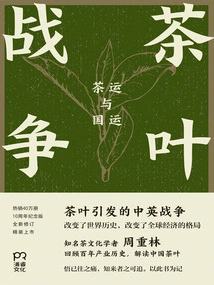
茶叶战争:茶运与国运
Zhou Chonglin Tai Junlin
The long-selling classic that has sold 400,000 copies has been newly revised; Zhou Chonglin, a well-known tea culture scholar, reviews the century-old industry history and interprets the story of Chinese tea! From the 17th to the 19th centuries, tea was inextricably linked to the fate of the four major countries: China, Britain, the United States, and India. The wars caused by tea, including the Sino-British Opium War, the First British War of Invasion of Tibet, and the American War of Independence, changed world history and also affected the shaping of the global economic landscape. "Why did the United Kingdom and the United States become rich and powerful because of tea, but the late Qing Dynasty declined because of tea?" Zhou Chonglin and Tai Junlin, well-known tea culture researchers, started from this question and combed and referenced hundreds of documents. They used detailed historical materials, objective records, and popular writing to restore the true history and reveal the profound reasons behind it layer by layer. It not only focuses on issues such as the Sino-British trade war, Sino-US relations, the right to speak about tea, and the frontiers of tea culture, but also panoramically displays the changes in the world's political and economic landscape, places tea in a macro historical context, interprets the politics, economy, and society of the late Qing Dynasty, and provides a deep insight into the entanglement between the tea movement and the national destiny. "Tea War" was first published in 2012 and was widely praised by readers. It sold 400,000 copies in 10 years. This edition has been fully revised and has added tens of thousands of words.
The long-selling classic that has sold 400,000 copies has been newly revised; Zhou Chonglin, a well-known tea culture scholar, reviews the century-old industry history and interprets the story of Chinese tea! From the 17th to the 19th centuries, tea was inextricably linked to the fate of the four major countries: China, Britain, the United States, and India. The wars caused by tea, including the Sino-British Opium War, the First British War of Invasion of Tibet, and the American War of Independence, changed world history and also affected the shaping of the global economic landscape. "Why did the United Kingdom and the United States become rich and powerful because of tea, but the late Qing Dynasty declined because of tea?" Zhou Chonglin and Tai Junlin, well-known tea culture researchers, started from this question and combed and referenced hundreds of documents. They used detailed historical materials, objective records, and popular writing to restore the true history and reveal the profound reasons behind it layer by layer. It not only focuses on issues such as the Sino-British trade war, Sino-US relations, the right to speak about tea, and the frontiers of tea culture, but also panoramically displays the changes in the world's political and economic landscape, places tea in a macro historical context, interprets the politics, economy, and society of the late Qing Dynasty, and provides a deep insight into the entanglement between the tea movement and the national destiny. "Tea War" was first published in 2012 and was widely praised by readers. It sold 400,000 copies in 10 years. This edition has been fully revised and has added tens of thousands of words.
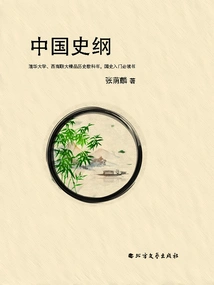
Outline of Chinese History
History中国史纲
Zhang Yinlin
This series of books selects classic works on academic culture by masters and famous figures at this time, with the aim of systematically organizing Chinese academic culture since the 20th century. Although the titles included in the series have been published long ago, they are scattered and not large-scale. The purpose of this collection is to use the publisher's modest efforts to promote the great development and prosperity of Chinese culture, to create a national cultural treasure, and to preserve for future generations a long-lasting masterpiece.
This series of books selects classic works on academic culture by masters and famous figures at this time, with the aim of systematically organizing Chinese academic culture since the 20th century. Although the titles included in the series have been published long ago, they are scattered and not large-scale. The purpose of this collection is to use the publisher's modest efforts to promote the great development and prosperity of Chinese culture, to create a national cultural treasure, and to preserve for future generations a long-lasting masterpiece.
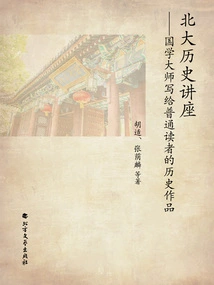
北大历史讲座:国学大师写给普通读者的历史作品
Hu Shi Zhang Yinlin Et Al.
Peking University is a century-old prestigious university in China with a strong faculty and is an institution of higher learning. The book "Peking University History Lectures" includes famous Chinese masters Hu Shi, Fu Sinian, Zhang Yinlin, Liang Qichao, Lu Simian, Meng Sen, Miao Fenglin, Lei Haizong, and Cen Zhongmian. It stands at a new height and uses a rational point of view to explain history, such as Xia, Shang and Zhou, Spring and Autumn and Warring States, Qin and Song, Ming and Qing, and modern Chinese history. It seizes the turning point of Chinese history, and its penetrating and easy-to-understand writing style allows future generations to clearly understand the real events that happened thousands of years ago. On the basis of respecting historical facts, "Peking University History Lectures" uses the form of narrating historical events, uses speculative language, and uses a new vision and historical perspective to comprehensively and in-depth explore the successes and failures of China's rise and fall from multiple angles such as politics, economics, thought, religion, etc. It not only draws on past experience, but also points out the direction for the future and sounds the alarm. It is worth reading and savoring by every Chinese.
Peking University is a century-old prestigious university in China with a strong faculty and is an institution of higher learning. The book "Peking University History Lectures" includes famous Chinese masters Hu Shi, Fu Sinian, Zhang Yinlin, Liang Qichao, Lu Simian, Meng Sen, Miao Fenglin, Lei Haizong, and Cen Zhongmian. It stands at a new height and uses a rational point of view to explain history, such as Xia, Shang and Zhou, Spring and Autumn and Warring States, Qin and Song, Ming and Qing, and modern Chinese history. It seizes the turning point of Chinese history, and its penetrating and easy-to-understand writing style allows future generations to clearly understand the real events that happened thousands of years ago. On the basis of respecting historical facts, "Peking University History Lectures" uses the form of narrating historical events, uses speculative language, and uses a new vision and historical perspective to comprehensively and in-depth explore the successes and failures of China's rise and fall from multiple angles such as politics, economics, thought, religion, etc. It not only draws on past experience, but also points out the direction for the future and sounds the alarm. It is worth reading and savoring by every Chinese.
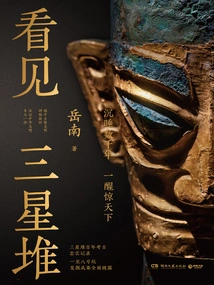
Saw Sanxingdui
History看见三星堆
Yuenan
Yue Nan, the author of "Traveling to the South and Returning to the North", has made a masterpiece after going to Sanxingdui for in-depth interviews many times! The archaeological records of Sanxingdui over the past century + the latest excavation results are fully disclosed! The book contains a large amount of precious historical materials + interviews with front-line archaeologists + real photos of the excavation site, allowing you to immersively touch the pulse of ancient Shu civilization! Panoramic collection of archaeological results from 1929 to 2024, exclusive disclosure of the latest discoveries in Pit No. 3 To Pit 8, and first-hand pictures of cultural relics that have never been released! Archeology professors from Peking University and Sichuan University jointly wrote the preface and highly recommended it! Sanxingdui in Guanghan, Sichuan, has always attracted the attention of the world with its unique cultural relics: magnificent and colorful jade artifacts, mysterious bronze masks, exquisite bronze sacred trees, shining golden scepters... All of these show the world the splendid and colorful ancient Shu civilization. This book uses vivid writing to reproduce the discovery and excavation process of Sanxingdui for nearly a hundred years from the 1920s to the present, the fierce game between relevant parties around Sanxingdui cultural relics, and the rich meaning and connotation behind the unearthed cultural relics. In the past two years, writer Yue Nan went to Sanxingdui again to conduct in-depth interviews, brilliantly interpreting the latest archaeological results of Pit No. 3 To No. 8, And striving to present a more three-dimensional and complete Sanxingdui to readers. Reading this book, you will understand the past and present life of Sanxingdui, and start a wonderful journey full of exploration!
Yue Nan, the author of "Traveling to the South and Returning to the North", has made a masterpiece after going to Sanxingdui for in-depth interviews many times! The archaeological records of Sanxingdui over the past century + the latest excavation results are fully disclosed! The book contains a large amount of precious historical materials + interviews with front-line archaeologists + real photos of the excavation site, allowing you to immersively touch the pulse of ancient Shu civilization! Panoramic collection of archaeological results from 1929 to 2024, exclusive disclosure of the latest discoveries in Pit No. 3 To Pit 8, and first-hand pictures of cultural relics that have never been released! Archeology professors from Peking University and Sichuan University jointly wrote the preface and highly recommended it! Sanxingdui in Guanghan, Sichuan, has always attracted the attention of the world with its unique cultural relics: magnificent and colorful jade artifacts, mysterious bronze masks, exquisite bronze sacred trees, shining golden scepters... All of these show the world the splendid and colorful ancient Shu civilization. This book uses vivid writing to reproduce the discovery and excavation process of Sanxingdui for nearly a hundred years from the 1920s to the present, the fierce game between relevant parties around Sanxingdui cultural relics, and the rich meaning and connotation behind the unearthed cultural relics. In the past two years, writer Yue Nan went to Sanxingdui again to conduct in-depth interviews, brilliantly interpreting the latest archaeological results of Pit No. 3 To No. 8, And striving to present a more three-dimensional and complete Sanxingdui to readers. Reading this book, you will understand the past and present life of Sanxingdui, and start a wonderful journey full of exploration!
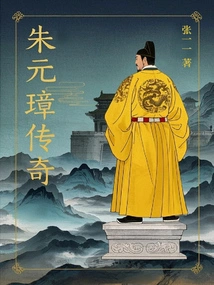
Legend of Zhu Yuanzhang
History朱元璋传奇
Zhang Yiyi
Zhu Yuanzhang, the founding emperor of the Ming Dynasty. From Zhu Yuanzhang's poor background to the establishment of the Ming Dynasty, this book demonstrates his political strategy, military talent and governance philosophy.
Zhu Yuanzhang, the founding emperor of the Ming Dynasty. From Zhu Yuanzhang's poor background to the establishment of the Ming Dynasty, this book demonstrates his political strategy, military talent and governance philosophy.
蔡东藩六史:前汉
Cai Dongfan
Starting from Qin Shihuang's unification of the six kingdoms and ending with Wang Mang's usurpation of the Han Dynasty, there are a hundred chapters, which truly reproduce the rise and fall of the unified Qin Empire, the changes between Chu and Han, and the magnificent history of the Han Empire at its peak.
Starting from Qin Shihuang's unification of the six kingdoms and ending with Wang Mang's usurpation of the Han Dynasty, there are a hundred chapters, which truly reproduce the rise and fall of the unified Qin Empire, the changes between Chu and Han, and the magnificent history of the Han Empire at its peak.
蔡东藩六史:唐
Cai Dongfan
The Tang Dynasty is an important era in the development of the Chinese nation. Not long after the founding of the country, his prestige spread far and wide, the society was prosperous and prosperous, and the emperor was revered as the Khan of Heaven. This book outlines the process of the Tang Empire from prosperity to decline in nearly three centuries, focusing on three historical lessons: the first is the disaster of women, that is, promiscuity in the palace; the second is the disaster of eunuchs, that is, the eunuchs are good at governing and hijacking the emperor; the third is the disaster of vassals, that is, warlords fight in a melee, separate one side, and finally usurp the central power. The book has a relatively detailed description of major events such as the Li family's father and son's defeat of the heroes, the Xuanwumen Incident, Wu Zetian's proclaiming emperor, and the Anshi Rebellion.
The Tang Dynasty is an important era in the development of the Chinese nation. Not long after the founding of the country, his prestige spread far and wide, the society was prosperous and prosperous, and the emperor was revered as the Khan of Heaven. This book outlines the process of the Tang Empire from prosperity to decline in nearly three centuries, focusing on three historical lessons: the first is the disaster of women, that is, promiscuity in the palace; the second is the disaster of eunuchs, that is, the eunuchs are good at governing and hijacking the emperor; the third is the disaster of vassals, that is, warlords fight in a melee, separate one side, and finally usurp the central power. The book has a relatively detailed description of major events such as the Li family's father and son's defeat of the heroes, the Xuanwumen Incident, Wu Zetian's proclaiming emperor, and the Anshi Rebellion.
蔡东藩六史:宋
Cai Dongfan
This book tells the history of 18 emperors in the 320 years of the Song Dynasty, from the founding of the country to its demise. It records the historical lessons of the Northern Song Dynasty's emphasis on literature and restraint of martial arts, and the lack of good generals externally, and the incompetent appointment of talents and lack of good prime ministers internally in the Southern Song Dynasty. It also describes in detail major historical events such as the Chenqiao Mutiny, the Chanyuan Alliance, Wang Anshi's Reform, the Jingkang Revolution, and Yue Fei's Northern Expedition.
This book tells the history of 18 emperors in the 320 years of the Song Dynasty, from the founding of the country to its demise. It records the historical lessons of the Northern Song Dynasty's emphasis on literature and restraint of martial arts, and the lack of good generals externally, and the incompetent appointment of talents and lack of good prime ministers internally in the Southern Song Dynasty. It also describes in detail major historical events such as the Chenqiao Mutiny, the Chanyuan Alliance, Wang Anshi's Reform, the Jingkang Revolution, and Yue Fei's Northern Expedition.
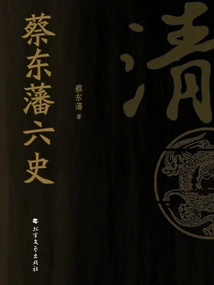
蔡东藩六史:清
Cai Dongfan
This book tells the history of the Qing Dynasty from the founding of Manchuria to the Revolution of 1911 for nearly three hundred years. The author summarizes the lessons and laws of history from the chaos, rise and fall, praises virtuous ministers, famous generals, and national heroes, and lashes out at the arrogance and mediocrity of rulers. While telling history, the author also expressed his deep worries and deep expectations for the future of the nation and country, and expressed his own progressive thoughts.
This book tells the history of the Qing Dynasty from the founding of Manchuria to the Revolution of 1911 for nearly three hundred years. The author summarizes the lessons and laws of history from the chaos, rise and fall, praises virtuous ministers, famous generals, and national heroes, and lashes out at the arrogance and mediocrity of rulers. While telling history, the author also expressed his deep worries and deep expectations for the future of the nation and country, and expressed his own progressive thoughts.
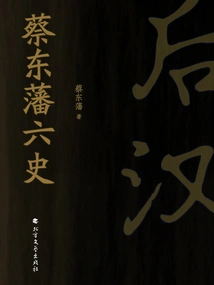
蔡东藩六史:后汉
Cai Dongfan
It started from Wang Mang's new dynasty and ended with the demise of Shu Han and Cao Wei, and the founding of the Jin Dynasty, which lasted for two and a half centuries. Pay special attention to the rise and fall of dynasties. Wang Mang's hypocrisy is deeply exposed. Guangwu Zhongxing, the Eastern Han Dynasty's civil and martial arts once achieved brilliant achievements. However, due to the family system of the feudal dynasty, the succeeding emperors were fatuous and promiscuous, their relatives interfered in politics, the eunuchs were rampant, and the warlords were rampant, which eventually led to the fall of the empire and the people suffered from wars.
It started from Wang Mang's new dynasty and ended with the demise of Shu Han and Cao Wei, and the founding of the Jin Dynasty, which lasted for two and a half centuries. Pay special attention to the rise and fall of dynasties. Wang Mang's hypocrisy is deeply exposed. Guangwu Zhongxing, the Eastern Han Dynasty's civil and martial arts once achieved brilliant achievements. However, due to the family system of the feudal dynasty, the succeeding emperors were fatuous and promiscuous, their relatives interfered in politics, the eunuchs were rampant, and the warlords were rampant, which eventually led to the fall of the empire and the people suffered from wars.
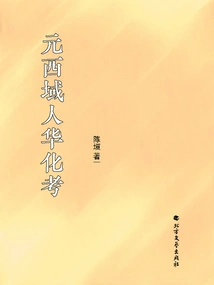
元西域人华化考
Chen Yuan
This book is an early representative work by Mr. Chen Yuan, a leading historian in my country. It examines the gradual assimilation of the Western Regions people (Semu people) who entered the Central Plains in the Yuan Dynasty into the Central Plains culture from various aspects such as literature, Confucianism, Buddhism, art, etiquette and customs. It shows the priority and vitality of the Central Plains culture at that time. The book is rich in information, detailed in research, has high academic value, and is a classic of its generation.
This book is an early representative work by Mr. Chen Yuan, a leading historian in my country. It examines the gradual assimilation of the Western Regions people (Semu people) who entered the Central Plains in the Yuan Dynasty into the Central Plains culture from various aspects such as literature, Confucianism, Buddhism, art, etiquette and customs. It shows the priority and vitality of the Central Plains culture at that time. The book is rich in information, detailed in research, has high academic value, and is a classic of its generation.
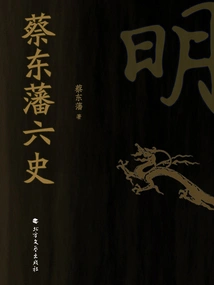
蔡东藩六史:明
Cai Dongfan
From the Qin and Han Dynasties to the Republic of China, the book has more than a thousand chapters and more than 5 million words, covering nearly 2,200 years of history. It mainly focuses on historical history and side by side with unofficial history. It draws materials carefully, has plain views, rich content, well-narrated narratives, elegant language, self-evaluation and self-annotation, and has both reason and interest. It is regarded as a classic of popular history.
From the Qin and Han Dynasties to the Republic of China, the book has more than a thousand chapters and more than 5 million words, covering nearly 2,200 years of history. It mainly focuses on historical history and side by side with unofficial history. It draws materials carefully, has plain views, rich content, well-narrated narratives, elegant language, self-evaluation and self-annotation, and has both reason and interest. It is regarded as a classic of popular history.
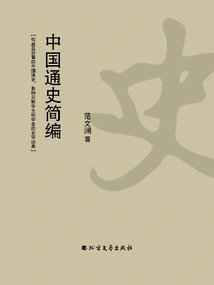
中国通史简编
Fan Wenlan
"A Compendium of General History of China" covers the period from primitive society to the Opium War, focusing on the origins of China's political and military successes and failures in the past dynasties, the economic development of society, and the living conditions, cultural and artistic life of the working people. The writing style of this book is mixed with narratives and discussions, and the text is concise and vivid, explaining the profound things in simple terms. It has been revised and reprinted several times, and has been printed in millions of copies. This book creates a new writing paradigm for my country's general history. It is a lofty and important work on China's general history and is well worth reading.
"A Compendium of General History of China" covers the period from primitive society to the Opium War, focusing on the origins of China's political and military successes and failures in the past dynasties, the economic development of society, and the living conditions, cultural and artistic life of the working people. The writing style of this book is mixed with narratives and discussions, and the text is concise and vivid, explaining the profound things in simple terms. It has been revised and reprinted several times, and has been printed in millions of copies. This book creates a new writing paradigm for my country's general history. It is a lofty and important work on China's general history and is well worth reading.
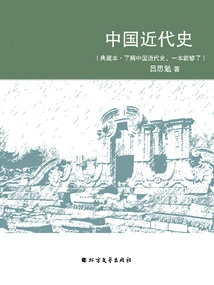
中国近代史(典藏本)
Lu Simian
Lu Simian was a historian of the middle and modern times. He made contributions to the construction of the general history of the Middle Ages and also pioneered the writing of modern history. This book starts from the social conquests in the early Qing Dynasty and continues to the end of the Anti-Japanese War. It covers all the events, characters, institutions and regulations in modern history in detail. It is a classic for readers to understand the history of middle and modern times. I often regard Mr. Lu Simian Chengzhi, Mr. Chen Yuan Yuan, Mr. Chen Yinke and Mr. Qian Mubin as the four predecessors of history who have broad theoretical fields, rich narratives, and can write deeply.
Lu Simian was a historian of the middle and modern times. He made contributions to the construction of the general history of the Middle Ages and also pioneered the writing of modern history. This book starts from the social conquests in the early Qing Dynasty and continues to the end of the Anti-Japanese War. It covers all the events, characters, institutions and regulations in modern history in detail. It is a classic for readers to understand the history of middle and modern times. I often regard Mr. Lu Simian Chengzhi, Mr. Chen Yuan Yuan, Mr. Chen Yinke and Mr. Qian Mubin as the four predecessors of history who have broad theoretical fields, rich narratives, and can write deeply.
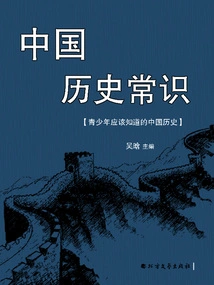
中国历史常识:青少年应该知道的中国历史
Editor-in-chief Wu Han
Wu Han organized a group of experts and scholars from 1963 to 1965, such as well-known historians Wang Zhuan, Bai Shouyi, Deng Guangming, Zheng Tianting, Weng Dujian, Hu Houxuan, Yin Faru, He Ziquan, Dai Yi, etc. Together they compiled and compiled this "Common Sense of Chinese History". The compilation of a "small" book by everyone is an important prerequisite to ensure the high quality of this book. As a popular historical reading, this book has a lively form, with each topic being both independent and interrelated. The content is short and concise, giving readers the necessary historical knowledge. It draws on a wide range of materials, introducing social profiles, famous figures and historical anecdotes in various historical periods, which is different from textbooks and dictionaries. It is interesting and easy to read, and the content is interspersed with storylines, vividly presenting Chinese history with warmth and attitude.
Wu Han organized a group of experts and scholars from 1963 to 1965, such as well-known historians Wang Zhuan, Bai Shouyi, Deng Guangming, Zheng Tianting, Weng Dujian, Hu Houxuan, Yin Faru, He Ziquan, Dai Yi, etc. Together they compiled and compiled this "Common Sense of Chinese History". The compilation of a "small" book by everyone is an important prerequisite to ensure the high quality of this book. As a popular historical reading, this book has a lively form, with each topic being both independent and interrelated. The content is short and concise, giving readers the necessary historical knowledge. It draws on a wide range of materials, introducing social profiles, famous figures and historical anecdotes in various historical periods, which is different from textbooks and dictionaries. It is interesting and easy to read, and the content is interspersed with storylines, vividly presenting Chinese history with warmth and attitude.
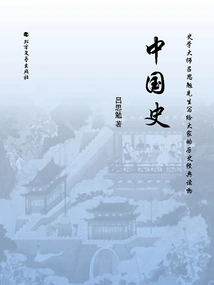
History of China (a Historical Classic Written for Everyone by Mr. Lu Simian, the Master of History)
History中国史(史学大师吕思勉先生写给大家的历史经典读物)
Lu Simian
"History of China", also known as "History of the Country in Vernacular", is the famous work of the master historian Mr. Lu Simian. It is also the general history of China written in vernacular. It ushered in a new era of general history writing and confronted Qian Mu's "Outline of National History". This book was completed by Mr. Lu Simian on the basis of teaching lectures and historical research over the years. It describes in detail the history of China from ancient times to the first half of the twentieth century. It is a general history of China in the sense of the word. The whole book is divided into five different periods according to the changes in Chinese history and society: ancient history, medieval history, modern history, modern history, and modern history. It is comprehensively sorted out according to politics, geography, society, culture, etc. It is large in scale, broad in vision, rich in historical materials, and fluent in writing.
"History of China", also known as "History of the Country in Vernacular", is the famous work of the master historian Mr. Lu Simian. It is also the general history of China written in vernacular. It ushered in a new era of general history writing and confronted Qian Mu's "Outline of National History". This book was completed by Mr. Lu Simian on the basis of teaching lectures and historical research over the years. It describes in detail the history of China from ancient times to the first half of the twentieth century. It is a general history of China in the sense of the word. The whole book is divided into five different periods according to the changes in Chinese history and society: ancient history, medieval history, modern history, modern history, and modern history. It is comprehensively sorted out according to politics, geography, society, culture, etc. It is large in scale, broad in vision, rich in historical materials, and fluent in writing.
Come to China Literature's website to read more of my works!
穿越大秦,我成皇子了?
The Invincible Bird
When he woke up, Qin Feng was a little uneasy. The good news is that time has passed. He also traveled through time to a prince. The bad news is that this is Da Qin. Yes, that's right, it's Zu Long's Great Qin. The seventeenth prince who traveled through time to become Zulong was only eight years old. ... At such a young age, at this time, the First Emperor was about to go on a tour. By then Hu Hai will take over. Frame the revival and kill all the brothers. What the hell. It was a hell of a start. Fortunately, there is also a system that accompanies me through time travel! [National Transport System] ... "Ding! The novice gift package has been distributed, please check the host!" ...
When he woke up, Qin Feng was a little uneasy. The good news is that time has passed. He also traveled through time to a prince. The bad news is that this is Da Qin. Yes, that's right, it's Zu Long's Great Qin. The seventeenth prince who traveled through time to become Zulong was only eight years old. ... At such a young age, at this time, the First Emperor was about to go on a tour. By then Hu Hai will take over. Frame the revival and kill all the brothers. What the hell. It was a hell of a start. Fortunately, there is also a system that accompanies me through time travel! [National Transport System] ... "Ding! The novice gift package has been distributed, please check the host!" ...
Wu Zetian's Patent Lover
History武则天的专利情人
Mo Zhixuebai
Li Qingyun traveled through Wu Zhou, and in order not to become Wu Zetian's face, he made great inventions to benefit the people while sacrificing the monarch's power to turn a deer into a horse. Others rely on scheming to fight in the palace, but he relies on physics in palace fighting. He likes to beat Xue Huaiyi. For example, he hinted that the empress's aesthetics are not good. Many years later-- With my character and style of conduct, when the emperor was criticized for being fatuous, he must have had something to do with me. It should be me who those people who launched a coup really wanted to kill! Everyone says that Yuan Tiangang's disciples are the best at bewitching the king's heart, but they don't know-- The most cruel trick is to make the entire dynasty believe that you will not rebel! For the sake of all the people in the world, this king, the most treacherous traitor in Wu Zhou, has no choice but to seduce the emperor and put the country in trouble! When I entered Luoyang, there was a great scholar who argued for me.
Li Qingyun traveled through Wu Zhou, and in order not to become Wu Zetian's face, he made great inventions to benefit the people while sacrificing the monarch's power to turn a deer into a horse. Others rely on scheming to fight in the palace, but he relies on physics in palace fighting. He likes to beat Xue Huaiyi. For example, he hinted that the empress's aesthetics are not good. Many years later-- With my character and style of conduct, when the emperor was criticized for being fatuous, he must have had something to do with me. It should be me who those people who launched a coup really wanted to kill! Everyone says that Yuan Tiangang's disciples are the best at bewitching the king's heart, but they don't know-- The most cruel trick is to make the entire dynasty believe that you will not rebel! For the sake of all the people in the world, this king, the most treacherous traitor in Wu Zhou, has no choice but to seduce the emperor and put the country in trouble! When I entered Luoyang, there was a great scholar who argued for me.
朕在大明假冒天子
Phoenix Ming Gao Gang
In the autumn of the 14th year of Zhengtong, the beacon smoke from Tumubao burned the backbone of the Ming Dynasty into powder, and the nine-layer palace palace trembled under the iron hoof of the tiles. Zhang Qi opened his eyes and became an official slave in the British Duke Zhang Fu's house. Due to the Han Dynasty's Rebellion in the first year of Xuande, he was reduced to the most humble status in the Ming Dynasty. He could not take the imperial examination, do business, marry his beloved, and was a slave for generations, which could not be changed. However, things are impermanent. When the bad news about Yingzong's Northern Hunting tore apart the dawn of Shuntian Mansion, when Zhang Fu's silver armor shattered into stars outside Juyong Pass, when the news of King Xi's sudden death was wrapped in blood mist and covered the Jinshui Bridge. --Yu Qian carried the embers of the border beacon and smashed the palace gate, and personally covered his thin shoulders with the blood-stained Twelve Chapters Pattern uniform. "The Ming Dynasty needs such a face. Please perform three plays to extend the Ming Dynasty for another two hundred years." In the first scene, Fengtianmen angrily denounced the southward migration; The second scene is Zhu Pi's execution of eunuchs in the Palace of Qianqing; The third game was to defeat Ye Xian in the defense battle of Beijing. After three scenes, the fake emperor became a puppet of power and was completely put on the stage of fate. From Fengtian Hall to Desheng Gate, he sang the drama of "a wise king saves the country" for eight years. It wasn't until the sound of digging into the wall was heard from Nangong that he discovered that the system task that allowed him to return home successfully was just to "save Yu Qian." The night when the bells of the Seizing of the Forbidden City rang throughout the Forbidden City, Yu Qian alone unfolded a still-undry imperial edict with a candle. There are bloodstains on the dragon button of the jade seal. "The Zhengtong Dynasty has been buried. Are you here in the eighth year of Jingtai? I ask you three questions: Can the people's livelihood be as important as the Nine Cauldrons? The war can be extinguished for a hundred years?" Zhu's tears rolled down the edge of the edict, "Shaobao, would you like to drink poisonous wine with me?"
In the autumn of the 14th year of Zhengtong, the beacon smoke from Tumubao burned the backbone of the Ming Dynasty into powder, and the nine-layer palace palace trembled under the iron hoof of the tiles. Zhang Qi opened his eyes and became an official slave in the British Duke Zhang Fu's house. Due to the Han Dynasty's Rebellion in the first year of Xuande, he was reduced to the most humble status in the Ming Dynasty. He could not take the imperial examination, do business, marry his beloved, and was a slave for generations, which could not be changed. However, things are impermanent. When the bad news about Yingzong's Northern Hunting tore apart the dawn of Shuntian Mansion, when Zhang Fu's silver armor shattered into stars outside Juyong Pass, when the news of King Xi's sudden death was wrapped in blood mist and covered the Jinshui Bridge. --Yu Qian carried the embers of the border beacon and smashed the palace gate, and personally covered his thin shoulders with the blood-stained Twelve Chapters Pattern uniform. "The Ming Dynasty needs such a face. Please perform three plays to extend the Ming Dynasty for another two hundred years." In the first scene, Fengtianmen angrily denounced the southward migration; The second scene is Zhu Pi's execution of eunuchs in the Palace of Qianqing; The third game was to defeat Ye Xian in the defense battle of Beijing. After three scenes, the fake emperor became a puppet of power and was completely put on the stage of fate. From Fengtian Hall to Desheng Gate, he sang the drama of "a wise king saves the country" for eight years. It wasn't until the sound of digging into the wall was heard from Nangong that he discovered that the system task that allowed him to return home successfully was just to "save Yu Qian." The night when the bells of the Seizing of the Forbidden City rang throughout the Forbidden City, Yu Qian alone unfolded a still-undry imperial edict with a candle. There are bloodstains on the dragon button of the jade seal. "The Zhengtong Dynasty has been buried. Are you here in the eighth year of Jingtai? I ask you three questions: Can the people's livelihood be as important as the Nine Cauldrons? The war can be extinguished for a hundred years?" Zhu's tears rolled down the edge of the edict, "Shaobao, would you like to drink poisonous wine with me?"
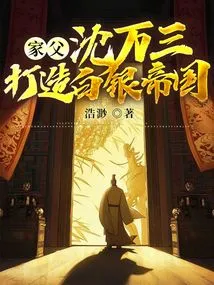
家父沈万三,打造海上日不落!
Hao Miao
Good news, good news, great news! Shen Mao traveled through time and became the third son of Shen Wansan, the richest man in the Ming Dynasty, the second generation of the top rich! You don't need an oar to row a boat, you rely on the waves for the rest of your life! Bad news... Shen Wansan has just taken over the construction of the Yingtianfu city wall, and he wants to take this opportunity to send Shen Mao to the court as an official! Shen Maoren was dumbfounded when he learned about this. He had just traveled through time and became the second generation of top rich people, and was targeted by Zhu Papi? What? Do you want to help Zhu Papi reward the three armies? Spicy pills! My rich second generation life! No! I have to rescue him! Who says that a businessman must be the emperor's money bag? He, a homeless beggar, can sit in the emperor's seat, but I, Shen Mao, can't?
Good news, good news, great news! Shen Mao traveled through time and became the third son of Shen Wansan, the richest man in the Ming Dynasty, the second generation of the top rich! You don't need an oar to row a boat, you rely on the waves for the rest of your life! Bad news... Shen Wansan has just taken over the construction of the Yingtianfu city wall, and he wants to take this opportunity to send Shen Mao to the court as an official! Shen Maoren was dumbfounded when he learned about this. He had just traveled through time and became the second generation of top rich people, and was targeted by Zhu Papi? What? Do you want to help Zhu Papi reward the three armies? Spicy pills! My rich second generation life! No! I have to rescue him! Who says that a businessman must be the emperor's money bag? He, a homeless beggar, can sit in the emperor's seat, but I, Shen Mao, can't?
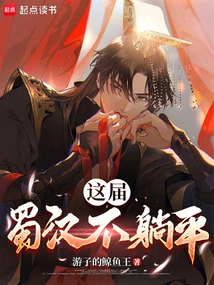
这届蜀汉不躺平
Wanderer's Whale King
AD 222. Liu Bei died of illness on the way, and Liu Chan ascended the throne early. The newly born Han Dynasty was faced with internal and external troubles, Xiangfan was defeated, Yiling was in flames, Nanzhong was in constant rebellion, Yizhou was in turmoil, and was in a precarious situation. In the future, it would face a difficult situation of one mine attacking ten mines. But Liu Chan now is no longer the Liu Adou in history. Nanzhong rebellion? Three sticks break up the barbarian sentiments. Sir, I am a Han. Not enough food and grass? Prime Minister, do you know that there is rice in the world that ripens every fifty days? There is a road in Jiaozhou alone, but the risk is a bit high. Not enough troops? Prime Minister, do you know that there is a civilian tactic in the art of war? Those poor people in the world are not my soldiers? I, Liu Chan, am destined to be the Holy Emperor this time!
AD 222. Liu Bei died of illness on the way, and Liu Chan ascended the throne early. The newly born Han Dynasty was faced with internal and external troubles, Xiangfan was defeated, Yiling was in flames, Nanzhong was in constant rebellion, Yizhou was in turmoil, and was in a precarious situation. In the future, it would face a difficult situation of one mine attacking ten mines. But Liu Chan now is no longer the Liu Adou in history. Nanzhong rebellion? Three sticks break up the barbarian sentiments. Sir, I am a Han. Not enough food and grass? Prime Minister, do you know that there is rice in the world that ripens every fifty days? There is a road in Jiaozhou alone, but the risk is a bit high. Not enough troops? Prime Minister, do you know that there is a civilian tactic in the art of war? Those poor people in the world are not my soldiers? I, Liu Chan, am destined to be the Holy Emperor this time!
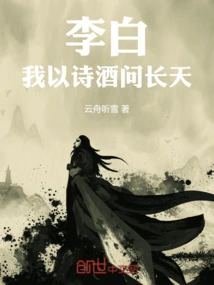
李白:我以诗酒问长天
Yunzhou Listens To Snow
When the moonlight wine of Chang'an was in the wasteland outside Suiye City, a baby was crying in the wind and sand of a foreign land. He didn't know that he would travel all over the mountains and rivers of Tang Dynasty, but he would never be able to enter the depths of the temple. My name is Li Bai, the broken leaves are my birthplace, and the mountains and rivers of Sichuan cultivate my spirit. When he was young, he came out of Sichuan with sword in hand, full of passion and poetry, and wanted to impress the emperor with his articles. However, official career is like looking at flowers in the mist. The closer you get, the more illusory it becomes. Trapped in the cold eyes of a wealthy family, hidden in the mountains and rivers, I used poetry as a sword to pierce the glitz; I used wine as a matchmaker to express my loneliness and anger. The turning point of fate began in Chang'an Palace. In the early years of Tianbao, I entered the Imperial Academy to serve as a priest. I thought I could fulfill my ambitions, but it was just an embellishment for the emperor's banquet. The golden vase and jade cup contain both talent and shackles. I was drunk and dissolute, laughed and left the banquet, and was finally given money and released. In exchange for my freedom, I also lost my fame. Anshi chaos broke out, and the mountains and rivers were shattered. I joined the army, willing to serve the country with my body, but I accidentally fell into the whirlpool of power and suffered several downfalls. Yelang was exiled and pardoned and returned to the east. In his old age, his sick bones still want to wear armor. However, the world has changed. The heroic sentiments of the past are now only poems. If life is a pot of wine, then I have drunk all the sweetness and swallowed the bitterness. The prosperous times are like dreams, and the troubled times are like ink. I ask Changtian with poetry and wine: In this vast world, how should scholars deal with themselves?
When the moonlight wine of Chang'an was in the wasteland outside Suiye City, a baby was crying in the wind and sand of a foreign land. He didn't know that he would travel all over the mountains and rivers of Tang Dynasty, but he would never be able to enter the depths of the temple. My name is Li Bai, the broken leaves are my birthplace, and the mountains and rivers of Sichuan cultivate my spirit. When he was young, he came out of Sichuan with sword in hand, full of passion and poetry, and wanted to impress the emperor with his articles. However, official career is like looking at flowers in the mist. The closer you get, the more illusory it becomes. Trapped in the cold eyes of a wealthy family, hidden in the mountains and rivers, I used poetry as a sword to pierce the glitz; I used wine as a matchmaker to express my loneliness and anger. The turning point of fate began in Chang'an Palace. In the early years of Tianbao, I entered the Imperial Academy to serve as a priest. I thought I could fulfill my ambitions, but it was just an embellishment for the emperor's banquet. The golden vase and jade cup contain both talent and shackles. I was drunk and dissolute, laughed and left the banquet, and was finally given money and released. In exchange for my freedom, I also lost my fame. Anshi chaos broke out, and the mountains and rivers were shattered. I joined the army, willing to serve the country with my body, but I accidentally fell into the whirlpool of power and suffered several downfalls. Yelang was exiled and pardoned and returned to the east. In his old age, his sick bones still want to wear armor. However, the world has changed. The heroic sentiments of the past are now only poems. If life is a pot of wine, then I have drunk all the sweetness and swallowed the bitterness. The prosperous times are like dreams, and the troubled times are like ink. I ask Changtian with poetry and wine: In this vast world, how should scholars deal with themselves?
Red Flame Army
History赤焰军
My Fate Is Up To Me And I Won't Be Able To Enjoy It
Come to China Literature's website to read more of my works!
Come to China Literature's website to read more of my works!
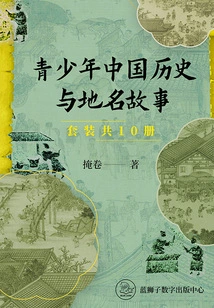
青少年中国历史与地名故事(套装共10册)
Cover Up
This book combines place names from various parts of China and mainly tells famous historical stories from ancient times to the Republic of China. In each historical story, it introduces historical encyclopedias and interesting facts about place names, and also attaches a chronology of historical events to help readers sort out the major events of the dynasty. For teenagers, the language of this book is easy to read and fascinating. It is a good introductory book on Chinese history.
This book combines place names from various parts of China and mainly tells famous historical stories from ancient times to the Republic of China. In each historical story, it introduces historical encyclopedias and interesting facts about place names, and also attaches a chronology of historical events to help readers sort out the major events of the dynasty. For teenagers, the language of this book is easy to read and fascinating. It is a good introductory book on Chinese history.
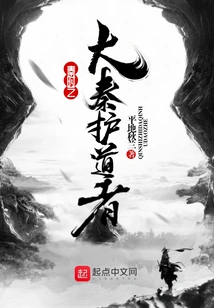
秦时之大秦护道者
Pingdi Qiulan
The moment Ji Yu became a snare killer, his fate had already changed... Lu Buwei: What a good sword! Ying Zheng: With Thirteen in hand, I own the world! Six Sword Slave: Slipping away... Gai Nie: Xiaozhuang, this person's strength is not inferior to yours or mine. Wei Zhuang:...... Odayan: Uncle... Mo Crow: Thank you, sir, for saving my life. ...............
The moment Ji Yu became a snare killer, his fate had already changed... Lu Buwei: What a good sword! Ying Zheng: With Thirteen in hand, I own the world! Six Sword Slave: Slipping away... Gai Nie: Xiaozhuang, this person's strength is not inferior to yours or mine. Wei Zhuang:...... Odayan: Uncle... Mo Crow: Thank you, sir, for saving my life. ...............
Decode Historical Passwords
History解码历史密码
Sun Dehou
There are many codes hidden in history, waiting for us to decipher them. Through the study of historical documents, archaeological discoveries and legends, this book reveals the truth and secrets behind history, giving you a deeper understanding of history.
There are many codes hidden in history, waiting for us to decipher them. Through the study of historical documents, archaeological discoveries and legends, this book reveals the truth and secrets behind history, giving you a deeper understanding of history.
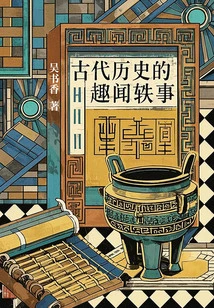
古代历史的趣闻轶事
Wu Shuxiang
It brings together interesting anecdotes from ancient history to let you learn about history with laughter. From humorous stories to hilarious incidents, these anecdotes add a lighthearted touch to history.
It brings together interesting anecdotes from ancient history to let you learn about history with laughter. From humorous stories to hilarious incidents, these anecdotes add a lighthearted touch to history.
古代文明的密码锁
Zhang Qixuan
Try to unlock the code lock of ancient civilization and delve into the origin, development and decline of ancient civilization. From mysterious symbols to magnificent buildings, we will take you to appreciate the mystery and charm of ancient civilizations.
Try to unlock the code lock of ancient civilization and delve into the origin, development and decline of ancient civilization. From mysterious symbols to magnificent buildings, we will take you to appreciate the mystery and charm of ancient civilizations.
古代文明的足迹
Yang Jincheng
Tracing the footsteps of ancient civilizations, from ancient ruins to precious cultural relics, will lead you to appreciate the unique charm of different civilizations. Understand the development process of ancient civilization and feel the great achievements of human civilization.
Tracing the footsteps of ancient civilizations, from ancient ruins to precious cultural relics, will lead you to appreciate the unique charm of different civilizations. Understand the development process of ancient civilization and feel the great achievements of human civilization.
民国城市记忆
Wei Botong
Deeply explore the urban memories of the Republic of China, from Shanghai's Shili Foreign Market to Beijing's ancient capital style. It tells the prosperity of the city and the stories behind it, and shows the charm and challenges of the city in that era.
Deeply explore the urban memories of the Republic of China, from Shanghai's Shili Foreign Market to Beijing's ancient capital style. It tells the prosperity of the city and the stories behind it, and shows the charm and challenges of the city in that era.
民国传奇人物志
Wei Botong
During the Republic of China, many legendary figures emerged. From political leaders to cultural celebrities, from revolutionary heroes to business tycoons. In their own unique ways, they have left a mark on the stage of history. This book selects representative figures from the Republic of China period, tells their life stories, achievements and setbacks, and shows their character charm and the spirit of the times. Through the experiences of these legendary figures, you will have a deeper understanding of the history and culture of the Republic of China.
During the Republic of China, many legendary figures emerged. From political leaders to cultural celebrities, from revolutionary heroes to business tycoons. In their own unique ways, they have left a mark on the stage of history. This book selects representative figures from the Republic of China period, tells their life stories, achievements and setbacks, and shows their character charm and the spirit of the times. Through the experiences of these legendary figures, you will have a deeper understanding of the history and culture of the Republic of China.
民国风华录
Qian Sanqi
The Republic of China was an era full of old dreams and memories. The prosperity of Shili Foreign Market, the charm of ancient streets and alleys, the romance of talented people and beautiful ladies, and the passion of revolutionary patriots. This book uses delicate writing methods to describe the social scene, people's daily life, and stories buried by the years during the Republic of China. It will take you through time, relive the old dream of the Republic of China when prosperity and vicissitudes were intertwined, and appreciate the unique style of that era.
The Republic of China was an era full of old dreams and memories. The prosperity of Shili Foreign Market, the charm of ancient streets and alleys, the romance of talented people and beautiful ladies, and the passion of revolutionary patriots. This book uses delicate writing methods to describe the social scene, people's daily life, and stories buried by the years during the Republic of China. It will take you through time, relive the old dream of the Republic of China when prosperity and vicissitudes were intertwined, and appreciate the unique style of that era.
民国风云录
Qian Sanqi
This book takes you into the magnificent history of the Republic of China. From the gunfire of the Revolution of 1911 to the beacon fire of the Anti-Japanese War, from the turmoil of the warlords' melee to the ideological collision of the New Culture Movement. We have witnessed countless heroes and literati working hard for the independence of the country and the rejuvenation of the nation in this special era. Through detailed historical materials and vivid narratives, it shows the changes in politics, economy, culture and other aspects during the Republic of China period, allowing you to feel the unique charm and challenges of that era.
This book takes you into the magnificent history of the Republic of China. From the gunfire of the Revolution of 1911 to the beacon fire of the Anti-Japanese War, from the turmoil of the warlords' melee to the ideological collision of the New Culture Movement. We have witnessed countless heroes and literati working hard for the independence of the country and the rejuvenation of the nation in this special era. Through detailed historical materials and vivid narratives, it shows the changes in politics, economy, culture and other aspects during the Republic of China period, allowing you to feel the unique charm and challenges of that era.
民国秘史寻踪
Wei Botong
Delve into the mysteries of Republican history, from mysterious events to unsolved mysteries. Through the research and analysis of historical materials, we try to solve these historical mysteries and present a more mysterious Republic of China to readers.
Delve into the mysteries of Republican history, from mysterious events to unsolved mysteries. Through the research and analysis of historical materials, we try to solve these historical mysteries and present a more mysterious Republic of China to readers.
民国岁月长歌
Wei Botong
It tells the historical stories of the Republic of China in the form of a long song. From the din of war to the desire for peace, from personal struggle to the fate of the country. Let you feel the magnificence of the Republic of China in the melody and rhythm of history.
It tells the historical stories of the Republic of China in the form of a long song. From the din of war to the desire for peace, from personal struggle to the fate of the country. Let you feel the magnificence of the Republic of China in the melody and rhythm of history.
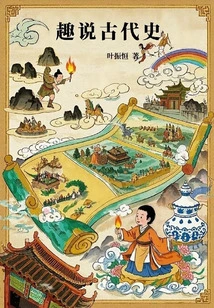
趣说古代史
Ye Zhenheng
Do you find history boring? This "Interesting Ancient History" will break your stereotypes. It tells ancient anecdotes, celebrity legends and major historical events in humorous language, allowing you to understand ancient history in a relaxed and pleasant atmosphere.
Do you find history boring? This "Interesting Ancient History" will break your stereotypes. It tells ancient anecdotes, celebrity legends and major historical events in humorous language, allowing you to understand ancient history in a relaxed and pleasant atmosphere.
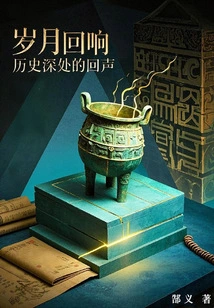
岁月回响:历史深处的回声
Gao Yi
Listen to the echoes of history and explore the development trajectory of human civilization. This book covers important historical periods from ancient times to modern times, and shows the progress and changes of human society through in-depth analysis of historical events, characters and culture.
Listen to the echoes of history and explore the development trajectory of human civilization. This book covers important historical periods from ancient times to modern times, and shows the progress and changes of human society through in-depth analysis of historical events, characters and culture.
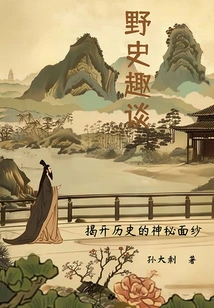
野史趣谈:揭开历史的神秘面纱
Sun Dayang
History is not only a serious record, but also has an interesting side. "Interesting Unofficial History: Uncovering the Mystery of History" takes you into a world of unofficial history full of surprises. Here, you will discover the unknown hobbies of historical figures, the truth behind ancient legends, and those hilarious historical moments. Easy to read and enjoy exploring the mysteries of history.
History is not only a serious record, but also has an interesting side. "Interesting Unofficial History: Uncovering the Mystery of History" takes you into a world of unofficial history full of surprises. Here, you will discover the unknown hobbies of historical figures, the truth behind ancient legends, and those hilarious historical moments. Easy to read and enjoy exploring the mysteries of history.
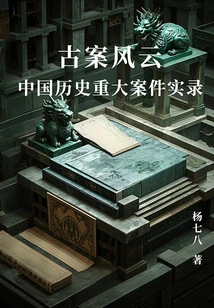
古案风云:中国历史重大案件实录
Yang Qiba
Opening "Ancient Cases: Records of Major Cases in Chinese History" is like opening a crime file in Chinese history. The book contains major cases from pre-Qin to Ming and Qing dynasties, covering politics, economy, culture and other fields. Each case is a magnificent historical story, witnessing the rise and fall of ancient dynasties, social changes and the complexity of human nature. Following the author's writing, you will personally visit the scene of an ancient crime, experience the intense and exciting investigation process, understand the operation of the ancient judicial system, and the profound impact of crimes on the direction of history.
Opening "Ancient Cases: Records of Major Cases in Chinese History" is like opening a crime file in Chinese history. The book contains major cases from pre-Qin to Ming and Qing dynasties, covering politics, economy, culture and other fields. Each case is a magnificent historical story, witnessing the rise and fall of ancient dynasties, social changes and the complexity of human nature. Following the author's writing, you will personally visit the scene of an ancient crime, experience the intense and exciting investigation process, understand the operation of the ancient judicial system, and the profound impact of crimes on the direction of history.
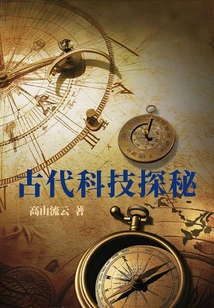
古代科技探秘
High Mountains And Flowing Clouds
Ancient technology is the crystallization of human wisdom, and it has witnessed the development of human civilization. This book deeply explores the development process of ancient science and technology and reveals the mystery of ancient science and technology for you. These ancient scientific and technological achievements not only demonstrate the wisdom and creativity of ancient people, but also provide valuable inspiration for the development of modern science and technology.
Ancient technology is the crystallization of human wisdom, and it has witnessed the development of human civilization. This book deeply explores the development process of ancient science and technology and reveals the mystery of ancient science and technology for you. These ancient scientific and technological achievements not only demonstrate the wisdom and creativity of ancient people, but also provide valuable inspiration for the development of modern science and technology.
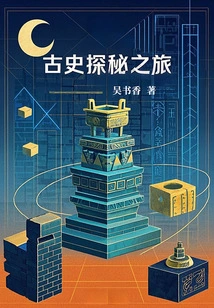
古史探秘之旅
Wu Shuxiang
Embark on an ancient history exploration journey and delve into the mysterious corners of history. Explore the ruins of ancient civilizations, solve historical mysteries, and pursue lost legends. In the process, you will continue to discover the surprises and charm of history.
Embark on an ancient history exploration journey and delve into the mysterious corners of history. Explore the ruins of ancient civilizations, solve historical mysteries, and pursue lost legends. In the process, you will continue to discover the surprises and charm of history.
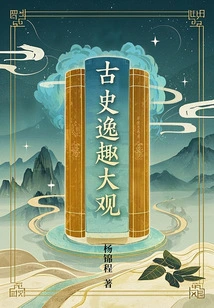
古史逸趣大观
Yang Jincheng
This is an interesting overview of ancient history, which collects various interesting historical events, anecdotes about people and cultural phenomena. Let you feel the fun and charm of history in relaxed and enjoyable reading.
This is an interesting overview of ancient history, which collects various interesting historical events, anecdotes about people and cultural phenomena. Let you feel the fun and charm of history in relaxed and enjoyable reading.
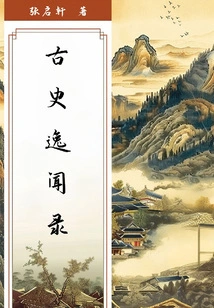
古史逸闻录
Zhang Qixuan
It collects a large number of anecdotes from ancient history, allowing you to learn about history in a relaxing and enjoyable way. From the emperor's little quirks to folk strange things, these stories show the richness and variety of ancient society and the various aspects of people's lives.
It collects a large number of anecdotes from ancient history, allowing you to learn about history in a relaxing and enjoyable way. From the emperor's little quirks to folk strange things, these stories show the richness and variety of ancient society and the various aspects of people's lives.
古史之谜团探索
Li Haibo
Delve into the mysteries of ancient history, such as lost civilizations, mysterious ruins, unsolved historical events, etc. Through scientific analysis and reasoning, we try to solve these mysteries and take you to uncover the mystery of history.
Delve into the mysteries of ancient history, such as lost civilizations, mysterious ruins, unsolved historical events, etc. Through scientific analysis and reasoning, we try to solve these mysteries and take you to uncover the mystery of history.
I Am Emperor Wanli
History朕就是万历帝
Lieutenant Breaking The Thief
Traveling back in time as the great grandson of Emperor Jiajing, he took advantage of Zhu Yijun's trap in advance, managed step by step, and became the Wanli Emperor who was completely different from the one in history, creating a completely different new Ming Dynasty. ****** The new book "Rebirth in 1987, They Called Me Detective" is a period criminal investigation article. You can try it for a change.
Traveling back in time as the great grandson of Emperor Jiajing, he took advantage of Zhu Yijun's trap in advance, managed step by step, and became the Wanli Emperor who was completely different from the one in history, creating a completely different new Ming Dynasty. ****** The new book "Rebirth in 1987, They Called Me Detective" is a period criminal investigation article. You can try it for a change.
水浒:魂穿阳谷县令
Maitreya Fights Humans
Zhu Xian finally became a member of the time-traveling army. Good news: a good start, a Jinshi in his early twenties. Although he was only the 258th Jinshi from the same background, the Jinshi at the end of the crane was also a Jinshi. Bad news: I came from a bad background, my family is poor, and my parents are dead. Although he won the imperial examination, he had no money left to pay bribes. It rained heavily on the day the results were released, so he missed the chance to catch his son-in-law. He had no background and was released as a county magistrate. Good news: Outside in Yanggu County, there is a man named Wu Song. Bad news: Wu Song came to report to the official with a bone from Wuhan University! ! !
Zhu Xian finally became a member of the time-traveling army. Good news: a good start, a Jinshi in his early twenties. Although he was only the 258th Jinshi from the same background, the Jinshi at the end of the crane was also a Jinshi. Bad news: I came from a bad background, my family is poor, and my parents are dead. Although he won the imperial examination, he had no money left to pay bribes. It rained heavily on the day the results were released, so he missed the chance to catch his son-in-law. He had no background and was released as a county magistrate. Good news: Outside in Yanggu County, there is a man named Wu Song. Bad news: Wu Song came to report to the official with a bone from Wuhan University! ! !
刘协:待朕看看尔等的下场!
Qiu Ying
A clerk traveled through time and became Emperor Xian of the Han Dynasty, Liu Xie. Gained the ability to examine the other party's final fate, and was able to change the fate of those around him; The rebellious ministers and traitors have no way of hiding under his scrutiny. However, later on, this ability became increasingly useless. Because, as long as anyone comes into his eyes, His fate and end are all in his mind!
A clerk traveled through time and became Emperor Xian of the Han Dynasty, Liu Xie. Gained the ability to examine the other party's final fate, and was able to change the fate of those around him; The rebellious ministers and traitors have no way of hiding under his scrutiny. However, later on, this ability became increasingly useless. Because, as long as anyone comes into his eyes, His fate and end are all in his mind!
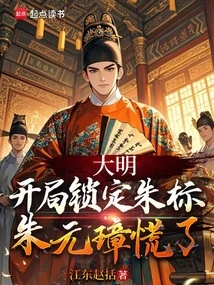
大明:开局锁定朱标,朱元璋慌了
Jiangdong Zhao Kuo
The 20th year of Hongwu in the Ming Dynasty. Lu Lan traveled through time and became the direct grandson of Marquis Dingyuan. But on the wedding night, she decided to run away from the marriage! Because he is familiar with the history of the Ming Dynasty, the Lu family will be implicated in Li Shanchang's case and the whole family will be executed. In order to break the deadlock, he went to the capital and targeted Prince Zhu Biao. Become a storyteller. The story of the Three Kingdoms is wonderful, with secrets hidden in every word. For example, it tells the story of Cao Cao's northern expedition to Wuhuan and Huo Qubing, who sealed Langjuxu. The next day, the capital received good news about the battle of Lanyuyuerhai... Zhu Biao touched his palms and exclaimed: "This man has a deep chest and a far-sighted vision. He will definitely be a minister of his shoulders and legs!" However. Zhu Yuanzhang panicked. He sneered: "This person talks a lot, forms cliques for personal gain, and brings trouble to the government and the public. He deserves to be killed!" But Xiao Zhu Yunwen shook his head vigorously: "Grandpa Huang is ridiculous, this person should be my teacher!" At this moment, a loud voice sounded outside the hall. "A qualified emperor should be born from a baby!" Lu Lan raised his head confidently and entered.
The 20th year of Hongwu in the Ming Dynasty. Lu Lan traveled through time and became the direct grandson of Marquis Dingyuan. But on the wedding night, she decided to run away from the marriage! Because he is familiar with the history of the Ming Dynasty, the Lu family will be implicated in Li Shanchang's case and the whole family will be executed. In order to break the deadlock, he went to the capital and targeted Prince Zhu Biao. Become a storyteller. The story of the Three Kingdoms is wonderful, with secrets hidden in every word. For example, it tells the story of Cao Cao's northern expedition to Wuhuan and Huo Qubing, who sealed Langjuxu. The next day, the capital received good news about the battle of Lanyuyuerhai... Zhu Biao touched his palms and exclaimed: "This man has a deep chest and a far-sighted vision. He will definitely be a minister of his shoulders and legs!" However. Zhu Yuanzhang panicked. He sneered: "This person talks a lot, forms cliques for personal gain, and brings trouble to the government and the public. He deserves to be killed!" But Xiao Zhu Yunwen shook his head vigorously: "Grandpa Huang is ridiculous, this person should be my teacher!" At this moment, a loud voice sounded outside the hall. "A qualified emperor should be born from a baby!" Lu Lan raised his head confidently and entered.