Library
Browse and search novels
25,832 novels found
解放战争纪实:解放临沂
Lin Keke
In September 1945, the Eighth Route Army's Binhai District conquered Linyi for the first time and established the capital of Shandong Liberated Area. In February 1947, Huaye voluntarily evacuated in order to implement the "Laiwu Campaign" strategy of luring the enemy. In the same year, it was retaken after the victory in Menglianggu. The city changed hands three times and eventually became a consolidated base, providing troops and material support for the East China Field Army. Chen Yi called it "the heart of the Shandong Liberation War."
In September 1945, the Eighth Route Army's Binhai District conquered Linyi for the first time and established the capital of Shandong Liberated Area. In February 1947, Huaye voluntarily evacuated in order to implement the "Laiwu Campaign" strategy of luring the enemy. In the same year, it was retaken after the victory in Menglianggu. The city changed hands three times and eventually became a consolidated base, providing troops and material support for the East China Field Army. Chen Yi called it "the heart of the Shandong Liberation War."
解放战争纪实:解放洛阳
Lin Keke
In March 1948, the East China Field Army and the Shanxi-Hebei-Luyu Field Army launched the Battle of Luoyang. Chen Shiju and Tang Liang commanded 28 regiments to storm Chiang Kai-shek's "key fortification" city. After seven days and nights of bloody battles (March 11-14), they pioneered the People's Liberation Army's infantry and artillery coordinated attack tactics, annihilating more than 20,000 people from the 206th Division of the Youth Army and capturing the division commander Qiu Xingxiang. This battle cut off the Longhai Railway, forcing Hu Lian's regiment to return for reinforcements and cover Liu and Deng's army as they moved to western Henan. Mao Zedong concluded that "by attacking Luoyang, the war situation in the Central Plains suddenly became clear", laying the foundation for the Eastern Henan Campaign.
In March 1948, the East China Field Army and the Shanxi-Hebei-Luyu Field Army launched the Battle of Luoyang. Chen Shiju and Tang Liang commanded 28 regiments to storm Chiang Kai-shek's "key fortification" city. After seven days and nights of bloody battles (March 11-14), they pioneered the People's Liberation Army's infantry and artillery coordinated attack tactics, annihilating more than 20,000 people from the 206th Division of the Youth Army and capturing the division commander Qiu Xingxiang. This battle cut off the Longhai Railway, forcing Hu Lian's regiment to return for reinforcements and cover Liu and Deng's army as they moved to western Henan. Mao Zedong concluded that "by attacking Luoyang, the war situation in the Central Plains suddenly became clear", laying the foundation for the Eastern Henan Campaign.
解放战争纪实:解放南京
Lin Keke
On April 23, 1949, the 35th Army of the Third Field Army broke through the Yangtze River defense line in a cross-river battle and liberated Nanjing without any blood. The Kuomintang defenders abandoned the city and fled. The People's Liberation Army occupied the presidential palace at midnight and lowered the blue sky and white sun flag, ending the 22-year rule of the Kuomintang. The thousand-year-old ancient capital was completely restored, and monuments such as Sun Yat-sen Mausoleum and the Forbidden City of the Ming Dynasty remained intact. This battle marked the collapse of the ruling center of the Nationalist Government. Mao Zedong's poem "Zhongshan turned yellow from the storm, and millions of troops crossed the river" announced the beginning of a new era in Chinese history.
On April 23, 1949, the 35th Army of the Third Field Army broke through the Yangtze River defense line in a cross-river battle and liberated Nanjing without any blood. The Kuomintang defenders abandoned the city and fled. The People's Liberation Army occupied the presidential palace at midnight and lowered the blue sky and white sun flag, ending the 22-year rule of the Kuomintang. The thousand-year-old ancient capital was completely restored, and monuments such as Sun Yat-sen Mausoleum and the Forbidden City of the Ming Dynasty remained intact. This battle marked the collapse of the ruling center of the Nationalist Government. Mao Zedong's poem "Zhongshan turned yellow from the storm, and millions of troops crossed the river" announced the beginning of a new era in Chinese history.
解放战争纪实:解放南昌
Lin Keke
In May 1949, the 15th Corps of the Fourth Field Army (Deng Hua's Department) launched a pursuit on the Ganjiang River. The Kuomintang Xiawei Corps, which fled south after the Battle of Crossing the River, abandoned Nanchang. On May 22, the 43rd Army of the People's Liberation Army entered this "hero city" without bloodshed. This campaign cut off the Zhejiang-Jiangxi Railway, isolated the Bai Chongxi Group in Central China, and protected revolutionary relics such as the August 1st Uprising Memorial Hall. The liberation of Nanchang connected the liberated areas of East China and South China, clearing obstacles for the advance into Guangdong, and marked a key node in the deepening advancement of the Liberation War.
In May 1949, the 15th Corps of the Fourth Field Army (Deng Hua's Department) launched a pursuit on the Ganjiang River. The Kuomintang Xiawei Corps, which fled south after the Battle of Crossing the River, abandoned Nanchang. On May 22, the 43rd Army of the People's Liberation Army entered this "hero city" without bloodshed. This campaign cut off the Zhejiang-Jiangxi Railway, isolated the Bai Chongxi Group in Central China, and protected revolutionary relics such as the August 1st Uprising Memorial Hall. The liberation of Nanchang connected the liberated areas of East China and South China, clearing obstacles for the advance into Guangdong, and marked a key node in the deepening advancement of the Liberation War.
解放战争纪实:解放青岛
Lin Keke
On June 2, 1949, troops from the Shandong Military Region entered Qingdao after a long siege. Previously, U. S. Warships and Kuomintang defenders (Liu Anqi's troops) had evacuated one after another. The People's Liberation Army took over the city without bloodshed and completely took over more than 200 factories and port facilities. This battle ended the colonial traces of the great powers in Qingdao (Germany, Japan, and the United States successively stationed troops), preserved core industries such as textiles and machinery, completed the liberation of Shandong, and provided a strategic pivot for the construction of the East China Navy.
On June 2, 1949, troops from the Shandong Military Region entered Qingdao after a long siege. Previously, U. S. Warships and Kuomintang defenders (Liu Anqi's troops) had evacuated one after another. The People's Liberation Army took over the city without bloodshed and completely took over more than 200 factories and port facilities. This battle ended the colonial traces of the great powers in Qingdao (Germany, Japan, and the United States successively stationed troops), preserved core industries such as textiles and machinery, completed the liberation of Shandong, and provided a strategic pivot for the construction of the East China Navy.
解放战争纪实:解放上海
Lin Keke
In May 1949, the Third Field Army launched the Battle of Shanghai. Chen Yi and Su Yu commanded an army of 300,000 people to adopt the tactics of "shooting rats in a china shop": heavy artillery was banned in urban operations and they fought street by street. After 15 days and nights of bloody fighting (May 12-27), 153,000 enemy defenders were annihilated and core facilities such as the Bund and the power plant were preserved. Liberation was announced on May 27, and citizens opened their windows early in the morning to see PLA soldiers sleeping on the streets. This battle created an example of "complete military and political victory" - zero damage to the city, uninterrupted water and electricity, and complete recovery of the financial system. It marked the return of China's largest economic center to the people and set a benchmark for the Communist Party to take over large cities.
In May 1949, the Third Field Army launched the Battle of Shanghai. Chen Yi and Su Yu commanded an army of 300,000 people to adopt the tactics of "shooting rats in a china shop": heavy artillery was banned in urban operations and they fought street by street. After 15 days and nights of bloody fighting (May 12-27), 153,000 enemy defenders were annihilated and core facilities such as the Bund and the power plant were preserved. Liberation was announced on May 27, and citizens opened their windows early in the morning to see PLA soldiers sleeping on the streets. This battle created an example of "complete military and political victory" - zero damage to the city, uninterrupted water and electricity, and complete recovery of the financial system. It marked the return of China's largest economic center to the people and set a benchmark for the Communist Party to take over large cities.
解放战争纪实:解放韶关
Lin Keke
In October 1949, the 15th Corps of the Fourth Field Army launched the Guangdong Campaign. After defeating Bai Chongxi's group at the Battle of Hengbao, Si Ye quickly marched into northern Guangdong and captured Shaoguan, the hub of the Guangdong-Han railway, on October 7. The national army abandoned the city and fled south. This soldier spared no effort to protect the city, seizing 32 locomotives and 17 ordnance warehouses, cutting off the Guangzhou defenders' land retreat. The liberation of Shaoguan opened the door to northern Guangdong, and the main forces of the Four Fields marched along the railway to Guangzhou (liberated on October 14), accelerating the collapse of the Kuomintang regime in South China and laying the foundation for the subsequent Guangxi campaign to annihilate the remnants of Bai Chongxi.
In October 1949, the 15th Corps of the Fourth Field Army launched the Guangdong Campaign. After defeating Bai Chongxi's group at the Battle of Hengbao, Si Ye quickly marched into northern Guangdong and captured Shaoguan, the hub of the Guangdong-Han railway, on October 7. The national army abandoned the city and fled south. This soldier spared no effort to protect the city, seizing 32 locomotives and 17 ordnance warehouses, cutting off the Guangzhou defenders' land retreat. The liberation of Shaoguan opened the door to northern Guangdong, and the main forces of the Four Fields marched along the railway to Guangzhou (liberated on October 14), accelerating the collapse of the Kuomintang regime in South China and laying the foundation for the subsequent Guangxi campaign to annihilate the remnants of Bai Chongxi.
解放战争纪实:解放沈阳
Lin Keke
On November 1, 1948, the Northeast Field Army launched a general offensive to liberate Shenyang. After the fall of Jinzhou and Changchun, the morale of Shenyang's 130,000 defenders collapsed. Encountering only weak resistance, the People's Liberation Army took over the city on November 2, captured Zhou Fucheng and other generals, and wiped out more than 130,000 enemies. This battle ended the Kuomintang's rule in the Northeast, seized a huge amount of military supplies, and became the first decisive regional battle of the Liberation War.
On November 1, 1948, the Northeast Field Army launched a general offensive to liberate Shenyang. After the fall of Jinzhou and Changchun, the morale of Shenyang's 130,000 defenders collapsed. Encountering only weak resistance, the People's Liberation Army took over the city on November 2, captured Zhou Fucheng and other generals, and wiped out more than 130,000 enemies. This battle ended the Kuomintang's rule in the Northeast, seized a huge amount of military supplies, and became the first decisive regional battle of the Liberation War.
解放战争纪实:解放石家庄
Lin Keke
In November 1947, the Shanxi-Chahar-Hebei Field Army launched the Battle of Shijiazhuang under the command of Nie Rongzhen. The People's Liberation Army concentrated three columns and pioneered the "tunnel blasting and infantry and artillery coordination" tactics. After six days and nights of attack, they captured Shijiazhuang, the strategic hub of North China, on November 12, wiping out more than 24,000 enemy defenders. This battle was the first time that the People's Liberation Army captured a large city heavily fortified by the National Army, smashing the Kuomintang's attempt to divide the North China Liberated Area and connecting the Shanxi-Chahar-Hebei and Shanxi-Hebei-Shandong-Henan Liberated Areas. Zhu De praised it as "an example of capturing a big city" and accumulated valuable experience for subsequent urban battles.
In November 1947, the Shanxi-Chahar-Hebei Field Army launched the Battle of Shijiazhuang under the command of Nie Rongzhen. The People's Liberation Army concentrated three columns and pioneered the "tunnel blasting and infantry and artillery coordination" tactics. After six days and nights of attack, they captured Shijiazhuang, the strategic hub of North China, on November 12, wiping out more than 24,000 enemy defenders. This battle was the first time that the People's Liberation Army captured a large city heavily fortified by the National Army, smashing the Kuomintang's attempt to divide the North China Liberated Area and connecting the Shanxi-Chahar-Hebei and Shanxi-Hebei-Shandong-Henan Liberated Areas. Zhu De praised it as "an example of capturing a big city" and accumulated valuable experience for subsequent urban battles.
解放战争纪实:解放四平
Lin Keke
On March 13, 1948, the Northeast Field Army launched the Fourth Siping Battle. Lin Biao concentrated 100,000 troops to storm Chen Mingren's old garrison. After 23 hours of bloody battle, more than 19,000 people from the 71st Army of the Kuomintang and other units were wiped out, ending the two-year "four battles and four draws" tug-of-war. This battle was the first for the People's Liberation Army to use large-scale coordinated infantry and tank siege tactics (30 tanks were invested), which destroyed the national army's "permanent fortification group" and isolated the Changchun and Shenyang defenders. The liberation of Siping marked the change of offensive and defensive positions in the Northeastern battlefield, clearing the way for the decisive battle of Liaoshen three months later. Mao Zedong said that "the North Manchu Corridor will be open from now on."
On March 13, 1948, the Northeast Field Army launched the Fourth Siping Battle. Lin Biao concentrated 100,000 troops to storm Chen Mingren's old garrison. After 23 hours of bloody battle, more than 19,000 people from the 71st Army of the Kuomintang and other units were wiped out, ending the two-year "four battles and four draws" tug-of-war. This battle was the first for the People's Liberation Army to use large-scale coordinated infantry and tank siege tactics (30 tanks were invested), which destroyed the national army's "permanent fortification group" and isolated the Changchun and Shenyang defenders. The liberation of Siping marked the change of offensive and defensive positions in the Northeastern battlefield, clearing the way for the decisive battle of Liaoshen three months later. Mao Zedong said that "the North Manchu Corridor will be open from now on."
解放战争纪实:解放海口
Lin Keke
In April 1950, the 15th Corps of the Fourth Field Army launched the Hainan Island Campaign. Han Xianchu commanded the 40th Army and the 43rd Army to cross the Qiongzhou Strait with wooden sailing boats, and landed under the support of the Qiongya column. On April 23, the People's Liberation Army launched a three-pronged attack on Haikou, annihilating more than 30,000 enemy troops, and capturing 5 warships and 4 aircraft. This battle shattered the Kuomintang's "Bering Line of Defense", ended Xue Yue's rule over Hainan, and the entire island was liberated on May 1. It was the People's Liberation Army's first successful cross-sea landing and accumulated experience for operations in the Taiwan Strait. Mao Zedong praised it as "the miracle of defeating warships with wooden ships."
In April 1950, the 15th Corps of the Fourth Field Army launched the Hainan Island Campaign. Han Xianchu commanded the 40th Army and the 43rd Army to cross the Qiongzhou Strait with wooden sailing boats, and landed under the support of the Qiongya column. On April 23, the People's Liberation Army launched a three-pronged attack on Haikou, annihilating more than 30,000 enemy troops, and capturing 5 warships and 4 aircraft. This battle shattered the Kuomintang's "Bering Line of Defense", ended Xue Yue's rule over Hainan, and the entire island was liberated on May 1. It was the People's Liberation Army's first successful cross-sea landing and accumulated experience for operations in the Taiwan Strait. Mao Zedong praised it as "the miracle of defeating warships with wooden ships."
解放战争纪实:解放邯郸
Lin Keke
In October 1945, the Shanxi-Hebei-Shandong-Henan Field Army launched the Handan Campaign (Ping-Han Campaign) under the command of Liu Bocheng and Deng Xiaoping. Facing the three Kuomintang armies advancing north along the Ping-Han Railway, the People's Liberation Army lured the enemy deep and set up an ambush south of Handan. After ten days of fierce fighting, more than 15,000 enemy troops were wiped out, prompting Gao Shuxun, deputy commander of the 11th Theater Command of the National Army, to lead an uprising of 10,000 troops on the battlefield. This battle shattered the Kuomintang's strategic attempt to open up transportation lines in North China, consolidated the core of the Shanxi-Hebei-Shandong-Henan liberated area, and won the key initiative for the CCP's strategic deployment in North China. It was hailed as "the first self-defense counterattack victory after the victory of the Anti-Japanese War."
In October 1945, the Shanxi-Hebei-Shandong-Henan Field Army launched the Handan Campaign (Ping-Han Campaign) under the command of Liu Bocheng and Deng Xiaoping. Facing the three Kuomintang armies advancing north along the Ping-Han Railway, the People's Liberation Army lured the enemy deep and set up an ambush south of Handan. After ten days of fierce fighting, more than 15,000 enemy troops were wiped out, prompting Gao Shuxun, deputy commander of the 11th Theater Command of the National Army, to lead an uprising of 10,000 troops on the battlefield. This battle shattered the Kuomintang's strategic attempt to open up transportation lines in North China, consolidated the core of the Shanxi-Hebei-Shandong-Henan liberated area, and won the key initiative for the CCP's strategic deployment in North China. It was hailed as "the first self-defense counterattack victory after the victory of the Anti-Japanese War."
解放战争纪实:解放衡阳
Lin Keke
In October 1949, the Fourth Field Army launched the Battle of Hengbao, targeting Hengyang, the core of Bai Chongxi's "Hunan-Guangdong Defense Line". Lin Biao made a three-pronged advance with an army of 450,000, and completed the strategic encirclement on October 8, annihilating all 47,000 troops including the elite 7th Army of the Guangxi Clan, and liberating Hengyang. This battle was the first example of the "big roundabout and big encirclement" tactic, which shattered the Kuomintang army's "Southwestern Joint Defense" plan and captured 402 artillery pieces and 176 cars. The liberation of Hengyang caused the remaining enemies in central China to collapse, clearing the way for the liberation of Guangzhou two weeks later. Mao Zedong telegraphed the commendation: "If you break through one point, the whole situation will be alive."
In October 1949, the Fourth Field Army launched the Battle of Hengbao, targeting Hengyang, the core of Bai Chongxi's "Hunan-Guangdong Defense Line". Lin Biao made a three-pronged advance with an army of 450,000, and completed the strategic encirclement on October 8, annihilating all 47,000 troops including the elite 7th Army of the Guangxi Clan, and liberating Hengyang. This battle was the first example of the "big roundabout and big encirclement" tactic, which shattered the Kuomintang army's "Southwestern Joint Defense" plan and captured 402 artillery pieces and 176 cars. The liberation of Hengyang caused the remaining enemies in central China to collapse, clearing the way for the liberation of Guangzhou two weeks later. Mao Zedong telegraphed the commendation: "If you break through one point, the whole situation will be alive."
解放战争纪实:解放济南
Lin Keke
In September 1948, the East China Field Army launched the Jinan Campaign, concentrating 140,000 troops to attack the city and 180,000 troops to provide reinforcements. After eight days and nights of bloody fighting, on September 24, they captured the capital of Shandong Province, which was heavily garrisoned by 100,000 national troops, annihilated all the defending enemies (including an uprising of 20,000 people from the Ministry of Culture and Culture of Wu), and captured Wang Yaowu, commander of the Second Appeasement District. This battle was the first example of the People's Liberation Army "capturing a solidly fortified city", destroying the Kuomintang's "key defense" system, connecting the North China and East China liberated areas, and kicking off the strategic decisive battle. Mao Zedong praised it as "the first example of seizing a big city" and laid the foundation for the Huaihai Campaign.
In September 1948, the East China Field Army launched the Jinan Campaign, concentrating 140,000 troops to attack the city and 180,000 troops to provide reinforcements. After eight days and nights of bloody fighting, on September 24, they captured the capital of Shandong Province, which was heavily garrisoned by 100,000 national troops, annihilated all the defending enemies (including an uprising of 20,000 people from the Ministry of Culture and Culture of Wu), and captured Wang Yaowu, commander of the Second Appeasement District. This battle was the first example of the People's Liberation Army "capturing a solidly fortified city", destroying the Kuomintang's "key defense" system, connecting the North China and East China liberated areas, and kicking off the strategic decisive battle. Mao Zedong praised it as "the first example of seizing a big city" and laid the foundation for the Huaihai Campaign.
解放战争纪实:解放锦州
Lin Keke
In October 1948, the Northeast Field Army launched the key battle of the Liaoshen Campaign - the Jinzhou Attack Battle. Lin Biao concentrated 250,000 troops and after 31 hours of fierce fighting, on October 15, he captured Jinzhou, which was heavily garrisoned by 100,000 national troops. In this battle, the enemy was completely wiped out, and Fan Hanjie, the deputy commander-in-chief of the "Suppression General" in the Northeast, was captured, completely blocking the Northeast Army's land retreat, and forcing the Changchun defenders to revolt and surrender. The liberation of Jinzhou became a turning point in the Liaoshen Campaign, realizing Mao Zedong's strategy of "closing the door and beating the dogs" and laying the foundation for victory in the liberation of the entire Northeast.
In October 1948, the Northeast Field Army launched the key battle of the Liaoshen Campaign - the Jinzhou Attack Battle. Lin Biao concentrated 250,000 troops and after 31 hours of fierce fighting, on October 15, he captured Jinzhou, which was heavily garrisoned by 100,000 national troops. In this battle, the enemy was completely wiped out, and Fan Hanjie, the deputy commander-in-chief of the "Suppression General" in the Northeast, was captured, completely blocking the Northeast Army's land retreat, and forcing the Changchun defenders to revolt and surrender. The liberation of Jinzhou became a turning point in the Liaoshen Campaign, realizing Mao Zedong's strategy of "closing the door and beating the dogs" and laying the foundation for victory in the liberation of the entire Northeast.
解放战争纪实:解放开封
Lin Keke
In June 1948, the East China Field Army launched the first phase of the East Henan Campaign. Su Yu commanded the 3rd and 8th columns to storm Kaifeng, the capital of Henan Province. After five days and nights of bloody battles (June 17-22), he annihilated 39,000 enemies and captured provincial chairman Liu Maoen (who attempted to abscond in disguise). This battle was the first example of the People's Liberation Army conquering a provincial capital city. However, due to strategic needs, it voluntarily evacuated on June 26 to lure the enemy. The second liberation on October 24 completely ended the core of the Kuomintang's rule in the Central Plains. Mao Zedong's congratulatory message said that "the victory of Kaifeng will revive the whole Central Plains", opening the door for the decisive battle at Huaihai.
In June 1948, the East China Field Army launched the first phase of the East Henan Campaign. Su Yu commanded the 3rd and 8th columns to storm Kaifeng, the capital of Henan Province. After five days and nights of bloody battles (June 17-22), he annihilated 39,000 enemies and captured provincial chairman Liu Maoen (who attempted to abscond in disguise). This battle was the first example of the People's Liberation Army conquering a provincial capital city. However, due to strategic needs, it voluntarily evacuated on June 26 to lure the enemy. The second liberation on October 24 completely ended the core of the Kuomintang's rule in the Central Plains. Mao Zedong's congratulatory message said that "the victory of Kaifeng will revive the whole Central Plains", opening the door for the decisive battle at Huaihai.
解放战争纪实:解放康定
Lin Keke
On March 24, 1950, the 62nd Army of the People's Liberation Army peacefully entered Kangding, ending the Kuomintang's rule over Xikang. On the basis of Liu Wenhui's uprising, the Tibetan-Han hub was conquered without a fight, and the people offered khatas to welcome them. This campaign accelerated the liberation of the entire territory of Xikang and opened up the main route to Tibet, becoming a successful practice of the Chinese Communist Party's ethnic policy in the border areas.
On March 24, 1950, the 62nd Army of the People's Liberation Army peacefully entered Kangding, ending the Kuomintang's rule over Xikang. On the basis of Liu Wenhui's uprising, the Tibetan-Han hub was conquered without a fight, and the people offered khatas to welcome them. This campaign accelerated the liberation of the entire territory of Xikang and opened up the main route to Tibet, becoming a successful practice of the Chinese Communist Party's ethnic policy in the border areas.
解放战争纪实:解放昆明
Lin Keke
On December 9, 1949, Lu Han, chairman of the Yunnan Province of the Kuomintang, led an uprising and announced the peaceful liberation of Kunming. The Kuomintang's 8th Army and 26th Army counterattacked and attacked the city. The insurgent troops fought bloody battles with the Yunnan-Guangxi-Guizhou border column for six days and nights (the "Kunming Defense Battle") until the leading troops of the Second Field Army rushed to rescue the siege. On February 20, 1950, Chen Geng led the Fourth Corps to hold an entry ceremony and officially took over the important southwest border town. This battle shattered Chiang Kai-shek's "Southwestern Counterattack Base" plan, preserved the thousand-year-old city and the Yunnan-Vietnam Railway hub, and provided strategic support for the liberation of Tibet. It is known in history as "the red flag rolled three times, and the spring city changed to a new sky."
On December 9, 1949, Lu Han, chairman of the Yunnan Province of the Kuomintang, led an uprising and announced the peaceful liberation of Kunming. The Kuomintang's 8th Army and 26th Army counterattacked and attacked the city. The insurgent troops fought bloody battles with the Yunnan-Guangxi-Guizhou border column for six days and nights (the "Kunming Defense Battle") until the leading troops of the Second Field Army rushed to rescue the siege. On February 20, 1950, Chen Geng led the Fourth Corps to hold an entry ceremony and officially took over the important southwest border town. This battle shattered Chiang Kai-shek's "Southwestern Counterattack Base" plan, preserved the thousand-year-old city and the Yunnan-Vietnam Railway hub, and provided strategic support for the liberation of Tibet. It is known in history as "the red flag rolled three times, and the spring city changed to a new sky."
解放战争纪实:解放莱芜
Lin Keke
In February 1947, the East China Field Army launched the Laiwu Campaign under the command of Chen Yi and Su Yu. Adopting the tactic of "luring the enemy deep", he took the initiative to abandon Linyi and induced three armies (56,000 people) of the Kuomintang Li Xianzhou Group to march north to Laiwu. From February 20 to 23, the People's Liberation Army used the "Encirclement Three Ques One" strategy to ambush the enemy who broke through, annihilated the group in the mountainous area north of Laiwu, and captured Li Xianzhou, deputy commander of the Second Appeasement District. This battle shattered the Kuomintang's "North-South Pincer Attack" plan and set a record for the People's Liberation Army to wipe out five entire enemy divisions in a single battle, making the Shandong battlefield easier to attack and defend.
In February 1947, the East China Field Army launched the Laiwu Campaign under the command of Chen Yi and Su Yu. Adopting the tactic of "luring the enemy deep", he took the initiative to abandon Linyi and induced three armies (56,000 people) of the Kuomintang Li Xianzhou Group to march north to Laiwu. From February 20 to 23, the People's Liberation Army used the "Encirclement Three Ques One" strategy to ambush the enemy who broke through, annihilated the group in the mountainous area north of Laiwu, and captured Li Xianzhou, deputy commander of the Second Appeasement District. This battle shattered the Kuomintang's "North-South Pincer Attack" plan and set a record for the People's Liberation Army to wipe out five entire enemy divisions in a single battle, making the Shandong battlefield easier to attack and defend.
解放战争纪实:解放兰州
Lin Keke
From August 21 to 26, 1949, the First Field Army stormed Lanzhou. After a bloody battle at Shenjialing, they broke through the Ma Jiajun defense line, annihilated 27,000 enemies, and defeated the main force of Qingma. The People's Liberation Army suffered more than 10,000 casualties in this battle, but it destroyed the last fortress of the Chinese army in the northwest and forced Ma Bufang to flee. Xining and Yinchuan were subsequently liberated, clearing the way for the peaceful liberation of Xinjiang and marking the end of the decisive battle in the Northwest.
From August 21 to 26, 1949, the First Field Army stormed Lanzhou. After a bloody battle at Shenjialing, they broke through the Ma Jiajun defense line, annihilated 27,000 enemies, and defeated the main force of Qingma. The People's Liberation Army suffered more than 10,000 casualties in this battle, but it destroyed the last fortress of the Chinese army in the northwest and forced Ma Bufang to flee. Xining and Yinchuan were subsequently liberated, clearing the way for the peaceful liberation of Xinjiang and marking the end of the decisive battle in the Northwest.
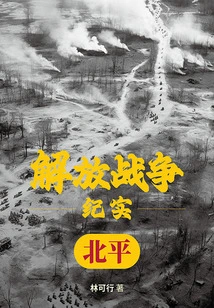
解放战争纪实:解放北平
Lin Keke
In January 1949, the People's Liberation Army approached the walls of Peiping with 900,000 troops, and the Kuomintang guard Fu Zuoyi's 250,000 troops were in dire straits. In order to protect this thousand-year-old cultural capital from war, the Central Committee of the Communist Party of China advocated peaceful liberation. Driven by military deterrence, the underground party instigation of Peking, and the promotion of democrats, Fu Zuoyi finally accepted the peace conditions and signed the "Agreement on the Peaceful Resolution of the Peking Issue" on January 21. Ten days later (January 31), the People's Liberation Army held a city entry ceremony and entered Peiping, achieving liberation without bloodshed. This move enabled the Forbidden City, Summer Palace and other precious heritage to be preserved intact, marking the successful end of the Peking-Tianjin Campaign and setting an example for peaceful liberation across the country.
In January 1949, the People's Liberation Army approached the walls of Peiping with 900,000 troops, and the Kuomintang guard Fu Zuoyi's 250,000 troops were in dire straits. In order to protect this thousand-year-old cultural capital from war, the Central Committee of the Communist Party of China advocated peaceful liberation. Driven by military deterrence, the underground party instigation of Peking, and the promotion of democrats, Fu Zuoyi finally accepted the peace conditions and signed the "Agreement on the Peaceful Resolution of the Peking Issue" on January 21. Ten days later (January 31), the People's Liberation Army held a city entry ceremony and entered Peiping, achieving liberation without bloodshed. This move enabled the Forbidden City, Summer Palace and other precious heritage to be preserved intact, marking the successful end of the Peking-Tianjin Campaign and setting an example for peaceful liberation across the country.
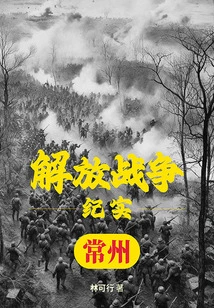
解放战争纪实:解放常州
Lin Keke
On April 23, 1949, on the eastern battlefield of the Battle of Crossing the River, the 10th Corps of the Third Field Army (Ye Fei's Department) pursued the retreating Kuomintang army and liberated Changzhou without a single blow. This battle cut off the Shanghai-Nanjing Railway and formed a coordination with the liberation of Nanjing, encircling more than 50,000 enemies who fled south. Changzhou, as an important industrial and commercial town in southern Jiangsu, was peacefully taken over, with its factories and historic sites well preserved, providing a logistical fulcrum for the subsequent Shanghai Campaign, marking the successful advancement of the second phase of the Beijing-Shanghai-Hangzhou Campaign.
On April 23, 1949, on the eastern battlefield of the Battle of Crossing the River, the 10th Corps of the Third Field Army (Ye Fei's Department) pursued the retreating Kuomintang army and liberated Changzhou without a single blow. This battle cut off the Shanghai-Nanjing Railway and formed a coordination with the liberation of Nanjing, encircling more than 50,000 enemies who fled south. Changzhou, as an important industrial and commercial town in southern Jiangsu, was peacefully taken over, with its factories and historic sites well preserved, providing a logistical fulcrum for the subsequent Shanghai Campaign, marking the successful advancement of the second phase of the Beijing-Shanghai-Hangzhou Campaign.
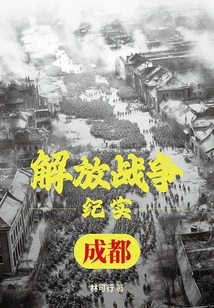
解放战争纪实:解放成都
Lin Keke
In December 1949, the main force of the Second Field Army and He Long's 18th Corps launched the Chengdu Campaign. Under the command of Liu Bocheng and Deng Xiaoping, three armies surrounded Hu Zongnan's group of 300,000 people. After a fierce battle in Longquan Mountain, they broke through the encirclement. On December 27, they completely wiped out the enemy and captured five regiment commanders. Hu Zongnan took the opportunity to escape. This battle annihilated the last main force of the Chinese army on the mainland, captured more than 200 tanks and armored vehicles, and 11 aircraft, ending the Kuomintang's rule in the southwest. The liberation of Chengdu marked the basic end of the war in mainland China. Mao Zedong called "the last battle on the mainland ended with a complete victory."
In December 1949, the main force of the Second Field Army and He Long's 18th Corps launched the Chengdu Campaign. Under the command of Liu Bocheng and Deng Xiaoping, three armies surrounded Hu Zongnan's group of 300,000 people. After a fierce battle in Longquan Mountain, they broke through the encirclement. On December 27, they completely wiped out the enemy and captured five regiment commanders. Hu Zongnan took the opportunity to escape. This battle annihilated the last main force of the Chinese army on the mainland, captured more than 200 tanks and armored vehicles, and 11 aircraft, ending the Kuomintang's rule in the southwest. The liberation of Chengdu marked the basic end of the war in mainland China. Mao Zedong called "the last battle on the mainland ended with a complete victory."
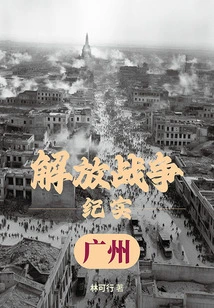
解放战争纪实:解放广州
Lin Keke
In October 1949, the 15th Corps of the Fourth Field Army launched the Guangdong Campaign. After annihilating Bai Chongxi's main force in the Battle of Hengbao, Si Ye quickly advanced southward along the Guangdong-Han Railway and captured Guangzhou, the largest city in South China, at dusk on the 14th. The Yu Hanmou Group of the National Army fled to Hainan, leaving only a small force to blow up the Haizhu Bridge but failed. This battle cut off the Kuomintang's "Hunan-Guangdong defense line" and captured 714 artillery pieces and 67 ships, thus protecting the economic lifeline of the south. The liberation of Guangzhou marked the end of the Nationalist Government's rule on the mainland (Li Zongren fled to Chongqing on October 12) and opened the prelude to the liberation of Hainan and Southwest China.
In October 1949, the 15th Corps of the Fourth Field Army launched the Guangdong Campaign. After annihilating Bai Chongxi's main force in the Battle of Hengbao, Si Ye quickly advanced southward along the Guangdong-Han Railway and captured Guangzhou, the largest city in South China, at dusk on the 14th. The Yu Hanmou Group of the National Army fled to Hainan, leaving only a small force to blow up the Haizhu Bridge but failed. This battle cut off the Kuomintang's "Hunan-Guangdong defense line" and captured 714 artillery pieces and 67 ships, thus protecting the economic lifeline of the south. The liberation of Guangzhou marked the end of the Nationalist Government's rule on the mainland (Li Zongren fled to Chongqing on October 12) and opened the prelude to the liberation of Hainan and Southwest China.
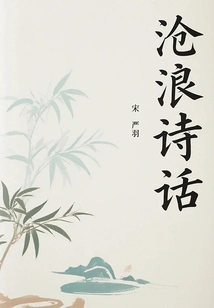
Canglang Poems
Literature沧浪诗话
Yan Yu
"Canglang Poetry" is a poetry theory work written by Yan Yu in the Southern Song Dynasty. Using Zen as a metaphor for poetry, he put forward poetic viewpoints such as "wonderful enlightenment" and "interest", and discussed the system, rhythm, and creation of poetry, which influenced the creation and theoretical development of poetry in later generations.
"Canglang Poetry" is a poetry theory work written by Yan Yu in the Southern Song Dynasty. Using Zen as a metaphor for poetry, he put forward poetic viewpoints such as "wonderful enlightenment" and "interest", and discussed the system, rhythm, and creation of poetry, which influenced the creation and theoretical development of poetry in later generations.
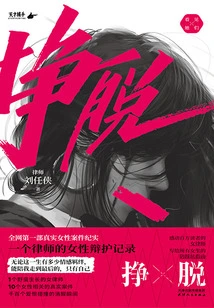
挣脱:一个律师的女性辩护记录
Liu Renxia
This book is lawyer Liu Renxia's defense notes on real cases, recording the most unforgettable moments in her nine-year career. This book is the first real case record of female group portraits on the Internet, telling the plight and hope of women in real society. The seemingly bizarre records in the book are actually describing the pain and self-rescue of the female community. The cases recorded in the book can always see light in the darkest places of human nature. Girls, no matter how many emotional bonds you have in this life, the only one who can accompany you to the end is yourself. You don't have to be a female warrior, but you do have to learn to protect yourself.
This book is lawyer Liu Renxia's defense notes on real cases, recording the most unforgettable moments in her nine-year career. This book is the first real case record of female group portraits on the Internet, telling the plight and hope of women in real society. The seemingly bizarre records in the book are actually describing the pain and self-rescue of the female community. The cases recorded in the book can always see light in the darkest places of human nature. Girls, no matter how many emotional bonds you have in this life, the only one who can accompany you to the end is yourself. You don't have to be a female warrior, but you do have to learn to protect yourself.
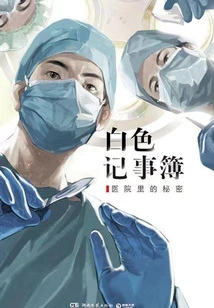
白色记事簿:医院里的秘密(2022年版)
Editor-in-chief Chen Zhuo
9 professional doctors and nurses hand-written accounts and the real lives of 15 patients. From the perspective of frontline medical care, we will take you to understand the life and death scenes that ordinary people cannot touch. There are stories here that can hit everyone, and there is no such thing as "this story is purely fictitious". The creative team of this book is composed of nine medical workers who are still fighting on the front line. They have sincerely recorded the real experiences of 15 patients they encountered in their careers, presenting the most realistic daily life in hospitals and taking readers to understand the life and death scenes that ordinary people cannot touch. From the perspective of front-line medical care, the book records how patients deal with serious illness and life and death problems; in the dilemma, how doctors make medical decisions that are more beneficial to patients; in this life and death field where death can visit at any time, what kind of situations do doctors and patients' families face every day. There are stories here that can hit everyone, but there is no such thing as "this story is purely fictitious". Life is precious and stories like this deserve to be seen.
9 professional doctors and nurses hand-written accounts and the real lives of 15 patients. From the perspective of frontline medical care, we will take you to understand the life and death scenes that ordinary people cannot touch. There are stories here that can hit everyone, and there is no such thing as "this story is purely fictitious". The creative team of this book is composed of nine medical workers who are still fighting on the front line. They have sincerely recorded the real experiences of 15 patients they encountered in their careers, presenting the most realistic daily life in hospitals and taking readers to understand the life and death scenes that ordinary people cannot touch. From the perspective of front-line medical care, the book records how patients deal with serious illness and life and death problems; in the dilemma, how doctors make medical decisions that are more beneficial to patients; in this life and death field where death can visit at any time, what kind of situations do doctors and patients' families face every day. There are stories here that can hit everyone, but there is no such thing as "this story is purely fictitious". Life is precious and stories like this deserve to be seen.
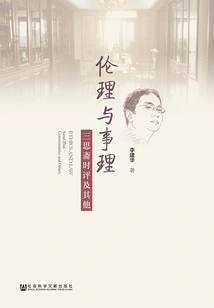
伦理与事理:三思斋时评及其他
Li Jianhua
This book is a collection of essays by the famous ethics scholar Li Jianhua, which includes his current moral comments, book prefaces and book review articles in recent years. The whole book focuses on ethics and affairs, combined with current hot social and moral events, to explore the changes in the moral life of Chinese society during the transition period, to find innovative paths for ethical theory, and to explore through theoretical reflection how ethics can take root in Chinese soil, summarize Chinese experience, solve Chinese problems, and highlight Chinese style. The author uses the knowledge and conscience of ethics scholars to respond to various problems in modern social life, involving political ethics, economic ethics, educational ethics, information ethics, legal ethics, professional ethics, family ethics and other fields, and explores the basic principles of learning to be a person and learning to do things.
This book is a collection of essays by the famous ethics scholar Li Jianhua, which includes his current moral comments, book prefaces and book review articles in recent years. The whole book focuses on ethics and affairs, combined with current hot social and moral events, to explore the changes in the moral life of Chinese society during the transition period, to find innovative paths for ethical theory, and to explore through theoretical reflection how ethics can take root in Chinese soil, summarize Chinese experience, solve Chinese problems, and highlight Chinese style. The author uses the knowledge and conscience of ethics scholars to respond to various problems in modern social life, involving political ethics, economic ethics, educational ethics, information ethics, legal ethics, professional ethics, family ethics and other fields, and explores the basic principles of learning to be a person and learning to do things.
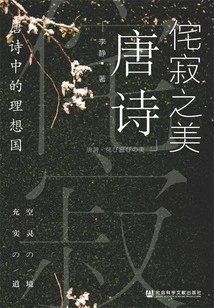
侘寂之美:唐诗中的理想国
Li Jing
This book selects 100 exquisite Tang poems, divided into ten classic categories, and reinterprets them. There are careful descriptions of natural scenery such as spring flowers and autumn moon, affectionate chants when climbing mountains and rivers, and deep reflections when facing historical monuments. The content basically covers all aspects of Tang people's life. From the interpretation of the ten types of poems, we can not only perceive the colorful poetic life of the poets of the Tang Dynasty, broaden our historical and cultural horizons, enrich our historical and cultural knowledge, and thus accept the influence of beauty, delight our spirits, and enjoy happiness; we can also cultivate our temperament and adjust our mood; we can also imbue the noble spirit of the ancients and improve our life cultivation.
This book selects 100 exquisite Tang poems, divided into ten classic categories, and reinterprets them. There are careful descriptions of natural scenery such as spring flowers and autumn moon, affectionate chants when climbing mountains and rivers, and deep reflections when facing historical monuments. The content basically covers all aspects of Tang people's life. From the interpretation of the ten types of poems, we can not only perceive the colorful poetic life of the poets of the Tang Dynasty, broaden our historical and cultural horizons, enrich our historical and cultural knowledge, and thus accept the influence of beauty, delight our spirits, and enjoy happiness; we can also cultivate our temperament and adjust our mood; we can also imbue the noble spirit of the ancients and improve our life cultivation.
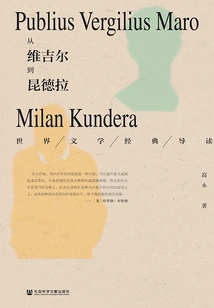
从维吉尔到昆德拉:世界文学经典导读
Gao Yong
Based on a close reading of the text, this book focuses on "human existence" and comprehensively uses thematic interpretation, comparative research, biographical research, cultural observation, theoretical analysis and other methods to interpret specific works, focusing on exploring the spiritual world contained in literary classics. Centered on Harold Bloom's theory of classic reading, this book explores the value of classics as well as the current situation and significance of classic reading, selecting "Aeneid", "Hamlet", "Hyperion", "The Necklace", "In the Penal Colony", "Border Town", "Snow Country" and "Life" "The Unbearable Lightness" and other world literary masterpieces, as well as world literary giants such as Virgil, Shakespeare, Milton, Maupassant, and Chekhov, provide in-depth and detailed interpretations of the writers' works, and explore literary creation and expression issues from the perspective of human heart and spirit.
Based on a close reading of the text, this book focuses on "human existence" and comprehensively uses thematic interpretation, comparative research, biographical research, cultural observation, theoretical analysis and other methods to interpret specific works, focusing on exploring the spiritual world contained in literary classics. Centered on Harold Bloom's theory of classic reading, this book explores the value of classics as well as the current situation and significance of classic reading, selecting "Aeneid", "Hamlet", "Hyperion", "The Necklace", "In the Penal Colony", "Border Town", "Snow Country" and "Life" "The Unbearable Lightness" and other world literary masterpieces, as well as world literary giants such as Virgil, Shakespeare, Milton, Maupassant, and Chekhov, provide in-depth and detailed interpretations of the writers' works, and explore literary creation and expression issues from the perspective of human heart and spirit.
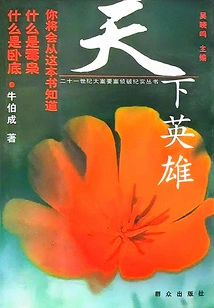
Heroes of the World
Literature天下英雄
Niu Bocheng
In order to capture the drug lord Huo Xuefan, Lin Zhixiang pretended to be a businessman who wanted to buy drugs and came to a province on the southwest border. In his contact with Huo Xuefan, Lin Zhixiang discovered the bigger drug lord "Old Xiong" behind Huo Xuefan. So the police changed their plan, and "Old Bear" became the main target of "Operation A". Lin Zhixiang went through all kinds of hardships to meet "Old Bear". Unexpectedly, he discovered that "Old Bear" was his childhood best friend Xin Fu. Lin Zhixiang naturally gained Xin Fu's trust and assumed the task of transporting drugs for Xin Fu. Because a large amount of drugs was "missed" during transportation, Xin Fu became suspicious of Lin Zhixiang. He acquiesced to the owner of the damaged cargo to get rid of Lin Zhixiang, and Lin Zhixiang escaped from death. Soon after, Lin Zhixiang asked for orders to come abroad again. Xin Fu missed his old relationship and planned to meet Lin Zhixiang. This book unfolds the magnificent scenes on the current anti-drug battlefield in our country, describes the turmoil and intrigues in the anti-drug struggle in detail, and at the same time creates the image of a group of anti-drug heroes.
In order to capture the drug lord Huo Xuefan, Lin Zhixiang pretended to be a businessman who wanted to buy drugs and came to a province on the southwest border. In his contact with Huo Xuefan, Lin Zhixiang discovered the bigger drug lord "Old Xiong" behind Huo Xuefan. So the police changed their plan, and "Old Bear" became the main target of "Operation A". Lin Zhixiang went through all kinds of hardships to meet "Old Bear". Unexpectedly, he discovered that "Old Bear" was his childhood best friend Xin Fu. Lin Zhixiang naturally gained Xin Fu's trust and assumed the task of transporting drugs for Xin Fu. Because a large amount of drugs was "missed" during transportation, Xin Fu became suspicious of Lin Zhixiang. He acquiesced to the owner of the damaged cargo to get rid of Lin Zhixiang, and Lin Zhixiang escaped from death. Soon after, Lin Zhixiang asked for orders to come abroad again. Xin Fu missed his old relationship and planned to meet Lin Zhixiang. This book unfolds the magnificent scenes on the current anti-drug battlefield in our country, describes the turmoil and intrigues in the anti-drug struggle in detail, and at the same time creates the image of a group of anti-drug heroes.
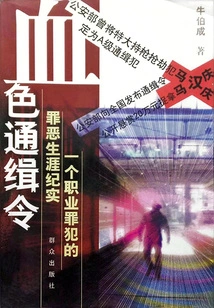
血色通缉令:一个职业罪犯的罪恶生涯纪实
Niu Bocheng
The author of this book has personally traveled to Xinjiang, gained first-hand information, and reproduced Ma Hanqing's sinful life with true and delicate writing.
The author of this book has personally traveled to Xinjiang, gained first-hand information, and reproduced Ma Hanqing's sinful life with true and delicate writing.
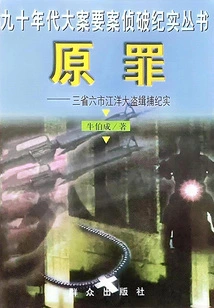
原罪:三省六市江洋大盗缉捕纪实
Niu Bocheng
Before the Spring Festival in 1996, a series of major armed robberies occurred in the famous Wu'ai Market in Shenyang, casting a shadow over this warm and peaceful city. The criminal gang headed by Li Hanyuan and Gao Bingqin used violent means and directly entered the house with a gun to rob cash and property. The targets were all businessmen doing business in Wuai Market. This group of criminals commits crimes rampantly, openly and openly, with no fear or fear, and their methods of committing crimes are brutal. After receiving the report, the public security department immediately investigated and filed the case. However, Li Hanyuan and his gang, contrary to their normal thinking, continued to commit crimes against the wind. The captured "little man" suddenly jumped off the building, ending all clues to the case. This book describes the entire process in detail and accurately with rich materials and documentary techniques. The author's exploration of the criminal's thinking, the exploration of the criminal's psychology, the duality of personality and the exploration of the life course have far-reaching sociological significance.
Before the Spring Festival in 1996, a series of major armed robberies occurred in the famous Wu'ai Market in Shenyang, casting a shadow over this warm and peaceful city. The criminal gang headed by Li Hanyuan and Gao Bingqin used violent means and directly entered the house with a gun to rob cash and property. The targets were all businessmen doing business in Wuai Market. This group of criminals commits crimes rampantly, openly and openly, with no fear or fear, and their methods of committing crimes are brutal. After receiving the report, the public security department immediately investigated and filed the case. However, Li Hanyuan and his gang, contrary to their normal thinking, continued to commit crimes against the wind. The captured "little man" suddenly jumped off the building, ending all clues to the case. This book describes the entire process in detail and accurately with rich materials and documentary techniques. The author's exploration of the criminal's thinking, the exploration of the criminal's psychology, the duality of personality and the exploration of the life course have far-reaching sociological significance.
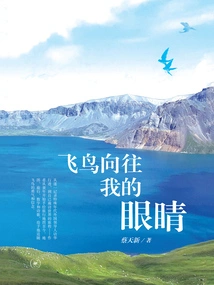
Birds Yearn for My Eyes
Literature飞鸟向往我的眼睛
Cai Tianxin
This is a "notebook" that records the author's travel and growth experiences over the past few years. In addition to sharing the journey, the author also includes a number of hand-drawn travel route maps. Every time the author returns from a trip, he will draw a travel route map to scale, indicating the time, direction, means of transportation, reasons and travel companions. Part of the travel route map will also be presented in the text of this book. The author has so far filled eight notebooks of different sizes. What's even more interesting is that this book contains 7 itineraries for foreign heads of state's visits to China in the 1970s, all of which were drawn by the author himself. The earliest one is the route of Richard Nixon's first visit to China. The author, who was 8 years old at the time, paid close attention to and hand-drawn the itinerary of the former US president's visit to China. Later, he followed the news reports in newspapers and recorded the visits of many foreign heads of state in that era.
This is a "notebook" that records the author's travel and growth experiences over the past few years. In addition to sharing the journey, the author also includes a number of hand-drawn travel route maps. Every time the author returns from a trip, he will draw a travel route map to scale, indicating the time, direction, means of transportation, reasons and travel companions. Part of the travel route map will also be presented in the text of this book. The author has so far filled eight notebooks of different sizes. What's even more interesting is that this book contains 7 itineraries for foreign heads of state's visits to China in the 1970s, all of which were drawn by the author himself. The earliest one is the route of Richard Nixon's first visit to China. The author, who was 8 years old at the time, paid close attention to and hand-drawn the itinerary of the former US president's visit to China. Later, he followed the news reports in newspapers and recorded the visits of many foreign heads of state in that era.
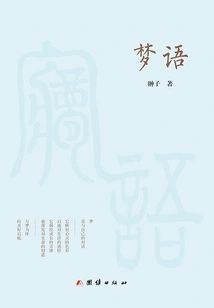
Dream Talk
Literature梦语
Chongzi
This book is a prose work about "dreams". Scientific research shows that people spend nearly one-third of their lives sleeping, and they spend a lot of time dreaming during sleep. The author of this book uses "dreams" as the starting point, and from the perspective of an "observer and recorder of dreams", he depicts hundreds of his dreams in a dramatic way, trying to explore the potential connection between dreams, the inner world and the real world. The book not only records seemingly bizarre dreams, puzzling absurd dreams, fantastic and magnificent dreams, but also dreams that appear continuously and have deep memories... These colorful dreams show the cycle of four seasons like spring, summer, autumn and winter. They are an adventure journey to discover the true self and lead to the inner world, a self-dialogue to understand life, and a journey to awaken the cultural blood genes.
This book is a prose work about "dreams". Scientific research shows that people spend nearly one-third of their lives sleeping, and they spend a lot of time dreaming during sleep. The author of this book uses "dreams" as the starting point, and from the perspective of an "observer and recorder of dreams", he depicts hundreds of his dreams in a dramatic way, trying to explore the potential connection between dreams, the inner world and the real world. The book not only records seemingly bizarre dreams, puzzling absurd dreams, fantastic and magnificent dreams, but also dreams that appear continuously and have deep memories... These colorful dreams show the cycle of four seasons like spring, summer, autumn and winter. They are an adventure journey to discover the true self and lead to the inner world, a self-dialogue to understand life, and a journey to awaken the cultural blood genes.
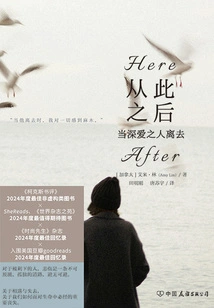
从此之后:当深爱之人离去
(added) Amy Lin
This book is an unconventional memoir about how we, as the remaining people, deal with our grief, grieve and accept our loss, and move on with our lives after someone we love most dies. Author Amy Lin records the year after her husband's unexpected death from a first-person perspective. She was only 31 when her husband, Curtis, died suddenly during a half-marathon. The two were still immersed in the joy of getting married and preparing for a future together, but everything suddenly fell apart. Through the clips of meeting, falling in, and losing Curtis, we see the deep love between the two when they lived together, and feel the heaviness and pain that follows when their soul mate dies. The intertwining between the present and memories not only depicts the extremely real love and loss, but also shows the fragility of human nature, so that when you finish reading the last page, the heartbreaking emotional power will still echo in your heart.
This book is an unconventional memoir about how we, as the remaining people, deal with our grief, grieve and accept our loss, and move on with our lives after someone we love most dies. Author Amy Lin records the year after her husband's unexpected death from a first-person perspective. She was only 31 when her husband, Curtis, died suddenly during a half-marathon. The two were still immersed in the joy of getting married and preparing for a future together, but everything suddenly fell apart. Through the clips of meeting, falling in, and losing Curtis, we see the deep love between the two when they lived together, and feel the heaviness and pain that follows when their soul mate dies. The intertwining between the present and memories not only depicts the extremely real love and loss, but also shows the fragility of human nature, so that when you finish reading the last page, the heartbreaking emotional power will still echo in your heart.
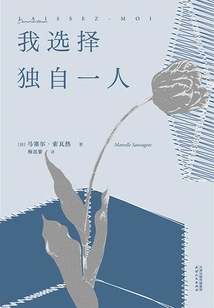
I Choose to Be Alone
Literature我选择独自一人
(france) Marcel Sauvage
This book is a collection of essays by French female writer Marcel Sauvage. At the age of 30, she was admitted to a sanatorium due to tuberculosis, but her boyfriend wanted to break up with her and marry someone else. In desperation, she wrote this letter, calmly analyzed the relationship, and decided to be alone again.
This book is a collection of essays by French female writer Marcel Sauvage. At the age of 30, she was admitted to a sanatorium due to tuberculosis, but her boyfriend wanted to break up with her and marry someone else. In desperation, she wrote this letter, calmly analyzed the relationship, and decided to be alone again.
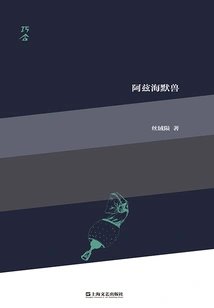
Alzheimermon
Literature阿兹海默兽
Velvet Meteorite
"Alzheimer's Beast" is the latest collection of poems by poet Velvet Yun, which selects some of his poems written in 2022. This book is divided into two volumes. The first volume is "Alzheimer's Beast", which records the special feelings in daily life in the form of non-lined poems; the second volume "Cosmic Thresher" records those frozen or flowing moments frame by frame with the sensitivity of a photographer.
"Alzheimer's Beast" is the latest collection of poems by poet Velvet Yun, which selects some of his poems written in 2022. This book is divided into two volumes. The first volume is "Alzheimer's Beast", which records the special feelings in daily life in the form of non-lined poems; the second volume "Cosmic Thresher" records those frozen or flowing moments frame by frame with the sensitivity of a photographer.
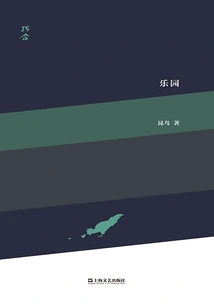
Paradise
Literature乐园
Kunniao
"Paradise" contains a batch of poems written by Kunniao in 2020. He wrote in the description of "Paradise": It is an encounter, no enemies, no ambitions - my best poem. Maybe he is too well-behaved, so he is also confused, tired of learning, and autistic, but he is also the most naked and selfless. I love it, and if you don't like it, you've got my apologies; if you like it, you've been blessed. It comes from Paradise.
"Paradise" contains a batch of poems written by Kunniao in 2020. He wrote in the description of "Paradise": It is an encounter, no enemies, no ambitions - my best poem. Maybe he is too well-behaved, so he is also confused, tired of learning, and autistic, but he is also the most naked and selfless. I love it, and if you don't like it, you've got my apologies; if you like it, you've been blessed. It comes from Paradise.
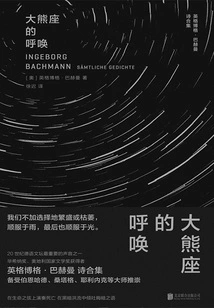
The Call of Ursa Major
Literature大熊座的呼唤
(austrian) Ingeborg Bachmann
A collection of poems by Ingeborg Bachmann, one of the most important voices in German literature in the 20th century and winner of the Büchner Prize and the Austrian National Literature Prize. Ingeborg Bachmann was one of the most unique poetic voices of the 20th century, and together with Paul Celan she is considered the two most important poets in postwar German-language literature. Her poetry closely combines philosophical insight and literary lyricism, using language to explore the essence of nature and the world, creating unique rhymes and rhythms, which has influenced many famous writers including Thomas Bernhard, Elfriede Jelinek, and Krista Wolf. During his lifetime, Bachmann won almost all important literary awards in German literature, including the Büchner Prize, the highest honor in German literature. "The Call of Ursa Major" contains the contents of all collections of poems Bachmann published during his lifetime, covering the poet's lifetime masterpieces.
A collection of poems by Ingeborg Bachmann, one of the most important voices in German literature in the 20th century and winner of the Büchner Prize and the Austrian National Literature Prize. Ingeborg Bachmann was one of the most unique poetic voices of the 20th century, and together with Paul Celan she is considered the two most important poets in postwar German-language literature. Her poetry closely combines philosophical insight and literary lyricism, using language to explore the essence of nature and the world, creating unique rhymes and rhythms, which has influenced many famous writers including Thomas Bernhard, Elfriede Jelinek, and Krista Wolf. During his lifetime, Bachmann won almost all important literary awards in German literature, including the Büchner Prize, the highest honor in German literature. "The Call of Ursa Major" contains the contents of all collections of poems Bachmann published during his lifetime, covering the poet's lifetime masterpieces.
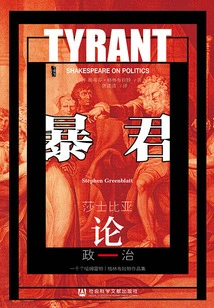
Tyrant: Shakespeare on Politics
Literature暴君:莎士比亚论政治
J
In this elegant and highly readable book, renowned Shakespeare scholar Stephen Greenblatt explores Shakespeare's tyrants and their tyranny from a unique perspective-their horrific and narcissistic folly, their usurpation, madness, and cruelty, their arrogance and lack of talent, their paranoia and evil, their hypocrisy, deception, and thirst for flattery. Never before have those bloody figures come to life as they do now.
In this elegant and highly readable book, renowned Shakespeare scholar Stephen Greenblatt explores Shakespeare's tyrants and their tyranny from a unique perspective-their horrific and narcissistic folly, their usurpation, madness, and cruelty, their arrogance and lack of talent, their paranoia and evil, their hypocrisy, deception, and thirst for flattery. Never before have those bloody figures come to life as they do now.
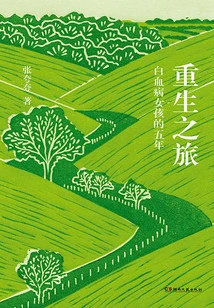
重生之旅:白血病女孩的五年
Exaggerate
It is easy to die, but braver to live. A "post-90s" girl with M3 leukemia candidly records her journey of rebirth after the illness! Zhang Guagua, a "post-90s" working girl, looks no different from anyone else. She never thought that she might die when she was young. It was not until her 27th birthday that she was sent to the central ICU for rescue. The doctor suggested several times that her family prepare for her funeral. It is difficult to get rid of death, and life cannot become better or smoother all of a sudden. She went through 4 major chemotherapy treatments and 8 rounds of maintenance treatment. The condition is gradually improving, but the problem in life is not only the threat of death. It does not mean that everything will be fine just by staying alive. In the past five years, her health has deteriorated, her work has stopped, and her marriage has been hopeless. Her life has been filled with various difficulties. What she tells is not only her "miracle of survival", but also her "journey of rebirth." People will always encounter troughs in life. When you feel painful and desperate, maybe you can find the courage to solve your own difficulties from her story.
It is easy to die, but braver to live. A "post-90s" girl with M3 leukemia candidly records her journey of rebirth after the illness! Zhang Guagua, a "post-90s" working girl, looks no different from anyone else. She never thought that she might die when she was young. It was not until her 27th birthday that she was sent to the central ICU for rescue. The doctor suggested several times that her family prepare for her funeral. It is difficult to get rid of death, and life cannot become better or smoother all of a sudden. She went through 4 major chemotherapy treatments and 8 rounds of maintenance treatment. The condition is gradually improving, but the problem in life is not only the threat of death. It does not mean that everything will be fine just by staying alive. In the past five years, her health has deteriorated, her work has stopped, and her marriage has been hopeless. Her life has been filled with various difficulties. What she tells is not only her "miracle of survival", but also her "journey of rebirth." People will always encounter troughs in life. When you feel painful and desperate, maybe you can find the courage to solve your own difficulties from her story.
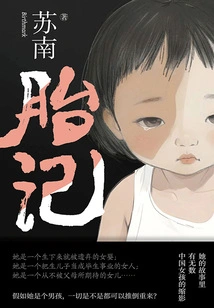
Birthmark
Literature胎记
Sunan
"My mother finally realized that she was going to lose me and the gap between us. She began to try hard to show her love for me, but I no longer needed it." "We raised you as a son." "Can I give you another brother?" These were the words my mother said most often. The girl grew up without being expected. The once high-spirited father became addicted to gambling, and the mother who expected her son pretended to like the girl more in front of outsiders. The girl's growth process was accompanied by rude abuse and loud slaps. Fortunately, the girl still had a small period of time under the protection of her grandmother. The "birthmark" is not only a natural scar on the face of the third sister who was given away, but also a lingering pain in the girl's heart. It is a childhood shadow left by parents who favor sons over daughters, and a seed of thorns in the original family. However, the girl finally started a new life through her own efforts. She changed "Sai Nan" to "Su Nan" and redeemed herself bit by bit in her writing.
"My mother finally realized that she was going to lose me and the gap between us. She began to try hard to show her love for me, but I no longer needed it." "We raised you as a son." "Can I give you another brother?" These were the words my mother said most often. The girl grew up without being expected. The once high-spirited father became addicted to gambling, and the mother who expected her son pretended to like the girl more in front of outsiders. The girl's growth process was accompanied by rude abuse and loud slaps. Fortunately, the girl still had a small period of time under the protection of her grandmother. The "birthmark" is not only a natural scar on the face of the third sister who was given away, but also a lingering pain in the girl's heart. It is a childhood shadow left by parents who favor sons over daughters, and a seed of thorns in the original family. However, the girl finally started a new life through her own efforts. She changed "Sai Nan" to "Su Nan" and redeemed herself bit by bit in her writing.
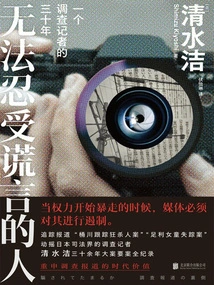
People Who Can't Stand Lies
Literature无法忍受谎言的人
(japan) Qingshuijie
Kiyomizu Kiyoshi is an investigative journalist who reported on famous unjust cases such as the Okekawa Stalker Murder Case and the Ashikaga Girl Disappearance Case, which shook the Japanese judiciary and promoted legal innovation. He cannot stand any lies, dares to challenge the power agencies, and is a news hero in the eyes of the public. But behind the glorious reputation, there are countless days and nights accompanied by dangers and failures: running around at the hijacking scene, being fooled by genius liars, fighting with the "statutory statute of limitations" until the last moment... In this complex and ever-changing era, how can people distinguish the true from the false? Why should journalists report and for whom? In this semi-memoir work, Qing Shuijie reviews more than ten major cases he has experienced in his career of more than thirty years, truly reveals his original intention as an investigative reporter, and asks what the mission of news reporting is.
Kiyomizu Kiyoshi is an investigative journalist who reported on famous unjust cases such as the Okekawa Stalker Murder Case and the Ashikaga Girl Disappearance Case, which shook the Japanese judiciary and promoted legal innovation. He cannot stand any lies, dares to challenge the power agencies, and is a news hero in the eyes of the public. But behind the glorious reputation, there are countless days and nights accompanied by dangers and failures: running around at the hijacking scene, being fooled by genius liars, fighting with the "statutory statute of limitations" until the last moment... In this complex and ever-changing era, how can people distinguish the true from the false? Why should journalists report and for whom? In this semi-memoir work, Qing Shuijie reviews more than ten major cases he has experienced in his career of more than thirty years, truly reveals his original intention as an investigative reporter, and asks what the mission of news reporting is.
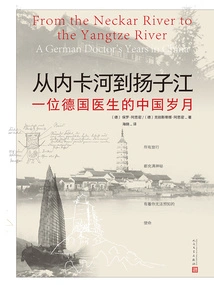
从内卡河到扬子江:一位德国医生的中国岁月
(germany) Paul Asmi Christina Asmi
German military doctor Asmi first went to Beijing with the German Expeditionary Force in 1900 to perform military medical duties. The mission ended in 1903 and returned to Germany via Henan, Hubei, Sichuan, Tibet, Yunnan, and Myanmar. In 1906, he was appointed by the German Foreign Ministry to go to China again and opened a hospital in Chongqing to practice medicine until his death in 1935. The German Pusey Hospital chaired by Asmi in Chongqing once had the highest number of patients among the four foreign hospitals in Chongqing. The German government stopped funding the hospital due to the defeat in World War I. The hospital was taken over by the Red Cross Society of China and became the first Red Cross hospital in Chongqing. Asmi also became the first Red Cross hospital director in Chongqing. He has made contributions to the development of medicine in Chongqing and improving the health status of Chongqing people. The book is divided into five chapters: Asmi's life, Beijing period, long return journey, retrograde Yang Zijiang, and medical practice in Chongqing. Most of them are diaries, written reports and photos left by Asmi, and a small part are compiled by his descendants based on relevant information. The author took a large number of historical photos and written records to preserve the customs, geology and hydrology of some areas in China a hundred years ago.
German military doctor Asmi first went to Beijing with the German Expeditionary Force in 1900 to perform military medical duties. The mission ended in 1903 and returned to Germany via Henan, Hubei, Sichuan, Tibet, Yunnan, and Myanmar. In 1906, he was appointed by the German Foreign Ministry to go to China again and opened a hospital in Chongqing to practice medicine until his death in 1935. The German Pusey Hospital chaired by Asmi in Chongqing once had the highest number of patients among the four foreign hospitals in Chongqing. The German government stopped funding the hospital due to the defeat in World War I. The hospital was taken over by the Red Cross Society of China and became the first Red Cross hospital in Chongqing. Asmi also became the first Red Cross hospital director in Chongqing. He has made contributions to the development of medicine in Chongqing and improving the health status of Chongqing people. The book is divided into five chapters: Asmi's life, Beijing period, long return journey, retrograde Yang Zijiang, and medical practice in Chongqing. Most of them are diaries, written reports and photos left by Asmi, and a small part are compiled by his descendants based on relevant information. The author took a large number of historical photos and written records to preserve the customs, geology and hydrology of some areas in China a hundred years ago.
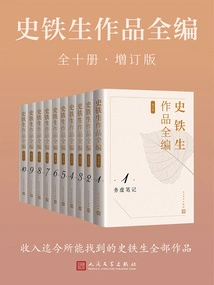
史铁生作品全编:增订版(全10册)
Shi Tiesheng
"Complete Collection of Shi Tiesheng's Works" is based on the seven volumes of the original "Shi Tiesheng's Works Series", and has been re-edited with newly compiled Shi Tiesheng's posthumous works. It has about 3 million words and is compiled into ten volumes. It was published in 2017 and sold 9,000 sets. In recent years, several anecdotes and interviews by Shi Tiesheng have been discovered. In recent years, Shi Tiesheng and his works have attracted much attention from the society. It should be a good time to publish, and we can also take the opportunity to increase the price of the book and ensure profits. Shi Tiesheng is one of the most profound writers in contemporary China. His works are concise and beautiful, rich in content, and of great ideological and artistic value.
"Complete Collection of Shi Tiesheng's Works" is based on the seven volumes of the original "Shi Tiesheng's Works Series", and has been re-edited with newly compiled Shi Tiesheng's posthumous works. It has about 3 million words and is compiled into ten volumes. It was published in 2017 and sold 9,000 sets. In recent years, several anecdotes and interviews by Shi Tiesheng have been discovered. In recent years, Shi Tiesheng and his works have attracted much attention from the society. It should be a good time to publish, and we can also take the opportunity to increase the price of the book and ensure profits. Shi Tiesheng is one of the most profound writers in contemporary China. His works are concise and beautiful, rich in content, and of great ideological and artistic value.
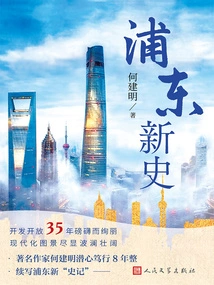
New History of Pudong
Literature浦东新史
He Jianming
This book tells the historical changes of Shanghai and Pudong, showing their journey from backwardness to prosperity, and embodies the great achievements of China's reform and opening up. The author starts from the origin of Shanghai and the place name "Shanghai". It has experienced many changes in modern times. The Bund has become a financial center, while Pudong has been in a backward state for a long time. It was not until 1990 that the central government announced the development and opening up of Pudong, which brought significant opportunities for its development. In recent years, Pudong has made remarkable achievements in development. In the fields of finance, technology, trade and other fields, Pudong will continue to deepen reforms, improve its international level and comprehensive competitiveness, and make greater contributions to China's development. Its development model and experience may be promoted and applied nationwide.
This book tells the historical changes of Shanghai and Pudong, showing their journey from backwardness to prosperity, and embodies the great achievements of China's reform and opening up. The author starts from the origin of Shanghai and the place name "Shanghai". It has experienced many changes in modern times. The Bund has become a financial center, while Pudong has been in a backward state for a long time. It was not until 1990 that the central government announced the development and opening up of Pudong, which brought significant opportunities for its development. In recent years, Pudong has made remarkable achievements in development. In the fields of finance, technology, trade and other fields, Pudong will continue to deepen reforms, improve its international level and comprehensive competitiveness, and make greater contributions to China's development. Its development model and experience may be promoted and applied nationwide.
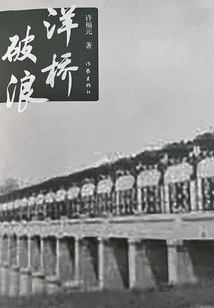
Ocean Bridge Breaks Waves
Literature洋桥破浪
Xu Fuyuan
"The Ocean Bridge Breaks the Waves" describes the construction process of the Suzhuang Ocean Bridge in Shunyi, Beijing, a large water conservancy project in northern China a hundred years ago. The rise and fall of Suzhuang Gate Bridge is almost a microcosm of the rise and fall of a period of history, and many high-level political figures were involved in it. From the county governor to the village chief and deputy, from the squire to the poor, from the warlord to the bandit, from the Qing Dynasty old man to the charlatan, from the foreign trade to the monk, all are involved in the rise and fall of Suzhuang Zhaqiao.
"The Ocean Bridge Breaks the Waves" describes the construction process of the Suzhuang Ocean Bridge in Shunyi, Beijing, a large water conservancy project in northern China a hundred years ago. The rise and fall of Suzhuang Gate Bridge is almost a microcosm of the rise and fall of a period of history, and many high-level political figures were involved in it. From the county governor to the village chief and deputy, from the squire to the poor, from the warlord to the bandit, from the Qing Dynasty old man to the charlatan, from the foreign trade to the monk, all are involved in the rise and fall of Suzhuang Zhaqiao.
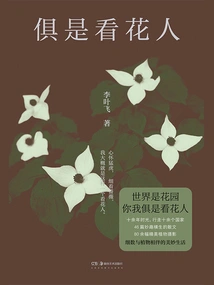
They Are All Florists
Literature俱是看花人
Li Yefei
From my doorstep to the southern hemisphere, I have been on a flower-hunting journey for more than ten years, in more than ten countries, and with more than 80 pieces of plant photography, recording the beautiful life accompanied by plants. All year round, flowers bloom and fall. Looking at flowers is an antidote to a busy life. Learn about the beauty of plants with an experienced florist. From the unique "aqui fruit" in Jamaica, the famous pandan in Singapore, the purple pearls in the Japanese garden, the linden tree in India, to kumquats in ordinary life and various inconspicuous grasses on the lawn, the author presents a beautiful, novel and vibrant world. Through years of travel and research, he tells the stories of plants and helps readers understand how plants have affected human life for thousands of years and our inner world.
From my doorstep to the southern hemisphere, I have been on a flower-hunting journey for more than ten years, in more than ten countries, and with more than 80 pieces of plant photography, recording the beautiful life accompanied by plants. All year round, flowers bloom and fall. Looking at flowers is an antidote to a busy life. Learn about the beauty of plants with an experienced florist. From the unique "aqui fruit" in Jamaica, the famous pandan in Singapore, the purple pearls in the Japanese garden, the linden tree in India, to kumquats in ordinary life and various inconspicuous grasses on the lawn, the author presents a beautiful, novel and vibrant world. Through years of travel and research, he tells the stories of plants and helps readers understand how plants have affected human life for thousands of years and our inner world.
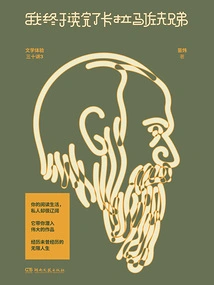
I Finally Finished Reading the Brothers Karamazov: Thirty Lectures on Literary Experience 3
Literature我终于读完了卡拉马佐夫兄弟:文学体验三十讲3
Miao Wei
In this book, Master Miao talks about empathy and second-hand emotions, and confesses her sympathy for the pain of female artists such as Frieda, Woolf, and Plath; talks about the impermanence of fate, and reviews the troubled lives of Benjamin, Eliot, and Proust; talks about how to work hard to read "difficult" masterpieces, such as reading "Ulysses" in Chinese and English, and finally finishing "Ulysses" in Chinese and English. "The Brothers Karamazov"; talks about those great writers who are "not close to you"; talks about the poetics of space, the sense of shelter that descriptive writers bring us; talks about poetic justice, trying to clarify what ordinary people should do when facing humanitarian disasters; and combines the original works to interpret modern movie classics, such as "The Shawshank Redemption", "In Cold Blood", "One Flew Over the Cuckoo's Nest"...
In this book, Master Miao talks about empathy and second-hand emotions, and confesses her sympathy for the pain of female artists such as Frieda, Woolf, and Plath; talks about the impermanence of fate, and reviews the troubled lives of Benjamin, Eliot, and Proust; talks about how to work hard to read "difficult" masterpieces, such as reading "Ulysses" in Chinese and English, and finally finishing "Ulysses" in Chinese and English. "The Brothers Karamazov"; talks about those great writers who are "not close to you"; talks about the poetics of space, the sense of shelter that descriptive writers bring us; talks about poetic justice, trying to clarify what ordinary people should do when facing humanitarian disasters; and combines the original works to interpret modern movie classics, such as "The Shawshank Redemption", "In Cold Blood", "One Flew Over the Cuckoo's Nest"...