Library
Browse and search novels
25,832 novels found
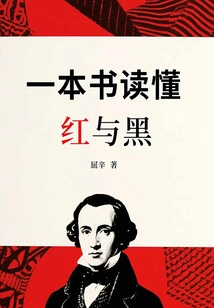
A Book to Understand Red and Black
Literature一本书读懂红与黑
Qu Xin
This book is based on Stendhal's handed down classic, and dismantles this "encyclopedia of human nature in the 19th century" through seven dimensions. The book takes the red passion of the Napoleonic era and the black depression of the Restoration Dynasty as its warp and weft, focusing on the ups and downs of Julien, the son of a carpenter, under the triple strangulation of the church, aristocracy and the bourgeoisie, revealing his soul map torn between ambition and innocence. The book not only analyzes the philosophical confrontation between "red" (the ascending path symbolized by the military uniform) and "black" (the survival law metaphorized by the priest's robe), but also uses a psychological microscope to examine the inner monologue narrative revolution pioneered by Stendhal. It also zooms in on the contemporary era - in the existential predicament of "lying flat" and "involution", Julien's mirror image reflects the existential crisis of modern social animals. By deconstructing the hypocritical masks in the arena of power, the truth of human nature in the game of love, and the paradox of awakening on the guillotine, this book not only restores the power code of French society during the Restoration period, but also builds a dialogue bridge between classic literature and current spiritual dilemmas, allowing readers to touch the eternal warmth of humanity in the textual folds of the 19th century.
This book is based on Stendhal's handed down classic, and dismantles this "encyclopedia of human nature in the 19th century" through seven dimensions. The book takes the red passion of the Napoleonic era and the black depression of the Restoration Dynasty as its warp and weft, focusing on the ups and downs of Julien, the son of a carpenter, under the triple strangulation of the church, aristocracy and the bourgeoisie, revealing his soul map torn between ambition and innocence. The book not only analyzes the philosophical confrontation between "red" (the ascending path symbolized by the military uniform) and "black" (the survival law metaphorized by the priest's robe), but also uses a psychological microscope to examine the inner monologue narrative revolution pioneered by Stendhal. It also zooms in on the contemporary era - in the existential predicament of "lying flat" and "involution", Julien's mirror image reflects the existential crisis of modern social animals. By deconstructing the hypocritical masks in the arena of power, the truth of human nature in the game of love, and the paradox of awakening on the guillotine, this book not only restores the power code of French society during the Restoration period, but also builds a dialogue bridge between classic literature and current spiritual dilemmas, allowing readers to touch the eternal warmth of humanity in the textual folds of the 19th century.
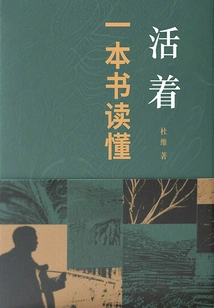
A Book to Understand Life
Literature一本书读懂活着
Du Wei
This book uses Yu Hua's classic novel "Alive" as an anatomical specimen to deconstruct the spiritual core of this "Chinese version of the Book of Job" through seven dimensions. The book takes farming civilization as its warp and existentialism as its latitude, deciphers the genetic code of land ethics between the symbiotic relationship between Fugui and Lao Niu, and reveals in ten death events how "reflection narrative" allows suffering to reveal the resilience of life. The author creates an original "sound politics" perspective to analyze how the silence of the mute girl Fengxia resists the collective noise. He also uses the "Myth of Sisyphus" to reexamine the farming ritual and graft Camus' absurd philosophy into the local roots. The book creates an original "narrative labyrinth" theory, decodes the space-time latitude and longitude of the dual narratives of literati and elderly people, and reveals how the act of naming a cow breaks out of the prison of linear time. This work, which combines literary criticism and philosophical speculation, is not only an epic footnote to the individual's will to survive, but also the key to decoding the Chinese people's spiritual genes, leading readers through the swamp of suffering and touching the most authentic warmth and power of "living".
This book uses Yu Hua's classic novel "Alive" as an anatomical specimen to deconstruct the spiritual core of this "Chinese version of the Book of Job" through seven dimensions. The book takes farming civilization as its warp and existentialism as its latitude, deciphers the genetic code of land ethics between the symbiotic relationship between Fugui and Lao Niu, and reveals in ten death events how "reflection narrative" allows suffering to reveal the resilience of life. The author creates an original "sound politics" perspective to analyze how the silence of the mute girl Fengxia resists the collective noise. He also uses the "Myth of Sisyphus" to reexamine the farming ritual and graft Camus' absurd philosophy into the local roots. The book creates an original "narrative labyrinth" theory, decodes the space-time latitude and longitude of the dual narratives of literati and elderly people, and reveals how the act of naming a cow breaks out of the prison of linear time. This work, which combines literary criticism and philosophical speculation, is not only an epic footnote to the individual's will to survive, but also the key to decoding the Chinese people's spiritual genes, leading readers through the swamp of suffering and touching the most authentic warmth and power of "living".
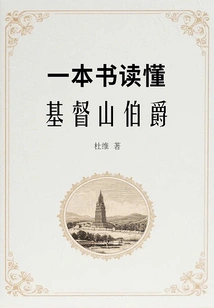
一本书读懂基督山伯爵
Du Wei
Based on an in-depth interpretation of Alexandre Dumas's classics, this book dismantles this literary masterpiece spanning two centuries from multi-dimensional perspectives such as revenge myth, human spectrum, narrative code, capital criticism, and existential philosophy. The book breaks the theme of "the Möbius strip of good and evil" and analyzes how the trio of Fernand, Villefort and Danglars reflect the human pathologies of jealousy, hypocrisy and greed; it restores Alexandre Dumas's sharp anatomy of judicial corruption, financial speculation and aristocratic decadence through the "Three Lines of Revenge"; it also uses the "broken wall image" as a key to reveal the spiritual transformation of the Count of Monte Cristo from an avenger to an awakener, and interrogates the eternal paradox of lynching justice and institutional violence. The book not only decodes how "waiting and hoping" has been sublimated from a survival strategy to a spiritual anchor against alienation, but also connects it to the survival dilemma in the metaverse era, showing the forward-looking inspiration of classics on digital civilization. Through a discussion that is both academic and readable, it leads readers through the stormy waves of romanticism, touching the scorching temperature of the abyss of human nature, and rediscovering the spark of wisdom that illuminates the fog of modernity in the purgatory of capital and power.
Based on an in-depth interpretation of Alexandre Dumas's classics, this book dismantles this literary masterpiece spanning two centuries from multi-dimensional perspectives such as revenge myth, human spectrum, narrative code, capital criticism, and existential philosophy. The book breaks the theme of "the Möbius strip of good and evil" and analyzes how the trio of Fernand, Villefort and Danglars reflect the human pathologies of jealousy, hypocrisy and greed; it restores Alexandre Dumas's sharp anatomy of judicial corruption, financial speculation and aristocratic decadence through the "Three Lines of Revenge"; it also uses the "broken wall image" as a key to reveal the spiritual transformation of the Count of Monte Cristo from an avenger to an awakener, and interrogates the eternal paradox of lynching justice and institutional violence. The book not only decodes how "waiting and hoping" has been sublimated from a survival strategy to a spiritual anchor against alienation, but also connects it to the survival dilemma in the metaverse era, showing the forward-looking inspiration of classics on digital civilization. Through a discussion that is both academic and readable, it leads readers through the stormy waves of romanticism, touching the scorching temperature of the abyss of human nature, and rediscovering the spark of wisdom that illuminates the fog of modernity in the purgatory of capital and power.
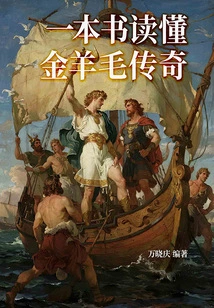
一本书读懂金羊毛传奇
Compiled By Wan Xiaoqing
In the ancient Greek era when heroes abounded, Jason led fifty legendary warriors and piloted the Argonaut on an epic journey to find the Golden Fleece. This is not only a treasure hunt, but also a human test about ambition, betrayal and redemption. The heroes crossed the dangerous Black Sea, outsmarted the deadly songs of the sirens, and narrowly escaped death in the cracks of hitting rocks, and finally came to the Kingdom of Colchis. There, Princess Medea's love became the sharpest double-edged sword - she helped Jason obtain the Golden Fleece, but she also planted the seeds of the most horrific tragedy in Greek mythology.
In the ancient Greek era when heroes abounded, Jason led fifty legendary warriors and piloted the Argonaut on an epic journey to find the Golden Fleece. This is not only a treasure hunt, but also a human test about ambition, betrayal and redemption. The heroes crossed the dangerous Black Sea, outsmarted the deadly songs of the sirens, and narrowly escaped death in the cracks of hitting rocks, and finally came to the Kingdom of Colchis. There, Princess Medea's love became the sharpest double-edged sword - she helped Jason obtain the Golden Fleece, but she also planted the seeds of the most horrific tragedy in Greek mythology.
一本书读懂克苏鲁神话
Remaining Words
This book is based on the cosmic horror system constructed by Howard Philip Lovecraft, and systematically combs this far-reaching modern mythological kingdom. The book starts from the chaotic singularity of the blind and foolish god Azathoth, dismantles the intertwined symbolic network between the Old Ones and the Ancient Gods, and reveals the human cognitive dilemma behind the collage of Cthulhu's octopus head and bat wings. The book provides an in-depth analysis of the fragmented narrative code of the "Necronomicon", showing how the parchment scrolls create immersive horror through forbidden knowledge, and form a cross-time and space dialogue with Borges' fictional encyclopedia. In the language dimension, the author decodes Lovecraft's original "ineffable" rhetorical system and shows how oxymorons such as "non-Euclidean geometry" can tear apart the boundaries of rationality and create an aesthetic shock that transcends Edgar Allan Poe and Ambrose Beerce. What is even more groundbreaking is that the book traces the variation of Cthulhu elements in the Eastern soil - from the grafting of the cultivation system with the pollution of the old gods in "The Lord of Mysteries" to the use of Nuo opera masks to carry Nyarlathotep's Thousand Faces Fable in "The Strange Immortal", revealing how Chinese Cthulhu transforms cosmic horror into cultural identity anxiety. The book ultimately points to the dilemma of modernity in the Cthulhu Age. It uses the SAN value mechanism of the board game as a metaphor for the crisis of information overload. It uses the city of Yharnam in "Bloodborne" to reflect on technological alienation and complete the doomsday warning of ecological disasters.
This book is based on the cosmic horror system constructed by Howard Philip Lovecraft, and systematically combs this far-reaching modern mythological kingdom. The book starts from the chaotic singularity of the blind and foolish god Azathoth, dismantles the intertwined symbolic network between the Old Ones and the Ancient Gods, and reveals the human cognitive dilemma behind the collage of Cthulhu's octopus head and bat wings. The book provides an in-depth analysis of the fragmented narrative code of the "Necronomicon", showing how the parchment scrolls create immersive horror through forbidden knowledge, and form a cross-time and space dialogue with Borges' fictional encyclopedia. In the language dimension, the author decodes Lovecraft's original "ineffable" rhetorical system and shows how oxymorons such as "non-Euclidean geometry" can tear apart the boundaries of rationality and create an aesthetic shock that transcends Edgar Allan Poe and Ambrose Beerce. What is even more groundbreaking is that the book traces the variation of Cthulhu elements in the Eastern soil - from the grafting of the cultivation system with the pollution of the old gods in "The Lord of Mysteries" to the use of Nuo opera masks to carry Nyarlathotep's Thousand Faces Fable in "The Strange Immortal", revealing how Chinese Cthulhu transforms cosmic horror into cultural identity anxiety. The book ultimately points to the dilemma of modernity in the Cthulhu Age. It uses the SAN value mechanism of the board game as a metaphor for the crisis of information overload. It uses the city of Yharnam in "Bloodborne" to reflect on technological alienation and complete the doomsday warning of ecological disasters.
一本书读懂老人与海
Su Bai
This book uses literary deconstruction and existential philosophy interpretation across time and space to reveal the multi-dimensional aspects of Hemingway's classic novella. The book begins with the eighty-four-day lonely voyage of the old fisherman Santiago and traces how his spiritual epic penetrates the fog of literary history - it is not only a literary reflection of the dilemma of existentialism, but also an apocalypse of survival in the postwar world with the declaration that "people can be destroyed but not defeated"; it is also a survival apocalypse in the digital age, providing a way out for Generation Z who are deeply trapped in involution and crisis of meaning, and transforming "lying flat" into an energy management technique that refines dignity. The book provides an in-depth analysis of the innovative nature of Hemingway's "iceberg aesthetics", revealing how telegraphic style carries the eternal proposition of human survival in one-eighth of words, while decoding the global migration history of classic quotations: from the skin of Vietnam War soldiers to the walls of Silicon Valley conference rooms, from modern reading empowered by AR technology to the semantic rebirth of the ChatGPT era, showing how golden sentences can always maintain their spiritual edge amid cultural variation. Through a seven-dimensional three-dimensional interpretation, this book not only restores the creative code of "The Old Man and the Sea" as a milestone in literary history, but also transforms it into a spiritual compass for contemporary people to fight against nothingness, proving that a true classic can always capture a new meaning of life in the sea of time.
This book uses literary deconstruction and existential philosophy interpretation across time and space to reveal the multi-dimensional aspects of Hemingway's classic novella. The book begins with the eighty-four-day lonely voyage of the old fisherman Santiago and traces how his spiritual epic penetrates the fog of literary history - it is not only a literary reflection of the dilemma of existentialism, but also an apocalypse of survival in the postwar world with the declaration that "people can be destroyed but not defeated"; it is also a survival apocalypse in the digital age, providing a way out for Generation Z who are deeply trapped in involution and crisis of meaning, and transforming "lying flat" into an energy management technique that refines dignity. The book provides an in-depth analysis of the innovative nature of Hemingway's "iceberg aesthetics", revealing how telegraphic style carries the eternal proposition of human survival in one-eighth of words, while decoding the global migration history of classic quotations: from the skin of Vietnam War soldiers to the walls of Silicon Valley conference rooms, from modern reading empowered by AR technology to the semantic rebirth of the ChatGPT era, showing how golden sentences can always maintain their spiritual edge amid cultural variation. Through a seven-dimensional three-dimensional interpretation, this book not only restores the creative code of "The Old Man and the Sea" as a milestone in literary history, but also transforms it into a spiritual compass for contemporary people to fight against nothingness, proving that a true classic can always capture a new meaning of life in the sea of time.
一本书读懂了凡四训
Fu Huaiyu
This book reconstructs the classic wisdom of the Ming Dynasty thinker Yuan Liaofan from a modern perspective, and transforms the four ancient teachings "The Study of Destiny", "The Method of Correction", "The Way of Accumulating Good" and "The Effect of Modesty" into a philosophy of life that penetrates time and space. The book uses "quantum entanglement" as a metaphor for the resonance effect of good deeds, uses the "dome of modesty" to interpret the growth space of the lowly, uses the "chess game of destiny" to analyze the way to break the game without regrets, and finally weaves into a spiritual map of "the eternal lamp of the heart", revealing the four-hundred-year-old life algorithm of "the one who overcomes the tribulation". The book not only retains the core of Eastern wisdom of "I make my destiny, but seek my own blessings", it also activates classical philosophy with contemporary scenes such as convenience stores, the Internet, and the metaverse, and provides a self-cultivation guide for the confused people in the era of involution: from micro-good deeds to combat anxiety to macro-awakening to reconstruct cognition, from spiritual breakthroughs that break fatalism to daily practice of practicing the law of cause and effect, it guides readers to build an anchor point of humility in the digital torrent, and to cultivate a bright mind in the face of impermanent encounters. This is a thought experiment that revitalizes traditional family mottos with modern vitality. It is also a soul dialogue connecting ancient and modern survival wisdom.
This book reconstructs the classic wisdom of the Ming Dynasty thinker Yuan Liaofan from a modern perspective, and transforms the four ancient teachings "The Study of Destiny", "The Method of Correction", "The Way of Accumulating Good" and "The Effect of Modesty" into a philosophy of life that penetrates time and space. The book uses "quantum entanglement" as a metaphor for the resonance effect of good deeds, uses the "dome of modesty" to interpret the growth space of the lowly, uses the "chess game of destiny" to analyze the way to break the game without regrets, and finally weaves into a spiritual map of "the eternal lamp of the heart", revealing the four-hundred-year-old life algorithm of "the one who overcomes the tribulation". The book not only retains the core of Eastern wisdom of "I make my destiny, but seek my own blessings", it also activates classical philosophy with contemporary scenes such as convenience stores, the Internet, and the metaverse, and provides a self-cultivation guide for the confused people in the era of involution: from micro-good deeds to combat anxiety to macro-awakening to reconstruct cognition, from spiritual breakthroughs that break fatalism to daily practice of practicing the law of cause and effect, it guides readers to build an anchor point of humility in the digital torrent, and to cultivate a bright mind in the face of impermanent encounters. This is a thought experiment that revitalizes traditional family mottos with modern vitality. It is also a soul dialogue connecting ancient and modern survival wisdom.
A Book to Understand the Utopia
Literature一本书读懂理想国
Luo Qingyou
This book takes Plato's "The Republic" as the core, and through seven chapters of in-depth analysis, it decodes the eternal wisdom and practical dilemmas of this work, the source of Western philosophy. The book starts from the paradox of the "philosopher king" to reveal the struggle of intellectual dominance in the alienation of power; it reconstructs the theory of class division of labor with "blood of gold and soul of black iron" and analyzes the cognitive cage of modern society and the breakthrough of human nature; through "the shackles of passion and the ladder of reason", it shows the contemporary metaphor of Plato's educational concept in prenatal education, early childhood education and elite training. The book not only traces the evolution of the utopian gene from the Acropolis to the Metaverse, but also confronts the civilized warnings behind controversial designs such as communism and eugenics. Using popular philosophical writing methods, the author transforms classic images such as the Allegory of the Cave and the Soul Carriage into ideological lenses for understanding algorithmic governance and digital alienation, building a dialogue bridge between classical texts and criticism of modernity, and starting a spiritual expedition for readers that spans 2,500 years.
This book takes Plato's "The Republic" as the core, and through seven chapters of in-depth analysis, it decodes the eternal wisdom and practical dilemmas of this work, the source of Western philosophy. The book starts from the paradox of the "philosopher king" to reveal the struggle of intellectual dominance in the alienation of power; it reconstructs the theory of class division of labor with "blood of gold and soul of black iron" and analyzes the cognitive cage of modern society and the breakthrough of human nature; through "the shackles of passion and the ladder of reason", it shows the contemporary metaphor of Plato's educational concept in prenatal education, early childhood education and elite training. The book not only traces the evolution of the utopian gene from the Acropolis to the Metaverse, but also confronts the civilized warnings behind controversial designs such as communism and eugenics. Using popular philosophical writing methods, the author transforms classic images such as the Allegory of the Cave and the Soul Carriage into ideological lenses for understanding algorithmic governance and digital alienation, building a dialogue bridge between classical texts and criticism of modernity, and starting a spiritual expedition for readers that spans 2,500 years.
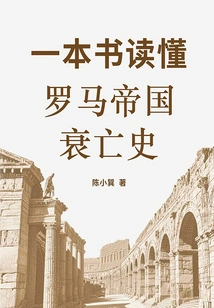
一本书读懂罗马帝国衰亡史
Chen Xiaoxun
Based on Edward Gibbon's historical masterpiece, this book reveals the multiple foreshadowings of the fall of civilization through the dust of the collapse of a thousand-year empire. This book starts from the golden age of the Antonine Dynasty and analyzes the financial collapse caused by the citizenship of Caracalla, the bureaucratic cancer caused by Diocletian's tax reform, the rise of Christianity that dissipated the martial spirit of Rome, and the doomsday carnival boiling in the Baths and the Colosseum. The author restores the bloody twilight of the Battle of Adrianople and the Jedi counterattack of the Battle of Chalons in a popular way, and decodes how the triangular strangulation of the barbarians, Persia and Rome tore apart the empire's territory. The book focuses particularly on Gibbon's "moral narcotics" theory, showing how Christianity transformed from an underground belief into a parasitic force that hollowed out the foundations of empires. It also examines the laws of historical cycles from an enlightenment perspective - from the power rent-seeking of the Senate to the mercenaryization of the army, from the abnormal prosperity of the slave economy to the collective collapse of the citizen spirit, which everywhere reflects the fatal erosion of autocracy and corruption on civilization. The book ends with the bloody dawn of the fall of Constantinople, allowing readers to see the pathological slices common to the decline of all empires in the ashes of the millennium epic.
Based on Edward Gibbon's historical masterpiece, this book reveals the multiple foreshadowings of the fall of civilization through the dust of the collapse of a thousand-year empire. This book starts from the golden age of the Antonine Dynasty and analyzes the financial collapse caused by the citizenship of Caracalla, the bureaucratic cancer caused by Diocletian's tax reform, the rise of Christianity that dissipated the martial spirit of Rome, and the doomsday carnival boiling in the Baths and the Colosseum. The author restores the bloody twilight of the Battle of Adrianople and the Jedi counterattack of the Battle of Chalons in a popular way, and decodes how the triangular strangulation of the barbarians, Persia and Rome tore apart the empire's territory. The book focuses particularly on Gibbon's "moral narcotics" theory, showing how Christianity transformed from an underground belief into a parasitic force that hollowed out the foundations of empires. It also examines the laws of historical cycles from an enlightenment perspective - from the power rent-seeking of the Senate to the mercenaryization of the army, from the abnormal prosperity of the slave economy to the collective collapse of the citizen spirit, which everywhere reflects the fatal erosion of autocracy and corruption on civilization. The book ends with the bloody dawn of the fall of Constantinople, allowing readers to see the pathological slices common to the decline of all empires in the ashes of the millennium epic.
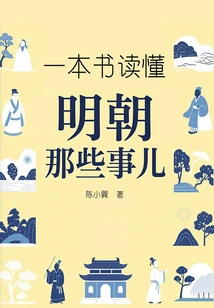
一本书读懂明朝那些事儿
Chen Xiaoxun
This book can help readers understand the essence of "Those Things in the Ming Dynasty" and reproduce the events of the three hundred years of the Ming Dynasty, from Zhu Yuanzhang proclaiming himself emperor in commoner clothes to hanging himself in Meishan, Chongzhen. It uses vivid writing to connect the rise and fall of the sixteen emperors, the game between powerful ministers, and the joys and sorrows of the market. The work breaks the framework of traditional history books. It not only includes the magnificent epic of Yongle's seven voyages to the West, but also analyzes the absurd drama of the emperor becoming a prisoner in the Tumubao Incident. It not only decodes the financial code behind Zhang Juzheng's reforms, but also tears apart the institutional corruption exposed by Wei Zhongxian's autocratic power. The book uses a humorous and sharp modern perspective to restore historical scenes such as the operation of Jin Yiwei's hidden stakes and the power struggle of the cabinet. It also slices through details such as the circulation of silver and the evolution of firearms to reveal the undercurrent of crisis under the appearance of a prosperous age. From Hai Rui's character to Qi Jiguang's fight against the Japanese, from the institutional dilemma in the fifteenth year of Wanli to the strangulation of power in the Tianqi years, each chapter is not only a collection of ups and downs, but also a collection of thoughts that provide insight into the collision between officialdom and civilization. This is not only a popular history of the Ming Dynasty, but also a mirror that reflects the complexity of human nature and the laws of history, allowing readers to understand why a dynasty died slowly in its glory through the chess game of life and death between emperors and generals and the ups and downs of ordinary people.
This book can help readers understand the essence of "Those Things in the Ming Dynasty" and reproduce the events of the three hundred years of the Ming Dynasty, from Zhu Yuanzhang proclaiming himself emperor in commoner clothes to hanging himself in Meishan, Chongzhen. It uses vivid writing to connect the rise and fall of the sixteen emperors, the game between powerful ministers, and the joys and sorrows of the market. The work breaks the framework of traditional history books. It not only includes the magnificent epic of Yongle's seven voyages to the West, but also analyzes the absurd drama of the emperor becoming a prisoner in the Tumubao Incident. It not only decodes the financial code behind Zhang Juzheng's reforms, but also tears apart the institutional corruption exposed by Wei Zhongxian's autocratic power. The book uses a humorous and sharp modern perspective to restore historical scenes such as the operation of Jin Yiwei's hidden stakes and the power struggle of the cabinet. It also slices through details such as the circulation of silver and the evolution of firearms to reveal the undercurrent of crisis under the appearance of a prosperous age. From Hai Rui's character to Qi Jiguang's fight against the Japanese, from the institutional dilemma in the fifteenth year of Wanli to the strangulation of power in the Tianqi years, each chapter is not only a collection of ups and downs, but also a collection of thoughts that provide insight into the collision between officialdom and civilization. This is not only a popular history of the Ming Dynasty, but also a mirror that reflects the complexity of human nature and the laws of history, allowing readers to understand why a dynasty died slowly in its glory through the chess game of life and death between emperors and generals and the ups and downs of ordinary people.
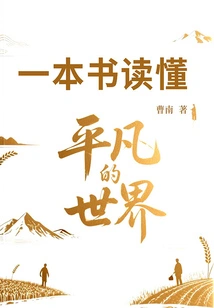
A Book to Understand the Ordinary World
Literature一本书读懂平凡的世界
Cao Nan
This book uses a panoramic perspective to deconstruct the loess epic written by Lu Yao, and reveals the multi-dimensional charm of the text through seven chapters of progressive analysis. From the spiritual umbilical cord of the "roots and stars" of farming civilization (the survival code of four generations of Sun Yuhou's family), to the narrative undercurrent of realism's "bronze forging" (an epic pattern intertwined with three main lines); from the emotional geology of "The Love of the Pear Tree" in the gap between urban and rural areas (the difference in emotional altitude between idealism and realism), to the "Sisypheus Stone" in the existential mine (a spiritual monument forged by suffering), the civilized texture of the text is peeled off layer by layer. The book uses "ordinary" as the longitude and "resistance" as the weft to weave the spiritual map of Chinese society in the early days of reform and opening up - it not only presents Sun Shaoan's farming wisdom of taking root in the land to rebuild brick kilns, but also decodes Sun Shaoping's philosophical breakthrough of "living toward death" when he wrote in the 800-meter mine. By re-examining Wang Manyin's mirror image, Tian Xiaoxia's star fable, and Tian Fujun's reform chess game, it reveals how Lu Yao forged individual destiny into a monument of the times. This monograph, which combines the depth of literary criticism and public readability, builds a bridge for readers to understand classics from a multidisciplinary perspective, giving new inspiration to the Loess Plateau's survival epic in the process of rural revitalization and urbanization.
This book uses a panoramic perspective to deconstruct the loess epic written by Lu Yao, and reveals the multi-dimensional charm of the text through seven chapters of progressive analysis. From the spiritual umbilical cord of the "roots and stars" of farming civilization (the survival code of four generations of Sun Yuhou's family), to the narrative undercurrent of realism's "bronze forging" (an epic pattern intertwined with three main lines); from the emotional geology of "The Love of the Pear Tree" in the gap between urban and rural areas (the difference in emotional altitude between idealism and realism), to the "Sisypheus Stone" in the existential mine (a spiritual monument forged by suffering), the civilized texture of the text is peeled off layer by layer. The book uses "ordinary" as the longitude and "resistance" as the weft to weave the spiritual map of Chinese society in the early days of reform and opening up - it not only presents Sun Shaoan's farming wisdom of taking root in the land to rebuild brick kilns, but also decodes Sun Shaoping's philosophical breakthrough of "living toward death" when he wrote in the 800-meter mine. By re-examining Wang Manyin's mirror image, Tian Xiaoxia's star fable, and Tian Fujun's reform chess game, it reveals how Lu Yao forged individual destiny into a monument of the times. This monograph, which combines the depth of literary criticism and public readability, builds a bridge for readers to understand classics from a multidisciplinary perspective, giving new inspiration to the Loess Plateau's survival epic in the process of rural revitalization and urbanization.
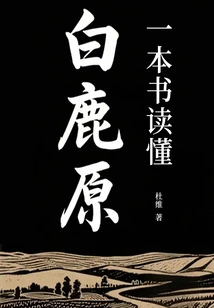
Understand Bailuyuan with a Book
Literature一本书读懂白鹿原
Du Wei
This book takes Chen Zhongshi's classic novel "White Deer Plain" as the research object. Through seven chapters of progressive in-depth analysis, it constructs a multi-dimensional cultural decoding manual that provides a multi-dimensional perspective on rural China. The book starts from the "mirror labyrinth of the patriarchal system" and analyzes Bailuyuan's power game, farming codes, revolutionary dilemmas and cross-media narratives chapter by chapter, ultimately pointing to a modern inquiry into the national spiritual map. The research is based on the ontology of literature, combined with historical and sociological perspectives, to reveal the symbiotic mechanism of patriarchal ethics and farming civilization that are mutually exclusive and external behind the core images of the bronze clan emblem and Mailang coat of arms in the novel; through the power struggle between Bai Jiaxuan and Lu Zilin, and the revolutionary paradox between Hei Wa and Lu Zhaopeng, it decodes the genetic code of the operation of power in rural society and the painful logic of civilization transformation. The book creatively incorporates Qin opera rhythm and dialect phonology into text analysis to decipher the life philosophy of Guanzhong civilization, and compares the narrative cracks in film and television adaptations to explore the interpretation dilemma of classic literature in the digital age. The research breaks through the traditional thematic criticism paradigm and integrates the theories of new historicism and magical realism. It not only restores the epic character of the "Secret History of the Nation", but also reveals its contemporary value as a cultural mirror, providing a new perspective for understanding the mutation of cultural genes in the process of China's modernization.
This book takes Chen Zhongshi's classic novel "White Deer Plain" as the research object. Through seven chapters of progressive in-depth analysis, it constructs a multi-dimensional cultural decoding manual that provides a multi-dimensional perspective on rural China. The book starts from the "mirror labyrinth of the patriarchal system" and analyzes Bailuyuan's power game, farming codes, revolutionary dilemmas and cross-media narratives chapter by chapter, ultimately pointing to a modern inquiry into the national spiritual map. The research is based on the ontology of literature, combined with historical and sociological perspectives, to reveal the symbiotic mechanism of patriarchal ethics and farming civilization that are mutually exclusive and external behind the core images of the bronze clan emblem and Mailang coat of arms in the novel; through the power struggle between Bai Jiaxuan and Lu Zilin, and the revolutionary paradox between Hei Wa and Lu Zhaopeng, it decodes the genetic code of the operation of power in rural society and the painful logic of civilization transformation. The book creatively incorporates Qin opera rhythm and dialect phonology into text analysis to decipher the life philosophy of Guanzhong civilization, and compares the narrative cracks in film and television adaptations to explore the interpretation dilemma of classic literature in the digital age. The research breaks through the traditional thematic criticism paradigm and integrates the theories of new historicism and magical realism. It not only restores the epic character of the "Secret History of the Nation", but also reveals its contemporary value as a cultural mirror, providing a new perspective for understanding the mutation of cultural genes in the process of China's modernization.
一本书读懂百年孤独
Su Bai
This book takes García Márquez's "One Hundred Years of Solitude" as the core, and through in-depth analysis, uncovers the layers of this masterpiece of magical realism. From the fateful reincarnation of seven generations of the Buendia family to the century-old rise and fall of the small town of Macondo, the book uses "loneliness" as the key to decode the collective trauma of Latin America eroded by colonial violence, civil war, and capital. Through chapters such as "Time Wrinkles," "Poison Ivy of Power," and "Literary Nuclear Explosion," it analyzes how Marquez weaved a time and space wormhole with images such as ice cubes, yellow butterflies, and parchments, sublimating the family epic into an allegory of the fate of the Latin American continent. The book contains sharp criticism of the banana company as a metaphor for neo-colonial exploitation, as well as philosophical speculation on classic scenes such as Colonel Aureliano's melting of a little goldfish and Úrsula's blindness in raising flowers. It reveals that loneliness is both a shackles of human nature and a spiritual armor against alienation. Combining a global perspective, this book traces the inspiration of "One Hundred Years of Solitude" to Chinese literature and even the digital age, showing how Marquez's narrative magic penetrates the page and continues to fission in the genes of contemporary civilization. The maze of texts intertwined with magic and reality ultimately leads to an ultimate question: When the hurricane wipes out Macondo, how can we salvage the untamed light of humanity in the ashes of memory?
This book takes García Márquez's "One Hundred Years of Solitude" as the core, and through in-depth analysis, uncovers the layers of this masterpiece of magical realism. From the fateful reincarnation of seven generations of the Buendia family to the century-old rise and fall of the small town of Macondo, the book uses "loneliness" as the key to decode the collective trauma of Latin America eroded by colonial violence, civil war, and capital. Through chapters such as "Time Wrinkles," "Poison Ivy of Power," and "Literary Nuclear Explosion," it analyzes how Marquez weaved a time and space wormhole with images such as ice cubes, yellow butterflies, and parchments, sublimating the family epic into an allegory of the fate of the Latin American continent. The book contains sharp criticism of the banana company as a metaphor for neo-colonial exploitation, as well as philosophical speculation on classic scenes such as Colonel Aureliano's melting of a little goldfish and Úrsula's blindness in raising flowers. It reveals that loneliness is both a shackles of human nature and a spiritual armor against alienation. Combining a global perspective, this book traces the inspiration of "One Hundred Years of Solitude" to Chinese literature and even the digital age, showing how Marquez's narrative magic penetrates the page and continues to fission in the genes of contemporary civilization. The maze of texts intertwined with magic and reality ultimately leads to an ultimate question: When the hurricane wipes out Macondo, how can we salvage the untamed light of humanity in the ashes of memory?
A Book to Understand the Border Town
Literature一本书读懂边城
Cao Nan
Shen Congwen's "Border Town" takes the Chadong in western Hunan as the stage, and draws on Cuicui's innocence and destiny to outline a philosophical picture where nature and civilization are intertwined. This book deconstructs this "modern pastoral" in depth in seven chapters: it analyzes the eternal game of fate and free will from the green waiting, restores the symbolic code of Miao border folk customs with dragon boat drum beats and folk song duets, and reveals the tearing of modernity on local civilization through the collapse of white towers and the roar of mills. The book also uses a female perspective to dissect the survival dilemma of Cuicui's maternal lineage, refracting the spiritual light in the cultural gap between silence and awakening, and using Shen Congwen's poetic brushwork to re-examine the prophetic revelation of "Border Town" on contemporary ecological crisis and emotional alienation - when the moonlight shines on the steel forest, the sound of the ferry still guides the lost souls to the possibility of poetic dwelling. Through multi-dimensional perspectives such as philosophy, semiotics, and cultural anthropology, this book not only restores Shen Congwen's aesthetic ideal of "beauty and love", but also turns the green mountains and green waters of Chadong into a prism, reflecting the paradox of survival that needs to be faced in every era: In a world where efficiency overwhelms poetry, how do we protect our innocent hearts that tremble like saxifrage?
Shen Congwen's "Border Town" takes the Chadong in western Hunan as the stage, and draws on Cuicui's innocence and destiny to outline a philosophical picture where nature and civilization are intertwined. This book deconstructs this "modern pastoral" in depth in seven chapters: it analyzes the eternal game of fate and free will from the green waiting, restores the symbolic code of Miao border folk customs with dragon boat drum beats and folk song duets, and reveals the tearing of modernity on local civilization through the collapse of white towers and the roar of mills. The book also uses a female perspective to dissect the survival dilemma of Cuicui's maternal lineage, refracting the spiritual light in the cultural gap between silence and awakening, and using Shen Congwen's poetic brushwork to re-examine the prophetic revelation of "Border Town" on contemporary ecological crisis and emotional alienation - when the moonlight shines on the steel forest, the sound of the ferry still guides the lost souls to the possibility of poetic dwelling. Through multi-dimensional perspectives such as philosophy, semiotics, and cultural anthropology, this book not only restores Shen Congwen's aesthetic ideal of "beauty and love", but also turns the green mountains and green waters of Chadong into a prism, reflecting the paradox of survival that needs to be faced in every era: In a world where efficiency overwhelms poetry, how do we protect our innocent hearts that tremble like saxifrage?
A Book to Understand the Biography
Literature一本书读懂传习录
Fu Huaiyu
This book takes profound Eastern wisdom as its latitude and longitude, and condenses the essence of Wang Yangming's philosophy of mind into a philosophy of life that modern people can feel and touch. The book is based on the original text of "Zhuan Xi Lu", and through the three core propositions of "the heart is reason", "the unity of knowledge and action" and "the conscience", it reveals how the ideological revolution born in the Longchang sarcophagus five hundred years ago is reborn in the contemporary era. The book not only restores the scene of Yang Ming and his disciples talking around the fire at night, but also uses vivid metaphors such as a craftsman kneading clay to feel the breath of clay, and Miao people sharing prey in a fire pit to interpret the true meaning of "hardening in work" - the truth is not in the typeface of the scriptures, but in the temperature of the mother's fingertips when testing medicine, and the crisp echo of the collision of silver jewelry in front of the live broadcast camera. The author re-examines the "Way of the Saint" from a phenomenological perspective, juxtaposing the data clouds of the metaverse with the miasma of the dragon field, revealing the topological rebirth of mind science in the digital age: when AR projection sprinkles "all things are one" onto the Taihu stone, the ancient bronze mirror has already turned into a clear light on thousands of heart screens. This work, which combines philosophical depth and narrative aesthetics, is not only a compass for inquiring into the heart, but also a silk that penetrates the clouds and wipes the mirror of the heart, so that every modern person who is tossed in the cocoon of information can regain the tremor of awakening under the starry sky of conscience.
This book takes profound Eastern wisdom as its latitude and longitude, and condenses the essence of Wang Yangming's philosophy of mind into a philosophy of life that modern people can feel and touch. The book is based on the original text of "Zhuan Xi Lu", and through the three core propositions of "the heart is reason", "the unity of knowledge and action" and "the conscience", it reveals how the ideological revolution born in the Longchang sarcophagus five hundred years ago is reborn in the contemporary era. The book not only restores the scene of Yang Ming and his disciples talking around the fire at night, but also uses vivid metaphors such as a craftsman kneading clay to feel the breath of clay, and Miao people sharing prey in a fire pit to interpret the true meaning of "hardening in work" - the truth is not in the typeface of the scriptures, but in the temperature of the mother's fingertips when testing medicine, and the crisp echo of the collision of silver jewelry in front of the live broadcast camera. The author re-examines the "Way of the Saint" from a phenomenological perspective, juxtaposing the data clouds of the metaverse with the miasma of the dragon field, revealing the topological rebirth of mind science in the digital age: when AR projection sprinkles "all things are one" onto the Taihu stone, the ancient bronze mirror has already turned into a clear light on thousands of heart screens. This work, which combines philosophical depth and narrative aesthetics, is not only a compass for inquiring into the heart, but also a silk that penetrates the clouds and wipes the mirror of the heart, so that every modern person who is tossed in the cocoon of information can regain the tremor of awakening under the starry sky of conscience.
A Book to Understand Oedipus
Literature一本书读懂俄狄甫斯
Compiled By Wan Xiaoqing
The myth of Oedipus transcends time and space precisely because it reveals mankind's eternal dilemma: the struggle between cognitive limitations and the uncertainty of fate. Freud saw the psychological prototype of the "Oedipus complex" in it, Camus read the "Sisyphean" absurd heroism, and modern philosophers regard it as an example of "existence precedes essence". When Oedipus mysteriously disappeared in the sacred grove of Colonos, he completed the transformation from "patricide" to "redemptor" and then to "guardian". This trajectory condenses the most profound wisdom of Greek civilization: the real tragedy does not lie in the cruelty of fate, but in the dignity and strength displayed by human beings in the face of fate.
The myth of Oedipus transcends time and space precisely because it reveals mankind's eternal dilemma: the struggle between cognitive limitations and the uncertainty of fate. Freud saw the psychological prototype of the "Oedipus complex" in it, Camus read the "Sisyphean" absurd heroism, and modern philosophers regard it as an example of "existence precedes essence". When Oedipus mysteriously disappeared in the sacred grove of Colonos, he completed the transformation from "patricide" to "redemptor" and then to "guardian". This trajectory condenses the most profound wisdom of Greek civilization: the real tragedy does not lie in the cruelty of fate, but in the dignity and strength displayed by human beings in the face of fate.
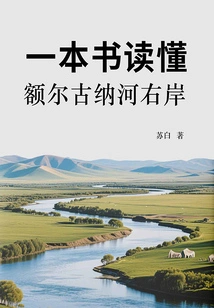
一本书读懂额尔古纳河右岸
Su Bai
This book is based on the century-old Ewenki epic "Right Bank of the Ergun River" and provides an in-depth analysis of the spiritual core of this Mao Dun Literature Prize masterpiece through six dimensions. The book takes the ecological code of reindeer as a starting point, reveals the ecological wisdom of the Ewenki people of "taking one for ten", glimpses divine redemption in the bronze mirror of the shaman's skirt, and presents the spiritual breakthrough of nomadic civilization against modernity in the collision of neon lights and bonfires. The book pays special attention to female narratives, from Damara's Hagoromo Dance to Nihao Shaman's bloody redemption, outlining the life resilience of the matriarchal clan blooming in suffering. By deconstructing the circular time structure of "morning, noon, and dusk", Chi Zijian's subversive writing of the linear view of history is revealed, and ultimately the survival inspiration against consumerism and ecological crisis is extracted from the birch bark epic. The whole book is not only a literary decoding of the centuries-old vicissitudes of primitive tribes, but also a warning song dedicated to modern civilization, leading readers to listen to the eternal dialogue between life and nature amidst the ringing of reindeer bells and the sound of urban sirens.
This book is based on the century-old Ewenki epic "Right Bank of the Ergun River" and provides an in-depth analysis of the spiritual core of this Mao Dun Literature Prize masterpiece through six dimensions. The book takes the ecological code of reindeer as a starting point, reveals the ecological wisdom of the Ewenki people of "taking one for ten", glimpses divine redemption in the bronze mirror of the shaman's skirt, and presents the spiritual breakthrough of nomadic civilization against modernity in the collision of neon lights and bonfires. The book pays special attention to female narratives, from Damara's Hagoromo Dance to Nihao Shaman's bloody redemption, outlining the life resilience of the matriarchal clan blooming in suffering. By deconstructing the circular time structure of "morning, noon, and dusk", Chi Zijian's subversive writing of the linear view of history is revealed, and ultimately the survival inspiration against consumerism and ecological crisis is extracted from the birch bark epic. The whole book is not only a literary decoding of the centuries-old vicissitudes of primitive tribes, but also a warning song dedicated to modern civilization, leading readers to listen to the eternal dialogue between life and nature amidst the ringing of reindeer bells and the sound of urban sirens.
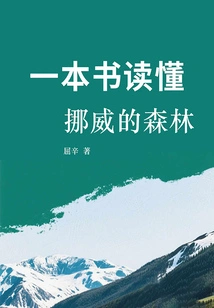
一本书读懂挪威的森林
Qu Xin
This book uses existential philosophy as a scalpel to cut open the spiritual texture of Murakami Haruki's phenomenal novel. Through seven chapters of in-depth interpretation, the book traces Tetsu Watanabe's epiphanies about life and death in funeral parlors, nursing homes, and the streets of Tokyo, decoding Naoko's claustrophobic spiritual universe, Midoriko's noisy survival declaration, and Nagazawa's nihilistic elite mask, and restores the existential dilemma of a generation behind Japan's economic boom in the 1960s. From the suicide scene in Kizuki's garage to the sound of pine waves in Amelia, from Midoriko's burned old bookstore to Reiko's guitar music, the book not only analyzes the philosophical core of "death is not the opposite of life", but also dismantles the mental analgesic effect behind Murakami's iconic jazz language rhythm and black humor. Through the prism of erotic writing, folds of memory and lonely group portraits, it reveals the spiritual wasteland of modern people in an era of material abundance, and how Haruki Murakami transformed Heidegger's "living toward death" into the aesthetics of survival in the Eastern context. This book is not only the ultimate decoding of "Norwegian Wood", but also provides contemporary people with a silver key through the fog of existence.
This book uses existential philosophy as a scalpel to cut open the spiritual texture of Murakami Haruki's phenomenal novel. Through seven chapters of in-depth interpretation, the book traces Tetsu Watanabe's epiphanies about life and death in funeral parlors, nursing homes, and the streets of Tokyo, decoding Naoko's claustrophobic spiritual universe, Midoriko's noisy survival declaration, and Nagazawa's nihilistic elite mask, and restores the existential dilemma of a generation behind Japan's economic boom in the 1960s. From the suicide scene in Kizuki's garage to the sound of pine waves in Amelia, from Midoriko's burned old bookstore to Reiko's guitar music, the book not only analyzes the philosophical core of "death is not the opposite of life", but also dismantles the mental analgesic effect behind Murakami's iconic jazz language rhythm and black humor. Through the prism of erotic writing, folds of memory and lonely group portraits, it reveals the spiritual wasteland of modern people in an era of material abundance, and how Haruki Murakami transformed Heidegger's "living toward death" into the aesthetics of survival in the Eastern context. This book is not only the ultimate decoding of "Norwegian Wood", but also provides contemporary people with a silver key through the fog of existence.

Race Against Disease
Literature与疾病赛跑
(us) David Feigenbaum
During his third year of medical school, David Feigenbaum often retreated to an empty ward to rest due to unexplained weakness. The former college quarterback who once dominated the field and was nicknamed "The Beast" is now weak. Emergency tests revealed that multiple organs were failing, but no diagnosis could be made. Eventually, he was diagnosed with an extremely rare disease, idiopathic multicentric Castleman disease. Unlike rare diseases such as ALS, this disease is almost unknown and has no effective treatments. David, who was almost sentenced to death, turned his personal misfortune into a mission. With his unyielding thirst for knowledge, he continued to study despite repeated relapses, and finally revealed the mechanism of the disease. Today, although the disease is still rare, a collaborative diagnosis and treatment network of professional doctors and researchers has been established so that patients no longer lose hope due to lack of knowledge or lack of resources.
During his third year of medical school, David Feigenbaum often retreated to an empty ward to rest due to unexplained weakness. The former college quarterback who once dominated the field and was nicknamed "The Beast" is now weak. Emergency tests revealed that multiple organs were failing, but no diagnosis could be made. Eventually, he was diagnosed with an extremely rare disease, idiopathic multicentric Castleman disease. Unlike rare diseases such as ALS, this disease is almost unknown and has no effective treatments. David, who was almost sentenced to death, turned his personal misfortune into a mission. With his unyielding thirst for knowledge, he continued to study despite repeated relapses, and finally revealed the mechanism of the disease. Today, although the disease is still rare, a collaborative diagnosis and treatment network of professional doctors and researchers has been established so that patients no longer lose hope due to lack of knowledge or lack of resources.
葛剑雄文集9:也是读书
Ge Jianxiong
This book collects more than 70 essays written by Ge Jianxiong, a famous scholar, historical geographer, and professor at Fudan University. The writing spans several decades and includes prefaces, postscripts, introductions, postscripts, and other forms. Read your own books, read other people's books, and read students' books. The content may be a statement of the purpose of your personal work, the process of creation, a review of the work of friends or colleagues, or a message to a student's work. The essence of Professor Ge Jianxiong's academic research and the breadth of his research can be seen. These words have both ideological value and rich connotation. They are full of the joy of reading and reflection on life. They focus on the author's academic and writing research and thinking.
This book collects more than 70 essays written by Ge Jianxiong, a famous scholar, historical geographer, and professor at Fudan University. The writing spans several decades and includes prefaces, postscripts, introductions, postscripts, and other forms. Read your own books, read other people's books, and read students' books. The content may be a statement of the purpose of your personal work, the process of creation, a review of the work of friends or colleagues, or a message to a student's work. The essence of Professor Ge Jianxiong's academic research and the breadth of his research can be seen. These words have both ideological value and rich connotation. They are full of the joy of reading and reflection on life. They focus on the author's academic and writing research and thinking.
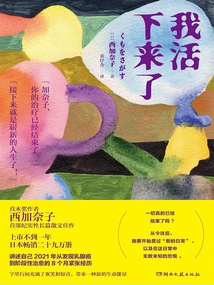
I Survived
Literature我活下来了
(japan) Nishikanako
This is a documentary and autobiographical long prose work. It describes that the author Nishikanako was diagnosed with breast cancer in 2021, when the COVID-19 epidemic in Canada was at its worst. From the discovery of cancer to the staged cure, the author went through a tense and special 8 months, and more unknowns will be buried in the body in the long-term future. At the same time, Kanako must continue to learn to welcome a tomorrow where happiness and fear coexist in her daily life. During these eight months, Kanako began to understand her disease and continued to accept her own weakness; from facing death calmly, she began to learn to overcome fear step by step and accept and fall in love with her incomplete self. Until after the operation, she wrote in the article: "After talking to her (the nurse), I realized that losing breasts and losing nipples did not seem to have anything to do with my life from now on (yes, it felt like discussing false eyelashes).
This is a documentary and autobiographical long prose work. It describes that the author Nishikanako was diagnosed with breast cancer in 2021, when the COVID-19 epidemic in Canada was at its worst. From the discovery of cancer to the staged cure, the author went through a tense and special 8 months, and more unknowns will be buried in the body in the long-term future. At the same time, Kanako must continue to learn to welcome a tomorrow where happiness and fear coexist in her daily life. During these eight months, Kanako began to understand her disease and continued to accept her own weakness; from facing death calmly, she began to learn to overcome fear step by step and accept and fall in love with her incomplete self. Until after the operation, she wrote in the article: "After talking to her (the nurse), I realized that losing breasts and losing nipples did not seem to have anything to do with my life from now on (yes, it felt like discussing false eyelashes).
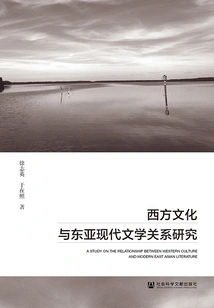
西方文化与东亚现代文学关系研究
Xu Zhiying Yu Zaizhao
This book uses cultural and literary theories such as cultural communication and comparative literature, and based on the detailed historical data on the relationship between Western culture and East Asian modern literature, and discusses the historical evolution and characteristics of Western culture from the broad perspective of world history, society and culture.
This book uses cultural and literary theories such as cultural communication and comparative literature, and based on the detailed historical data on the relationship between Western culture and East Asian modern literature, and discusses the historical evolution and characteristics of Western culture from the broad perspective of world history, society and culture.
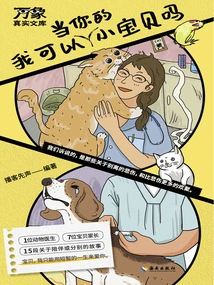
Can I Be Your Little Baby
Literature我可以当你的小宝贝吗
Podcast First
This is not a book about pets, but a book about "us" - telling about those furry little lives and teaching humans how to love, hurt, and cherish. This book is divided into two parts. Among them, the author of "Emergency Chapter" is a pet doctor who has been practicing for 7 years. Starting from the pet rescue cases he has personally experienced, he tells the inner struggle of parents when facing sick pets, as well as the hospital's treatment process of small animals, and the joy or regret that follows. "Farewell" is from the perspective of seven pet parents, recalling every moment of getting together with their babies, the circumstances of separation, and the longing and relief after the babies left. After experiencing separation, I understand that love is knowing that it will be lost, but still choosing to have it with all your heart.
This is not a book about pets, but a book about "us" - telling about those furry little lives and teaching humans how to love, hurt, and cherish. This book is divided into two parts. Among them, the author of "Emergency Chapter" is a pet doctor who has been practicing for 7 years. Starting from the pet rescue cases he has personally experienced, he tells the inner struggle of parents when facing sick pets, as well as the hospital's treatment process of small animals, and the joy or regret that follows. "Farewell" is from the perspective of seven pet parents, recalling every moment of getting together with their babies, the circumstances of separation, and the longing and relief after the babies left. After experiencing separation, I understand that love is knowing that it will be lost, but still choosing to have it with all your heart.
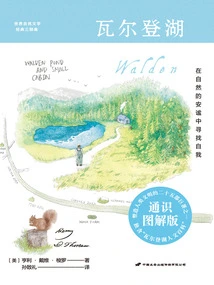
紫图经典文库:瓦尔登湖(通识图解版)
(u. S.) Henry David Thoreau
This book is a minimalist record of Thoreau's life when he lived alone by Walden Pond. It depicts the natural scenery of Walden Pond with beautiful brushstrokes. It records what the author saw, heard and thought over more than two years, and expresses his profound thinking about man and nature, society and life. Since its first publication in 1854, "Walden" has broken the limitations of time and space and continued to influence the world. In the field of literature, it created and triggered the writing trend of natural literature. In the field of philosophy, Thoreau and Emerson are urged to be regarded as the two giants of transcendentalism. It also directly gave birth to the idea of environmental protection and is the true origin of the contemporary minimalist aesthetics and lifestyle that are in the ascendant. The general illustrated edition contains a large number of fine illustrations, intuitively presenting Thoreau's philosophical thoughts, allusions in the text and related natural history knowledge, and pioneeringly provides a set of "knowledge encyclopedia" that is essential for understanding "Walden".
This book is a minimalist record of Thoreau's life when he lived alone by Walden Pond. It depicts the natural scenery of Walden Pond with beautiful brushstrokes. It records what the author saw, heard and thought over more than two years, and expresses his profound thinking about man and nature, society and life. Since its first publication in 1854, "Walden" has broken the limitations of time and space and continued to influence the world. In the field of literature, it created and triggered the writing trend of natural literature. In the field of philosophy, Thoreau and Emerson are urged to be regarded as the two giants of transcendentalism. It also directly gave birth to the idea of environmental protection and is the true origin of the contemporary minimalist aesthetics and lifestyle that are in the ascendant. The general illustrated edition contains a large number of fine illustrations, intuitively presenting Thoreau's philosophical thoughts, allusions in the text and related natural history knowledge, and pioneeringly provides a set of "knowledge encyclopedia" that is essential for understanding "Walden".
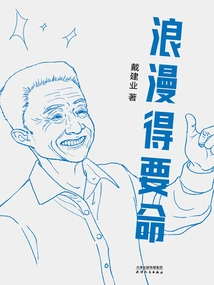
Romantic as Hell
Literature浪漫得要命
Dai Jianye
The final work of Dai Jianye's "Mantra Trilogy", a collection of essays full of "Dai flavor"! Chat with young friends, and talk about those poets and poems that are extremely romantic and crazy. The three major chapters in the book, "Words about Life", "Careful Reading of Poems and Books", and "Conversations with Inkstones and Writing", connect together memories of growth, reading methods, and life concepts. Su Dongpo, Li Bai, Bai Juyi, Du Fu, Foucault, Dana... From ancient times to the present, we have covered them all; how to read poetry, tips before exams, how to deal with confusion in career choices... From students to workers, they are all covered. Funny, sharp and transparent, for every lovely young person.
The final work of Dai Jianye's "Mantra Trilogy", a collection of essays full of "Dai flavor"! Chat with young friends, and talk about those poets and poems that are extremely romantic and crazy. The three major chapters in the book, "Words about Life", "Careful Reading of Poems and Books", and "Conversations with Inkstones and Writing", connect together memories of growth, reading methods, and life concepts. Su Dongpo, Li Bai, Bai Juyi, Du Fu, Foucault, Dana... From ancient times to the present, we have covered them all; how to read poetry, tips before exams, how to deal with confusion in career choices... From students to workers, they are all covered. Funny, sharp and transparent, for every lovely young person.
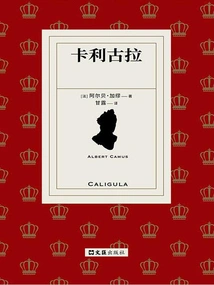
Caligula
Literature卡利古拉
(france) Albert Camus
This book is a four-act tragedy created by Albert Camus. It is based on the life of the ancient Roman tyrant Caligula and profoundly reflects Camus' existentialism and absurd philosophy. In the play, Caligula begins to question the meaning and value of life after experiencing the shock of the death of his beloved lover. He found that personality, dignity, and even pain were meaningless in the face of death, which triggered his extreme use of power and destruction of the existing order. He became a tyrant who wantonly trampled on the original human system, good and evil, and emotions, trying to find truth and eternity through power and expose the hypocrisy of the world. Through the image of Caligula, Camus explores the way humans deal with themselves in the face of an absurd world, showing the destructive consequences of abuse of power and personal madness. At the same time, he also put forward profound thoughts about human existence and freedom, and explored how to find personal meaning and value in an absurd world.
This book is a four-act tragedy created by Albert Camus. It is based on the life of the ancient Roman tyrant Caligula and profoundly reflects Camus' existentialism and absurd philosophy. In the play, Caligula begins to question the meaning and value of life after experiencing the shock of the death of his beloved lover. He found that personality, dignity, and even pain were meaningless in the face of death, which triggered his extreme use of power and destruction of the existing order. He became a tyrant who wantonly trampled on the original human system, good and evil, and emotions, trying to find truth and eternity through power and expose the hypocrisy of the world. Through the image of Caligula, Camus explores the way humans deal with themselves in the face of an absurd world, showing the destructive consequences of abuse of power and personal madness. At the same time, he also put forward profound thoughts about human existence and freedom, and explored how to find personal meaning and value in an absurd world.
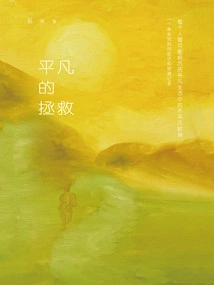
Ordinary Salvation
Literature平凡的拯救
Tammy
This is a collection of poems about women's growth stories. It records the life and mental journey of a single mother from entering society, getting married, getting divorced, and raising her son alone. It tells her loneliness, confusion, weakness, entanglement, joy, sensitivity, delicacy, innocence, firmness, and persistence, and also whispers her delicate and dreamy emotional world. Ordinary emphasizes the universality of life, while salvation implies self-salvation, rebirth of life, salvation and help from others and society, as well as the author's unremitting efforts with hope in life. It focuses on the extraordinary moments in ordinary life that everyone can experience.
This is a collection of poems about women's growth stories. It records the life and mental journey of a single mother from entering society, getting married, getting divorced, and raising her son alone. It tells her loneliness, confusion, weakness, entanglement, joy, sensitivity, delicacy, innocence, firmness, and persistence, and also whispers her delicate and dreamy emotional world. Ordinary emphasizes the universality of life, while salvation implies self-salvation, rebirth of life, salvation and help from others and society, as well as the author's unremitting efforts with hope in life. It focuses on the extraordinary moments in ordinary life that everyone can experience.
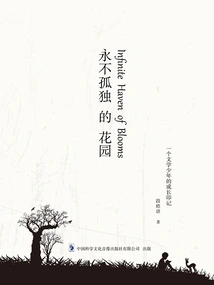
The Garden That is Never Lonely
Literature永不孤独的花园
Duan Haoyu
This book collects the author's personal essays in recent years, with a wide range of content, including classic literature, drama, opera, music, and detailed observations and profound insights into daily life. The writing style gradually transforms from youthful to mature, truly showing the growth process of a young man who loves reading and writing.
This book collects the author's personal essays in recent years, with a wide range of content, including classic literature, drama, opera, music, and detailed observations and profound insights into daily life. The writing style gradually transforms from youthful to mature, truly showing the growth process of a young man who loves reading and writing.
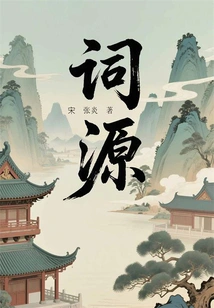
Etymology
Literature词源
(song Dynasty) Zhang Yan
"Etymology" is a monograph on word theory written by Zhang Yan in the late Song Dynasty and early Yuan Dynasty. At that time, the Song Dynasty died, and Zhang Yan's life experience was ups and downs, so he wrote this book while wandering. The book analyzes the five tones and twelve temperaments, the rhythm and the sound, and the palace tone and color, and analyzes the essence and principles, covering chapters such as composition, syntax, and clearing. It is a classic in the field of Ci poetry and has a profound influence on later generations.
"Etymology" is a monograph on word theory written by Zhang Yan in the late Song Dynasty and early Yuan Dynasty. At that time, the Song Dynasty died, and Zhang Yan's life experience was ups and downs, so he wrote this book while wandering. The book analyzes the five tones and twelve temperaments, the rhythm and the sound, and the palace tone and color, and analyzes the essence and principles, covering chapters such as composition, syntax, and clearing. It is a classic in the field of Ci poetry and has a profound influence on later generations.
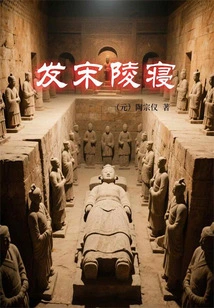
Fa Song Mausoleum
Literature发宋陵寝
(yuan) Tao Zongyi
"Fa Song Tombs" is an early article in ancient literature that clearly talks about robbing royal tombs. The text takes the core event of Yang Lianzhenjia, a monk from the Western Regions in the early Yuan Dynasty, who robbed the imperial mausoleum of the Southern Song Dynasty as the core event, showing a fleeting tragedy in the change of power between the Song and Yuan Dynasties. In 1285, Yang Lianzhenjia, the general manager of Buddhism in the south of the Yangtze River and a Tibetan monk, took advantage of the power of Sang Ge, a powerful official in the Yuan Dynasty, and led a crowd to excavate and destroy the six tombs of the Song Dynasty in Shaoxing, and looted the tombs of the six emperors including Gaozong, Xiaozong, Lizong and their concubines. Countless treasures were lost, and Emperor Lizong of the Song Dynasty drained mercury from the corpses hanging upside down and cut off their heads to make magical objects. Countless actions would seem outrageous today. This looting, which lasted for several months, completely ruined the face of the Song Dynasty and scattered all the cultural relics. The complex political game, religious fanaticism, cultural symbols, etc. Hidden behind the entire tomb robbing incident have triggered long-term thinking for future generations.
"Fa Song Tombs" is an early article in ancient literature that clearly talks about robbing royal tombs. The text takes the core event of Yang Lianzhenjia, a monk from the Western Regions in the early Yuan Dynasty, who robbed the imperial mausoleum of the Southern Song Dynasty as the core event, showing a fleeting tragedy in the change of power between the Song and Yuan Dynasties. In 1285, Yang Lianzhenjia, the general manager of Buddhism in the south of the Yangtze River and a Tibetan monk, took advantage of the power of Sang Ge, a powerful official in the Yuan Dynasty, and led a crowd to excavate and destroy the six tombs of the Song Dynasty in Shaoxing, and looted the tombs of the six emperors including Gaozong, Xiaozong, Lizong and their concubines. Countless treasures were lost, and Emperor Lizong of the Song Dynasty drained mercury from the corpses hanging upside down and cut off their heads to make magical objects. Countless actions would seem outrageous today. This looting, which lasted for several months, completely ruined the face of the Song Dynasty and scattered all the cultural relics. The complex political game, religious fanaticism, cultural symbols, etc. Hidden behind the entire tomb robbing incident have triggered long-term thinking for future generations.
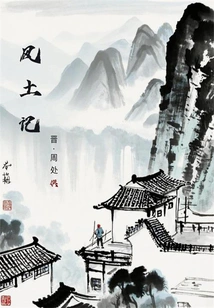
Fengtuji (miniature Local Chronicle)
Literature风土记(微型地方志)
(jin) Zhou Chu
"Fengtu Ji" is a local chronicle work written by Zhou Chu of the Jin Dynasty. It records the customs and customs of Jiangnan during the Jin Dynasty. The content is short and concise, covering customs, landforms and folklore. Because it was written earlier, it has been around for a long time, and most of it has been lost. It has survived to this day and has been transformed into what it is today. Zhou Chu entered the court as an official in both Wu and Western Jin Dynasties. Before his death, he had been a local official and had considerable experience in governance. The customs and social conditions he recorded are precious information for future generations to understand the political, economic and cultural changes at that time. Through a miniature local chronicle, today's people can understand the customs and customs of ancient Jiangnan, and also understand the multi-faceted presentation of Zhou Chu himself, which is a rare gain.
"Fengtu Ji" is a local chronicle work written by Zhou Chu of the Jin Dynasty. It records the customs and customs of Jiangnan during the Jin Dynasty. The content is short and concise, covering customs, landforms and folklore. Because it was written earlier, it has been around for a long time, and most of it has been lost. It has survived to this day and has been transformed into what it is today. Zhou Chu entered the court as an official in both Wu and Western Jin Dynasties. Before his death, he had been a local official and had considerable experience in governance. The customs and social conditions he recorded are precious information for future generations to understand the political, economic and cultural changes at that time. Through a miniature local chronicle, today's people can understand the customs and customs of ancient Jiangnan, and also understand the multi-faceted presentation of Zhou Chu himself, which is a rare gain.
玫瑰泪:都市女性犯罪调查
Sea sword
This book is divided into three main parts and collects contemporary female crime cases, including the Meng Xiaolan case and other incidents. The cases cover the causes of crime such as emotional disputes, materialistic desires, and psychological distortions, reveal the impact of social problems such as housing conditions, domestic violence, and financial temptations, and reveal the trajectory of women's decline through the analysis of criminal methods and mental processes.
This book is divided into three main parts and collects contemporary female crime cases, including the Meng Xiaolan case and other incidents. The cases cover the causes of crime such as emotional disputes, materialistic desires, and psychological distortions, reveal the impact of social problems such as housing conditions, domestic violence, and financial temptations, and reveal the trajectory of women's decline through the analysis of criminal methods and mental processes.
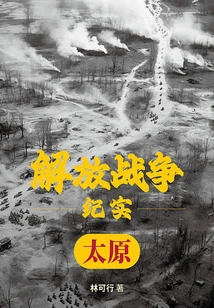
解放战争纪实:解放太原
Lin Keke
In October 1948, the North China Field Army launched the Taiyuan Campaign to attack the "Bunker City" that Yan Xishan had run for 38 years. Xu Xiangqian commanded an army of 200,000. After half a year of bloody battles, he cleared more than a hundred peripheral strongholds. The general offensive was launched on April 24, 1949. It took only 4 hours to break through the city and annihilate all 124,000 enemy defenders, ending Yan Xishan's rule in Shanxi. This battle was the most brutal urban assault in the Liberation War. The People's Liberation Army suffered 45,000 casualties. It destroyed the "model fortress" of the National Army, uprooted the last anti-communist bastion in North China, and laid the foundation for the liberation of the northwest battlefield.
In October 1948, the North China Field Army launched the Taiyuan Campaign to attack the "Bunker City" that Yan Xishan had run for 38 years. Xu Xiangqian commanded an army of 200,000. After half a year of bloody battles, he cleared more than a hundred peripheral strongholds. The general offensive was launched on April 24, 1949. It took only 4 hours to break through the city and annihilate all 124,000 enemy defenders, ending Yan Xishan's rule in Shanxi. This battle was the most brutal urban assault in the Liberation War. The People's Liberation Army suffered 45,000 casualties. It destroyed the "model fortress" of the National Army, uprooted the last anti-communist bastion in North China, and laid the foundation for the liberation of the northwest battlefield.
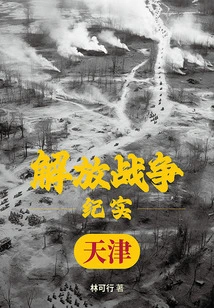
解放战争纪实:解放天津
Lin Keke
In January 1949, the Northeast Field Army launched the Tianjin Campaign with 340,000 troops. Liu Yalou commanded the troops to adopt the tactics of "advance from east to west and cut off from the middle". After 29 hours of fierce attack, on January 15, they completely wiped out 130,000 enemy defenders and captured Chen Changjie, commander of the Tianjin garrison of the National Army. This battle destroyed the fortress-like city defenses carefully constructed by the Kuomintang army. Artillery and tanks were used to break through deep ditches and high fortresses, cutting off the Peiping defenders' sea retreat, and forcing Fu Zuoyi to accept peace negotiations. The liberation of Tianjin became a model for the People's Liberation Army in modernizing cities and laid the foundation for the peaceful liberation of Peiping.
In January 1949, the Northeast Field Army launched the Tianjin Campaign with 340,000 troops. Liu Yalou commanded the troops to adopt the tactics of "advance from east to west and cut off from the middle". After 29 hours of fierce attack, on January 15, they completely wiped out 130,000 enemy defenders and captured Chen Changjie, commander of the Tianjin garrison of the National Army. This battle destroyed the fortress-like city defenses carefully constructed by the Kuomintang army. Artillery and tanks were used to break through deep ditches and high fortresses, cutting off the Peiping defenders' sea retreat, and forcing Fu Zuoyi to accept peace negotiations. The liberation of Tianjin became a model for the People's Liberation Army in modernizing cities and laid the foundation for the peaceful liberation of Peiping.
解放战争纪实:解放西双版纳
Lin Keke
In February 1950, the 13th Corps of the Second Field Army pursued the remnants of the defeated Kuomintang 8th Army and advanced into southern Yunnan in two ways. With the cooperation of the Dai militia, they liberated Che (today's Jinghong) on February 17 and took control of Menghai and Mengla on the 19th, ending the Kuomintang's rule over the southern Yunnan frontier. In this battle, 1,200 enemies were wiped out, cultural heritage such as Dai Buddhist temples and tea mountains were preserved, and the China-Myanmar border was opened. The liberation of Xishuangbanna marked the recovery of the entire territory of Yunnan, laid the foundation for the People's Liberation Army to establish a forward base for entering Tibet, and created a model of "national unity to liberate the frontier".
In February 1950, the 13th Corps of the Second Field Army pursued the remnants of the defeated Kuomintang 8th Army and advanced into southern Yunnan in two ways. With the cooperation of the Dai militia, they liberated Che (today's Jinghong) on February 17 and took control of Menghai and Mengla on the 19th, ending the Kuomintang's rule over the southern Yunnan frontier. In this battle, 1,200 enemies were wiped out, cultural heritage such as Dai Buddhist temples and tea mountains were preserved, and the China-Myanmar border was opened. The liberation of Xishuangbanna marked the recovery of the entire territory of Yunnan, laid the foundation for the People's Liberation Army to establish a forward base for entering Tibet, and created a model of "national unity to liberate the frontier".
解放战争纪实:解放襄阳
Lin Keke
In July 1948, the 6th column of the Central Plains Field Army attacked northern Hubei. Wang Jinshan commanded the troops to implement the "heart-breaking tactics": Tongbai Military Region forcibly crossed the Han River to cut off the enemy's retreat, and the main force stormed the city wall from three sides. After 14 days and nights of bloody battles (July 2-16), the Ming Dynasty stone wall was blown down and penetrated into the core, 21,000 enemy defenders were wiped out, and the spy leader Kang Ze (commander of the 15th Appeasement District) was captured. This battle pioneered the "abandoning mountains and attacking the city" strategy, preserving Zhongxuan Tower, Green Shadow Wall and other historic sites, controlling the golden waterway in the upper reaches of the Han River, integrating Tongbai with the Jianghan Liberated Area, and opening up the southern gateway for the Huaihai Campaign.
In July 1948, the 6th column of the Central Plains Field Army attacked northern Hubei. Wang Jinshan commanded the troops to implement the "heart-breaking tactics": Tongbai Military Region forcibly crossed the Han River to cut off the enemy's retreat, and the main force stormed the city wall from three sides. After 14 days and nights of bloody battles (July 2-16), the Ming Dynasty stone wall was blown down and penetrated into the core, 21,000 enemy defenders were wiped out, and the spy leader Kang Ze (commander of the 15th Appeasement District) was captured. This battle pioneered the "abandoning mountains and attacking the city" strategy, preserving Zhongxuan Tower, Green Shadow Wall and other historic sites, controlling the golden waterway in the upper reaches of the Han River, integrating Tongbai with the Jianghan Liberated Area, and opening up the southern gateway for the Huaihai Campaign.
解放战争纪实:解放烟台
Lin Keke
On August 24, 1945, the Jiaodong Eighth Route Army took advantage of the surrender of the Japanese army and stormed Yantai, annihilating more than 5,000 Japanese and puppet troops, becoming the first coastal port city liberated by the CCP. In the autumn of 1947, the Kuomintang troops briefly reoccupied the area. On October 15, 1948, the Shandong Corps was liberated for the second time, wiping out all 8,000 enemy defenders. The city changed hands three times and finally belonged to the people, preserving national industries such as Changyu Winery and Shipyard, and opening up the maritime trade channel in the liberated area. It is known as the "key to the liberation of Jiaodong" and provided a forward base for the liberation of Qingdao in 1949.
On August 24, 1945, the Jiaodong Eighth Route Army took advantage of the surrender of the Japanese army and stormed Yantai, annihilating more than 5,000 Japanese and puppet troops, becoming the first coastal port city liberated by the CCP. In the autumn of 1947, the Kuomintang troops briefly reoccupied the area. On October 15, 1948, the Shandong Corps was liberated for the second time, wiping out all 8,000 enemy defenders. The city changed hands three times and finally belonged to the people, preserving national industries such as Changyu Winery and Shipyard, and opening up the maritime trade channel in the liberated area. It is known as the "key to the liberation of Jiaodong" and provided a forward base for the liberation of Qingdao in 1949.
解放战争纪实:解放徐州
Lin Keke
On December 1, 1948, during the second stage of the Huaihai Campaign, Du Yuming's group of the Kuomintang abandoned Xuzhou and fled south. The East China Field Army took advantage of the situation and moved in to liberate this strategic hub of "the thoroughfare to five provinces" without any bloodshed. In this battle, more than 1,700 artillery pieces, 250 tanks and armored vehicles, and a large amount of military supplies were seized, cutting off the land retreat of the largest corps of the national army. The liberation of Xuzhou connected the East China and Central Plains liberated areas, laid the foundation for the encirclement of Du Yuming's group in Chenguanzhuang, and accelerated the victory of the Huaihai Campaign. Mao Zedong praised it as "the master key to the decisive battle on the southern front."
On December 1, 1948, during the second stage of the Huaihai Campaign, Du Yuming's group of the Kuomintang abandoned Xuzhou and fled south. The East China Field Army took advantage of the situation and moved in to liberate this strategic hub of "the thoroughfare to five provinces" without any bloodshed. In this battle, more than 1,700 artillery pieces, 250 tanks and armored vehicles, and a large amount of military supplies were seized, cutting off the land retreat of the largest corps of the national army. The liberation of Xuzhou connected the East China and Central Plains liberated areas, laid the foundation for the encirclement of Du Yuming's group in Chenguanzhuang, and accelerated the victory of the Huaihai Campaign. Mao Zedong praised it as "the master key to the decisive battle on the southern front."
解放战争纪实:解放延安
Lin Keke
In April 1948, after the Northwest Field Army depleted the enemy forces in the Qinghua Bian and Yangma River battles, it took advantage of the victory to pursue the retreating southern Hu Zong. On April 22, the People's Liberation Army recaptured Yan'an without firing a shot, ending the Kuomintang's one-year and one-month occupation of the Northern Shaanxi Liberated Area. Mao Zedong's strategic concept of "exchanging one Yan'an for all of China" was realized, which greatly boosted the morale of the national liberation battlefield.
In April 1948, after the Northwest Field Army depleted the enemy forces in the Qinghua Bian and Yangma River battles, it took advantage of the victory to pursue the retreating southern Hu Zong. On April 22, the People's Liberation Army recaptured Yan'an without firing a shot, ending the Kuomintang's one-year and one-month occupation of the Northern Shaanxi Liberated Area. Mao Zedong's strategic concept of "exchanging one Yan'an for all of China" was realized, which greatly boosted the morale of the national liberation battlefield.
解放战争纪实:解放运城
Lin Keke
In December 1947, troops from the Shanxi-Hebei-Luyu Military Region launched the Battle of Yuncheng under the command of Xu Xiangqian. The People's Liberation Army used tunnel blasting combined with coordinated infantry and artillery tactics. After 19 days and nights of bloody battles, the People's Liberation Army captured the strategic fortress Yuncheng in southern Shanxi on December 28, wiping out more than 13,000 enemy defenders and capturing 112 artillery pieces. This battle was the first example of "civilian work destroying a group of bunkers", destroying the hub of the National Army's Yellow River defense line, opening up the channel between Shanxi, Hebei, Shandong and Henan and the northwest liberated areas, accumulating experience for subsequent offensives in Linfen and Taiyuan, and laying the foundation for the liberation of Shanxi.
In December 1947, troops from the Shanxi-Hebei-Luyu Military Region launched the Battle of Yuncheng under the command of Xu Xiangqian. The People's Liberation Army used tunnel blasting combined with coordinated infantry and artillery tactics. After 19 days and nights of bloody battles, the People's Liberation Army captured the strategic fortress Yuncheng in southern Shanxi on December 28, wiping out more than 13,000 enemy defenders and capturing 112 artillery pieces. This battle was the first example of "civilian work destroying a group of bunkers", destroying the hub of the National Army's Yellow River defense line, opening up the channel between Shanxi, Hebei, Shandong and Henan and the northwest liberated areas, accumulating experience for subsequent offensives in Linfen and Taiyuan, and laying the foundation for the liberation of Shanxi.
解放战争纪实:解放长春
Lin Keke
In October 1948, the Northeast Field Army implemented a 150-day military siege of Changchun. Through economic blockade and political disintegration, the defenders were forced to divide. On October 17, Zeng Zesheng, commander of the 60th Army, led an uprising of 26,000 troops; on October 19, Zheng Dongguo, deputy commander-in-chief of the Northeast "Suppression General", led the remaining 47,000 troops to surrender. This soldier liberated the first provincial capital city without bloodshed, protected the Manchukuo Imperial Palace, the First Automobile Factory and other facilities, wiped out 96,000 enemies, cut off the Shenyang National Army's escape route to the north, and created a strategic example of "protracted siege and long siege".
In October 1948, the Northeast Field Army implemented a 150-day military siege of Changchun. Through economic blockade and political disintegration, the defenders were forced to divide. On October 17, Zeng Zesheng, commander of the 60th Army, led an uprising of 26,000 troops; on October 19, Zheng Dongguo, deputy commander-in-chief of the Northeast "Suppression General", led the remaining 47,000 troops to surrender. This soldier liberated the first provincial capital city without bloodshed, protected the Manchukuo Imperial Palace, the First Automobile Factory and other facilities, wiped out 96,000 enemies, cut off the Shenyang National Army's escape route to the north, and created a strategic example of "protracted siege and long siege".
解放战争纪实:解放长沙
Lin Keke
In August 1949, Kuomintang Hunan Provincial Chairman Cheng Qian and First Corps Commander Chen Mingren led an uprising of 77,000 people. On August 5, the People's Liberation Army peacefully entered Changsha. This move will avoid the thousand-year-old war in the ancient city, preserve cultural heritage such as Yuelu Academy and Tianxin Pavilion, and accelerate the liberation of Hunan as a whole. The Changsha Uprising shattered Bai Chongxi's "Hunan-Kiangxi Defense Line" and caused the remaining enemies in central China to flee south to Guangxi and Guangxi. It laid the foundation for the Hengbao Battle to annihilate the main force of the Guangxi clique. Mao Zedong praised it as "producing a demonstration effect on the liberation of the southwest" and became a key turning point in the strategic pursuit phase of the Liberation War.
In August 1949, Kuomintang Hunan Provincial Chairman Cheng Qian and First Corps Commander Chen Mingren led an uprising of 77,000 people. On August 5, the People's Liberation Army peacefully entered Changsha. This move will avoid the thousand-year-old war in the ancient city, preserve cultural heritage such as Yuelu Academy and Tianxin Pavilion, and accelerate the liberation of Hunan as a whole. The Changsha Uprising shattered Bai Chongxi's "Hunan-Kiangxi Defense Line" and caused the remaining enemies in central China to flee south to Guangxi and Guangxi. It laid the foundation for the Hengbao Battle to annihilate the main force of the Guangxi clique. Mao Zedong praised it as "producing a demonstration effect on the liberation of the southwest" and became a key turning point in the strategic pursuit phase of the Liberation War.
解放战争纪实:解放长治
Lin Keke
In October 1945, the Shanxi-Hebei-Luyu Military Region launched the Shangdang Campaign to liberate Changzhi. Liu and Deng's army used the tactic of "siege the city and fight for reinforcements", first annihilating Yan Xishan's 20,000 reinforcements, and then broke through Changzhi City, wiping out all 17,000 enemy defenders. This battle shattered the national army's plan to advance north, annihilating a total of 35,000 enemies, directly supporting the Chongqing negotiations, forcing Chiang Kai-shek to sign the "Double Ten Agreement", and started the first strategic defense victory in the Liberation War.
In October 1945, the Shanxi-Hebei-Luyu Military Region launched the Shangdang Campaign to liberate Changzhi. Liu and Deng's army used the tactic of "siege the city and fight for reinforcements", first annihilating Yan Xishan's 20,000 reinforcements, and then broke through Changzhi City, wiping out all 17,000 enemy defenders. This battle shattered the national army's plan to advance north, annihilating a total of 35,000 enemies, directly supporting the Chongqing negotiations, forcing Chiang Kai-shek to sign the "Double Ten Agreement", and started the first strategic defense victory in the Liberation War.
滑竿(名家文学经典)
Xiao Hong
"Sliding Gun" is a very interesting text. It uses the image of donkeys on the Yellow River and bearers of sedan chairs in Sichuan to outline the survival picture of the lower class people during the Anti-Japanese War. The donkeys of the Yellow River trekked through the wilderness carrying military provisions, and the bearers of Sichuan sedan chairs climbed the steep mountain roads with heavy loads. Both of them carried the weight of the times with their rickety bodies. The author shows his simple patriotic feelings through dialogue with the bearers. This collection also includes several excellent texts such as "Untitled", "Completion of a Railway", "Letter", "Skeleton and Soul", etc., All of which demonstrate the spiritual core of patriotism, love for family and loved ones, and national awakening.
"Sliding Gun" is a very interesting text. It uses the image of donkeys on the Yellow River and bearers of sedan chairs in Sichuan to outline the survival picture of the lower class people during the Anti-Japanese War. The donkeys of the Yellow River trekked through the wilderness carrying military provisions, and the bearers of Sichuan sedan chairs climbed the steep mountain roads with heavy loads. Both of them carried the weight of the times with their rickety bodies. The author shows his simple patriotic feelings through dialogue with the bearers. This collection also includes several excellent texts such as "Untitled", "Completion of a Railway", "Letter", "Skeleton and Soul", etc., All of which demonstrate the spiritual core of patriotism, love for family and loved ones, and national awakening.
After Dusk (famous Literary Classic)
Literature黄昏后(名家文学经典)
Xu Dishan
"After Dusk" was published in 1921. It is based on the failure of the Sino-Japanese War of 1894-1891 and the French occupation of Guangzhou Bay. It tells the story of the protagonist Guan Guan who lives in seclusion on an isolated island with her two daughters after the death of his wife. Not long after the beginning of the novel, it unfolds with a dialogue between father and daughter. By recalling the past with his daughter and his deceased wife, it depicts the deep love, family affection and feelings of family and country. Guan Guan fled the world due to defeat in the war. After his wife died of illness, he raised his daughter alone. He expressed his grief with the sound of the piano every day. This collection also includes "Mother of All Things", "Farewell", "Lone Star on the Cape", etc. This collection focuses on showing the intertwining of individual destiny and the future of the nation, family warmth, colonial resentment, and patriotism and love for others.
"After Dusk" was published in 1921. It is based on the failure of the Sino-Japanese War of 1894-1891 and the French occupation of Guangzhou Bay. It tells the story of the protagonist Guan Guan who lives in seclusion on an isolated island with her two daughters after the death of his wife. Not long after the beginning of the novel, it unfolds with a dialogue between father and daughter. By recalling the past with his daughter and his deceased wife, it depicts the deep love, family affection and feelings of family and country. Guan Guan fled the world due to defeat in the war. After his wife died of illness, he raised his daughter alone. He expressed his grief with the sound of the piano every day. This collection also includes "Mother of All Things", "Farewell", "Lone Star on the Cape", etc. This collection focuses on showing the intertwining of individual destiny and the future of the nation, family warmth, colonial resentment, and patriotism and love for others.
How to Read
Literature阅读的方法
Compiled By Su Zizhen
The book abandons traditional methodological preaching and instead constructs a metaphor of a "knowledge playground" - through dialogue with classics across time and space, capturing cognitive prisms in different fields, it guides readers to forge thinking sharpness in reasoning and abstraction, and to extend the dimension of life between scenery and emotions. The book not only presents multiple paths for "reading books to life", but also dispels the anxiety of "must finish reading" and deconstructs reading into a non-linear journey that triggers inspiration.
The book abandons traditional methodological preaching and instead constructs a metaphor of a "knowledge playground" - through dialogue with classics across time and space, capturing cognitive prisms in different fields, it guides readers to forge thinking sharpness in reasoning and abstraction, and to extend the dimension of life between scenery and emotions. The book not only presents multiple paths for "reading books to life", but also dispels the anxiety of "must finish reading" and deconstructs reading into a non-linear journey that triggers inspiration.
过夜(名家文学经典)
Xiao Hong
"Overnight" uses Xiao Hong's wandering on a cold winter night in Harbin as a clue to depict the survival plight of lower-class women. The protagonist wandered around in the cold night and witnessed an old woman forcing a thirteen-year-old girl to sell herself to survive. The distortion of human nature caused by poverty, the snow on a cold night, the suffering individuals, and the cold utility among people are intertwined into a sad social picture. This collection also includes "Squatting on a Foreign Car" and "People Outside the Family", which mainly express family affection and emotional exchanges between people. The background is bitingly cold and sad.
"Overnight" uses Xiao Hong's wandering on a cold winter night in Harbin as a clue to depict the survival plight of lower-class women. The protagonist wandered around in the cold night and witnessed an old woman forcing a thirteen-year-old girl to sell herself to survive. The distortion of human nature caused by poverty, the snow on a cold night, the suffering individuals, and the cold utility among people are intertwined into a sad social picture. This collection also includes "Squatting on a Foreign Car" and "People Outside the Family", which mainly express family affection and emotional exchanges between people. The background is bitingly cold and sad.
Dou E's Injustice
Literature窦娥冤
Guan Hanqing
"The Injustice of Dou E" is a representative drama written by Guan Hanqing in the Yuan Dynasty. It tells the tragic story of Dou E who was wrongfully executed. She was framed by a gangster and misjudged by an unlucky official. Before her execution, she made three vows, all of which came true. The work profoundly exposes the darkness of society and praises Dou E's fighting spirit. It has been passed down through the ages with shocking tragic power and has become an immortal classic of Yuan dramas.
"The Injustice of Dou E" is a representative drama written by Guan Hanqing in the Yuan Dynasty. It tells the tragic story of Dou E who was wrongfully executed. She was framed by a gangster and misjudged by an unlucky official. Before her execution, she made three vows, all of which came true. The work profoundly exposes the darkness of society and praises Dou E's fighting spirit. It has been passed down through the ages with shocking tragic power and has become an immortal classic of Yuan dramas.

行动与美学:苏珊·桑塔格的“沉默”
Chen Wengang
Susan Sontag is a famous American literary critic and novelist. She has a great influence on the American cultural world. To a certain extent, it also reflects the changes and debates in American cultural trends. This book takes the American cultural radicalism in the 1960s as the research background, and based on Sontag's own experience and her "Aesthetics of Silence", "Against Interpretation", "Style of Radical Will" and her literary colleagues of the same period or writers and scholars who had a significant impact on her ideological formation.
Susan Sontag is a famous American literary critic and novelist. She has a great influence on the American cultural world. To a certain extent, it also reflects the changes and debates in American cultural trends. This book takes the American cultural radicalism in the 1960s as the research background, and based on Sontag's own experience and her "Aesthetics of Silence", "Against Interpretation", "Style of Radical Will" and her literary colleagues of the same period or writers and scholars who had a significant impact on her ideological formation.
Greek Tyranny over Germany: on the Influence of Greek Art and Poetry on the Great German Writers
Literature希腊对德意志的暴政:论希腊艺术与诗歌对德意志伟大作家的影响
(uk) Eliza Marian Butler
Eliza Marianne Barthes was a famous British critic in the 20th century. "Greek Tyranny over Germany" is her masterpiece and her most influential work. By describing and analyzing the entanglement between Winckelmann, Lessing, Goethe, Schiller, Heine and other German writers in the fields of art and poetry with ancient Greece, this book studies the influence of Greek art and poetry on great German writers since the 18th century, revealing an extremely strange, subtle, and decisive process of the German national soul.
Eliza Marianne Barthes was a famous British critic in the 20th century. "Greek Tyranny over Germany" is her masterpiece and her most influential work. By describing and analyzing the entanglement between Winckelmann, Lessing, Goethe, Schiller, Heine and other German writers in the fields of art and poetry with ancient Greece, this book studies the influence of Greek art and poetry on great German writers since the 18th century, revealing an extremely strange, subtle, and decisive process of the German national soul.