Library
Browse and search novels
25,832 novels found
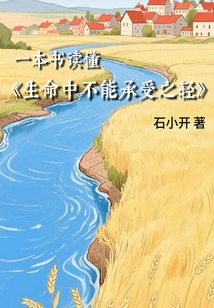
一本书读懂《生命中不能承受之轻》
Shi Xiaokai
Born under the haze of political repression, Milan Kundera's "The Unbearable Lightness of Being" survived the fate of being banned and eventually became an immortal monument to existentialist literature in the 20th century. This book interprets this work from multiple perspectives and reveals how it touches the soul of the times with its philosophical speculation and literary charm. The book analyzes core propositions such as "light" and "heavy", "kitsch" and "the debate between soul and body", showing the author's profound insight into the plight of human existence; it also dismantles the emotional confusion of the four protagonists including Thomas and Theresa, and presents the fierce collision of different values in the tide of the times. Combined with the historical background of the "Prague Spring", it reveals how the novel uses private narratives to reflect the collective trauma under totalitarian rule, and explores the eternal game of freedom and confinement. At the same time, it rectifies the name of the highly controversial Sabina and restores her rebel spiritual core. This book also breaks down the unique narrative structure and philosophical monologue of the novel, showing the perfect blend of literature and thought. Based on the 21st century, combined with the spiritual dilemma of the social media era, the work explores the profound enlightenment of contemporary people on how to deal with love, freedom and responsibility, and finds an anchor point of existence for people who are lost in the flood of information.
Born under the haze of political repression, Milan Kundera's "The Unbearable Lightness of Being" survived the fate of being banned and eventually became an immortal monument to existentialist literature in the 20th century. This book interprets this work from multiple perspectives and reveals how it touches the soul of the times with its philosophical speculation and literary charm. The book analyzes core propositions such as "light" and "heavy", "kitsch" and "the debate between soul and body", showing the author's profound insight into the plight of human existence; it also dismantles the emotional confusion of the four protagonists including Thomas and Theresa, and presents the fierce collision of different values in the tide of the times. Combined with the historical background of the "Prague Spring", it reveals how the novel uses private narratives to reflect the collective trauma under totalitarian rule, and explores the eternal game of freedom and confinement. At the same time, it rectifies the name of the highly controversial Sabina and restores her rebel spiritual core. This book also breaks down the unique narrative structure and philosophical monologue of the novel, showing the perfect blend of literature and thought. Based on the 21st century, combined with the spiritual dilemma of the social media era, the work explores the profound enlightenment of contemporary people on how to deal with love, freedom and responsibility, and finds an anchor point of existence for people who are lost in the flood of information.
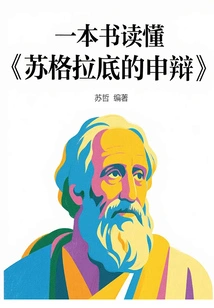
Read "socrates' Apology" in One Book
Literature一本书读懂《苏格拉底的申辩》
Compiled By Su Zhe
How did Socrates defend philosophy with his life in the dock in Athens? This book provides you with an in-depth reconstruction of this great trial in the history of thought. With an exquisite writing style full of reflection and respect, this book reproduces his calm defense when faced with the accusations of "corrupting youth" and "impiety", explains his "oracle mission" and "gadfly" spirit, and his determination to adhere to the "unexamined life" in the choice of life and death. Help you quickly and thoroughly understand the immortal wisdom and martyrdom of this founder of Western philosophy.
How did Socrates defend philosophy with his life in the dock in Athens? This book provides you with an in-depth reconstruction of this great trial in the history of thought. With an exquisite writing style full of reflection and respect, this book reproduces his calm defense when faced with the accusations of "corrupting youth" and "impiety", explains his "oracle mission" and "gadfly" spirit, and his determination to adhere to the "unexamined life" in the choice of life and death. Help you quickly and thoroughly understand the immortal wisdom and martyrdom of this founder of Western philosophy.
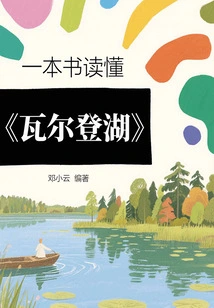
Read "walden Pond" in One Book
Literature一本书读懂《瓦尔登湖》
Compiled By Deng Xiaoyun
Tired of life and longing for spiritual "breathing" and "awakening"? This book is a soul guide you shouldn't miss. With poetic and profound writing, this book leads you into Thoreau's lakeside world, and realizes his "economic" wisdom, the freedom of simple life, the inspiration of the four seasons of nature, the power of solitude and reading, and the pursuit of "higher laws." It will not only help you fully understand this century-old classic, but also enlighten you on how to reshape your life in an impetuous era, find inner peace and authenticity, and live a broad and meaningful life.
Tired of life and longing for spiritual "breathing" and "awakening"? This book is a soul guide you shouldn't miss. With poetic and profound writing, this book leads you into Thoreau's lakeside world, and realizes his "economic" wisdom, the freedom of simple life, the inspiration of the four seasons of nature, the power of solitude and reading, and the pursuit of "higher laws." It will not only help you fully understand this century-old classic, but also enlighten you on how to reshape your life in an impetuous era, find inner peace and authenticity, and live a broad and meaningful life.

Read "the Myth of Sisyphus" in One Book
Literature一本书读懂《西西弗神话》
Qu Xin
In an era when nihilism is spreading, Albert Camus's "The Myth of Sisyphus" is like an enlightening philosophical antidote. This book analyzes Camus's creative context, revealing how he responded to the dilemmas of the times with keen insight and refined the philosophy of absurdity into a spiritual banner against nothingness. The book dismantles the core proposition of "absurdity" layer by layer, interprets the eternal contradiction between the irrationality of the world and human beings' pursuit of meaning, and re-endows Sisyphus's hard work of pushing a stone up a mountain with modern connotations of freedom and resistance. By exploring Camus's thoughts on existential dilemmas, it demonstrates his philosophical decision to refuse to commit suicide to escape absurdity and instead demonstrate the power of life through action. At the same time, combined with Camus's artistic practice, it analyzes how literature and drama construct meaning in absurdity. This book also focuses on contemporary life, from workplace anxiety to the impact of artificial intelligence, providing profound inspiration and action guidance for modern people to maintain their passion for life and rebuild spiritual beliefs in an uncertain world.
In an era when nihilism is spreading, Albert Camus's "The Myth of Sisyphus" is like an enlightening philosophical antidote. This book analyzes Camus's creative context, revealing how he responded to the dilemmas of the times with keen insight and refined the philosophy of absurdity into a spiritual banner against nothingness. The book dismantles the core proposition of "absurdity" layer by layer, interprets the eternal contradiction between the irrationality of the world and human beings' pursuit of meaning, and re-endows Sisyphus's hard work of pushing a stone up a mountain with modern connotations of freedom and resistance. By exploring Camus's thoughts on existential dilemmas, it demonstrates his philosophical decision to refuse to commit suicide to escape absurdity and instead demonstrate the power of life through action. At the same time, combined with Camus's artistic practice, it analyzes how literature and drama construct meaning in absurdity. This book also focuses on contemporary life, from workplace anxiety to the impact of artificial intelligence, providing profound inspiration and action guidance for modern people to maintain their passion for life and rebuild spiritual beliefs in an uncertain world.
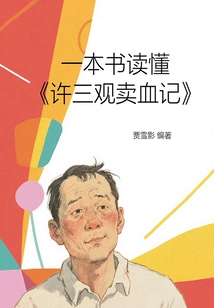
一本书读懂《许三观卖血记》
Compiled By Jia Xueying
Why did Xu Sanguan "sell blood" again and again? This book explains Yu Hua's contemporary classic for you. This book analyzes the tenacity and warmth of maintaining the family with blood in the absurd years, and shows the extraordinary power of little people to "live". Help you quickly understand its profound meaning and the joys and sorrows of the times.
Why did Xu Sanguan "sell blood" again and again? This book explains Yu Hua's contemporary classic for you. This book analyzes the tenacity and warmth of maintaining the family with blood in the absurd years, and shows the extraordinary power of little people to "live". Help you quickly understand its profound meaning and the joys and sorrows of the times.
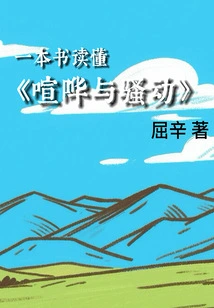
一本书读懂《喧哗与骚动》
Qu Xin
This book analyzes the literary charm and contemporary value of Faulkner's classic "The Sound and the Fury". Starting from the labyrinth of deconstructed narratives, it presents a picture of the decline of southern society with a broken mirror image; focusing on characters such as Quentin, Benjy and Jason, it reveals the abyss of human nature behind the family tragedy. The book explores how non-linear narrative breaks traditional time logic and uses memory fragments to reconstruct the reading experience; through Katie's fate and the collapse of the Compson family, it plays an elegy for the spirit of the southern aristocracy. At the same time, the role of the black maid Dilsey is explored to show her significance as a glimmer of humanity and a redemptive force in a chaotic world. The book traces the work's journey from avant-garde experiment to literary monument, explains its eternal value, and combines it with the contemporary context to interpret the forward-looking revelation of this work on the modern spiritual dilemma, highlighting its irreplaceable literary status.
This book analyzes the literary charm and contemporary value of Faulkner's classic "The Sound and the Fury". Starting from the labyrinth of deconstructed narratives, it presents a picture of the decline of southern society with a broken mirror image; focusing on characters such as Quentin, Benjy and Jason, it reveals the abyss of human nature behind the family tragedy. The book explores how non-linear narrative breaks traditional time logic and uses memory fragments to reconstruct the reading experience; through Katie's fate and the collapse of the Compson family, it plays an elegy for the spirit of the southern aristocracy. At the same time, the role of the black maid Dilsey is explored to show her significance as a glimmer of humanity and a redemptive force in a chaotic world. The book traces the work's journey from avant-garde experiment to literary monument, explains its eternal value, and combines it with the contemporary context to interpret the forward-looking revelation of this work on the modern spiritual dilemma, highlighting its irreplaceable literary status.
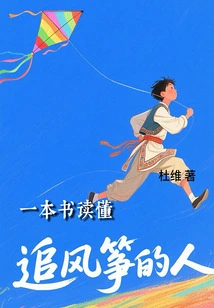
Read "the Kite Runner" in One Book
Literature一本书读懂《追风筝的人》
Du Wei
This book analyzes the spiritual core and creative context of "The Kite Runner" from a unique perspective. Beginning with the decoding of the human redemption code that has touched people's hearts for 20 years, it focuses on the tearing and repair of the friendship between Amir and Hassan, and interprets the philosophy of hope and struggle carried by kites against the backdrop of war-torn Kabul. The book compares different father images and explores the redemption gene across generations; combined with readers' resonance points, it analyzes why the story makes people cry. It also corrects common misunderstandings and reveals the deep and shocking truth of the text. Finally, the author Hosseini's creative transformation process from a doctor to a literary giant is presented, allowing readers to appreciate the charm of classic works and the stories behind their creation from multiple angles.
This book analyzes the spiritual core and creative context of "The Kite Runner" from a unique perspective. Beginning with the decoding of the human redemption code that has touched people's hearts for 20 years, it focuses on the tearing and repair of the friendship between Amir and Hassan, and interprets the philosophy of hope and struggle carried by kites against the backdrop of war-torn Kabul. The book compares different father images and explores the redemption gene across generations; combined with readers' resonance points, it analyzes why the story makes people cry. It also corrects common misunderstandings and reveals the deep and shocking truth of the text. Finally, the author Hosseini's creative transformation process from a doctor to a literary giant is presented, allowing readers to appreciate the charm of classic works and the stories behind their creation from multiple angles.
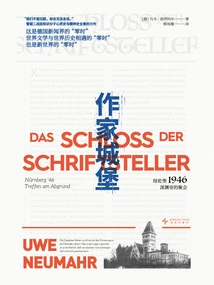
作家城堡:纽伦堡1946,深渊旁的聚会
(germany) Uwe Neumar
This book is a key reading to commemorate the 80th anniversary of the victory of World War II and the anti-fascist victory. It tells the story of countless world-renowned writers and reporters who lived and wrote in Fabelburg during the "Nuremberg Trials" from November 1945 to October 1946 to try the Nazis and the European Axis powers and liquidate the crimes of World War II. They reported on the records of German war criminals and crimes. As they gazed into the abyss of history and pondered atonement and justice, the way they wrote quietly changed. "The Writer's Castle" shows the extreme situations writers encountered, shows the way humans face violence, crime, and trauma, and discusses how the trial affected their later lives.
This book is a key reading to commemorate the 80th anniversary of the victory of World War II and the anti-fascist victory. It tells the story of countless world-renowned writers and reporters who lived and wrote in Fabelburg during the "Nuremberg Trials" from November 1945 to October 1946 to try the Nazis and the European Axis powers and liquidate the crimes of World War II. They reported on the records of German war criminals and crimes. As they gazed into the abyss of history and pondered atonement and justice, the way they wrote quietly changed. "The Writer's Castle" shows the extreme situations writers encountered, shows the way humans face violence, crime, and trauma, and discusses how the trial affected their later lives.
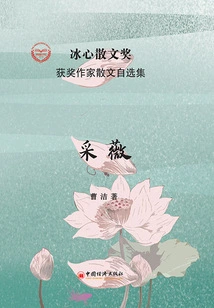
Caiwei: a Self-selected Collection of Prose by the Winning Writer of the "bingxin Prose Award
Literature采薇:“冰心散文奖”获奖作家散文自选集
Cao Jie
"Plucking Wei" is divided into five parts: "The Butterfly Comes", "The Peach Blossom", "You Xuan in the Beitang", "Dry Rain and Flowers" and "Night Talk around the Fireplace". Each part seems to be independent, but they are related to each other. Picking weeds indicates the cycle of seasons, the sequential progression of phenological phenomena, and the alternation of moon dew, stars, wind and clouds, flowers, birds, grass and insects. This manuscript mainly expresses the perception, observation and thinking of one's own life and all things in nature. It reflects the harmony of movement and stillness of all things and the harmony of each other, and implies the variables and permanence of human nature. The vicissitudes of the world, the right path of the world, are in this poetic blend of ending and rebirth, accepting all the details of life without ever being distorted.
"Plucking Wei" is divided into five parts: "The Butterfly Comes", "The Peach Blossom", "You Xuan in the Beitang", "Dry Rain and Flowers" and "Night Talk around the Fireplace". Each part seems to be independent, but they are related to each other. Picking weeds indicates the cycle of seasons, the sequential progression of phenological phenomena, and the alternation of moon dew, stars, wind and clouds, flowers, birds, grass and insects. This manuscript mainly expresses the perception, observation and thinking of one's own life and all things in nature. It reflects the harmony of movement and stillness of all things and the harmony of each other, and implies the variables and permanence of human nature. The vicissitudes of the world, the right path of the world, are in this poetic blend of ending and rebirth, accepting all the details of life without ever being distorted.
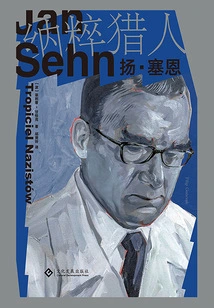
Nazi Hunter Jan Sain
Literature纳粹猎人扬·塞恩
(bo) Philip Gancak
Thain was not imprisoned in a concentration camp, nor did he experience German repression firsthand. However, it was he, a descendant of German colonists who settled in Galicia, who became an outstanding expert on Auschwitz and Nazi criminals after 1945. As chairman of the Regional Committee for the Investigation of German Crime in Kraków, he interrogated leading Nazi criminals: Amon Gerth, Rudolf Hoss and Maria Mandel. Although he later declared himself an opponent of the death penalty, he sent many Nazis to the gallows. He searches and finds evidence in rubble and trash cans, and in an unconventional way comes into contact with witnesses who survived the hell of the concentration camp. He knew how to negotiate with Polish officials, the American and Soviet military, and German prosecutors. He spent 20 years tracking down the whereabouts of the Nazis.
Thain was not imprisoned in a concentration camp, nor did he experience German repression firsthand. However, it was he, a descendant of German colonists who settled in Galicia, who became an outstanding expert on Auschwitz and Nazi criminals after 1945. As chairman of the Regional Committee for the Investigation of German Crime in Kraków, he interrogated leading Nazi criminals: Amon Gerth, Rudolf Hoss and Maria Mandel. Although he later declared himself an opponent of the death penalty, he sent many Nazis to the gallows. He searches and finds evidence in rubble and trash cans, and in an unconventional way comes into contact with witnesses who survived the hell of the concentration camp. He knew how to negotiate with Polish officials, the American and Soviet military, and German prosecutors. He spent 20 years tracking down the whereabouts of the Nazis.
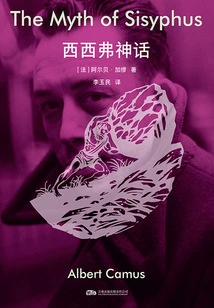
W
Literaturew
H
"The Myth of Sisyphus" is a comprehensive reflection on the meaning of life by Nobel Prize winner Albert Camus. It contains the content of four series: "The Myth of Sisyphus", "Absurd Reasoning", "Absurd Man" and "Absurd Creation". Among them, "The Myth of Sisyphus" mainly revolves around Sisyphus in Greek mythology. He never stops pushing the boulder to the top of the mountain, and the boulder rolls down again unchanged. In Albert Camus's view, the struggle of pushing the boulder up the mountain is enough to enrich people's hearts. For Albert Camus, the essence of life is how to live with the pain you are born with. This book directly faces the dilemma of human existence and has become an influential philosophical essay in Western literature in the 20th century.
"The Myth of Sisyphus" is a comprehensive reflection on the meaning of life by Nobel Prize winner Albert Camus. It contains the content of four series: "The Myth of Sisyphus", "Absurd Reasoning", "Absurd Man" and "Absurd Creation". Among them, "The Myth of Sisyphus" mainly revolves around Sisyphus in Greek mythology. He never stops pushing the boulder to the top of the mountain, and the boulder rolls down again unchanged. In Albert Camus's view, the struggle of pushing the boulder up the mountain is enough to enrich people's hearts. For Albert Camus, the essence of life is how to live with the pain you are born with. This book directly faces the dilemma of human existence and has become an influential philosophical essay in Western literature in the 20th century.
Read "pride and Prejudice" in One Book
Literature一本书读懂《傲慢与偏见》
Su Bai
This book reveals the classic charm and contemporary value of "Pride and Prejudice" spanning two hundred years from multiple dimensions. By tracing the creative process of Jane Austen, we analyze the birth code of this literary hit; with "Pride" and "Prejudice" as the core, we dismantle the conflicts and dramatic tension of the story, and dig into the emotional logic behind the love game between Elizabeth and Darcy. The book outlines the social picture of 19th century Britain in a delicate way, showing various social classes through the living room, salon and manor life; comparing the marriage and love choices of six couples in the book, it reflects the dilemma of choice between marriage and love of modern people. At the same time, we correct common misunderstandings of the work and explore its hidden feminist ideas. Finally, we explore the underlying reasons why this classic continues to resonate over the years, demonstrating its enduring literary vitality and practical significance.
This book reveals the classic charm and contemporary value of "Pride and Prejudice" spanning two hundred years from multiple dimensions. By tracing the creative process of Jane Austen, we analyze the birth code of this literary hit; with "Pride" and "Prejudice" as the core, we dismantle the conflicts and dramatic tension of the story, and dig into the emotional logic behind the love game between Elizabeth and Darcy. The book outlines the social picture of 19th century Britain in a delicate way, showing various social classes through the living room, salon and manor life; comparing the marriage and love choices of six couples in the book, it reflects the dilemma of choice between marriage and love of modern people. At the same time, we correct common misunderstandings of the work and explore its hidden feminist ideas. Finally, we explore the underlying reasons why this classic continues to resonate over the years, demonstrating its enduring literary vitality and practical significance.
Read "chao Sao" in One Book
Literature一本书读懂《潮骚》
Compiled By Su Bai
What kind of pure and touching love pastoral is performed on the Song Island where the sea breeze and the sound of tide intertwine? This book provides you with an in-depth interpretation of this unique masterpiece of pure beauty by Yukio Mishima. With Mishima-style clarity and poetic writing, this book leads you into the love world of fisherman Shinji and pearl-diver Hatsue, and witnesses how they win the blessing of the "Poseidon" with their courage and virtue in the test of nature and human nature. It profoundly explains its praise of original vitality, pure love and traditional values, helping you quickly and comprehensively appreciate the freshness and timelessness of this "literary anomaly".
What kind of pure and touching love pastoral is performed on the Song Island where the sea breeze and the sound of tide intertwine? This book provides you with an in-depth interpretation of this unique masterpiece of pure beauty by Yukio Mishima. With Mishima-style clarity and poetic writing, this book leads you into the love world of fisherman Shinji and pearl-diver Hatsue, and witnesses how they win the blessing of the "Poseidon" with their courage and virtue in the test of nature and human nature. It profoundly explains its praise of original vitality, pure love and traditional values, helping you quickly and comprehensively appreciate the freshness and timelessness of this "literary anomaly".

Read "jane Eyre" in One Book
Literature一本书读懂《简爱》
Shi Xiaokai
This book deeply explores the literary value and contemporary significance of "Jane Eyre" and decodes the timeless charm of this classic. Taking the awakening of Jane Eyre's rebellious soul as the context, it shows the difficult journey of women in the 19th century to break through the shackles of fate, and analyzes the spiritual tempering they experienced in the process from the orphanage to Thornfield Manor. The book focuses on the fiery yet restrained emotional game between Jane Eyre and Rochester, revealing the tension and struggle in their relationship. It uses the fog of Gothic narrative to interpret the work's hidden criticism of class issues in the Victorian era. Explore the meaning of modernity contained in Jane Eyre's declaration of "I am my own master" and the moral dilemma of religion and humanity she faced in front of St. John. It finally explains the spiritual value of "Jane Eyre" across the centuries and shows its far-reaching influence as an eternal guide to women's growth.
This book deeply explores the literary value and contemporary significance of "Jane Eyre" and decodes the timeless charm of this classic. Taking the awakening of Jane Eyre's rebellious soul as the context, it shows the difficult journey of women in the 19th century to break through the shackles of fate, and analyzes the spiritual tempering they experienced in the process from the orphanage to Thornfield Manor. The book focuses on the fiery yet restrained emotional game between Jane Eyre and Rochester, revealing the tension and struggle in their relationship. It uses the fog of Gothic narrative to interpret the work's hidden criticism of class issues in the Victorian era. Explore the meaning of modernity contained in Jane Eyre's declaration of "I am my own master" and the moral dilemma of religion and humanity she faced in front of St. John. It finally explains the spiritual value of "Jane Eyre" across the centuries and shows its far-reaching influence as an eternal guide to women's growth.
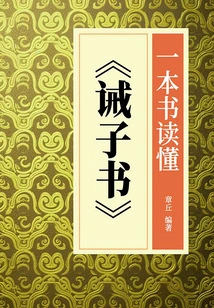
一本书读懂《诫子书》
Compiled By Zhang Qiu
In the troubled times of the Three Kingdoms when the five-foot-long crude oil lamp was about to be exhausted and the army was ruthless, Zhuge Liang wrote the "Book of Commandments" of less than a hundred words. This family motto left to the youngest son condenses the ultimate wisdom of his life: "Quietness is used to cultivate one's moral character, and frugality is used to cultivate virtue. Without indifference, one cannot have clear ambitions, and without tranquility, one cannot reach far." This book systematically dismantles the philosophical veins behind these 86 words. From "Still Waters and Deep Flows" to decipher the code of determination in troubled times, and "Frugal Virtue and Endurance" to reveal the philosophy of life in the materialistic era, to "Indifferent and Clear Aspirations" to guide the anchor point of aspirations, and "Tranquil and Far-reaching" to pave the accessible path, progressing step by step. A more in-depth analysis of the achievement rules of the triple spiral of "Learning·Talent·Ambition", and a "time alarm" to warn against the danger of desolation in life. Combining real cases spanning thousands of years, including Zhuge Liang himself, Tao Yuanming, Fan Zhongyan, Li Hang, Wang Yangming, Yan Zhenqing, and Liang Sicheng, this book not only restores the tempering of classics in the flames of history, but also turns its wisdom into a beacon that illuminates contemporary anxiety and confusion-in the midst of information overload and material desires, how to regain a peaceful and pure land deep in the soul, clarify life aspirations with indifference, and finally live out a life that is sober, firm, and full of inner depth.
In the troubled times of the Three Kingdoms when the five-foot-long crude oil lamp was about to be exhausted and the army was ruthless, Zhuge Liang wrote the "Book of Commandments" of less than a hundred words. This family motto left to the youngest son condenses the ultimate wisdom of his life: "Quietness is used to cultivate one's moral character, and frugality is used to cultivate virtue. Without indifference, one cannot have clear ambitions, and without tranquility, one cannot reach far." This book systematically dismantles the philosophical veins behind these 86 words. From "Still Waters and Deep Flows" to decipher the code of determination in troubled times, and "Frugal Virtue and Endurance" to reveal the philosophy of life in the materialistic era, to "Indifferent and Clear Aspirations" to guide the anchor point of aspirations, and "Tranquil and Far-reaching" to pave the accessible path, progressing step by step. A more in-depth analysis of the achievement rules of the triple spiral of "Learning·Talent·Ambition", and a "time alarm" to warn against the danger of desolation in life. Combining real cases spanning thousands of years, including Zhuge Liang himself, Tao Yuanming, Fan Zhongyan, Li Hang, Wang Yangming, Yan Zhenqing, and Liang Sicheng, this book not only restores the tempering of classics in the flames of history, but also turns its wisdom into a beacon that illuminates contemporary anxiety and confusion-in the midst of information overload and material desires, how to regain a peaceful and pure land deep in the soul, clarify life aspirations with indifference, and finally live out a life that is sober, firm, and full of inner depth.
Read "the Thorn Birds" in One Book
Literature一本书读懂《荆棘鸟》
Du Wei
This book analyzes the literary charm and spiritual connotation of "The Thorn Birds" and deciphers the reasons why this classic tragedy remains timeless. Starting from "The Bloody Thorn", it reveals the core of tragedy under the intertwining of fate and faith; focusing on the forbidden love of Ralph and Meggie, it shows how the fierce collision between ideal and reality tears apart human nature. The book uses Drogheda Manor as a microcosm to show women's survival dilemma and road to breakthrough under the shackles of tradition; it criticizes the suppression and devouring of individual souls by the religious clergy system. Through the rise and fall of the Cleary family, interpret a hidden fable of power, desire and struggle. Explore the origins of the emotional resonance of "The Thorn Birds" spanning half a century, explore its eternal themes of love and pain, and combine it with the contemporary context to explain the inspiration of the "Thorn Bird Spirit" to modern people's pursuit of the meaning of life amid contradictions and obsessions.
This book analyzes the literary charm and spiritual connotation of "The Thorn Birds" and deciphers the reasons why this classic tragedy remains timeless. Starting from "The Bloody Thorn", it reveals the core of tragedy under the intertwining of fate and faith; focusing on the forbidden love of Ralph and Meggie, it shows how the fierce collision between ideal and reality tears apart human nature. The book uses Drogheda Manor as a microcosm to show women's survival dilemma and road to breakthrough under the shackles of tradition; it criticizes the suppression and devouring of individual souls by the religious clergy system. Through the rise and fall of the Cleary family, interpret a hidden fable of power, desire and struggle. Explore the origins of the emotional resonance of "The Thorn Birds" spanning half a century, explore its eternal themes of love and pain, and combine it with the contemporary context to explain the inspiration of the "Thorn Bird Spirit" to modern people's pursuit of the meaning of life amid contradictions and obsessions.
Read "the Outsider" in One Book
Literature一本书读懂《局外人》
Su Bai
This book analyzes the creative context and ideological core of Camus' classic "The Stranger" and decodes its eternal value as a breakthrough work in the spirit of the absurd era. Starting from tracing the birth background of the work, it shows how Camus used words to attack the essence of existence in turbulent times; by dismantling the reality and absurdity under the surface of Meursault's "indifference", it unearths the philosophical implications behind five key details. The book uses Meursault's trial and execution as metaphors to reveal society's discipline of heterogeneous individuals; it interprets the existential codes carried by images such as sunshine and beaches, and analyzes how the conflicts between "outsiders" and "social people" reflect the modern spiritual dilemma. At the same time, the misunderstanding of the work is corrected and the rebellious nature of absurd philosophy is explained. Finally, combined with the contemporary context, the author explores the profound enlightenment of "The Outsider" on modern people facing absurdity and seeking the meaning of existence.
This book analyzes the creative context and ideological core of Camus' classic "The Stranger" and decodes its eternal value as a breakthrough work in the spirit of the absurd era. Starting from tracing the birth background of the work, it shows how Camus used words to attack the essence of existence in turbulent times; by dismantling the reality and absurdity under the surface of Meursault's "indifference", it unearths the philosophical implications behind five key details. The book uses Meursault's trial and execution as metaphors to reveal society's discipline of heterogeneous individuals; it interprets the existential codes carried by images such as sunshine and beaches, and analyzes how the conflicts between "outsiders" and "social people" reflect the modern spiritual dilemma. At the same time, the misunderstanding of the work is corrected and the rebellious nature of absurd philosophy is explained. Finally, combined with the contemporary context, the author explores the profound enlightenment of "The Outsider" on modern people facing absurdity and seeking the meaning of existence.
一本书读懂《卡拉马佐夫兄弟》
Shi Xiaokai
Dostoyevsky's "The Brothers Karamazov" is like a prism, refracting the most complex spectrum of human nature. This book analyzes this literary masterpiece from a multi-dimensional perspective. It starts by tearing apart the genetic map of the Karamazov family and explores how fatal factors such as vanity, greed and desire drive the fate of the characters. The book focuses on the dark philosophy of Ivan Karamazov, showing its fierce impact on the belief system; it launches ethical speculation around the parricide case, revealing the potential moral dilemmas and responsibility torture in everyone's heart. By analyzing the classic passages of "The Grand Inquisitor", it deconstructs the eternal game between faith and freedom, while depicting characters such as Alyosha and Zosima to show the light of redemption of human nature in its darkest moments. This book also decodes the metaphorical code of "a grain of wheat" in the book and explores the philosophy of life contained in it. Based on the 21st century, combined with the spiritual crisis of modern society, this article explores the new contemporary manifestations of "Karamazov Syndrome" and explains how this century-old work provides profound inspiration and spiritual guidance for modern people to understand themselves and fight against nothingness.
Dostoyevsky's "The Brothers Karamazov" is like a prism, refracting the most complex spectrum of human nature. This book analyzes this literary masterpiece from a multi-dimensional perspective. It starts by tearing apart the genetic map of the Karamazov family and explores how fatal factors such as vanity, greed and desire drive the fate of the characters. The book focuses on the dark philosophy of Ivan Karamazov, showing its fierce impact on the belief system; it launches ethical speculation around the parricide case, revealing the potential moral dilemmas and responsibility torture in everyone's heart. By analyzing the classic passages of "The Grand Inquisitor", it deconstructs the eternal game between faith and freedom, while depicting characters such as Alyosha and Zosima to show the light of redemption of human nature in its darkest moments. This book also decodes the metaphorical code of "a grain of wheat" in the book and explores the philosophy of life contained in it. Based on the 21st century, combined with the spiritual crisis of modern society, this article explores the new contemporary manifestations of "Karamazov Syndrome" and explains how this century-old work provides profound inspiration and spiritual guidance for modern people to understand themselves and fight against nothingness.

Read "sophie's World" in One Book
Literature一本书读懂《苏菲的世界》
Compiled By Ding Zhe
"Who are you?" "Where does the world come from?" The mysterious letter sets off the girl Sophie's philosophical journey! This book provides you with a panoramic interpretation of this wise novel that is popular all over the world. With clear and fascinating writing, this book clearly combs the context of Western philosophy from ancient Greece to existentialism, and simultaneously reveals the fantastic destiny and ultimate inquiry of Sophie and her mentor Albert as "people in the book". This is not only an interesting history of philosophy, but also a profound enlightenment about reality, fiction and the meaning of life, helping you easily grasp its essence and rekindle your curiosity about the world.
"Who are you?" "Where does the world come from?" The mysterious letter sets off the girl Sophie's philosophical journey! This book provides you with a panoramic interpretation of this wise novel that is popular all over the world. With clear and fascinating writing, this book clearly combs the context of Western philosophy from ancient Greece to existentialism, and simultaneously reveals the fantastic destiny and ultimate inquiry of Sophie and her mentor Albert as "people in the book". This is not only an interesting history of philosophy, but also a profound enlightenment about reality, fiction and the meaning of life, helping you easily grasp its essence and rekindle your curiosity about the world.
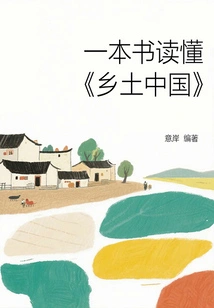
A Book to Understand "russian China
Literature一本书读懂《乡土中国》
Compiled By Yi An
Do you long for a key that opens the door to understanding the mysteries of the deep structure of Chinese society? "One Book to Understand" was born for this purpose. With the clear and warm writing style of Mr. Fei Xiaotong, this book systematically interprets this sociological classic for you: from how "native nature" shapes life, to the complex network of human relations under the "different order pattern", to the operational wisdom of "ritual order" and "litigation-free" society, and its profound repercussions on the current transformation and cultural inheritance of China. Let you quickly and thoroughly grasp the essence of his thoughts, gain insight into the cultural genes that have remained unchanged for thousands of years, and re-understand the soul of the land beneath our feet.
Do you long for a key that opens the door to understanding the mysteries of the deep structure of Chinese society? "One Book to Understand" was born for this purpose. With the clear and warm writing style of Mr. Fei Xiaotong, this book systematically interprets this sociological classic for you: from how "native nature" shapes life, to the complex network of human relations under the "different order pattern", to the operational wisdom of "ritual order" and "litigation-free" society, and its profound repercussions on the current transformation and cultural inheritance of China. Let you quickly and thoroughly grasp the essence of his thoughts, gain insight into the cultural genes that have remained unchanged for thousands of years, and re-understand the soul of the land beneath our feet.

Read "war and Peace" in One Book
Literature一本书读懂《战争与和平》
Compiled By Qu Xin
How to truly understand Tolstoy's all-encompassing epic "War and Peace"? This book lights the way for you. With vivid and epic writing, this book guides you through the grand scenes of "peace" and the flames of "war" in Russia in the 19th century, deeply interprets the search and growth of immortal souls such as Pierre, Andrei, and Natasha in the torrent of love, ideals, and history, and analyzes Toon's profound philosophy about people, history, and "the meaning of life." Help you quickly and comprehensively appreciate the magnificence and eternity of this "Encyclopedia of Life".
How to truly understand Tolstoy's all-encompassing epic "War and Peace"? This book lights the way for you. With vivid and epic writing, this book guides you through the grand scenes of "peace" and the flames of "war" in Russia in the 19th century, deeply interprets the search and growth of immortal souls such as Pierre, Andrei, and Natasha in the torrent of love, ideals, and history, and analyzes Toon's profound philosophy about people, history, and "the meaning of life." Help you quickly and comprehensively appreciate the magnificence and eternity of this "Encyclopedia of Life".
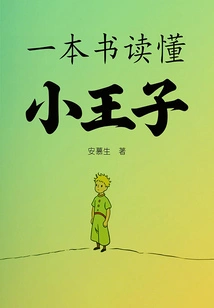
A Book to Understand the Little Prince
Literature一本书读懂小王子
An Musheng
This book is based on Saint-Exupéry's classic fairy tale, and uses delicate brushstrokes to interweave it with pictures of contemporary life, building a bridge to childlike innocence for adults. The book uses the planet B612 as a metaphor, turning the entanglement between the little prince and the rose and the philosophy of interstellar travel into a mirror that reflects the spiritual desolation of modern people. The book not only decodes the fragility and pride of roses, the true meaning of fox "taming", and the erosion of desire symbolized by the baobab tree in the original work, but also projects the fable into the performance cage of the urban workplace, the glass cover of parenting anxiety, and the virtual wheat field of social media, revealing how the adult world has been alienated by vanity, greed, and numbness. The author proposes a "Guide to Restoring Childlike Innocence" from a psychological perspective, teaching people to regain the wonder of the world from the tremor of the subway security inspection machine, plant poetry in the gaps of overtime codes, and use the courage to "waste time" to rebuild emotional connections. The whole book is like an invisible well in the desert, allowing readers to sip pure starlight in the torrent of data and find the heartbeat of gazing at a wild flower in the void of meaning.
This book is based on Saint-Exupéry's classic fairy tale, and uses delicate brushstrokes to interweave it with pictures of contemporary life, building a bridge to childlike innocence for adults. The book uses the planet B612 as a metaphor, turning the entanglement between the little prince and the rose and the philosophy of interstellar travel into a mirror that reflects the spiritual desolation of modern people. The book not only decodes the fragility and pride of roses, the true meaning of fox "taming", and the erosion of desire symbolized by the baobab tree in the original work, but also projects the fable into the performance cage of the urban workplace, the glass cover of parenting anxiety, and the virtual wheat field of social media, revealing how the adult world has been alienated by vanity, greed, and numbness. The author proposes a "Guide to Restoring Childlike Innocence" from a psychological perspective, teaching people to regain the wonder of the world from the tremor of the subway security inspection machine, plant poetry in the gaps of overtime codes, and use the courage to "waste time" to rebuild emotional connections. The whole book is like an invisible well in the desert, allowing readers to sip pure starlight in the torrent of data and find the heartbeat of gazing at a wild flower in the void of meaning.

一本书读懂月亮与六便士
Qu Xin
This book is based on Somerset Maugham's classic novel "The Moon and Sixpence" and provides an in-depth interpretation of the protagonist Strickland's transformation from a London stockbroker to an artistic martyr through a multi-dimensional perspective. The work is based on the life of the French post-Impressionist painter Gauguin, and analyzes the eternal confrontation between genius and secularity - Strickland's decision to abandon his wife and children and go to Tahiti was not only the awakening of artistic faith, but also a violent rebellion against the shackles of modern civilization. The book combines contemporary issues such as "lying flat" and "involution" to explore the dynamic balance between material survival and spiritual utopia, revealing the untamed idealistic gene in everyone's blood. Through female group portraits, the gender shackles of the Victorian era are revealed, Maugham's literary magic is dismantled with cold narratives, and existential philosophy is used to interrogate the spiritual dilemma of modern people. From the mold stains in the Paris garret to the starry sky in Tahiti, from the metal wail of sixpence to the burning faith in the moon, this book is not only an in-depth decoding of the classics, but also a magic mirror that reflects the soul struggles of contemporary people. Open it and you will understand the courage of Maugham's "Looking up at the moon among six pennies on the ground", and you will also be able to touch the embers of ideals in your heart that have not been extinguished by reality.
This book is based on Somerset Maugham's classic novel "The Moon and Sixpence" and provides an in-depth interpretation of the protagonist Strickland's transformation from a London stockbroker to an artistic martyr through a multi-dimensional perspective. The work is based on the life of the French post-Impressionist painter Gauguin, and analyzes the eternal confrontation between genius and secularity - Strickland's decision to abandon his wife and children and go to Tahiti was not only the awakening of artistic faith, but also a violent rebellion against the shackles of modern civilization. The book combines contemporary issues such as "lying flat" and "involution" to explore the dynamic balance between material survival and spiritual utopia, revealing the untamed idealistic gene in everyone's blood. Through female group portraits, the gender shackles of the Victorian era are revealed, Maugham's literary magic is dismantled with cold narratives, and existential philosophy is used to interrogate the spiritual dilemma of modern people. From the mold stains in the Paris garret to the starry sky in Tahiti, from the metal wail of sixpence to the burning faith in the moon, this book is not only an in-depth decoding of the classics, but also a magic mirror that reflects the soul struggles of contemporary people. Open it and you will understand the courage of Maugham's "Looking up at the moon among six pennies on the ground", and you will also be able to touch the embers of ideals in your heart that have not been extinguished by reality.
A Book to Understand the Narrow Gate
Literature一本书读懂窄门
Du Wei
This book is a spiritual decoding book that penetrates time and space. It takes Andre Gide's "The Narrow Gate" as the origin and unearths the eternal survival dilemma of mankind under the surface of love tragedy. The book dissects this Nobel Prize-winning classic through seven dimensions: from the ashes of Alyssa's burned love letters, we glimpse the spiritual breakthrough of the Gide family's trauma and the dilemma of homosexuality; in the contemporary mirror image of "the harder we work, the more nihilistic we become", we reexamine the collective conspiracy of self-exploitation; we use the death specimen of Plato's love to illuminate the crisis of emotional materialization in the Internet age; and finally, in the philosophical wilderness where God is dead, we reconstruct the poetry of life that confronts the absurd meaning of life. The book not only reveals how the Puritans in the 19th century used religious narrow doors to imprison human nature, but also makes the soul monologues of Jerome and Alyssa a hundred years ago resonate surprisingly with today's "living generation" - when we repeat Alyssa's ascetic practice of copying the Bible in KPI purgatory, and when social filters reproduce the illusion of epistolary love, Gide has already buried the antidote in the diary burned by the flames: the real narrow door is not in the kingdom of heaven, but in the courage to embrace the incompleteness of life. This century-spanning literary review is not only a spiritual map to the classics, but also a philosophical mirror that shines a light on the dilemma of contemporary existence.
This book is a spiritual decoding book that penetrates time and space. It takes Andre Gide's "The Narrow Gate" as the origin and unearths the eternal survival dilemma of mankind under the surface of love tragedy. The book dissects this Nobel Prize-winning classic through seven dimensions: from the ashes of Alyssa's burned love letters, we glimpse the spiritual breakthrough of the Gide family's trauma and the dilemma of homosexuality; in the contemporary mirror image of "the harder we work, the more nihilistic we become", we reexamine the collective conspiracy of self-exploitation; we use the death specimen of Plato's love to illuminate the crisis of emotional materialization in the Internet age; and finally, in the philosophical wilderness where God is dead, we reconstruct the poetry of life that confronts the absurd meaning of life. The book not only reveals how the Puritans in the 19th century used religious narrow doors to imprison human nature, but also makes the soul monologues of Jerome and Alyssa a hundred years ago resonate surprisingly with today's "living generation" - when we repeat Alyssa's ascetic practice of copying the Bible in KPI purgatory, and when social filters reproduce the illusion of epistolary love, Gide has already buried the antidote in the diary burned by the flames: the real narrow door is not in the kingdom of heaven, but in the courage to embrace the incompleteness of life. This century-spanning literary review is not only a spiritual map to the classics, but also a philosophical mirror that shines a light on the dilemma of contemporary existence.
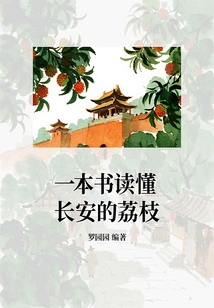
一本书读懂长安的荔枝
Compiled By Luo Yuanyuan
A book to understand the lychees of Chang'an focuses on Li Shande's lychee transportation journey between Chang'an and Lingnan, combing through his fateful transition from a small official to shouldering heavy responsibilities, and analyzing the official rules, post road system and people's livelihood of the Tang Dynasty hidden in the book. It unearths overlooked details, such as the ancient wisdom of keeping lychees fresh and the metaphors in poems. It also combines historical research to show how Ma Boyong uses micro narrative to reflect the struggle and perseverance of individuals in the grand era, helping you to deeply understand the historical depth and human warmth of this novel.
A book to understand the lychees of Chang'an focuses on Li Shande's lychee transportation journey between Chang'an and Lingnan, combing through his fateful transition from a small official to shouldering heavy responsibilities, and analyzing the official rules, post road system and people's livelihood of the Tang Dynasty hidden in the book. It unearths overlooked details, such as the ancient wisdom of keeping lychees fresh and the metaphors in poems. It also combines historical research to show how Ma Boyong uses micro narrative to reflect the struggle and perseverance of individuals in the grand era, helping you to deeply understand the historical depth and human warmth of this novel.
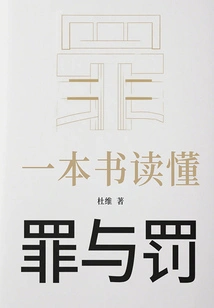
一本书读懂罪与罚
Du Wei
Dostoevsky's "Crime and Punishment" is not only a literary classic about crime and confession, but also a mirror that reflects the abyss of human nature and the dilemma of the times. This book dismantles this masterpiece in seven dimensions, from Raskolnikov's "Superman Theory" to Sonya's candlelight redemption, from the artistic revolution of polyphonic narrative to the harbinger of existentialist thought, layer by layer, revealing the novel's spiritual core across time and space. The author uses a popular style to analyze the protagonist's intracranial storm: How does a murder evolve into the ultimate question of morality, faith and freedom? When the ax falls, how do divinity and humanity clash in a pool of blood? The book not only restores the plight of the slums of Petersburg and the mental cancer of intellectuals described by Doskovsky, but also connects the involution anxiety of contemporary society with the spiritual self-help of Generation Z - the tear between lying down and struggling, and the moral nihilism of the algorithmic era. It actually echoes the "Superman" myth of the 19th century. By contrasting the power of faith of the holy prostitute Sonia with the mediocrity of evil in the hypocrite Luzhin, this book presents the gravitational field of human nature where good and evil are intertwined; it uses a "psychological microscope" to see through Dosage's subversive narrative techniques and shows how long monologues can create a model of modern psychological suspense. Finally, we return to Dosty's religious philosophy motif: when suffering becomes the norm of survival, should we choose the graceful fall of Svidrigailov, or touch the glimmer of redemption on the road to exile like Raskolnikov? This book is not only a reinterpretation of the classics, but also provides contemporary people with a spiritual guide to confront absurdity - how to use Sonia's concrete love to fight against Luzhin's systemic hypocrisy under the strangulation of capital and data.
Dostoevsky's "Crime and Punishment" is not only a literary classic about crime and confession, but also a mirror that reflects the abyss of human nature and the dilemma of the times. This book dismantles this masterpiece in seven dimensions, from Raskolnikov's "Superman Theory" to Sonya's candlelight redemption, from the artistic revolution of polyphonic narrative to the harbinger of existentialist thought, layer by layer, revealing the novel's spiritual core across time and space. The author uses a popular style to analyze the protagonist's intracranial storm: How does a murder evolve into the ultimate question of morality, faith and freedom? When the ax falls, how do divinity and humanity clash in a pool of blood? The book not only restores the plight of the slums of Petersburg and the mental cancer of intellectuals described by Doskovsky, but also connects the involution anxiety of contemporary society with the spiritual self-help of Generation Z - the tear between lying down and struggling, and the moral nihilism of the algorithmic era. It actually echoes the "Superman" myth of the 19th century. By contrasting the power of faith of the holy prostitute Sonia with the mediocrity of evil in the hypocrite Luzhin, this book presents the gravitational field of human nature where good and evil are intertwined; it uses a "psychological microscope" to see through Dosage's subversive narrative techniques and shows how long monologues can create a model of modern psychological suspense. Finally, we return to Dosty's religious philosophy motif: when suffering becomes the norm of survival, should we choose the graceful fall of Svidrigailov, or touch the glimmer of redemption on the road to exile like Raskolnikov? This book is not only a reinterpretation of the classics, but also provides contemporary people with a spiritual guide to confront absurdity - how to use Sonia's concrete love to fight against Luzhin's systemic hypocrisy under the strangulation of capital and data.
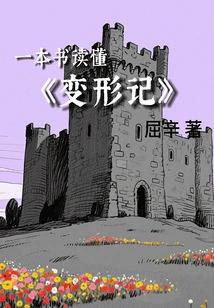
Read "metamorphosis" in One Book
Literature一本书读懂《变形记》
Qu Xin
This book interprets the literary value and practical significance of Kafka's "Metamorphosis", and analyzes the tremors of human nature and philosophy of survival under its absurd appearance. Taking the bizarre setting of Gregor turning into a beetle as an entry point, it reveals the deep dilemma of individual alienation in modern society and shows the existential crisis of human beings in material squeeze and spiritual emptiness. The book focuses on the attitude changes of the Samsa family, analyzing how family relationships accelerate the tragic process of the protagonist; it dismantles Kafka's unique narrative technique, and outlines the unspoken spiritual dilemma through blank spaces and absurd writing methods. Extending from individual tragedy to group allegory, it criticizes the erosion of human nature caused by social alienation. Combined with the current situation of contemporary society, it explores why people are still trapped in the dilemma of "deformation" and explores the potential for redemption hidden in the works, providing modern people with a way of thinking to break through their spiritual dilemma.
This book interprets the literary value and practical significance of Kafka's "Metamorphosis", and analyzes the tremors of human nature and philosophy of survival under its absurd appearance. Taking the bizarre setting of Gregor turning into a beetle as an entry point, it reveals the deep dilemma of individual alienation in modern society and shows the existential crisis of human beings in material squeeze and spiritual emptiness. The book focuses on the attitude changes of the Samsa family, analyzing how family relationships accelerate the tragic process of the protagonist; it dismantles Kafka's unique narrative technique, and outlines the unspoken spiritual dilemma through blank spaces and absurd writing methods. Extending from individual tragedy to group allegory, it criticizes the erosion of human nature caused by social alienation. Combined with the current situation of contemporary society, it explores why people are still trapped in the dilemma of "deformation" and explores the potential for redemption hidden in the works, providing modern people with a way of thinking to break through their spiritual dilemma.
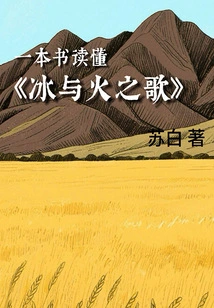
一本书读懂《冰与火之歌》
Su Bai
The world of Westeros constructed with a majestic narrative in "A Song of Ice and Fire" can be called a giant testing ground for power and humanity. This book dismantles this epic masterpiece and analyzes how George R. R. Martin used the Middle Ages as a basis to weave a political fable full of betrayal and intrigue, revealing the alienation of human nature by power. The book focuses on the fate of the Stark family, Daenerys and other core characters, explores the collision of honor, loyalty and cruel reality, and the way for women to break through in a patriarchal society; it also analyzes the metaphorical meaning of the supernatural threat of the White Walkers, and shows the ultimate thinking under the crisis of civilization. In addition, this book also explores the cross-media adaptation controversy from the original work to the series, combines geopolitics and social media public opinion, and explores the profound enlightenment of the work on contemporary society, demonstrating its strong vitality that spans fiction and reality.
The world of Westeros constructed with a majestic narrative in "A Song of Ice and Fire" can be called a giant testing ground for power and humanity. This book dismantles this epic masterpiece and analyzes how George R. R. Martin used the Middle Ages as a basis to weave a political fable full of betrayal and intrigue, revealing the alienation of human nature by power. The book focuses on the fate of the Stark family, Daenerys and other core characters, explores the collision of honor, loyalty and cruel reality, and the way for women to break through in a patriarchal society; it also analyzes the metaphorical meaning of the supernatural threat of the White Walkers, and shows the ultimate thinking under the crisis of civilization. In addition, this book also explores the cross-media adaptation controversy from the original work to the series, combines geopolitics and social media public opinion, and explores the profound enlightenment of the work on contemporary society, demonstrating its strong vitality that spans fiction and reality.

Read "the Second Sex" in One Book
Literature一本书读懂《第二性》
Du Wei
This book analyzes the ideological core and practical significance of Simone de Beauvoir's "The Second Sex" and reveals its eternal value as a feminist classic. Starting from deconstructing the concept of "other", it analyzes how Beauvoir reveals the essence of gender construction and criticizes the constraints on women's situation from biological myths to social disciplines from a multi-dimensional perspective. The book focuses on the social creation of "femininity", explores the paradoxes and struggles in marriage, motherhood and career choices, and shows women's awakening process from passive objects to subjects. By tracing the cross-era influence of "The Second Sex", we explain why it is still a beacon of feminist thought, and combined with the contemporary context, we point out the thinking direction and action guidance this work leaves for modern women, highlighting the continuing significance of the unfinished revolution of gender equality.
This book analyzes the ideological core and practical significance of Simone de Beauvoir's "The Second Sex" and reveals its eternal value as a feminist classic. Starting from deconstructing the concept of "other", it analyzes how Beauvoir reveals the essence of gender construction and criticizes the constraints on women's situation from biological myths to social disciplines from a multi-dimensional perspective. The book focuses on the social creation of "femininity", explores the paradoxes and struggles in marriage, motherhood and career choices, and shows women's awakening process from passive objects to subjects. By tracing the cross-era influence of "The Second Sex", we explain why it is still a beacon of feminist thought, and combined with the contemporary context, we point out the thinking direction and action guidance this work leaves for modern women, highlighting the continuing significance of the unfinished revolution of gender equality.

Read "sherlock Holmes" in One Book
Literature一本书读懂《福尔摩斯探案集》
Cao Nan
This book analyzes the profound influence and eternal charm of Sherlock Holmes, a classic IP, from multiple dimensions. Starting from the legendary address of 221B Baker Street, we trace how Sherlock Holmes laid the cornerstone of detective literature; we delve into the art of deductive reasoning and reveal the exquisite fusion of scientific logic and human insight behind it. The book uses real cases such as Jack the Ripper as a guide to connect classic murder cases in novels to show the crime scene of the Victorian era; it analyzes how Moriarty and Watson, the old enemies and partners, outline the double life of Sherlock Holmes. At the same time, detective stories are used to interpret the social issues and metaphors of the times in the Victorian era, and the century-old adaptation process of Sherlock Holmes from the page to the screen is traced back to decode its cultural influence. Finally, it explains the contemporary value of Sherlock Holmes and shows its timeless charm as a guide for thinking training.
This book analyzes the profound influence and eternal charm of Sherlock Holmes, a classic IP, from multiple dimensions. Starting from the legendary address of 221B Baker Street, we trace how Sherlock Holmes laid the cornerstone of detective literature; we delve into the art of deductive reasoning and reveal the exquisite fusion of scientific logic and human insight behind it. The book uses real cases such as Jack the Ripper as a guide to connect classic murder cases in novels to show the crime scene of the Victorian era; it analyzes how Moriarty and Watson, the old enemies and partners, outline the double life of Sherlock Holmes. At the same time, detective stories are used to interpret the social issues and metaphors of the times in the Victorian era, and the century-old adaptation process of Sherlock Holmes from the page to the screen is traced back to decode its cultural influence. Finally, it explains the contemporary value of Sherlock Holmes and shows its timeless charm as a guide for thinking training.
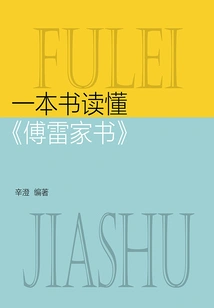
一本书读懂《傅雷家书》
Compiled By Xin Cheng
There are thousands of letters from home, but the love is short but the love is long. How can the wisdom and love of Fu Lei and his wife cross the ocean? This book provides you with an in-depth interpretation of this spiritual book that has touched generations. With delicate writing full of respect and warmth, this book gives a panoramic view of his personality shaping from "being a human first, then an artist", to his profound influence in music, literature, and art, to his sincere teachings on cultivating one's life and feelings for one's family and country. It profoundly explains its immortal value as an educational classic and a reflection of the times, helping you quickly understand the true feelings, character and eternal inspiration of this precious book.
There are thousands of letters from home, but the love is short but the love is long. How can the wisdom and love of Fu Lei and his wife cross the ocean? This book provides you with an in-depth interpretation of this spiritual book that has touched generations. With delicate writing full of respect and warmth, this book gives a panoramic view of his personality shaping from "being a human first, then an artist", to his profound influence in music, literature, and art, to his sincere teachings on cultivating one's life and feelings for one's family and country. It profoundly explains its immortal value as an educational classic and a reflection of the times, helping you quickly understand the true feelings, character and eternal inspiration of this precious book.
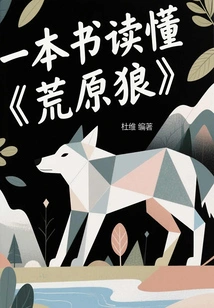
Read "steppenwolf" in One Book
Literature一本书读懂《荒原狼》
Edited By Du Wei
Have you ever felt like a lonely "Steppenwolf" wandering in modern cities, torn painfully between spirit and instinct, "man" and "wolf"? This book will give you an in-depth analysis of Hermann Hesse's soul-shaking masterpiece. This book will accompany you into the heart of Harry Haller, experience his adventures with Hermina and Pablo, break into the magic theater "only for madmen", and jointly explore the mystery of the multiplexes of human nature and the path of integration beyond binary opposition. Use elegant and clear writing to interpret the contemporary echo and eternal theme of self-pursuit of this century-old classic.
Have you ever felt like a lonely "Steppenwolf" wandering in modern cities, torn painfully between spirit and instinct, "man" and "wolf"? This book will give you an in-depth analysis of Hermann Hesse's soul-shaking masterpiece. This book will accompany you into the heart of Harry Haller, experience his adventures with Hermina and Pablo, break into the magic theater "only for madmen", and jointly explore the mystery of the multiplexes of human nature and the path of integration beyond binary opposition. Use elegant and clear writing to interpret the contemporary echo and eternal theme of self-pursuit of this century-old classic.
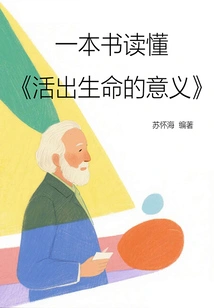
一本书读懂《活出生命的意义》
Compiled By Su Huaihai
What is the meaning of life in the hell-like Nazi concentration camps on earth? This book will explore with you Viktor Frankl's profound answers. With a respectful and warm writing style, this book reproduces his "unforgettable years in the concentration camp" and systematically interprets the essence of his "logotherapy": even if everything is deprived, people still have the "final freedom" to choose their attitude, and find meaning through creation, love and suffering. This is not only an understanding of a handed down classic, but also a soul guide to draw on the power of "tragic optimism" and live out the value of life in any situation.
What is the meaning of life in the hell-like Nazi concentration camps on earth? This book will explore with you Viktor Frankl's profound answers. With a respectful and warm writing style, this book reproduces his "unforgettable years in the concentration camp" and systematically interprets the essence of his "logotherapy": even if everything is deprived, people still have the "final freedom" to choose their attitude, and find meaning through creation, love and suffering. This is not only an understanding of a handed down classic, but also a soul guide to draw on the power of "tragic optimism" and live out the value of life in any situation.
C
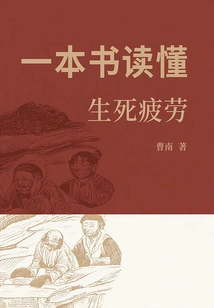
一本书读懂生死疲劳
Cao Nan
This book takes Mo Yan's Nobel Prize-winning classic work as an anatomy, and decodes the fifty-year spiritual fission of Chinese rural society through the magical prism of six reincarnations. The book unfolds with seven chapters of in-depth analysis: from the magical gene under the mask of Nuo opera to the sudden change of the times in the family's love chain, from the historical rewriting of the Huangquan account book in the Yama Palace to the suffering dialogue of the millennium big-headed baby, peeling off the peasant epics, land beliefs and human fables intertwined in the text. The book creatively interprets Ximen Nao's animal perspective as the scalpel of historical deconstruction - the violence of land reform in the eyes of a donkey, the communal fanaticism on the back of an ox, the absurdity of the Cultural Revolution in a pig pen, and the specter of capital in a dog's soul. Together they collage an alternative contemporary history. The author further refines Mo Yan's "laughing with tears" rhetoric into linguistic alchemy, revealing how black humor refines the suffering of survival into literary relics. By mirroring it with Yu Hua's "To Live", it shows the two philosophies of survival of Chinese farmers under the crushing force of history: obsessive questioning and forbearance and detachment. This collection of reviews, which combines academic depth with public readability, is not only the key to unlocking the magical maze of "Life and Death Fatigue", but also a contemporary reader for understanding the spiritual code of rural China.
This book takes Mo Yan's Nobel Prize-winning classic work as an anatomy, and decodes the fifty-year spiritual fission of Chinese rural society through the magical prism of six reincarnations. The book unfolds with seven chapters of in-depth analysis: from the magical gene under the mask of Nuo opera to the sudden change of the times in the family's love chain, from the historical rewriting of the Huangquan account book in the Yama Palace to the suffering dialogue of the millennium big-headed baby, peeling off the peasant epics, land beliefs and human fables intertwined in the text. The book creatively interprets Ximen Nao's animal perspective as the scalpel of historical deconstruction - the violence of land reform in the eyes of a donkey, the communal fanaticism on the back of an ox, the absurdity of the Cultural Revolution in a pig pen, and the specter of capital in a dog's soul. Together they collage an alternative contemporary history. The author further refines Mo Yan's "laughing with tears" rhetoric into linguistic alchemy, revealing how black humor refines the suffering of survival into literary relics. By mirroring it with Yu Hua's "To Live", it shows the two philosophies of survival of Chinese farmers under the crushing force of history: obsessive questioning and forbearance and detachment. This collection of reviews, which combines academic depth with public readability, is not only the key to unlocking the magical maze of "Life and Death Fatigue", but also a contemporary reader for understanding the spiritual code of rural China.
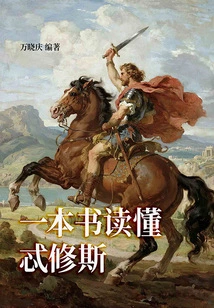
A Book to Understand Theseus
Literature一本书读懂忒修斯
Compiled By Wan Xiaoqing
As the son of King Aegeus of Athens, Theseus followed the example of Hercules and killed six villains on his way to Athens overland. After seeing through Medea's plot, he beheaded the Minotaur, but due to negligence, his father threw himself into the sea (the origin of the name of the Aegean Sea). After unifying Attica and establishing the Athenian democracy, this legendary monarch encountered marital tragedies one after another: his Amazonian wife died in the war, and his step-wife Phaedra framed him, leading to the tragic deaths of his parents and children. In his later years, he failed to rob the underworld and was eventually pushed off a cliff by the king of the exile. Hundreds of years later, the Athenians welcomed back the hero's remains. His life is a classic footnote of heroism and impermanence of fate in ancient Greek civilization.
As the son of King Aegeus of Athens, Theseus followed the example of Hercules and killed six villains on his way to Athens overland. After seeing through Medea's plot, he beheaded the Minotaur, but due to negligence, his father threw himself into the sea (the origin of the name of the Aegean Sea). After unifying Attica and establishing the Athenian democracy, this legendary monarch encountered marital tragedies one after another: his Amazonian wife died in the war, and his step-wife Phaedra framed him, leading to the tragic deaths of his parents and children. In his later years, he failed to rob the underworld and was eventually pushed off a cliff by the king of the exile. Hundreds of years later, the Athenians welcomed back the hero's remains. His life is a classic footnote of heroism and impermanence of fate in ancient Greek civilization.
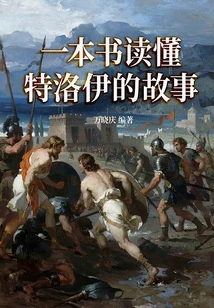
Read the Story of Troy in One Book
Literature一本书读懂特洛伊的故事
Compiled By Wan Xiaoqing
The Trojan War in Greek mythology is an example of divine intervention in human destiny. It originated from the "Dispute for the Golden Apple" - three goddesses (Hera, Athena, and Aphrodite) competed for the title of "the most beautiful one". In the end, Prince Paris awarded the apple to Aphrodite in exchange for the most beautiful woman in the world, Helen. Aphrodite helped Paris abduct Queen Helen of Sparta, triggering an expedition to Troy by the Greek coalition (commanded by Agamemnon). This book presents readers with a panoramic view of the story of Troy in an easy-to-understand manner, allowing readers to have a deeper understanding of the entire Greek mythology story.
The Trojan War in Greek mythology is an example of divine intervention in human destiny. It originated from the "Dispute for the Golden Apple" - three goddesses (Hera, Athena, and Aphrodite) competed for the title of "the most beautiful one". In the end, Prince Paris awarded the apple to Aphrodite in exchange for the most beautiful woman in the world, Helen. Aphrodite helped Paris abduct Queen Helen of Sparta, triggering an expedition to Troy by the Greek coalition (commanded by Agamemnon). This book presents readers with a panoramic view of the story of Troy in an easy-to-understand manner, allowing readers to have a deeper understanding of the entire Greek mythology story.
一本书读懂万历十五年
Chen Xiaoxun
Based on Huang Renyu's classic works, this book deeply dissects the historical slices of "calm on the surface but turbulent undercurrents" during the Wanli period of the Ming Dynasty. Through the ups and downs of seven core figures including Emperor Wanli, Zhang Juzheng, and Hai Rui, the book reveals how moral idealism and technical flaws jointly stifle the vitality of reform. From the financial management loopholes exposed by Zhang Juzheng's premature reform, to the paradox of Hai Rui's integrity but being rejected by the system; from the tragedy of Qi Jiguang's military innovation being stifled by the civil service system, to the dilemma of Li Zhi's ideological enlightenment encountering the strangulation of ethics, the social ill of "replacing morality with the rule of law" is analyzed layer by layer. The book focuses specifically on the "insignificant year" of 1587, decoding historical details such as the struggle to establish the crown prince behind the emperor's neglect of government, the falsification of data hidden in the Qing Dynasty's land, and the imbalance of civil and military affairs reflected in the anti-Japanese war, showing how a huge empire declined in a systemic collapse. Through the perspective of the "big historical perspective", it not only restores the classic discussion of "The Fifteenth Year of Wanli", but also incorporates in-depth interpretation from a contemporary perspective, building a cognitive bridge for readers to connect historical laws and realistic enlightenment.
Based on Huang Renyu's classic works, this book deeply dissects the historical slices of "calm on the surface but turbulent undercurrents" during the Wanli period of the Ming Dynasty. Through the ups and downs of seven core figures including Emperor Wanli, Zhang Juzheng, and Hai Rui, the book reveals how moral idealism and technical flaws jointly stifle the vitality of reform. From the financial management loopholes exposed by Zhang Juzheng's premature reform, to the paradox of Hai Rui's integrity but being rejected by the system; from the tragedy of Qi Jiguang's military innovation being stifled by the civil service system, to the dilemma of Li Zhi's ideological enlightenment encountering the strangulation of ethics, the social ill of "replacing morality with the rule of law" is analyzed layer by layer. The book focuses specifically on the "insignificant year" of 1587, decoding historical details such as the struggle to establish the crown prince behind the emperor's neglect of government, the falsification of data hidden in the Qing Dynasty's land, and the imbalance of civil and military affairs reflected in the anti-Japanese war, showing how a huge empire declined in a systemic collapse. Through the perspective of the "big historical perspective", it not only restores the classic discussion of "The Fifteenth Year of Wanli", but also incorporates in-depth interpretation from a contemporary perspective, building a cognitive bridge for readers to connect historical laws and realistic enlightenment.
A Book to Understand the Siege
Literature一本书读懂围城
Qu Xin
This book is based on Qian Zhongshu's classic novel and deconstructs the eternal proposition of "fortress under siege" layer by layer. From Fang Hongjian's four emotional entanglements, it reveals the power game of modern intimate relationships, to the cultural inferiority and cross-civilizational division reflected in Clayton's diploma; from the ironic aesthetics revealed by 731 exquisite metaphors, to the self-perception dilemma reflected in the marriage dilemma; and finally extends to the survival revelation of contemporary involution society - academic anxiety, 996 in the workplace, algorithm siege and other realistic mirrors, which form a cross-century resonance with the spiritual dilemma of intellectuals in the Republic of China. This book is not only an in-depth decoding of the text of "Fortress Besieged", but also a prism that shines a light on the spiritual dilemma of modern people. When analyzing the classic paradox of "people in the city want to go out, people outside the city want to come in", it reveals the philosophical possibility of breaking out of the siege dilemma: Only when we reconstruct the perception of time in the digital siege and cultivate subject consciousness in cultural blending can we break the linear fatalism and cultivate the poetic glimmer in the absurd existence. The whole book uses literary criticism as a boat, carrying readers between the texture of the text and the symptoms of the times, completing a deep dialogue from classic interpretation to life enlightenment.
This book is based on Qian Zhongshu's classic novel and deconstructs the eternal proposition of "fortress under siege" layer by layer. From Fang Hongjian's four emotional entanglements, it reveals the power game of modern intimate relationships, to the cultural inferiority and cross-civilizational division reflected in Clayton's diploma; from the ironic aesthetics revealed by 731 exquisite metaphors, to the self-perception dilemma reflected in the marriage dilemma; and finally extends to the survival revelation of contemporary involution society - academic anxiety, 996 in the workplace, algorithm siege and other realistic mirrors, which form a cross-century resonance with the spiritual dilemma of intellectuals in the Republic of China. This book is not only an in-depth decoding of the text of "Fortress Besieged", but also a prism that shines a light on the spiritual dilemma of modern people. When analyzing the classic paradox of "people in the city want to go out, people outside the city want to come in", it reveals the philosophical possibility of breaking out of the siege dilemma: Only when we reconstruct the perception of time in the digital siege and cultivate subject consciousness in cultural blending can we break the linear fatalism and cultivate the poetic glimmer in the absurd existence. The whole book uses literary criticism as a boat, carrying readers between the texture of the text and the symptoms of the times, completing a deep dialogue from classic interpretation to life enlightenment.
一本书读懂我与地坛
Qu Xin
This book takes Shi Tiesheng's classic collection of essays "The Temple of Earth and Me" as its core, and provides an in-depth analysis of this literary treasure that has been included in Chinese textbooks. Through three major chapters: "Philosophy of Life", "Memories of Mother's Love" and "Image of the Temple of Earth", the book leads readers into the 15-year spiritual dialogue between Shi Tiesheng and the Temple of Earth after his legs were paralyzed. The book not only analyzes the survival epiphany of "you don't have to rush for success", but also deciphers how the mother's secretly following footsteps weave the most forbearing family writing in Chinese literature. Combining the images of vegetation in the Temple of Earth with the cycle of seasons and the life scenes of people coming and going, it shows how the author sublimates personal suffering into the ultimate reflection on the existential plight of all mankind. Specially included are fragments of Shi Tiesheng's precious manuscripts and interpretations by famous writers, building a spiritual bridge for readers to this "pinnacle work of contemporary Chinese prose".
This book takes Shi Tiesheng's classic collection of essays "The Temple of Earth and Me" as its core, and provides an in-depth analysis of this literary treasure that has been included in Chinese textbooks. Through three major chapters: "Philosophy of Life", "Memories of Mother's Love" and "Image of the Temple of Earth", the book leads readers into the 15-year spiritual dialogue between Shi Tiesheng and the Temple of Earth after his legs were paralyzed. The book not only analyzes the survival epiphany of "you don't have to rush for success", but also deciphers how the mother's secretly following footsteps weave the most forbearing family writing in Chinese literature. Combining the images of vegetation in the Temple of Earth with the cycle of seasons and the life scenes of people coming and going, it shows how the author sublimates personal suffering into the ultimate reflection on the existential plight of all mankind. Specially included are fragments of Shi Tiesheng's precious manuscripts and interpretations by famous writers, building a spiritual bridge for readers to this "pinnacle work of contemporary Chinese prose".
一本书读懂希腊神话主要人物
Compiled By Wan Xiaoqing
Greek mythology has endured for three thousand years because it reveals the eternal propositions of human nature - desire, power, love and struggle. Zeus's rule is a metaphor for political game, Prometheus' stealing of fire symbolizes the awakening of civilization, and Oedipus' fate questions free will. These stories are not only the spiritual totems of the ancient Greeks, but also the genetic code of Western culture. Greek mythology has shaped the soul of Western civilization, but it is daunting because of its complex characters and intertwined stories. This book sorts out the clear context of Greek mythology, and presents the main characters and their stories in a concise and popular way, helping readers to easily understand and master them.
Greek mythology has endured for three thousand years because it reveals the eternal propositions of human nature - desire, power, love and struggle. Zeus's rule is a metaphor for political game, Prometheus' stealing of fire symbolizes the awakening of civilization, and Oedipus' fate questions free will. These stories are not only the spiritual totems of the ancient Greeks, but also the genetic code of Western culture. Greek mythology has shaped the soul of Western civilization, but it is daunting because of its complex characters and intertwined stories. This book sorts out the clear context of Greek mythology, and presents the main characters and their stories in a concise and popular way, helping readers to easily understand and master them.
A Book to Understand the Crowd
Literature一本书读懂乌合之众
Hulo
Based on Gustave Le Bon's classic works, this book reveals the deep laws of human collective behavior from the French Revolution to the metaverse era through the analysis of group psychology across time and space. This book uses neuroscience, algorithmic ethics, and communication as scalpels to decode the cognitive collapse mechanism of how groups transform from rational individuals into "unconscious mobs": when individuals integrate into the group, the rational function of the prefrontal lobe is suppressed, and dopamine-driven emotional resonance replaces independent judgment, forming an extreme and suggestible "digital swarm." The book combines cutting-edge cases such as neural hijacking of live streaming, cognitive dimensionality reduction of hot search manipulation, and the contagion model of QAnon conspiracy theory to show how algorithms can upgrade the three major group manipulation techniques of assertion, repetition, and contagion into "21st century hypnosis." At the same time, he broke through Le Pen's pessimistic argument and proposed the "Twelve Methods of Cognitive Immune Training", from information traceability, neuroplasticity reshaping to blockchain evidence storage technology, to provide a practical path for individuals to build rational firewalls in the flood of information. This is a sobering drug that travels between historical cave paintings and digital abyss, guiding readers to find the balance between group carnival and independent thinking for the survival of civilization.
Based on Gustave Le Bon's classic works, this book reveals the deep laws of human collective behavior from the French Revolution to the metaverse era through the analysis of group psychology across time and space. This book uses neuroscience, algorithmic ethics, and communication as scalpels to decode the cognitive collapse mechanism of how groups transform from rational individuals into "unconscious mobs": when individuals integrate into the group, the rational function of the prefrontal lobe is suppressed, and dopamine-driven emotional resonance replaces independent judgment, forming an extreme and suggestible "digital swarm." The book combines cutting-edge cases such as neural hijacking of live streaming, cognitive dimensionality reduction of hot search manipulation, and the contagion model of QAnon conspiracy theory to show how algorithms can upgrade the three major group manipulation techniques of assertion, repetition, and contagion into "21st century hypnosis." At the same time, he broke through Le Pen's pessimistic argument and proposed the "Twelve Methods of Cognitive Immune Training", from information traceability, neuroplasticity reshaping to blockchain evidence storage technology, to provide a practical path for individuals to build rational firewalls in the flood of information. This is a sobering drug that travels between historical cave paintings and digital abyss, guiding readers to find the balance between group carnival and independent thinking for the survival of civilization.
A Book to Understand Siddhartha
Literature一本书读懂悉达多
Su Bai
This book is based on Hesse's classic novel, and deeply analyzes the protagonist's three-fold life transformation from a Brahmin noble to a ascetic ascetic, and from a sinker in the world to a river ferryman. Through seven chapters of philosophical wandering, the book reveals how modern people bridge the gap between "knowledge" and "wisdom" - when Siddhartha pointed out the fault zone in the Buddha's teachings, he essentially revealed the limitations of all ready-made truths: true awakening must be reached through "wrong" paths such as the burning of lust, the corrosion of wealth, and the tearing of parent-child relationships. The book creatively proposes the "river epistemology" and interprets Hesse's Ganges as a flowing university of life: those years that we regard as failures are actually compulsory credits for the soul; every dilemma is a training ground preset by destiny. Finally, it ends with an existential declaration of life: becoming one's own ferryman is not about becoming a saint, but about accepting a life in the quantum state where light and shadow dance together. This ideological navigator is not only a modern decoding of a century-old classic, but also provides Eastern wisdom for spiritual breakthrough for contemporary people who are trapped in the maze of meaning.
This book is based on Hesse's classic novel, and deeply analyzes the protagonist's three-fold life transformation from a Brahmin noble to a ascetic ascetic, and from a sinker in the world to a river ferryman. Through seven chapters of philosophical wandering, the book reveals how modern people bridge the gap between "knowledge" and "wisdom" - when Siddhartha pointed out the fault zone in the Buddha's teachings, he essentially revealed the limitations of all ready-made truths: true awakening must be reached through "wrong" paths such as the burning of lust, the corrosion of wealth, and the tearing of parent-child relationships. The book creatively proposes the "river epistemology" and interprets Hesse's Ganges as a flowing university of life: those years that we regard as failures are actually compulsory credits for the soul; every dilemma is a training ground preset by destiny. Finally, it ends with an existential declaration of life: becoming one's own ferryman is not about becoming a saint, but about accepting a life in the quantum state where light and shadow dance together. This ideological navigator is not only a modern decoding of a century-old classic, but also provides Eastern wisdom for spiritual breakthrough for contemporary people who are trapped in the maze of meaning.
A Book to Understand the Golden Age
Literature一本书读懂黄金时代
Gong Zhi
Wang Xiaobo's "Golden Age" uses absurd and poetic touches to launch a philosophical experiment on power, freedom and existence in the rubber forests of Yunnan's educated youth. This book provides an in-depth analysis of the "great friendship" between Wang Er and Chen Qingyang, revealing how sex writing has become a linguistic alchemy for deconstructing totalitarianism: from the collective violence of the stigma of "broken shoes" to the two people's fight against moral judgment with physical pleasure; from the playful subversion of the handed-in materials to the epic of awakening in which Chen Qingyang transforms from a defined person into a narrative subject. Through the double mirror of the narrative of educated youth, this book explores the disenchantment of the collective memory of the Cultural Revolution through the text, and the eternal dilemma of human nature between hammering and dancing. The book also dissects Wang Xiaobo's language carnival - the tension between vulgarity and poetry, the edge of ironic aesthetics, and the reconstruction of the novel's style through essay writing, ultimately pointing to a question that transcends the times: when discipline attempts to obliterate individual reality, can we keep the gold of our souls in the midst of absurdity? With the sharpness of literary criticism, this book reveals for readers the code of spiritual breakthrough in Wang Xiaobo's "Hammered Ox" and "Half-Dark Cloud".
Wang Xiaobo's "Golden Age" uses absurd and poetic touches to launch a philosophical experiment on power, freedom and existence in the rubber forests of Yunnan's educated youth. This book provides an in-depth analysis of the "great friendship" between Wang Er and Chen Qingyang, revealing how sex writing has become a linguistic alchemy for deconstructing totalitarianism: from the collective violence of the stigma of "broken shoes" to the two people's fight against moral judgment with physical pleasure; from the playful subversion of the handed-in materials to the epic of awakening in which Chen Qingyang transforms from a defined person into a narrative subject. Through the double mirror of the narrative of educated youth, this book explores the disenchantment of the collective memory of the Cultural Revolution through the text, and the eternal dilemma of human nature between hammering and dancing. The book also dissects Wang Xiaobo's language carnival - the tension between vulgarity and poetry, the edge of ironic aesthetics, and the reconstruction of the novel's style through essay writing, ultimately pointing to a question that transcends the times: when discipline attempts to obliterate individual reality, can we keep the gold of our souls in the midst of absurdity? With the sharpness of literary criticism, this book reveals for readers the code of spiritual breakthrough in Wang Xiaobo's "Hammered Ox" and "Half-Dark Cloud".
一本书读懂人间失格
Su Bai
This book uses the most controversial classic of decadent aesthetics in the history of Japanese literature as an anatomical sample, and weaves through a century of time and space to weave an ideological map that connects the despair of the Showa era and the spiritual dilemma of Generation Z. This book starts from the dialectic of life and death of Dazai Osamu's five suicides, and analyzes the hidden truth behind the collapse of the post-war world and the alienation of human nature behind Ye Zang's alcoholism, self-destruction, and acting ugly to please others. By tracing the redemption metaphors carried by female characters such as Ryoko and Shizuko, we reveal the paradox of the survival of purity in a dirty world, and compare it with the current youth subculture phenomena such as flat culture, virtual idols, and cyber dependence to decode the underlying logic of "mourning aesthetics" becoming a global spiritual totem. The original "seven spiritual anchors" theory in the book sublimates the careful reading of the text into a survival philosophy guide, guiding readers to plant wild chrysanthemums in the ruins, build a spiritual island in the torrent of data, use vulnerability as a shield to pierce the mask of hypocrisy, and finally salvage the starlight against nothingness in the reflection of the Tamagawa River where Dazai Osamu drowned. This cross-border work that spans literary criticism and social observation is not only a profound tribute to the literary spirit of Showa, but also a survival apocalypse customized for the digital nomad generation.
This book uses the most controversial classic of decadent aesthetics in the history of Japanese literature as an anatomical sample, and weaves through a century of time and space to weave an ideological map that connects the despair of the Showa era and the spiritual dilemma of Generation Z. This book starts from the dialectic of life and death of Dazai Osamu's five suicides, and analyzes the hidden truth behind the collapse of the post-war world and the alienation of human nature behind Ye Zang's alcoholism, self-destruction, and acting ugly to please others. By tracing the redemption metaphors carried by female characters such as Ryoko and Shizuko, we reveal the paradox of the survival of purity in a dirty world, and compare it with the current youth subculture phenomena such as flat culture, virtual idols, and cyber dependence to decode the underlying logic of "mourning aesthetics" becoming a global spiritual totem. The original "seven spiritual anchors" theory in the book sublimates the careful reading of the text into a survival philosophy guide, guiding readers to plant wild chrysanthemums in the ruins, build a spiritual island in the torrent of data, use vulnerability as a shield to pierce the mask of hypocrisy, and finally salvage the starlight against nothingness in the reflection of the Tamagawa River where Dazai Osamu drowned. This cross-border work that spans literary criticism and social observation is not only a profound tribute to the literary spirit of Showa, but also a survival apocalypse customized for the digital nomad generation.
一本书读懂人类简史
Kirshen
This book is based on the classic work of Israeli historian Yuval Harari. Through the folding of time and space of 70,000 years, this book reveals the ultimate code for Homo sapiens to leap from an ordinary species in the corner of Africa to the master of the earth. With the cognitive revolution, agricultural revolution, and scientific revolution as the three pillars, the book penetrates the weaving logic of fictional stories such as religion, currency, and empire, and analyzes how human beings use collective imagination to build the pyramid of civilization. From the awakening of the universe under the Galileo telescope, to CRISPR genetic scissors reshaping the laws of life; from the TikTok algorithm cocoon splitting social consensus, to the blockchain's impact on US dollar hegemony - this book not only presents the historical paradox of wheat domesticating humans and technology backlashing civilization, but also focuses on contemporary issues such as brain-computer interface and climate crisis, and provides 12 thinking keys to help readers break through in the era of uncertainty. The book runs through multidisciplinary perspectives and casts the Big Bang of physics, biological evolution, and the dilemma of digital civilization into a cognitive lens. It is not only an in-depth deconstruction of the ideological essence of "A Brief History of Humanity", but also a forward-looking response to the 21st century dilemmas such as the metaverse and AI anxiety, and ultimately points to the ultimate question of a community with a shared future for mankind: When the ability of fictional stories not only allows us to conquer the earth, but also brings the risk of self-destruction, can Homo sapiens keep the glimmer of humanity on the way to becoming "gods"?
This book is based on the classic work of Israeli historian Yuval Harari. Through the folding of time and space of 70,000 years, this book reveals the ultimate code for Homo sapiens to leap from an ordinary species in the corner of Africa to the master of the earth. With the cognitive revolution, agricultural revolution, and scientific revolution as the three pillars, the book penetrates the weaving logic of fictional stories such as religion, currency, and empire, and analyzes how human beings use collective imagination to build the pyramid of civilization. From the awakening of the universe under the Galileo telescope, to CRISPR genetic scissors reshaping the laws of life; from the TikTok algorithm cocoon splitting social consensus, to the blockchain's impact on US dollar hegemony - this book not only presents the historical paradox of wheat domesticating humans and technology backlashing civilization, but also focuses on contemporary issues such as brain-computer interface and climate crisis, and provides 12 thinking keys to help readers break through in the era of uncertainty. The book runs through multidisciplinary perspectives and casts the Big Bang of physics, biological evolution, and the dilemma of digital civilization into a cognitive lens. It is not only an in-depth deconstruction of the ideological essence of "A Brief History of Humanity", but also a forward-looking response to the 21st century dilemmas such as the metaverse and AI anxiety, and ultimately points to the ultimate question of a community with a shared future for mankind: When the ability of fictional stories not only allows us to conquer the earth, but also brings the risk of self-destruction, can Homo sapiens keep the glimmer of humanity on the way to becoming "gods"?

一本书读懂三体
Kirshen
This book is based on Liu Cixin's Hugo Award-winning masterpiece "The Three-Body Problem" trilogy, and panoramically deconstructs this cosmic epic spanning the rise and fall of civilization through seven dimensions. The book starts from the survival game of "Dark Forest Law", analyzes the life-and-death contest between Trisolaran civilization and human civilization in the chain of suspicion, technological explosion, and dimensionality reduction attack, and reveals the cold truth behind the sociology of the universe that "survival is the first need of civilization." The book deeply explores the hard core of science: three-body chaotic motion, strong interaction materials, two-way foil dimensionality reduction principle and other science fiction settings, all anchored by cutting-edge theories such as quantum physics and celestial mechanics, showing the amazing resonance between science fiction and reality. At the same time, the "spectrum of human nature" is used as a mirror to decode Luo Ji's art of intimidation, Cheng Xin's moral dilemma, and Zhang Beihai's rational choices, sublimating the fate of the characters into a philosophical torture for the survival of human civilization. It also creates an original chapter "Breaking the Circle Code" to analyze the miracle of cross-cultural communication of the novel from the Eastern Mohist cosmology to the global streaming media adaptation. Combining the visual reconstruction of Netflix series and the Hugo Award breaking circle effect, it reveals the underlying logic of Eastern elements such as "Human Computer" and "Ideological Stamp" detonating the world. The book is interspersed with real-life scientific and technological advances such as controllable nuclear fusion, quantum communications, and brain-computer interfaces, giving sci-fi concepts such as "water droplets" and "sophons" a sense of future predictability. Finally, in the ultimate thinking of "the possibility of interstellar cooperation" and "restarting the universe at zero," it completes the sublimation from science fiction narratives to a community with a shared future for mankind.
This book is based on Liu Cixin's Hugo Award-winning masterpiece "The Three-Body Problem" trilogy, and panoramically deconstructs this cosmic epic spanning the rise and fall of civilization through seven dimensions. The book starts from the survival game of "Dark Forest Law", analyzes the life-and-death contest between Trisolaran civilization and human civilization in the chain of suspicion, technological explosion, and dimensionality reduction attack, and reveals the cold truth behind the sociology of the universe that "survival is the first need of civilization." The book deeply explores the hard core of science: three-body chaotic motion, strong interaction materials, two-way foil dimensionality reduction principle and other science fiction settings, all anchored by cutting-edge theories such as quantum physics and celestial mechanics, showing the amazing resonance between science fiction and reality. At the same time, the "spectrum of human nature" is used as a mirror to decode Luo Ji's art of intimidation, Cheng Xin's moral dilemma, and Zhang Beihai's rational choices, sublimating the fate of the characters into a philosophical torture for the survival of human civilization. It also creates an original chapter "Breaking the Circle Code" to analyze the miracle of cross-cultural communication of the novel from the Eastern Mohist cosmology to the global streaming media adaptation. Combining the visual reconstruction of Netflix series and the Hugo Award breaking circle effect, it reveals the underlying logic of Eastern elements such as "Human Computer" and "Ideological Stamp" detonating the world. The book is interspersed with real-life scientific and technological advances such as controllable nuclear fusion, quantum communications, and brain-computer interfaces, giving sci-fi concepts such as "water droplets" and "sophons" a sense of future predictability. Finally, in the ultimate thinking of "the possibility of interstellar cooperation" and "restarting the universe at zero," it completes the sublimation from science fiction narratives to a community with a shared future for mankind.
一本书读懂浮生六记
Qu Xin
This book is based on the autobiographical prose of Shen Fu, a scholar in the Qing Dynasty, and deeply decodes this "poetics of life of a commoner scholar". The whole book analyzes the literary genes and era mirrors of "Six Chapters of a Floating Life" from a multi-dimensional perspective: from Shen Fu and Yun Niang's life aesthetics of "making tea with lotus dew and expressing interest on moss and stones" to the survival dilemma of feudal families; from the virtual and real philosophy of Suzhou gardens to the rebirth of the metaverse of classic texts in the digital age, it peels away the spiritual folds of the Qing Dynasty literati. The book not only restores the deep affection of "the joy of the boudoir" and the bleak world of "the ups and downs of sorrow", but also examines the survival wisdom behind "leisure" from a modern perspective - how to refine poetry amidst material hardship and protect authenticity under the shackles of ethics. By interpreting Yun Niang's creative personality of "transforming vulgarity into elegance" and rediscovering the middle path of "traveling in the world without being trapped in it", this book provides contemporary people with a classical prism that reflects the anxiety of survival, reveals the eternal game between elegance and embarrassment, ideals and reality, and ultimately points to the common life issues of all times: planting hope in the cracks, brewing character in the fireworks.
This book is based on the autobiographical prose of Shen Fu, a scholar in the Qing Dynasty, and deeply decodes this "poetics of life of a commoner scholar". The whole book analyzes the literary genes and era mirrors of "Six Chapters of a Floating Life" from a multi-dimensional perspective: from Shen Fu and Yun Niang's life aesthetics of "making tea with lotus dew and expressing interest on moss and stones" to the survival dilemma of feudal families; from the virtual and real philosophy of Suzhou gardens to the rebirth of the metaverse of classic texts in the digital age, it peels away the spiritual folds of the Qing Dynasty literati. The book not only restores the deep affection of "the joy of the boudoir" and the bleak world of "the ups and downs of sorrow", but also examines the survival wisdom behind "leisure" from a modern perspective - how to refine poetry amidst material hardship and protect authenticity under the shackles of ethics. By interpreting Yun Niang's creative personality of "transforming vulgarity into elegance" and rediscovering the middle path of "traveling in the world without being trapped in it", this book provides contemporary people with a classical prism that reflects the anxiety of survival, reveals the eternal game between elegance and embarrassment, ideals and reality, and ultimately points to the common life issues of all times: planting hope in the cracks, brewing character in the fireworks.
一本书读懂国富论
Wu Chang
Based on Adam Smith's classic works, this book travels through time and space to dismantle the modern economic code. The book ranges from textile machines in the steam age to blockchain in Silicon Valley, from the colonial trade of the East India Company to the crisis of WTO rules, using vivid cases to interpret the eternal wisdom of "The Wealth of Nations". Through seven chapters of in-depth analysis, it reveals how the division of labor catalyzed the industrial revolution, why the market mechanism is called the "invisible hand", and how free trade reshapes the landscape of globalization. The book not only restores the spiritual resonance between 18th-century British factory owners and contemporary Silicon Valley venture capitalists, but also directly confronts new economic propositions such as digital currency, chip wars, and ESG investment, demonstrating the amazing explanatory power of classical theory in the intelligent age. What is particularly unique is that the author integrates the ethical dimension of Smith's "Theory of Moral Sentiments" into the analysis to explore how the thousand-year dialectic of self-interest and altruism affects modern business civilization. This is not only a general reading on economics, but also a key that opens the door to the nature of wealth, guiding readers to understand the economic laws driven by human nature and the inner logic of civilization evolution in the hustle and bustle of the metaverse and carbon tariffs.
Based on Adam Smith's classic works, this book travels through time and space to dismantle the modern economic code. The book ranges from textile machines in the steam age to blockchain in Silicon Valley, from the colonial trade of the East India Company to the crisis of WTO rules, using vivid cases to interpret the eternal wisdom of "The Wealth of Nations". Through seven chapters of in-depth analysis, it reveals how the division of labor catalyzed the industrial revolution, why the market mechanism is called the "invisible hand", and how free trade reshapes the landscape of globalization. The book not only restores the spiritual resonance between 18th-century British factory owners and contemporary Silicon Valley venture capitalists, but also directly confronts new economic propositions such as digital currency, chip wars, and ESG investment, demonstrating the amazing explanatory power of classical theory in the intelligent age. What is particularly unique is that the author integrates the ethical dimension of Smith's "Theory of Moral Sentiments" into the analysis to explore how the thousand-year dialectic of self-interest and altruism affects modern business civilization. This is not only a general reading on economics, but also a key that opens the door to the nature of wealth, guiding readers to understand the economic laws driven by human nature and the inner logic of civilization evolution in the hustle and bustle of the metaverse and carbon tariffs.
A Book to Understand Hercules
Literature一本书读懂赫拉克勒斯
Compiled By Wan Xiaoqing
It is no accident that Heracles becomes a central figure that cannot be bypassed when reading Greek mythology. The story of this semi-god hero can be called the "encyclopedia" of Greek mythology. Its significance goes far beyond simple adventure legends, but profoundly reflects the spiritual core of ancient Greek civilization.
It is no accident that Heracles becomes a central figure that cannot be bypassed when reading Greek mythology. The story of this semi-god hero can be called the "encyclopedia" of Greek mythology. Its significance goes far beyond simple adventure legends, but profoundly reflects the spiritual core of ancient Greek civilization.