Library
Browse and search books
17 novels found
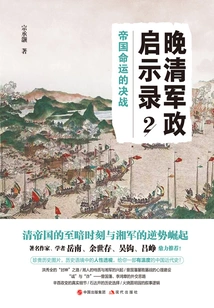
晚清军政启示录(第2部):帝国命运的决战
Zong Chenghao
The "Military and Political Apocalypse of the Late Qing Dynasty" series provides readers with more possibilities to show the personal hardship and pain in the "era background where everything is possible" in the late Qing Dynasty, as well as the choices of the country and the nation in the transformation of the world. It not only focuses on exploring the truth of historical events, but also pays attention to the fate of characters in the context of the times. This is the second part of this book. It takes a series of battles between the Hunan Army and the Taiping Heavenly Kingdom army as the main line, and tells the whole process of the rise and fall of the Taiping Heavenly Kingdom, the rise and disintegration of the Hunan Army, the Second Crow War and other historical events. Through a large number of first-hand historical materials and different perspectives from the East and the West, these events and related historical figures are placed in the real historical context and interpreted back to the basics of human nature - such as Hong Xiuquan's road to becoming a god, Zeng Guofan's psychological construction after repeated defeats and battles. It includes the psychological descriptions of the participants in the Xinyou coup, Prince Gong's mental journey to break through the power encirclement, the vertical and horizontal maneuvering and offensive and defensive games between the Qing court, the Taiping Heavenly Kingdom and the Western powers, the unusual loyalty of Ye Mingchen, the governor of Guangdong and Guangxi, the narrative logic of the burning of the Old Summer Palace, etc. In particular, this book provides a vivid description of the battles between the Hunan Army and the Taiping Army. It provides an in-depth comparative explanation and success-failure analysis of the Hunan Army and the Taiping Army from various aspects such as their organizational mechanisms, strategies, talent development, and general personalities.
The "Military and Political Apocalypse of the Late Qing Dynasty" series provides readers with more possibilities to show the personal hardship and pain in the "era background where everything is possible" in the late Qing Dynasty, as well as the choices of the country and the nation in the transformation of the world. It not only focuses on exploring the truth of historical events, but also pays attention to the fate of characters in the context of the times. This is the second part of this book. It takes a series of battles between the Hunan Army and the Taiping Heavenly Kingdom army as the main line, and tells the whole process of the rise and fall of the Taiping Heavenly Kingdom, the rise and disintegration of the Hunan Army, the Second Crow War and other historical events. Through a large number of first-hand historical materials and different perspectives from the East and the West, these events and related historical figures are placed in the real historical context and interpreted back to the basics of human nature - such as Hong Xiuquan's road to becoming a god, Zeng Guofan's psychological construction after repeated defeats and battles. It includes the psychological descriptions of the participants in the Xinyou coup, Prince Gong's mental journey to break through the power encirclement, the vertical and horizontal maneuvering and offensive and defensive games between the Qing court, the Taiping Heavenly Kingdom and the Western powers, the unusual loyalty of Ye Mingchen, the governor of Guangdong and Guangxi, the narrative logic of the burning of the Old Summer Palace, etc. In particular, this book provides a vivid description of the battles between the Hunan Army and the Taiping Army. It provides an in-depth comparative explanation and success-failure analysis of the Hunan Army and the Taiping Army from various aspects such as their organizational mechanisms, strategies, talent development, and general personalities.
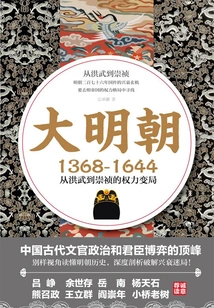
大明朝(1368—1644):从洪武到崇祯的权力变局
Zong Chenghao
At the beginning of the founding of the Ming Dynasty, Zhu Yuanzhang abolished the prime minister system that had lasted for thousands of years, used an iron fist to eliminate the founding officials, strictly ordered the harem and eunuchs not to interfere in politics, and pushed the imperial power to unprecedented heights. Later successors did not have the brilliance and enthusiasm of their ancestors, so eunuchs began to appear in the empire's power system. At the same time, the cabinet gradually formed and the voting system came into being. The power of the empire gradually flowed from the emperor to the eunuchs and ministers. Under the imperial examination system, the civil service group was prone to partisan struggles for power. The close relationship between the eunuchs and the emperor gave them the convenience of accessing the highest power. Therefore, strong eunuchs or strong cabinet ministers acted as power agents for the weak emperor. Although the contradiction between civil servants and eunuchs is irreconcilable, there are times when the two unite. In this way, the intricate and ever-changing relationship between the three gradually dragged down the political machine of the Ming Dynasty, and eventually led to its inevitable demise.
At the beginning of the founding of the Ming Dynasty, Zhu Yuanzhang abolished the prime minister system that had lasted for thousands of years, used an iron fist to eliminate the founding officials, strictly ordered the harem and eunuchs not to interfere in politics, and pushed the imperial power to unprecedented heights. Later successors did not have the brilliance and enthusiasm of their ancestors, so eunuchs began to appear in the empire's power system. At the same time, the cabinet gradually formed and the voting system came into being. The power of the empire gradually flowed from the emperor to the eunuchs and ministers. Under the imperial examination system, the civil service group was prone to partisan struggles for power. The close relationship between the eunuchs and the emperor gave them the convenience of accessing the highest power. Therefore, strong eunuchs or strong cabinet ministers acted as power agents for the weak emperor. Although the contradiction between civil servants and eunuchs is irreconcilable, there are times when the two unite. In this way, the intricate and ever-changing relationship between the three gradually dragged down the political machine of the Ming Dynasty, and eventually led to its inevitable demise.
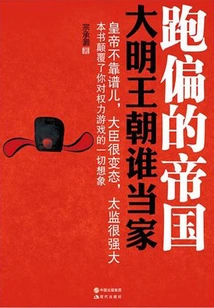
跑偏的帝国:大明王朝谁当家
Zong Chenghao
How did Daming go astray? The emperor is unreliable, the ministers are perverted, and the eunuchs are very powerful! Completely subverts all your imagination of the Game of Thrones!--"";;"";......--;,,;--;,;"" The most terrible eunuch's interference in politics even became a system and was recognized by the court. This is an empire gone awry. It makes all the impossible imaginations about the relationship between monarch and ministers come true, subverting people's general understanding of the power operation of ancient Chinese dynasties.
How did Daming go astray? The emperor is unreliable, the ministers are perverted, and the eunuchs are very powerful! Completely subverts all your imagination of the Game of Thrones!--"";;"";......--;,,;--;,;"" The most terrible eunuch's interference in politics even became a system and was recognized by the court. This is an empire gone awry. It makes all the impossible imaginations about the relationship between monarch and ministers come true, subverting people's general understanding of the power operation of ancient Chinese dynasties.
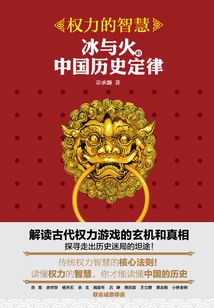
权力的智慧:冰与火的中国历史定律
Zong Chenghao
This book uses a writing style that is both elegant and vulgar, solemn and humorous, and uses rich, diverse, real and vivid materials to sort out the ultimate laws that affect Chinese history for readers in a simple and easy-to-understand manner, revealing many historical laws; it discusses the origin, content and mode of action of these laws, and then points out that the reason for their occurrence is the pursuit of advantages and avoidance of disadvantages in reality. At the same time, it explores the logic of interests in the power game of different dynasties, the wrestling methods of various classes, the checks and balance strategies of the official power structure and other topics. When combined, it is spliced into Chinese history and the survival wisdom of society. The author's writing is sharp and penetrating, reflecting his wisdom and sensitivity to history and reality; he strives to allow readers to spend the least time and energy to penetrate the core of history and see clearly the essence and truth of history! Lift away the layers of fog and dissect the darkness and glory of human nature!
This book uses a writing style that is both elegant and vulgar, solemn and humorous, and uses rich, diverse, real and vivid materials to sort out the ultimate laws that affect Chinese history for readers in a simple and easy-to-understand manner, revealing many historical laws; it discusses the origin, content and mode of action of these laws, and then points out that the reason for their occurrence is the pursuit of advantages and avoidance of disadvantages in reality. At the same time, it explores the logic of interests in the power game of different dynasties, the wrestling methods of various classes, the checks and balance strategies of the official power structure and other topics. When combined, it is spliced into Chinese history and the survival wisdom of society. The author's writing is sharp and penetrating, reflecting his wisdom and sensitivity to history and reality; he strives to allow readers to spend the least time and energy to penetrate the core of history and see clearly the essence and truth of history! Lift away the layers of fog and dissect the darkness and glory of human nature!
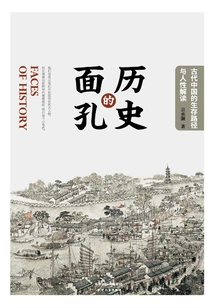
历史的面孔:古代中国的生存路径与人性解读
Zong Chenghao
All history is human history, and human nature is always a mirror. "The Face of History" selects 12 distinctive historical figures in ancient history: Shang Yang, Li Si, Liu Bang, Wang Mang, Yang Guang, Wei Zheng, Wang Anshi, Yue Fei, Hai Rui, Chongzhen, Lin Zexu, and Li Hongzhang. It analyzes their personality and background of the times, the connection between destiny and the times, explores the individual's survival path, and reflects on the weaknesses and flaws in the depths of human nature.
All history is human history, and human nature is always a mirror. "The Face of History" selects 12 distinctive historical figures in ancient history: Shang Yang, Li Si, Liu Bang, Wang Mang, Yang Guang, Wei Zheng, Wang Anshi, Yue Fei, Hai Rui, Chongzhen, Lin Zexu, and Li Hongzhang. It analyzes their personality and background of the times, the connection between destiny and the times, explores the individual's survival path, and reflects on the weaknesses and flaws in the depths of human nature.
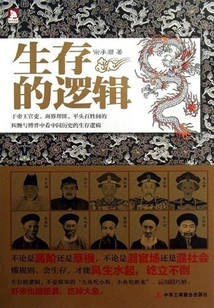
Logic of Survival
History生存的逻辑
Zong Chenghao
The author of "Official Law" and "Gray Survival" is making waves in cultural history again. Big names in official circles appear in all their glory, while little people in society struggle to survive. Zhu Yuanzhang PKed court officials: with an iron-blooded sword, he killed six entire armies and annihilated them; with a common people card, he supported the people at the bottom of the hierarchy to petition. The treasury guard PKs the imperial power: How to steal official silver in a heavily regulated bank area and steal more than 9 million taels of money from the imperial court? Sheng Xuanhuai PK Hu Xueyan: the most famous red-top businessman in an all-out war between officialdom and shopping malls. The feudal officials VS the capital officials: How did Li Hongzhang, Zeng Guofan and other officials fall into the hands of the petty scribes? Government PK bandits: As long as you don't commit any crimes on my territory, I will treat you as an invisible government-bandit tacit understanding. Local officials VS ordinary people: How did a large-scale battle between officials and people happen?
The author of "Official Law" and "Gray Survival" is making waves in cultural history again. Big names in official circles appear in all their glory, while little people in society struggle to survive. Zhu Yuanzhang PKed court officials: with an iron-blooded sword, he killed six entire armies and annihilated them; with a common people card, he supported the people at the bottom of the hierarchy to petition. The treasury guard PKs the imperial power: How to steal official silver in a heavily regulated bank area and steal more than 9 million taels of money from the imperial court? Sheng Xuanhuai PK Hu Xueyan: the most famous red-top businessman in an all-out war between officialdom and shopping malls. The feudal officials VS the capital officials: How did Li Hongzhang, Zeng Guofan and other officials fall into the hands of the petty scribes? Government PK bandits: As long as you don't commit any crimes on my territory, I will treat you as an invisible government-bandit tacit understanding. Local officials VS ordinary people: How did a large-scale battle between officials and people happen?
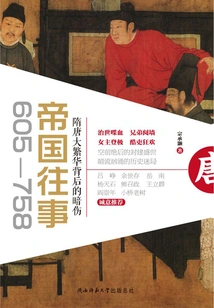
帝国往事(605—758):隋唐大繁华背后的暗伤
Zong Chenghao
China's 7th and 8th centuries were the century between the Sui and Tang Dynasties. There, the prosperous age is like a carefully crafted, illusory and profound mirror world. In this little book, you see the same emperors and generals, but they are not the faces you are familiar with. In the scattered dust, there is a different style hidden. It doesn't just belong to one person, but to everyone involved in it. How much it fascinates you, how much you are curious and afraid of it. History is not a record of the merits of emperors and generals, nor is it a record of the daily lives of this great emperor and that great emperor. For those clueless historical narratives, those wails between heaven and earth, the conspiracies under the moonlight, and the joy of banquets, it is all about human interests and interests that subdue monsters and monsters in time. For those things that must have happened in history but are not recorded in history books, you have to see them, smell them, and preferably touch their heartbeats.
China's 7th and 8th centuries were the century between the Sui and Tang Dynasties. There, the prosperous age is like a carefully crafted, illusory and profound mirror world. In this little book, you see the same emperors and generals, but they are not the faces you are familiar with. In the scattered dust, there is a different style hidden. It doesn't just belong to one person, but to everyone involved in it. How much it fascinates you, how much you are curious and afraid of it. History is not a record of the merits of emperors and generals, nor is it a record of the daily lives of this great emperor and that great emperor. For those clueless historical narratives, those wails between heaven and earth, the conspiracies under the moonlight, and the joy of banquets, it is all about human interests and interests that subdue monsters and monsters in time. For those things that must have happened in history but are not recorded in history books, you have to see them, smell them, and preferably touch their heartbeats.
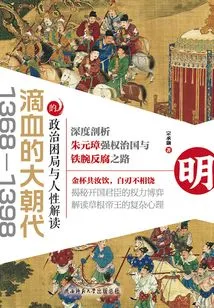
滴血的大朝代:1368-1398的政治困局与人性解读
Zong Chenghao
Thirty years after the founding of Hongwu, who is causing trouble for the empire? This is a historical proposition that has clues but remains unsolved. The book adheres to the author Zong Chenghao's consistent smooth and smooth writing style, from shallow to deep, and tells the story of Zhu Yuanzhang's power dilemma after the founding of the People's Republic of China, the political struggle on the eve of the Jingnan Incident, as well as major historical events such as the internal power struggles of the civil servant group and the eunuchs' chaos in the country. The author narrates each of the landmark events that had a huge impact on the politics of the Ming Dynasty, deeply revealing the causal relationship between historical events and the underlying operating rules. In the author's writing, the power game between emperors, generals and eunuchs has a more humane interpretation.
Thirty years after the founding of Hongwu, who is causing trouble for the empire? This is a historical proposition that has clues but remains unsolved. The book adheres to the author Zong Chenghao's consistent smooth and smooth writing style, from shallow to deep, and tells the story of Zhu Yuanzhang's power dilemma after the founding of the People's Republic of China, the political struggle on the eve of the Jingnan Incident, as well as major historical events such as the internal power struggles of the civil servant group and the eunuchs' chaos in the country. The author narrates each of the landmark events that had a huge impact on the politics of the Ming Dynasty, deeply revealing the causal relationship between historical events and the underlying operating rules. In the author's writing, the power game between emperors, generals and eunuchs has a more humane interpretation.
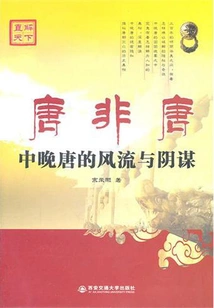
The Tang Dynasty is Not the Tang Dynasty: Romance and Conspiracy in the Middle and Late Tang Dynasty
History唐非唐:中晚唐的风流与阴谋
Zong Chenghao
After the hustle and bustle, the glitz and glamor dissipated, the Tang Dynasty, which was at its peak, never escaped the iron law of history. Ministers fight for power and domestic slaves cause chaos. The glorious Tang Dynasty was brought to an end by a scoundrel, Yakuza. What kind of secrets and strangeness are there among the century-old splendor and splendor? What little-known truth lies in the fog of the middle and late Tang Dynasty? An in-depth interpretation of the top-secret privacy of the middle and late Tang Dynasty reveals the historical truth of the fall of the Tang Dynasty. Let us peel back the mystery of the middle and late Tang Dynasty, re-examine the conspiracy and betrayal, and explore the details of the fall of the Tang Dynasty.
After the hustle and bustle, the glitz and glamor dissipated, the Tang Dynasty, which was at its peak, never escaped the iron law of history. Ministers fight for power and domestic slaves cause chaos. The glorious Tang Dynasty was brought to an end by a scoundrel, Yakuza. What kind of secrets and strangeness are there among the century-old splendor and splendor? What little-known truth lies in the fog of the middle and late Tang Dynasty? An in-depth interpretation of the top-secret privacy of the middle and late Tang Dynasty reveals the historical truth of the fall of the Tang Dynasty. Let us peel back the mystery of the middle and late Tang Dynasty, re-examine the conspiracy and betrayal, and explore the details of the fall of the Tang Dynasty.
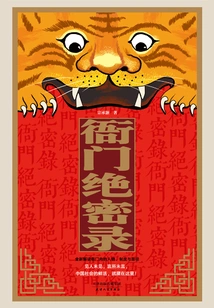
Yamen Top Secret Records
History衙门绝密录
Zong Chenghao
There is a popular saying among the people: "The yamen gate opens to the south. If you have reason or no money, don't come in." As a political institution of the feudal imperial power, the yamen can be said to be a bridge between the upper imperial power and the lower society, and it occupies an important position in the political landscape of ancient Chinese society. This book focuses on the center of "yamen", from point to point, to sort out a clear context for readers to understand ancient Chinese society.
There is a popular saying among the people: "The yamen gate opens to the south. If you have reason or no money, don't come in." As a political institution of the feudal imperial power, the yamen can be said to be a bridge between the upper imperial power and the lower society, and it occupies an important position in the political landscape of ancient Chinese society. This book focuses on the center of "yamen", from point to point, to sort out a clear context for readers to understand ancient Chinese society.
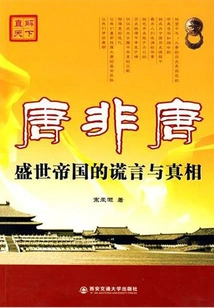
唐非唐:盛世帝国的谎言与真相
Zong Chenghao
This dynasty has given us too much pride, too much capital to show off, and too many historical events that can be mentioned again. This is not a serious so-called history of the truth, nor is it some unreasonable nonsense. As a book that attempts to interpret the historical truth of the Tang Dynasty, the author can only try to reflect the colorful situations and mental processes of that era.
This dynasty has given us too much pride, too much capital to show off, and too many historical events that can be mentioned again. This is not a serious so-called history of the truth, nor is it some unreasonable nonsense. As a book that attempts to interpret the historical truth of the Tang Dynasty, the author can only try to reflect the colorful situations and mental processes of that era.
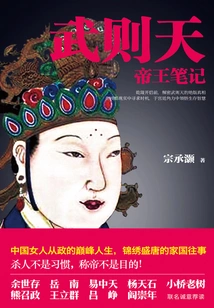
Emperor Wu Zetian's Notes
History武则天帝王笔记
Zong Chenghao
History is real and cruel. Wu Zetian was also struggling! When opportunities and her own efforts made her sit firmly on the throne, what should she do in order to stabilize her position? This book provides a detailed answer. Wu Zetian, who held power for half a century, was the most accomplished and greatest woman in history and the only female emperor in history. We have too many reasons to get to know this woman, to read that period of history, and to see how she transformed from a talented person to a generation of queen... This book takes official history as its sutra, major political events and personal destiny as its latitude, "explains" history as its call, and focuses on the analysis of mysterious cases, and restores the true face and moving details of history in a panoramic manner!
History is real and cruel. Wu Zetian was also struggling! When opportunities and her own efforts made her sit firmly on the throne, what should she do in order to stabilize her position? This book provides a detailed answer. Wu Zetian, who held power for half a century, was the most accomplished and greatest woman in history and the only female emperor in history. We have too many reasons to get to know this woman, to read that period of history, and to see how she transformed from a talented person to a generation of queen... This book takes official history as its sutra, major political events and personal destiny as its latitude, "explains" history as its call, and focuses on the analysis of mysterious cases, and restores the true face and moving details of history in a panoramic manner!
从开国斗到亡国:明朝残酷权力斗争全史
Zong Chenghao
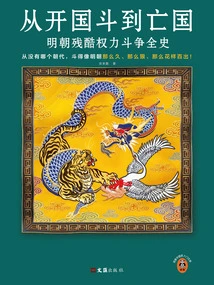
The Ming Dynasty was the dynasty with the most intense power struggle in Chinese history. Throughout the entire dynasty, the emperor fought against his cabinet ministers, his cabinet ministers fought against his cabinet ministers, and his cabinet ministers fought against their eunuchs. The struggle was so cruel and varied that it was "breathtaking". The endless internal fighting also exhausted the national power of the Ming Dynasty. Jiajing Grand Ceremony: Emperor's Fight with Cabinet Ministers In 1521, Emperor Wuzong of the Ming Dynasty Zhu Houzhao died suddenly without heirs. His cousin Zhu Houcong succeeded to the throne and was called Emperor Jiajing. After that, Emperor Jiajing and his courtiers argued endlessly about who should be regarded as the patriarchal father. At the height of the conflict, more than 200 ritual-protecting officials, including Cabinet University scholar Mao Ji, collectively knelt outside Zuoshun Gate to offer their support. In exchange, they received orders from Emperor Jiajing to serve as imperial staff, and seventeen of them were beaten to death. After this beating, fewer and fewer ministers dared to oppose Emperor Jiajing, and the imperial power once overwhelmed the cabinet power.
The Ming Dynasty was the dynasty with the most intense power struggle in Chinese history. Throughout the entire dynasty, the emperor fought against his cabinet ministers, his cabinet ministers fought against his cabinet ministers, and his cabinet ministers fought against their eunuchs. The struggle was so cruel and varied that it was "breathtaking". The endless internal fighting also exhausted the national power of the Ming Dynasty. Jiajing Grand Ceremony: Emperor's Fight with Cabinet Ministers In 1521, Emperor Wuzong of the Ming Dynasty Zhu Houzhao died suddenly without heirs. His cousin Zhu Houcong succeeded to the throne and was called Emperor Jiajing. After that, Emperor Jiajing and his courtiers argued endlessly about who should be regarded as the patriarchal father. At the height of the conflict, more than 200 ritual-protecting officials, including Cabinet University scholar Mao Ji, collectively knelt outside Zuoshun Gate to offer their support. In exchange, they received orders from Emperor Jiajing to serve as imperial staff, and seventeen of them were beaten to death. After this beating, fewer and fewer ministers dared to oppose Emperor Jiajing, and the imperial power once overwhelmed the cabinet power.
Zhu Yuanzhang and His Era
History朱元璋及其时代
Zong Chenghao
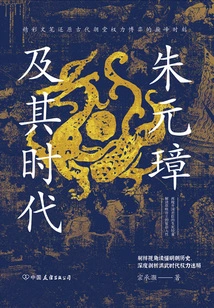
Thirty-one years after the founding of Hongwu, who is causing trouble for the empire? This is a historical mystery that has clues but remains unsolved. The book adheres to the author Zong Chenghao's consistent smooth and smooth writing style, from shallow to deep, and tells the story of Zhu Yuanzhang's power dilemma before and after the founding of the People's Republic of China, the political struggle on the eve of the Jingnan Incident, and the internal struggles of the civil servant group and other major historical events. In the author's writing, the power game between Emperor Hongwu and his ministers has a more humane interpretation.
Thirty-one years after the founding of Hongwu, who is causing trouble for the empire? This is a historical mystery that has clues but remains unsolved. The book adheres to the author Zong Chenghao's consistent smooth and smooth writing style, from shallow to deep, and tells the story of Zhu Yuanzhang's power dilemma before and after the founding of the People's Republic of China, the political struggle on the eve of the Jingnan Incident, and the internal struggles of the civil servant group and other major historical events. In the author's writing, the power game between Emperor Hongwu and his ministers has a more humane interpretation.
权力病人:朱元璋的帝王笔记
Zong Chenghao
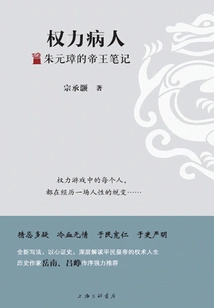
This book uses the first person to show the life of the grassroots emperor Zhu Yuanzhang. Among the emperors at home and abroad in ancient and modern times, Zhu Yuanzhang's identity should be the most special one. He came from the lowest level of society and can be regarded as the grassroots among the grassroots. Zhu Yuanzhang suffered too many mental shocks in his life. His humble status, difficult situation, and fierce struggles left too many traumas in his heart. Once he had the power in hand, the huge gap made him feel like he was in a dream. Inferiority, fear, and awareness of crisis were intertwined together, forming an almost perverted delusion of persecution in his mind. His behavior is more like a power patient. He uses power to imprison his colleagues, and he himself is also trapped in the trap of power. The author sifted through a large number of first-hand historical materials for in-depth interpretation of the complicated events.
This book uses the first person to show the life of the grassroots emperor Zhu Yuanzhang. Among the emperors at home and abroad in ancient and modern times, Zhu Yuanzhang's identity should be the most special one. He came from the lowest level of society and can be regarded as the grassroots among the grassroots. Zhu Yuanzhang suffered too many mental shocks in his life. His humble status, difficult situation, and fierce struggles left too many traumas in his heart. Once he had the power in hand, the huge gap made him feel like he was in a dream. Inferiority, fear, and awareness of crisis were intertwined together, forming an almost perverted delusion of persecution in his mind. His behavior is more like a power patient. He uses power to imprison his colleagues, and he himself is also trapped in the trap of power. The author sifted through a large number of first-hand historical materials for in-depth interpretation of the complicated events.
靖难之役:明朝初年的改革、削藩、政争与叛乱
Zong Chenghao
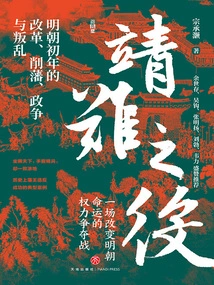
In the late Hongwu years of the early Ming Dynasty, Prince Zhu Biao suddenly passed away. The waning Zhu Yuanzhang succeeded to the throne for the emperor's grandson Zhu Yunwen, setting off a bloody purge of heroes. The "benevolent and weak" Emperor Jianwen insisted on reducing the vassal vassal, and the Yan King Zhu Di, who was dormant in Peiping, brazenly raised troops in the name of "Qingjun side", triggering the four-year Jingnan Campaign. This uncle-nephew duel, involving the collapse of the system and the game of human nature, finally shook the mountains and rivers with gold and iron horses, and rewrote the fate of the empire with the flames of Nanjing. How did the enfeoffment system produce negative consequences that could backfire on the country? Why were the literati ideals of Jianwen's New Deal no match for the cavalry of Yan and Fan? What kind of imperial anxiety was hidden behind Zheng He's seven voyages to the West? From the bloody emperor's magic in the Blue Jade Case to the rain of millions of arrows in the Baigou River, from the tug-of-war in the city of Jinan to the swan song of the slaying clan at the tip of Fang Xiaoru's pen, every move in the chess game of power hides the tearing and rebirth of civilization. This book shows the tragedy of idealists and the counterattack of pragmatists under autocratic imperial power through the life and death choices of generals and civil servants during the change of power and the rise of the eunuch group. This is not only a history of dynastic wars, but also an in-depth analysis of the legitimacy of power, institutional dilemmas and the struggle of human nature.
In the late Hongwu years of the early Ming Dynasty, Prince Zhu Biao suddenly passed away. The waning Zhu Yuanzhang succeeded to the throne for the emperor's grandson Zhu Yunwen, setting off a bloody purge of heroes. The "benevolent and weak" Emperor Jianwen insisted on reducing the vassal vassal, and the Yan King Zhu Di, who was dormant in Peiping, brazenly raised troops in the name of "Qingjun side", triggering the four-year Jingnan Campaign. This uncle-nephew duel, involving the collapse of the system and the game of human nature, finally shook the mountains and rivers with gold and iron horses, and rewrote the fate of the empire with the flames of Nanjing. How did the enfeoffment system produce negative consequences that could backfire on the country? Why were the literati ideals of Jianwen's New Deal no match for the cavalry of Yan and Fan? What kind of imperial anxiety was hidden behind Zheng He's seven voyages to the West? From the bloody emperor's magic in the Blue Jade Case to the rain of millions of arrows in the Baigou River, from the tug-of-war in the city of Jinan to the swan song of the slaying clan at the tip of Fang Xiaoru's pen, every move in the chess game of power hides the tearing and rebirth of civilization. This book shows the tragedy of idealists and the counterattack of pragmatists under autocratic imperial power through the life and death choices of generals and civil servants during the change of power and the rise of the eunuch group. This is not only a history of dynastic wars, but also an in-depth analysis of the legitimacy of power, institutional dilemmas and the struggle of human nature.
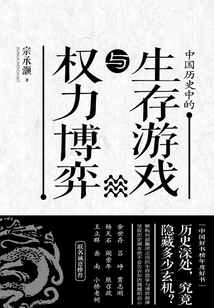
中国历史中的生存游戏与权力博弈
Zong Chenghao
In Chinese history, whether it is the bureaucratic group that holds power or the "subordinate officials" with legal status; whether it is the gray forces that rely on violent "blood rewards" to survive, or the victims who are always in a weak position in this survival system, it can be said that the vast majority are realists, and calculation of interests is their only code of conduct. This book focuses on typical cases of power struggles over thousands of years of Chinese history, especially in the Ming and Qing dynasties. It takes the real living conditions of officials, officials, and civilians in the evolution of dynasties as an entry point. It deeply analyzes and deciphers the many mysteries of the interest struggle between all parties with the struggle for power as the core, and systematically sorts out and completely presents the survival competition and game rules between interest groups.
In Chinese history, whether it is the bureaucratic group that holds power or the "subordinate officials" with legal status; whether it is the gray forces that rely on violent "blood rewards" to survive, or the victims who are always in a weak position in this survival system, it can be said that the vast majority are realists, and calculation of interests is their only code of conduct. This book focuses on typical cases of power struggles over thousands of years of Chinese history, especially in the Ming and Qing dynasties. It takes the real living conditions of officials, officials, and civilians in the evolution of dynasties as an entry point. It deeply analyzes and deciphers the many mysteries of the interest struggle between all parties with the struggle for power as the core, and systematically sorts out and completely presents the survival competition and game rules between interest groups.