Library
Browse and search books
5 novels found
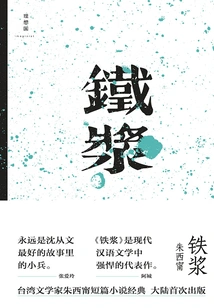
Iron Slurry
General Fiction铁浆
Zhu Xining
"Iron Slurry" is a short story collection by Taiwanese writer Mr. Zhu Xining. It includes nine classic short stories and is published in mainland China for the first time. Written in the 1960s in Taiwan, the work continues the tradition of vernacular novels of the May Fourth Movement and restores legendary figures and ancient events in northern rural market towns in the early years of the Republic of China. At the moment of conflict between traditional Chinese society and modern civilization, the countryside has become a stage for exploring the good and evil of human nature: Meng Zhaoyou, who committed suicide by drinking iron slurry while fighting for the salt business, Fu Ernu, the butcher who stirred people's hearts by eating in a restaurant, and those who taught themselves medical books and killed themselves one after another. The family's Neng Ye... A group of hot-blooded little people resurrected the bloody nature of the Warring States Period and the national character that we don't know much about. They performed vendetta and redemption, chivalry and warmth, ignorance and civilization, all of which are tragedies that shock the soul. Mr. Acheng wrote a postscript: "Iron Slurry" is a powerful masterpiece in modern Chinese literature.
"Iron Slurry" is a short story collection by Taiwanese writer Mr. Zhu Xining. It includes nine classic short stories and is published in mainland China for the first time. Written in the 1960s in Taiwan, the work continues the tradition of vernacular novels of the May Fourth Movement and restores legendary figures and ancient events in northern rural market towns in the early years of the Republic of China. At the moment of conflict between traditional Chinese society and modern civilization, the countryside has become a stage for exploring the good and evil of human nature: Meng Zhaoyou, who committed suicide by drinking iron slurry while fighting for the salt business, Fu Ernu, the butcher who stirred people's hearts by eating in a restaurant, and those who taught themselves medical books and killed themselves one after another. The family's Neng Ye... A group of hot-blooded little people resurrected the bloody nature of the Warring States Period and the national character that we don't know much about. They performed vendetta and redemption, chivalry and warmth, ignorance and civilization, all of which are tragedies that shock the soul. Mr. Acheng wrote a postscript: "Iron Slurry" is a powerful masterpiece in modern Chinese literature.
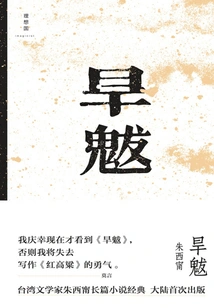
Drought Demon
General Fiction旱魃
Zhu Xining
"The Drought" is a classic novel by Mr. Zhu Xining. It is set in the distant world of the old Yellow River in North China. It tells the story of a drought in the countryside and water shortage everywhere. Only the well in the Tangjia Oil Mill has an endless stream of clear spring. Rumors in the village The Drought Monster appeared... The writer drew materials from ancient local legends and used the love story of Tong Qiuxiang, a juggling troupe girl, and Tang Tiemian, the bandit leader, as the main line. The heat of emotion echoed the drought of heaven and earth, creating this powerful novel. "Drought Demon" is a masterpiece that inherits the precious line drawing tradition of Chinese classical novels. The words of the characters are all heard as if they were seen. The elder Jin who entrusted all Mr. Zhu's ideals, the bandit leader Tang Tiemian who kills people quickly but knows how to return when he is lost, the brave and courageous Tong Qiuxiang, and the vaudeville leader Father Tong who tenaciously maintains his dignity despite being poor and abject, all the characters are vivid and ready to be seen. Mr. Zhu's language is strong, full, and rich in imagery, as if it comes from Li He's poems, like a wall made of rocks, full of sharp edges. This pioneering work, written half a century ago, is a representative work of Mr. Zhu Xining's exploration of modernist literature.
"The Drought" is a classic novel by Mr. Zhu Xining. It is set in the distant world of the old Yellow River in North China. It tells the story of a drought in the countryside and water shortage everywhere. Only the well in the Tangjia Oil Mill has an endless stream of clear spring. Rumors in the village The Drought Monster appeared... The writer drew materials from ancient local legends and used the love story of Tong Qiuxiang, a juggling troupe girl, and Tang Tiemian, the bandit leader, as the main line. The heat of emotion echoed the drought of heaven and earth, creating this powerful novel. "Drought Demon" is a masterpiece that inherits the precious line drawing tradition of Chinese classical novels. The words of the characters are all heard as if they were seen. The elder Jin who entrusted all Mr. Zhu's ideals, the bandit leader Tang Tiemian who kills people quickly but knows how to return when he is lost, the brave and courageous Tong Qiuxiang, and the vaudeville leader Father Tong who tenaciously maintains his dignity despite being poor and abject, all the characters are vivid and ready to be seen. Mr. Zhu's language is strong, full, and rich in imagery, as if it comes from Li He's poems, like a wall made of rocks, full of sharp edges. This pioneering work, written half a century ago, is a representative work of Mr. Zhu Xining's exploration of modernist literature.
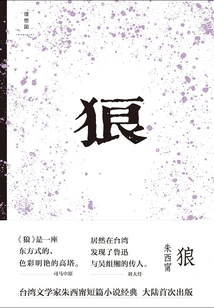
Wolf
Literature狼
Zhu Xining
"Wolf" is a collection of short stories by Taiwanese writer Zhu Xining, which includes nine classic short stories and is published in mainland China for the first time. "Wolf" continues the legendary characters and ancient events in the northern rural market town in "Iron Pulp". It is deeply engraved, and the characters and stories all flow from that "pure China": the old tailor who lives alone and is troubled by desire in "Odd", the tricycle driver who chooses to protect his simple beliefs after the battle between heaven and man in "Life Under the Line", "Goodbye, the sound of train wheels!" "The crazy Dr. Liu De who is obsessed with studying "silent railways" in "Snake House", Xiao Xuan, a national yoke who finally finds true confidence after suffering internal and external hardships, and the big wheel who adheres to the traditional Oriental tradition of forgiveness in a wild environment in "Wolf"... The original appearance of tradition, the situation of survival, the temptation of sexual desire, the pressure of the human heart, ancient China encounters modern civilization, and the eternal human desire encounters the suppression of reality. Each article contains a solid and rich brilliance and charming charm. In the hometown of words cast by Zhu Xining, people walk in the sun, moon, mountains and rivers, and ignorance and violence are never absent, but benevolence, love and faith are bright, upright and solid. He is a carver of words. With a pure pen, he summons the lost ancient China back bit by bit.
"Wolf" is a collection of short stories by Taiwanese writer Zhu Xining, which includes nine classic short stories and is published in mainland China for the first time. "Wolf" continues the legendary characters and ancient events in the northern rural market town in "Iron Pulp". It is deeply engraved, and the characters and stories all flow from that "pure China": the old tailor who lives alone and is troubled by desire in "Odd", the tricycle driver who chooses to protect his simple beliefs after the battle between heaven and man in "Life Under the Line", "Goodbye, the sound of train wheels!" "The crazy Dr. Liu De who is obsessed with studying "silent railways" in "Snake House", Xiao Xuan, a national yoke who finally finds true confidence after suffering internal and external hardships, and the big wheel who adheres to the traditional Oriental tradition of forgiveness in a wild environment in "Wolf"... The original appearance of tradition, the situation of survival, the temptation of sexual desire, the pressure of the human heart, ancient China encounters modern civilization, and the eternal human desire encounters the suppression of reality. Each article contains a solid and rich brilliance and charming charm. In the hometown of words cast by Zhu Xining, people walk in the sun, moon, mountains and rivers, and ignorance and violence are never absent, but benevolence, love and faith are bright, upright and solid. He is a carver of words. With a pure pen, he summons the lost ancient China back bit by bit.
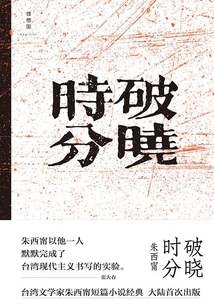
Dawn
General Fiction破晓时分
Zhu Xining
"Dawn" is a short story collection by Taiwanese writer Mr. Zhu Xining. It includes 13 classic short stories and is published in mainland China for the first time. The characters have expanded from the bloody heroes in "Plasma" to ordinary citizens. The rural legends of the Northland and the urban customs of Taiwan reflect each other. The ancient Greek tragedy has evolved into the trivial daily life and inner battlefield of ordinary people, presenting a more modern and profound scenery. "Spring Is Gone" describes the lingering emotions of a silk-cutting master in spring, "White Grave" commemorates the fall of a hero, "The Grain Thief" mourns the decline of integrity, and "It's a Taste" depicts the stream of consciousness reverie of a married man. "Fucheng Baitiehao" tells the story of the cage-like and boring urban daily life and the fatigue of life from the perspective of a family of four. The short story "Break of Dawn" of the same name is adapted from the Song Dynasty story-telling novel "The Wrong Killing of Cui Ning". It points directly to the entanglement between people and absurd fate. It is a shocking tragedy and asks "How does the process of degeneration begin in each of us?"
"Dawn" is a short story collection by Taiwanese writer Mr. Zhu Xining. It includes 13 classic short stories and is published in mainland China for the first time. The characters have expanded from the bloody heroes in "Plasma" to ordinary citizens. The rural legends of the Northland and the urban customs of Taiwan reflect each other. The ancient Greek tragedy has evolved into the trivial daily life and inner battlefield of ordinary people, presenting a more modern and profound scenery. "Spring Is Gone" describes the lingering emotions of a silk-cutting master in spring, "White Grave" commemorates the fall of a hero, "The Grain Thief" mourns the decline of integrity, and "It's a Taste" depicts the stream of consciousness reverie of a married man. "Fucheng Baitiehao" tells the story of the cage-like and boring urban daily life and the fatigue of life from the perspective of a family of four. The short story "Break of Dawn" of the same name is adapted from the Song Dynasty story-telling novel "The Wrong Killing of Cui Ning". It points directly to the entanglement between people and absurd fate. It is a shocking tragedy and asks "How does the process of degeneration begin in each of us?"
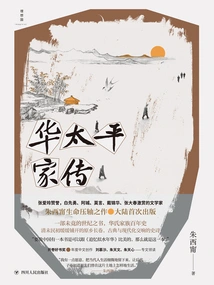
Hua Taiping Family Biography
General Fiction华太平家传
Zhu Xining
"I am a little willing to leave the lives of contemporary people in detail, so that future generations can know how their ancestors lived on this land." "Hua Taiping Family Biography" is the posthumous novel of Taiwanese writer Zhu Xining, and it is also the most important work in his creative career. The book was originally planned to be three million words. The author devoted his life's work, revised the manuscript seven times, and started writing eight times. After completing 550,000 words, he died due to illness, leaving it as an unfinished symphonic epic. The book is divided into thirty-five chapters. The story begins in the 26th year of the reign of Emperor Guangxu of the Qing Dynasty (1900). It is a harkening back to a prosperous "peaceful" era that was not peaceful. It takes the century-old family history of the Hua family as the main axis and details the various changes in the countryside of Shandong Province when the new and old, Chinese and Western eras collided. Returning to the origin of modernization, where family history and national history are intertwined, personal destiny, loss of love, and the turmoil of the times, "Hua Taiping Family Biography" is an unfinished book of the century, and an epic symphony of classics and modernity. The author's language is highly sophisticated and smooth, and his narration is meticulous. The stories of the four seasons, folk customs and etiquette, details of the common people, and dialects are like a long scroll of the hometown slowly unfolding in the late Qing Dynasty and the early Republic of China, which is full of local color and folk customs. Just like a picture of "Along the River During the Qingming Festival", as the scroll slowly unfolds, scenes of full and interesting scenes of common people flow between the lines. Attached are Zhu Xining's precious manuscripts and photos, as well as special introductions by Liu Musa, Zhu Tianwen and Zhu Tianxin.
"I am a little willing to leave the lives of contemporary people in detail, so that future generations can know how their ancestors lived on this land." "Hua Taiping Family Biography" is the posthumous novel of Taiwanese writer Zhu Xining, and it is also the most important work in his creative career. The book was originally planned to be three million words. The author devoted his life's work, revised the manuscript seven times, and started writing eight times. After completing 550,000 words, he died due to illness, leaving it as an unfinished symphonic epic. The book is divided into thirty-five chapters. The story begins in the 26th year of the reign of Emperor Guangxu of the Qing Dynasty (1900). It is a harkening back to a prosperous "peaceful" era that was not peaceful. It takes the century-old family history of the Hua family as the main axis and details the various changes in the countryside of Shandong Province when the new and old, Chinese and Western eras collided. Returning to the origin of modernization, where family history and national history are intertwined, personal destiny, loss of love, and the turmoil of the times, "Hua Taiping Family Biography" is an unfinished book of the century, and an epic symphony of classics and modernity. The author's language is highly sophisticated and smooth, and his narration is meticulous. The stories of the four seasons, folk customs and etiquette, details of the common people, and dialects are like a long scroll of the hometown slowly unfolding in the late Qing Dynasty and the early Republic of China, which is full of local color and folk customs. Just like a picture of "Along the River During the Qingming Festival", as the scroll slowly unfolds, scenes of full and interesting scenes of common people flow between the lines. Attached are Zhu Xining's precious manuscripts and photos, as well as special introductions by Liu Musa, Zhu Tianwen and Zhu Tianxin.