Library
Browse and search books
5 novels found
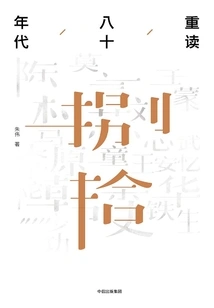
Rereading the 1980s
Literature重读八十年代
Zhu Wei
What were the eighties? Zhu Wei, former editor-in-chief of Sanlian Life Weekly, wrote: The 1980s was an era when people could sit together in groups of three or five and talk about literature all night long; it was an era when everyone could get together to drink beer, watch movie videos and World Cup broadcasts all night long; it was an era when people could "run" on the road like "lovers". Everyone was being chased by the innovative dog and couldn't lift their pants, but they were all intimate and having endless fun. In the 1980s, Zhu Wei rode his bicycle from one writer's house to meet another writer. During this period, he successively published a large number of writers in "People's Literature" such as Mo Yan, Yu Hua, Su Tong, Liu Sola, Acheng, and Ge Fei. In 2013, Zhu Wei began to write "Me and the 1980s" on his blog, hoping to recall every node of that era through his own life trajectory and record the process of interacting with each writer. This book is the culmination of three years of reading and writing by Zhu Wei. He rereads the classic works of important writers active from the 1980s to the present one by one, analyzed them step by step, and systematically interpreted the works of 10 iconic writers: Wang Meng, Li Tuo, Han Shaogong, Chen Cun, Shi Tiesheng, Wang Anyi, Mo Yan, Ma Yuan, Yu Hua, and Su Tong, allowing readers to understand a writer through one article.
What were the eighties? Zhu Wei, former editor-in-chief of Sanlian Life Weekly, wrote: The 1980s was an era when people could sit together in groups of three or five and talk about literature all night long; it was an era when everyone could get together to drink beer, watch movie videos and World Cup broadcasts all night long; it was an era when people could "run" on the road like "lovers". Everyone was being chased by the innovative dog and couldn't lift their pants, but they were all intimate and having endless fun. In the 1980s, Zhu Wei rode his bicycle from one writer's house to meet another writer. During this period, he successively published a large number of writers in "People's Literature" such as Mo Yan, Yu Hua, Su Tong, Liu Sola, Acheng, and Ge Fei. In 2013, Zhu Wei began to write "Me and the 1980s" on his blog, hoping to recall every node of that era through his own life trajectory and record the process of interacting with each writer. This book is the culmination of three years of reading and writing by Zhu Wei. He rereads the classic works of important writers active from the 1980s to the present one by one, analyzed them step by step, and systematically interpreted the works of 10 iconic writers: Wang Meng, Li Tuo, Han Shaogong, Chen Cun, Shi Tiesheng, Wang Anyi, Mo Yan, Ma Yuan, Yu Hua, and Su Tong, allowing readers to understand a writer through one article.
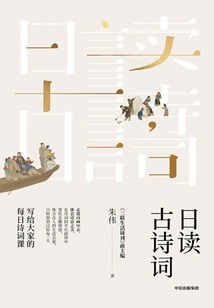
Reading Ancient Poems Every Day
Literature日读古诗词
Zhu Wei
Poetry does not produce thoughts, but corresponds to specific days every day and recites specific circumstances, time, place, people, and feelings. Poems from generation to generation are better than others, forming a huge treasure house. I personally feel that the practical value of this little book is: first, for each day of the four seasons of the year, we can transplant the poetry of the ancients into our own experience, so that every day we can live a poetic life in the spring breeze, summer rain, autumn frost, and winter snow, as the orioles fly and the grass grows, the cicadas chirp and the clouds float, the crickets chant the cinnamon, and the grackles dance and the magpies respond; secondly, compared with generations of ancients, our language level is really deteriorating. Then, this little book can actually become a daily Chinese lesson to replenish our Chinese. Isn't the artistic conception and word choice in Tang poetry and Song lyrics a good Chinese lesson? --Zhu Wei's ancient poetry is a key to our understanding of the poetic lifestyle of the ancients. This book "Daily Reading Ancient Poems" has a unique perspective. It is a record of the author's four or five years of poetry selection, precision, extended reading, and sharing of reading pleasure. The author goes by day by day to look for the attitude towards life revealed by the ancients when they chanted about spring flowers, autumn moon, summer wind and winter snow. Through systematic combing and tracing of traces, this book has become a practical life guide that inherits the elegant life of the ancients and enjoys every day immersed in poetry and painting. "Reading Ancient Poems Daily" can be described as an interesting Chinese reading book.
Poetry does not produce thoughts, but corresponds to specific days every day and recites specific circumstances, time, place, people, and feelings. Poems from generation to generation are better than others, forming a huge treasure house. I personally feel that the practical value of this little book is: first, for each day of the four seasons of the year, we can transplant the poetry of the ancients into our own experience, so that every day we can live a poetic life in the spring breeze, summer rain, autumn frost, and winter snow, as the orioles fly and the grass grows, the cicadas chirp and the clouds float, the crickets chant the cinnamon, and the grackles dance and the magpies respond; secondly, compared with generations of ancients, our language level is really deteriorating. Then, this little book can actually become a daily Chinese lesson to replenish our Chinese. Isn't the artistic conception and word choice in Tang poetry and Song lyrics a good Chinese lesson? --Zhu Wei's ancient poetry is a key to our understanding of the poetic lifestyle of the ancients. This book "Daily Reading Ancient Poems" has a unique perspective. It is a record of the author's four or five years of poetry selection, precision, extended reading, and sharing of reading pleasure. The author goes by day by day to look for the attitude towards life revealed by the ancients when they chanted about spring flowers, autumn moon, summer wind and winter snow. Through systematic combing and tracing of traces, this book has become a practical life guide that inherits the elegant life of the ancients and enjoys every day immersed in poetry and painting. "Reading Ancient Poems Daily" can be described as an interesting Chinese reading book.
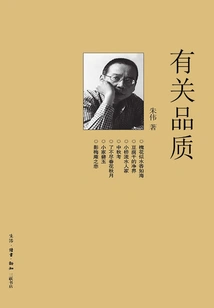
About Quality
Literature有关品质
Zhu Wei
A collection of selected columns by Zhu Wei, editor-in-chief of Sanlian Life Weekly. In the "Related Quality" column, Zhu Wei talks about writers, artists, books, music, literature, architecture, painting, friends, himself, hobbies, fashion, food and drink... The article is rich in sensibility, full of rational power, and runs through a pursuit of human inner quality. The accumulation of quality is a kind of subtle influence, which is an endless aftertaste in everyone's beautiful memory. This book records Zhu Wei's understanding of quality life, and is also a text for communication and sharing with readers.
A collection of selected columns by Zhu Wei, editor-in-chief of Sanlian Life Weekly. In the "Related Quality" column, Zhu Wei talks about writers, artists, books, music, literature, architecture, painting, friends, himself, hobbies, fashion, food and drink... The article is rich in sensibility, full of rational power, and runs through a pursuit of human inner quality. The accumulation of quality is a kind of subtle influence, which is an endless aftertaste in everyone's beautiful memory. This book records Zhu Wei's understanding of quality life, and is also a text for communication and sharing with readers.
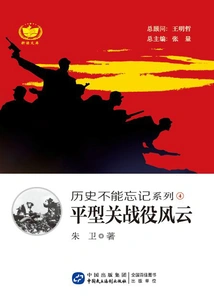
Battle of Pingxingguan
History平型关战役风云
Zhu Wei
"History Can't Forget" is a themed series of books specially designed by China Democracy and Legal Publishing House for young readers. It aims to allow young people to fully understand the face of the Anti-Japanese War and inspire their patriotism. This book is a volume in the series. It mainly describes the struggle of the Communist Party of China to establish the anti-Japanese national united front, the changes in the domestic and foreign policies of the Nationalist government, the second Kuomintang-Communist cooperation negotiation and the establishment of the anti-Japanese national united front, the Kuomintang's strategic deployment in North and Northwest China, the Red Army's reorganization and the Eighth Route Army's Pingxingguan ambush battle, etc.
"History Can't Forget" is a themed series of books specially designed by China Democracy and Legal Publishing House for young readers. It aims to allow young people to fully understand the face of the Anti-Japanese War and inspire their patriotism. This book is a volume in the series. It mainly describes the struggle of the Communist Party of China to establish the anti-Japanese national united front, the changes in the domestic and foreign policies of the Nationalist government, the second Kuomintang-Communist cooperation negotiation and the establishment of the anti-Japanese national united front, the Kuomintang's strategic deployment in North and Northwest China, the Red Army's reorganization and the Eighth Route Army's Pingxingguan ambush battle, etc.
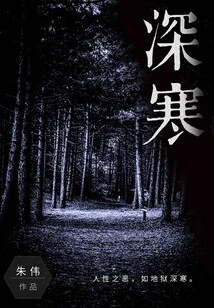
Deep Cold
General Fiction深寒
Zhu Wei
Li Cang, captain of the city's criminal police detachment, received a call. Someone found a burnt male body by the river and was hastily dumped on the river bank. While investigating the murder, two more bodies were discovered nearby. The victims in these three cases were all burned to death, with the fire points all on their heads, and their hands were cut off after death. Li Cang discovered that these deceased people were closely related to a village called Xujiashan, and all the clues in these cases led the police to a vicious incident that occurred in Xujiashan more than ten years ago...
Li Cang, captain of the city's criminal police detachment, received a call. Someone found a burnt male body by the river and was hastily dumped on the river bank. While investigating the murder, two more bodies were discovered nearby. The victims in these three cases were all burned to death, with the fire points all on their heads, and their hands were cut off after death. Li Cang discovered that these deceased people were closely related to a village called Xujiashan, and all the clues in these cases led the police to a vicious incident that occurred in Xujiashan more than ten years ago...