Library
Browse and search books
2 novels found
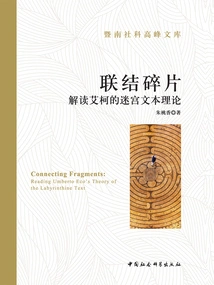
联结碎片:解读艾柯的迷宫文本理论
Zhu Taoxiang
Based on extensive reading and in-depth understanding of Eco's writings, this book finds that his thinking on the labyrinth text ran through his entire academic and creative career, and fragments of his thoughts were scattered and submerged in every corner of his theoretical books, essays and novels. In his representative work "The Name of the Rose", he put the theory into practice, and added narration to what was unclear in the theory. This book puts forward a proposition - Eco has actually discussed the labyrinth text theory intermittently and scatteredly, but only in fragmentary form, which needs to be connected. This book attempts to discover, sort out and connect relevant theoretical fragments to outline the basic outline of its labyrinth text theory.
Based on extensive reading and in-depth understanding of Eco's writings, this book finds that his thinking on the labyrinth text ran through his entire academic and creative career, and fragments of his thoughts were scattered and submerged in every corner of his theoretical books, essays and novels. In his representative work "The Name of the Rose", he put the theory into practice, and added narration to what was unclear in the theory. This book puts forward a proposition - Eco has actually discussed the labyrinth text theory intermittently and scatteredly, but only in fragmentary form, which needs to be connected. This book attempts to discover, sort out and connect relevant theoretical fragments to outline the basic outline of its labyrinth text theory.
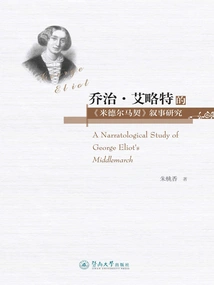
乔治·艾略特的《米德尔马契》叙事研究
Zhu Taoxiang
This book has six chapters in total. The first chapter introduces the important position of George Eliot, a world cultural celebrity and a female writer in the Victorian era, in British literature and culture, the complex story clues of her masterpiece "Middlemarch" and the current research status at home and abroad, and reviews the history of foreign criticism of "Middlemarch" over more than 140 years. The second chapter examines Eliot's notes and sources before writing "Middlemarch" and the use of multiple narrative perspectives in the novel to explore the author's narrative The third chapter studies the constellation of paratexts surrounding "Middlemarch" and its construction function in the network narrative form based on the paratext theory; the fourth chapter studies the narrative construction function of the author's intervention in "Middlemarch" and the production process of the networked story based on the metanarrative theory; the fifth chapter explores the uniqueness of gender narrative strategies and female consciousness in "Middlemarch" based on female narratology; Chapter Six is the conclusion.
This book has six chapters in total. The first chapter introduces the important position of George Eliot, a world cultural celebrity and a female writer in the Victorian era, in British literature and culture, the complex story clues of her masterpiece "Middlemarch" and the current research status at home and abroad, and reviews the history of foreign criticism of "Middlemarch" over more than 140 years. The second chapter examines Eliot's notes and sources before writing "Middlemarch" and the use of multiple narrative perspectives in the novel to explore the author's narrative The third chapter studies the constellation of paratexts surrounding "Middlemarch" and its construction function in the network narrative form based on the paratext theory; the fourth chapter studies the narrative construction function of the author's intervention in "Middlemarch" and the production process of the networked story based on the metanarrative theory; the fifth chapter explores the uniqueness of gender narrative strategies and female consciousness in "Middlemarch" based on female narratology; Chapter Six is the conclusion.