Library
Browse and search books
17 novels found
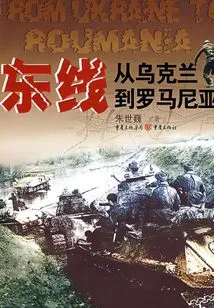
东线:从乌克兰到罗马尼亚
Zhu Shiwei
This book tells the story of the Red Army's offensive in the first half of 1944. It focuses on describing several encirclement battles in the southern part of the Eastern Front in the first half of 1944, as well as the Soviet army's recapture of Crimea and its advance into Romania. As a result of these battles, a large number of sophisticated combat vehicles provided by the German industrial sector for the armored forces suffered irreparable losses.
This book tells the story of the Red Army's offensive in the first half of 1944. It focuses on describing several encirclement battles in the southern part of the Eastern Front in the first half of 1944, as well as the Soviet army's recapture of Crimea and its advance into Romania. As a result of these battles, a large number of sophisticated combat vehicles provided by the German industrial sector for the armored forces suffered irreparable losses.
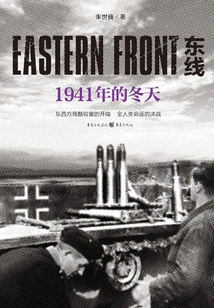
Eastern Front: Winter 1941
Military东线:1941年的冬天
Zhu Shiwei
The "Eastern Front" series of books is written by the famous military writer Mr. Zhu Shiwei. It comprehensively and in detail tells the entire process of the Soviet-German war in World War II. "Eastern Front: Winter of 1941" follows the previous part "Eastern Front: Autumn and Winter in Moscow". It mainly tells the story: On December 5, 1941, the Soviet army suddenly launched a large-scale counterattack on the Moscow front. The German army was caught off guard and retreated significantly. A few days later, the war between the United States and Japan broke out. While Hitler ordered the German troops on the Eastern Front to defend the front, he decided to declare war on the United States. The Soviet army exhausted its strength in the major counteroffensive that lasted for several months, and the Soviet and German armies suspended their fighting. At the same time, on the Crimean Peninsula, the German 11th Army also launched a fierce offensive and defensive battle with the Soviet army.
The "Eastern Front" series of books is written by the famous military writer Mr. Zhu Shiwei. It comprehensively and in detail tells the entire process of the Soviet-German war in World War II. "Eastern Front: Winter of 1941" follows the previous part "Eastern Front: Autumn and Winter in Moscow". It mainly tells the story: On December 5, 1941, the Soviet army suddenly launched a large-scale counterattack on the Moscow front. The German army was caught off guard and retreated significantly. A few days later, the war between the United States and Japan broke out. While Hitler ordered the German troops on the Eastern Front to defend the front, he decided to declare war on the United States. The Soviet army exhausted its strength in the major counteroffensive that lasted for several months, and the Soviet and German armies suspended their fighting. At the same time, on the Crimean Peninsula, the German 11th Army also launched a fierce offensive and defensive battle with the Soviet army.
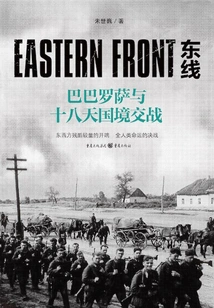
东线:巴巴罗萨与十八天国境交战
Zhu Shiwei
The "Eastern Front" series of books is written by the famous military writer Mr. Zhu Shiwei. It comprehensively and in detail tells the entire process of the Soviet-German war in World War II. "Eastern Front: Barbarossa and the Eighteen-Day Border War" mainly introduces the basic historical background of the Soviet-German War, the Soviet Union and Germany's respective war preparations, the Barbarossa Plan and the initial Eighteen-Day Border War of the Soviet-German War.
The "Eastern Front" series of books is written by the famous military writer Mr. Zhu Shiwei. It comprehensively and in detail tells the entire process of the Soviet-German war in World War II. "Eastern Front: Barbarossa and the Eighteen-Day Border War" mainly introduces the basic historical background of the Soviet-German War, the Soviet Union and Germany's respective war preparations, the Barbarossa Plan and the initial Eighteen-Day Border War of the Soviet-German War.
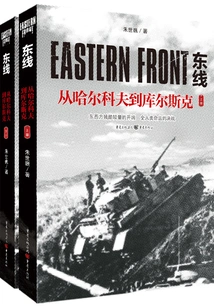
东线:从哈尔科夫到库尔斯克(上下册)
Zhu Shiwei
The "Eastern Front" series of books is written by the famous military writer Mr. Zhu Shiwei. It comprehensively and in detail tells the entire process of the Soviet-German war in World War II. "Eastern Front: From Kharkov to Kursk" tells the story of the war process in the southern part of the Soviet-German battlefield from the beginning of 1943 to the summer of that year after the Battle of Stalingrad. In early 1943, the German army suffered consecutive disastrous defeats in the southern part of the Eastern Front, and it was not until the counterattack in Kharkov that the German army stabilized its position. The Soviet-German battlefield thus ushered in a longer period of calm. As the war situation changed, both warring parties were considering how to end the war. A campaign was therefore needed to test the new balance of power. In the summer of 1943, the German army concentrated a huge armored force and launched the last strategic offensive in the Soviet-German War in Kursk, but it quickly failed. The Red Army took the opportunity to regain the Kharkov and Orel regions.
The "Eastern Front" series of books is written by the famous military writer Mr. Zhu Shiwei. It comprehensively and in detail tells the entire process of the Soviet-German war in World War II. "Eastern Front: From Kharkov to Kursk" tells the story of the war process in the southern part of the Soviet-German battlefield from the beginning of 1943 to the summer of that year after the Battle of Stalingrad. In early 1943, the German army suffered consecutive disastrous defeats in the southern part of the Eastern Front, and it was not until the counterattack in Kharkov that the German army stabilized its position. The Soviet-German battlefield thus ushered in a longer period of calm. As the war situation changed, both warring parties were considering how to end the war. A campaign was therefore needed to test the new balance of power. In the summer of 1943, the German army concentrated a huge armored force and launched the last strategic offensive in the Soviet-German War in Kursk, but it quickly failed. The Red Army took the opportunity to regain the Kharkov and Orel regions.
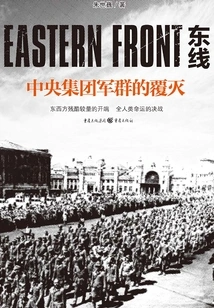
东线:中央集团军群的覆灭
Zhu Shiwei
This book follows the previous volume "Eastern Front: From Ukraine to Romania" and mainly introduces the Battle of Belarus in the summer of 1944. This battle directly led to the destruction of the German Army Group Center and was also one of the large-scale encirclement battles in the history of the Soviet-German War. Coupled with the beginning of Western armies entering the Western European continent, the total collapse of the German armed forces began. Under external pressure, a rebellion emerged within Germany but was suppressed.
This book follows the previous volume "Eastern Front: From Ukraine to Romania" and mainly introduces the Battle of Belarus in the summer of 1944. This battle directly led to the destruction of the German Army Group Center and was also one of the large-scale encirclement battles in the history of the Soviet-German War. Coupled with the beginning of Western armies entering the Western European continent, the total collapse of the German armed forces began. Under external pressure, a rebellion emerged within Germany but was suppressed.
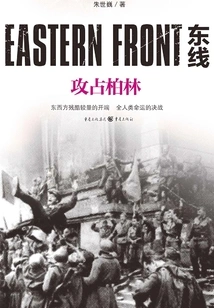
Eastern Front: Capture of Berlin
Military东线:攻占柏林
Zhu Shiwei
This book tells the story of the final stage of the war on the Eastern Front, when the Soviet army advanced in full force and directed its troops towards Berlin, until the final decisive battle in Berlin, where Hitler committed suicide. As the war came to an end, the competition for interests between the East and the West began to intensify, and a complex military and diplomatic situation emerged, which gave rise to the prototype of the post-war European order. The final outcome of each theater of war on the Eastern Front is reproduced from the smallest detail.
This book tells the story of the final stage of the war on the Eastern Front, when the Soviet army advanced in full force and directed its troops towards Berlin, until the final decisive battle in Berlin, where Hitler committed suicide. As the war came to an end, the competition for interests between the East and the West began to intensify, and a complex military and diplomatic situation emerged, which gave rise to the prototype of the post-war European order. The final outcome of each theater of war on the Eastern Front is reproduced from the smallest detail.
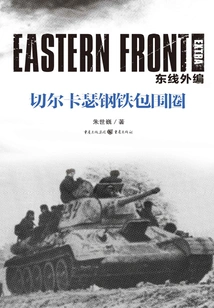
东线外编:切尔卡瑟钢铁包围圈
Zhu Shiwei
In the autumn and winter of 1943, since the Kursk Tank Battle, the Soviet army rapidly advanced in Ukraine, forcing Manstein's German Army Group South to retreat step by step. However, the Soviet army never got the chance to encircle and annihilate Manstein's heavily armed group. At the same time, Hitler transported Germany's most elite armored forces and a large number of the latest heavy tanks to Manstein to stabilize the situation on the southern battlefield on the Eastern Front. In Kiev and other places, Manstein launched a powerful armored counterattack, but failed. The Soviets continued their advance. In early 1944, in the Cherkasy area, the Soviet army finally seized a fighter opportunity and surrounded the two armies under Manstein's command. The so-called steel circle was formed. In order to save face, Manstein decided to make a desperate move and deploy the largest and most elite armored force to carry out the rescue. A rare tank battle unfolded on the winter snowfields. After the German army fought hard, although a large number of soldiers were rescued, the strongest armored corps of the German army on the Eastern Front lost its combat effectiveness. The balanced situation on the southern battlefield of the Eastern Front was completely broken. Having lost Hitler's trust, Manstein's military career would also come to an end. Since 1943, the technical advantages of German heavy armored forces were also lost in this battle. The Battle of Cherkasy has a unique and important position in a tactical sense. An in-depth understanding of this battle will help deepen our understanding of the Soviet and German military systems, tactics, and weapons usage. This volume provides a more detailed description of this winter tank battle than conventional volumes.
In the autumn and winter of 1943, since the Kursk Tank Battle, the Soviet army rapidly advanced in Ukraine, forcing Manstein's German Army Group South to retreat step by step. However, the Soviet army never got the chance to encircle and annihilate Manstein's heavily armed group. At the same time, Hitler transported Germany's most elite armored forces and a large number of the latest heavy tanks to Manstein to stabilize the situation on the southern battlefield on the Eastern Front. In Kiev and other places, Manstein launched a powerful armored counterattack, but failed. The Soviets continued their advance. In early 1944, in the Cherkasy area, the Soviet army finally seized a fighter opportunity and surrounded the two armies under Manstein's command. The so-called steel circle was formed. In order to save face, Manstein decided to make a desperate move and deploy the largest and most elite armored force to carry out the rescue. A rare tank battle unfolded on the winter snowfields. After the German army fought hard, although a large number of soldiers were rescued, the strongest armored corps of the German army on the Eastern Front lost its combat effectiveness. The balanced situation on the southern battlefield of the Eastern Front was completely broken. Having lost Hitler's trust, Manstein's military career would also come to an end. Since 1943, the technical advantages of German heavy armored forces were also lost in this battle. The Battle of Cherkasy has a unique and important position in a tactical sense. An in-depth understanding of this battle will help deepen our understanding of the Soviet and German military systems, tactics, and weapons usage. This volume provides a more detailed description of this winter tank battle than conventional volumes.
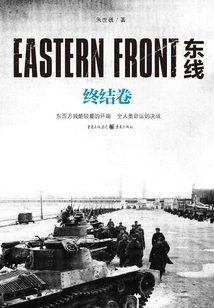
Eastern Front: the End Vol
Military东线:终结卷
Zhu Shiwei
The "Eastern Front" series of books is written by the famous military writer Mr. Zhu Shiwei. It comprehensively and in detail tells the entire process of the Soviet-German war in World War II. The book uses rich maps, tables and pictures, as well as concise and clean text expressions, to show the shocking bloody battles and the great transformation of offensive and defensive forces on the Soviet-German battlefield. As the final volume of the "Eastern Front" series, this book mainly tells the story: In August 1945, the Soviet army attacked the Japanese Kwantung Army in Northeast China. The Americans also dropped the atomic bomb, and Japan was in dire straits. The Japanese Kwantung Army laid down its weapons after suffering heavy losses. World War II was finally over. At the same time, the overt and covert struggle between China, the United States and Britain is also going on. The prototype of Asia's postwar order was established.
The "Eastern Front" series of books is written by the famous military writer Mr. Zhu Shiwei. It comprehensively and in detail tells the entire process of the Soviet-German war in World War II. The book uses rich maps, tables and pictures, as well as concise and clean text expressions, to show the shocking bloody battles and the great transformation of offensive and defensive forces on the Soviet-German battlefield. As the final volume of the "Eastern Front" series, this book mainly tells the story: In August 1945, the Soviet army attacked the Japanese Kwantung Army in Northeast China. The Americans also dropped the atomic bomb, and Japan was in dire straits. The Japanese Kwantung Army laid down its weapons after suffering heavy losses. World War II was finally over. At the same time, the overt and covert struggle between China, the United States and Britain is also going on. The prototype of Asia's postwar order was established.
东线:莫斯科的秋与冬
Zhu Shiwei
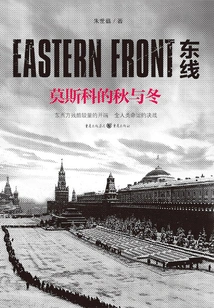
The "Eastern Front" series of books is written by the famous military writer Mr. Zhu Shiwei. It comprehensively and in detail tells the entire process of the Soviet-German war in World War II. "Eastern Front: Autumn and Winter in Moscow" follows the previous part "Eastern Front: The Vast Southern Land" and mainly introduces the changes in the war situation on the Eastern Front. As the war progressed from summer to autumn, the German army began to concentrate its efforts on capturing Moscow, the capital of the Soviet Union. Since the border battle, fierce fighting involving millions of people once again broke out in the history of the Soviet-German war. After the initial success of the German army, the offensive gradually came to a standstill.
The "Eastern Front" series of books is written by the famous military writer Mr. Zhu Shiwei. It comprehensively and in detail tells the entire process of the Soviet-German war in World War II. "Eastern Front: Autumn and Winter in Moscow" follows the previous part "Eastern Front: The Vast Southern Land" and mainly introduces the changes in the war situation on the Eastern Front. As the war progressed from summer to autumn, the German army began to concentrate its efforts on capturing Moscow, the capital of the Soviet Union. Since the border battle, fierce fighting involving millions of people once again broke out in the history of the Soviet-German war. After the initial success of the German army, the offensive gradually came to a standstill.
Eastern Front: Spring 1945
Military东线:1945年的春天
Zhu Shiwei
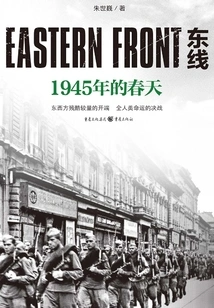
"Eastern Front: Spring of 1945" succeeds the previous part "Eastern Front: The Great Collapse" and mainly tells the panoramic view of the Eastern Front in the spring of 1945. Including campaigns in Poland, East Prussia, and Hungary. The German Polish group collapsed, the East Prussian group also struggled to its death, and Budapest was occupied by the Soviet army. In order to save the defeat, the German army concentrated its last elite armored forces and launched a counterattack in the Lake Balaton area, but it ended in a disastrous defeat. Soviet troops then occupied Vienna.
"Eastern Front: Spring of 1945" succeeds the previous part "Eastern Front: The Great Collapse" and mainly tells the panoramic view of the Eastern Front in the spring of 1945. Including campaigns in Poland, East Prussia, and Hungary. The German Polish group collapsed, the East Prussian group also struggled to its death, and Budapest was occupied by the Soviet army. In order to save the defeat, the German army concentrated its last elite armored forces and launched a counterattack in the Lake Balaton area, but it ended in a disastrous defeat. Soviet troops then occupied Vienna.
东线:决战第聂伯河
Zhu Shiwei
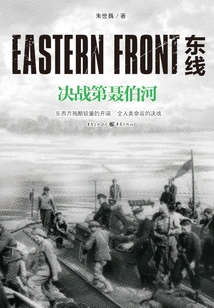
The "Eastern Front" series of books is written by the famous military writer Mr. Zhu Shiwei. It comprehensively and in detail tells the entire process of the Soviet-German war in World War II. "Eastern Front: The Decisive Battle of the Dnieper" follows the previous part "Eastern Front: From Kharkov to Kursk". It mainly tells the story of the summer and autumn of 1943. Following the German army's defeat in the Battle of Kursk, the Red Army began a major counterattack. The Dnieper River in the southern part of the Eastern Front became the main decisive battle area. At the same time, the Red Army on other fronts also launched an offensive. After the above-mentioned battles, the Red Army recovered Smolensk, Kiev, Donbass and the Taman Peninsula. The Soviet Union therefore strengthened its determination to end the war by force.
The "Eastern Front" series of books is written by the famous military writer Mr. Zhu Shiwei. It comprehensively and in detail tells the entire process of the Soviet-German war in World War II. "Eastern Front: The Decisive Battle of the Dnieper" follows the previous part "Eastern Front: From Kharkov to Kursk". It mainly tells the story of the summer and autumn of 1943. Following the German army's defeat in the Battle of Kursk, the Red Army began a major counterattack. The Dnieper River in the southern part of the Eastern Front became the main decisive battle area. At the same time, the Red Army on other fronts also launched an offensive. After the above-mentioned battles, the Red Army recovered Smolensk, Kiev, Donbass and the Taman Peninsula. The Soviet Union therefore strengthened its determination to end the war by force.
东线:大崩溃
Zhu Shiwei
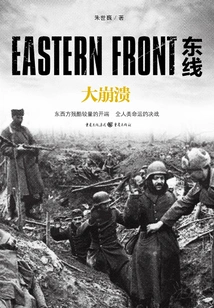
"Eastern Front: Collapse" tells the story of the Red Army's all-out offensive after the Battle of Belarus, including the battle in the Baltic Sea region, as well as the Soviet advance into southeastern Europe and the German mainland. Under the attack of the Soviet army, the German army suffered heavy losses in Poland. Its heavy troop group deployed in Romania was almost completely wiped out, and the Budapest group was surrounded. During the course of the war, Germany's allies betrayed one after another. This book analyzes the operational concept and process from both the German and Soviet perspectives, with detailed content and clear narrative.
"Eastern Front: Collapse" tells the story of the Red Army's all-out offensive after the Battle of Belarus, including the battle in the Baltic Sea region, as well as the Soviet advance into southeastern Europe and the German mainland. Under the attack of the Soviet army, the German army suffered heavy losses in Poland. Its heavy troop group deployed in Romania was almost completely wiped out, and the Budapest group was surrounded. During the course of the war, Germany's allies betrayed one after another. This book analyzes the operational concept and process from both the German and Soviet perspectives, with detailed content and clear narrative.
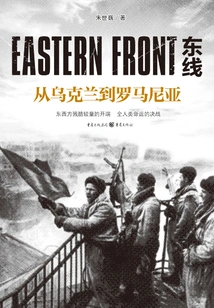
东线:从乌克兰到罗马尼亚
Zhu Shiwei
The "Eastern Front" series of books is written by the famous military writer Mr. Zhu Shiwei. It comprehensively and in detail tells the entire process of the Soviet-German war in World War II. "Eastern Front: From Ukraine to Romania" succeeds the previous part "Eastern Front: The Decisive Battle on the Dnieper River". It mainly tells the offensive launched by the Soviet Red Army in the first half of 1944, focusing on several encirclement battles in the southern part of the Eastern Front in the first half of the year. After these battles, the Soviet army regained Crimea and advanced into Romania, but a large number of sophisticated tanks of the German armored forces suffered irreparable damage. Huge contribution.
The "Eastern Front" series of books is written by the famous military writer Mr. Zhu Shiwei. It comprehensively and in detail tells the entire process of the Soviet-German war in World War II. "Eastern Front: From Ukraine to Romania" succeeds the previous part "Eastern Front: The Decisive Battle on the Dnieper River". It mainly tells the offensive launched by the Soviet Red Army in the first half of 1944, focusing on several encirclement battles in the southern part of the Eastern Front in the first half of the year. After these battles, the Soviet army regained Crimea and advanced into Romania, but a large number of sophisticated tanks of the German armored forces suffered irreparable damage. Huge contribution.
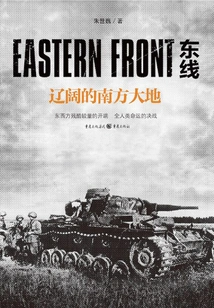
东线:辽阔的南方大地
Zhu Shiwei
The "Eastern Front" series of books is written by the famous military writer Mr. Zhu Shiwei. It comprehensively and in detail tells the entire process of the Soviet-German war in World War II. "Eastern Front: The Vast Southern Land" follows the previous part "Eastern Front: Barbarossa and the Battle of the Eighteen Heavenly Borders". It mainly tells the story of the German army's invasion of the Soviet Union after the end of the border war. Faced with the tenacious resistance of the Soviet army and the war situation in various places, the German high command held a fierce debate on the next step of the war. Finally, the focus of the decisive battles in the summer and autumn campaigns shifted from the center to the south, and the huge Smolensk and Kiev battles broke out one after another. Although the Germans won, they lost valuable time to attack Moscow. The pros and cons of this change in the direction of the battle are still debated in historians.
The "Eastern Front" series of books is written by the famous military writer Mr. Zhu Shiwei. It comprehensively and in detail tells the entire process of the Soviet-German war in World War II. "Eastern Front: The Vast Southern Land" follows the previous part "Eastern Front: Barbarossa and the Battle of the Eighteen Heavenly Borders". It mainly tells the story of the German army's invasion of the Soviet Union after the end of the border war. Faced with the tenacious resistance of the Soviet army and the war situation in various places, the German high command held a fierce debate on the next step of the war. Finally, the focus of the decisive battles in the summer and autumn campaigns shifted from the center to the south, and the huge Smolensk and Kiev battles broke out one after another. Although the Germans won, they lost valuable time to attack Moscow. The pros and cons of this change in the direction of the battle are still debated in historians.
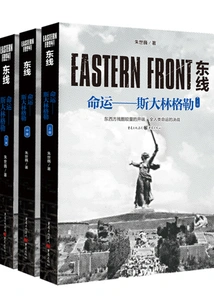
东线:命运:斯大林格勒(全三册)
Zhu Shiwei
The "Eastern Front" series of books is written by the famous military writer Mr. Zhu Shiwei. It comprehensively and in detail tells the entire process of the Soviet-German war in World War II. "Eastern Front: Destiny - Stalingrad" follows the previous part "Eastern Front: Winter of 1941". It mainly tells the story: After Germany's attack on Moscow failed in 1941, Hitler decided to change his strategy, adopt a local focus offensive approach, and formulated a 1942 summer offensive plan with the main goal of seizing the Caucasus oil fields and cutting off the communication lines in the central and southern Soviet Union. At the same time, the Soviet army suffered another disastrous defeat in Kharkov. The German army took advantage of the situation and implemented its summer strategy, advancing to Stalingrad and the Caucasus in one fell swoop. The Soviet and German armies fought fiercely in the crucial Stalingrad. After the street fighting, winter came, and the Soviet army counterattacked again, encircling and annihilating the German 6th Army.
The "Eastern Front" series of books is written by the famous military writer Mr. Zhu Shiwei. It comprehensively and in detail tells the entire process of the Soviet-German war in World War II. "Eastern Front: Destiny - Stalingrad" follows the previous part "Eastern Front: Winter of 1941". It mainly tells the story: After Germany's attack on Moscow failed in 1941, Hitler decided to change his strategy, adopt a local focus offensive approach, and formulated a 1942 summer offensive plan with the main goal of seizing the Caucasus oil fields and cutting off the communication lines in the central and southern Soviet Union. At the same time, the Soviet army suffered another disastrous defeat in Kharkov. The German army took advantage of the situation and implemented its summer strategy, advancing to Stalingrad and the Caucasus in one fell swoop. The Soviet and German armies fought fiercely in the crucial Stalingrad. After the street fighting, winter came, and the Soviet army counterattacked again, encircling and annihilating the German 6th Army.
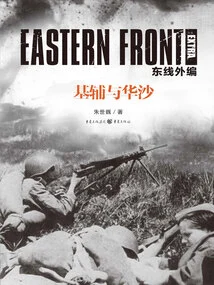
东线外编:基辅与华沙
Zhu Shiwei
In-depth and informative! Reproduce the classic battle of the Soviet-German front truly and objectively! The "Eastern Front Series" series of books depicting life-and-death battles on the battlefields of World War II was written by the famous military writer Mr. Zhu Shiwei. This series focuses on the battles that were of great significance on the Eastern Front battlefield, or that were typical and representative in World War II, and strive to restore the reality of the battlefield to the maximum extent. The book uses rich maps, tables and pictures, as well as concise and clean text expressions, to show every thought-provoking turning point on the Soviet-German battlefield. Ukraine and Poland were in an extremely delicate situation between the two superpowers in the Soviet-German war. Survival and struggle, sacrifice and compromise. From a contemporary perspective, the author makes an objective analysis and fair evaluation of the various judgments and choices made by all parties. Manstein fought in Kiev and Model fought in Warsaw. How did the two German marshals respond when they faced the same crisis...
In-depth and informative! Reproduce the classic battle of the Soviet-German front truly and objectively! The "Eastern Front Series" series of books depicting life-and-death battles on the battlefields of World War II was written by the famous military writer Mr. Zhu Shiwei. This series focuses on the battles that were of great significance on the Eastern Front battlefield, or that were typical and representative in World War II, and strive to restore the reality of the battlefield to the maximum extent. The book uses rich maps, tables and pictures, as well as concise and clean text expressions, to show every thought-provoking turning point on the Soviet-German battlefield. Ukraine and Poland were in an extremely delicate situation between the two superpowers in the Soviet-German war. Survival and struggle, sacrifice and compromise. From a contemporary perspective, the author makes an objective analysis and fair evaluation of the various judgments and choices made by all parties. Manstein fought in Kiev and Model fought in Warsaw. How did the two German marshals respond when they faced the same crisis...
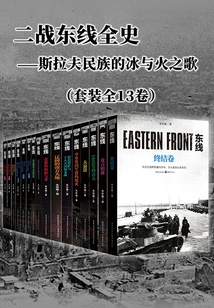
二战东线全史:斯拉夫民族的冰与火之歌(套装全13卷)
Zhu Shiwei
The "Eastern Front" series of books is written by the famous military writer Mr. Zhu Shiwei. It comprehensively and in detail tells the entire process of the Soviet-German war in World War II. The book uses rich maps, tables and pictures, as well as concise and clean text expressions, to show the shocking bloody battles and the great transformation of offensive and defensive forces on the Soviet-German battlefield. This set of books is the "Eastern Front" series, including: "Barbarossa and the Battle of the Eighteen Days", "The Vast Southern Land", "Autumn and Winter in Moscow", "Winter of 1941", "Fate - Stalingrad", "From Kharkov to Kursk", "The Decisive Battle of the Dnieper", "From Ukraine to Romania", "The Destruction of Army Group Center", "The Great Collapse", "Spring of 1945", "The Capture of Berlin" and "The Final Volume", a total of 13 volumes.
The "Eastern Front" series of books is written by the famous military writer Mr. Zhu Shiwei. It comprehensively and in detail tells the entire process of the Soviet-German war in World War II. The book uses rich maps, tables and pictures, as well as concise and clean text expressions, to show the shocking bloody battles and the great transformation of offensive and defensive forces on the Soviet-German battlefield. This set of books is the "Eastern Front" series, including: "Barbarossa and the Battle of the Eighteen Days", "The Vast Southern Land", "Autumn and Winter in Moscow", "Winter of 1941", "Fate - Stalingrad", "From Kharkov to Kursk", "The Decisive Battle of the Dnieper", "From Ukraine to Romania", "The Destruction of Army Group Center", "The Great Collapse", "Spring of 1945", "The Capture of Berlin" and "The Final Volume", a total of 13 volumes.