Library
Browse and search books
1 novel found
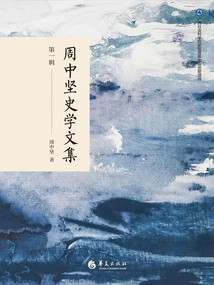
周中坚史学文集(第一辑)
Zhou Zhongjian
This book is the result of the author, Mr. Zhou Zhongjian, who has studied the history of Guangxi, the development of southwest China, and the Beibu Gulf Economic Circle for many years. The author takes historical materialism as the starting point for observing history, respects objective history, uses a scientific and rigorous attitude, and takes economic development and reform and opening up as the entry point for research issues. He discusses in detail the history and current situation of Guangxi, geographical environment and economic development, port construction and tourism development, showing readers a comprehensive and complete Guangxi. This book does not cover issues such as territorial history and boundaries. The book is divided into several parts: Guangxi history and culture, Guangxi coastal areas, Guangxi along the rivers, Guangxi transportation, Guangxi ecology, and Guangxi opening up. The articles included in this book have all been published or read at academic seminars. Many of them had great influence and positive feedback at the time, and were inspiring for the construction and development of the economic and cultural fields, such as "The Concept of the Beibu Gulf Economic Circle", "Developing the Charming Xijiang Scenic Corridor", "Strive to Make Guangxi a Strong Shipping Province", "Commonalities and Individuality of Guangxi's Coastal Areas", etc. Some of the ideas or suggestions may seem a bit outdated today, but they were all innovative ideas at the time and are inspiring to people today. The collection of manuscripts is not limited to academic papers, but also includes the author's remarks and reflections, which are highly readable.
This book is the result of the author, Mr. Zhou Zhongjian, who has studied the history of Guangxi, the development of southwest China, and the Beibu Gulf Economic Circle for many years. The author takes historical materialism as the starting point for observing history, respects objective history, uses a scientific and rigorous attitude, and takes economic development and reform and opening up as the entry point for research issues. He discusses in detail the history and current situation of Guangxi, geographical environment and economic development, port construction and tourism development, showing readers a comprehensive and complete Guangxi. This book does not cover issues such as territorial history and boundaries. The book is divided into several parts: Guangxi history and culture, Guangxi coastal areas, Guangxi along the rivers, Guangxi transportation, Guangxi ecology, and Guangxi opening up. The articles included in this book have all been published or read at academic seminars. Many of them had great influence and positive feedback at the time, and were inspiring for the construction and development of the economic and cultural fields, such as "The Concept of the Beibu Gulf Economic Circle", "Developing the Charming Xijiang Scenic Corridor", "Strive to Make Guangxi a Strong Shipping Province", "Commonalities and Individuality of Guangxi's Coastal Areas", etc. Some of the ideas or suggestions may seem a bit outdated today, but they were all innovative ideas at the time and are inspiring to people today. The collection of manuscripts is not limited to academic papers, but also includes the author's remarks and reflections, which are highly readable.