Library
Browse and search books
2 novels found
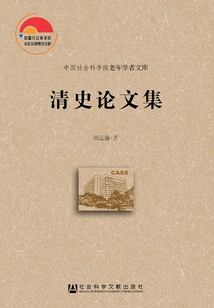
Essays on Qing History
History清史论文集
Zhou Yuanlian
This book makes full use of "Manwen Old Documents" to study the history of the founding period of the Qing Dynasty. It provides irrefutable historical materials and rigorous textual research to determine the nature of society at that time. It also comprehensively discusses the historical conditions, specific content and social functions of the Eight Banners system. It is the first to give a detailed description of the Eight Beile "co-governance" system and the Qing Taizu Nurhachi. In addition, the book also evaluates the young emperor Shunzhi.
This book makes full use of "Manwen Old Documents" to study the history of the founding period of the Qing Dynasty. It provides irrefutable historical materials and rigorous textual research to determine the nature of society at that time. It also comprehensively discusses the historical conditions, specific content and social functions of the Eight Banners system. It is the first to give a detailed description of the Eight Beile "co-governance" system and the Qing Taizu Nurhachi. In addition, the book also evaluates the young emperor Shunzhi.
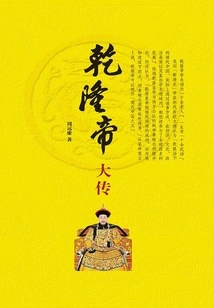
乾隆帝大传
Zhou Yuanlian
Emperor Qianlong was the sixth emperor of the Qing Dynasty and the fourth emperor after entering the Pass. He ascended the throne at the age of twenty-five and reigned for sixty years. After the throne, he served as the Supreme Emperor for three years and four months. He actually exercised the highest power of the country for sixty-three years and four months. He was the emperor who actually held the highest power of the country for the longest time in Chinese history and was also the longest-lived emperor in Chinese history. During his reign, the Qing Dynasty reached its highest peak since the heyday of Kangxi and Qianlong. On the basis of the cultural and military achievements of the Kangxi and Yongzheng dynasties, he further completed the unification of the multi-ethnic country, and further developed the social economy and culture. He attached great importance to social stability and cared about the people affected by disasters. During his reign, he exempted the world's money and grain five times, and exempted eight provinces' canal grain three times, which reduced the burden on farmers. He also attached great importance to water conservancy construction, which played a role in protecting agricultural production and enriched the Qing Dynasty's treasury. He was prosperous in martial arts and made great achievements in quelling rebellions in border areas. He maintained the country's unity and expanded its territory. He also improved his rule over Tibet and formally incorporated Xinjiang into China's territory. This maximized the territory of the Qing Dynasty. During his reign, folk art developed greatly, such as Peking Opera, which was formed during the Qianlong period. However, in the later period of his reign, he was extravagant, his administration was corrupt, and uprisings broke out in many places. Moreover, the policy of isolation from the country has reached its highest level, widening the gap with the West and causing a crisis in the rule of the Qing Dynasty. The literary prison was even more severe than during the Kangxi and Yongzheng periods. The book is divided into fifteen chapters, which objectively and fairly evaluates the merits and demerits of Emperor Qianlong's life. It is a work with relatively good academic standards among related works.
Emperor Qianlong was the sixth emperor of the Qing Dynasty and the fourth emperor after entering the Pass. He ascended the throne at the age of twenty-five and reigned for sixty years. After the throne, he served as the Supreme Emperor for three years and four months. He actually exercised the highest power of the country for sixty-three years and four months. He was the emperor who actually held the highest power of the country for the longest time in Chinese history and was also the longest-lived emperor in Chinese history. During his reign, the Qing Dynasty reached its highest peak since the heyday of Kangxi and Qianlong. On the basis of the cultural and military achievements of the Kangxi and Yongzheng dynasties, he further completed the unification of the multi-ethnic country, and further developed the social economy and culture. He attached great importance to social stability and cared about the people affected by disasters. During his reign, he exempted the world's money and grain five times, and exempted eight provinces' canal grain three times, which reduced the burden on farmers. He also attached great importance to water conservancy construction, which played a role in protecting agricultural production and enriched the Qing Dynasty's treasury. He was prosperous in martial arts and made great achievements in quelling rebellions in border areas. He maintained the country's unity and expanded its territory. He also improved his rule over Tibet and formally incorporated Xinjiang into China's territory. This maximized the territory of the Qing Dynasty. During his reign, folk art developed greatly, such as Peking Opera, which was formed during the Qianlong period. However, in the later period of his reign, he was extravagant, his administration was corrupt, and uprisings broke out in many places. Moreover, the policy of isolation from the country has reached its highest level, widening the gap with the West and causing a crisis in the rule of the Qing Dynasty. The literary prison was even more severe than during the Kangxi and Yongzheng periods. The book is divided into fifteen chapters, which objectively and fairly evaluates the merits and demerits of Emperor Qianlong's life. It is a work with relatively good academic standards among related works.