Library
Browse and search books
4 novels found
中国历代史学名著快读
Zhou Jiarong
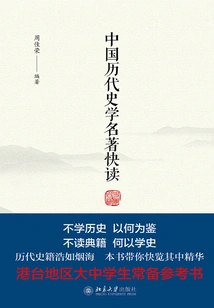
Based on the six periods of Pre-Qin, Han, Wei, Jin, Southern and Northern Dynasties, Tang Dynasty, Song and Yuan, and Qing Dynasty, the book explains the important historical masterpieces of the past dynasties, including the "Four Histories", "Three Links" and historical reviews. In addition to describing the life of the compiler, the process of writing the book, the content and style, and historical evaluation, it also includes a variety of related classics, either as supplements or for comparison, in order to show the general appearance of ancient Chinese historiography in an orderly manner. The discussion content in this book strives to be as complex and concise as possible, while trying to refer to recent research results. Important items are illustrated with diagrams, and each chapter is annotated. Classic texts from historical books are also attached as reading materials. References are attached at the end of the book, which can serve as clues for readers to further read.
Based on the six periods of Pre-Qin, Han, Wei, Jin, Southern and Northern Dynasties, Tang Dynasty, Song and Yuan, and Qing Dynasty, the book explains the important historical masterpieces of the past dynasties, including the "Four Histories", "Three Links" and historical reviews. In addition to describing the life of the compiler, the process of writing the book, the content and style, and historical evaluation, it also includes a variety of related classics, either as supplements or for comparison, in order to show the general appearance of ancient Chinese historiography in an orderly manner. The discussion content in this book strives to be as complex and concise as possible, while trying to refer to recent research results. Important items are illustrated with diagrams, and each chapter is annotated. Classic texts from historical books are also attached as reading materials. References are attached at the end of the book, which can serve as clues for readers to further read.

潮流两岸:近代香港的人和事
Zhou Jiarong
This book starts with Hong Kong's status in domestic and foreign transportation and maritime undertakings, and details the visits of celebrities to Hong Kong and their cultural and educational activities in modern times. It demonstrates that Hong Kong pioneered modern Asian trends and connected regional networks in the fields of books and periodicals, translation, language, news, and political activities. Divided into three volumes, the book explains Hong Kong's unique role in modern China and Asia from the perspective of "people and things".
This book starts with Hong Kong's status in domestic and foreign transportation and maritime undertakings, and details the visits of celebrities to Hong Kong and their cultural and educational activities in modern times. It demonstrates that Hong Kong pioneered modern Asian trends and connected regional networks in the fields of books and periodicals, translation, language, news, and political activities. Divided into three volumes, the book explains Hong Kong's unique role in modern China and Asia from the perspective of "people and things".
明清小说历史与文学之间
Zhou Jiarong
Chinese classical novels are mostly based on historical events from past dynasties, and then adapted with literary techniques, affecting the world and people's hearts and reflecting social changes. The book combines literature and history, and combines the charts organized by the author to analyze the relationship between historical turning points and the transformation of novel forms in the Ming and Qing Dynasties, and how to use the novel itself as a reference material for historical research. It is an indispensable introductory book for understanding the novels of the Ming and Qing Dynasties and their development history.
Chinese classical novels are mostly based on historical events from past dynasties, and then adapted with literary techniques, affecting the world and people's hearts and reflecting social changes. The book combines literature and history, and combines the charts organized by the author to analyze the relationship between historical turning points and the transformation of novel forms in the Ming and Qing Dynasties, and how to use the novel itself as a reference material for historical research. It is an indispensable introductory book for understanding the novels of the Ming and Qing Dynasties and their development history.
中国历代史学名著快读
Zhou Jiarong
Based on the six periods of Pre-Qin, Han, Wei, Jin, Southern and Northern Dynasties, Tang Dynasty, Song and Yuan, and Qing Dynasty, the book elaborates on the important historical masterpieces of the past dynasties, including the "Four Histories", "Three Communications", and historical reviews. In addition to introducing the life of the compiler, the process of writing the book, the content and style, and historical evaluation, it also refers to a variety of related classics, either as supplements or for comparison, in order to present the general appearance of ancient Chinese historiography in an orderly manner. The content of the discussion should be as complex and concise as possible, while trying to refer to recent research results. Important items are explained with tables, and each chapter has annotations, which can be read with selected passages from historical classics. A bibliography is attached at the end of the book, which can serve as clues for further reading.
Based on the six periods of Pre-Qin, Han, Wei, Jin, Southern and Northern Dynasties, Tang Dynasty, Song and Yuan, and Qing Dynasty, the book elaborates on the important historical masterpieces of the past dynasties, including the "Four Histories", "Three Communications", and historical reviews. In addition to introducing the life of the compiler, the process of writing the book, the content and style, and historical evaluation, it also refers to a variety of related classics, either as supplements or for comparison, in order to present the general appearance of ancient Chinese historiography in an orderly manner. The content of the discussion should be as complex and concise as possible, while trying to refer to recent research results. Important items are explained with tables, and each chapter has annotations, which can be read with selected passages from historical classics. A bibliography is attached at the end of the book, which can serve as clues for further reading.