Library
Browse and search books
12 novels found

Divided Village
General Fiction分裂的村庄
Zhou Jianxin
Lao Huo stood on the roof, looking down at the whole village, his neck stretched like a giraffe, his head turned into a snail, and he was making small calculations in his heart. In fact, Lao Huo didn't need to clumsily climb up to the house, nor did he need to stretch his neck to look around. He has never left the village for half his life. He has been the village chief for more than ten years, and his family is as transparent as glass. He could know the brand of someone's door lock, where the water tank was placed, how many teeth the child had, and how many times the man had hemorrhoids. Even if someone's old lady becomes famous, he can't hide it from him, let alone if someone buys a TV, buys a pet dog, and sells several kilograms of food, it will definitely reach his ears in less than half an hour.
Lao Huo stood on the roof, looking down at the whole village, his neck stretched like a giraffe, his head turned into a snail, and he was making small calculations in his heart. In fact, Lao Huo didn't need to clumsily climb up to the house, nor did he need to stretch his neck to look around. He has never left the village for half his life. He has been the village chief for more than ten years, and his family is as transparent as glass. He could know the brand of someone's door lock, where the water tank was placed, how many teeth the child had, and how many times the man had hemorrhoids. Even if someone's old lady becomes famous, he can't hide it from him, let alone if someone buys a TV, buys a pet dog, and sells several kilograms of food, it will definitely reach his ears in less than half an hour.
Friend, What Can I Give You?
Literature朋友,我能给你什么
Zhou Jianxin
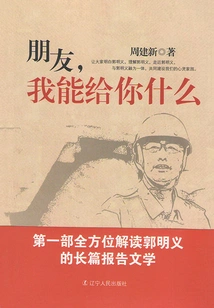
If we say he is poor, he is indeed poor, so poor that his family is almost completely destitute. If we say he is rich, he is indeed rich. He is one of the few spiritual rich men in the world. He had no power or money, but with a wave of his arms, thousands of people joined him in donating blood, money and love. This is a value he has created over decades and has been widely recognized. Guo Mingyi's growth process makes me think deeply, reflect and savor. If what Guo Mingyi did 30 years ago, it would have seemed ordinary, because it was fashionable to imitate Lei Feng at that time, but Guo Mingyi can persist to this day, being independent and independent, and leading a team of tens of thousands of people. It is really incredible. This is not just perseverance, but an unshakable belief. On the other hand, we can think in reverse. We have described Guo Mingyi's life for nearly half a century. Has he done anything earth-shattering? No. His perseverance makes each of us feel ashamed. Mencius said: "Everyone can become Yao and Shun." I think that if you put your mind down and go down-to-earth, everyone can become Guo Mingyi.
If we say he is poor, he is indeed poor, so poor that his family is almost completely destitute. If we say he is rich, he is indeed rich. He is one of the few spiritual rich men in the world. He had no power or money, but with a wave of his arms, thousands of people joined him in donating blood, money and love. This is a value he has created over decades and has been widely recognized. Guo Mingyi's growth process makes me think deeply, reflect and savor. If what Guo Mingyi did 30 years ago, it would have seemed ordinary, because it was fashionable to imitate Lei Feng at that time, but Guo Mingyi can persist to this day, being independent and independent, and leading a team of tens of thousands of people. It is really incredible. This is not just perseverance, but an unshakable belief. On the other hand, we can think in reverse. We have described Guo Mingyi's life for nearly half a century. Has he done anything earth-shattering? No. His perseverance makes each of us feel ashamed. Mencius said: "Everyone can become Yao and Shun." I think that if you put your mind down and go down-to-earth, everyone can become Guo Mingyi.
Xianglu Mountain
General Fiction香炉山
Zhou Jianxin
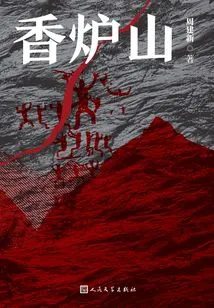
The novel "Xianglu Mountain" is a companion piece to Zhou Jianxin's novel "Jinxi Wei". The novel describes the Northeast during the Anti-Japanese War, and tells the touching story of the fathers of western Liaoning who grew up tenaciously and defended the country passionately. There are songs and tears about the vast history, concern, and compassion and tenderness. What is protected here is not only land and life, but also culture and blood. The heroes here are not limited to soldiers, but also elders from their hometown and various characters. They sang "Ballad of the Great Wall", embodying the spirit of "the more difficult and dangerous the situation, the farther forward". This group of generous and protective people, with the weight and breadth of the Northeast, created a historical legend.
The novel "Xianglu Mountain" is a companion piece to Zhou Jianxin's novel "Jinxi Wei". The novel describes the Northeast during the Anti-Japanese War, and tells the touching story of the fathers of western Liaoning who grew up tenaciously and defended the country passionately. There are songs and tears about the vast history, concern, and compassion and tenderness. What is protected here is not only land and life, but also culture and blood. The heroes here are not limited to soldiers, but also elders from their hometown and various characters. They sang "Ballad of the Great Wall", embodying the spirit of "the more difficult and dangerous the situation, the farther forward". This group of generous and protective people, with the weight and breadth of the Northeast, created a historical legend.
Peaceful Rice (zi Wan Du Ku·liaoning Ship)
General Fiction平安稻谷(字码头读库·辽宁舰)
Zhou Jianxin
This collection contains 8 short stories and short stories by the author, focusing on the display of regional cultural customs in western Liaoning, covering various themes such as history and reality, towns and fishing villages. Zhou Jianxin's novels are highly accomplished in language, either sad and sad, or concise and capable. They are good at capturing the subtle and wonderful heartbeat of every living life, expressing the anxiety and melancholy of the human spiritual world. They may use intellectual thinking to polish the fire of hope and thoughts from tragedy, express uncompromising criticism of the characters' living conditions, or use poetic rendering to express the poignancy and helplessness of human nature, and try to seek comfort from the poignancy and warm the soul with the light of idealism.
This collection contains 8 short stories and short stories by the author, focusing on the display of regional cultural customs in western Liaoning, covering various themes such as history and reality, towns and fishing villages. Zhou Jianxin's novels are highly accomplished in language, either sad and sad, or concise and capable. They are good at capturing the subtle and wonderful heartbeat of every living life, expressing the anxiety and melancholy of the human spiritual world. They may use intellectual thinking to polish the fire of hope and thoughts from tragedy, express uncompromising criticism of the characters' living conditions, or use poetic rendering to express the poignancy and helplessness of human nature, and try to seek comfort from the poignancy and warm the soul with the light of idealism.

Not a Single Shot of Blood
General Fiction一针不见血
Zhou Jianxin
The county magistrate disappeared so completely that the driver and his family were nowhere to be found. For a whole week, there was no news. The county magistrate's wife came from the city, crying so hard that her eyes were like rotten peaches, and she asked the county party secretary Ding Abo for help. Secretary Ding was also confused. The county magistrate had always been well-behaved. He handled things in a disciplined manner. He always said hello when he went out for inspections. Why did he suddenly disappear this time? Also missing with the county magistrate was the county magistrate's secretary. I have called them probably ten thousand times, but my cell phone has never been able to answer the call. As a result, various speculations and rumors arose and spread to every corner of the county. A week later, the secretary came back exhausted and brought back a shocking news. The county magistrate couldn't bear the pressure of work and suffered a psychological breakdown. He left his secretary who had been accompanying him and a piece of resignation letter and disappeared.
The county magistrate disappeared so completely that the driver and his family were nowhere to be found. For a whole week, there was no news. The county magistrate's wife came from the city, crying so hard that her eyes were like rotten peaches, and she asked the county party secretary Ding Abo for help. Secretary Ding was also confused. The county magistrate had always been well-behaved. He handled things in a disciplined manner. He always said hello when he went out for inspections. Why did he suddenly disappear this time? Also missing with the county magistrate was the county magistrate's secretary. I have called them probably ten thousand times, but my cell phone has never been able to answer the call. As a result, various speculations and rumors arose and spread to every corner of the county. A week later, the secretary came back exhausted and brought back a shocking news. The county magistrate couldn't bear the pressure of work and suffered a psychological breakdown. He left his secretary who had been accompanying him and a piece of resignation letter and disappeared.
Rich Family
General Fiction大户人家
Zhou Jianxin
Zhang Baichuan became a giant in the construction industry, and he also "killed" from the countryside to the city to become a wealthy family. A wealthy family is full of quarrels and quarrels: Zhang Baichuan tricks his little secret, and his wife suddenly becomes jealous; the eldest daughter-in-law Chun Yan guards her crazy husband, and hearing a shout outside the window suddenly awakens her desire to be a woman; He was distraught, but was involved in the corruption case of government officials; the little Wuhu suffered a lot for a little bit of dignity... From this, the big family unfolded many real-life problems that thousands of families had encountered before, revealing the various behaviors and mentality of contemporary people that are praiseworthy, resentful, hateful, and lamentable, and enlightening people to think: After becoming rich, what do people still lack?
Zhang Baichuan became a giant in the construction industry, and he also "killed" from the countryside to the city to become a wealthy family. A wealthy family is full of quarrels and quarrels: Zhang Baichuan tricks his little secret, and his wife suddenly becomes jealous; the eldest daughter-in-law Chun Yan guards her crazy husband, and hearing a shout outside the window suddenly awakens her desire to be a woman; He was distraught, but was involved in the corruption case of government officials; the little Wuhu suffered a lot for a little bit of dignity... From this, the big family unfolded many real-life problems that thousands of families had encountered before, revealing the various behaviors and mentality of contemporary people that are praiseworthy, resentful, hateful, and lamentable, and enlightening people to think: After becoming rich, what do people still lack?

Love is Boundless
General Fiction大爱无边
Zhou Jianxin
Zhou Jianxin, male, Manchu, first-class writer, was born in Xingcheng, Liaoning Province in the winter of 1963. He has published 8 novels including "Laotan", and more than 100 short and medium-sized novels in literary journals such as "Contemporary" and "October". His works have been reprinted many times in "Novel Monthly", "Selected Novels", "Xinhua Digest", etc., And he has won the Liaoning Literature Award many times. He has won the National Horse Award and the Liaoning Outstanding Young Writer Award. Currently working for Liaoning Huludao Federation of Literary and Art Circles. It is not difficult for one person to move a few people, but what is difficult is to move thousands of people. It is not difficult for a person to make a few contributions. What is difficult is to only make contributions throughout his life and not ask for anything. It is not difficult for a person to get a few praises. What is difficult is to receive unanimous praise without any noise.
Zhou Jianxin, male, Manchu, first-class writer, was born in Xingcheng, Liaoning Province in the winter of 1963. He has published 8 novels including "Laotan", and more than 100 short and medium-sized novels in literary journals such as "Contemporary" and "October". His works have been reprinted many times in "Novel Monthly", "Selected Novels", "Xinhua Digest", etc., And he has won the Liaoning Literature Award many times. He has won the National Horse Award and the Liaoning Outstanding Young Writer Award. Currently working for Liaoning Huludao Federation of Literary and Art Circles. It is not difficult for one person to move a few people, but what is difficult is to move thousands of people. It is not difficult for a person to make a few contributions. What is difficult is to only make contributions throughout his life and not ask for anything. It is not difficult for a person to get a few praises. What is difficult is to receive unanimous praise without any noise.

Wolfsbane (short Story)
General Fiction瑞香狼毒(短篇小说)
Zhou Jianxin
Han Moru thought for a moment and said slowly, the child's name should be Tianci, and his surname is Han. A smile finally appeared on her daughter's face. Early the next morning, a truck parked in front of Han Moru's house, loaded with all the medicinal materials and utensils in the house, and the three members of the Han family, and drove to a distant place. A cage was tied to the roof of the truck. The wind was blowing fiercely, constantly pulling out the remaining feathers of the rooster. The bald-tailed rooster huddled up, forgetting to crow and scream. In the rearview mirror, the image of my hometown is getting smaller and smaller, becoming more and more blurry. It has been almost eighty years since his feet had grown old tree roots here. He just waited to die and be laid to rest. However, unexpectedly, the roots were uprooted overnight and he suddenly left.
Han Moru thought for a moment and said slowly, the child's name should be Tianci, and his surname is Han. A smile finally appeared on her daughter's face. Early the next morning, a truck parked in front of Han Moru's house, loaded with all the medicinal materials and utensils in the house, and the three members of the Han family, and drove to a distant place. A cage was tied to the roof of the truck. The wind was blowing fiercely, constantly pulling out the remaining feathers of the rooster. The bald-tailed rooster huddled up, forgetting to crow and scream. In the rearview mirror, the image of my hometown is getting smaller and smaller, becoming more and more blurry. It has been almost eighty years since his feet had grown old tree roots here. He just waited to die and be laid to rest. However, unexpectedly, the roots were uprooted overnight and he suddenly left.

Family Affairs, State Affairs, Ningyuan Affairs
General Fiction家事国事宁远事
Zhou Jianxin
When I pushed open the back door of my grandma's house, I was greeted by the blue-grey city walls. My field of vision was completely blocked, and I was extremely small. Passing by the layers of stone and blue bricks, looking up, the sky is squeezed very narrowly. Throwing my head to the east, my eyes ran along the city wall, and were intercepted by the prominent Yanhui Gate (South City Gate) and the round Wengcheng. The desolate strength stayed in my eyes. There are no doors or windows on the city gate tower, only the mottled red door frame is left. The north and south winds flow freely, whistling the sound of winter. On the herringbone roof, withered yellow thatch is stuck in the cracks of the tiles one after another, swaying left and right in the wind. This is the ancient city of Ningyuan more than forty years ago. At that time, Xingcheng was still a small city, and the people in the city were limited to the city walls, which were less than two kilometers in radius. Outside the city gate, known as the Four Passes, there are sparse houses, inhabited by non-farmers, vegetable farmers and farmers.
When I pushed open the back door of my grandma's house, I was greeted by the blue-grey city walls. My field of vision was completely blocked, and I was extremely small. Passing by the layers of stone and blue bricks, looking up, the sky is squeezed very narrowly. Throwing my head to the east, my eyes ran along the city wall, and were intercepted by the prominent Yanhui Gate (South City Gate) and the round Wengcheng. The desolate strength stayed in my eyes. There are no doors or windows on the city gate tower, only the mottled red door frame is left. The north and south winds flow freely, whistling the sound of winter. On the herringbone roof, withered yellow thatch is stuck in the cracks of the tiles one after another, swaying left and right in the wind. This is the ancient city of Ningyuan more than forty years ago. At that time, Xingcheng was still a small city, and the people in the city were limited to the city walls, which were less than two kilometers in radius. Outside the city gate, known as the Four Passes, there are sparse houses, inhabited by non-farmers, vegetable farmers and farmers.

Tiny Little Band
General Fiction小不点儿乐队
Zhou Jianxin
Wuhu ran away from home one morning in late autumn. Wuhu was wearing a small evening dress, a snow-white bow tie, and his sparse yellow hair was combed smoothly. He carried his luggage and walked out of the house like a little prince in a fairy tale. He bid farewell to his splendid two-story building calmly and unnoticed. He took a pair of short legs and walked out of Dingye Xingcun Wuhu. When he left Ye Xingcun, he didn't feel the sadness of running away from home at all. He walked out with a smile as usual, singing a song he made up as he walked: Wild flowers bloom on the wild apricot trees, jellyfish are born without mother, grapes climb the gourd frame, no wonder the seedlings don't bear melons, they walked out of the three or four miles of loess road, stepped onto the asphalt road, Wuhu, walked all the way, and plunged into the crowds of people waiting for the train.
Wuhu ran away from home one morning in late autumn. Wuhu was wearing a small evening dress, a snow-white bow tie, and his sparse yellow hair was combed smoothly. He carried his luggage and walked out of the house like a little prince in a fairy tale. He bid farewell to his splendid two-story building calmly and unnoticed. He took a pair of short legs and walked out of Dingye Xingcun Wuhu. When he left Ye Xingcun, he didn't feel the sadness of running away from home at all. He walked out with a smile as usual, singing a song he made up as he walked: Wild flowers bloom on the wild apricot trees, jellyfish are born without mother, grapes climb the gourd frame, no wonder the seedlings don't bear melons, they walked out of the three or four miles of loess road, stepped onto the asphalt road, Wuhu, walked all the way, and plunged into the crowds of people waiting for the train.
Jinxiwei
General Fiction锦西卫
Zhou Jianxin
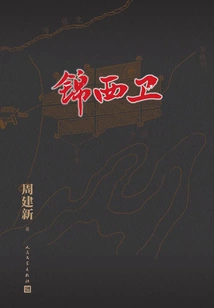
"Wei" refers to the military establishment of the Ming Dynasty. There was no Jinxi Guard in history. This article uses the place name establishment of "Wei" to recreate the group of passionate and heroic warriors who resisted Japan in Jinxi 80 years ago, resurrecting various characters such as craftsmen, bandits, county magistrates, sharpshooters, squires, spies, and Japanese soldiers. The language is vivid, the fate is wonderful, the tear between the soul and reality, the era and regional color of the scene are used to highlight the bloody life of a land and a land where people generously went to the national disaster, with epic songs and cries. After the starting point of the Anti-Japanese War was changed to September 18th, the author resurrected a group of vivid and tragic lives after years of field visits, and used literature to erect statues of this era for the tragic figures in national history and county annals.
"Wei" refers to the military establishment of the Ming Dynasty. There was no Jinxi Guard in history. This article uses the place name establishment of "Wei" to recreate the group of passionate and heroic warriors who resisted Japan in Jinxi 80 years ago, resurrecting various characters such as craftsmen, bandits, county magistrates, sharpshooters, squires, spies, and Japanese soldiers. The language is vivid, the fate is wonderful, the tear between the soul and reality, the era and regional color of the scene are used to highlight the bloody life of a land and a land where people generously went to the national disaster, with epic songs and cries. After the starting point of the Anti-Japanese War was changed to September 18th, the author resurrected a group of vivid and tragic lives after years of field visits, and used literature to erect statues of this era for the tragic figures in national history and county annals.
动荡的围龙屋:一个客家宗族的城市化遭遇与文化抗争
Zhou Jianxin
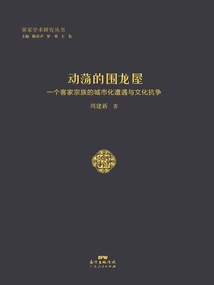
This book mainly tells about the fate of the Weilongwu ancient building, which is the spatial carrier of the ancestral hall and ancestral house of the Hakka people in eastern Guangdong, facing urban demolition, and the Hakka people's reactions, attitudes and actions in this regard. The book integrates ethnology, anthropology, Hakka and other multi-disciplinary theoretical methods, adopts the research path of "process-event analysis" and the analytical framework of "mutual construction in cultural resistance", and focuses on explaining the reasons and processes of the protection of dragon houses and the protection of historical and cultural heritage initiated by the Hakka clan in response to urban demolition. , Characteristics and social and cultural significance, it deeply analyzes issues such as Hakka clan society and modern changes, cultural protection and modernization, explores the psychological activities, behavioral patterns and strategic means behind cultural resistance, and responds to ethnology and anthropology on the research and protection of traditional culture, ethnic culture and identity and other themes. The book is divided into ten chapters and is accompanied by a large amount of survey data and charts. This book was published by China Social Sciences Press in 2006. This reprint includes several new book reviews, totaling about 350,000 words. This book won the first prize of the 12th Jiangxi Province Social Science Outstanding Achievements Award and is the only first prize winner in its discipline.
This book mainly tells about the fate of the Weilongwu ancient building, which is the spatial carrier of the ancestral hall and ancestral house of the Hakka people in eastern Guangdong, facing urban demolition, and the Hakka people's reactions, attitudes and actions in this regard. The book integrates ethnology, anthropology, Hakka and other multi-disciplinary theoretical methods, adopts the research path of "process-event analysis" and the analytical framework of "mutual construction in cultural resistance", and focuses on explaining the reasons and processes of the protection of dragon houses and the protection of historical and cultural heritage initiated by the Hakka clan in response to urban demolition. , Characteristics and social and cultural significance, it deeply analyzes issues such as Hakka clan society and modern changes, cultural protection and modernization, explores the psychological activities, behavioral patterns and strategic means behind cultural resistance, and responds to ethnology and anthropology on the research and protection of traditional culture, ethnic culture and identity and other themes. The book is divided into ten chapters and is accompanied by a large amount of survey data and charts. This book was published by China Social Sciences Press in 2006. This reprint includes several new book reviews, totaling about 350,000 words. This book won the first prize of the 12th Jiangxi Province Social Science Outstanding Achievements Award and is the only first prize winner in its discipline.