Library
Browse and search books
13 novels found
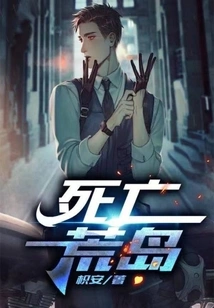
死亡荒岛
Zhi'an
The game rules of Desert Island of Death are cruel and extreme. How can we escape from the cruel competition?
The game rules of Desert Island of Death are cruel and extreme. How can we escape from the cruel competition?
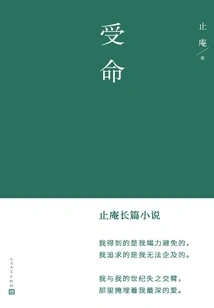
Ordered
General Fiction受命
Zhi'an
"Entrusted" is Zhi'an's first novel. The story of the novel takes place in Beijing in the 1980s. Two young people, Bing Feng and Ye Sheng, who have just graduated from university, meet at a poetry recital. Because of their common hobbies, the two young people started visiting bookstores, walking in alleys, and talking about literature. But as the relationship continues to deepen, what lies between the two are some ancient grievances between their parents. Bing Feng carries such a secret with him every day. Facing the lively and cheerful Ye Sheng, he finds it difficult to let go and continue to interact with him. The story unfolds in the ups and downs of these tangled emotions and intertwined lives, and is also interspersed with the branch line of brother Bingfeng and brother Ye Sheng going south to Shenzhen to start a business. When Zhi'an was writing this novel, in order to truly restore the streets and alleys of Beijing in 1986 and the social atmosphere at that time, he went to the library to read newspapers and maps, and did two years of research. Therefore, it can also be said that this novel shows a period of days and nights in Beijing in the 1980s.
"Entrusted" is Zhi'an's first novel. The story of the novel takes place in Beijing in the 1980s. Two young people, Bing Feng and Ye Sheng, who have just graduated from university, meet at a poetry recital. Because of their common hobbies, the two young people started visiting bookstores, walking in alleys, and talking about literature. But as the relationship continues to deepen, what lies between the two are some ancient grievances between their parents. Bing Feng carries such a secret with him every day. Facing the lively and cheerful Ye Sheng, he finds it difficult to let go and continue to interact with him. The story unfolds in the ups and downs of these tangled emotions and intertwined lives, and is also interspersed with the branch line of brother Bingfeng and brother Ye Sheng going south to Shenzhen to start a business. When Zhi'an was writing this novel, in order to truly restore the streets and alleys of Beijing in 1986 and the social atmosphere at that time, he went to the library to read newspapers and maps, and did two years of research. Therefore, it can also be said that this novel shows a period of days and nights in Beijing in the 1980s.
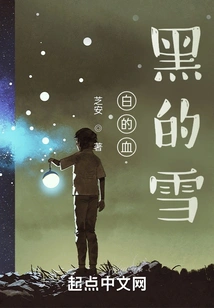
White Blood, Black Snow
Science Fiction白的血,黑的雪
Zhi'an
A beautiful young girl turned into a black invisible man. An ancient medical document was mysteriously lost. Can a metal from outer space cure humans, or cholera? In the vast universe, will that mysterious energy change the world or reduce it to ruins?
A beautiful young girl turned into a black invisible man. An ancient medical document was mysteriously lost. Can a metal from outer space cure humans, or cholera? In the vast universe, will that mysterious energy change the world or reduce it to ruins?
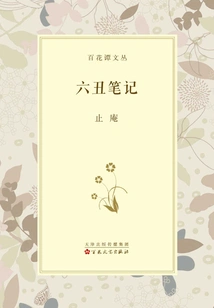
Six Ugly Notes
Literature六丑笔记
Zhi'an
"Six Ugly Notes" is a collection of essays written by Mr. Zhi'an, a famous contemporary prose writer. It shows the author's many years of reading and writing experience, spanning ancient and modern times, and integrating Chinese and foreign works. The discussion covers the works of Zhou Zuoren, Fei Ming, Qian Zhongshu, Borges, Kawabata Yasunari and other domestic and foreign masters. The essays and theories are rich in speculation, and the casual talk is broken, providing literature lovers with new ideas for prose study.
"Six Ugly Notes" is a collection of essays written by Mr. Zhi'an, a famous contemporary prose writer. It shows the author's many years of reading and writing experience, spanning ancient and modern times, and integrating Chinese and foreign works. The discussion covers the works of Zhou Zuoren, Fei Ming, Qian Zhongshu, Borges, Kawabata Yasunari and other domestic and foreign masters. The essays and theories are rich in speculation, and the casual talk is broken, providing literature lovers with new ideas for prose study.
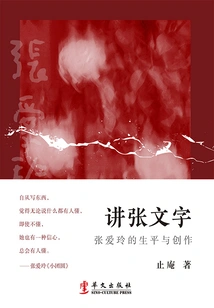
讲张文字:张爱玲的生平与创作
Zhi'an
Zhi'an is a well-known expert on Zhang Ailing in China and has edited the simplified Chinese version of "The Complete Works of Zhang Ailing". This book selects Zhi'an's research articles on Zhang Ailing in the past twenty years, and is the first collection of such works. The discussion is practical and in-depth, and there is much that others have not said; the author is also a master of prose, and his writing is exquisite and elegant. It is not an exaggeration to call him "gentle and elegant". The collection includes "The Differences of Zhang Ailing's Literature", "Zhang Ailing's Cruel Beauty", "Postscript", "Character Illustrations", "Floating Life Is Only for Little Reunion", "Revisiting", "The Skills of Female Writer Sheng Jiuli", "With", "Zhang Ailing and Visual Art", "About "Nan Ling Beimei"", "Review of the Manuscript of "Little Reunion"", "Review of the Manuscript of "Border Town Revisited"", etc., Totaling nearly 100,000 words.
Zhi'an is a well-known expert on Zhang Ailing in China and has edited the simplified Chinese version of "The Complete Works of Zhang Ailing". This book selects Zhi'an's research articles on Zhang Ailing in the past twenty years, and is the first collection of such works. The discussion is practical and in-depth, and there is much that others have not said; the author is also a master of prose, and his writing is exquisite and elegant. It is not an exaggeration to call him "gentle and elegant". The collection includes "The Differences of Zhang Ailing's Literature", "Zhang Ailing's Cruel Beauty", "Postscript", "Character Illustrations", "Floating Life Is Only for Little Reunion", "Revisiting", "The Skills of Female Writer Sheng Jiuli", "With", "Zhang Ailing and Visual Art", "About "Nan Ling Beimei"", "Review of the Manuscript of "Little Reunion"", "Review of the Manuscript of "Border Town Revisited"", etc., Totaling nearly 100,000 words.
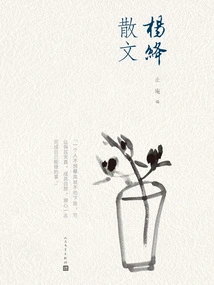
Yang Jiang's Prose
Literature杨绛散文
Zhi'an
Yang Jiang is a famous translator, novelist, literary critic, and also a famous essayist. The "Yang Jiang Prose" published this time includes a total of 18 representative prose works and literary essays by Yang Jiang. Yang Jiang's prose mostly uses line drawing to recall past events or describe the life experiences of relatives, friends, and individuals. They are fresh, timeless, expressive, and profound in meaning. Readers can further understand the writer's inner world and the unique features of the historical era she has experienced through the creation of Yang Jiang's prose. The "Yang Jiang Prose" published this time is a version confirmed and approved by Yang Jiang during his lifetime. It has a certain degree of authority and is also a rare selection of Yang Jiang's prose.
Yang Jiang is a famous translator, novelist, literary critic, and also a famous essayist. The "Yang Jiang Prose" published this time includes a total of 18 representative prose works and literary essays by Yang Jiang. Yang Jiang's prose mostly uses line drawing to recall past events or describe the life experiences of relatives, friends, and individuals. They are fresh, timeless, expressive, and profound in meaning. Readers can further understand the writer's inner world and the unique features of the historical era she has experienced through the creation of Yang Jiang's prose. The "Yang Jiang Prose" published this time is a version confirmed and approved by Yang Jiang during his lifetime. It has a certain degree of authority and is also a rare selection of Yang Jiang's prose.
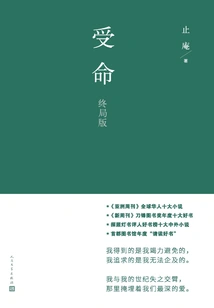
Ordered: Final Edition
General Fiction受命:终局版
Zhi'an
"Entrusted" is Zhi'an's first novel. The story of the novel takes place in Beijing in the 1980s. Two young people, Bing Feng and Ye Sheng, who have just graduated from university, meet at a poetry recital. Because of their common hobbies, the two young people started visiting bookstores, walking in alleys, and talking about literature. But as the relationship continues to deepen, what lies between the two are some ancient grievances between their parents. Bing Feng carries such a secret with him every day. Facing the lively and cheerful Ye Sheng, he finds it difficult to let go and continue to interact with each other. The story unfolds in the ups and downs of this entangled emotion and intertwined life. The novel adopts Bing Feng's perspective and tells readers in detail about an unbearable love and a memory that keeps catching up. Although the author's written expressions are calm and restrained, they form a certain tension with the fiery emotions, which adds to the reading experience of the novel, which is both soothing and tense. The novel is also interspersed with a branch line about brother Bingfeng and brother Ye Sheng going south to Shenzhen to start a business, which further expands the novel. In order to truly restore the scenery of Beijing's streets in 1986, Zhi'an went to the library to do research for two years.
"Entrusted" is Zhi'an's first novel. The story of the novel takes place in Beijing in the 1980s. Two young people, Bing Feng and Ye Sheng, who have just graduated from university, meet at a poetry recital. Because of their common hobbies, the two young people started visiting bookstores, walking in alleys, and talking about literature. But as the relationship continues to deepen, what lies between the two are some ancient grievances between their parents. Bing Feng carries such a secret with him every day. Facing the lively and cheerful Ye Sheng, he finds it difficult to let go and continue to interact with each other. The story unfolds in the ups and downs of this entangled emotion and intertwined life. The novel adopts Bing Feng's perspective and tells readers in detail about an unbearable love and a memory that keeps catching up. Although the author's written expressions are calm and restrained, they form a certain tension with the fiery emotions, which adds to the reading experience of the novel, which is both soothing and tense. The novel is also interspersed with a branch line about brother Bingfeng and brother Ye Sheng going south to Shenzhen to start a business, which further expands the novel. In order to truly restore the scenery of Beijing's streets in 1986, Zhi'an went to the library to do research for two years.
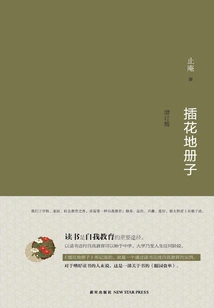
插花地册子(增订版)
Zhi'an
Zhi'an's "Book of Flower Arrangements" is a wonderful book. His past is his reading history, and the 1970s is the history of nausea and vomiting. He was angry about that misplaced reading period. Some commentators believe that he "wanted to overturn people's neatly stacked bookcases and expose the flaws of those who have already worn crowns and their works. At the same time, some concealed authors and books should stand in the front row." He changed his past academic style and wrote calmly and casually. For those who love reading, his work is a "Suiyuan Food List" about books.
Zhi'an's "Book of Flower Arrangements" is a wonderful book. His past is his reading history, and the 1970s is the history of nausea and vomiting. He was angry about that misplaced reading period. Some commentators believe that he "wanted to overturn people's neatly stacked bookcases and expose the flaws of those who have already worn crowns and their works. At the same time, some concealed authors and books should stand in the front row." He changed his past academic style and wrote calmly and casually. For those who love reading, his work is a "Suiyuan Food List" about books.
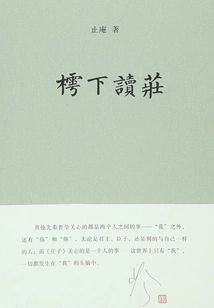
Read the Village under The
Literature樗下读庄
Zhi'an
The book "Reading Zhuangzi under Chuangzi" is the scholar Zhi'an's experience in studying "Zhuangzi" and later generations' commentaries on "Zhuangzi". Mr. Zhi'an believes that if there is a book that people can take the trouble to read over and over again throughout their lives, it is "Zhuangzi". In the book "Reading Zhuangzi under the Chuangzi", Mr. Zhi'an believes that "I lose myself" is the main subject of Zhuangzi, which runs through all of Zhuangzi's thoughts; "adapting oneself to oneself" is the ultimate point of "Zhuangzi". In Mr. Zhi'an's view, other pre-Qin philosophies are concerned with the affairs of two people - besides "I", there are also "you" and "him"; "Zhuangzi" is concerned with the affairs of one person - there is only "I" in the world, and everything happens in the mind of "I". In terms of style, the book "Reading Zhuangzi under Chuangzi" starts with the original text of "Zhuangzi", followed by Mr. Zhi'an's experience of reading Zhuangzi and his comments on previous people's reading of Zhuangzi. From the perspective of academic research, "Reading Zhuang under the Chuang River" is also an indispensable work for studying Zhuang studies.
The book "Reading Zhuangzi under Chuangzi" is the scholar Zhi'an's experience in studying "Zhuangzi" and later generations' commentaries on "Zhuangzi". Mr. Zhi'an believes that if there is a book that people can take the trouble to read over and over again throughout their lives, it is "Zhuangzi". In the book "Reading Zhuangzi under the Chuangzi", Mr. Zhi'an believes that "I lose myself" is the main subject of Zhuangzi, which runs through all of Zhuangzi's thoughts; "adapting oneself to oneself" is the ultimate point of "Zhuangzi". In Mr. Zhi'an's view, other pre-Qin philosophies are concerned with the affairs of two people - besides "I", there are also "you" and "him"; "Zhuangzi" is concerned with the affairs of one person - there is only "I" in the world, and everything happens in the mind of "I". In terms of style, the book "Reading Zhuangzi under Chuangzi" starts with the original text of "Zhuangzi", followed by Mr. Zhi'an's experience of reading Zhuangzi and his comments on previous people's reading of Zhuangzi. From the perspective of academic research, "Reading Zhuang under the Chuang River" is also an indispensable work for studying Zhuang studies.
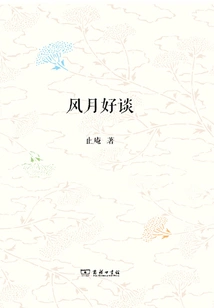
Love is Easy to Talk About
Literature风月好谈
Zhi'an
"Feng Yue Hao Tan" continues the author's consistent writing style and collects his recent cultural essays and reading notes, including some insights on reading and researching Lu Xun and Zhou Zuoren, as well as notes on detective mystery novels, "Gulag" and other historical literary writing, and the introduction of foreign literary publishing. The title of the book "Feng Yue Hao Tan" is taken from a handwritten calligraphy of the famous Japanese writer Kawabata Yasunari collected by the author. It is used as the title of the book, which in a roundabout way reflects the author's elegance and interest.
"Feng Yue Hao Tan" continues the author's consistent writing style and collects his recent cultural essays and reading notes, including some insights on reading and researching Lu Xun and Zhou Zuoren, as well as notes on detective mystery novels, "Gulag" and other historical literary writing, and the introduction of foreign literary publishing. The title of the book "Feng Yue Hao Tan" is taken from a handwritten calligraphy of the famous Japanese writer Kawabata Yasunari collected by the author. It is used as the title of the book, which in a roundabout way reflects the author's elegance and interest.
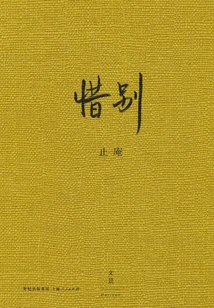
Farewell
Literature惜别
Zhi'an
"Farewell" is Zhi'an's experience of life and death condensed from his experience three years after his mother's death. There are six parts in the book, starting from the mother's death and tracing back in fragments. The mother's diaries and letters during her lifetime alternate with the author's memories and thoughts, forming two opposing but interdependent writing states. The handprint left by my mother is full of warm details of the time when relatives get along with each other: the red cabbage soup I made most often, the movie I watched together, the little pudding I ate when I was seriously ill... These things are ordinary and small, but deeply touching. They are tangible marks of our existence.
"Farewell" is Zhi'an's experience of life and death condensed from his experience three years after his mother's death. There are six parts in the book, starting from the mother's death and tracing back in fragments. The mother's diaries and letters during her lifetime alternate with the author's memories and thoughts, forming two opposing but interdependent writing states. The handprint left by my mother is full of warm details of the time when relatives get along with each other: the red cabbage soup I made most often, the movie I watched together, the little pudding I ate when I was seriously ill... These things are ordinary and small, but deeply touching. They are tangible marks of our existence.
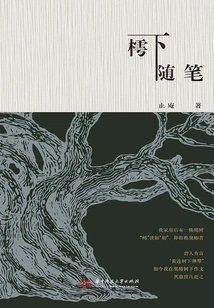
Essays under Aoi
Literature樗下随笔
Zhi'an
"Chuxia Essays" is Zhi'an's first collection of essays. At that time, he was still working in the company, and it took him five years to complete this book. Thirty years have passed now, and when I look back at some chapters in the book, such as "Talk about State of Mind" and "Talk about Hobbies", he has never written anything since. He said that there is nothing wrong with speaking young words when you are young, as long as you don't be too wanton. This book consists of three volumes, collecting the author's early cultural essays and reading notes, covering human relationships, poetry, classics and history, as well as the stories behind these writers' writings and his own experiences and insights, etc. The title of the book is "Chuxia Essay", which refers to a large and useless tree mentioned in "Zhuangzi·Xiaoyaoyou". There used to be a locust tree behind Zhi'an's house. He had been reading and composing under the locust tree for many years and used it as the title of his book, which shows that he had a special liking for it. Later, he left the bungalow where he lived for several years and moved to a building with many high-rise buildings, but the acanthus tree was deeply rooted in the book and never left.
"Chuxia Essays" is Zhi'an's first collection of essays. At that time, he was still working in the company, and it took him five years to complete this book. Thirty years have passed now, and when I look back at some chapters in the book, such as "Talk about State of Mind" and "Talk about Hobbies", he has never written anything since. He said that there is nothing wrong with speaking young words when you are young, as long as you don't be too wanton. This book consists of three volumes, collecting the author's early cultural essays and reading notes, covering human relationships, poetry, classics and history, as well as the stories behind these writers' writings and his own experiences and insights, etc. The title of the book is "Chuxia Essay", which refers to a large and useless tree mentioned in "Zhuangzi·Xiaoyaoyou". There used to be a locust tree behind Zhi'an's house. He had been reading and composing under the locust tree for many years and used it as the title of his book, which shows that he had a special liking for it. Later, he left the bungalow where he lived for several years and moved to a building with many high-rise buildings, but the acanthus tree was deeply rooted in the book and never left.
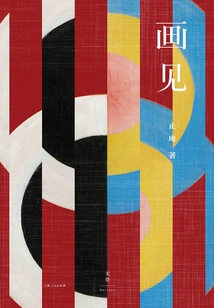
Picture See
Literature画见
Zhi'an
They say they are looking at paintings, but they are actually reading people's hearts. They say they are looking at paintings, but they are actually observing themselves. "Seeing in Painting" is a collection of art essays. A journey of growth about self-aesthetic education, a review of time spent in an art gallery, a time-traveling communication between people and paintings, and a self-examination of unrestrained emotions. They say they are looking at paintings, but they are actually looking at themselves. The book is divided into four parts: Women, Nature, Dreams, and Era. It involves Gauguin, Van Gogh, Franz and other artists who are not to be missed in modern art. It is Zhi'an's experience of visiting European, American and Japanese museums in the past few years. In a world of colorful intertwining colors and lines, the author uses his paintings to talk about many insights on life, history, literature, and art. The concept of "viewing" is no longer a narrow theory of painting bound under the title of "painting art", but a deep exploration from "vision" to "emotion", which embodies the author's modern aesthetic consciousness and life experience. It no longer emphasizes the commentary on painting as a professional art field, but focuses on the connection between the viewer as an emotional "person" and the "painting", removing the obscure and difficult professional terminology and private aesthetic understanding.
They say they are looking at paintings, but they are actually reading people's hearts. They say they are looking at paintings, but they are actually observing themselves. "Seeing in Painting" is a collection of art essays. A journey of growth about self-aesthetic education, a review of time spent in an art gallery, a time-traveling communication between people and paintings, and a self-examination of unrestrained emotions. They say they are looking at paintings, but they are actually looking at themselves. The book is divided into four parts: Women, Nature, Dreams, and Era. It involves Gauguin, Van Gogh, Franz and other artists who are not to be missed in modern art. It is Zhi'an's experience of visiting European, American and Japanese museums in the past few years. In a world of colorful intertwining colors and lines, the author uses his paintings to talk about many insights on life, history, literature, and art. The concept of "viewing" is no longer a narrow theory of painting bound under the title of "painting art", but a deep exploration from "vision" to "emotion", which embodies the author's modern aesthetic consciousness and life experience. It no longer emphasizes the commentary on painting as a professional art field, but focuses on the connection between the viewer as an emotional "person" and the "painting", removing the obscure and difficult professional terminology and private aesthetic understanding.