Library
Browse and search books
6 novels found
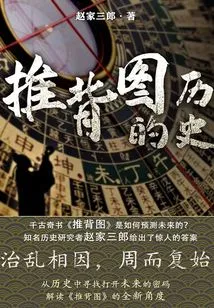
The History of Tuibeitu
History推背图的历史
Zhaojiasaburo
"Tuibei Tu" has long been considered a historical prophetic book. There are a lot of rumors and interpretations surrounding it, but its appearance is becoming more and more confusing. However, from a scientific perspective, the author of this book analyzed the sixty hexagrams of "Tui Bei Tu" and combined with the major historical events in China since the Tang Dynasty, and concluded that "Tui Bei Tu" is not a prophecy, but conveys a historical view that "ruling and chaos are caused by each other, and the cycle begins again": where there are gentlemen, there will be villains. For people, where there is justice there is evil, where there is prosperity there is chaos, where there is strength there is weakness, where there is peace there is war, where there is unity there is chaos, where there is political enlightenment there is poverty for the people... This view of history that is still full of warnings to people today is the greatest value of the existence of "Tuibei Tu".
"Tuibei Tu" has long been considered a historical prophetic book. There are a lot of rumors and interpretations surrounding it, but its appearance is becoming more and more confusing. However, from a scientific perspective, the author of this book analyzed the sixty hexagrams of "Tui Bei Tu" and combined with the major historical events in China since the Tang Dynasty, and concluded that "Tui Bei Tu" is not a prophecy, but conveys a historical view that "ruling and chaos are caused by each other, and the cycle begins again": where there are gentlemen, there will be villains. For people, where there is justice there is evil, where there is prosperity there is chaos, where there is strength there is weakness, where there is peace there is war, where there is unity there is chaos, where there is political enlightenment there is poverty for the people... This view of history that is still full of warnings to people today is the greatest value of the existence of "Tuibei Tu".
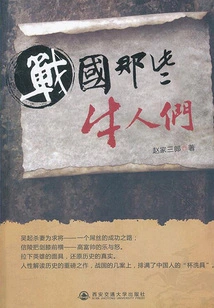
战国那些牛人们
Zhaojiasaburo
"Those Awesome People in the Warring States Period" uses a humorous and relaxed writing style to show us all kinds of outstanding people in the first troubled times in Chinese history during the Spring and Autumn Period and the Warring States Period. "Those Awesome Men of the Warring States Period" introduces Jing Ke, Zhuan Zhu and other hot-blooded assassins, Sun Wu, Sun Bin and other ancestors of military strategists, Guan Zhong and Shang Yang and other historical figures who have influenced the direction of Chinese history. On the scroll of five thousand years of Chinese civilization, the Spring and Autumn Period and the Warring States Period are destined to be the most colorful. In that turbulent era, in the intertwining of blood and fire, the roots of Chinese civilization were planted.
"Those Awesome People in the Warring States Period" uses a humorous and relaxed writing style to show us all kinds of outstanding people in the first troubled times in Chinese history during the Spring and Autumn Period and the Warring States Period. "Those Awesome Men of the Warring States Period" introduces Jing Ke, Zhuan Zhu and other hot-blooded assassins, Sun Wu, Sun Bin and other ancestors of military strategists, Guan Zhong and Shang Yang and other historical figures who have influenced the direction of Chinese history. On the scroll of five thousand years of Chinese civilization, the Spring and Autumn Period and the Warring States Period are destined to be the most colorful. In that turbulent era, in the intertwining of blood and fire, the roots of Chinese civilization were planted.
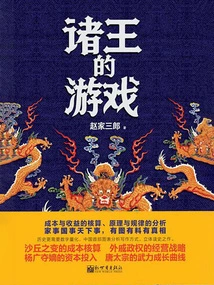
诸王的游戏:变革中的生存与死亡
Zhaojiasaburo
Interpret the coups in Chinese history from the perspectives of economics, management, and marketing, organically integrating modern theory with ancient history. Use economic principles to analyze and calculate the costs and benefits of coups, and use systematic analysis methods, chart examples, and visual displays. It is no longer a simple translation, but a three-dimensional interpretation of history, and a scientific exploration of human nature and historical laws. Zhao Gao's murder cost accounting, Wang Mang's regime management strategy, Tang Taizong's force growth curve, eunuchs' power reproduction, and Song Taizu's human resources management.
Interpret the coups in Chinese history from the perspectives of economics, management, and marketing, organically integrating modern theory with ancient history. Use economic principles to analyze and calculate the costs and benefits of coups, and use systematic analysis methods, chart examples, and visual displays. It is no longer a simple translation, but a three-dimensional interpretation of history, and a scientific exploration of human nature and historical laws. Zhao Gao's murder cost accounting, Wang Mang's regime management strategy, Tang Taizong's force growth curve, eunuchs' power reproduction, and Song Taizu's human resources management.
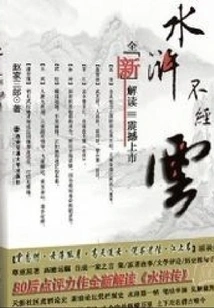
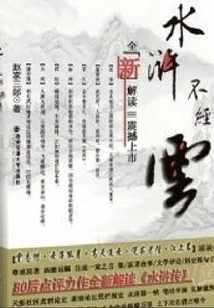
水浒不经云.
Zhaojiasaburo
\"0 Those who observe things judge names, and those who comment on people distinguish their will. Shi Naian passed down Song Jiang and inscribed his book "Water Margin". The evil is so severe that it bursts out, which is not the same as China. However, later generations do not know what kind of trouble-loving people they are, but they mistakenly label it as "loyalty". --Jin Shengtan\"
\"0 Those who observe things judge names, and those who comment on people distinguish their will. Shi Naian passed down Song Jiang and inscribed his book "Water Margin". The evil is so severe that it bursts out, which is not the same as China. However, later generations do not know what kind of trouble-loving people they are, but they mistakenly label it as "loyalty". --Jin Shengtan\"
\
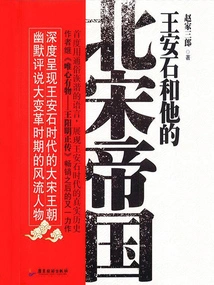
王安石和他的北宋帝国
Zhaojiasaburo
Clarify basic historical facts, restore the true face of history, and present the Song Dynasty during the period of great changes in depth. In the mid-Northern Song Dynasty, Wang Anshi was the most controversial figure in Chinese history. Some people called him a thief, while others said he was a saint. Darkness and glory were intertwined, and slander and praise were mixed. Nearly a thousand years later, how can we give Wang Anshi a fair evaluation? This book takes Wang Anshi as the main line. While describing and analyzing Wang Anshi himself, it also adds famous figures and historical events of the same period to gain a glimpse of the appearance and characteristics of the history of the Song Dynasty.
Clarify basic historical facts, restore the true face of history, and present the Song Dynasty during the period of great changes in depth. In the mid-Northern Song Dynasty, Wang Anshi was the most controversial figure in Chinese history. Some people called him a thief, while others said he was a saint. Darkness and glory were intertwined, and slander and praise were mixed. Nearly a thousand years later, how can we give Wang Anshi a fair evaluation? This book takes Wang Anshi as the main line. While describing and analyzing Wang Anshi himself, it also adds famous figures and historical events of the same period to gain a glimpse of the appearance and characteristics of the history of the Song Dynasty.