Library
Browse and search books
1 novel found
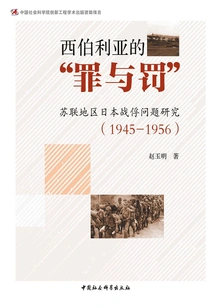
西伯利亚的“罪与罚”:苏联地区日本战俘问题研究:1945—1956
Zhao Yuming
From September 1945 to April 1946, the Soviet Union actually transferred more than 500,000 Japanese prisoners of war from the above-mentioned areas and the northern part of the Korean Peninsula to various parts of the Soviet Union to engage in various forms of labor utilization such as log collection, mineral extraction, and railway and road construction labor. From the end of 1946, the Soviet Union began to repatriate Japanese prisoners of war one after another. It was not until the two countries signed the "Soviet-Japanese Joint Declaration" in 1956 and normalized relations that the repatriation of Japanese prisoners of war was basically completed. During this period, the repatriation of Japanese prisoners of war went through two stages: the early stage of concentrated repatriation and the later stage of concentrated repatriation. The issue of Japanese prisoners of war in the Soviet Union is an important issue in the history of post-war Soviet-Japanese relations. The resulting debate between the Soviet and Japanese governments, private citizens, and the international community has never ended. This article uses the declassified archives of the Soviet Union, the latest research results of Russian and Japanese academic circles, the memoirs of Japanese prisoners of war in the Soviet area, and interviews with the parties, etc. To conduct a systematic study and combing of the postwar Soviet government's entry into the Soviet Union, regional distribution, daily management, ideological and political education, labor utilization, and repatriation of Japanese prisoners of war.
From September 1945 to April 1946, the Soviet Union actually transferred more than 500,000 Japanese prisoners of war from the above-mentioned areas and the northern part of the Korean Peninsula to various parts of the Soviet Union to engage in various forms of labor utilization such as log collection, mineral extraction, and railway and road construction labor. From the end of 1946, the Soviet Union began to repatriate Japanese prisoners of war one after another. It was not until the two countries signed the "Soviet-Japanese Joint Declaration" in 1956 and normalized relations that the repatriation of Japanese prisoners of war was basically completed. During this period, the repatriation of Japanese prisoners of war went through two stages: the early stage of concentrated repatriation and the later stage of concentrated repatriation. The issue of Japanese prisoners of war in the Soviet Union is an important issue in the history of post-war Soviet-Japanese relations. The resulting debate between the Soviet and Japanese governments, private citizens, and the international community has never ended. This article uses the declassified archives of the Soviet Union, the latest research results of Russian and Japanese academic circles, the memoirs of Japanese prisoners of war in the Soviet area, and interviews with the parties, etc. To conduct a systematic study and combing of the postwar Soviet government's entry into the Soviet Union, regional distribution, daily management, ideological and political education, labor utilization, and repatriation of Japanese prisoners of war.