Library
Browse and search books
2 novels found
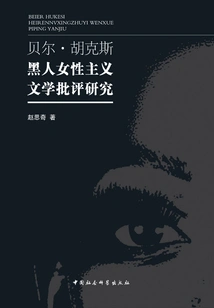
贝尔·胡克斯黑人女性主义文学批评研究
Zhao Siqi
In the 1970s, with the in-depth development of the feminist movement in Europe and the United States, African American feminist criticism began to make its own voice. Among them, bell hooks, the academic representative, increasingly became the focus of American criticism. This book first introduces the development of Hooks' thoughts, and then sorts out Hooks's black feminist criticism into four topics: black women's writing, black women's tradition, black women's images, and sisterhood, and critically reflects on them, which has great academic value.
In the 1970s, with the in-depth development of the feminist movement in Europe and the United States, African American feminist criticism began to make its own voice. Among them, bell hooks, the academic representative, increasingly became the focus of American criticism. This book first introduces the development of Hooks' thoughts, and then sorts out Hooks's black feminist criticism into four topics: black women's writing, black women's tradition, black women's images, and sisterhood, and critically reflects on them, which has great academic value.
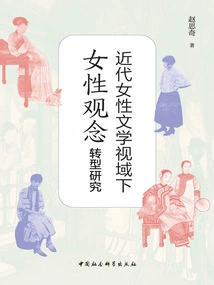
Research on the Transformation of Women's Concepts from the Perspective of Modern Women's Literature
Literature近代女性文学视域下女性观念转型研究
Zhao Siqi
Modern China is a period of alternation between the old and the new. During this period of great change, the female group's ideological concepts and historical destiny have undergone obvious transformations. This is particularly evident in modern women's literature, especially women's poetry creation and women's novel creation. As far as female poetry creation is concerned, this book is based on the works of modern female writers such as the talented Wu Zao, Shen Queying, Shan Shili, the Xu sisters of Nanshe, Qiu Jin, and Lu Bicheng, and finds the dividing points between their early and late creations. Based on this, it compares the changes in their creative content and style in the early and later periods, and presents the transformation trajectory of their female concepts. As far as women's novel creation is concerned, the themes are diverse, including women's studies, marriage and love, etc. As far as women's education is concerned, the female characters in modern women's novels are different from the ancient Chinese women who studied books such as "Women's Training" and "Women's Commandments", and tend to accept new-style school education. As far as marriage and love are concerned, the female characters written by modern female novel writers have stepped out of the boudoir to a certain extent. Their awareness of autonomy in marriage and love has been significantly enhanced, and they have begun to reflect on their fate and their own situation, and even express doubts about men and marriage and even escape.
Modern China is a period of alternation between the old and the new. During this period of great change, the female group's ideological concepts and historical destiny have undergone obvious transformations. This is particularly evident in modern women's literature, especially women's poetry creation and women's novel creation. As far as female poetry creation is concerned, this book is based on the works of modern female writers such as the talented Wu Zao, Shen Queying, Shan Shili, the Xu sisters of Nanshe, Qiu Jin, and Lu Bicheng, and finds the dividing points between their early and late creations. Based on this, it compares the changes in their creative content and style in the early and later periods, and presents the transformation trajectory of their female concepts. As far as women's novel creation is concerned, the themes are diverse, including women's studies, marriage and love, etc. As far as women's education is concerned, the female characters in modern women's novels are different from the ancient Chinese women who studied books such as "Women's Training" and "Women's Commandments", and tend to accept new-style school education. As far as marriage and love are concerned, the female characters written by modern female novel writers have stepped out of the boudoir to a certain extent. Their awareness of autonomy in marriage and love has been significantly enhanced, and they have begun to reflect on their fate and their own situation, and even express doubts about men and marriage and even escape.