Library
Browse and search books
4 novels found
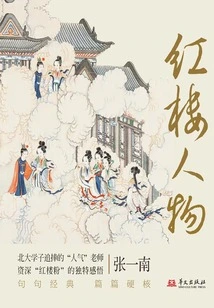
Figures in Red Mansions
Literature红楼人物
Zhang Yinan
Cao Xueqin created a variety of characters: the "fake" Jia Zheng, the "unfeeling" Jia Baoyu, the ideal "Flower in the Mirror" Lin Daiyu, the "ruthless" and "fateless" Xue Baochai, the bold and generous man Shi Xiangyun, the eldest lady Wang Xifeng, the high-class concubine Jia Tanchun, and Jia Baoyu's fan group - the maids of Yihongyuan. The characters, no matter how big or small, are all flesh and blood, all have reasonable motivations for their actions, and they are all one of the incarnations of Cao Xueqin. How can we sort out the complicated relationships between characters in "A Dream of Red Mansions"? This book will also teach you some methods: for example, how to read "Guan Guan Talisman" and how to remember the twelve hairpins like the twelve constellations. Help you turn character analysis into a game and get an overview of "A Dream of Red Mansions". "A Dream of Red Mansions" is not a political struggle textbook, a palace battle novel, a love story, a "serious book", a stupid riddle for you to do crossword puzzles, a diary of the political life of Yongzong and Qianlong, or a supreme holy book. She is a novel, an imaginary novel, and a realistic novel. It is an adult's recollection of the life of a teenager. The character setting of "Dream of Red Mansions" is typical, and the character's identity determines the character's personality.
Cao Xueqin created a variety of characters: the "fake" Jia Zheng, the "unfeeling" Jia Baoyu, the ideal "Flower in the Mirror" Lin Daiyu, the "ruthless" and "fateless" Xue Baochai, the bold and generous man Shi Xiangyun, the eldest lady Wang Xifeng, the high-class concubine Jia Tanchun, and Jia Baoyu's fan group - the maids of Yihongyuan. The characters, no matter how big or small, are all flesh and blood, all have reasonable motivations for their actions, and they are all one of the incarnations of Cao Xueqin. How can we sort out the complicated relationships between characters in "A Dream of Red Mansions"? This book will also teach you some methods: for example, how to read "Guan Guan Talisman" and how to remember the twelve hairpins like the twelve constellations. Help you turn character analysis into a game and get an overview of "A Dream of Red Mansions". "A Dream of Red Mansions" is not a political struggle textbook, a palace battle novel, a love story, a "serious book", a stupid riddle for you to do crossword puzzles, a diary of the political life of Yongzong and Qianlong, or a supreme holy book. She is a novel, an imaginary novel, and a realistic novel. It is an adult's recollection of the life of a teenager. The character setting of "Dream of Red Mansions" is typical, and the character's identity determines the character's personality.
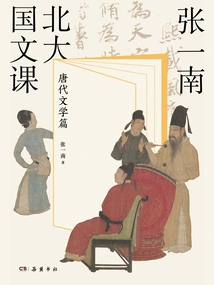
Zhang Yi Chinese Language Course at North and South University: Literature of the Tang Dynasty
Literature张一南北大国文课:唐代文学篇
Zhang Yinan
The final work of Zhang Yinan's Chinese language course series, the character and excitement of the golden age of literature! The Tang Dynasty was the golden age of Chinese classical literature, especially poetry. Tang poetry rose to an insurmountable peak, and a large number of outstanding great poets emerged, which has become a familiar literary memory of the Chinese people. This book is the final work of teacher Zhang Yinan's "Peking University Chinese Language Course Series". After the literature of the Six Dynasties, it enters the literature of the Tang Dynasty. From the founding of the Tang Dynasty to the fall of the Southern Tang Dynasty, spanning more than 300 years, the author uses the development of poetry as the main line to sort out the literary history of the Tang Dynasty in detail. The four heroes of the early Tang Dynasty, Meng Haoran, Wang Wei, Li Bai, Du Fu, Gao Shi, Cen Shen, Han Yu, Bai Juyi, Poets such as Li He and Li Shangyin are all presented one by one in the literary galaxy of the Tang Dynasty. Interpreting their life circumstances, famous poems, and creative styles in the real historical situation allows us to discover that many poems that have long been well-recited actually have different meanings. In addition to poetry, the author also introduces articles, lyrics, and legends of the Tang Dynasty, leading readers to fully appreciate the unique scenery of Tang Dynasty literature.
The final work of Zhang Yinan's Chinese language course series, the character and excitement of the golden age of literature! The Tang Dynasty was the golden age of Chinese classical literature, especially poetry. Tang poetry rose to an insurmountable peak, and a large number of outstanding great poets emerged, which has become a familiar literary memory of the Chinese people. This book is the final work of teacher Zhang Yinan's "Peking University Chinese Language Course Series". After the literature of the Six Dynasties, it enters the literature of the Tang Dynasty. From the founding of the Tang Dynasty to the fall of the Southern Tang Dynasty, spanning more than 300 years, the author uses the development of poetry as the main line to sort out the literary history of the Tang Dynasty in detail. The four heroes of the early Tang Dynasty, Meng Haoran, Wang Wei, Li Bai, Du Fu, Gao Shi, Cen Shen, Han Yu, Bai Juyi, Poets such as Li He and Li Shangyin are all presented one by one in the literary galaxy of the Tang Dynasty. Interpreting their life circumstances, famous poems, and creative styles in the real historical situation allows us to discover that many poems that have long been well-recited actually have different meanings. In addition to poetry, the author also introduces articles, lyrics, and legends of the Tang Dynasty, leading readers to fully appreciate the unique scenery of Tang Dynasty literature.
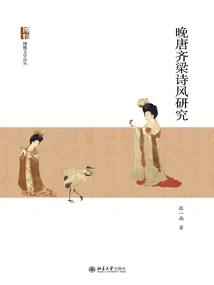
晚唐齐梁诗风研究
Zhang Yinan
"A Study on the Qi-Liang Poetry Style in the Late Tang Dynasty" takes the Qi-Liang Poetry Style in the late Tang Dynasty as the research object, and explores the poetic phenomena of the Late Tang Dynasty related to Qi-Liang elements from different perspectives such as form, content, and rhetoric. It not only summarizes the main manifestations of the Qi-Liang poetry style in the late Tang Dynasty and its changes with the times, but also analyzes the origins, life experiences and different types of writers involved in the Qi-Liang poetry style in the late Tang Dynasty. It also analyzes the various possibilities of combining the Qi-Liang poetry style with the late Tang era based on the combination of genres and themes. From the perspective of genre, this article divides the genres involved in the Qi-Liang poetic style in the late Tang Dynasty into two categories, namely the typical Qi-Liang genre that originated in the Qi-Liang Dynasty and the atypical Qi-Liang genre that was finalized and flourished after the prosperous Tang Dynasty. It outlines the efforts of the late Tang poets to learn the former, and the efforts to integrate the latter with Qi-Liang elements. From the perspective of subject matter, this article summarizes eight major themes that are closely related to Qi and Liang poetry styles, thereby exploring the relationship between Qi and Liang poetry styles and Qi and Liang poetics in the late Tang Dynasty, and analyzing the different ways in which poets in the late Tang Dynasty dealt with Qi and Liang themes based on different genres in the Tang poetry system. Through the above research, I have made my own thoughts on the Tang poetry system and the evolution history of modern poetry.
"A Study on the Qi-Liang Poetry Style in the Late Tang Dynasty" takes the Qi-Liang Poetry Style in the late Tang Dynasty as the research object, and explores the poetic phenomena of the Late Tang Dynasty related to Qi-Liang elements from different perspectives such as form, content, and rhetoric. It not only summarizes the main manifestations of the Qi-Liang poetry style in the late Tang Dynasty and its changes with the times, but also analyzes the origins, life experiences and different types of writers involved in the Qi-Liang poetry style in the late Tang Dynasty. It also analyzes the various possibilities of combining the Qi-Liang poetry style with the late Tang era based on the combination of genres and themes. From the perspective of genre, this article divides the genres involved in the Qi-Liang poetic style in the late Tang Dynasty into two categories, namely the typical Qi-Liang genre that originated in the Qi-Liang Dynasty and the atypical Qi-Liang genre that was finalized and flourished after the prosperous Tang Dynasty. It outlines the efforts of the late Tang poets to learn the former, and the efforts to integrate the latter with Qi-Liang elements. From the perspective of subject matter, this article summarizes eight major themes that are closely related to Qi and Liang poetry styles, thereby exploring the relationship between Qi and Liang poetry styles and Qi and Liang poetics in the late Tang Dynasty, and analyzing the different ways in which poets in the late Tang Dynasty dealt with Qi and Liang themes based on different genres in the Tang poetry system. Through the above research, I have made my own thoughts on the Tang poetry system and the evolution history of modern poetry.
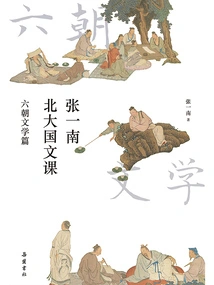
Zhang Yi Chinese Language Course at North and South University: Literature of the Six Dynasties
Literature张一南北大国文课:六朝文学篇
Zhang Yinan
The new masterpiece of Zhang Yinan, a popular teacher at Peking University, will take you to understand Chinese literature of the Six Dynasties in one go. From the end of the Eastern Han Dynasty to the beginning of the Sui Dynasty, the literary world of the Six Dynasties spanned more than 300 years, and many well-known great poets emerged, from the three fathers and sons of the Cao family to the seven sons of Jian'an, from the pastoral poet Tao Yuanming to the landscape poet Xie Lingyun, from Ji Kang who was handsome even without makeup to the plastic handsome man Pan Yue, etc. Without the explorations of the Six Dynasties poets, there would be no golden age of Chinese poetry. In this book, the author carefully explains in detail the development of the history of Six Dynasties literature, and thoroughly interprets the life experiences, famous poems and creative styles of more than 30 literati. He presents the spiritual world of celebrities in the Six Dynasties in a consistently relaxed, humorous and simple way, leading readers to appreciate the unique charm of the Six Dynasties literature, with incisive sentences and hilarious articles.
The new masterpiece of Zhang Yinan, a popular teacher at Peking University, will take you to understand Chinese literature of the Six Dynasties in one go. From the end of the Eastern Han Dynasty to the beginning of the Sui Dynasty, the literary world of the Six Dynasties spanned more than 300 years, and many well-known great poets emerged, from the three fathers and sons of the Cao family to the seven sons of Jian'an, from the pastoral poet Tao Yuanming to the landscape poet Xie Lingyun, from Ji Kang who was handsome even without makeup to the plastic handsome man Pan Yue, etc. Without the explorations of the Six Dynasties poets, there would be no golden age of Chinese poetry. In this book, the author carefully explains in detail the development of the history of Six Dynasties literature, and thoroughly interprets the life experiences, famous poems and creative styles of more than 30 literati. He presents the spiritual world of celebrities in the Six Dynasties in a consistently relaxed, humorous and simple way, leading readers to appreciate the unique charm of the Six Dynasties literature, with incisive sentences and hilarious articles.