Library
Browse and search books
4 novels found
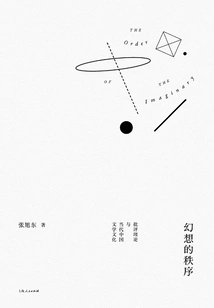
Fantasy Order
Literature幻想的秩序
Zhang Xudong
This collection brings together Professor Zhang Xudong's series of achievements on cultural theory and critical practice from the 1980s to the early 21st century, interprets the literary research, aesthetic exploration and cultural analysis of Lukács, Benjamin, Lacan, Said, Bourdieu, Jameson and other theorists, and explains various "new trends" and "experiments" in contemporary Chinese ideological and cultural circles. Through careful reading of text cases or ideological debates, we will have an overall grasp and critical thinking of Western learning issues and Chinese culture in the continuously changing cultural context.
This collection brings together Professor Zhang Xudong's series of achievements on cultural theory and critical practice from the 1980s to the early 21st century, interprets the literary research, aesthetic exploration and cultural analysis of Lukács, Benjamin, Lacan, Said, Bourdieu, Jameson and other theorists, and explains various "new trends" and "experiments" in contemporary Chinese ideological and cultural circles. Through careful reading of text cases or ideological debates, we will have an overall grasp and critical thinking of Western learning issues and Chinese culture in the continuously changing cultural context.
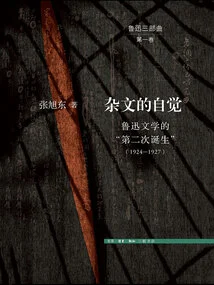
杂文的自觉:鲁迅文学的“第二次诞生”(1924—1927)
Zhang Xudong
This book is the first volume of Zhang Xudong's "Lu Xun Trilogy", analyzing how Lu Xun's literature "became himself" from 1924 to 1927, marked by "essay consciousness". The author shows that the unprecedented external challenges and internal pressures faced by Lu Xun's literature during this period brought about a series of profound and irreversible choices, decisions and mutations in the history of style and literary principles. Through an overall critical approach that combines auteur theory, textual analysis, and theoretical interpretation, this book explores the syntactic and phenomenological structure of Lu Xun's essays with stylistic mixture and the political ontology of writing as the core. The conclusion is: it is necessary to analyze and grasp the essay, a stylistic experiment and style movement that is higher than the "pure literature" establishment and its ideology, in the context of the history and axiology of new literature and modern world literature, and at the level of the philosophical proposition of "the end of art." This "intermediate breakthrough" in the internal interpretation of Lu Xun's literature opens up historical depth in the second volume's "critical philology" investigation of Lu Xun's writings in the "Shanghai Period" (1927-1936), and presents a broader social and political vision and a more complex critical narrative relationship between reality and its appearance under the title of "The Freedom of Essays". Lu Xun's short stories, prose poems and autonarrative creations will be specially analyzed in the third volume "Enlightenment and the Plastic Art of New Literature". Each volume of the "trilogy" unfolds along six interlocking propositions: the primacy of literature in the study of Lu Xun; the primacy of essays in Lu Xun's literature; the modernism and nature of world literature in Lu Xun's literature; the biological determinism and temporal structure of Lu Xun's literature; the political ontology of Lu Xun's literature; and the "consistency of writing and translation" characteristics of Lu Xun's literature.
This book is the first volume of Zhang Xudong's "Lu Xun Trilogy", analyzing how Lu Xun's literature "became himself" from 1924 to 1927, marked by "essay consciousness". The author shows that the unprecedented external challenges and internal pressures faced by Lu Xun's literature during this period brought about a series of profound and irreversible choices, decisions and mutations in the history of style and literary principles. Through an overall critical approach that combines auteur theory, textual analysis, and theoretical interpretation, this book explores the syntactic and phenomenological structure of Lu Xun's essays with stylistic mixture and the political ontology of writing as the core. The conclusion is: it is necessary to analyze and grasp the essay, a stylistic experiment and style movement that is higher than the "pure literature" establishment and its ideology, in the context of the history and axiology of new literature and modern world literature, and at the level of the philosophical proposition of "the end of art." This "intermediate breakthrough" in the internal interpretation of Lu Xun's literature opens up historical depth in the second volume's "critical philology" investigation of Lu Xun's writings in the "Shanghai Period" (1927-1936), and presents a broader social and political vision and a more complex critical narrative relationship between reality and its appearance under the title of "The Freedom of Essays". Lu Xun's short stories, prose poems and autonarrative creations will be specially analyzed in the third volume "Enlightenment and the Plastic Art of New Literature". Each volume of the "trilogy" unfolds along six interlocking propositions: the primacy of literature in the study of Lu Xun; the primacy of essays in Lu Xun's literature; the modernism and nature of world literature in Lu Xun's literature; the biological determinism and temporal structure of Lu Xun's literature; the political ontology of Lu Xun's literature; and the "consistency of writing and translation" characteristics of Lu Xun's literature.
Odd Lotus Root Fragrance
Literature藕香零拾
Zhang Xudong
How Chen Yinque and Fu Sinian worked together and contradicted each other, how Gu Jiegang, the standard-bearer of "Ancient History Analysis", transformed himself, as well as Lu Simian, Chen Yuan, Mou Runsun... Using the works and diary letters of modern scholars as materials, this article interestingly tells the scholarship and life of the "masters of the Republic of China". This book is the latest in the "Liuhe Series". This collection is based on characters and contains more than thirty essays on modern intellectuals, including Chen Yinke, Chen Yuan, Fu Sinian, Lu Simian, Gu Jiegang, Yang Jiang, etc. The topics covered, such as how to pronounce the word "ke" in Chen Yinke, the relationship between Chen Yinke and Fu Sinian, and Gu Jiegang's experience in the 1950s and 1960s, are mostly interesting and meaningful. Most of the articles were previously published in newspapers such as "Dushu" and "China Reading News", and some of them were published for the first time.
How Chen Yinque and Fu Sinian worked together and contradicted each other, how Gu Jiegang, the standard-bearer of "Ancient History Analysis", transformed himself, as well as Lu Simian, Chen Yuan, Mou Runsun... Using the works and diary letters of modern scholars as materials, this article interestingly tells the scholarship and life of the "masters of the Republic of China". This book is the latest in the "Liuhe Series". This collection is based on characters and contains more than thirty essays on modern intellectuals, including Chen Yinke, Chen Yuan, Fu Sinian, Lu Simian, Gu Jiegang, Yang Jiang, etc. The topics covered, such as how to pronounce the word "ke" in Chen Yinke, the relationship between Chen Yinke and Fu Sinian, and Gu Jiegang's experience in the 1950s and 1960s, are mostly interesting and meaningful. Most of the articles were previously published in newspapers such as "Dushu" and "China Reading News", and some of them were published for the first time.
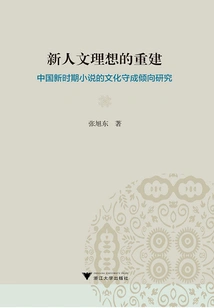
新人文理想的重建:中国新时期小说的文化守成倾向研究
Zhang Xudong
Doctoral thesis of Zhejiang University, planned to apply for later-stage funding project of National Social Science Fund. This manuscript mainly analyzes the cultural conservative trend of thought that has gradually gained momentum since the 1990s, and the novel creation under its influence and interaction. The manuscript reveals the background, essence, meaning generation and value characteristics of the cultural conservative trend in multiple dimensions and levels, and focuses on analyzing the cultural conservative value orientation of the novels of this period: persistence of local traditions, reflection on instrumental rationality modernity, nostalgia and review of rural pastoralism, protection of faith and morality, and call for ecological harmony. In particular, it analyzes these The different manifestations and expressions of this value orientation in novel creation in the new era are also systematically studied on some core issues, revealing the spiritual connotation of this value orientation and its response to modern culture; in addition, this book also conducts an in-depth discussion of the common characteristics of the artistic style of novels that hold this value orientation, as well as their potential misunderstandings in ideological concepts and creative expression. The discussion often has new insights and perspectives, has obvious academic value, and is at the leading level in the same or similar research fields in China.
Doctoral thesis of Zhejiang University, planned to apply for later-stage funding project of National Social Science Fund. This manuscript mainly analyzes the cultural conservative trend of thought that has gradually gained momentum since the 1990s, and the novel creation under its influence and interaction. The manuscript reveals the background, essence, meaning generation and value characteristics of the cultural conservative trend in multiple dimensions and levels, and focuses on analyzing the cultural conservative value orientation of the novels of this period: persistence of local traditions, reflection on instrumental rationality modernity, nostalgia and review of rural pastoralism, protection of faith and morality, and call for ecological harmony. In particular, it analyzes these The different manifestations and expressions of this value orientation in novel creation in the new era are also systematically studied on some core issues, revealing the spiritual connotation of this value orientation and its response to modern culture; in addition, this book also conducts an in-depth discussion of the common characteristics of the artistic style of novels that hold this value orientation, as well as their potential misunderstandings in ideological concepts and creative expression. The discussion often has new insights and perspectives, has obvious academic value, and is at the leading level in the same or similar research fields in China.