Library
Browse and search books
9 novels found
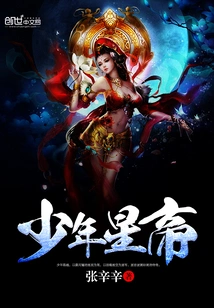
Young Star Emperor
Xuanhuan少年星帝
Zhang Xinxin
In the endless starry sky, each star represents a unique power. The young Chen Yue used the brightest stars as his pen and the vast starry sky as his canvas to paint a magnificent legend.
In the endless starry sky, each star represents a unique power. The young Chen Yue used the brightest stars as his pen and the vast starry sky as his canvas to paint a magnificent legend.
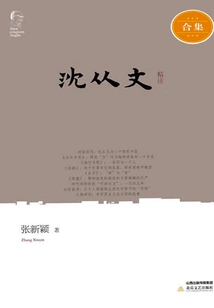
沈从文精读(全2册)
Zhang Xinxin
"Shen Congwen's Intensive Reading" uses the method of close reading of the text. On the one hand, it draws attention to the work itself, exploring and exploring its richness and complexity. At the same time, it does not look at the work in isolation, but in the continuation and change of writing activities, it outlines three images of Shen Congwen in three stages of his life: a writer who "gets what he wants", a painful thinker, and a practitioner who is on the edge of the times but enters the depths of history. Through the analysis of the works, the transition, conversion and internal relationship between these three images are revealed. The author's intention is not to repeat and solidify the existing narrative model about Shen Congwen, but to expand the space of interpretation, to re-understand Shen Congwen's literature, thought and practice, and to re-understand Shen Congwen and China in the twentieth century.
"Shen Congwen's Intensive Reading" uses the method of close reading of the text. On the one hand, it draws attention to the work itself, exploring and exploring its richness and complexity. At the same time, it does not look at the work in isolation, but in the continuation and change of writing activities, it outlines three images of Shen Congwen in three stages of his life: a writer who "gets what he wants", a painful thinker, and a practitioner who is on the edge of the times but enters the depths of history. Through the analysis of the works, the transition, conversion and internal relationship between these three images are revealed. The author's intention is not to repeat and solidify the existing narrative model about Shen Congwen, but to expand the space of interpretation, to re-understand Shen Congwen's literature, thought and practice, and to re-understand Shen Congwen and China in the twentieth century.
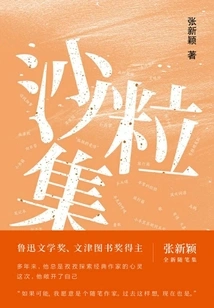
Set of Sand Grains
Literature沙粒集
Zhang Xinxin
This book collects twenty-two essays written by the author between 2017 and 2019. The content covers his childhood school experiences and mentors he met, his understanding of literature and writing, prefaces written by himself or by invitation, research on Shen Congwen, and other text research (Mu Dan, Yu Hua and Eliot). These memorials of life are composed of countless small scenes, like inconspicuous grains of sand, delicate and simple, but containing touching moments.
This book collects twenty-two essays written by the author between 2017 and 2019. The content covers his childhood school experiences and mentors he met, his understanding of literature and writing, prefaces written by himself or by invitation, research on Shen Congwen, and other text research (Mu Dan, Yu Hua and Eliot). These memorials of life are composed of countless small scenes, like inconspicuous grains of sand, delicate and simple, but containing touching moments.
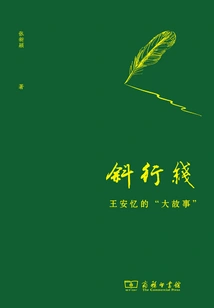
Diagonal Lines: Wang Anyi's "big Story
Literature斜行线:王安忆的“大故事”
Zhang Xinxin
Wang Anyi is a well-known contemporary female writer at home and abroad. The author Zhang Xinxin is a professor in the Chinese Department of Fudan University. The author and Wang Anyi are two generations apart, but they developed a resonance and resonance when they deeply interpreted Wang Anyi's works, and formed articles, which are collected in this book. In the book, Wang Anyi's creative trajectory and the author's explanation as a well-known critic complement each other, forming an invisible dialogue relationship. "Diagonal line" is a term coined by the author Zhang Xinxin to specifically comment on the writer Wang Anyi. It is an apt metaphor for Wang Anyi's ascetic-like writing path and his confusion about the unknown realm. The book consists of six articles, which include an explanation of Wang Anyi's overall creative style, as well as an in-depth exploration of a specific work or even a specific character.
Wang Anyi is a well-known contemporary female writer at home and abroad. The author Zhang Xinxin is a professor in the Chinese Department of Fudan University. The author and Wang Anyi are two generations apart, but they developed a resonance and resonance when they deeply interpreted Wang Anyi's works, and formed articles, which are collected in this book. In the book, Wang Anyi's creative trajectory and the author's explanation as a well-known critic complement each other, forming an invisible dialogue relationship. "Diagonal line" is a term coined by the author Zhang Xinxin to specifically comment on the writer Wang Anyi. It is an apt metaphor for Wang Anyi's ascetic-like writing path and his confusion about the unknown realm. The book consists of six articles, which include an explanation of Wang Anyi's overall creative style, as well as an in-depth exploration of a specific work or even a specific character.
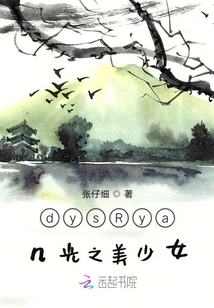
Dysryanprecure
Fantasy RomancedysRyan光之美少女
Zhang Xinxin
A Pretty Cure who was born in the theatrical version finally walked out
A Pretty Cure who was born in the theatrical version finally walked out
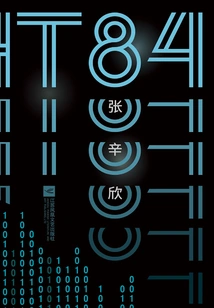
It84
General FictionIT84
Zhang Xinxin
"IT84" is author Zhang Xinxin's first novel after bidding farewell to novel writing for nearly 30 years. After many years of cross-media and cross-industry creation, as well as many years of life and creation under the background of Internet technology, the author believes that only science fiction can give novels a place in the future art landscape, while novel writing in the ordinary sense has long been replaced and eliminated by the impact of non-fiction, oral history, genre novels and other impacts. This is the original intention of the author's creation, and it is also the author's expectation, that is, he hopes to create a full-length masterpiece that profoundly reflects the background of the digital information age.
"IT84" is author Zhang Xinxin's first novel after bidding farewell to novel writing for nearly 30 years. After many years of cross-media and cross-industry creation, as well as many years of life and creation under the background of Internet technology, the author believes that only science fiction can give novels a place in the future art landscape, while novel writing in the ordinary sense has long been replaced and eliminated by the impact of non-fiction, oral history, genre novels and other impacts. This is the original intention of the author's creation, and it is also the author's expectation, that is, he hopes to create a full-length masterpiece that profoundly reflects the background of the digital information age.
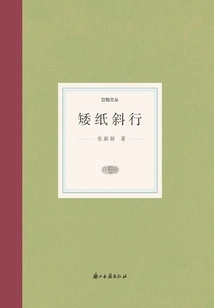
矮纸斜行(日知文丛)
Zhang Xinxin
This book is one of the "Japanese Knowledge Series" and is a collection of essays by Zhang Xinxin, a professor of the Chinese Department of Fudan University, about writers and calligraphers. The title of the book comes from a poem written by Lu Fangweng: "The paper on the short side is running slanted, making grass leisurely, and the thin breasts on the clear window are playing with tea." The four words "the paper on the short side is running on the slant" are somewhat related to the idea of "high-headed sermon". Inside and outside the book, text and personnel, writers and readers - these things recorded by the author, whether they are separated by time or space, or in the same place, are all derived from personal feelings and experiences. The depth or shallowness of the feeling, the amount of experience or the amount of experience, are secondary; what is important is the personal experience, even just a little bit. The writing is free and lively, but the words must be well-founded. Covering Chinese and foreign literature since modern times, he patiently and meticulously touches on the spiritual information behind Chen's writings.
This book is one of the "Japanese Knowledge Series" and is a collection of essays by Zhang Xinxin, a professor of the Chinese Department of Fudan University, about writers and calligraphers. The title of the book comes from a poem written by Lu Fangweng: "The paper on the short side is running slanted, making grass leisurely, and the thin breasts on the clear window are playing with tea." The four words "the paper on the short side is running on the slant" are somewhat related to the idea of "high-headed sermon". Inside and outside the book, text and personnel, writers and readers - these things recorded by the author, whether they are separated by time or space, or in the same place, are all derived from personal feelings and experiences. The depth or shallowness of the feeling, the amount of experience or the amount of experience, are secondary; what is important is the personal experience, even just a little bit. The writing is free and lively, but the words must be well-founded. Covering Chinese and foreign literature since modern times, he patiently and meticulously touches on the spiritual information behind Chen's writings.
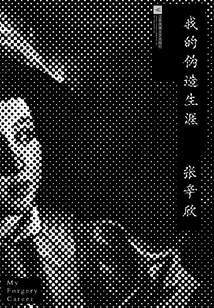
My Forgery Career
Literature我的伪造生涯
Zhang Xinxin
Since the 1980s, Zhang Xinxin has devoted herself to explorations other than writing, which include the pressure of survival, the expression of interest, and the exploration of her own creativity. In the 21st century, with the rise of the Internet and the migration of individuals, Zhang Xinxin's creative fields have become more and more extensive, covering novels, non-fiction, film reviews, film and television dramas, dramas, broadcasts, paintings, picture books, digital books, translations, videos, etc. Among them, in-depth contact with the Internet is inevitable, and the support of Internet technology for individuals and the loss caused by the Internet world are also reflected. It can be said that Zhang Xinxin is a rare specimen of the technological wave at the turn of the century and the early Internet era of mankind. Her creative experience completely presents the hardships and gains of a person who strives and migrates in different geographical spaces and different cultural fields. The book is divided into six parts: "Smear Hollow", "Black Heaven", "Prophecy", "Backstage", "My Translation" and "My Matrix". Taking "creation" as a clue, it presents Zhang Xinxin's personal experience and thinking for more than thirty years. Zhang Xinxin's writing does not have the so-called sedimentation or far-reaching meaning, but is more dynamic, jumping and impromptu. Her writing is not for awards, palaces, immortality or even temples, but for this moment, to face young and younger people, and to make herself a young person.
Since the 1980s, Zhang Xinxin has devoted herself to explorations other than writing, which include the pressure of survival, the expression of interest, and the exploration of her own creativity. In the 21st century, with the rise of the Internet and the migration of individuals, Zhang Xinxin's creative fields have become more and more extensive, covering novels, non-fiction, film reviews, film and television dramas, dramas, broadcasts, paintings, picture books, digital books, translations, videos, etc. Among them, in-depth contact with the Internet is inevitable, and the support of Internet technology for individuals and the loss caused by the Internet world are also reflected. It can be said that Zhang Xinxin is a rare specimen of the technological wave at the turn of the century and the early Internet era of mankind. Her creative experience completely presents the hardships and gains of a person who strives and migrates in different geographical spaces and different cultural fields. The book is divided into six parts: "Smear Hollow", "Black Heaven", "Prophecy", "Backstage", "My Translation" and "My Matrix". Taking "creation" as a clue, it presents Zhang Xinxin's personal experience and thinking for more than thirty years. Zhang Xinxin's writing does not have the so-called sedimentation or far-reaching meaning, but is more dynamic, jumping and impromptu. Her writing is not for awards, palaces, immortality or even temples, but for this moment, to face young and younger people, and to make herself a young person.
The Whereabouts of the Lost
Literature迷失者的行踪
Zhang Xinxin
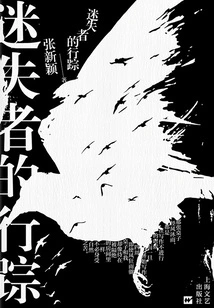
The "lost people" described by Zhang Xinyin are typical modern people under the rapid development of civilization. They lost their old hometown in the city and built a "new hometown" in their own way. This hometown seems to be unique and private, and with its secret whereabouts, it sends an invitation to us. Seventeen essays and seventeen kinds of dreams are the words of a lost person who is accustomed to silence speaking and starting an inner communication. Sometimes the dream is melancholy, like a flock of birds that are hovering over the city and chirping wildly but no one can see them; sometimes it is peaceful, like a desk by the river that has never been affected by wind and rain; sometimes it is absurd, like a city collector who specializes in collecting rumored corpses; sometimes it is sad, as the peacock in the cage commits suicide by caesarean section, hinting at the fate of the missing friend. The scene is full of vagueness, like catching the wind in the void; moving to change scenery is like running water, trying to hold on but it turns into nothing in an instant. They come from the author's pure intuition. The text is combined with the original perception, and the dancing waves finally remain still in the viewfinder.
The "lost people" described by Zhang Xinyin are typical modern people under the rapid development of civilization. They lost their old hometown in the city and built a "new hometown" in their own way. This hometown seems to be unique and private, and with its secret whereabouts, it sends an invitation to us. Seventeen essays and seventeen kinds of dreams are the words of a lost person who is accustomed to silence speaking and starting an inner communication. Sometimes the dream is melancholy, like a flock of birds that are hovering over the city and chirping wildly but no one can see them; sometimes it is peaceful, like a desk by the river that has never been affected by wind and rain; sometimes it is absurd, like a city collector who specializes in collecting rumored corpses; sometimes it is sad, as the peacock in the cage commits suicide by caesarean section, hinting at the fate of the missing friend. The scene is full of vagueness, like catching the wind in the void; moving to change scenery is like running water, trying to hold on but it turns into nothing in an instant. They come from the author's pure intuition. The text is combined with the original perception, and the dancing waves finally remain still in the viewfinder.