Library
Browse and search books
8 novels found
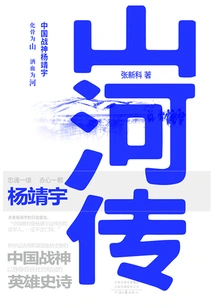
Legend of Mountains and Rivers
General Fiction山河传
Zhang Xinke
As my country's first full-length documentary novel that presents the revolutionary career of General Yang Jingyu in a panoramic manner, the work begins with the protagonist studying in Kaifeng in 1923, gradually embarking on the revolutionary road, and finally making a heroic sacrifice in the Anti-Japanese War in 1940. With infectious language and ups and downs of narrative, it comprehensively presents the process of how the national hero Yang Jingyu was made, and truly shows the revolutionary career of General Yang Jingyu that shocked the world and made people cry.
As my country's first full-length documentary novel that presents the revolutionary career of General Yang Jingyu in a panoramic manner, the work begins with the protagonist studying in Kaifeng in 1923, gradually embarking on the revolutionary road, and finally making a heroic sacrifice in the Anti-Japanese War in 1940. With infectious language and ups and downs of narrative, it comprehensively presents the process of how the national hero Yang Jingyu was made, and truly shows the revolutionary career of General Yang Jingyu that shocked the world and made people cry.
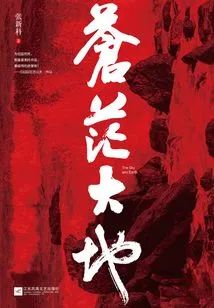
Vast Land
General Fiction苍茫大地
Zhang Xinke
"The Vast Land" is the first full-length novel to express the heroic deeds of the Yuhuatai martyrs. The work takes Comrade Xu Baoye, the legendary martyr of Yuhuatai, an early member of the Communist Party of China, a doctor who studied in Germany, and the former Secretary of the Jiangsu Provincial Committee and Henan Provincial Committee of the Communist Party of China, and his revolutionary activities as the main prototype, and strives to create the character of Xu Zihe, a great hero who embraces lofty beliefs and national justice, possesses extraordinary courage, and is knowledgeable and wise. The protagonist Xu Zihe was born in a family of wealthy overseas Chinese businessmen in Thailand. He returned to his motherland at the age of 7. He was very smart and had excellent grades since he was a child. After being admitted to Peking University, under the influence of teachers and friends such as Yun Changjun and Deng Hansheng, he accepted the baptism of progressive ideas. He then went to the University of Göttingen in Germany to study abroad, where he received a master's degree and a doctorate. During this period, he joined the Communist Party of China. After completing his studies, Xu Zihe resolutely chose to return to China and was sent to Moscow Oriental University for further studies. After overcoming many obstacles and returning to the motherland, he engaged in revolutionary activities as a professor at Shanghai University and fought in many places in Shanghai, Nanjing, and Henan. He grew into a calm and calm professional revolutionary who frightened his enemies. He has experienced major historical events and periods such as the cooperation between the Kuomintang and the Communist Party, the Northern Expedition, the "April 12" coup, the White Terror, the Anti-Japanese War for National Salvation, and the Liberation War. He has successively served as Secretary of the Nanjing Municipal Committee of the Communist Party of China, Secretary of the Henan Provincial Committee, and Secretary of the Jiangsu Provincial Committee. He has devoted everything he has to the Chinese revolution and the liberation of the Chinese nation.
"The Vast Land" is the first full-length novel to express the heroic deeds of the Yuhuatai martyrs. The work takes Comrade Xu Baoye, the legendary martyr of Yuhuatai, an early member of the Communist Party of China, a doctor who studied in Germany, and the former Secretary of the Jiangsu Provincial Committee and Henan Provincial Committee of the Communist Party of China, and his revolutionary activities as the main prototype, and strives to create the character of Xu Zihe, a great hero who embraces lofty beliefs and national justice, possesses extraordinary courage, and is knowledgeable and wise. The protagonist Xu Zihe was born in a family of wealthy overseas Chinese businessmen in Thailand. He returned to his motherland at the age of 7. He was very smart and had excellent grades since he was a child. After being admitted to Peking University, under the influence of teachers and friends such as Yun Changjun and Deng Hansheng, he accepted the baptism of progressive ideas. He then went to the University of Göttingen in Germany to study abroad, where he received a master's degree and a doctorate. During this period, he joined the Communist Party of China. After completing his studies, Xu Zihe resolutely chose to return to China and was sent to Moscow Oriental University for further studies. After overcoming many obstacles and returning to the motherland, he engaged in revolutionary activities as a professor at Shanghai University and fought in many places in Shanghai, Nanjing, and Henan. He grew into a calm and calm professional revolutionary who frightened his enemies. He has experienced major historical events and periods such as the cooperation between the Kuomintang and the Communist Party, the Northern Expedition, the "April 12" coup, the White Terror, the Anti-Japanese War for National Salvation, and the Liberation War. He has successively served as Secretary of the Nanjing Municipal Committee of the Communist Party of China, Secretary of the Henan Provincial Committee, and Secretary of the Jiangsu Provincial Committee. He has devoted everything he has to the Chinese revolution and the liberation of the Chinese nation.

Letters from the Far East (part 2)
General Fiction远东来信(下部)
Zhang Xinke
Ten days after Leo came to the village, everyone in Banla Village knew that the Eight Immortals had picked up a beggar for the Pan family troupe, and the credit for the microphone must go to the barber Lao Ji. There are two unwritten rules for Lao Ji to shave his head in the village. First, they only shave in their own house. The reason is very simple. The hair stubble that falls on the ground belongs to their family. Short hair stubble mixed with mud can be used to repair walls and courtyards. Long hair, after being washed and smoothed, can be sold to a county purchasing shop and replaced with one or two ounces of pot salt. The second is not shaving on one day but shaving on two days. Every time you use the scissors, you need to make a fire and boil water, and making a fire requires a match. It is okay if there are more people, but it is not cost-effective if there are fewer people. Ten days after Leo came to the village, Lao Ji lit five fires in his yard. The people who had their heads shaved and the people watching happened to be from Banla Village.
Ten days after Leo came to the village, everyone in Banla Village knew that the Eight Immortals had picked up a beggar for the Pan family troupe, and the credit for the microphone must go to the barber Lao Ji. There are two unwritten rules for Lao Ji to shave his head in the village. First, they only shave in their own house. The reason is very simple. The hair stubble that falls on the ground belongs to their family. Short hair stubble mixed with mud can be used to repair walls and courtyards. Long hair, after being washed and smoothed, can be sold to a county purchasing shop and replaced with one or two ounces of pot salt. The second is not shaving on one day but shaving on two days. Every time you use the scissors, you need to make a fire and boil water, and making a fire requires a match. It is okay if there are more people, but it is not cost-effective if there are fewer people. Ten days after Leo came to the village, Lao Ji lit five fires in his yard. The people who had their heads shaved and the people watching happened to be from Banla Village.
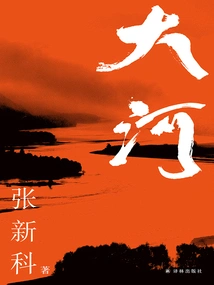
Big River
General Fiction大河
Zhang Xinke
When the Anti-Japanese War broke out, Hu Xuantao, who worked in the Jinan Public Works Bureau, resigned angrily in the face of the bleak situation and corrupt officialdom and returned to his hometown of Xuzhou on the bank of the canal. At this time, Hu Xuantao's brother and member of the Communist Party of China, Hu Xuanyu, returned to his hometown from Nanjing. The two brothers did not want to be slaves to the subjugation of their country, so they resolutely sold their property and formed an armed force to defend their homeland. Under the leadership of the two brothers, the Canal Detachment intelligently seized weapons, punished bandits, attacked traitors, and intercepted and killed Japanese troops... Its reputation spread throughout northern Jiangsu and southern Shandong, and many anti-Japanese armed forces joined its ranks. The Canal Detachment, which was affiliated to the 115th Division of the Eighth Route Army and the Fourth Division of the New Fourth Army, galloped across the land of Sulu and fought fiercely on both sides of the canal. Alongside the river, in the mining area, and among the mountains, their vigorous figures can be seen everywhere. On the Sulu secret communication line, they escorted a large number of important CCP personnel to Yan'an; inside the Japanese and puppet enemies, members of the Canal detachment explored the tiger's den alone, and captured the culprit in Longtan... They used their infinite loyalty and great wisdom and courage to fight hand-to-hand with Xiangchuan, Miura, Han Shizhong, Zhu Haochang, Sun Youzhong, Long Xizhen and other Japanese, puppet, stubborn, special and bandit forces in a bloody battle. Hu Xuanyu, Wang Tiezhu, Wang Zhixia and many other heroes of the canal detachment shed their blood until the ghosts were subdued and the bandits were subdued, and the river was calm.
When the Anti-Japanese War broke out, Hu Xuantao, who worked in the Jinan Public Works Bureau, resigned angrily in the face of the bleak situation and corrupt officialdom and returned to his hometown of Xuzhou on the bank of the canal. At this time, Hu Xuantao's brother and member of the Communist Party of China, Hu Xuanyu, returned to his hometown from Nanjing. The two brothers did not want to be slaves to the subjugation of their country, so they resolutely sold their property and formed an armed force to defend their homeland. Under the leadership of the two brothers, the Canal Detachment intelligently seized weapons, punished bandits, attacked traitors, and intercepted and killed Japanese troops... Its reputation spread throughout northern Jiangsu and southern Shandong, and many anti-Japanese armed forces joined its ranks. The Canal Detachment, which was affiliated to the 115th Division of the Eighth Route Army and the Fourth Division of the New Fourth Army, galloped across the land of Sulu and fought fiercely on both sides of the canal. Alongside the river, in the mining area, and among the mountains, their vigorous figures can be seen everywhere. On the Sulu secret communication line, they escorted a large number of important CCP personnel to Yan'an; inside the Japanese and puppet enemies, members of the Canal detachment explored the tiger's den alone, and captured the culprit in Longtan... They used their infinite loyalty and great wisdom and courage to fight hand-to-hand with Xiangchuan, Miura, Han Shizhong, Zhu Haochang, Sun Youzhong, Long Xizhen and other Japanese, puppet, stubborn, special and bandit forces in a bloody battle. Hu Xuanyu, Wang Tiezhu, Wang Zhixia and many other heroes of the canal detachment shed their blood until the ghosts were subdued and the bandits were subdued, and the river was calm.
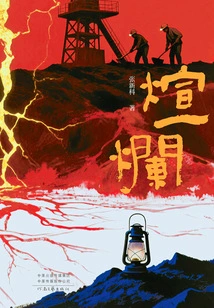
Xuanlan
General Fiction煊烂
Zhang Xinke
This is a novel telling the history of Huaihai mining development over a century. The manuscript uses the growth experience of four generations of the Geng family as the bright line and the development of the national enterprise Huaihai Mining as the hidden line. It integrates the history of personal struggle, corporate development, family and country revitalization, and national rejuvenation in the past century. It provides a panoramic description of the century-old Huaihai Mining in the Agrarian Revolution, the Anti-Japanese War, the Liberation War, and the Anti-U. S. The outstanding contributions made to the country and the nation during the period of aid to Korea, socialist construction, reform and opening up, and the development of the new era show the touching and earth-shaking story of the Huaihai people, mainly represented by Geng Zhiyuan and Geng Yongxin and their sons, for the liberation and independence of the Chinese nation, and for the rise and rejuvenation of the national industry.
This is a novel telling the history of Huaihai mining development over a century. The manuscript uses the growth experience of four generations of the Geng family as the bright line and the development of the national enterprise Huaihai Mining as the hidden line. It integrates the history of personal struggle, corporate development, family and country revitalization, and national rejuvenation in the past century. It provides a panoramic description of the century-old Huaihai Mining in the Agrarian Revolution, the Anti-Japanese War, the Liberation War, and the Anti-U. S. The outstanding contributions made to the country and the nation during the period of aid to Korea, socialist construction, reform and opening up, and the development of the new era show the touching and earth-shaking story of the Huaihai people, mainly represented by Geng Zhiyuan and Geng Yongxin and their sons, for the liberation and independence of the Chinese nation, and for the rise and rejuvenation of the national industry.
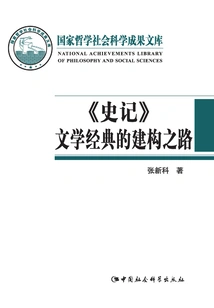
《史记》文学经典的建构之路
Zhang Xinke
Based on a comprehensive review of the literary materials and historical research of "Historical Records", this book systematically outlines the process of literary canonization of "Historical Records" based on the question of why "Historical Records" "crossed the boundary" and became a literary classic. It shows the interpretation and acceptance of the literature of "Historical Records" by different readers in different periods from the Han Dynasty to the present day, and explores the political, cultural and other reasons behind the canonization. Through comprehensive research on the history of literary interpretation, aesthetic effects, and classic influence of "Historical Records" at home and abroad for more than two thousand years, we have further understood the literary characteristics of "Historical Records" and its immortal position in the history of Chinese culture, deepened the study of "Historical Records" and Han Dynasty literature; revealed the internal and external factors that formed the literary classic of "Historical Records", and delved into the inner connection between literature and historiography; through The discussion of the literary dissemination and reader acceptance of "Historical Records" has unearthed the aesthetic psychology and aesthetic concepts of our nation; through the discussion of the process and approaches of the literary canonization of "Historical Records", it provides reference for today's literary creation and historical compilation, and then inspires contemporary writers to create vital biographical works that are accepted by readers, so it has important theoretical and practical significance.
Based on a comprehensive review of the literary materials and historical research of "Historical Records", this book systematically outlines the process of literary canonization of "Historical Records" based on the question of why "Historical Records" "crossed the boundary" and became a literary classic. It shows the interpretation and acceptance of the literature of "Historical Records" by different readers in different periods from the Han Dynasty to the present day, and explores the political, cultural and other reasons behind the canonization. Through comprehensive research on the history of literary interpretation, aesthetic effects, and classic influence of "Historical Records" at home and abroad for more than two thousand years, we have further understood the literary characteristics of "Historical Records" and its immortal position in the history of Chinese culture, deepened the study of "Historical Records" and Han Dynasty literature; revealed the internal and external factors that formed the literary classic of "Historical Records", and delved into the inner connection between literature and historiography; through The discussion of the literary dissemination and reader acceptance of "Historical Records" has unearthed the aesthetic psychology and aesthetic concepts of our nation; through the discussion of the process and approaches of the literary canonization of "Historical Records", it provides reference for today's literary creation and historical compilation, and then inspires contemporary writers to create vital biographical works that are accepted by readers, so it has important theoretical and practical significance.

Letters from the Far East (part 1)
General Fiction远东来信(上部)
Zhang Xinke
"Go to the fish market in the morning, go boating on the Alsta Lake in the afternoon, and be intoxicated in the red light district of St. Pauli in the evening." Xie Donghong always couldn't do without this sentence when showing off Hamburg, the city where he studied abroad, in front of his friends. Everyone thinks that Xie Donghong's words are insightful, not only concise but also concise. But when my friend came to Hamburg, he suddenly discovered that he was not the only one to say this. On the tour bus heading to Hamburg, the tour guides shook their heads and shouted the same sentence. Xie Donghong naturally didn't know where the tour guide found the good lines, but he knew where he learned them. Two years ago, on the first day he arrived in Hamburg, while waiting for the train at the train station, he wanted to open his eyes by picking up a copy of Playboy or FHM, which was not available in China, from the newsstand. However, he did not expect that such magazines were sealed with transparent films, and the excitement inside could not be seen without paying. So he had to take a travel brochure, and when he opened the first page, he saw this sentence. From then on, this sentence took root in Xie Donghong's heart.
"Go to the fish market in the morning, go boating on the Alsta Lake in the afternoon, and be intoxicated in the red light district of St. Pauli in the evening." Xie Donghong always couldn't do without this sentence when showing off Hamburg, the city where he studied abroad, in front of his friends. Everyone thinks that Xie Donghong's words are insightful, not only concise but also concise. But when my friend came to Hamburg, he suddenly discovered that he was not the only one to say this. On the tour bus heading to Hamburg, the tour guides shook their heads and shouted the same sentence. Xie Donghong naturally didn't know where the tour guide found the good lines, but he knew where he learned them. Two years ago, on the first day he arrived in Hamburg, while waiting for the train at the train station, he wanted to open his eyes by picking up a copy of Playboy or FHM, which was not available in China, from the newsstand. However, he did not expect that such magazines were sealed with transparent films, and the excitement inside could not be seen without paying. So he had to take a travel brochure, and when he opened the first page, he saw this sentence. From then on, this sentence took root in Xie Donghong's heart.
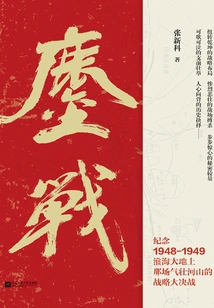
Fierce Battle
General Fiction鏖战
Zhang Xinke
"Fierce Battle" is a masterpiece of a novel that comprehensively reflects the Battle of Huaihai. From the end of 1948 to the beginning of 1949, the two major field armies of East China and the Central Plains launched a massive strategic attack on the Kuomintang troops in a vast area centered on Xuzhou, starting from Haizhou in the east, Shangqiu in the west, Lincheng in the north, and Huaihe River in the south. This was the Huaihai Campaign with the largest scale, heaviest casualties, the most complex war situation, and the most far-reaching political impact among the "three major battles" in which both sides participated. The novel "Fierce Battle" focuses on the magnificent story of how under the unified leadership of Mao Zedong, the Party Central Committee and the Central Military Commission, the Huaihai Campaign General Front Committee Liu Bocheng, Chen Yi, Deng Xiaoping, Su Yu, Tan Zhenlin and other senior commanders of our party planned the strategy, and the 600,000-strong army used the momentum of the storm to encircle and annihilate the 800,000-strong army of the Kuomintang's Xuzhou "Suppression General". It reproduces the stormy smoke and clouds of great history, not only vividly depicts the head-on confrontation between the two armies, but also vividly depicts the struggle on the hidden front, shaping the witty heroes such as Yang Yunfeng, the director of the Huaye Enemy Industry Department, Cai Yunmiao, Guo Guangyu, and Li Wanli. It features brave characters, grand and spectacular scenes, thrilling and confusing plots, and endless suspense; the work also leaves a vivid record of the selfless dedication of front-support migrant workers represented by Yang Yunlin and Qingshan, interpreting the profound connotation of the People's War. The work stirs up the righteousness of the world and shows the inevitable history. It is epic, legendary, documentary and speculative; it has a blend of strength and heat; it has realistic details, ups and downs of the plot, and a magnificent style. It can be called a landmark novel that panoramically describes the Huaihai Campaign.
"Fierce Battle" is a masterpiece of a novel that comprehensively reflects the Battle of Huaihai. From the end of 1948 to the beginning of 1949, the two major field armies of East China and the Central Plains launched a massive strategic attack on the Kuomintang troops in a vast area centered on Xuzhou, starting from Haizhou in the east, Shangqiu in the west, Lincheng in the north, and Huaihe River in the south. This was the Huaihai Campaign with the largest scale, heaviest casualties, the most complex war situation, and the most far-reaching political impact among the "three major battles" in which both sides participated. The novel "Fierce Battle" focuses on the magnificent story of how under the unified leadership of Mao Zedong, the Party Central Committee and the Central Military Commission, the Huaihai Campaign General Front Committee Liu Bocheng, Chen Yi, Deng Xiaoping, Su Yu, Tan Zhenlin and other senior commanders of our party planned the strategy, and the 600,000-strong army used the momentum of the storm to encircle and annihilate the 800,000-strong army of the Kuomintang's Xuzhou "Suppression General". It reproduces the stormy smoke and clouds of great history, not only vividly depicts the head-on confrontation between the two armies, but also vividly depicts the struggle on the hidden front, shaping the witty heroes such as Yang Yunfeng, the director of the Huaye Enemy Industry Department, Cai Yunmiao, Guo Guangyu, and Li Wanli. It features brave characters, grand and spectacular scenes, thrilling and confusing plots, and endless suspense; the work also leaves a vivid record of the selfless dedication of front-support migrant workers represented by Yang Yunlin and Qingshan, interpreting the profound connotation of the People's War. The work stirs up the righteousness of the world and shows the inevitable history. It is epic, legendary, documentary and speculative; it has a blend of strength and heat; it has realistic details, ups and downs of the plot, and a magnificent style. It can be called a landmark novel that panoramically describes the Huaihai Campaign.