Library
Browse and search books
4 novels found
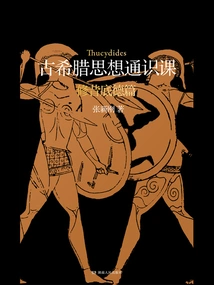
古希腊思想通识课:修昔底德篇
Zhang Xingang
In 431 BC, the 27-year Peloponnesian War broke out between two major camps within the Greek world. In this far-reaching war, various city-states and people of all colors took turns to appear, making their own choices in various extreme environments. The History of the Peloponnesian War written by the ancient Greek historian Thucydides has become a classic masterpiece of Western history. Thucydides believed that the growing power of Athens aroused fear in Sparta, and that Sparta had to respond to this threat. This logic that there must be a war between an established power and an emerging power is what later generations called the "Thucydides Trap." This book is Professor Zhang Xingang's interpretation of the book "History of the Peloponnesian War". Professor Zhang selected the most important events in the book and sorted out the causes, consequences and internal logic of the Peloponnesian War according to the course of time. He also used this to explore important issues related to the thought and spirit of the ancient Greeks, such as citizen character, city-state government, power and justice, revealing Thucydides' in-depth and complex thinking on the "human condition".
In 431 BC, the 27-year Peloponnesian War broke out between two major camps within the Greek world. In this far-reaching war, various city-states and people of all colors took turns to appear, making their own choices in various extreme environments. The History of the Peloponnesian War written by the ancient Greek historian Thucydides has become a classic masterpiece of Western history. Thucydides believed that the growing power of Athens aroused fear in Sparta, and that Sparta had to respond to this threat. This logic that there must be a war between an established power and an emerging power is what later generations called the "Thucydides Trap." This book is Professor Zhang Xingang's interpretation of the book "History of the Peloponnesian War". Professor Zhang selected the most important events in the book and sorted out the causes, consequences and internal logic of the Peloponnesian War according to the course of time. He also used this to explore important issues related to the thought and spirit of the ancient Greeks, such as citizen character, city-state government, power and justice, revealing Thucydides' in-depth and complex thinking on the "human condition".
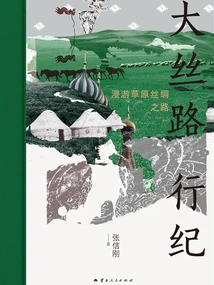
大丝路行纪:漫游草原丝绸之路
Zhang Xingang
This book is the first volume in Zhang Xingang's "Travel on the Great Silk Road" series, focusing on the Prairie Silk Road, a long-standing civilization channel. The Grassland Silk Road is connected by the prairie that runs through northern Eurasia, starting from the Greater Khingan Mountains and Hulunbuir Grassland in the east, and ending in the lower reaches of the Dnieper River that flows into the Black Sea in the west. This vast prairie has given birth to a unique civilization landscape in the history of Eurasia. This book mainly relies on the author's more than 40 years of travel and research, covering tens of thousands of kilometers and covering the cultural characteristics and historical anecdotes of various places along the Prairie Silk Road. From Inner Mongolia to Ningxia, from Lake Baikal to the Altai Mountains, from the Kazakh grasslands to the Black Sea-Caspian Sea grasslands... The author is deeply touched by the diverse customs and geographical features along the Prairie Silk Road. He uses his lens to record the changes of the times over the past few decades. He observes the past and present with profound writing skills, combs through the inextricable historical origins of different civilizations, and connects a vast and mobile map of grassland civilization.
This book is the first volume in Zhang Xingang's "Travel on the Great Silk Road" series, focusing on the Prairie Silk Road, a long-standing civilization channel. The Grassland Silk Road is connected by the prairie that runs through northern Eurasia, starting from the Greater Khingan Mountains and Hulunbuir Grassland in the east, and ending in the lower reaches of the Dnieper River that flows into the Black Sea in the west. This vast prairie has given birth to a unique civilization landscape in the history of Eurasia. This book mainly relies on the author's more than 40 years of travel and research, covering tens of thousands of kilometers and covering the cultural characteristics and historical anecdotes of various places along the Prairie Silk Road. From Inner Mongolia to Ningxia, from Lake Baikal to the Altai Mountains, from the Kazakh grasslands to the Black Sea-Caspian Sea grasslands... The author is deeply touched by the diverse customs and geographical features along the Prairie Silk Road. He uses his lens to record the changes of the times over the past few decades. He observes the past and present with profound writing skills, combs through the inextricable historical origins of different civilizations, and connects a vast and mobile map of grassland civilization.
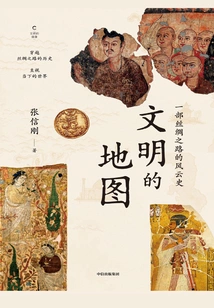
Map of Civilization
History文明的地图
Zhang Xingang
Professor Zhang Xingang has conducted in-depth research on the history, politics, and culture of various regions along the "Belt and Road" for many years, and has conducted on-site inspections and visits. He started from the perspective of historical changes, geopolitics, and cultural context of the Silk Road, and deeply analyzed the yesterday, today, and tomorrow of the "One Belt, One Road" from the perspectives of history and reality, international and domestic. In his view, the proposal of "One Belt, One Road" is not only China's strategic concept to respond to changes in the global situation and coordinate domestic and international situations, but also the historical and cultural inheritance of the Silk Road. At the same time, he incorporated his personal experience of traveling in countries along the Silk Road into the book, and used his profound cultural heritage to describe the topic of the Belt and Road in a vivid and interesting way. We can more vividly and vividly perceive the population migration, cultural integration, geopolitical situation, historical origins of various countries along the Silk Road, and the current international situation, and it is easier to grasp the cultural significance, historical inheritance and international impact of the "One Belt, One Road" initiative on China. Whether it is a macro description of the Silk Road and civilizational changes, or a separate perspective on Greater Central Asia, India, Iran, Caucasus, Turkey and other places, this book is a feast of history and culture.
Professor Zhang Xingang has conducted in-depth research on the history, politics, and culture of various regions along the "Belt and Road" for many years, and has conducted on-site inspections and visits. He started from the perspective of historical changes, geopolitics, and cultural context of the Silk Road, and deeply analyzed the yesterday, today, and tomorrow of the "One Belt, One Road" from the perspectives of history and reality, international and domestic. In his view, the proposal of "One Belt, One Road" is not only China's strategic concept to respond to changes in the global situation and coordinate domestic and international situations, but also the historical and cultural inheritance of the Silk Road. At the same time, he incorporated his personal experience of traveling in countries along the Silk Road into the book, and used his profound cultural heritage to describe the topic of the Belt and Road in a vivid and interesting way. We can more vividly and vividly perceive the population migration, cultural integration, geopolitical situation, historical origins of various countries along the Silk Road, and the current international situation, and it is easier to grasp the cultural significance, historical inheritance and international impact of the "One Belt, One Road" initiative on China. Whether it is a macro description of the Silk Road and civilizational changes, or a separate perspective on Greater Central Asia, India, Iran, Caucasus, Turkey and other places, this book is a feast of history and culture.
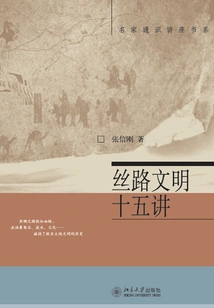
丝路文明十五讲
Zhang Xingang
This book is based on the general courses taught by the author at Shanghai Jiao Tong University, and takes the historical Silk Road as the main line to comprehensively sort out the political, economic, and cultural exchanges of human civilization on the Eurasian continent from prehistory to 1500. The author first summarizes the origins and characteristics of civilization, and then gives a lively, concrete and detailed introduction to the history of the Silk Road civilization, focusing on topics such as Alexander's Eastern Expedition and Zhang Qian's hollowing out, Kumarajiva's translation of scriptures and Fa Xian's pursuit of Dharma, the Sogdians in Sino-Western exchanges, the spread of paper to the west and the spread of letters to the east, the founding and spread of Islam, the westward migration of the Turks and the impact of the Mongolian conquest on Eurasian civilization, etc. The book outlines the history of Eurasian civilization through the Silk Road, making the complicated and magnificent history of human civilization clear and accessible.
This book is based on the general courses taught by the author at Shanghai Jiao Tong University, and takes the historical Silk Road as the main line to comprehensively sort out the political, economic, and cultural exchanges of human civilization on the Eurasian continent from prehistory to 1500. The author first summarizes the origins and characteristics of civilization, and then gives a lively, concrete and detailed introduction to the history of the Silk Road civilization, focusing on topics such as Alexander's Eastern Expedition and Zhang Qian's hollowing out, Kumarajiva's translation of scriptures and Fa Xian's pursuit of Dharma, the Sogdians in Sino-Western exchanges, the spread of paper to the west and the spread of letters to the east, the founding and spread of Islam, the westward migration of the Turks and the impact of the Mongolian conquest on Eurasian civilization, etc. The book outlines the history of Eurasian civilization through the Silk Road, making the complicated and magnificent history of human civilization clear and accessible.