Library
Browse and search books
4 novels found
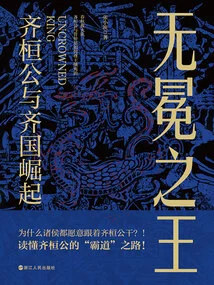
无冕之王:齐桓公与齐国崛起
Zhang Xiaoyang
The Chinese have always talked about the Five Hegemons of the Spring and Autumn Period, but what did these hegemons bring to the Chinese people? This question has never been answered. Qi Huangong's history of hegemony in the Spring and Autumn Period is undoubtedly a vivid lesson - this is an era of great powers competing for hegemony, and its political landscape is the same as today. All great powers are working tirelessly for hegemony. Which one of economy, military, culture, morality and system is the key to the rise of a great power? Overlord Qi Huan will explain the meaning of "overlord" and teach us an interesting lesson. This book describes the life of Duke Huan of Qi, the first overlord of the Spring and Autumn Period. It tells how he won the throne, used Guan Zhong in an important position, worked hard to govern, respected the king and rejected the barbarians, and united the nine princes, making Qi a dominant country, which greatly changed the structure of China at that time and had a profound impact on later generations.
The Chinese have always talked about the Five Hegemons of the Spring and Autumn Period, but what did these hegemons bring to the Chinese people? This question has never been answered. Qi Huangong's history of hegemony in the Spring and Autumn Period is undoubtedly a vivid lesson - this is an era of great powers competing for hegemony, and its political landscape is the same as today. All great powers are working tirelessly for hegemony. Which one of economy, military, culture, morality and system is the key to the rise of a great power? Overlord Qi Huan will explain the meaning of "overlord" and teach us an interesting lesson. This book describes the life of Duke Huan of Qi, the first overlord of the Spring and Autumn Period. It tells how he won the throne, used Guan Zhong in an important position, worked hard to govern, respected the king and rejected the barbarians, and united the nine princes, making Qi a dominant country, which greatly changed the structure of China at that time and had a profound impact on later generations.
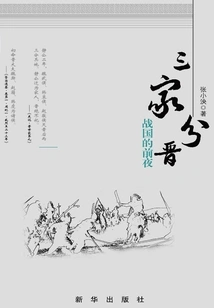
三家分晋:战国的前夜
Zhang Xiaoyang
Ten years later, Tian He, the great-grandson of Qi State official Tian Chang, deposed Qi Kanggong, destroyed Qi State's duke family, and established himself as the king of Qi State. As a result, in the land of China at this time, there were Qin State in the west, Qi State in the east, Yan State in the north, Chu State in the south, and Zhao, Han, and Wei in the middle. The situation of seven warring states vying for supremacy was officially formed. The Warring States Period began.
Ten years later, Tian He, the great-grandson of Qi State official Tian Chang, deposed Qi Kanggong, destroyed Qi State's duke family, and established himself as the king of Qi State. As a result, in the land of China at this time, there were Qin State in the west, Qi State in the east, Yan State in the north, Chu State in the south, and Zhao, Han, and Wei in the middle. The situation of seven warring states vying for supremacy was officially formed. The Warring States Period began.
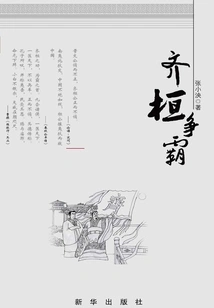
齐桓争霸
Zhang Xiaoyang
The protagonist of this book is Duke Huan of Qi - I don't want everyone to mistakenly think that this is a novel once I mention the "protagonist". The author will not be presumptuous and will slowly explain this "glorious era, glorious people" to everyone using words that are not too verbose.
The protagonist of this book is Duke Huan of Qi - I don't want everyone to mistakenly think that this is a novel once I mention the "protagonist". The author will not be presumptuous and will slowly explain this "glorious era, glorious people" to everyone using words that are not too verbose.
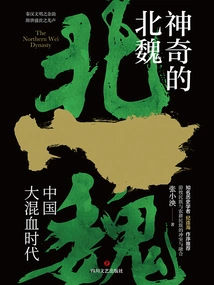
神奇的北魏
Zhang Xiaoyang
During the Northern and Southern Dynasties, when the heroes were divided and the current situation was chaotic, the Tuoba Xianbei clan, a nomadic grassland, took advantage of the situation and unified the Central Plains, establishing a magical dynasty that governed the country with the Central Plains rituals and music. "The Magical Northern Wei" takes the Wei, Jin, Southern and Northern Dynasties as the historical background, historical materials as the basis, and characters as the main line. It vividly describes the history of the Tuoba clan of the Xianbei people moving south from the frontier, enclosing the Central Plains, establishing the Northern Wei Dynasty, dividing the river with the Southern Dynasties to rule, dominating East Asia, and finally integrating with the Chinese nation. It vividly records historical events such as Emperor Daowu Tuoba Gui founded the country and proclaimed himself emperor, Emperor Taiwu Tuoba Tao unified the north, Empress Dowager Feng came to the dynasty to implement reforms, Emperor Xiaowen Yuanhong's sinicization reform, Emperor Xuanwu Yuanke Zhongli's battle, the mutiny of six towns, the rise of Er Zhurong, the split of the Northern Wei Dynasty, Gao Huan and Yuwentai's separate court resistance and other historical events. This book covers war strategies, officialdom politics, and court power. It is a popular reader of the chronological history of the Northern Wei Dynasty written for the public.
During the Northern and Southern Dynasties, when the heroes were divided and the current situation was chaotic, the Tuoba Xianbei clan, a nomadic grassland, took advantage of the situation and unified the Central Plains, establishing a magical dynasty that governed the country with the Central Plains rituals and music. "The Magical Northern Wei" takes the Wei, Jin, Southern and Northern Dynasties as the historical background, historical materials as the basis, and characters as the main line. It vividly describes the history of the Tuoba clan of the Xianbei people moving south from the frontier, enclosing the Central Plains, establishing the Northern Wei Dynasty, dividing the river with the Southern Dynasties to rule, dominating East Asia, and finally integrating with the Chinese nation. It vividly records historical events such as Emperor Daowu Tuoba Gui founded the country and proclaimed himself emperor, Emperor Taiwu Tuoba Tao unified the north, Empress Dowager Feng came to the dynasty to implement reforms, Emperor Xiaowen Yuanhong's sinicization reform, Emperor Xuanwu Yuanke Zhongli's battle, the mutiny of six towns, the rise of Er Zhurong, the split of the Northern Wei Dynasty, Gao Huan and Yuwentai's separate court resistance and other historical events. This book covers war strategies, officialdom politics, and court power. It is a popular reader of the chronological history of the Northern Wei Dynasty written for the public.