Library
Browse and search books
4 novels found
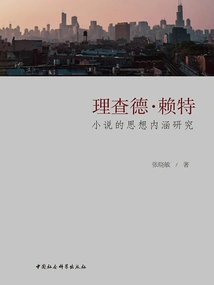
理查德·赖特小说的思想内涵研究
Zhang Xiaomin
This book mainly studies the ideological connotation of Richard Wright's novels, covering four aspects: first, the source of Wright's creation, that is, the life experiences he has seen and felt since his childhood; second, the cultural logic and ethical and political thoughts of Wright's novels, which are Wright's ideological program for literary creation; third, the textual interpretation of Wright's representative works created in different periods; fourth, a discussion of Wright's chain role in the development history of African-American literature.
This book mainly studies the ideological connotation of Richard Wright's novels, covering four aspects: first, the source of Wright's creation, that is, the life experiences he has seen and felt since his childhood; second, the cultural logic and ethical and political thoughts of Wright's novels, which are Wright's ideological program for literary creation; third, the textual interpretation of Wright's representative works created in different periods; fourth, a discussion of Wright's chain role in the development history of African-American literature.
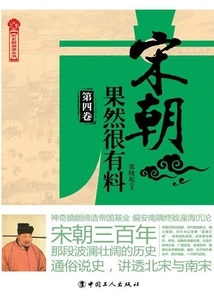
宋朝果然很有料(第四卷)
Zhang Xiaomin
This book mainly tells about some political and foreign policies during the reign of Song Zhenzong Zhao Heng. In this volume, it is mainly written that after the "Chanyuan Alliance", Song Zhenzong became politically depressed, indulged in enshrining Zen, engaged in superstitious activities, and delayed political affairs, which led to the villain in power in the later period of his rule and the crisis in the prosperous age. This volume ends with the death of Song Zhenzong.
This book mainly tells about some political and foreign policies during the reign of Song Zhenzong Zhao Heng. In this volume, it is mainly written that after the "Chanyuan Alliance", Song Zhenzong became politically depressed, indulged in enshrining Zen, engaged in superstitious activities, and delayed political affairs, which led to the villain in power in the later period of his rule and the crisis in the prosperous age. This volume ends with the death of Song Zhenzong.
宋朝果然很有料·第七卷
Zhang Xiaomin
This book mainly covers events during the reigns of Song Shenzong, Song Huizong and Song Qinzong. In the last era of the Northern Song Dynasty, people such as Song Shenzong Zhao Xiang, Wang Anshi, Sima Guang, Song Zhezong Zhao Xu, Su Shi Zhangchun, Song Huizong Zhao Ji, and Cai Jingtong Guan successively stepped onto the stage of history and staged the last events of the Northern Song Dynasty.
This book mainly covers events during the reigns of Song Shenzong, Song Huizong and Song Qinzong. In the last era of the Northern Song Dynasty, people such as Song Shenzong Zhao Xiang, Wang Anshi, Sima Guang, Song Zhezong Zhao Xu, Su Shi Zhangchun, Song Huizong Zhao Ji, and Cai Jingtong Guan successively stepped onto the stage of history and staged the last events of the Northern Song Dynasty.
宋朝果然很有料·第六卷
Zhang Xiaomin
This book mainly tells that after Song Renzong came to the throne, Fan Zhongyan, Ouyang Xiu, Su Shi, Bao Zheng and other good officials and generals successively stepped onto the stage of history and jointly wrote the splendid epic of the empire. However, during Renzong's reign, border wars broke out again - the invasion of Xixia and the game between Song and Liao. The use of troops for many years resulted in "three redundancies and three expenses" for the imperial court. In this context, the Qingli New Deal... Tells history in a popular way and is humorous; the author writes about the Song Dynasty and also comments on some human nature. History is changing, but human nature remains unchanged.
This book mainly tells that after Song Renzong came to the throne, Fan Zhongyan, Ouyang Xiu, Su Shi, Bao Zheng and other good officials and generals successively stepped onto the stage of history and jointly wrote the splendid epic of the empire. However, during Renzong's reign, border wars broke out again - the invasion of Xixia and the game between Song and Liao. The use of troops for many years resulted in "three redundancies and three expenses" for the imperial court. In this context, the Qingli New Deal... Tells history in a popular way and is humorous; the author writes about the Song Dynasty and also comments on some human nature. History is changing, but human nature remains unchanged.