Library
Browse and search books
3 novels found
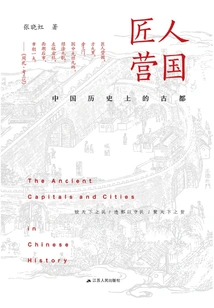
匠人营国:中国历史上的古都
Zhang Xiaohong
This book is divided into three parts, with a total of nine chapters. "Archaeology and the Age of Legend" examines the origins of early cities and explores the history of capitals in the Xia, Shang and Zhou dynasties. "Ancient Capital Chapter" introduces and describes the establishment and migration of the ancient capital, the capital and its companion capital, the evolution of urban form and the development of capital society. "City Chapter" analyzes cities and economy, cities and transportation, as well as cities and Sino-foreign exchanges in ancient China.
This book is divided into three parts, with a total of nine chapters. "Archaeology and the Age of Legend" examines the origins of early cities and explores the history of capitals in the Xia, Shang and Zhou dynasties. "Ancient Capital Chapter" introduces and describes the establishment and migration of the ancient capital, the capital and its companion capital, the evolution of urban form and the development of capital society. "City Chapter" analyzes cities and economy, cities and transportation, as well as cities and Sino-foreign exchanges in ancient China.
The City is a Flowery Dress
Literature城市是件花衣裳
Zhang Xiaohong
"The City is a Flowery Clothes" is the essence of Professor Zhang Xiaohong's thinking on "fetishes", known as China's "Susan Sontag". "Fetishism" is a popular cultural trend in the twentieth century. From the perspective of "fetish", masterpieces by Zhang Ailing, Lu Xun, Jin Yong and other famous figures are presented to readers in a fresh and interesting way.
"The City is a Flowery Clothes" is the essence of Professor Zhang Xiaohong's thinking on "fetishes", known as China's "Susan Sontag". "Fetishism" is a popular cultural trend in the twentieth century. From the perspective of "fetish", masterpieces by Zhang Ailing, Lu Xun, Jin Yong and other famous figures are presented to readers in a fresh and interesting way.
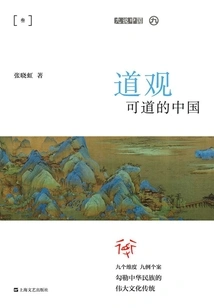
道观可道的中国(九说中国)
Zhang Xiaohong
Taoist temples are important places for Taoists to worship and practice. They are often hidden in a considerable number of Taoist holy places. If a Taoist master comes here to practice Buddhism, or even writes a book, then the reputation of these Taoist temples will naturally spread widely. Therefore, together with the famous Taoist mountains, they constitute an important part of the Taoist cave heaven and blessed land. The distribution, rise and fall of these cave-heaven blessed lands all over China are closely related to the development of Taoism. Therefore, this book selects nine representative Cave Heaven Blessed Lands, trying to reflect the formation and development of Taoism through them, and from them, it can see the role and influence of Taoism, a local religion, on the spiritual and cultural life of the Chinese people. Zhang Xiaohong is the director, professor and doctoral supervisor of the Chinese Institute of Historical Geography, the director of the Historical Geography Center of Fudan University, a key research base for humanities and social sciences of the Ministry of Education, a Harvard-Yenching Scholar in 2002-2003, and currently the vice president of the Shanghai Geographical Society. Mainly engaged in research on historical urban geography and historical and cultural geography. He has presided over a number of research projects of the National Natural Science Foundation, the National Social Science Foundation and the Ministry of Education. He is the author of the monographs "Differentiation and Integration of Cultural Regions - Research on the Historical and Cultural Geography of Shaanxi", "Ancient Capitals and Cities", and editors of "What All Peoples Depend on: Architecture and Imagery", "Dongtian Blessed Land", etc.
Taoist temples are important places for Taoists to worship and practice. They are often hidden in a considerable number of Taoist holy places. If a Taoist master comes here to practice Buddhism, or even writes a book, then the reputation of these Taoist temples will naturally spread widely. Therefore, together with the famous Taoist mountains, they constitute an important part of the Taoist cave heaven and blessed land. The distribution, rise and fall of these cave-heaven blessed lands all over China are closely related to the development of Taoism. Therefore, this book selects nine representative Cave Heaven Blessed Lands, trying to reflect the formation and development of Taoism through them, and from them, it can see the role and influence of Taoism, a local religion, on the spiritual and cultural life of the Chinese people. Zhang Xiaohong is the director, professor and doctoral supervisor of the Chinese Institute of Historical Geography, the director of the Historical Geography Center of Fudan University, a key research base for humanities and social sciences of the Ministry of Education, a Harvard-Yenching Scholar in 2002-2003, and currently the vice president of the Shanghai Geographical Society. Mainly engaged in research on historical urban geography and historical and cultural geography. He has presided over a number of research projects of the National Natural Science Foundation, the National Social Science Foundation and the Ministry of Education. He is the author of the monographs "Differentiation and Integration of Cultural Regions - Research on the Historical and Cultural Geography of Shaanxi", "Ancient Capitals and Cities", and editors of "What All Peoples Depend on: Architecture and Imagery", "Dongtian Blessed Land", etc.