Library
Browse and search books
4 novels found
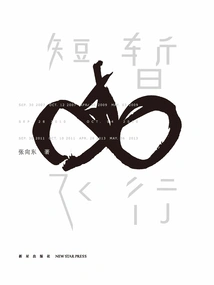
Short Flight
Literature短暂飞行
Zhang Xiangdong
What will you encounter when riding alone on the blue coastline where you don't understand the language? What do you see when you stand in the wind where the Indian and Atlantic oceans meet? What do you think of when you walk through the mountains, forests and lakes of Argentina in the rain? ... He wrote his conversations with himself in this book. It took 10 years to create a listed company, and 7 years to travel across five continents. This is the meditation of Internet entrepreneur Zhang Xiangdong who has accumulated many years of experience. This is not a travel book. It not only depicts the different colors of ocean blue seen along the way, and the guide who miraculously appears when he gets lost, but also paints a picture into the darkness of his heart. Does the colorful movement of life make people nostalgic, or is boring the most charming part? How to find it? Or is clinging to oneself a kind of loss? Life is painful, so why fear death? If you live happily, why do you expect it to end? When you are young, the world is your enemy. Now, learn how to get along with the world. In the end, it will become a piece of dust in this world. Starting from a bicycle in his childhood, Zhang Xiangdong shared his understanding of entrepreneurship and life through encounters and contemplation. This is a "meditation" from the beginning of cycling to the conclusion of entrepreneurial insights.
What will you encounter when riding alone on the blue coastline where you don't understand the language? What do you see when you stand in the wind where the Indian and Atlantic oceans meet? What do you think of when you walk through the mountains, forests and lakes of Argentina in the rain? ... He wrote his conversations with himself in this book. It took 10 years to create a listed company, and 7 years to travel across five continents. This is the meditation of Internet entrepreneur Zhang Xiangdong who has accumulated many years of experience. This is not a travel book. It not only depicts the different colors of ocean blue seen along the way, and the guide who miraculously appears when he gets lost, but also paints a picture into the darkness of his heart. Does the colorful movement of life make people nostalgic, or is boring the most charming part? How to find it? Or is clinging to oneself a kind of loss? Life is painful, so why fear death? If you live happily, why do you expect it to end? When you are young, the world is your enemy. Now, learn how to get along with the world. In the end, it will become a piece of dust in this world. Starting from a bicycle in his childhood, Zhang Xiangdong shared his understanding of entrepreneurship and life through encounters and contemplation. This is a "meditation" from the beginning of cycling to the conclusion of entrepreneurial insights.
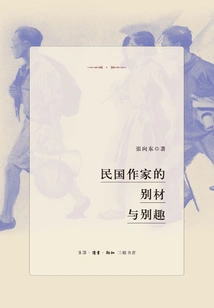
民国作家的别材与别趣
Zhang Xiangdong
The subjects discussed in this book include eight writers (artists) including Lu Xun, Hu Shi, Gu Jiegang, Luo Jialun, Yi Junzuo, Ding Ling, Hong Shen and Xu Beihong. These eight writers have different identities. Some are scholars, some are writers, and some hold multiple responsibilities; some are famous, and some are little known. Some of their life trajectories ended up in the mainland, and some drifted overseas; their creations were either focused on enlightenment, or devoted to personal interests, a mixture of new and old, public and private, poetry, calligraphy and painting, all good at them... In short, it is difficult to summarize them in one word. The research angle chosen by the author is an aspect that is not paid much attention in general research, including their little-known life experiences and personal interests, Gaga's unique artistic creation, maverick personality, etc., Presenting to readers the "unique talents" and "unique interests" of these artists that are not well known.
The subjects discussed in this book include eight writers (artists) including Lu Xun, Hu Shi, Gu Jiegang, Luo Jialun, Yi Junzuo, Ding Ling, Hong Shen and Xu Beihong. These eight writers have different identities. Some are scholars, some are writers, and some hold multiple responsibilities; some are famous, and some are little known. Some of their life trajectories ended up in the mainland, and some drifted overseas; their creations were either focused on enlightenment, or devoted to personal interests, a mixture of new and old, public and private, poetry, calligraphy and painting, all good at them... In short, it is difficult to summarize them in one word. The research angle chosen by the author is an aspect that is not paid much attention in general research, including their little-known life experiences and personal interests, Gaga's unique artistic creation, maverick personality, etc., Presenting to readers the "unique talents" and "unique interests" of these artists that are not well known.
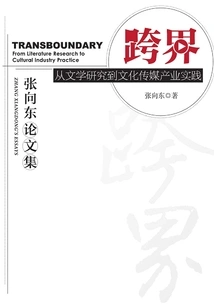
跨界:从文学研究到文化传媒产业实践
Zhang Xiangdong
This book contains 37 papers published by the author from 1994 to 2019, including 15 academic papers on literary research, 16 papers on news communication and media economics and management, and 6 papers on media investment. It mainly records the author's journey from literary academic research to news media academic research over the past twenty years, from the news media academic research world to the news media industry, and then from the news media industry to the cultural media investment industry. It records the author's thinking process and insights into literature and media, and reflects his life trends, career and value pursuits from one side.
This book contains 37 papers published by the author from 1994 to 2019, including 15 academic papers on literary research, 16 papers on news communication and media economics and management, and 6 papers on media investment. It mainly records the author's journey from literary academic research to news media academic research over the past twenty years, from the news media academic research world to the news media industry, and then from the news media industry to the cultural media investment industry. It records the author's thinking process and insights into literature and media, and reflects his life trends, career and value pursuits from one side.
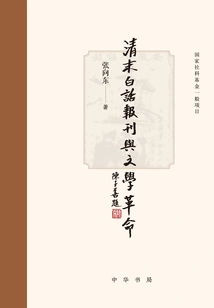
清末白话报刊与文学革命
Zhang Xiangdong
The vernacular newspapers and periodicals of the late Qing Dynasty were the forerunners of the May Fourth literary revolution. "Vernacular Newspapers and the Literary Revolution in the Late Qing Dynasty" comprehensively analyzes the connection between the vernacular newspapers and the literary revolution in the late Qing Dynasty, and re-understands the emergence and evolution of the May Fourth Literary Revolution in the late Qing Dynasty.
The vernacular newspapers and periodicals of the late Qing Dynasty were the forerunners of the May Fourth literary revolution. "Vernacular Newspapers and the Literary Revolution in the Late Qing Dynasty" comprehensively analyzes the connection between the vernacular newspapers and the literary revolution in the late Qing Dynasty, and re-understands the emergence and evolution of the May Fourth Literary Revolution in the late Qing Dynasty.