Library
Browse and search books
3 novels found
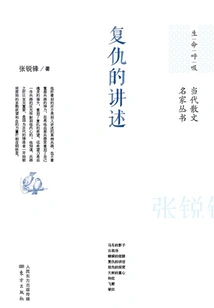
Narration of Revenge
Literature复仇的讲述
Zhang Ruifeng
"A Narration of Revenge" maintains the consistent style of the author Zhang Ruifeng, which focuses on discovery and thinking in the narrative, attaches great importance to the connection between fragments, and establishes a unique structural form of prose, with complex angles and a broad theme coastline. The interweaving of rural memories and the real world, the connection between various childhood scenes and hidden cultural symbols. People's various memories actually record basic images of the world, full of symbols and hints. From different angles, we reveal the deep content that has always been hidden behind the phenomena, understand the small facts that we have never thought about, and gradually shift our sight from external things to our own hearts.
"A Narration of Revenge" maintains the consistent style of the author Zhang Ruifeng, which focuses on discovery and thinking in the narrative, attaches great importance to the connection between fragments, and establishes a unique structural form of prose, with complex angles and a broad theme coastline. The interweaving of rural memories and the real world, the connection between various childhood scenes and hidden cultural symbols. People's various memories actually record basic images of the world, full of symbols and hints. From different angles, we reveal the deep content that has always been hidden behind the phenomena, understand the small facts that we have never thought about, and gradually shift our sight from external things to our own hearts.
Zhang Ruifeng's Prose
Literature张锐锋散文
Zhang Ruifeng
Zhang Ruifeng is one of the initiators and representative writers of "New Prose" in the 1990s. His prose is huge, powerful, broad and thick, with complexity and internal structure. It breaks the solid prose pattern in the past, expands the boundaries of prose, and gives people a completely new look. He is good at selecting allegorical materials, interweaving multiple elements, making ordinary events appear strange, forming a deep and magical effect like a symphony, showing the warmth hidden in complex past events, and has influenced a group of young prose writers. This book selects dozens of Zhang Ruifeng's essays, including representative works such as "Deep Red", "Paradise Lost", "Arithmetic Problems" and "A Narration of Revenge" that recall rural life; as well as recent works such as "Fairy Mountain", "Running Shadows of Mountains" and "Notes on the West Chamber" that eulogize nature with profound meaning. It also selects some reading notes "Kafka's Puzzle", which can basically present the author's creative style from different aspects.
Zhang Ruifeng is one of the initiators and representative writers of "New Prose" in the 1990s. His prose is huge, powerful, broad and thick, with complexity and internal structure. It breaks the solid prose pattern in the past, expands the boundaries of prose, and gives people a completely new look. He is good at selecting allegorical materials, interweaving multiple elements, making ordinary events appear strange, forming a deep and magical effect like a symphony, showing the warmth hidden in complex past events, and has influenced a group of young prose writers. This book selects dozens of Zhang Ruifeng's essays, including representative works such as "Deep Red", "Paradise Lost", "Arithmetic Problems" and "A Narration of Revenge" that recall rural life; as well as recent works such as "Fairy Mountain", "Running Shadows of Mountains" and "Notes on the West Chamber" that eulogize nature with profound meaning. It also selects some reading notes "Kafka's Puzzle", which can basically present the author's creative style from different aspects.
Kafka Puzzle (1-15)
Literature卡夫卡谜题(1—15)
Zhang Ruifeng
Who knows that there is no trace of spring, unless you ask the oriole for hundreds of turns, no one can explain it because the wind flies over the roses - Huang Tingjian. ......Autumn. The leaves in the mountains stopped photosynthesis and returned their remaining nutrients to their parent plants. A dazzling color feast begins. Various trees compete to reveal their last brilliant light, and the leaves that are about to break away from the branches show a colorful scene. This is the last scene, a brilliant scene. Why do they leave prophecies of the future in a language that only flowers can speak in summer? What exactly do they want to express? Is it a sigh of annual reincarnation? Or is it a reward for your own destiny?
Who knows that there is no trace of spring, unless you ask the oriole for hundreds of turns, no one can explain it because the wind flies over the roses - Huang Tingjian. ......Autumn. The leaves in the mountains stopped photosynthesis and returned their remaining nutrients to their parent plants. A dazzling color feast begins. Various trees compete to reveal their last brilliant light, and the leaves that are about to break away from the branches show a colorful scene. This is the last scene, a brilliant scene. Why do they leave prophecies of the future in a language that only flowers can speak in summer? What exactly do they want to express? Is it a sigh of annual reincarnation? Or is it a reward for your own destiny?