Library
Browse and search books
5 novels found
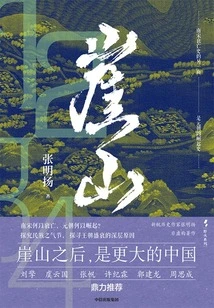
Yashan
History崖山
Zhang Mingyang
The Battle of Yashan was a famous battle that affected the course of Chinese history. In 1279, the Mongolian army and the Southern Song Dynasty army launched a large-scale naval battle on the sea in Yashan, Xinhui, Guangdong. In the end, the Southern Song Dynasty army was defeated, and Lu Xiufu threw himself into the sea and died for his country in the face of the last emperor Zhao Bing. This book uses twelve place names in history (Caizhou, Diaoyu City, Ezhou, Shangdu, Yidu, Luzhou, Xiangyang, Dadu, Dingjiazhou, Lin'an, Yashan and Lingdingyang) as clues. It starts from the "Duanping Enters Luo" in 1234 and continues to the demise of the Southern Song Dynasty in 1279, which spans nearly fifty years. The book is divided into two main lines. One line explores the demise of the Southern Song Dynasty, and the other line explores the rise of the Yuan Dynasty. At the same time, from multiple perspectives such as politics, diplomacy, culture, and military, it vividly describes the entire process from the Mongolian Song Dynasty's destruction of the Jin Dynasty to the Battle of Yashan, the fierce battle in Xiangyang, the surrender of Lin'an, the demise of the Southern Song Dynasty, and finally Wen Tianxiang's death. The description is magnificent and tragic. The author uses careful and delicate writing to describe the fate and choices of many historical figures such as Kublai Khan, Meng Ge, Wang Wentong, Ahema, Lu Wenhuan, Jia Sidao, Liu Zheng, Wen Tianxiang, etc., Striving to restore a true historical situation. Beyond Yashan lies a larger China.
The Battle of Yashan was a famous battle that affected the course of Chinese history. In 1279, the Mongolian army and the Southern Song Dynasty army launched a large-scale naval battle on the sea in Yashan, Xinhui, Guangdong. In the end, the Southern Song Dynasty army was defeated, and Lu Xiufu threw himself into the sea and died for his country in the face of the last emperor Zhao Bing. This book uses twelve place names in history (Caizhou, Diaoyu City, Ezhou, Shangdu, Yidu, Luzhou, Xiangyang, Dadu, Dingjiazhou, Lin'an, Yashan and Lingdingyang) as clues. It starts from the "Duanping Enters Luo" in 1234 and continues to the demise of the Southern Song Dynasty in 1279, which spans nearly fifty years. The book is divided into two main lines. One line explores the demise of the Southern Song Dynasty, and the other line explores the rise of the Yuan Dynasty. At the same time, from multiple perspectives such as politics, diplomacy, culture, and military, it vividly describes the entire process from the Mongolian Song Dynasty's destruction of the Jin Dynasty to the Battle of Yashan, the fierce battle in Xiangyang, the surrender of Lin'an, the demise of the Southern Song Dynasty, and finally Wen Tianxiang's death. The description is magnificent and tragic. The author uses careful and delicate writing to describe the fate and choices of many historical figures such as Kublai Khan, Meng Ge, Wang Wentong, Ahema, Lu Wenhuan, Jia Sidao, Liu Zheng, Wen Tianxiang, etc., Striving to restore a true historical situation. Beyond Yashan lies a larger China.
Shi Buyu
Literature史不语
Zhang Mingyang
This is a compilation of the author's historical reading notes in recent years. "The Analects of Confucius·Shuer": "The Master did not talk about strangeness, power, chaos, and gods." In the era when Confucius was the most sage teacher, what Confucius did not talk about was what the Confucian scholar-bureaucrats did not talk about, did not praise, and could not bear to talk about, that is, the trend of the atmosphere. The author borrowed the name "Zi Buyu" from "Zi Buyu" to name this book "Shi Buyu". The "history" in "Shi Buyu" does not refer to history in the general sense, but specifically refers to our common historical cognition. Shi Wuyu but my words refer to academic monographs published in recent years and use popular language to convey fresh historical knowledge and academic viewpoints.
This is a compilation of the author's historical reading notes in recent years. "The Analects of Confucius·Shuer": "The Master did not talk about strangeness, power, chaos, and gods." In the era when Confucius was the most sage teacher, what Confucius did not talk about was what the Confucian scholar-bureaucrats did not talk about, did not praise, and could not bear to talk about, that is, the trend of the atmosphere. The author borrowed the name "Zi Buyu" from "Zi Buyu" to name this book "Shi Buyu". The "history" in "Shi Buyu" does not refer to history in the general sense, but specifically refers to our common historical cognition. Shi Wuyu but my words refer to academic monographs published in recent years and use popular language to convey fresh historical knowledge and academic viewpoints.
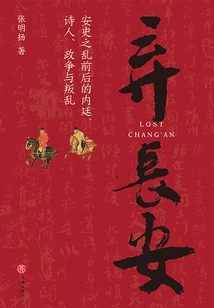
弃长安:安史之乱前后的内廷、诗人、政争与叛乱
Zhang Mingyang
This book is a popular work that tells the historical process and the fate of characters during the Anshi Rebellion in the Tang Dynasty. It uses the stories of many key historical figures in the Anshi Rebellion, namely Li Linfu, Yang Guozhong, An Lushan, Yan Gaoqing, Ge Shuhan, Yang Yuhuan, Li Heng, Zhang Xun and others. The experience of "abandoning Chang'an" is used as a clue to focus on the important issues in the process of the Tang Dynasty's transition from prosperity to decline. It uses the experiences of people who experienced the chaos to explain "why the chaos broke out" and "why the prosperous age collapsed", thereby re-creating the complete historical picture of the Anshi Rebellion period.
This book is a popular work that tells the historical process and the fate of characters during the Anshi Rebellion in the Tang Dynasty. It uses the stories of many key historical figures in the Anshi Rebellion, namely Li Linfu, Yang Guozhong, An Lushan, Yan Gaoqing, Ge Shuhan, Yang Yuhuan, Li Heng, Zhang Xun and others. The experience of "abandoning Chang'an" is used as a clue to focus on the important issues in the process of the Tang Dynasty's transition from prosperity to decline. It uses the experiences of people who experienced the chaos to explain "why the chaos broke out" and "why the prosperous age collapsed", thereby re-creating the complete historical picture of the Anshi Rebellion period.
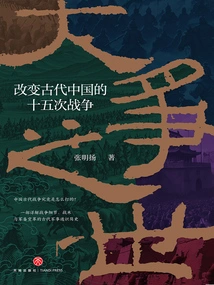
大争之世:改变古代中国的十五次战争
Zhang Mingyang
This book selects fifteen representative wars from the pre-Qin Dynasty to the Qing Dynasty, such as the Battle of Chu-Han, the Battle of Feishui, the Battle of Han-Hungary, the Battle of Song-Jin Dynasty, the Battle of Ningyuan, etc., And combines ancient documentary records and military theories to interpret in detail the multiple factors and details that determine the outcome of a war - types of troops, equipment, weapons, tactics, logistics, terrain, formations, etc., To restore the actual situation of ancient battlefields and clarify the military legends performed by later generations. This book pays special attention to the promotion of military innovation by the competitive pressure among ancient Chinese regimes. It is a new attempt to study the evolution of ancient Chinese war history and war methods by sorting out the evolution of ancient weapons and tactics.
This book selects fifteen representative wars from the pre-Qin Dynasty to the Qing Dynasty, such as the Battle of Chu-Han, the Battle of Feishui, the Battle of Han-Hungary, the Battle of Song-Jin Dynasty, the Battle of Ningyuan, etc., And combines ancient documentary records and military theories to interpret in detail the multiple factors and details that determine the outcome of a war - types of troops, equipment, weapons, tactics, logistics, terrain, formations, etc., To restore the actual situation of ancient battlefields and clarify the military legends performed by later generations. This book pays special attention to the promotion of military innovation by the competitive pressure among ancient Chinese regimes. It is a new attempt to study the evolution of ancient Chinese war history and war methods by sorting out the evolution of ancient weapons and tactics.
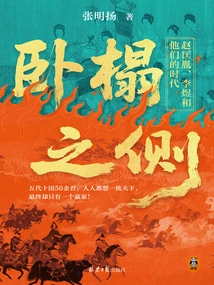
On the Side of the Couch: Zhao Kuangyin, Li Yu and Their Era (prototype History of the Taiping Year)
History卧榻之侧:赵匡胤、李煜和他们的时代(太平年原型历史)
Zhang Mingyang
"Don't allow others to snore on the side of the bed!" Zhao Kuangyin's final declaration of annihilation of the Southern Tang Dynasty demonstrated his firm belief in the unification of the world. After thousands of years, it still carries the sound of wind and thunder. Zhang Mingyang uses the literary style of gratification and grudges, two main lines of north and south, and dual perspectives of Zhao Kuangyin and Li Yu to recreate the soul-stirring Five Dynasties and Ten Kingdoms: This is an epic epic that splits the continent and must be reunited after a long time. From Guo Wei, Chai Rong to Zhao Brothers, there are many heroes in the north, whether to "stop war with war" or "promote unification with peace", they are fighting at every step; from the Li family of the Southern Tang Dynasty to King Qian of Wu and Yue, the political power in the south is relatively peaceful, whether to fight to the death or to "accept land and surrender to the Song Dynasty", they are in a dilemma of survival. This is a cruel trial in troubled times where people are trapped and beasts still fight. Feng Dao went through four dynasties and was scolded as a "shameless person", but he also maintained the cultural heritage and people's livelihood; Han Xizai indulged in sensuality, but could not hide the painful struggle after his ideals were disillusioned; Qian Chu accepted the soil and surrendered to the Song Dynasty to protect the peace of Wu and Yue, but he was still worried about his own safety...
"Don't allow others to snore on the side of the bed!" Zhao Kuangyin's final declaration of annihilation of the Southern Tang Dynasty demonstrated his firm belief in the unification of the world. After thousands of years, it still carries the sound of wind and thunder. Zhang Mingyang uses the literary style of gratification and grudges, two main lines of north and south, and dual perspectives of Zhao Kuangyin and Li Yu to recreate the soul-stirring Five Dynasties and Ten Kingdoms: This is an epic epic that splits the continent and must be reunited after a long time. From Guo Wei, Chai Rong to Zhao Brothers, there are many heroes in the north, whether to "stop war with war" or "promote unification with peace", they are fighting at every step; from the Li family of the Southern Tang Dynasty to King Qian of Wu and Yue, the political power in the south is relatively peaceful, whether to fight to the death or to "accept land and surrender to the Song Dynasty", they are in a dilemma of survival. This is a cruel trial in troubled times where people are trapped and beasts still fight. Feng Dao went through four dynasties and was scolded as a "shameless person", but he also maintained the cultural heritage and people's livelihood; Han Xizai indulged in sensuality, but could not hide the painful struggle after his ideals were disillusioned; Qian Chu accepted the soil and surrendered to the Song Dynasty to protect the peace of Wu and Yue, but he was still worried about his own safety...