Library
Browse and search books
5 novels found
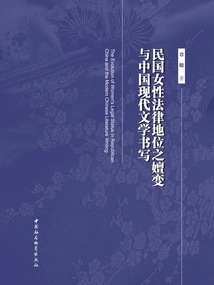
民国女性法律地位之嬗变与中国现代文学书写
Zhang Min
The status of women is one of the important yardsticks for measuring the degree of social civilization. Although the Republic of China lasted only a few decades, women's legal status encountered changes unprecedented in thousands of years during this historical period. For the first time, this book systematically examines the evolution of women's legal status in the Republic of China and modern Chinese literary writing and the "interaction" between the two in the context of the entire social, historical, political and cultural changes. It comprehensively combs the relationship between the evolution of women's legal status in traditional rural society, urban space, Soviet areas and liberated areas during the Republic of China and modern Chinese literary writing, in order to explore the historical process of changes in women's legal status and living conditions in the Republic of China and its impact on literary creation, as well as the role of literature on this historical process. This book is an intertextual examination of legal provisions, historical materials and literary texts. It re-examines and interprets some writers' works that have been ignored by previous literary history from the perspectives of women's history and legal history. It also provides new interpretations of some classic works in literary history, and outlines a modern literary picture of the changes in the legal status of women in the Republic of China. This provides a new interpretation space for literature and a new understanding of this period of history. It also has implications for the living conditions of women in today's society.
The status of women is one of the important yardsticks for measuring the degree of social civilization. Although the Republic of China lasted only a few decades, women's legal status encountered changes unprecedented in thousands of years during this historical period. For the first time, this book systematically examines the evolution of women's legal status in the Republic of China and modern Chinese literary writing and the "interaction" between the two in the context of the entire social, historical, political and cultural changes. It comprehensively combs the relationship between the evolution of women's legal status in traditional rural society, urban space, Soviet areas and liberated areas during the Republic of China and modern Chinese literary writing, in order to explore the historical process of changes in women's legal status and living conditions in the Republic of China and its impact on literary creation, as well as the role of literature on this historical process. This book is an intertextual examination of legal provisions, historical materials and literary texts. It re-examines and interprets some writers' works that have been ignored by previous literary history from the perspectives of women's history and legal history. It also provides new interpretations of some classic works in literary history, and outlines a modern literary picture of the changes in the legal status of women in the Republic of China. This provides a new interpretation space for literature and a new understanding of this period of history. It also has implications for the living conditions of women in today's society.
Lonely Love
General Fiction孤独之恋
Zhang Min
At the foot of the mountain where two large mountains are connected, there is a school next to it. This school is a newly established primary school, covering an area of only 3,000 square meters. Its predecessor was a teaching site for grades one, two and three. Before the establishment of complete primary schools. Most children in this village are accustomed to dropping out of school after the third grade. Some even think that they only need to go to school for three years in their life. If there are outstanding students, the teachers will recommend them to the county primary school to attend grades 4, 5 and 6, and they need to live on campus, far from home, which is very inconvenient, so there are very few students in this village who insist on going to school. Although it has been expanded to include the sixth grade, the building scale of the school has not been expanded. Fortunately, there are extra buildings and three warehouses have been freed up as classrooms for the fourth, fifth and sixth grade.
At the foot of the mountain where two large mountains are connected, there is a school next to it. This school is a newly established primary school, covering an area of only 3,000 square meters. Its predecessor was a teaching site for grades one, two and three. Before the establishment of complete primary schools. Most children in this village are accustomed to dropping out of school after the third grade. Some even think that they only need to go to school for three years in their life. If there are outstanding students, the teachers will recommend them to the county primary school to attend grades 4, 5 and 6, and they need to live on campus, far from home, which is very inconvenient, so there are very few students in this village who insist on going to school. Although it has been expanded to include the sixth grade, the building scale of the school has not been expanded. Fortunately, there are extra buildings and three warehouses have been freed up as classrooms for the fourth, fifth and sixth grade.
Red Leaves (short Story)
General Fiction红叶(短篇小说)
Zhang Min
In the snowy countryside, in early summer, the mountains gradually turn green, and the highland barley grows taller, decorating the barren land particularly beautifully. Villages are sparsely distributed on the land, and the villagers' houses are all single-yard, flat-roofed Tibetan-style houses. They are sparsely distributed among the highland barley fields, or hidden among the green poplars and willows. Dolma held her daughter Ram and stood at the gate of the courtyard, staring blankly at the distant mountains, highland barley fields, and willow trees. In early summer, the sky is still so blue, with not a single white cloud in sight, and the blue sky connects with the distant mountains. A gust of wind blows, and the highland barley seedlings set off layers of wheat waves, and some even seem to form some small whirlpools. A circle of highland barley bends toward the southeast and northwest, causing the branches of the trees in the distance to sway.
In the snowy countryside, in early summer, the mountains gradually turn green, and the highland barley grows taller, decorating the barren land particularly beautifully. Villages are sparsely distributed on the land, and the villagers' houses are all single-yard, flat-roofed Tibetan-style houses. They are sparsely distributed among the highland barley fields, or hidden among the green poplars and willows. Dolma held her daughter Ram and stood at the gate of the courtyard, staring blankly at the distant mountains, highland barley fields, and willow trees. In early summer, the sky is still so blue, with not a single white cloud in sight, and the blue sky connects with the distant mountains. A gust of wind blows, and the highland barley seedlings set off layers of wheat waves, and some even seem to form some small whirlpools. A circle of highland barley bends toward the southeast and northwest, causing the branches of the trees in the distance to sway.
Look Back and Smile
General Fiction回眸一笑
Zhang Min
In the snowy area of mid-August, the night rain continued, making the mountaintops shrouded in clouds and mist in the early morning. There were cars coming and going on the asphalt road, and the roar of two walking tractors resounded throughout the land. The front tractor bed contained brand-new furniture, which was securely secured by a long rope. The driver was a middle-aged man in his fifties, wearing a black jacket and a black top hat. He was driving intently, with his eyes wide open, exuding a sense of confidence and arrogance. Following closely behind him was his eldest son, driving another walk-behind tractor. Bedding, straw mats, pots and pans were piled in the compartment, as well as a cow dung stove. There were two people sitting on the straw mat of the carriage. One was a woman about forty-five years old, the wife of the middle-aged man. She was wearing a dark brown Tibetan robe, her hair was pulled into a bun, and she had a happy smile on her plump round face. She looked back at her youngest son, Nima, from time to time.
In the snowy area of mid-August, the night rain continued, making the mountaintops shrouded in clouds and mist in the early morning. There were cars coming and going on the asphalt road, and the roar of two walking tractors resounded throughout the land. The front tractor bed contained brand-new furniture, which was securely secured by a long rope. The driver was a middle-aged man in his fifties, wearing a black jacket and a black top hat. He was driving intently, with his eyes wide open, exuding a sense of confidence and arrogance. Following closely behind him was his eldest son, driving another walk-behind tractor. Bedding, straw mats, pots and pans were piled in the compartment, as well as a cow dung stove. There were two people sitting on the straw mat of the carriage. One was a woman about forty-five years old, the wife of the middle-aged man. She was wearing a dark brown Tibetan robe, her hair was pulled into a bun, and she had a happy smile on her plump round face. She looked back at her youngest son, Nima, from time to time.
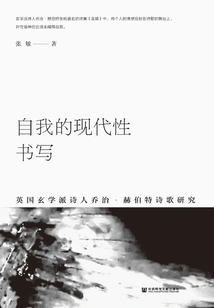
自我的现代性书写:英国玄学派诗人乔治·赫伯特诗歌研究
Zhang Min
This book explains the evolution of his attitude toward God as shown in the collection of poems "The Temple" by George Herbert, the great British metaphysical poet in the seventeenth century, and analyzes the aesthetic consciousness embodied by Herbert in the process of poetry creation.
This book explains the evolution of his attitude toward God as shown in the collection of poems "The Temple" by George Herbert, the great British metaphysical poet in the seventeenth century, and analyzes the aesthetic consciousness embodied by Herbert in the process of poetry creation.