Library
Browse and search books
6 novels found
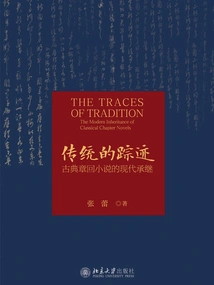
传统的踪迹:古典章回小说的现代承继
Zhang Lei
This book uses the writings of literary theorists such as F. R. Leavis and T. S. Eliot of the United Kingdom, Harold Bloom of the United States, Jacques Derrida, Julia Kristeva, Tiffena Samovayo of France, and Dewey Fokkema of the Netherlands to study and explain issues in literary history such as "tradition," "influence," "traces," and "intertextuality." It is not limited to modern categories, but also transcends internal or external research horizons.
This book uses the writings of literary theorists such as F. R. Leavis and T. S. Eliot of the United Kingdom, Harold Bloom of the United States, Jacques Derrida, Julia Kristeva, Tiffena Samovayo of France, and Dewey Fokkema of the Netherlands to study and explain issues in literary history such as "tradition," "influence," "traces," and "intertextuality." It is not limited to modern categories, but also transcends internal or external research horizons.
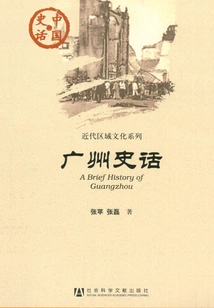
Guangzhou History
History广州史话
Zhang Lei
Guangzhou is a famous historical and cultural city in my country. Guangzhou has a long history, superior natural environment and geographical location, forming a unique local culture. Guangzhou has been the gateway to southern China and an important port for foreign trade since ancient times. It is also a city with a glorious revolutionary tradition. Many cultural and historical celebrities in modern times, such as Kang Youwei, Liang Qichao, Sun Yat-sen, etc., Have left revolutionary footprints here. And this "History of Guangzhou" will show you the city's yesterday's glory one by one.
Guangzhou is a famous historical and cultural city in my country. Guangzhou has a long history, superior natural environment and geographical location, forming a unique local culture. Guangzhou has been the gateway to southern China and an important port for foreign trade since ancient times. It is also a city with a glorious revolutionary tradition. Many cultural and historical celebrities in modern times, such as Kang Youwei, Liang Qichao, Sun Yat-sen, etc., Have left revolutionary footprints here. And this "History of Guangzhou" will show you the city's yesterday's glory one by one.
Can't Feel You (novelette)
General Fiction感觉不到你(中篇小说)
Zhang Lei
Destiny is really like a snail's shell, accumulating gradually as the years go by. The brown birds flew away, and the black shadows faded into the clouds. The little boy looked up. After a while, he lowered his head and sighed softly. A snail is on the ground, with its head held high and its shell on its back, crawling slowly. There is a thin, bright trail behind it. With a surprised smile, the boy picked up the snail with a piece of bamboo. The snail suddenly jumped into the air and looked around blankly. The boy smiled and touched the snail's shell with his fingers, admiring the snail's panic. Later, the boy took out a small copper box from his arms. He had gone to great lengths to get this from his doting grandfather in the morning, and he liked it very much.
Destiny is really like a snail's shell, accumulating gradually as the years go by. The brown birds flew away, and the black shadows faded into the clouds. The little boy looked up. After a while, he lowered his head and sighed softly. A snail is on the ground, with its head held high and its shell on its back, crawling slowly. There is a thin, bright trail behind it. With a surprised smile, the boy picked up the snail with a piece of bamboo. The snail suddenly jumped into the air and looked around blankly. The boy smiled and touched the snail's shell with his fingers, admiring the snail's panic. Later, the boy took out a small copper box from his arms. He had gone to great lengths to get this from his doting grandfather in the morning, and he liked it very much.
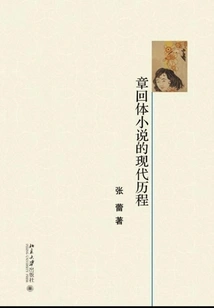
The Modern History of Chapter Novels
Literature章回体小说的现代历程
Zhang Lei
"The Modern Course of Chapter Novels" draws on Western cultural morphology methods to accurately grasp the relationship between Chinese chapter novels themselves and their various forms or appearances. This is a systematic research that integrates "internal" and "external" and can reveal the "spiritual" rhythm of Zhang Hui's novel in the complex historical situation. At the same time, Western novels are also introduced as reference, making this book both an influence study and a synchronic study. Under the two-phase observation, the life form of modern chapter novels is more clearly presented.
"The Modern Course of Chapter Novels" draws on Western cultural morphology methods to accurately grasp the relationship between Chinese chapter novels themselves and their various forms or appearances. This is a systematic research that integrates "internal" and "external" and can reveal the "spiritual" rhythm of Zhang Hui's novel in the complex historical situation. At the same time, Western novels are also introduced as reference, making this book both an influence study and a synchronic study. Under the two-phase observation, the life form of modern chapter novels is more clearly presented.
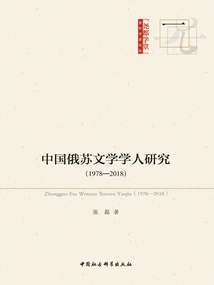
中国俄苏文学学人研究(1978—2018)
Zhang Lei
This book takes Russian-Soviet literary scholars in China as the research object, trying to sort out and present the characteristics of the Russian-Soviet literary scholars group such as their geographical distribution, research methods, and era characteristics. At the same time, it adopts the method of combining group investigation and case study, and selects five scholars, Ge Baoquan, Gao Mang, Wu Yuanmai, Liu Wenfei, and Zhou Qichao, for case analysis. These five scholars focus on different research directions, reflect different research personalities, and demonstrate the academic inheritance among three generations of scholars, old, middle, and young. Through this point-to-point approach, it provides rich and detailed materials for the study of the academic history of Russian and Soviet literature, and provides a reference for future scholars' research.
This book takes Russian-Soviet literary scholars in China as the research object, trying to sort out and present the characteristics of the Russian-Soviet literary scholars group such as their geographical distribution, research methods, and era characteristics. At the same time, it adopts the method of combining group investigation and case study, and selects five scholars, Ge Baoquan, Gao Mang, Wu Yuanmai, Liu Wenfei, and Zhou Qichao, for case analysis. These five scholars focus on different research directions, reflect different research personalities, and demonstrate the academic inheritance among three generations of scholars, old, middle, and young. Through this point-to-point approach, it provides rich and detailed materials for the study of the academic history of Russian and Soviet literature, and provides a reference for future scholars' research.
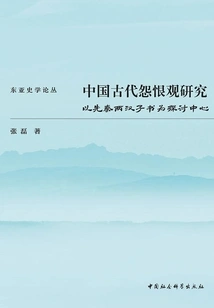
中国古代怨恨观研究:以先秦两汉子书为探讨中心
Zhang Lei
Resentment is a depressed state of frustration after the subject is stimulated by an object. Resentment generated when the subject actively searches for stimulation is self-generated resentment, while resentment generated when the object actively exerts stimulation is other-generated resentment. The starting point of self-generated resentment is the subject's own desires, which mainly include dignity desire, value desire, emotional desire, and interest desire; the starting point of other-generated resentment is the harm caused by the object to the subject, which mainly includes dignity harm, value harm, emotional harm, and benefit harm. Ancient Chinese books, represented by the Book of Pre-Qin and Han Dynasties, have many discussions on the logic of resentment, conceptual basis, normative principles, ways of experiencing, elimination methods, control measures, adjustment strategies, guidance and treatment methods, forming the far-reaching "Ancient Chinese View of Resentment."
Resentment is a depressed state of frustration after the subject is stimulated by an object. Resentment generated when the subject actively searches for stimulation is self-generated resentment, while resentment generated when the object actively exerts stimulation is other-generated resentment. The starting point of self-generated resentment is the subject's own desires, which mainly include dignity desire, value desire, emotional desire, and interest desire; the starting point of other-generated resentment is the harm caused by the object to the subject, which mainly includes dignity harm, value harm, emotional harm, and benefit harm. Ancient Chinese books, represented by the Book of Pre-Qin and Han Dynasties, have many discussions on the logic of resentment, conceptual basis, normative principles, ways of experiencing, elimination methods, control measures, adjustment strategies, guidance and treatment methods, forming the far-reaching "Ancient Chinese View of Resentment."