Library
Browse and search books
1 novel found
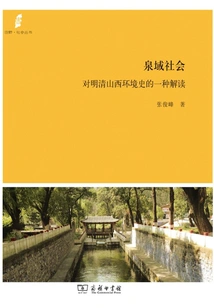
Spring Society: an Interpretation of Shanxi's Environmental History in the Ming and Qing Dynasties
History泉域社会:对明清山西环境史的一种解读
Zhang Junfeng
Spring society is an important type of Shanxi water conservancy society. It is an active attempt and exploration advocated by the author to conduct research on the history of Chinese water conservancy society from the perspective of typology. At the beginning of my research on the social history of water conservancy in Shanxi, I noticed that Gu Yanwu, a famous scholar in the late Ming and early Qing dynasties, said in "The Book of Benefits and Diseases of Prefectures and Countries in the World" that "the spring water in Shanxi is as abundant as that in Fujian." This is in sharp contrast to the current people's impression of Shanxi's lack of water resources. The ancient and modern changes in Shanxi's water resources are intrinsically related to the development of regional society. Taking water as the starting point is a new perspective to comprehensively examine the social and historical changes in Shanxi's region. This is complementary to the emerging environmental history research in China. This book strives to organically combine social history and environmental history. It hopes to provide a comparable regional case for the study of Chinese water conservancy social history while interpreting the environmental history of Shanxi in the Ming and Qing Dynasties. As an important birthplace of the Yellow River civilization, Shanxi has a long history of development and utilization of spring water resources. The water politics, water economy, water rights, water beliefs, and water culture formed around the development of water resources are very rich. The main spring areas represented by Taiyuan Jinci Spring, Jiexiu Hongshan Spring, Hongdong Huo Spring, Xinjianggudui Spring, Yicheng Luanchi Spring, and Linfen Longci Spring not only fully retain the ancient water conservancy facilities and water conservancy relics since the Tang and Song Dynasties, but also have a wealth of water conservancy inscriptions, water conservancy contracts, water conservancy canals, water conservancy lawsuit files and other precious documents, which provide us with favorable conditions for research on the social history of Shanxi water conservancy. In the spirit of "Going to poverty and falling into the underworld, looking for things with hands and feet" and under the guidance of Professor Xinglong's academic philosophy of "going to the fields and society", we have traveled throughout the major spring areas in Shanxi over the past twenty years, going deep into the countryside and fields, entering villages and households, conducting field surveys and conducting on-site visits. On this basis, the impression of "Quanyu Society" has become more and more profound. In order to fully present the appearance and characteristics of Shanxi Quanyu society, this book adopts a combination of case study and special research. As an important branch and hot field of Chinese social history, the social history of water conservancy has attracted the attention of researchers from multiple disciplines. Since the Tang and Song Dynasties, Shanxi's large-scale spring irrigation systems are dotted throughout the province, especially in the Fen River Basin. They are important economic zones and cultural centers in their respective regions. This book fully explores and utilizes the abundant and diverse water conservancy inscriptions, contract documents, canal and water records, genealogy, archives and other folk documents in various spring areas in Shanxi. It combines case-based empirical research and special research to fully demonstrate the history of Shanxi, a province with increasingly scarce water resources. During this period, focusing on the water environment, aquatic industry, water organization, water system, water culture, water belief and water politics formed by the development of spring water resources, we tried to use spring society as an example to construct a basic knowledge system for the study of water conservancy social history, and on this basis, we refined a localized conceptual model - spring society.
Spring society is an important type of Shanxi water conservancy society. It is an active attempt and exploration advocated by the author to conduct research on the history of Chinese water conservancy society from the perspective of typology. At the beginning of my research on the social history of water conservancy in Shanxi, I noticed that Gu Yanwu, a famous scholar in the late Ming and early Qing dynasties, said in "The Book of Benefits and Diseases of Prefectures and Countries in the World" that "the spring water in Shanxi is as abundant as that in Fujian." This is in sharp contrast to the current people's impression of Shanxi's lack of water resources. The ancient and modern changes in Shanxi's water resources are intrinsically related to the development of regional society. Taking water as the starting point is a new perspective to comprehensively examine the social and historical changes in Shanxi's region. This is complementary to the emerging environmental history research in China. This book strives to organically combine social history and environmental history. It hopes to provide a comparable regional case for the study of Chinese water conservancy social history while interpreting the environmental history of Shanxi in the Ming and Qing Dynasties. As an important birthplace of the Yellow River civilization, Shanxi has a long history of development and utilization of spring water resources. The water politics, water economy, water rights, water beliefs, and water culture formed around the development of water resources are very rich. The main spring areas represented by Taiyuan Jinci Spring, Jiexiu Hongshan Spring, Hongdong Huo Spring, Xinjianggudui Spring, Yicheng Luanchi Spring, and Linfen Longci Spring not only fully retain the ancient water conservancy facilities and water conservancy relics since the Tang and Song Dynasties, but also have a wealth of water conservancy inscriptions, water conservancy contracts, water conservancy canals, water conservancy lawsuit files and other precious documents, which provide us with favorable conditions for research on the social history of Shanxi water conservancy. In the spirit of "Going to poverty and falling into the underworld, looking for things with hands and feet" and under the guidance of Professor Xinglong's academic philosophy of "going to the fields and society", we have traveled throughout the major spring areas in Shanxi over the past twenty years, going deep into the countryside and fields, entering villages and households, conducting field surveys and conducting on-site visits. On this basis, the impression of "Quanyu Society" has become more and more profound. In order to fully present the appearance and characteristics of Shanxi Quanyu society, this book adopts a combination of case study and special research. As an important branch and hot field of Chinese social history, the social history of water conservancy has attracted the attention of researchers from multiple disciplines. Since the Tang and Song Dynasties, Shanxi's large-scale spring irrigation systems are dotted throughout the province, especially in the Fen River Basin. They are important economic zones and cultural centers in their respective regions. This book fully explores and utilizes the abundant and diverse water conservancy inscriptions, contract documents, canal and water records, genealogy, archives and other folk documents in various spring areas in Shanxi. It combines case-based empirical research and special research to fully demonstrate the history of Shanxi, a province with increasingly scarce water resources. During this period, focusing on the water environment, aquatic industry, water organization, water system, water culture, water belief and water politics formed by the development of spring water resources, we tried to use spring society as an example to construct a basic knowledge system for the study of water conservancy social history, and on this basis, we refined a localized conceptual model - spring society.