Library
Browse and search books
9 novels found
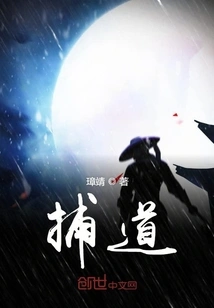
Catch Road
Martial Arts捕道
Zhang Jing
Professional or ethical? Family or faith? Stick to your point of view or just follow orders? Is the capture moral or just for career? It's time to make a choice! ! !
Professional or ethical? Family or faith? Stick to your point of view or just follow orders? Is the capture moral or just for career? It's time to make a choice! ! !
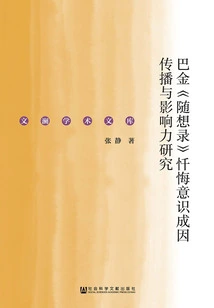
巴金《随想录》忏悔意识成因传播与影响力研究
Zhang Jing
The reason why Ba Jin's "Random Thoughts" is known as "the pinnacle of China's contemporary literary world" is that it is a big book that "tells the truth" with "power, emotion, and warmth that penetrates the back of the paper." "Give your heart to the readers" is the most obvious embodiment of Ba Jin's way of "expressing true feelings". The internal communication influence of "Random Thoughts" lies in criticizing "ultra-left" ideological trends and enlightening the souls of Chinese people; sincere confession saves people's hearts, and literature saves the world and society. The external communication influence of Ba Jin's "Random Thoughts" lies in the fact that the study of Ba Jin's works has become an effective medium for the mutual dissemination of Chinese and foreign cultures.
The reason why Ba Jin's "Random Thoughts" is known as "the pinnacle of China's contemporary literary world" is that it is a big book that "tells the truth" with "power, emotion, and warmth that penetrates the back of the paper." "Give your heart to the readers" is the most obvious embodiment of Ba Jin's way of "expressing true feelings". The internal communication influence of "Random Thoughts" lies in criticizing "ultra-left" ideological trends and enlightening the souls of Chinese people; sincere confession saves people's hearts, and literature saves the world and society. The external communication influence of Ba Jin's "Random Thoughts" lies in the fact that the study of Ba Jin's works has become an effective medium for the mutual dissemination of Chinese and foreign cultures.
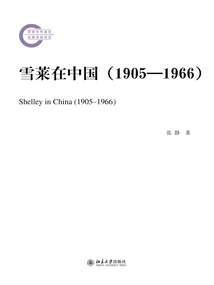
Shelley in China (1905-1966)
Literature雪莱在中国(1905—1966)
Zhang Jing
This book mainly studies Shelley's translation and reception in different periods of modern Chinese literature. Starting from the portrait of Shelley published in "New Novel" in 1905 hosted by Liang Qichao, it discusses Shelley's outstanding characteristics and views presented by translators with different identities in different periods, in order to examine its relationship with the occurrence and development of modern Chinese literature.
This book mainly studies Shelley's translation and reception in different periods of modern Chinese literature. Starting from the portrait of Shelley published in "New Novel" in 1905 hosted by Liang Qichao, it discusses Shelley's outstanding characteristics and views presented by translators with different identities in different periods, in order to examine its relationship with the occurrence and development of modern Chinese literature.
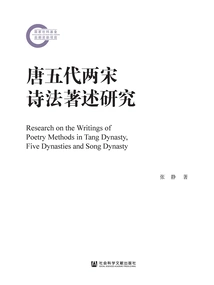
唐五代两宋诗法著述研究
Zhang Jing
The so-called poetry writings are special books on poetry that take the summary of poetry writing techniques as the main content and list the names and techniques of poetry as the main form. The research object of this book is the sixty-eight kinds of poetic writings from the Tang Dynasty, the Five Dynasties and the Song Dynasty. In the case study section, this book examines in detail the author, year of writing, preservation, edition, publication and dissemination of poetry writings, and studies its compilation characteristics, content composition, and theoretical value. It then summarizes the characteristics of poetry writings in the Tang Dynasty, Five Dynasties, and Song Dynasty. Finally, it conducts a systematic review of poetry writings in the past dynasties, summarizing their compilation characteristics, system construction, and ancient people's evaluation of them.
The so-called poetry writings are special books on poetry that take the summary of poetry writing techniques as the main content and list the names and techniques of poetry as the main form. The research object of this book is the sixty-eight kinds of poetic writings from the Tang Dynasty, the Five Dynasties and the Song Dynasty. In the case study section, this book examines in detail the author, year of writing, preservation, edition, publication and dissemination of poetry writings, and studies its compilation characteristics, content composition, and theoretical value. It then summarizes the characteristics of poetry writings in the Tang Dynasty, Five Dynasties, and Song Dynasty. Finally, it conducts a systematic review of poetry writings in the past dynasties, summarizing their compilation characteristics, system construction, and ancient people's evaluation of them.
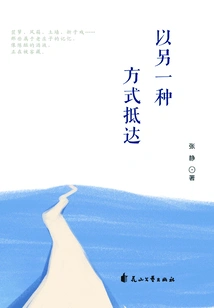
Arrive Another Way
Literature以另一种方式抵达
Zhang Jing
This book is a collection of local prose. In this book, the author not only writes about the benevolence and generosity of the traditional farming culture in the Guanzhong area, but also writes about the pure and gentle noble qualities of her ancestors and their tenacity to defy poverty and hardship, as well as the thinking, hesitation and confusion caused by the integration of urban and rural areas and the changes in people's ideological understanding, value orientation and lifestyle after people's lives become rich.
This book is a collection of local prose. In this book, the author not only writes about the benevolence and generosity of the traditional farming culture in the Guanzhong area, but also writes about the pure and gentle noble qualities of her ancestors and their tenacity to defy poverty and hardship, as well as the thinking, hesitation and confusion caused by the integration of urban and rural areas and the changes in people's ideological understanding, value orientation and lifestyle after people's lives become rich.
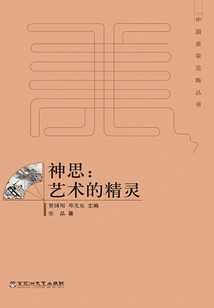
Shensi: the Spirit of Art
Literature神思:艺术的精灵
Zhang Jing
"Shensi: The Spirit of Art" is one of the "Chinese Aesthetic Category Series". This book provides a comprehensive and in-depth discussion of "spiritual thinking", a core category of artistic creative thinking in Chinese classical aesthetics. It explains that "spiritual thinking" has the characteristics of freedom, transcendence, intuition and creativity, and is a dynamic way of thinking. It also discusses that imagination is the main connotation of "spiritual thinking" and has many original ideas to inspire readers.
"Shensi: The Spirit of Art" is one of the "Chinese Aesthetic Category Series". This book provides a comprehensive and in-depth discussion of "spiritual thinking", a core category of artistic creative thinking in Chinese classical aesthetics. It explains that "spiritual thinking" has the characteristics of freedom, transcendence, intuition and creativity, and is a dynamic way of thinking. It also discusses that imagination is the main connotation of "spiritual thinking" and has many original ideas to inspire readers.
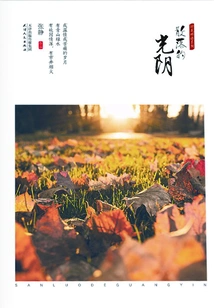
Scattered Time
Literature散落的光阴
Zhang Jing
The scattered time has beautiful language and elegant artistic conception. In the collection, the author shares with readers his personal experience and insights in the depths of the years, describing a life that is either warm or profound, including green mountains and green waters, deep love for his hometown, fireworks in the city, and insights from reading.
The scattered time has beautiful language and elegant artistic conception. In the collection, the author shares with readers his personal experience and insights in the depths of the years, describing a life that is either warm or profound, including green mountains and green waters, deep love for his hometown, fireworks in the city, and insights from reading.
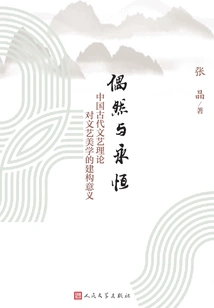
偶然与永恒:中国古代文艺理论对文艺美学的建构意义
Zhang Jing
Can literary aesthetics achieve breakthrough development? What role can ancient Chinese literary and artistic theory play in the construction of contemporary aesthetics? It is the structure of the upper and lower parts of the book that highlights this thinking dimension. The first part constructively analyzes the internal logic and realistic basis of the contemporary development of literary aesthetics, reveals the unique aesthetic attributes of ancient Chinese literary theory, and extracts important elements of literary aesthetics such as the theory of inspiration, contingency theory, theory of enlightenment, theory of self-satisfaction, theory of transformation, and theory of bipolarity from the author's many years of research. The second part uses a philosophical perspective to solve some problems in Chinese aesthetics and poetics and build a unique theoretical landscape.
Can literary aesthetics achieve breakthrough development? What role can ancient Chinese literary and artistic theory play in the construction of contemporary aesthetics? It is the structure of the upper and lower parts of the book that highlights this thinking dimension. The first part constructively analyzes the internal logic and realistic basis of the contemporary development of literary aesthetics, reveals the unique aesthetic attributes of ancient Chinese literary theory, and extracts important elements of literary aesthetics such as the theory of inspiration, contingency theory, theory of enlightenment, theory of self-satisfaction, theory of transformation, and theory of bipolarity from the author's many years of research. The second part uses a philosophical perspective to solve some problems in Chinese aesthetics and poetics and build a unique theoretical landscape.
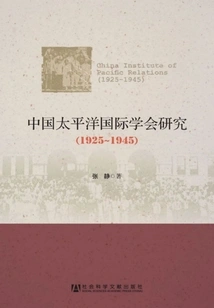
中国太平洋国际学会研究(1925~1945)
Zhang Jing
This book discusses the initial China-Pacific International Trade Conference (1925~1930) of the China-Pacific Society, the China-Pacific Society before the Anti-Japanese War, the China-Pacific Society during the war, and the research cooperation between the China-Pacific Society and Chinese academic circles. It is of great value to the study of China Pacific International Society.
This book discusses the initial China-Pacific International Trade Conference (1925~1930) of the China-Pacific Society, the China-Pacific Society before the Anti-Japanese War, the China-Pacific Society during the war, and the research cooperation between the China-Pacific Society and Chinese academic circles. It is of great value to the study of China Pacific International Society.