Library
Browse and search books
1 novel found
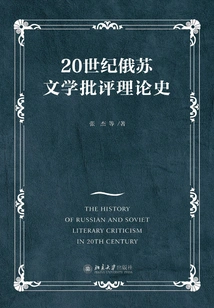
20世纪俄苏文学批评理论史
Zhang Jie Et Al.
The century-long course of the 20th century was not only a century of hesitation and confusion, a century of hardship and pain in the Russian and Soviet intellectual circles, but also a century of exploration and pursuit, a century of subversion and innovation. During this period, people's world outlook, values, aesthetics and ways of thinking have undergone tremendous changes. This book is my country's first academic monograph to conduct a complete study of Russian and Soviet literary criticism theories in the 20th century. It provides a relatively comprehensive discussion of the major Russian and Soviet literary criticism theoretical schools within the territory of the former Soviet Union and in exile, especially some critics who were little-known in the past and their representative achievements. We try to review this historical picture of literary criticism theory from a methodological perspective, and try to use the methods of religious and aesthetic criticism theory to analyze specific literary works as much as possible, in order to achieve the purpose of integrating theory with practice and reveal the guiding role of literary criticism theory in literary creation. This book provides a valuable reference for reflecting on the relationship between Russian and Soviet literature and ideology in the 20th century, understanding the origins of modern Western literary criticism theory, and perceiving the spiritual life of the Russian nation in the 20th century.
The century-long course of the 20th century was not only a century of hesitation and confusion, a century of hardship and pain in the Russian and Soviet intellectual circles, but also a century of exploration and pursuit, a century of subversion and innovation. During this period, people's world outlook, values, aesthetics and ways of thinking have undergone tremendous changes. This book is my country's first academic monograph to conduct a complete study of Russian and Soviet literary criticism theories in the 20th century. It provides a relatively comprehensive discussion of the major Russian and Soviet literary criticism theoretical schools within the territory of the former Soviet Union and in exile, especially some critics who were little-known in the past and their representative achievements. We try to review this historical picture of literary criticism theory from a methodological perspective, and try to use the methods of religious and aesthetic criticism theory to analyze specific literary works as much as possible, in order to achieve the purpose of integrating theory with practice and reveal the guiding role of literary criticism theory in literary creation. This book provides a valuable reference for reflecting on the relationship between Russian and Soviet literature and ideology in the 20th century, understanding the origins of modern Western literary criticism theory, and perceiving the spiritual life of the Russian nation in the 20th century.