Library
Browse and search books
4 novels found
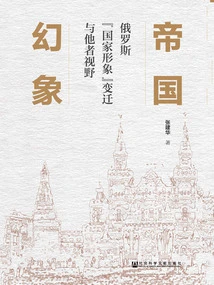
帝国幻象:俄罗斯“国家形象”变迁与他者视野
Zhang Jianhua
This book adopts an interdisciplinary research method and introduces theories such as culture, politics, communication, and literature into the study of Russian history. It uses diverse documents such as archives, newspapers, memoirs, literary works, and video historical materials, and integrates multilingual materials such as Russian, Chinese, and English to conduct a diachronic and synchronic examination of Russia's "national image" and "national image." Throughout Russia's more than 1,100-year history since the founding of Novgorod in 862 AD, the empire's demands have been throughout, the shadow of the empire has been around, and the empire's image has been both criticized and praised.
This book adopts an interdisciplinary research method and introduces theories such as culture, politics, communication, and literature into the study of Russian history. It uses diverse documents such as archives, newspapers, memoirs, literary works, and video historical materials, and integrates multilingual materials such as Russian, Chinese, and English to conduct a diachronic and synchronic examination of Russia's "national image" and "national image." Throughout Russia's more than 1,100-year history since the founding of Novgorod in 862 AD, the empire's demands have been throughout, the shadow of the empire has been around, and the empire's image has been both criticized and praised.
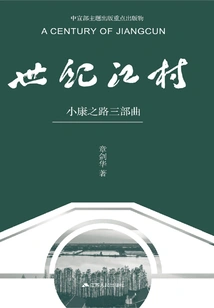
世纪江村:小康之路三部曲
Zhang Jianhua
This book uses the writing style of documentary literature to focus on Kaixiangong Village in Wu County, Jiangsu Province (the Jiangcun in Mr. Fei Xiaotong's "Jiangcun Economy") in the midst of great changes. Through the trilogy of "Can Be Well-off", "Exploring from Above and Below" and "A Hundred Years of Dreams Come True", it uses vivid language and stories to explore the century-old journey and century-long exploration of China's Jiangcun's road to a well-off society. It provides a vertical and in-depth account, showing the hardships, twists and turns and tenacious struggles that several generations have experienced in order to achieve a moderately prosperous society. It profoundly reveals that without the Communist Party, there would be no new China, and without the new China, there would be no new countryside. Only China under the leadership of the Communist Party can realize the millennium dream of the Chinese people - to build a moderately prosperous society in all respects. Kaixiangong Village in Wujiang County, Jiangsu Province has been exploring the road to a moderately prosperous society since the Silk Revolution in the 1920s. During the Anti-Japanese War, it was sabotaged by the invaders and stalled. After the founding of New China, especially after the reform and opening up, it basically achieved the goal of a moderately prosperous society. It entered a new era, promoted the construction of beautiful countryside, and achieved a high-level moderately prosperous society.
This book uses the writing style of documentary literature to focus on Kaixiangong Village in Wu County, Jiangsu Province (the Jiangcun in Mr. Fei Xiaotong's "Jiangcun Economy") in the midst of great changes. Through the trilogy of "Can Be Well-off", "Exploring from Above and Below" and "A Hundred Years of Dreams Come True", it uses vivid language and stories to explore the century-old journey and century-long exploration of China's Jiangcun's road to a well-off society. It provides a vertical and in-depth account, showing the hardships, twists and turns and tenacious struggles that several generations have experienced in order to achieve a moderately prosperous society. It profoundly reveals that without the Communist Party, there would be no new China, and without the new China, there would be no new countryside. Only China under the leadership of the Communist Party can realize the millennium dream of the Chinese people - to build a moderately prosperous society in all respects. Kaixiangong Village in Wujiang County, Jiangsu Province has been exploring the road to a moderately prosperous society since the Silk Revolution in the 1920s. During the Anti-Japanese War, it was sabotaged by the invaders and stalled. After the founding of New China, especially after the reform and opening up, it basically achieved the goal of a moderately prosperous society. It entered a new era, promoted the construction of beautiful countryside, and achieved a high-level moderately prosperous society.
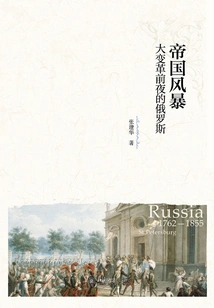
帝国风暴:大变革前夜的俄罗斯
Zhang Jianhua
The period from 1762 to 1855 was the period when the Russian Empire was at its most prosperous, and it was also the period when Russian thought and culture was most glorious. It was also a period when the advantages and legitimacy of the old system were exhausted, and it was also the eve of great changes in the nation, country, society, family and individuals. There are numerous works on this period in the academic, biographical and literary circles at home and abroad, but most of them are general history or general knowledge, and the research perspectives are relatively old-fashioned. This book adopts the latest theories in contemporary academic circles: Imperialism and Iconology, focusing on this historical turning point, the evolution of the Russian Empire's internal structure, the changes in the rulers' imperial governance concepts, the changes in imperial consciousness and imperial ideology, and the evolution of Russia's national image and national image, in order to answer the many urgent questions and destiny challenges faced by the Russian Empire and society on the eve of the great changes (before the serfdom reform in 1861 and the start of Russia's modernization process). This book uses a large number of newly published Russian documents, supplemented by English and other documents. The book has made major adjustments in its writing style. It attempts to use a fresh and smooth writing style, a writing style that narrates history rather than writing history, and an attitude that explores history rather than dramatizes history. It is hoped that more non-professional readers will like Russian history.
The period from 1762 to 1855 was the period when the Russian Empire was at its most prosperous, and it was also the period when Russian thought and culture was most glorious. It was also a period when the advantages and legitimacy of the old system were exhausted, and it was also the eve of great changes in the nation, country, society, family and individuals. There are numerous works on this period in the academic, biographical and literary circles at home and abroad, but most of them are general history or general knowledge, and the research perspectives are relatively old-fashioned. This book adopts the latest theories in contemporary academic circles: Imperialism and Iconology, focusing on this historical turning point, the evolution of the Russian Empire's internal structure, the changes in the rulers' imperial governance concepts, the changes in imperial consciousness and imperial ideology, and the evolution of Russia's national image and national image, in order to answer the many urgent questions and destiny challenges faced by the Russian Empire and society on the eve of the great changes (before the serfdom reform in 1861 and the start of Russia's modernization process). This book uses a large number of newly published Russian documents, supplemented by English and other documents. The book has made major adjustments in its writing style. It attempts to use a fresh and smooth writing style, a writing style that narrates history rather than writing history, and an attitude that explores history rather than dramatizes history. It is hoped that more non-professional readers will like Russian history.
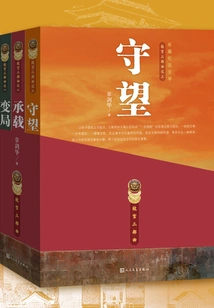
故宫三部曲:变局 承载 守望
Zhang Jianhua
The first part, "Changes," tells the story of how the Imperial Palace became the Forbidden City, and how Li Shizeng and others turned the Forbidden City into a Palace Museum for the public to visit during the historical turmoil and the mutiny in the capital. The second part "Carrying" tells the story of the difficult experience of the Forbidden City's cultural relics in the war during the Anti-Japanese War. A group of outstanding Chinese intellectuals led by Ma Heng and Yi Peiji completed the largest relocation of cultural relics in the history of world wars. The third part "Watching" tells the story of the turmoil and stability of the Palace Museum in Beijing and the Taipei Museum under New China. Through the ups and downs of the cultural relics, it presents the cultural complex of the elderly in the Palace Museum on both sides of the Taiwan Strait.
The first part, "Changes," tells the story of how the Imperial Palace became the Forbidden City, and how Li Shizeng and others turned the Forbidden City into a Palace Museum for the public to visit during the historical turmoil and the mutiny in the capital. The second part "Carrying" tells the story of the difficult experience of the Forbidden City's cultural relics in the war during the Anti-Japanese War. A group of outstanding Chinese intellectuals led by Ma Heng and Yi Peiji completed the largest relocation of cultural relics in the history of world wars. The third part "Watching" tells the story of the turmoil and stability of the Palace Museum in Beijing and the Taipei Museum under New China. Through the ups and downs of the cultural relics, it presents the cultural complex of the elderly in the Palace Museum on both sides of the Taiwan Strait.