Library
Browse and search books
3 novels found
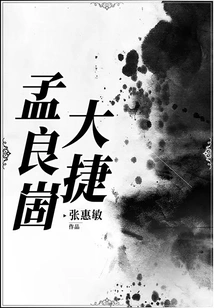
Great Victory at Menglianggu
Literature大捷孟良崮
Zhang Huimin
Under the command of Chiang Kai-shek. The Kuomintang troops mobilized across the board, and Su Yu's long-awaited fighter plane finally appeared. In the spring of 1947, Chiang Kai-shek's mood was gloomy and rainy. Since the Kuomintang tore up the armistice agreement at the end of June last year, although it occupied more than 100 empty cities, it paid the price of annihilating 710,000 troops. As the battle line grew longer and longer, the troops became increasingly stretched. Chiang Kai-shek gradually felt that he was beyond his capabilities, and the initiative on the battlefield was tilted towards the Communist Party.
Under the command of Chiang Kai-shek. The Kuomintang troops mobilized across the board, and Su Yu's long-awaited fighter plane finally appeared. In the spring of 1947, Chiang Kai-shek's mood was gloomy and rainy. Since the Kuomintang tore up the armistice agreement at the end of June last year, although it occupied more than 100 empty cities, it paid the price of annihilating 710,000 troops. As the battle line grew longer and longer, the troops became increasingly stretched. Chiang Kai-shek gradually felt that he was beyond his capabilities, and the initiative on the battlefield was tilted towards the Communist Party.
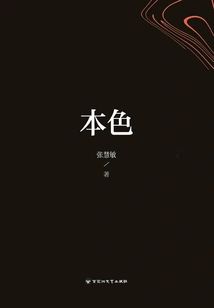
True Color
Literature本色
Zhang Huimin
This is a collection of original prose essays, consisting of five volumes: Memories, Galloping, Traveling in America, Yehua, and Porcelain City. The author has written across Beijing, Hong Kong, Boston, Shenzhen, Jingdezhen and other places. In addition to the true character of the porcelain city, the collected chapters also include the individual experiences and journeys of women, showing the author's rich inner world.
This is a collection of original prose essays, consisting of five volumes: Memories, Galloping, Traveling in America, Yehua, and Porcelain City. The author has written across Beijing, Hong Kong, Boston, Shenzhen, Jingdezhen and other places. In addition to the true character of the porcelain city, the collected chapters also include the individual experiences and journeys of women, showing the author's rich inner world.
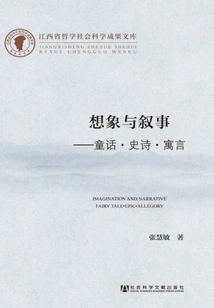
想象与叙事:童话·史诗·寓言
Zhang Huimin
Narrative is inseparable from imagination, but existing narrative theories mostly focus on research techniques and ignore the imaginative function of the essence of narrative. This study starts from fairy tales, epics, and fables, focuses on analyzing the pivotal role of imagination in narrative, and analyzes the two-way interaction between theory and practice. If the penetration of fairy tales into people's childhood is the alienation of narrative time (or the unreality of the present), then epics trace the narrative time back to ancient times, explore the origins of history, and explore the setting of narrative plots in the explicit and implicit dual mechanisms of the narrative process; while fables use the immortal throbbing of the soul to transform the future. Drawing on the similarities between fairy tale thinking and myth, we explore the "perceptual" picture of narrative images and the metaphorical language structure that constructs this image picture; we reveal the symbolic order and allegorical effect of the interaction, mismatch, and harmonic resonance between the conceptual world and the sensory world.
Narrative is inseparable from imagination, but existing narrative theories mostly focus on research techniques and ignore the imaginative function of the essence of narrative. This study starts from fairy tales, epics, and fables, focuses on analyzing the pivotal role of imagination in narrative, and analyzes the two-way interaction between theory and practice. If the penetration of fairy tales into people's childhood is the alienation of narrative time (or the unreality of the present), then epics trace the narrative time back to ancient times, explore the origins of history, and explore the setting of narrative plots in the explicit and implicit dual mechanisms of the narrative process; while fables use the immortal throbbing of the soul to transform the future. Drawing on the similarities between fairy tale thinking and myth, we explore the "perceptual" picture of narrative images and the metaphorical language structure that constructs this image picture; we reveal the symbolic order and allegorical effect of the interaction, mismatch, and harmonic resonance between the conceptual world and the sensory world.