Library
Browse and search books
3 novels found
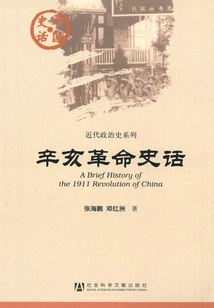
辛亥革命史话
Zhang Haipeng
The Revolution of 1911 refers to a nationwide revolution that took place in the year of Xinhai in the Chinese lunar calendar (the third year of Xuantong in the Qing Dynasty), that is, from 1911 to early 1912, and aimed to overthrow the Qing autocratic imperial dynasty and establish a republican system of government. As a democratic revolution, the Revolution of 1911 successfully overthrew the rule of the Qing Dynasty, ended China's imperial system, ushered in a new era of democratic republic, and made the concept of republic deeply rooted in the minds of the middle and upper classes of society. As a national revolution, the success of the Revolution of 1911 also had an important impact on ethnic relations in China and the national liberation movements in other Asian countries at the same time. A series of events before and after the Revolution of 1911 not only ended the previous efforts of the constitutionalists to implement a constitutional monarchy, but also had a key impact on the subsequent development of China's constitutional government and rule of law, central and local politics, and the relationship between the central and local governments.
The Revolution of 1911 refers to a nationwide revolution that took place in the year of Xinhai in the Chinese lunar calendar (the third year of Xuantong in the Qing Dynasty), that is, from 1911 to early 1912, and aimed to overthrow the Qing autocratic imperial dynasty and establish a republican system of government. As a democratic revolution, the Revolution of 1911 successfully overthrew the rule of the Qing Dynasty, ended China's imperial system, ushered in a new era of democratic republic, and made the concept of republic deeply rooted in the minds of the middle and upper classes of society. As a national revolution, the success of the Revolution of 1911 also had an important impact on ethnic relations in China and the national liberation movements in other Asian countries at the same time. A series of events before and after the Revolution of 1911 not only ended the previous efforts of the constitutionalists to implement a constitutional monarchy, but also had a key impact on the subsequent development of China's constitutional government and rule of law, central and local politics, and the relationship between the central and local governments.
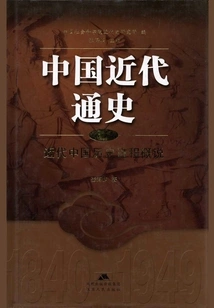
中国近代通史·第一卷:近代中国历史进程
Zhang Haipeng
This book is the summary of the "General History of Modern China". In this volume, the author gives an accurate summary of the entire process of modern Chinese history, clarifies the purpose of writing the book, sorts out the clues of modern Chinese history, expounds academic insights on the period division, major events and other issues of modern Chinese history, and reviews the research results of the academic circle of modern Chinese history over the past 20 years.
This book is the summary of the "General History of Modern China". In this volume, the author gives an accurate summary of the entire process of modern Chinese history, clarifies the purpose of writing the book, sorts out the clues of modern Chinese history, expounds academic insights on the period division, major events and other issues of modern Chinese history, and reviews the research results of the academic circle of modern Chinese history over the past 20 years.
中国近代史基本问题研究
Zhang Haipeng
This book is a special collection of articles by members of the Chinese Academy of Social Sciences. It contains 20 essays by the author. It mainly contains the author's thoughts on several macro-level issues in modern Chinese history, including the periodization of modern Chinese history, theoretical methods, the Opium War, early modernization, all-day relations, and anti-aggression understanding.
This book is a special collection of articles by members of the Chinese Academy of Social Sciences. It contains 20 essays by the author. It mainly contains the author's thoughts on several macro-level issues in modern Chinese history, including the periodization of modern Chinese history, theoretical methods, the Opium War, early modernization, all-day relations, and anti-aggression understanding.